
Last Updated on August 18, 2026 by Daniel Globe
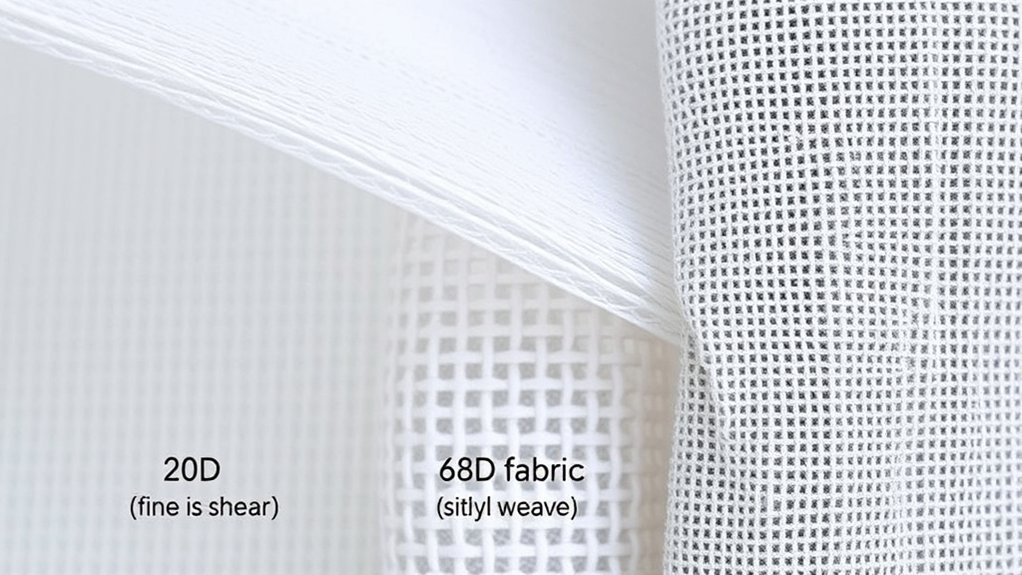
Not all “20D” or “68D” tent fabrics perform the same way, and that number alone won’t tell you whether a tent will survive a windy ridge or a season of car camping. Denier describes the yarn used in the fabric, but real-world strength also depends on the fiber, weave, coatings, seams, and overall tent design. Here’s how to read those numbers without giving the denier rating more weight than it deserves.
Quick Answer
Tent denier (D) describes yarn linear density: grams per 9,000 meters. Higher D usually means thicker, heavier yarn when comparing similar fabrics, but it does not directly measure tent strength. For most shoppers, 20D favors low weight, 40D adds durability, and 68D–75D+ favors tougher use, while material, weave, coating, and construction can matter just as much.
Last updated: August 18, 2026.
Disclosure: As an Amazon Associate I earn from qualifying purchases. Some links on this page are affiliate links, at no extra cost to you.
What Is Tent Denier?
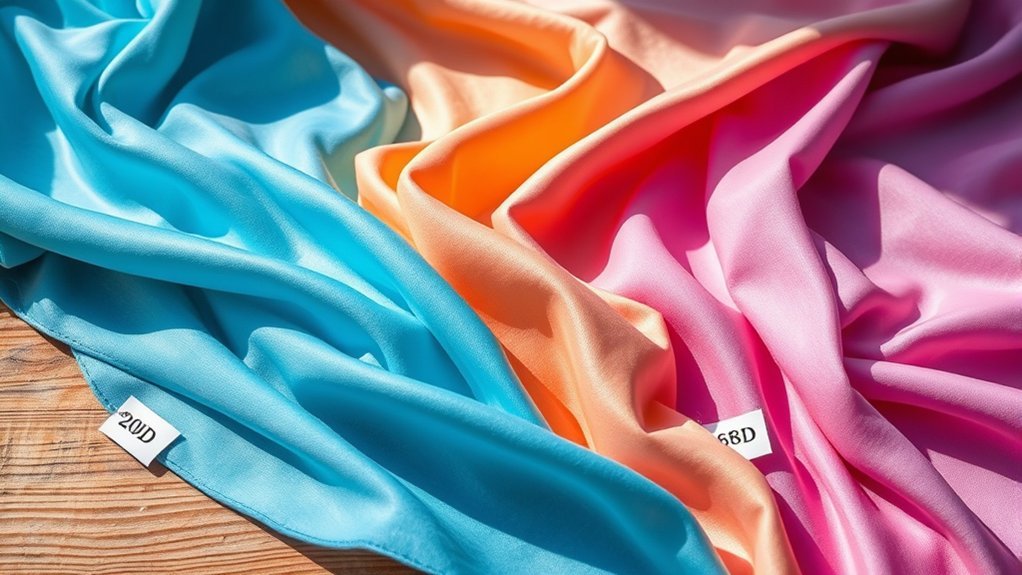
Denier, written as D, measures the linear mass of the yarn or fiber used in a fabric. Technically, the number tells you how many grams 9,000 meters of that yarn would weigh. A lower number means a finer, lighter yarn; a higher number means a heavier yarn. MSR’s tent-fabric guide uses a 20D versus 40D nylon example to show how denier relates to yarn diameter.
That makes denier useful, but it is not a direct strength rating. A 40D fabric is not automatically twice as strong as a 20D fabric, and two different 20D fabrics can have very different tear strength, abrasion resistance, weight, and lifespan.
What Denier Does Not Tell You
To judge a tent fabric properly, look at the whole specification:
- Fiber type: Nylon, polyester, high-tenacity yarns, and specialty fibers have different strength, stretch, UV, and moisture characteristics.
- Weave: Ripstop, taffeta, and other constructions distribute stress differently.
- Thread count: Often shown as T, this measures warp and fill threads per square inch. A bigger T-number does not automatically mean a stronger fabric.
- Coating: Silicone, polyurethane (PU), polyethylene-based coatings, and mixed systems affect waterproofing, weight, tear behavior, and repair options.
- Finished-fabric strength: Tear and tensile tests tell you more about actual strength than denier alone.
For example, the often-seen specification 20D × 330T ripstop nylon, 1200mm PU/silicone describes several different things: 20D yarn size, a 330-thread-per-square-inch weave, ripstop construction, nylon fiber, a 1,200 mm hydrostatic-head rating, and the waterproofing/treatment system. Those details work together.
Note: Compare denier most confidently when the fabrics are otherwise similar. Comparing a 20D high-tenacity ripstop nylon directly with a basic 20D polyester taffeta can be misleading because the D-number describes yarn mass, not finished-fabric performance.
The Importance of Denier in Tent Fabric
Denier still matters because yarn size affects how designers balance weight, packability, abrasion resistance, and durability. It is simply one part of that balance rather than the final score.
Denier is a yarn-size clue, not a universal strength grade. Compare the whole fabric specification, not just the biggest D-number.
- Strength and abrasion: When the fiber, weave, and construction are similar, a higher denier usually means more material is available to resist wear and abrasion.
- Weight and packed size: Lower-denier fabrics help manufacturers cut ounces and reduce bulk, which matters on long backpacking trips.
- Design balance: Tent makers often mix deniers, using lighter fabric where abrasion is low and heavier or otherwise reinforced material where extra durability is useful.
The key phrase is when the fabrics are similar. REI’s backpacking-tent guidance specifically warns that inherent fabric differences can affect strength more than the denier number itself.
Comparing 20D, 40D, and 68D Fabrics
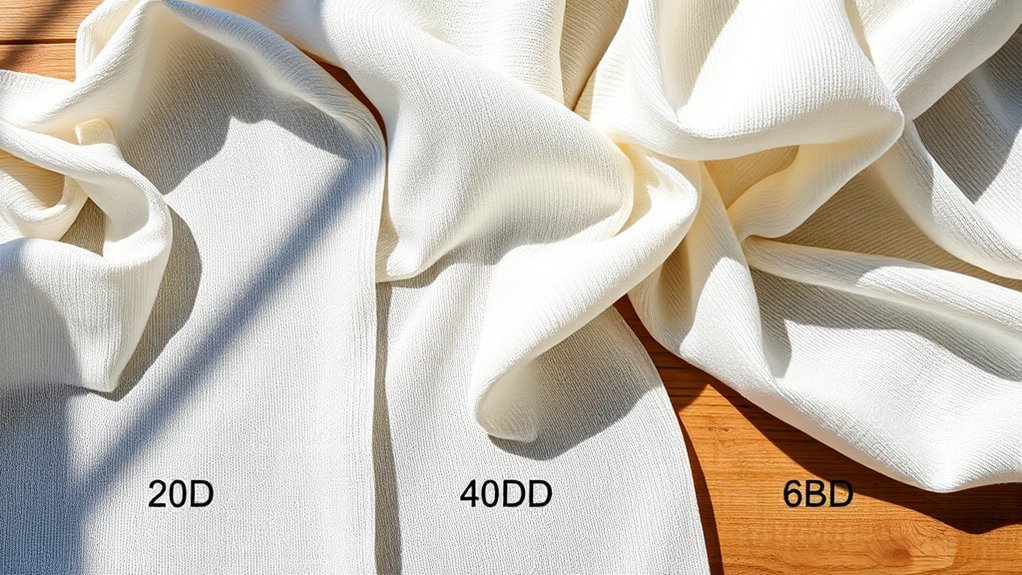
There is no official industry rule saying a particular denier belongs to a particular camping style. Still, the following ranges are useful as a buying shortcut when you compare otherwise similar nylon or polyester tent fabrics.
| Denier Range | Typical Role | Main Trade-Off |
|---|---|---|
| 10D–20D | Ultralight rainflies, canopies, and some lightweight floors | Very light and compact, but less forgiving of abrasion and rough handling |
| 30D–40D | Lightweight to general backpacking components | A useful balance of weight and added durability |
| 68D–75D+ | Durable backpacking, crossover, family-tent components, and floors | More material for wear resistance, with greater weight and bulk |
| 150D+ | Heavy-duty shelters, some car-camping tents, footprints, and specialized applications | High durability can matter more than minimizing packed weight |
A 20D fabric makes sense when every ounce matters and the user is willing to protect the tent from sharp rock, branches, and repeated abrasion. A 40D fabric can provide more margin for regular trail use without moving into truly heavy fabric. Fabrics around 68D–75D and above are common where designers prioritize wear resistance over minimum weight.
These ranges are not quality grades. A carefully engineered lower-denier fabric can outperform a cheaper higher-denier fabric in a specific strength test, while a heavier fabric may still handle long-term abrasion better.
Note: You may also come across tents with no denier number at all. Non-woven laminate fabrics such as Dyneema Composite Fabric (DCF) aren’t woven from yarn, so they aren’t rated in denier — manufacturers typically specify them by fabric weight instead, in grams per square meter (gsm) or ounces per square yard. When comparing a DCF shelter against a traditional woven nylon or polyester tent, compare published fabric weight and tear/puncture data side by side rather than looking for a missing D-number.
Products Worth Considering

【40D Ripstop Nylon Fabric】: Ultra-lightweight ripstop nylon fabric with interwoven reinforcement yarns resists tearing & abrasion. Ideal for kite fabric, tent fabric, bag,camping gear (camping fabric), banners, and outdoor covers requiring durability without bulk.It's easy to make your own DIY project with just some simple sewing!

【40D Ripstop Nylon Fabric】: Ultra-lightweight ripstop nylon fabric with interwoven reinforcement yarns resists tearing & abrasion. Ideal for kite fabric, tent fabric, bag,camping gear (camping fabric), banners, and outdoor covers requiring durability without bulk.It's easy to make your own DIY project with just some simple sewing!

【40D Ripstop Nylon Fabric for Outdoor Gear】Crafted from 40D ripstop nylon fabric with reinforced grid weave, this tear-resistant and puncture-proof material is ideal for outdoor gear including camping tents, backpack covers, tarps, kites, and hammocks. Its high strength-to-weight ratio delivers durability without adding bulk.
Weight vs. Durability: Finding the Right Balance
Choosing a tent fabric means deciding how much durability you need versus how far you have to carry the shelter. Lower-denier fabrics save weight, but they generally demand more thoughtful campsite selection and handling.
Products Worth Considering

60s Easy Setup: Mimajor 4 person camping tent features a pre-assembled hydraulic top pole structure that lets you pitch it in just 60 seconds—no extra tools or expertise required. Perfect for last-minute camping trips, backyard family stays, or festival glamping. Built with rust-resistant aluminum poles, it stands up to rain, wind, so you can camp safely and efficiently every time.

Lightweight and Durable: The OneTigris STELLA Camping Tent features a lightweight and durable 20D Nylon outer fabric with a single-layer silicone coating, making it both sturdy and easy to carry at only 4.4lb/2kg. Suitable for backpackers, bushcrafters, everyday campers, and families Waterproof: With a 3000mm waterproof rating, the STELLA camping tent is perfect for use in all weather conditions. The removable blackout outer tent allows for greater flexibility in use.

【Heavy Waterproof】BISINNA Backpacking tent made with 190T waterproof polyester, Bottom using 210D Oxford fabric and the waterproof tape on every seam, offering PU3000 waterproof rating to keep you dry even in heavy rain.
Weight Considerations
- Lightweight options: Fabrics around 10D–30D are common in weight-focused shelters because they keep the packed tent small and light.
- More durable options: Higher-denier materials add yarn mass and can provide more abrasion margin where pack weight is less critical.
- Mixed construction: A tent does not need one denier everywhere. Manufacturers can combine a light rainfly with a tougher floor or reinforce only high-stress locations.
Durability Factors
Where a fabric sits on the tent matters as much as the denier number. Floors deal with dirt, grit, pressure from sleepers, repeated setup, and contact with rough ground. Rainflies face wind loading, UV exposure, tension from guylines, and repeated wet-dry cycles.
Because of those different jobs, floors often use a heavier fabric, a more abrasion-resistant construction, or a higher waterproof rating than the rainfly. That is not universal, though. Some ultralight tents use 20D material for both the fly and floor, while more durable backpacking tents may use 40D, 70D, 75D, or heavier floor fabrics.
Pro Tip: Check the floor and rainfly specifications separately. If the floor is very light and you regularly camp on gritty, rocky, or abrasive sites, use the manufacturer’s fitted footprint when recommended and clear sharp debris before pitching.
Ripstop, Abrasion, and Tear Strength
Ripstop fabric uses reinforcing yarns woven into a visible or very fine grid. The grid is designed to limit how easily a small puncture develops into a much larger tear. It does not make the fabric puncture-proof.
Abrasion resistance is different. A fabric can resist tearing well yet still wear thin when repeatedly rubbed against granite, sand, or grit. Tensile strength is another measurement again: it describes how much pulling force a fabric can withstand before it breaks.
That is why “stronger” is too vague when comparing tent fabrics. Ask what kind of failure matters for your use: abrasion, puncture, tear propagation, stretching, seam failure, or coating wear.
Does Higher Denier Make a Tent Better in Wind?
Not by itself. Wind performance depends on the complete shelter: pole diameter and geometry, fabric tension, panel shape, guy points, seams, stakes, campsite exposure, and how well the tent is pitched. REI notes that tent strength comes from the combination of fabric, poles, and structural architecture, not a single fabric specification.
Warning: Do not treat denier or hydrostatic-head numbers as storm-safety ratings. For exposed ridges, winter conditions, or severe wind, choose a shelter designed and rated for those conditions, use every required guy point, stake it correctly, and follow the manufacturer’s weather guidance.
Coatings and Waterproof Ratings
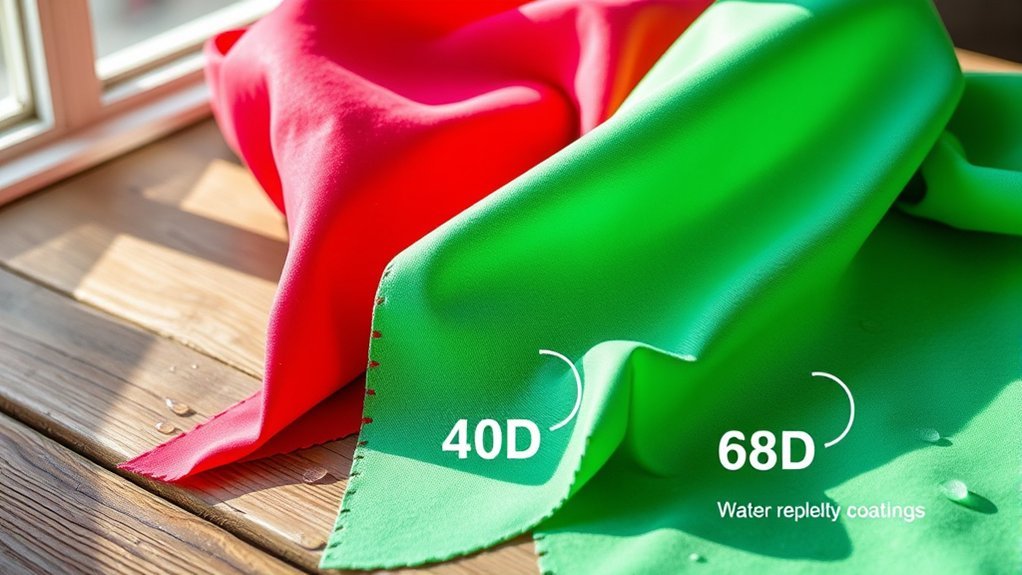
Nylon and polyester base fabrics are not enough by themselves to make a reliable waterproof tent fly or floor. Manufacturers use coatings, laminates, surface treatments, seam construction, and seam sealing to keep water out.
Products Worth Considering

Seal up to 24 ft of seams with 1.5 oz of this durable, clear adhesive that bonds permanently to silicone-treated (silynylon) tents

Permanent Repairs – Seal seams and fix holes in tents, tarps, awnings, rainflies, and gear like Thermarest sleeping pads with a flexible, waterproof adhesive.

Seal up to 60 ft of seams on tents, tarps and awnings with this water-based seam sealant; cures in 2 hours at room temperature
Types of Coatings
- Silicone-treated fabrics (silnylon and silpoly): Silicone can improve water resistance, flexibility, and tear performance. Pure silicone surfaces require silicone-compatible repair and seam-sealing products because conventional urethane adhesives do not bond reliably to them.
- PU and polyether-urethane coatings: These coatings are widely used because they can provide waterproofness while allowing manufacturers to tape seams. Traditional PU systems can eventually deteriorate through hydrolysis, especially after long-term exposure to heat and moisture.
- Silicone/PU or mixed constructions: Some fabrics combine silicone treatment with a PU-compatible surface or coating so manufacturers can balance fabric performance with factory seam taping.
Repair chemistry matters. GEAR AID specifies silicone sealant for silicone-treated fabrics, while polyurethane-coated materials require a compatible urethane-type product.
DWR Is Not the Same as the Waterproof Coating
A durable water repellent, or DWR, is a surface treatment that helps water bead and roll away instead of immediately wetting the fabric face. It is not the same thing as the waterproof barrier that produces the tent’s hydrostatic-head rating.
In other words, a rainfly can lose some of its water-beading performance while its underlying waterproof coating remains intact. Likewise, fresh-looking DWR does not fix a damaged or peeling waterproof coating.
Waterproof Ratings Explained
Hydrostatic head, usually shown in millimeters or mmH₂O, describes the water pressure a fabric sample resists before water penetrates it during testing. A larger number means the tested fabric withstood more pressure, but there is no universal rule that one number equals “light rain” and another automatically equals “expedition proof.”
| Hydrostatic Head | How to Interpret It |
|---|---|
| Around 1,000–1,500 mm | Used successfully on some properly designed rainflies; construction, seams, coating quality, and wear matter greatly |
| Around 1,500–3,000 mm | Common territory for many tent fly and floor applications, with the exact requirement depending on design and fabric location |
| 3,000 mm+ | Provides greater pressure resistance and is often useful for floors or demanding applications |
| 5,000 mm+ | Very high pressure resistance, but the bigger number alone does not prove better total tent performance |
MSR’s waterproof-rating guidance explains why it does not design every tent around one minimum hydrostatic-head number. Adding more waterproof coating can increase weight and stiffness, and eventually the trade-offs can work against the flexibility a lightweight rainfly needs in wind.
Note: Floors often carry a higher hydrostatic-head rating than rainflies because kneeling, sleeping, or placing gear on wet ground creates direct pressure against the fabric. Seam construction and the condition of the coating remain just as important as the published number.
Recommendations for Choosing Tent Fabrics
Key Takeaways
- Denier measures yarn linear density, not finished-fabric strength.
- 20D, 40D, and 68D–75D+ are useful comparison ranges, but they are not official tent-quality grades.
- Compare fiber type, ripstop or other weave, thread count, coating, waterproof rating, and fabric location along with denier.
- Silicone-treated and PU-coated fabrics require different repair and seam-sealing products.
- A high hydrostatic-head number does not automatically make a tent stronger, more durable, or better in wind.
- Check current manufacturer specifications because fabric constructions can change between model generations.
When comparing tents, work through the specifications in this order instead of choosing whichever tent shows the biggest denier number:
- Start with how you camp: Long-distance backpackers have stronger reasons to accept delicate lightweight fabrics than car campers who move a tent only a few yards.
- Identify the fabric: Check whether the fly and floor are nylon, polyester, or another material. Nylon commonly offers strong strength-to-weight performance, while polyester generally stretches less when wet and handles UV exposure well.
- Read each denier separately: Look for individual fly, canopy, and floor specifications rather than one number presented as the specification for the whole tent.
- Check the weave and yarn description: Ripstop and high-tenacity yarns can materially change performance.
- Check waterproof construction: Look at hydrostatic head, coating type, taped or sealed seams, bathtub-floor design, and long-term care requirements.
- Consider the full shelter: For exposed or four-season use, poles, guy points, geometry, stakes, ventilation, and seasonal design matter more than chasing a particular fabric denier.
Current products show how wide the design range can be. The MSR Hubba Hubba Bikepack 1 uses 20D ripstop nylon for both its rainfly and floor, while the current MSR Elixir 2 uses 75D polyester for its rainfly and floor. The current REI Co-op Half Dome 2 mixes a 40D nylon rainfly with a 75D polyester floor and lower tent-body wall, topped with a 20D nylon mesh canopy. None of those approaches is automatically “better”; each reflects a different weight, durability, price, and use-case target.
If you are comparing lightweight shelters where fabric weight and packability matter most, this guide to ultralight 2-person backpacking tents can help you compare practical options for different trail priorities.
Frequently Asked Questions
How does denier affect tent breathability?
Denier alone does not tell you whether a tent will breathe well. Practical ventilation depends much more on mesh area, vents, fabric weave, waterproof coatings or membranes, and whether the shelter is single-wall or double-wall. A lower D-number does not automatically mean noticeably better airflow.
Can I repair a tent with a different denier fabric?
Yes. The patch does not normally need the exact same denier. Coating and adhesive compatibility are more important. Silicone-treated fabrics need a silicone-compatible patch or sealant, while PU-coated nylon or polyester uses different repair products. The patch should extend beyond the damaged area and follow the repair-product or tent-maker instructions.
What brands commonly use 20D, 40D, and 68D fabrics?
Many major tent brands use fabrics throughout this range, but specifications change by model and year. Current examples include a 20D fly and floor on the MSR Hubba Hubba Bikepack 1, a 40D rainfly on the REI Co-op Half Dome 2, and 75D fly and floor fabrics on the current MSR Elixir 2. Older 68D examples are still common online, so check the current manufacturer’s specification before comparing models.
Are there environmental impacts from tent fabric production?
Yes. Nylon and polyester require raw materials, energy, dyeing, finishing, and coatings, and replacing worn-out gear adds more material demand. Some newer tents use recycled fibers, solution-dyed fabrics, or treatments made without intentionally added PFAS. Durability also matters: choosing a tent suited to your actual use and caring for it properly can extend its service life.
How do weather conditions influence fabric choice?
Nylon is valued for strength-to-weight performance, while polyester usually stretches less when wet and generally has good UV stability. For prolonged rain, look at coatings, seam construction, floor design, and hydrostatic head as well as the base fabric. For strong wind, snow, or exposed alpine use, pole architecture, guy points, tent shape, and seasonal design are more important than denier alone.
Is a higher-denier tent always more durable?
No. Higher denier usually adds abrasion margin when you compare similar fabrics, but material quality, high-tenacity yarns, weave, coatings, reinforcement, and sewing can outweigh the D-number. Compare denier directly only after checking whether the fabrics are otherwise similar.
Is a 1500mm waterproof rating enough for a tent?
It can be. A 1,500 mm rating is used successfully in many tent applications, but the number cannot be judged alone. Fabric location, coating quality, seam sealing, wear, floor pressure, tent geometry, and maintenance all affect whether the shelter stays dry. Floors often benefit from higher pressure resistance than rainflies.
Conclusion
Denier is useful shorthand, but it is only one part of a tent’s fabric specification. A higher number generally means heavier yarn when you compare similar materials, yet it does not tell you the finished fabric’s tear strength, abrasion resistance, waterproofness, or storm performance by itself.
For a better comparison, read the floor and rainfly specifications separately and check the fiber, weave, thread count, coating, hydrostatic head, seams, and tent architecture. Lightweight 20D fabrics can make sense for carefully used backpacking shelters, while 40D and 68D–75D+ materials can add useful durability where extra ounces matter less. The right choice is the fabric system that matches how and where you actually camp, not simply the largest denier number on the specification sheet.
Sources
- MSR / Cascade Designs — Tent Fabric Specifications and Waterproof Ratings — denier, thread count, coating, and hydrostatic-head fundamentals
- REI Co-op — How to Choose a Backpacking Tent — denier comparison limits and whole-tent strength considerations
- REI Co-op — What to Look for in a Camping Tent — nylon/polyester and denier durability trade-offs
- REI Co-op — Tent Repair: Leaks, Rips & Broken Poles — coating-specific seam repair and waterproofing guidance
- GEAR AID — Seam Grip SIL Silicone Tent Sealant — silicone-treated fabric repair compatibility
- MSR / Cascade Designs — Current Elixir 2 Specifications — current 75D polyester rainfly and floor example
- MSR / Cascade Designs — Current Hubba Hubba Bikepack 1 Specifications — current 20D ripstop nylon rainfly and floor example
- REI Co-op — Current Half Dome 2 Product Specifications — current 40D rainfly / 75D floor and body wall example
