

Last Updated on July 23, 2026 by Mason Reed
Your tent’s waterproof coating is the barrier between the weather and your sleeping area. Polyurethane, usually shortened to PU, and silicone can both make woven tent fabric waterproof, but the label alone does not tell the whole story. The base fabric, exact coating chemistry, seam construction, waterproof rating, and storage conditions all affect how the tent performs and how long it lasts. This guide explains the practical differences so you can match the coating to your camping style.
Quick Answer
Silicone-coated tent fabric usually offers better long-term resistance to hydrolysis and often higher tear strength, while PU-based coatings are easier to seam tape and can reach high waterproof ratings at lower cost. The best choice depends on the exact coating formula, base fabric, seam construction, and how you store the tent, not the label alone.
Key Takeaways
- Silicone does not have the same hydrolysis weakness as polyester-based PU, but no coating has a guaranteed lifespan.
- “PU” covers several chemistries. Polyether and polycarbonate urethanes can resist hydrolysis better than basic polyester urethane.
- Many tents use hybrid fabrics, such as silicone on the outside and PU-based coating on the inside, rather than one coating on both sides.
- Waterproof fly and floor coatings are not normally breathable. Tent ventilation, mesh, and wall design control condensation.
- Match seam sealer and repair adhesive to the exposed coating surface, and ask the manufacturer when the specification is unclear.
- Store every tent completely dry in a cool place. Damp, heat, dirt, and long compression can shorten the life of coatings and seam tape.
What’s in This Article
- What Are Tent Coatings?
- Quick Verdict: PU vs Silicone
- Why Campers Choose PU Coatings
- Why Silicone Coatings Last Longer
- What Sil/Sil, Sil/PU, and PU/PU Mean
- Durability and Longevity Compared
- How Hydrolysis Damages PU Coatings
- Waterproofness vs. Breathability
- UV Resistance and Environmental Factors
- Seam Sealing and Repairability
- How to Identify Your Tent Coating
- How to Choose the Right Coating
- How to Make Either Coating Last Longer
- Frequently Asked Questions
Disclosure: As an Amazon Associate I earn from qualifying purchases. Some links on this page are affiliate links, at no extra cost to you.
What Are Tent Coatings and How Do They Work?
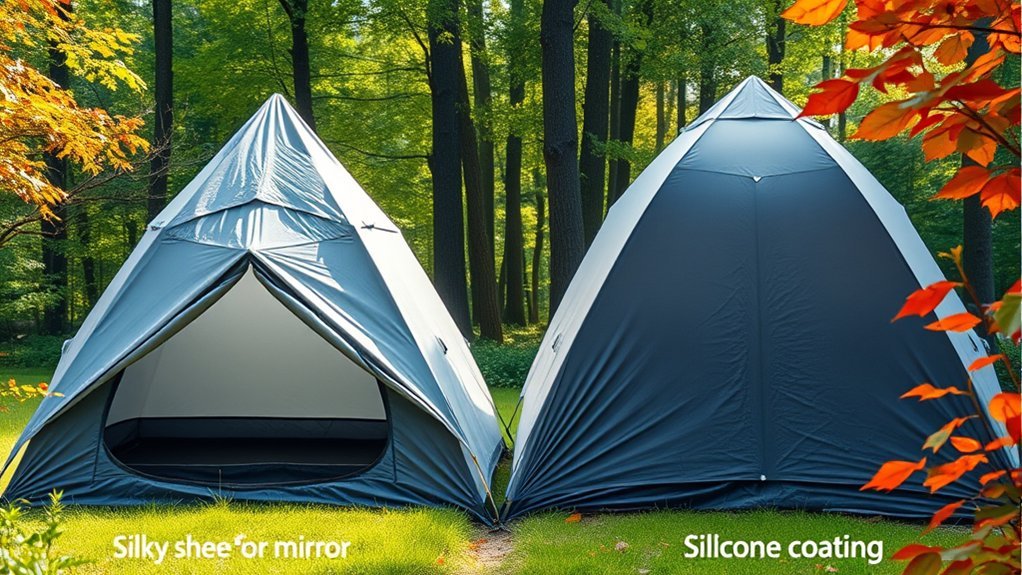
Most woven nylon and polyester used for rainflies and tent floors is not waterproof by itself. Manufacturers add a waterproof coating or treatment during production. The coating fills or surrounds the spaces in the weave so water cannot pass through under normal use.
PU-based coatings form a waterproof layer on one side of the fabric. They can be applied in different thicknesses, accept factory seam tape, and reach high water-pressure ratings. However, the word “PU” is broad. Polyester urethane is more vulnerable to hydrolysis, while polyether urethane and polycarbonate urethane can offer better moisture stability.
Silicone coatings penetrate and surround the yarns rather than forming only a surface film. Silicone is highly water-repellent, does not hydrolyze like polyester-based PU, and can increase the tear strength of some woven fabrics by allowing yarns to move and share a load.
The base fabric still matters. Nylon is usually stronger for its weight but can absorb moisture and stretch. Polyester generally changes shape less when wet and often handles sunlight better, although its tear strength can be lower at the same denier. A silicone coating can reduce wetting, but it does not erase every difference between nylon and polyester.
Note: A durable water-repellent finish, or DWR, is not the same as the waterproof coating. DWR helps water bead on the outer surface. The PU, silicone, laminate, or membrane provides the main waterproof barrier.
Quick Verdict: PU vs Silicone Coatings at a Glance
Both coating families can keep a tent dry when the fabric, seams, and design are suitable. Use the table as a starting point, then check the exact material description for the tent you are considering.
| Feature | PU-Based Coating | Silicone Coating |
|---|---|---|
| Hydrolysis resistance | Varies by chemistry; polyester urethane is the most vulnerable | Not prone to the same hydrolysis process |
| Waterproof rating | Can reach very high ratings with thicker applications | Often uses moderate ratings on lightweight fabrics; design and seams still matter |
| Tear strength effect | May reduce tear strength compared with the same uncoated fabric | Can improve tear strength in woven fabric |
| Wet sag | Depends heavily on whether the base fabric is nylon or polyester | Low water uptake helps, but nylon can still stretch more than polyester |
| Factory seam finishing | PU-facing seams can usually be taped | Pure silicone faces normally need liquid silicone sealing or specialized construction |
| Field repair | Use a compatible urethane adhesive or manufacturer-approved patch | Use silicone-compatible adhesive or a patch made for silicone fabric |
| Cost | Often lower, but formulation and construction affect price | Often higher for comparable fabric, but no universal percentage applies |
| Best fit | Value-focused tents, high-pressure floors, and factory-taped seams | Long-term use, ultralight shelters, and campers prioritizing hydrolysis resistance |
Choose a PU-based tent if the model has a good waterproof specification, taped seams, suitable fabric weight, and a price that fits your budget. Do not reject PU automatically, especially when the manufacturer uses a more hydrolysis-resistant urethane chemistry.
Choose a silicone-coated tent if you prioritize long-term coating stability, low water uptake, and high tear strength for weight. Confirm whether the fabric is sil/sil or a hybrid, and check whether the seams arrive sealed.
Why Campers Choose PU Coatings
PU-based coatings remain common because they are versatile. Manufacturers can tune the coating thickness, waterproof rating, seam-tape compatibility, feel, and cost for different tent parts.
A Cost-Effective Waterproof Solution
PU-based coatings often help manufacturers reach a target waterproof rating without moving to a more expensive fabric system. That can make a well-designed tent more affordable. Retail price still depends on poles, fabric denier, construction, brand, labor, and features, so there is no reliable rule that every silicone tent costs a fixed percentage more.
Some PU formulations can absorb moisture over prolonged exposure, and polyester-based PU can deteriorate through hydrolysis. Dry storage and protection from heat slow that damage. Modern polyether and polycarbonate urethanes may perform better than older or cheaper polyester-urethane coatings, so ask for the exact chemistry when longevity is a major concern.
Fire Retardant Compatibility and Current Standards
Fire-retardant chemicals can be incorporated into some PU-based coating systems more readily than into pure silicone coatings. However, coating type is not a reliable shortcut for deciding whether a tent meets a current flammability requirement. Standards and state rules have changed, product construction matters, and a compliant tent may use different material approaches.
The current ASTM listing is ASTM F3431-25, a recreational camping-tent flammability and warning-label specification derived from CPAI-84. The U.S. Consumer Product Safety Commission tent page also tracks the voluntary-standard work. Check the tent label and manufacturer documentation instead of assuming that PU automatically complies or silicone automatically fails.
Warning: Treat every tent as combustible. Keep stoves, heaters, candles, lantern flames, cigarettes, and campfires outside and well away from the shelter, even when the tent carries a flammability label.
High Hydrostatic Head Ratings
PU-based coatings can be built up in layers, which makes them useful when a manufacturer wants a high hydrostatic-head rating. Floors often need more resistance to water pressure than rainflies because knees, sleeping pads, and pooled water can press against the fabric.
ISO 811:2018 defines a hydrostatic-pressure method for measuring resistance to water penetration. A higher number indicates greater pressure resistance under the test, but it does not predict the entire tent’s performance. Seam quality, aging, abrasion, fabric stretch, test method, and construction also matter.
Note: Avoid rigid claims that one number is enough for every storm. Compare ratings measured by the same method and consider whether the number applies to the fly, floor, or both.
Why Silicone Coatings Last Longer
Silicone’s main advantage is chemical stability. It does not break down through polyester-urethane hydrolysis, and it absorbs little water. On woven nylon or polyester, it can also improve tear strength by helping adjacent yarns move and share stress.
- Hydrolysis resistance: Pure silicone does not turn sticky and peel through the same moisture-driven reaction that affects polyester-based PU.
- Low water uptake: Silicone-coated fabric sheds water efficiently, dries quickly, and is less likely to remain waterlogged.
- Tear performance: Silicone can improve yarn slippage and tear strength, which is valuable in lightweight fabrics.
- Long-term value: A well-made silicone-coated shelter can remain useful for many years, but service life still depends on UV exposure, abrasion, dirt, seam construction, and storage.
Silicone is not automatically superior in every category. Pure sil/sil fabric is difficult to seam tape, may feel slippery as a floor, and often needs silicone-specific sealing and repair products. Some lightweight silicone fabrics also use lower hydrostatic-head ratings than heavily coated PU floors.
What Sil/Sil, Sil/PU, and PU/PU Mean
Tent specifications often describe the coating on each face of the fabric. Understanding these labels prevents repair mistakes and makes comparisons more accurate.
- Sil/sil: Silicone is applied to both sides. It offers strong hydrolysis resistance and tear performance, but ordinary seam tape does not bond well to the silicone surface.
- Sil/PU or sil/PeU: Silicone is on one face and a urethane coating is on the other. The urethane side can often accept seam tape, while the silicone side needs silicone-compatible adhesive for repairs.
- PU/PU: A PU-based coating is used on both sides or as the main coating system. Exact performance depends on the urethane chemistry and coating weight.
- Silnylon and silpoly: These names usually describe silicone-treated nylon or polyester, but brands do not always use the terms consistently. Read the full material specification.
A current manufacturer guide from Tarptent also distinguishes polyester urethane, polyether urethane, and polycarbonate urethane. That distinction matters because a generic “PU” label can hide meaningful differences in hydrolysis resistance.
How PU and Silicone Compare in Durability
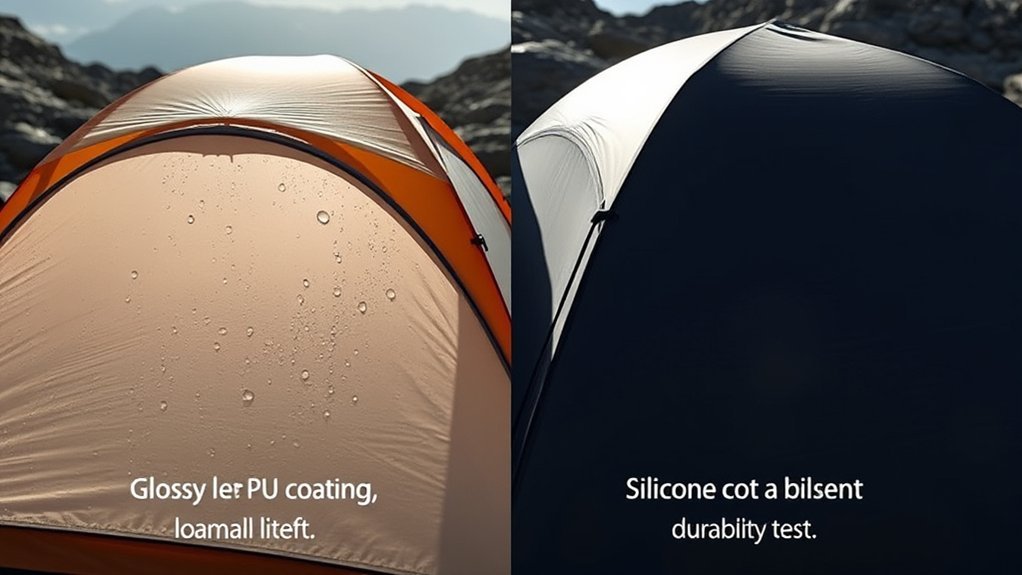
Durability depends on more than coating type. The base fabric, coating formulation, coating weight, seam tape, UV exposure, abrasion, contamination, and storage environment all influence when a tent begins to leak or delaminate.
Hydrolytic Stability Differences
Polyester-based PU can react with moisture over time. Heat and humidity speed the reaction, which can cause odor, tackiness, peeling, seam-tape failure, and loss of waterproofness. Polyether and polycarbonate urethanes can offer better resistance, so not every PU-coated tent follows the same aging pattern.
Silicone does not share the same polyester-urethane hydrolysis mechanism. This gives sil/sil fabric an important advantage for long storage and humid use, provided the tent is still cleaned, dried, and protected from other forms of damage.
UV Resistance Comparison
Sunlight ages both fabric and coatings. Silicone-coated fabrics often perform well in long-term outdoor use, but “excellent UV resistance” should not be treated as a guarantee. Nylon or polyester type, yarn quality, color, coating formulation, fabric thickness, pitch duration, and altitude all affect UV damage.
Reduce exposure by using shade when practical, packing the tent after it dries, and avoiding leaving it pitched for weeks unless it is designed for extended use. A darker or heavier fabric may behave differently from an ultralight translucent fly even when both use silicone.
Fabric Lifespan Considerations
There is no universal three-to-five-year lifespan for PU and no guaranteed ten-year lifespan for silicone. A lightly used PU tent stored cool and dry can outlast a heavily exposed silicone tent. A cheaply formulated PU coating stored in a hot, humid attic may fail much sooner.
- Coating chemistry: Polyester urethane is more hydrolysis-prone than improved urethane chemistries or silicone.
- Base fabric: Nylon, polyester, denier, weave, and yarn quality affect sag, abrasion, tear strength, and sunlight resistance.
- Construction: Seam type, seam tape, stitching, and reinforcement can fail before the main coating.
- Care: Drying, loose storage, cleaning, and limiting heat and UV exposure can add years of useful service.
How Hydrolysis Damages PU Coatings Over Time
Hydrolysis occurs when moisture breaks susceptible chemical bonds in a polyester-urethane coating. The earliest signs may include a sour or musty “old tent” odor, a tacky surface, cloudy or flaking coating, and seam tape that lifts from the fabric. Waterproofness falls as the coating loses its structure.
Storage heat and humidity accelerate the process. Packing the tent wet is especially damaging because it also supports mildew on dirt, stitching, uncoated fabric, and other organic residue.
| What You Notice | What It May Mean | Best Response |
|---|---|---|
| Loose seam tape only | Localized adhesive or heat-aging failure | Clean the area and use the manufacturer-approved repair method |
| Sticky coating and strong odor | Likely widespread PU hydrolysis | Contact the manufacturer; replacement is often more reliable than spot repair |
| Small pinhole or abrasion leak | Local physical damage | Patch with an adhesive compatible with the exposed coating |
| Mildew spots or persistent damp smell | Tent was stored dirty or damp | Clean gently, dry fully, and inspect coating and seam tape before the next trip |
Once widespread hydrolysis has started, washing may reduce odor but cannot rebuild the original polymer. Large-area recoating is time-consuming and may not restore factory performance. For critical trips, replace a fly or floor that remains sticky, peels widely, or leaks after correct seam repair.
Warning: Never store a tent while damp. Dry it as soon as possible after the trip, including seams, pole sleeves, webbing, and the underside of the floor.
Waterproofness vs. Breathability: Which Coating Wins?
For ordinary double-wall tents, neither waterproof coating “wins” on breathability. The coated rainfly and floor are intended to block water, so they are generally not the parts that provide meaningful airflow. Breathability comes from mesh or uncoated inner fabric, vents, door openings, and space between the fly and inner tent.
Condensation forms when warm, moist air meets a cooler surface. NEMO’s condensation guidance recommends maximizing ventilation and choosing the campsite carefully. Coating choice may affect wetting and sag, but it does not replace good vent design.
- For rain protection: Check the fly and floor ratings, seam treatment, coverage, bathtub-floor height, and pitch tension.
- For condensation control: Look for high and low vents, mesh area, two-wall separation, and doors that can remain partly open in rain.
- For long-term reliability: Consider coating chemistry, seam construction, base fabric, and storage habits together.
How UV Exposure and Environmental Factors Affect Each Coating
UV radiation weakens textile fibers and can age coatings, but performance cannot be ranked by coating name alone. Extended exposure is harder on thin fabrics, and high-altitude camps can receive strong sunlight. Silicone-coated fabrics are often selected for demanding lightweight shelters, while many PU and hybrid fabrics also provide long service when their formulation and base textile are suitable.
Moisture and heat are especially important for polyester-based PU because they accelerate hydrolysis. Dirt, body oils, fuel residue, and harsh cleaners can also damage coatings or support mildew. Use mild cleaning methods recommended by the tent maker.
Environmental claims need the same care. Silicone does not automatically mean PFAS-free, and PU does not automatically mean PFAS-containing. Waterproof coatings, surface water-repellent finishes, seam tape, and other treatments may use different chemistry. Check the current product disclosure instead of guessing from “silicone” or “PU” in the fabric name.
The exact fabric specification matters more than a simple “PU versus silicone” label. Look for the base textile, coating on each side, hydrostatic-head rating, seam treatment, and chemical disclosures.
Seam Sealing and Repairability: A Practical Difference
Seam treatment depends on the coating that is exposed where the repair will be made. PU-facing fabric can often be factory taped and repaired with a compatible urethane sealant. Pure silicone surfaces normally reject ordinary tape and urethane adhesive, so they require silicone-compatible products.
Gear Aid Seam Grip SIL is specified for silicone-treated fabric and silnylon. Gear Aid Seam Grip WP is a urethane sealant and adhesive used for many non-silicone tent repairs. A hybrid sil/PU fabric may need one product on the outside and another on the inside.
Do not assume that “standard seam tape from any outdoor retailer” will work. Consumer seam tape, factory hot tape, liquid sealer, and adhesive patches are different products. Follow the tent maker’s repair instructions whenever possible.
Pro Tip: Before sealing a large area, test the product on a hidden spot or the matching stuff sack. A correct adhesive should bond after curing without peeling, remaining gummy, or damaging the fabric.
How to Identify Your Tent Coating Before Repairing It
- Read the specification: Look for sil/sil, sil/PU, sil/PeU, PU-coated, silicone-treated, silnylon, or silpoly.
- Check which side is coated: On hybrid fabric, the shinier or more slippery side is often silicone, while the duller side may be urethane, but appearance is not a guaranteed test.
- Check the seam finish: Factory seam tape usually indicates a tape-compatible coating on that side.
- Ask the manufacturer: Provide the model name, production year, and the exact area you need to repair.
- Use a small test: Apply the recommended product to a hidden area and allow the full cure time before repairing the main seam.
If the specification says only “silicone-treated,” do not assume the fabric is sil/sil. Many popular tents use silicone on the face and a PU-based coating on the reverse so the seams can be taped.
How to Choose the Right Coating for Your Camping Style
The right coating depends on the complete tent, not one material claim. Use these practical priorities:
- Occasional car camping: A well-made PU or hybrid tent with factory-taped seams may offer the best balance of price and convenience.
- Frequent backpacking: Silicone-coated or high-quality hybrid fabric can provide strong tear performance and low water uptake at a light weight.
- Hot and humid storage conditions: Prioritize silicone, polyether urethane, or polycarbonate urethane over basic polyester urethane, and store the tent in an air-conditioned or otherwise cool, dry space when possible.
- Extended sunny pitches: Choose a fabric designed for prolonged exposure, use shade when practical, and do not rely on a generic “UV resistant” claim.
- Easy field repair: Confirm that compatible patches and sealers are readily available for the exposed coating.
- Low wet sag: Compare polyester and nylon as well as the coating. Silicone-coated polyester often changes shape less in rain than silicone-coated nylon.
Frequent campers and ultralight backpackers may value silicone’s tear performance and hydrolysis resistance. Occasional campers may get excellent service from a PU or hybrid tent when it is well designed and stored correctly.
How to Make Either Coating Last Longer
- Dry before storage: If you must pack a wet tent at camp, unpack and dry it as soon as you return.
- Store cool and loose: Avoid hot attics, vehicle trunks, damp basements, and years of tight compression in the stuff sack.
- Clean gently: Use lukewarm water, a soft sponge, and the cleaner approved by the manufacturer. Avoid bleach, household detergent, and machine washing unless the maker allows it.
- Limit UV exposure: Do not leave a lightweight backpacking tent pitched for long periods when a more durable base-camp shelter is appropriate.
- Protect the floor: Clear sharp debris and use the correct footprint when abrasion or rough ground is a concern.
- Inspect before travel: Check seam tape, coating feel, odor, pinholes, and waterproof seams before a remote or storm-prone trip.
- Repair with matching chemistry: Silicone products go on silicone surfaces; urethane products go on compatible PU-based surfaces.
Frequently Asked Questions
Is silicone coating always better than PU?
No. Silicone usually offers better hydrolysis resistance and can improve tear strength, but PU-based coatings can provide high waterproof ratings, factory seam taping, simple production, and good value. Modern polyether or polycarbonate urethanes may also last longer than basic polyester urethane.
How do PU and silicone coatings affect tent weight?
Coating weight depends on how much material is applied, not only whether it is PU or silicone. Thick PU layers can add weight, while lightweight silicone systems can be very light. Fabric denier, weave, floor size, seam tape, poles, and design often matter more to total tent weight.
Can I apply silicone over a PU-coated tent?
Do not apply silicone blindly over a PU surface. Adhesion is unreliable when the chemistry does not match. A hybrid fabric may have silicone on one side and PU on the other, so identify the exposed face and use the manufacturer-approved sealer for that side.
How can I tell whether my tent is sil/sil or sil/PU?
Check the product specification, manual, or manufacturer support page. Factory seam tape often indicates a tape-compatible urethane face. Surface feel can offer a clue, but it is not reliable enough for a major repair.
What maintenance do PU and silicone-coated tents require?
Both need gentle cleaning, complete drying, cool storage, limited UV exposure, and regular inspection. PU-based coatings and seam tape deserve extra attention for stickiness, peeling, odor, and delamination. Silicone fabric needs silicone-compatible products for sealing and patching.
Are specific tent brands known for superior coatings?
Brand reputation can help, but compare the specification for the exact model and year. Large brands change fabric suppliers and coating systems over time. Look for the coating on each side, urethane type when disclosed, hydrostatic-head rating, seam treatment, warranty, and repair support.
How do temperature swings affect tent coatings?
Repeated heat, cold, and moisture can stress coatings, adhesives, and seam tape. Heat is especially harmful during storage because it can accelerate PU hydrolysis and adhesive aging. Keep the tent out of hot vehicles and attics, and inspect it after long storage.
Is a 1,500 mm hydrostatic-head rating waterproof enough?
It can be enough for a well-designed rainfly or lightweight shelter, but the number should not be judged alone. Floors experience more pressure, test methods differ, and seams, abrasion, aging, pitch, and coverage all affect whether the complete tent stays dry.
Does silicone coating prevent condensation?
No. Silicone can reduce water uptake and wet sag, but condensation is controlled mainly by temperature, humidity, ventilation, campsite choice, and tent design. Use vents and maintain space between the fly and inner tent.
Conclusion
Silicone-coated fabrics usually lead on hydrolysis resistance, low water uptake, and tear performance. PU-based coatings lead on manufacturing flexibility, high water-pressure ratings, factory seam taping, and often price. The most important correction is that neither label guarantees a fixed lifespan or complete performance. Compare the exact urethane chemistry, base fabric, coating on each side, hydrostatic-head rating, seam treatment, repair method, and storage needs. A carefully stored PU or hybrid tent can provide years of reliable use, while a silicone tent is the stronger choice when long-term coating stability is your main priority.
Sources
- ISO 811:2018, Textiles — Hydrostatic Pressure Test — explains how fabric resistance to water penetration is measured.
- ASTM F3431-25 and the CPSC tent standards page — current U.S. flammability-standard context for recreational camping tents.
- SlingFin Waterproof Fabric Coatings 101 — technical comparison of PU, polyether urethane, silicone, hydrolysis, tear strength, and seam finishing.
- Tarptent Buyer’s Guide — current explanation of sil/sil, hybrid coatings, and different urethane chemistries.
- Gear Aid Seam Grip SIL and Seam Grip WP — coating-specific seam sealing and repair guidance.
- NEMO Tent Condensation Guidance — explains condensation causes and the role of ventilation.

