
Last Updated on July 23, 2026 by Mason Reed
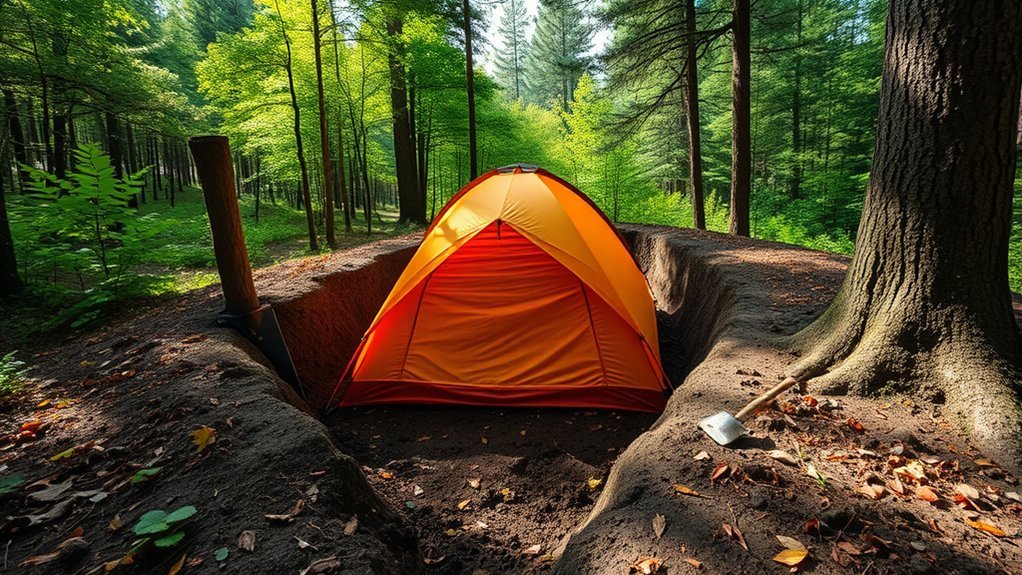
Rain can ruin your sleep quickly, but digging around your tent is usually not the right solution. Water pooling beneath a shelter is better prevented through careful site selection, a properly fitted footprint, and a taut rainfly. Current low-impact guidance discourages altering campsites by digging trenches.
Quick Answer
Do not dig a trench around your tent on public or natural campsites. Leave No Trace guidance says campsites should be found rather than made, and some parks expressly prohibit trenching. Choose high, well-drained ground, use a fitted footprint, tension the rainfly, and relocate if water begins pooling.
Key Takeaways
- Routine campers should not dig drainage trenches around tents unless the landowner or site manager expressly permits and directs the work.
- Choose level ground on a slight natural rise, away from depressions, ravines, washes, dry creek beds, and other places where water may collect.
- Keep every edge of a footprint or tarp beneath the tent floor so it cannot catch rain and funnel it underneath.
- A trench cannot protect you from campground flooding or a flash flood. Move to higher ground when water rises or warnings are issued.
At a Glance
| Time Required | Usually 10–30 minutes, depending on the tent, terrain, and weather |
| Difficulty | Easy to moderate |
| Tools Needed | Tent, rainfly, stakes, guylines, fitted footprint, stake mallet, headlamp, and absorbent cloth |
| Cost | No added cost if your normal tent setup includes rain gear; an optional fitted footprint varies by tent model |
Disclosure: As an Amazon Associate I earn from qualifying purchases. Some links on this page are affiliate links, at no extra cost to you.
Should You Trench Around Your Tent?
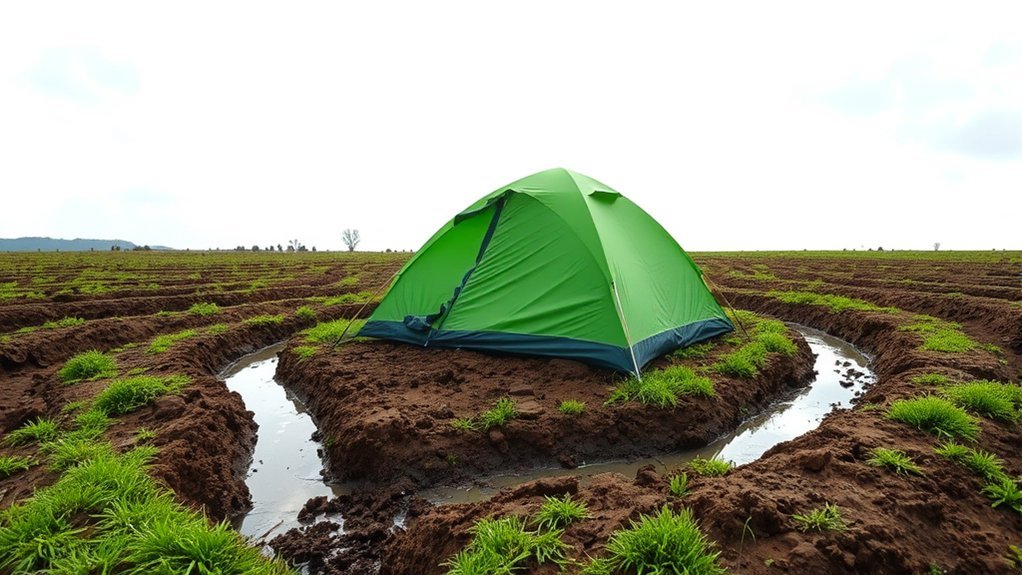
In most recreational camping situations, you should not trench around your tent. The Leave No Trace guidance on leaving natural areas unchanged specifically advises visitors not to dig trenches for tents. It also says that a good campsite should be found rather than made.
Rules vary by location, but some park units are even more direct. For example, the Sequoia and Kings Canyon campground regulations tell campers not to trench around tents or otherwise alter the landscape.
Even a trench that you plan to refill can disturb roots, soil layers, vegetation, insects, and existing water flow. Refilling loose dirt does not always return the site to its original condition.
Good campsites are found, not made. If a site needs excavation to remain dry, choose another place or relocate before conditions become dangerous.
Note: On private land or at a managed work camp, the owner may approve drainage work. Follow the owner’s instructions rather than applying a universal trench depth, angle, or layout.
What You’ll Need Instead of a Shovel
A rain-ready tent setup does not normally require excavation tools. Pack equipment that helps you select, secure, and maintain a dry shelter:
- Properly fitted footprint or groundsheet: It should sit fully beneath the tent floor without exposed edges.
- Complete rainfly: Use the fly supplied or approved for your tent.
- Stakes and guylines: These hold the rainfly away from the inner tent and help it shed water.
- Stake mallet: It makes it easier to secure stakes without using loose rocks near the tent.
- Absorbent cloth: Use it to wipe condensation or small drips inside the shelter.
- Headlamp: Keep it accessible in case you must adjust the fly or move after dark.
- Work gloves: Gloves can protect your hands while handling stakes, wet guylines, sticks, and rough ground.
Pro Tip: Inspect the entire site before unpacking. If you see flattened vegetation, water marks, channels, soft mud, or a depression that could collect runoff, keep looking for a safer spot.
Step-by-Step: Keep Water Away Without Trenching
The best rain protection starts before the tent touches the ground. Use these steps to reduce pooling without changing the landscape.
- Check the rules and forecast. Read the campground or land-management regulations before your trip. Check for heavy-rain, thunderstorm, and flood alerts, then remain prepared to change your plans.
- Choose a durable surface. Use an established tent pad, existing campsite, bare compacted ground, gravel, rock, or another surface allowed by the local land manager. The Leave No Trace durable-surface guidance recommends concentrating use on existing sites in popular areas.
- Stay out of low terrain. Select level ground on a slight natural rise. Avoid bowls, depressions, ravines, washes, dry creek beds, stream edges, and obvious runoff paths. In backcountry areas, follow local rules concerning distance from water. Leave No Trace generally recommends camping at least 200 feet from lakes and streams.
- Check overhead and surrounding hazards. Look for dead branches, damaged trees, unstable slopes, loose rocks, and exposed locations where wind or lightning may become dangerous.
- Place the footprint correctly. Lay a fitted footprint beneath the tent. If you use a generic tarp, fold every exposed edge under the floor. Material that extends beyond the tent can catch rain and send it underneath.
- Pitch the tent and fly completely. Assemble the tent according to its instructions. Secure the rainfly, vestibules, stakes, and guylines before moving bedding inside.
- Tension the fly evenly. The rainfly should remain separated from the inner tent. Recheck its tension after it becomes wet because some fabrics stretch or sag in rain.
- Manage doors and wet gear. When practical, orient the main door away from wind-driven rain. Store wet boots and rainwear in the vestibule or another sheltered area instead of against bedding.
- Keep safe ventilation open. Use rain-protected vents to reduce condensation without allowing wind-driven water inside.
- Monitor the ground. If water begins moving through the site or collecting beneath the shelter, move your gear and tent to higher ground rather than relying on a trench.
Rain-Management Techniques That Work Best
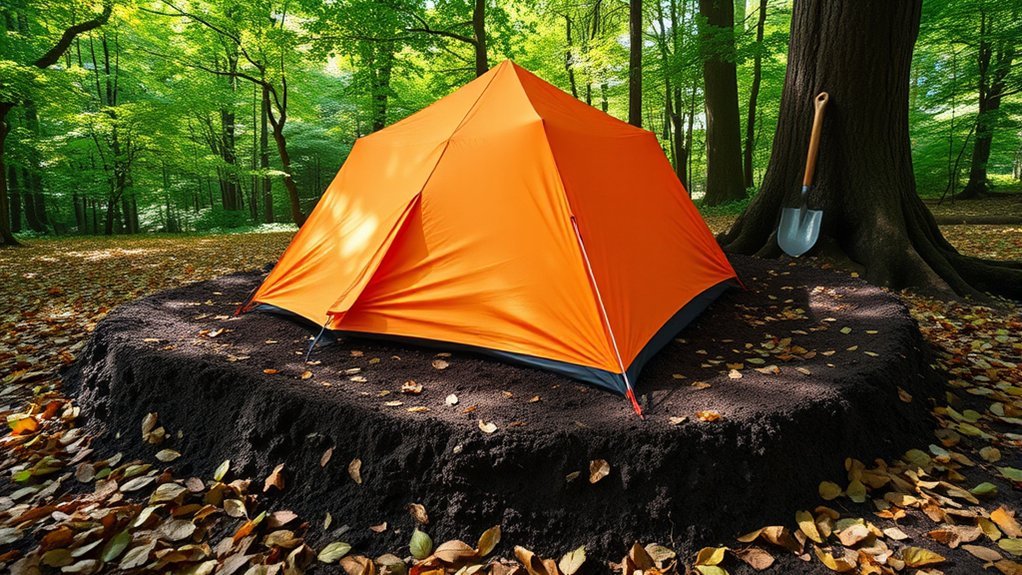
Effective rain management uses the terrain and your shelter design without excavating the campsite. The following methods address the most common causes of a wet tent.
| Technique | How to Use It | Main Benefit |
|---|---|---|
| Higher-ground selection | Choose level ground that sits slightly above nearby low spots and runoff paths. | Reduces the chance of water collecting beneath the floor. |
| Fitted footprint | Keep the footprint within the tent perimeter and use the model intended for your shelter when available. | Protects the floor from wet, abrasive, or sharp ground. |
| Taut rainfly | Attach every required buckle and support point, then tension all sides evenly. | Helps shed water and keeps wet fly fabric away from the inner tent. |
| Guylines and vestibules | Stake out the recommended guylines and vestibule panels before heavy rain arrives. | Improves stability, usable covered space, and fly separation. |
| Ventilation | Open protected vents and avoid pressing sleeping bags or clothing against damp tent walls. | Reduces condensation mistaken for a roof or seam leak. |
| Early relocation | Move before runoff deepens, the ground saturates, or visibility becomes poor. | Avoids relying on small campsite modifications during worsening weather. |
Temporary vs. Permanent Trenching Practices
Temporary and permanent trenches are both forms of site alteration. The fact that you intend to refill a channel does not automatically make it low impact or permitted.
- Temporary tent trenches: These can displace topsoil, expose roots or stones, disturb organisms, damage vegetation, and leave a channel after loose soil settles. Routine campers should avoid them unless the site owner gives specific authorization.
- Permanent drainage channels: These are campground or property infrastructure. They should be designed, approved, and maintained by the landowner, campground operator, or responsible land manager.
- Existing drainage features: Do not block, deepen, reroute, or expand an established ditch without permission. Redirected water may affect another campsite, road, trail, or natural habitat.
If a developed campsite repeatedly floods, report the problem to the host or land manager. Moving to another tent pad is safer than attempting unauthorized drainage work.
Environmental Considerations and Safety Tips
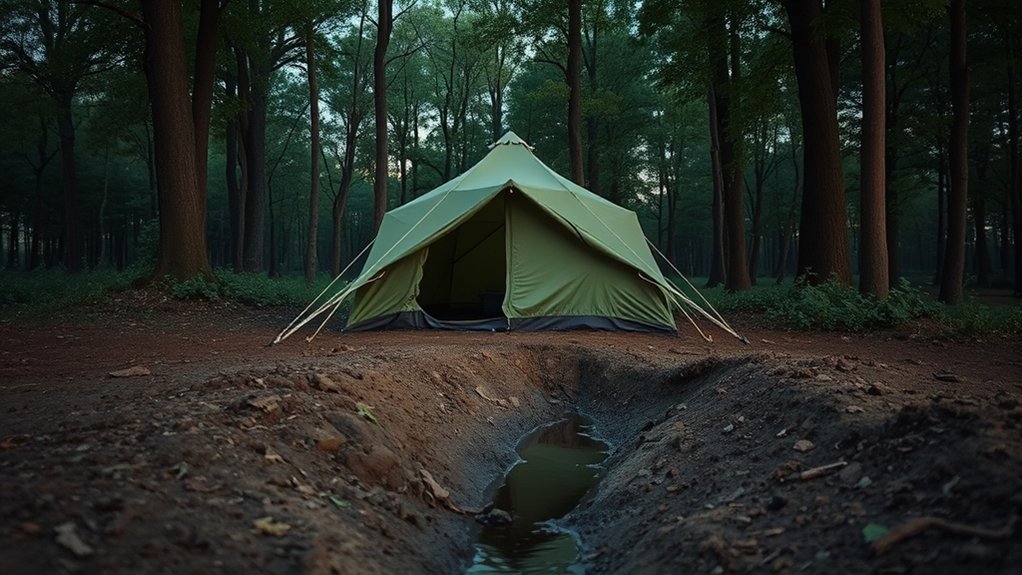
Use an established campsite or another durable surface whenever possible. Avoid digging near tree roots, vegetation, animal burrows, nesting areas, fragile soil crusts, shorelines, and restoration areas. Campsite disturbance can be much more serious in deserts, wetlands, alpine terrain, and places with thin or slow-growing vegetation.
The National Park Service campsite guide recommends level ground that is not a low spot. It also advises campers to consider hazards such as flash flooding, wind, lightning, and dead branches.
Warning: Never depend on a tent trench for protection from a flash flood. Do not camp in a wash, ravine, dry creek bed, low area, or beside a stream when heavy rain is possible. The National Weather Service advises campers on flood-prone low ground to move to higher ground.
Check weather conditions before leaving home and again when service is available. If water rises, runoff accelerates, thunder approaches, or officials issue a warning, follow local emergency instructions. Your tent and gear are replaceable; your safety is not.
What to Do If Water Starts Pooling
Pooling water means the site or shelter setup needs immediate attention. Use the following order:
- Check for an emergency hazard. If water is rising, flowing quickly, entering from a ravine or stream, or accompanied by a flood warning, leave the low area and move to higher ground.
- Protect essential gear. Put sleeping bags, dry clothing, electronics, medication, and important documents in waterproof bags or elevated storage.
- Inspect the footprint. Tuck any exposed edge beneath the tent so it cannot collect runoff.
- Check the rainfly. Tighten loose corners and guylines, clear pooled water from the fly, and confirm that the fly is not pressed against the inner tent.
- Identify condensation. Moisture on the inner wall may come from breath and wet clothing rather than a fabric leak. Increase protected ventilation and wipe away droplets.
- Relocate when necessary. If water continues collecting beneath the floor, move the tent to higher, permitted ground while conditions remain manageable.
Note: Do not place loose stones, branches, or other hard objects beneath an occupied tent to lift it above water. Concentrated pressure can damage the floor and create an unstable sleeping surface.
Frequently Asked Questions
Can I trench if camping in a national park?
Do not assume that you can. Leave No Trace advises against digging tent trenches, and some National Park Service units expressly prohibit them. Check the specific park’s campground or wilderness rules. When the rule is unclear, ask a ranger or use a no-dig setup.
What tools are best for digging tent trenches?
Routine tent camping should not require trench-digging tools. Bring a fitted footprint, stakes, guylines, a stake mallet, a headlamp, and an absorbent cloth instead. Follow a landowner’s specific plan if drainage work has been authorized on private property.
How deep should a trench be around a tent?
There is no universal recommended depth because the modern low-impact default is not to dig a tent trench. Soil, slope, weather, property rules, and environmental sensitivity vary. Select better-drained ground or move the tent instead.
Will trenching attract wildlife to my campsite?
Digging is not usually the main wildlife attractant, but it can disturb burrows, insects, roots, and habitat. Food, trash, cooking residue, toiletries, and other scented items are more common attractants. Follow the site’s food-storage rules and keep the campsite clean.
Can trenching damage a tent’s groundsheet?
Yes. Excavation may expose sharp stones, roots, or uneven edges that increase abrasion and puncture risk. Use a properly fitted footprint and inspect the floor if you already have a tent floor leak.
What should I do if rainwater is already under my tent?
Protect your bedding and essential gear first. Check whether an exposed footprint edge is catching water, then inspect the fly and guylines. If water continues to collect or flow through the site, move the shelter to higher ground. Leave immediately if flooding is possible.
Can I dig a drainage trench on private property?
Only with the property owner’s explicit permission. Confirm where the water will go and whether underground utilities, neighboring property, roads, buildings, or erosion-sensitive land could be affected. Permanent drainage should be handled by the owner or another responsible professional.
Trenching around a tent is an old rain-management technique, but it is not the best default for modern camping. You will usually stay drier and leave less damage by selecting naturally draining ground, positioning your footprint correctly, fully securing the rainfly, and moving before water or weather becomes dangerous.
Sources
- Leave No Trace: Leave What You Find — advises campers not to dig trenches for tents or make unnecessary site alterations.
- Leave No Trace: Travel and Camp on Durable Surfaces — covers established campsites, durable terrain, water setbacks, and the principle that campsites should be found rather than made.
- National Park Service: Finding and Setting Up a Campsite — supports higher-ground selection, hazard checks, footprints, and avoiding low or sunken sites.
- Sequoia and Kings Canyon National Parks: Campground Regulations — provides an example of an explicit prohibition on trenching around tents.
- National Weather Service: Outdoor Flooding Safety — explains why campers should avoid low ground and move to higher ground during flood danger.
- Big Agnes: Footprint FAQs — explains fitted-footprint sizing, high-ground selection, staking, and guyline use in wet conditions.
