
Last Updated on July 23, 2026 by Daniel Globe
You may not notice a tick until hours after your hike, but that does not mean it is too late to act. Prompt removal lowers your risk, and a few simple steps before, during, and after hiking can prevent many bites. This guide explains how to choose protection, check your body and gear, remove a tick safely, and recognize symptoms that need medical care.
Quick Answer
Prevent tick bites by staying in the center of trails, wearing long light-colored clothing, using an EPA-registered skin repellent, and treating clothing and gear with 0.5% permethrin. Check yourself, children, pets, clothing, and gear after hiking. Remove every attached tick immediately because disease-transmission time varies by pathogen.
Key Takeaways
- Stay in the center of marked trails and avoid brushing against tall grass, leaf litter, and dense vegetation.
- Use an EPA-registered repellent on exposed skin and 0.5% permethrin on clothing and gear, never directly on your skin.
- Check your body, clothing, gear, children, and pets during and immediately after outdoor activity.
- Shower within two hours and dry clothing on high heat according to CDC guidance.
- Remove attached ticks immediately. The commonly cited 24-hour window applies mainly to Lyme disease, not every tickborne infection.
At a Glance
| Time Required | 5–10 minutes before hiking and 10–15 minutes for a full post-hike check |
| Difficulty | Easy |
| Tools Needed | EPA-registered repellent, protective clothing, fine-tipped tweezers, mirror, and optional lint roller |
| Cost | Usually low; depends on the repellent, clothing, and gear treatment you choose |
What’s in This Article
- Where Ticks Live
- Choosing the Right Clothing
- Using Insect Repellents
- Avoiding Ticks on the Trail
- Checking for Ticks After Hiking
- How Long a Tick Must Be Attached
- Creating a Lower-Risk Campsite
- Treating Gear and Equipment
- Removing Ticks Safely
- What If the Mouthparts Break Off?
- What to Do After a Tick Bite
- When to See a Doctor
- Frequently Asked Questions
Disclosure: As an Amazon Associate I earn from qualifying purchases. Some links on this page are affiliate links, at no extra cost to you.
Where Ticks Live and Why Prevention Matters
Ticks live in grassy, brushy, wooded, and leaf-covered areas. You can encounter them while hiking, camping, gardening, hunting, walking a dog, or spending time in your own yard. Exposure can occur throughout the year, although many tick species are most active during warmer months.
Ticks can carry bacteria, viruses, and parasites that cause illnesses such as Lyme disease, Rocky Mountain spotted fever, ehrlichiosis, and anaplasmosis. The diseases and tick species present vary by location, so your risk depends partly on where you hike.
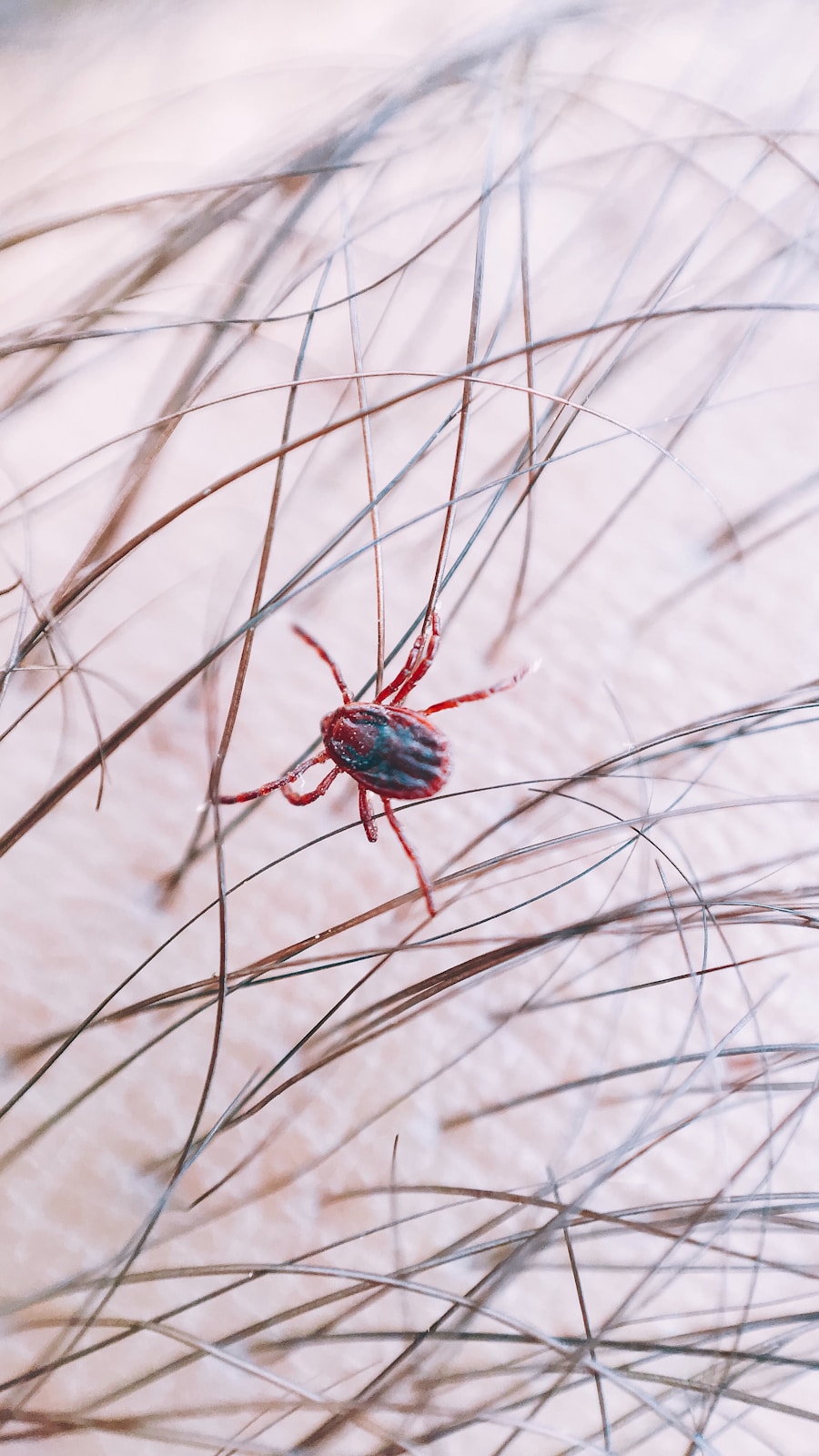
Most ticks go through four life stages: egg, six-legged larva, eight-legged nymph, and adult. Larvae, nymphs, and adults feed on blood, but the stages most likely to transmit a particular disease depend on the tick and pathogen. For example, blacklegged tick larvae commonly acquire Lyme disease bacteria while feeding, while infected nymphs and adult females can transmit the bacteria during a later blood meal.
Lyme disease can cause an expanding rash, fever, fatigue, headache, facial weakness, heart problems, or joint swelling. The rash may look like a bull’s-eye, but it can also appear uniformly red or take another expanding shape. Rocky Mountain spotted fever can cause fever, headache, stomach symptoms, muscle pain, and a rash, and it can become life-threatening without prompt treatment.
Choosing the Right Clothing for Tick-Prone Trails
Your clothing is your first physical barrier against ticks. Wear a long-sleeved shirt, long pants, closed shoes or boots, and socks that cover your ankles. Closely woven fabric makes it harder for a tick to reach your skin.
Choose light-colored clothing when practical. A dark tick is easier to spot against tan, white, or another pale color before it reaches an opening.
Tuck your shirt into your pants and your pant legs into your socks or boots. Check that cuffs fit closely around your wrists and ankles. A hat can provide extra protection around your hairline, head, and neck, especially when you pass beneath low vegetation.
For added protection, choose clothing and footwear that are factory-treated with permethrin or treat them yourself with a product labeled for clothing. Follow the product’s directions for drying, washing, and retreatment because protection duration varies.
Using Insect Repellents for Tick Protection
Use an EPA-registered skin repellent and follow its label. CDC-listed active ingredients for ticks include DEET, picaridin, IR3535, oil of lemon eucalyptus, para-menthane-diol, and 2-undecanone.
Apply the product only to exposed skin and any clothing surfaces allowed by the label. Do not spray it directly into your face. Spray it onto your hands first, then carefully apply it around your face while avoiding your eyes and mouth.
If you also use sunscreen, apply sunscreen first and insect repellent second. Reapply the repellent only as often as its label directs, including after heavy sweating or water exposure when the instructions require it.
Warning: Do not apply permethrin directly to your skin. It is used to treat boots, socks, clothing, tents, and other gear. Apply it only as the label directs and allow treated items to dry completely before use.
The CDC advises against using products containing oil of lemon eucalyptus or para-menthane-diol on children under age 3. When applying repellent to a child, put it on your own hands first and then spread it carefully on the child’s exposed skin. Do not apply it to a child’s hands, eyes, mouth, cuts, or irritated skin.
EPA-registered repellents can be used during pregnancy or breastfeeding when used according to the label. Anyone with allergies, skin conditions, or other concerns should ask a healthcare professional which product is appropriate.
Pro Tip: Layer your protection. Use 0.5% permethrin on approved clothing and gear, an EPA-registered skin repellent on exposed skin, protective clothing, and smart trail habits instead of relying on one method alone.
Do not substitute homemade lavender, tea tree, citronella, or lemon eucalyptus essential-oil mixtures for an EPA-registered product. Unregistered mixtures may not provide dependable or long-lasting tick protection, and pure lemon eucalyptus essential oil is not the same product as an EPA-registered oil of lemon eucalyptus repellent.
How to Avoid Ticks While You Are Hiking
Stay in the center of marked trails whenever possible. Avoid walking through high grass, brush, leaf litter, and dense vegetation where ticks wait for a person or animal to pass.
Do not sit directly in grass or leaf litter during breaks. Choose a dry, open area and use a chair, pad, or ground cloth. Keep backpacks and jackets off brush, logs, and vegetation.
During a long hike, perform quick checks every few hours. Look at your shoes, socks, pant legs, waistband, sleeves, and backpack. Brush off or capture any crawling tick before it reaches your skin.
Carry fine-tipped tweezers, a small mirror, hand sanitizer, repellent, and a sealable container or tape in an easy-to-reach pocket. This lets you remove and contain a tick without waiting until you return home.
How to Perform a Thorough Tick Check After Hiking
Check yourself as soon as you return from a grassy, brushy, or wooded area. Ticks can be very small, and their bites are often painless, so do not wait until you feel irritation.
Use a full-length or handheld mirror and inspect:
- Under your arms
- In and around your ears
- In your hair and across your scalp
- Inside your belly button
- Around your waist and beltline
- Between your legs and around your groin
- Behind your knees
- Around your ankles and under your socks
- Your back, neck, and shoulders
Ask another person to examine areas that are difficult to see, especially your scalp and back. Use a comb to separate thick hair, but inspect the scalp visually and by touch rather than relying on the comb alone.
A community survey from SUNY Upstate Medical University recorded the body locations reported for 722 attached deer ticks submitted in central New York. The results show why a full-body check matters, but they are regional citizen-science data and should not be treated as national percentages.
| Body Part | Share of Reported Attachments |
|---|---|
| Thigh | 15.8% |
| Waist and stomach | 15.2% combined |
| Groin | 6.6% |
| Upper back and scalp | 6.6% and 6.5% |
| Behind the knee and armpit | 5.9% and 5.1% |
The survey found the thigh was the most frequently reported attachment site, but ticks were also found on the scalp, back, waist, groin, knees, armpits, ears, belly button, and feet.
Check children and pets as well. Ticks can enter your home on clothing, coats, daypacks, or animals and attach to a person later.
What to Do With Clothing After a Hike
Remove outdoor clothing before sitting on furniture or lying on a bed. Check it carefully for crawling ticks.
According to the CDC’s tick-prevention guidance, tumble dry dry clothing on high heat for 10 minutes. Damp clothing needs additional drying time. If you wash the clothes first, use hot water because cold and medium-temperature water may not kill ticks.
Shower Within Two Hours
Shower as soon as possible, ideally within two hours of coming indoors. Showering may wash away unattached ticks and gives you another opportunity to inspect your entire body.
How Long Does a Tick Need to Be Attached to Spread Disease?
There is no single safe attachment-time rule for every tickborne disease.
For Lyme disease in the United States, an infected blacklegged tick generally must be attached for more than 24 hours before it transmits the bacteria. Removing it within 24 hours can greatly reduce the chance of Lyme disease.
Other pathogens may transmit sooner. CDC-reviewed evidence reports that transmission of the organism that causes Rocky Mountain spotted fever can occur after a shorter attachment period, with reported ranges of 2 to 20 hours in some circumstances. Timing also varies with the tick species, pathogen, prior feeding, and other factors.
Note: Treat “more than 24 hours” as Lyme-specific guidance, not as permission to leave a tick attached. Remove every attached tick immediately, regardless of how recently you think it bit you.
Creating a Lower-Risk Campsite or Rest Area
You cannot guarantee a completely tick-free campsite, but you can reduce exposure. Choose an open, dry site away from tall grass, brush, leaf litter, animal trails, and dense vegetation.
Use a ground cloth beneath your tent and a chair instead of sitting directly on the ground. Keep clothing, towels, sleeping bags, and backpacks inside the tent or on a clean surface rather than draped over bushes or logs.
Do not clear or damage vegetation in places where campsite rules prohibit it. Choose an already established campsite whenever possible and follow Leave No Trace principles.
Store food securely so you do not attract animals that may carry ticks into the area. Check the tent entrance, sleeping area, and clothing before going to bed.
Treating Backpacks, Clothing, and Camping Gear
Ticks can crawl onto boots, backpacks, tents, sleeping bags, and other equipment. Treat approved items with a product containing 0.5% permethrin or buy factory-treated gear.
Read the label before spraying. Apply the product outdoors or in a well-ventilated area as directed, keep it away from food and flames, and let the item dry fully before wearing or packing it.
Do not assume that every product lasts for the same number of washes or weeks. Factory treatment, home-applied aerosol products, and soaking treatments have different retreatment schedules. Follow the specific label on the product you use.
After hiking, examine coats, boots, daypacks, tents, sleeping bags, trekking-pole straps, and other gear before bringing them into your living space. Shake items outside. A lint roller can help collect tiny unattached ticks from smooth surfaces. You can also vacuum non-washable gear and then empty the vacuum outside into a sealed bag.
How to Remove an Attached Tick Safely
Remove an attached tick as soon as you find it. Do not wait for a medical appointment before taking it off.
- Use clean fine-tipped tweezers. Grasp the tick as close to the skin’s surface as possible.
- Pull upward steadily. Use even pressure without twisting, jerking, or crushing the tick’s body.
- Check the rest of your body. Finding one attached tick does not mean it is the only one.
- Clean the area. Wash the bite and your hands with soap and water, rubbing alcohol, or hand sanitizer.
- Dispose of the tick safely. Put it in a sealed container, wrap it tightly in tape, place it in alcohol, or flush it down the toilet. Never crush it with bare fingers.
Warning: Do not cover an attached tick with petroleum jelly, nail polish, essential oil, gasoline, or another substance. Do not burn it with a match or hot object. These methods delay safe removal and may irritate the tick.
What If the Tick’s Mouthparts Break Off?
If mouthparts remain in your skin, try to lift them out gently with clean tweezers only when they are easy to grasp. Do not cut, squeeze, or dig deeply into the skin.
If they do not come out easily, leave them alone. Your skin will usually push the remaining material out as it heals. Clean the area and watch for increasing pain, warmth, pus, swelling, or spreading redness, which may indicate a local skin infection.
What to Do After a Tick Bite
Write down the date and the location where you were probably bitten. You may photograph the tick next to a ruler or coin before disposal, or keep it temporarily in a sealed container for identification.
Knowing the tick’s appearance can help a healthcare professional assess your regional disease risk. However, the CDC generally does not recommend commercial tick testing for treatment decisions. A positive result does not prove that the tick infected you, while a negative result may create false reassurance.
Check the bite site once a day for several weeks and pay attention to how you feel. A small bump or mild redness immediately after removal can be a local reaction. A rash that expands over several days, especially one that grows beyond the original bite area, needs medical evaluation.
Do You Need Preventive Antibiotics?
Antibiotics are not automatically recommended after every tick bite. In certain circumstances, a healthcare professional may consider a single dose of doxycycline after a bite from a likely blacklegged tick in an area where Lyme disease is common.
The decision depends on factors such as the tick species, geographic location, estimated attachment time, when the tick was removed, and your medical history. Because preventive treatment is time-sensitive, contact a clinician promptly if you believe you had a high-risk blacklegged tick bite. Do not use leftover or borrowed antibiotics.
When to See a Doctor After a Tick Bite
Contact a healthcare professional if you develop a rash, fever, chills, severe headache, unusual fatigue, muscle aches, joint pain, nausea, or other illness within several days or weeks after a tick bite or possible tick exposure.
Do not wait for a perfect bull’s-eye rash. Lyme disease rashes can have several appearances, and some tickborne diseases do not cause a rash at all.
Seek urgent medical care for:
- Confusion, fainting, seizures, or difficulty walking
- New facial drooping or weakness
- Progressive weakness or paralysis
- Chest pain, strong heart palpitations, or shortness of breath
- A severe headache with neck stiffness
- A rapidly spreading rash or high fever
- Severe illness in a child, older adult, pregnant person, or anyone with a weakened immune system
Tell the clinician when the bite happened, where you were hiking, how long the tick may have been attached, what it looked like, and when your symptoms began. Do not delay care while waiting for tick-test results.
Frequently Asked Questions
What are ticks and why are they a concern while hiking?
Ticks are blood-feeding arachnids that live in grassy, brushy, wooded, and leaf-covered areas. Some ticks carry bacteria, viruses, or parasites that can cause Lyme disease, Rocky Mountain spotted fever, ehrlichiosis, anaplasmosis, and other illnesses.
How can I protect myself from ticks while hiking?
Stay in the center of trails, avoid tall grass and brush, wear long light-colored clothing, tuck your pants into your socks, use an EPA-registered skin repellent, and treat approved clothing and gear with 0.5% permethrin.
Where are ticks most common?
Ticks are commonly found in wooded, brushy, grassy, and leaf-covered areas and on animals. Their species and activity patterns vary by region and season. You can also encounter ticks in yards, parks, campsites, and neighborhoods.
How long can a tick stay attached before it becomes dangerous?
There is no universal safe period. Lyme disease usually requires more than 24 hours of attachment, but some other tickborne pathogens may transmit sooner. Remove every attached tick immediately.
What should I do if I find a tick while hiking?
Use fine-tipped tweezers to grasp it close to your skin and pull upward with steady, even pressure. Clean the bite and your hands, contain or dispose of the tick safely, and check the rest of your body for more ticks.
What should I do after hiking in a tick-prone area?
Check your body, clothing, children, pets, and gear. Shower within two hours. Dry dry clothing on high heat for 10 minutes, allow extra time for damp clothing, and use hot water if the clothes must be washed first.
Can I apply permethrin directly to my skin?
No. Permethrin products used for tick prevention are intended for approved clothing, footwear, tents, and gear. Use a separate EPA-registered skin repellent on exposed skin.
Should I have the tick tested for disease?
Commercial tick testing is generally not recommended for treatment decisions. A positive result does not prove transmission, and a negative result may offer false reassurance. Monitor for symptoms and consult a healthcare professional when needed.
Do I need antibiotics after every tick bite?
No. Preventive antibiotics are considered only in selected circumstances, mainly after certain high-risk blacklegged tick bites in areas where Lyme disease is common. A clinician should assess the tick, location, attachment estimate, timing, and your medical history.
Medical Disclaimer: This article is for informational purposes only and does not constitute professional medical advice, diagnosis, or treatment. Consult a qualified healthcare professional about a tick bite, possible exposure, symptoms, medication, pregnancy, or care for a child.
Tick bites are common, but many can be prevented with protective clothing, an EPA-registered repellent, treated gear, smart trail habits, and a careful post-hike check. Keep tweezers in your hiking kit, remove attached ticks immediately, and seek medical advice when symptoms or high-risk circumstances appear.
Sources
- CDC: Preventing Tick Bites — trail habits, repellents, permethrin, showering, clothing, pets, and dryer guidance
- CDC: What to Do After a Tick Bite — tick removal, retained mouthparts, disposal, symptoms, and tick-testing guidance
- CDC: How Lyme Disease Spreads — tick lifecycle, transmitting stages, geographic risk, and attachment timing
- CDC: Lyme Disease Clinical Resources — preventive antibiotic considerations after selected tick bites
- EPA: Skin-Applied Repellent Ingredients — EPA-registered active ingredients used in insect repellents
- SUNY Upstate: Where Ticks Bite — regional citizen-science attachment-site survey
