
Last Updated on July 23, 2026 by Daniel Globe
A tent zipper that drags, catches, or refuses to move does not always need lubricant. First check for trapped fabric, sand, salt, mud, or a damaged slider. Once the zipper is clean, dry, and mechanically sound, a small amount of zipper-specific lubricant can reduce friction and help it move smoothly without coating the tent fabric in oily residue.
Quick Answer
Clean the tent zipper with a soft brush, rinse away salt or stubborn dirt, and let it dry. Apply a zipper-specific cleaner/lubricant or dry zipper wax sparingly, work the slider back and forth, and wipe off the excess. Do not force a jammed slider or coat technical tent fabric with cooking oil, petroleum jelly, or heavy household lubricants.
Key Takeaways
- Diagnose the problem before adding lubricant. Fabric snags, grit, damaged teeth, and worn sliders need different fixes.
- Brush the zipper first, rinse away salt or mud when needed, and allow it to dry before treatment.
- Use a product made for nylon, molded-plastic, or metal zippers, and follow the product and tent manufacturer’s directions.
- Use candle wax only as a temporary field fix, then clean the zipper properly at home.
- Maintain the zipper after dirty or salty trips and when movement becomes rough; there is no universal monthly schedule.
At a Glance
| Time Required | About 10 minutes, plus drying time |
| Difficulty | Easy |
| Tools Needed | Soft brush, clean cloth, fresh water, mild soap if needed, and compatible zipper lubricant |
| Cost | Usually under $15 for a small zipper-care product |
What’s in This Article
- Diagnose the Problem Before Lubricating
- What You’ll Need
- How to Lubricate a Tent Zipper, Step by Step
- Why Tent Zippers Need Cleaning and Lubrication
- When to Apply Zipper Lubricant
- Recommended Lubrication Products
- DIY and Emergency Lubrication Options
- Cleaning and Maintenance Tips
- Coil, Molded-Plastic, and Metal Zipper Care
- Water-Resistant and Watertight Zipper Care
- Common Zipper Issues and Solutions
- When to Repair or Replace a Zipper
- Frequently Asked Questions
- Wrapping Up
Disclosure: As an Amazon Associate I earn from qualifying purchases. Some links on this page are affiliate links, at no extra cost to you.
Diagnose the Problem Before Lubricating
Lubricant helps only when clean zipper elements and a healthy slider have too much friction. Before you apply anything, move the slider gently and look closely at the problem area.
- Fabric is trapped: Back the slider away from the snag while easing the fabric out. Do not add lubricant to trapped fabric.
- Sand, salt, mud, or sticky residue is present: Brush or rinse it away first. Lubricating over debris can grind it deeper into the zipper.
- The zipper closes and then splits open: The slider may be worn or slightly spread. Lubricant alone will not restore slider pressure.
- Teeth are missing, the coil is cut, or the tape is torn: Stop using the zipper and repair it before the damage spreads.
- The clean zipper simply feels stiff: A compatible zipper lubricant is appropriate.
Warning: Never yank a jammed zipper or pull the slider at a sharp angle. Back it up, remove the obstruction, and try again slowly. Forcing it can damage the slider, teeth, coil, stops, or zipper tape.
What You’ll Need
- Soft-bristled brush, such as an old toothbrush
- Fresh water for rinsing salt, mud, or stubborn grit
- Mild, fragrance-free soap for spot cleaning when needed
- Clean, dry cloth
- Zipper-specific cleaner/lubricant or dry zipper wax that is compatible with the zipper
- Cotton swab or folded cloth for controlled application
- Needle-nose pliers only for a careful slider adjustment, not for bending zipper teeth
How to Lubricate a Tent Zipper, Step by Step
Time needed: About 10 minutes per zipper, plus drying time.
- Remove tension from the door. Pitch the tent correctly or lay the zipper area flat so the zipper is not being pulled sideways.
- Check for a snag or damage. Free trapped fabric and inspect the slider, coil or teeth, bottom stop, and zipper tape. Do not continue if parts are missing or torn.
- Brush away loose debris. Unzip the door and brush both sides of the zipper to remove dry sand, dust, and grit.
- Rinse or spot clean when needed. Use fresh water for salt or stubborn dirt. Use a small amount of mild, fragrance-free soap only if plain water is not enough, then rinse away the soap.
- Let the zipper dry. Air-dry the zipper and surrounding fabric completely unless the care-product label gives different directions.
- Apply the lubricant as directed. Use a light, controlled coat on the zipper elements or the location named by the manufacturer. Shield the tent fabric from sprays and avoid soaking the zipper tape.
- Work the slider slowly. Open and close the zipper several times to distribute the product. Stop if it catches at one exact point and inspect that spot again.
- Wipe away excess. Remove visible residue from the zipper and fabric, then test the full zipper without forcing it.
Pro Tip: Apply spray products to a cloth or cotton swab first instead of spraying directly at the tent. This gives you better control and reduces the chance of staining fabric or coating a waterproof finish.
Why Tent Zippers Need Cleaning and Lubrication
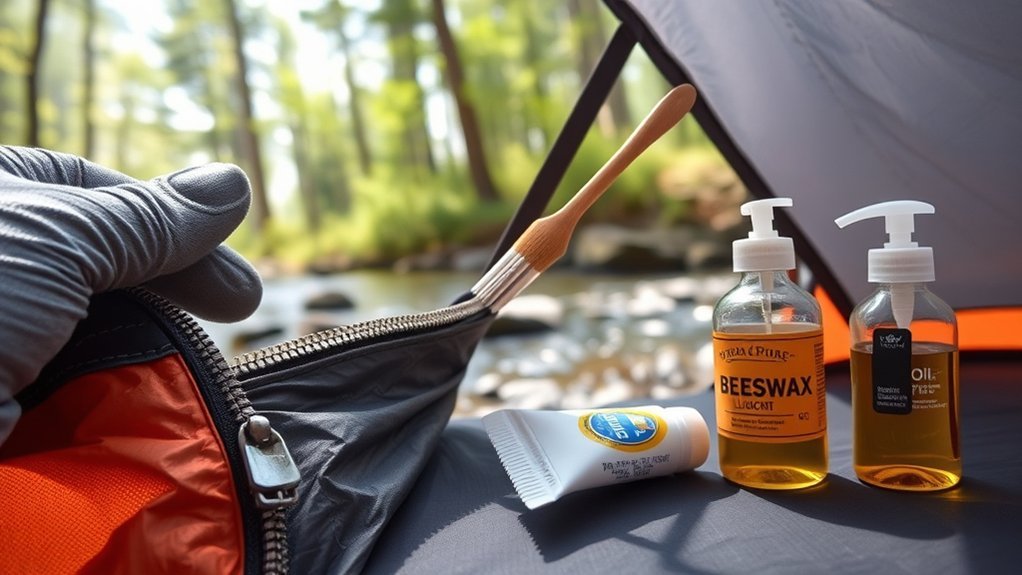
Tent zippers collect fine dust, sand, mud, salt, and fibers. These particles increase drag and can wear the slider and zipper elements each time you open the door. Cleaning removes the abrasive material. Lubrication then reduces friction on a zipper that is otherwise clean and undamaged.
Lubricant is maintenance, not a cure for every zipper failure. It cannot replace missing teeth, repair a cut coil, reconnect torn zipper tape, or rebuild a worn slider. That is why diagnosis and cleaning come first.
When to Apply Zipper Lubricant
There is no universal rule that every tent zipper needs lubrication once a month. Usage, conditions, zipper design, and the care-product instructions matter more than the calendar.
- After a sandy, muddy, or salty trip: Clean the zipper first, let it dry, and lubricate if it still feels rough.
- When a clean zipper develops drag: Apply a small amount after ruling out trapped fabric and damage.
- Before storage: Reapply only when the product label or zipper manufacturer recommends it.
- Before harsh conditions: Inspect and service the zipper before trips involving blowing sand, sea spray, or freezing weather.
- After fresh-water rinsing: Zippers exposed to saltwater should be rinsed, dried, and maintained with a compatible product.
Recommended Lubrication Products

The safest default is a product made specifically for zippers and listed as compatible with nylon, plastic, or metal zipper elements.
- Gear Aid Zipper Cleaner and Lubricant: The brush-top product is designed to remove debris and lightly lubricate zippers on tents and other outdoor gear.
- Gear Aid Zipper Lubricant: This dry stick is listed for nylon, plastic, and metal zippers and is useful when you want controlled application without aerosol overspray.
- AGS Zipper-Ease: This dry lubricant is made for metal, plastic, and nylon zipper elements and is designed to avoid an oily dirt-attracting film.
Note: A generic silicone spray may be suitable for some zipper materials, but it is not automatically safe for every tent fabric, seam tape, coating, or watertight zipper. Check the tent and zipper manufacturer’s instructions, spot-test an inconspicuous area, and prevent overspray.
What about WD-40? Standard WD-40 Multi-Use Product is not the best default for a tent zipper because a dedicated zipper product is easier to control and is made for this task. The manufacturer says its Multi-Use Product is safe on most plastics but not polycarbonate or clear polystyrene, so the blanket claim that it damages all plastic zippers is inaccurate. Use any general-purpose spray only when the tent or zipper maker confirms compatibility.
DIY and Emergency Lubrication Options
A household substitute can help you finish a trip, but it should not replace proper cleaning and a zipper-care product.
- Unscented candle wax: Rub a very small amount on the sticky area as a temporary field fix. Clean the zipper at home because leftover wax can hold grit.
- Plain bar soap: It may reduce drag briefly, but soap residue can collect dirt. Use it only in an emergency and wash it away later.
- Chapstick or petroleum jelly: These greasy products can stain fabric and attract dust, so they are poor choices for technical outdoor gear.
- Pencil graphite: Graphite can leave gray marks and is difficult to control around light tent fabric. A zipper-specific dry lubricant is the cleaner option.
- Cooking oil: Do not use it. It can spread into fabric, collect dirt, become rancid, and leave odor or stains.
- Crayon wax: Avoid colored or scented crayons because pigment and additives can transfer to the tent.
Cleaning and Maintenance Tips
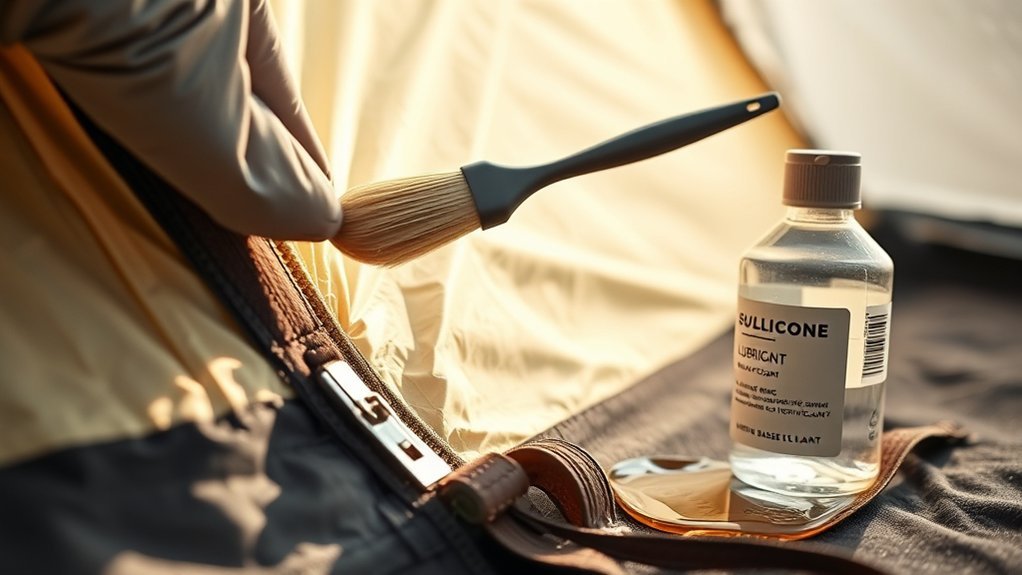
- Hold the zipper track with one hand while operating the slider so the door fabric does not pull it sideways.
- Brush dry grit away before it reaches the slider.
- Rinse salt and mud with fresh water instead of grinding them into the zipper with a dry cloth.
- Never pack or store the tent while it is wet. Dry the tent fully and store it in a cool, dry place.
- Keep the zipper relaxed rather than sharply folded or crushed during storage.
- Inspect the zipper tape, stitching, coil or teeth, stops, and slider before every major trip.
- Follow the care instructions for your tent fabric and tent coating before applying cleaners or sprays nearby.
Coil, Molded-Plastic, and Metal Zipper Care
“Plastic zipper” and “coil zipper” are not the same thing. Identifying the construction helps you avoid the wrong repair.
| Zipper Type | How to Identify It | Care Notes |
|---|---|---|
| Coil | A continuous nylon or polyester coil sewn to the zipper tape | Brush grit from the coil and use a lubricant approved for nylon or coil zippers. Do not try to straighten the coil with pliers. |
| Molded plastic | Separate molded teeth attached to the tape | Use a plastic-compatible zipper product. A missing or cracked tooth usually requires professional repair or replacement. |
| Metal | Separate brass, nickel, or aluminum teeth | Rinse salt promptly, dry the zipper, and use a compatible product to limit friction and corrosion. |
Water-Resistant and Watertight Zipper Care
Many tent doors use coated coil zippers that resist water but are not fully watertight. Heavy-duty watertight zippers can have different lubrication points and storage rules. Do not assume one method fits every sealed zipper.
For example, YKK’s AQUASEAL technical guidance tells users to clean with fresh water, use suitable lubricant or paraffin according to the zipper configuration, avoid forcing a jammed slider, and store the zipper without bending it. Follow the instructions for the exact zipper on your tent.
Common Zipper Issues and Solutions
- Slider catches on fabric: Stop pulling. Back the slider up while gently freeing the fabric. Smooth the storm flap before trying again.
- Zipper feels gritty: Brush both sides. If salt or mud remains, rinse with fresh water, let it dry, and test before lubricating.
- Clean zipper feels stiff: Apply a small amount of compatible zipper lubricant and work the slider slowly.
- Zipper separates behind the slider: Back the slider up until the zipper re-engages. If it keeps splitting, the slider may be worn or slightly spread.
- Slider needs a minor adjustment: With the zipper unloaded, use needle-nose pliers to squeeze the slider body in very small, even increments. Test after each adjustment. Overtightening can jam or crack it.
- Teeth or coil will not align: Check for a damaged slider, missing tooth, cut coil, or bent stop. Lubricant will not fix structural damage.
- Zipper tape is frayed or torn: Stop using the door until the tape is sewn or replaced. Continued pulling can tear the tent fabric.
- Metal parts show salt or corrosion: Rinse with fresh water, dry fully, and use a compatible corrosion-protective zipper product. Replace severely corroded parts.
When to Repair or Replace a Zipper
Choose repair or replacement when lubrication and cleaning do not solve the problem. Common repair triggers include:
- Missing, cracked, or melted molded teeth
- A cut or badly distorted coil
- Zipper tape torn away from the tent
- A broken bottom stop, pin, or box
- A slider that repeatedly splits the zipper after one careful adjustment
- A slider that cannot engage the zipper track
- Severe corrosion or a cracked slider body
A correctly sized replacement slider can save the zipper when the coil or teeth and tape are still intact. If the tape, bottom hardware, or zipper elements are damaged, a gear-repair service will usually need to sew in a repair section or replace the full zipper.
Frequently Asked Questions
Can I use silicone spray on a tent zipper?
Only when the tent or zipper manufacturer says it is compatible. Silicone products can lubricate some metal, plastic, and nylon parts, but aerosol overspray may stain fabric or contact coatings and seam tape. A zipper-specific brush-on liquid or dry stick gives you more control.
How often should I lubricate my tent zipper?
Service it according to use and exposure, not a fixed monthly rule. Clean it after sandy, muddy, or salty trips and apply lubricant when the clean zipper still feels rough or when the product or zipper maker recommends treatment before storage.
What tools do I need for zipper maintenance?
Use a soft toothbrush, fresh water, a clean cloth, mild fragrance-free soap when needed, and a compatible zipper lubricant. Keep needle-nose pliers for a cautious slider adjustment only; do not use them to reshape a nylon coil.
Are eco-friendly zipper lubricants available?
Some products are marketed as non-toxic, biodegradable, or free from silicone and paraffin. Check the current ingredient and disposal information on the label instead of assuming a natural-sounding product is safer for the tent or environment.
Can I lubricate a water-resistant or watertight zipper?
Yes, but use the exact method specified for that zipper. Some sealed zippers require lubricant or paraffin only on particular surfaces, and applying the wrong product to the elements or sealing layer can affect performance.
Can I use WD-40 on a tent zipper?
A zipper-specific product is the better first choice. Standard WD-40 is safe on many plastics but not every plastic, and the exact zipper, coating, adhesive, and tent fabric may be unknown. Use it only if the tent or zipper manufacturer confirms compatibility and you can prevent overspray.
What can I do if the zipper sticks while camping?
Check for trapped fabric and brush away grit first. If the clean zipper still drags, rub a tiny amount of unscented candle wax on the problem area, work the slider gently, and clean and lubricate the zipper properly when you return home.
Wrapping Up
The best tent zipper care follows a simple order: inspect, clean, dry, lubricate, and test. A dedicated zipper product can reduce friction, but it cannot repair torn tape, missing teeth, a damaged coil, or a worn-out slider.
Carry a small brush and an approved lubricant on longer trips, operate the door without side-loading the slider, and rinse away sand or salt before storage. Those habits do more for zipper life than applying lubricant on an arbitrary schedule.
Sources
- Gear Aid: Tips for Using Zipper Cleaner and Lubricant — cleaning, application, wiping excess, and periodic maintenance
- REI Co-op: Tent Repair — diagnosing snags, cleaning grit, and using candle wax only as a field fix
- REI Co-op: Tent Care Basics — safe zipper operation, slider adjustment, and dry storage
- YKK: AQUASEAL Technical Support — cleaning, lubrication, operation, and storage guidance for watertight zippers
- AGS: Zipper-Ease Dry Zipper Lubricant — material compatibility and application directions
- WD-40: What Multi-Use Product Is Safe On — plastic compatibility limits and spot-testing advice
