
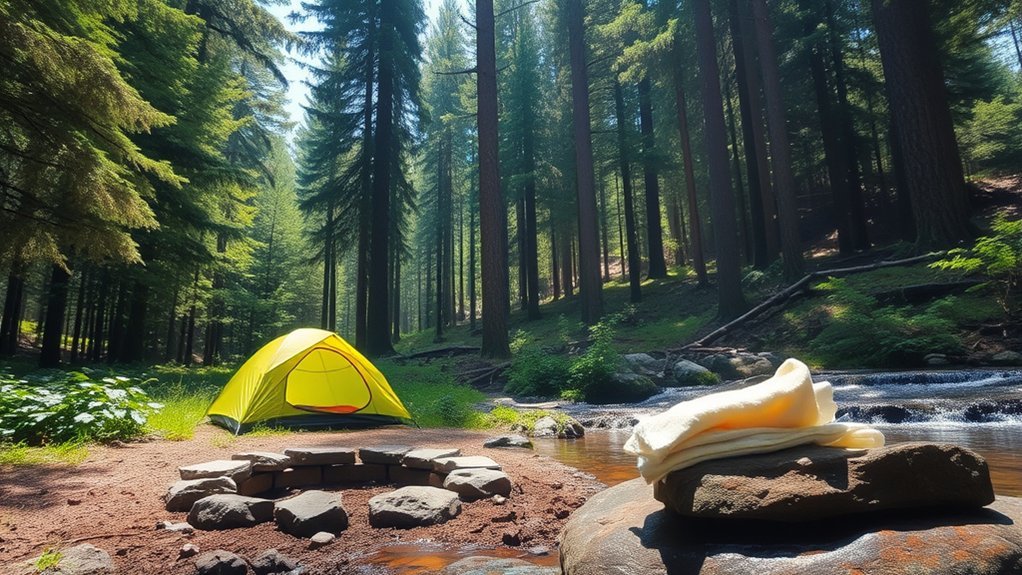
Last Updated on July 29, 2026 by Mason Reed
Leave No Trace tent camping is about more than picking up litter. It means planning for local rules, choosing a campsite that can handle use, managing food and waste correctly, preventing fire damage, giving wildlife space, and respecting other visitors. These practical habits protect the places you enjoy while making camp safer and more comfortable.
Quick Answer
To practice Leave No Trace while tent camping, follow local rules, use established campsites or durable ground, stay about 200 feet from water when dispersed camping, pack out trash and food scraps, manage human waste correctly, keep fires legal and cold out, secure scented items, respect wildlife, and keep noise low.
Key Takeaways
- Check permits, weather, fire restrictions, food-storage rules, and waste requirements before leaving home.
- Use established campsites and durable surfaces instead of clearing vegetation or creating a new site.
- Pack out all trash, food scraps, hygiene products, and anything local rules require you to carry out.
- Never feed wildlife, never store food in your tent, and follow the destination’s approved storage method.
- Keep fires small and legal, leave natural and cultural objects where they are, and be considerate of other visitors.
At a Glance
| Time Required | About 15–30 minutes of pre-trip planning, plus low-impact habits throughout the trip |
| Difficulty | Easy, although regulations and environmental conditions vary by destination |
| Tools Needed | Map or offline navigation, trash bags, trowel or approved waste kit, camp stove, water, and locally approved food storage |
| Cost | Usually no added cost; permits, approved food-storage equipment, or waste kits may add fees |
Disclosure: As an Amazon Associate I earn from qualifying purchases. Some links on this page are affiliate links, at no extra cost to you.
Plan Ahead and Prepare
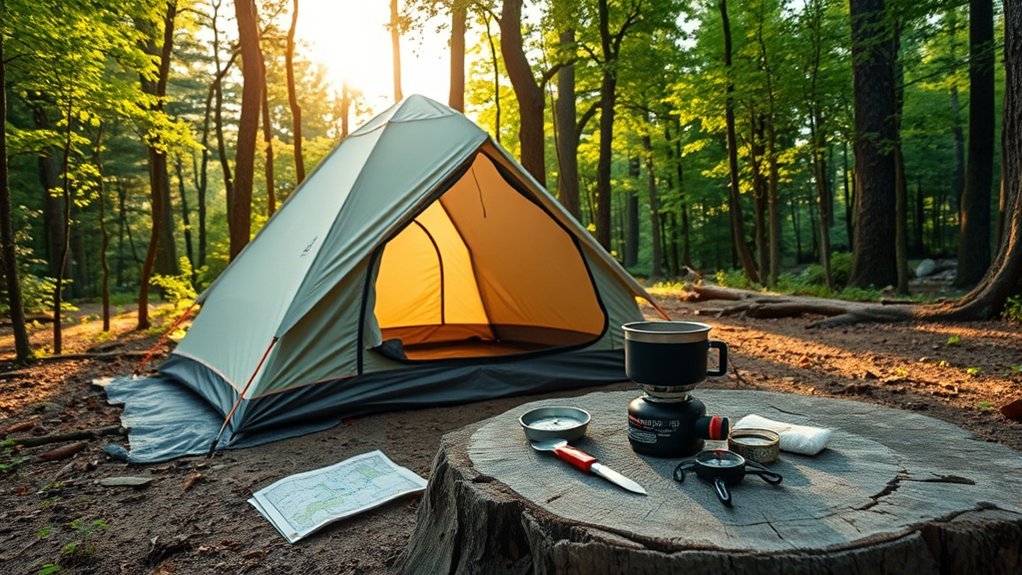
Good Leave No Trace camping begins before you reach the trailhead. Review the official guidance for the land you will visit, including permits, campsite rules, group-size limits, seasonal closures, pet rules, fire restrictions, and food-storage requirements. The Leave No Trace Plan Ahead and Prepare principle also recommends preparing for extreme weather, hazards, emergencies, and busy periods.
Check the full forecast, not just the expected temperature. Look for wind, rain, lightning, heat, cold, flooding, and wildfire conditions. Match your tent, sleeping bag, clothing, water supply, and navigation tools to the conditions. Download an offline map, leave a trip plan with a trusted person, carry a first aid kit suited to your group, and bring enough food and water for a delay.
Obtain required permits or reservations early. Repackage food to reduce wrappers and bulky waste, and choose meals that are easy to cook on a stove. When possible, travel during less crowded times and keep the group small. Better planning lowers the chance that you will cut switchbacks, build an unnecessary fire, abandon trash, or improvise a campsite in a fragile area.
Warning: Local regulations override general Leave No Trace guidance. A destination may require designated campsites, approved bear canisters, human-waste pack-out systems, or a complete ban on campfires.
Pre-Trip Leave No Trace Checklist
- Confirm permits, reservations, campsite boundaries, and group-size limits.
- Check weather, trail conditions, closures, fire danger, and emergency alerts.
- Learn the area’s food-storage and wildlife-distance rules.
- Confirm whether human waste may be buried or must be packed out.
- Bring trash bags, a trowel or approved waste kit, and a camp stove.
- Clean mud, seeds, and plant material from boots, tents, bikes, and other gear.
- Plan enough water and a safe treatment method where drinking water is not provided.
Travel and Camp on Durable Surfaces
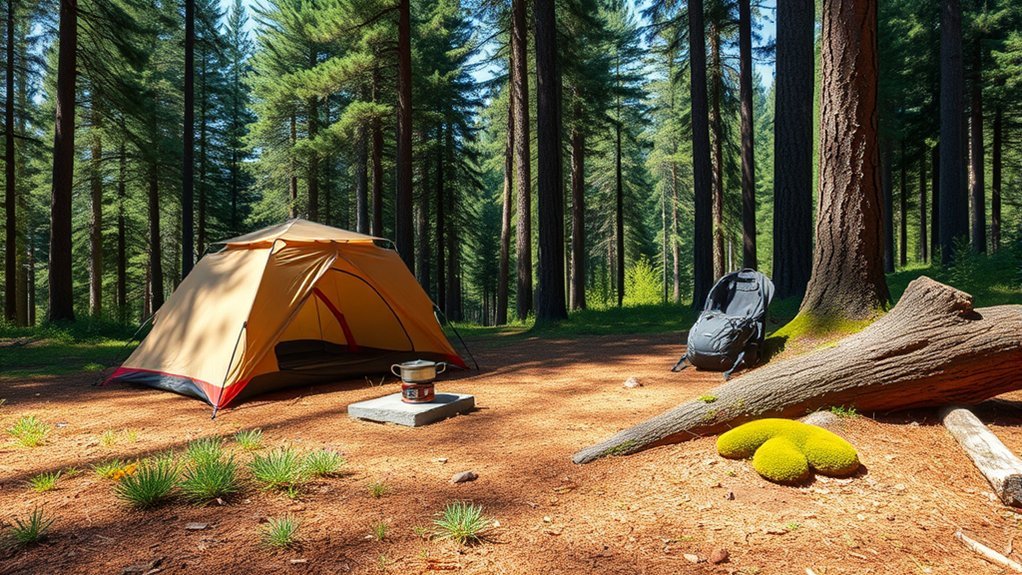
Use established trails and campsites whenever they are available. Durable surfaces include existing campsites, rock, gravel, sand, dry grass, and snow. These surfaces can handle repeated use better than wildflowers, wetlands, moss, cryptobiotic soil, or other fragile vegetation.
“Good campsites are found, not made.” Choose a site that does not need trenching, clearing, construction, or major rearrangement.
Choose Established Campsites
In popular areas, concentrate your use on an existing campsite instead of creating a second disturbed area. Keep the site compact, place tents where vegetation is already absent, and keep walking routes between tents, the kitchen, and the trail as short as practical. Walk single file in the middle of established trails, even when the path is wet or muddy, to reduce trail widening and erosion.
If dispersed camping is allowed and no established site exists, select a naturally durable surface. Avoid places where impacts are just beginning, because repeated use can turn a small patch of damage into a permanent campsite. Do not dig drainage trenches, build furniture, move large rocks, or cut branches to improve the site.
Protect Fragile Vegetation
Place your tent, chairs, and cooking area on rock, gravel, sand, dry grass, or another durable surface. Avoid trampling living plants, soft shoreline vegetation, alpine tundra, and biological soil crusts. In lightly used or pristine areas, spread foot traffic across durable ground rather than creating a new path. In established sites, do the opposite: concentrate activity on the already impacted surface.
Keep tents and kitchen equipment away from tree trunks and avoid damaging bark. Use wide tree-friendly straps for hammocks or clotheslines where they are allowed. Before leaving, return small surface materials you moved and remove every piece of gear, cord, tape, and trash.
Stay Away From Water
When dispersed camping, protect shorelines and wildlife access by pitching your tent at least 200 feet—about 70 adult steps—from lakes and streams when terrain and local rules allow. The Leave No Trace durable-surfaces guidance uses this distance to protect riparian areas. Use designated campsites where required, even when their approved location is closer to water.
Do not camp in a dry wash, flood channel, unstable shoreline, or low spot that may collect runoff. A campsite farther from water usually reduces contamination risk, preserves animal travel routes, and gives you a quieter place to sleep.
Pro Tip: Count roughly 70 adult steps to estimate 200 feet. Then confirm that the location is legal, durable, above flood risk, and not blocking a trail or wildlife route.
Dispose of Waste Properly
Pack out all trash, leftover food, wrappers, foil, tea bags, coffee grounds, and litter. Food scraps such as peels, shells, crumbs, and grease do not belong on the ground or in a fire. They can attract wildlife, alter animal behavior, and leave a mess for the next camper.
Manage Human Waste Correctly
Use toilets or provided waste systems whenever possible. If local rules allow catholes, follow the Leave No Trace waste-disposal guidance: choose an inconspicuous site at least 200 feet from water, camp, and trails; dig a hole 6–8 inches deep and about 4–6 inches wide; cover it fully; and disguise the site with natural material.
Some river corridors, alpine zones, deserts, high-use areas, and protected sites require visitors to pack out solid human waste in an approved waste kit. Check the land manager’s rules before the trip. Pack out hygiene products and follow local instructions for toilet paper. A sealed, opaque double-bag system helps contain used paper until you reach a proper trash receptacle.
Dispose of Dishwater
Use a designated greywater station when one is provided. Otherwise, carry wash water at least 200 feet from lakes, streams, campsites, and trails. Scrape food from dishes first, strain the wash water, pack out the captured food particles, and scatter the strained water widely over durable ground. Use no soap when practical; when soap is needed, use only a small amount.
Note: “Biodegradable” does not mean soap belongs in a lake or stream. Carry water away from the source before washing yourself or your dishes.
Pack Out Pet Waste
Follow local pet rules and carry bags for every trip. In developed areas and on most trails, pick up pet waste and pack it out. Do not leave filled bags beside the trail. Pet waste can contaminate water, spread disease, attract animals, and create an unpleasant experience for other visitors.
Leave What You Find
Leave rocks, antlers, plants, flowers, fossils, nests, and other natural objects where you find them. These items may provide food, shelter, nutrients, or scientific information. They also give future visitors the same sense of discovery.
Observe cultural and historical structures and artifacts without touching, moving, or removing them. The Leave What You Find principle also advises campers not to build structures, furniture, unauthorized cairns, or trenches. Do not carve trees, hammer nails into trunks, cut live branches, or rearrange a site for decoration.
Prevent the spread of invasive species by cleaning mud, seeds, insects, and plant fragments from boots, tent stakes, vehicles, bikes, and other gear before moving to a new area. Do not transport plants or soil between destinations. If you see litter left by someone else and can collect it safely, pack it out.
Minimize Campfire Impacts
A camp stove is usually the lowest-impact way to cook. Before starting any fire, confirm that fires are allowed, check current restrictions, and make sure you have enough water to extinguish the fire completely. Never build a fire during a ban or in an unauthorized location.
Where fires are permitted, use an established fire ring, fire pan, or other approved setup. Keep the fire small and attended. Use local firewood or small sticks found on the ground that can be broken by hand, if gathering is legal. Do not cut live trees or standing dead trees, and do not burn trash, food, foil, plastic, or cans.
Moving untreated firewood can spread insects and diseases. The USDA advises campers to buy or use firewood close to the campsite rather than transporting it long distances.
Warning: Never leave a campfire unattended. Drown the coals with water, stir the ashes and embers, add more water, and check for heat. If anything is warm, the fire is not out.
Burn wood and coals as completely as conditions allow. Follow the land manager’s instructions for ash disposal. Do not bury hot coals or rely on dirt alone to extinguish a fire, because buried embers can remain hot and ignite roots or surface fuels later.
Respect Wildlife
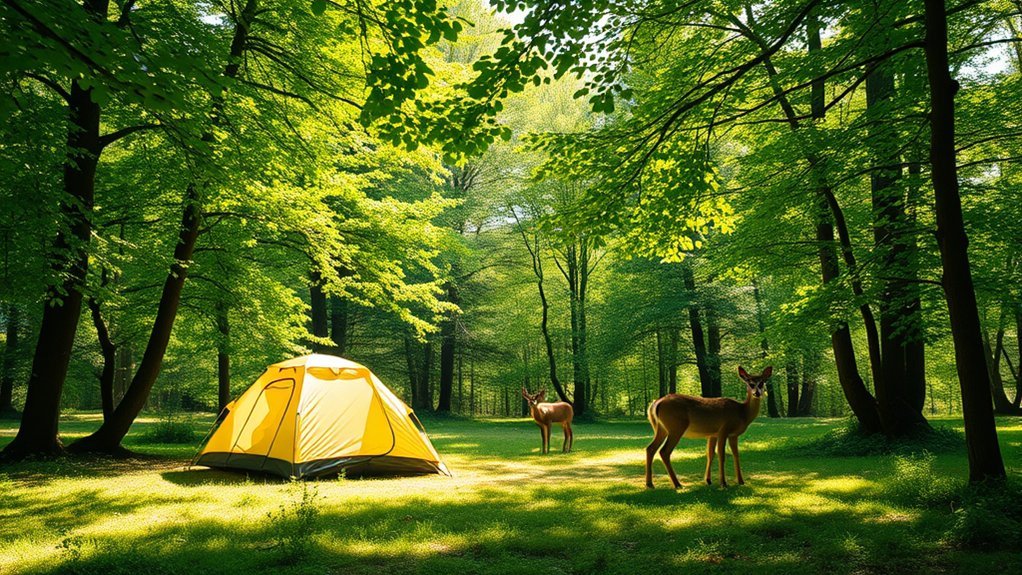
Observe wildlife from a distance and never follow, surround, touch, or feed an animal. Give animals a clear route to move away. Avoid sensitive nesting, mating, birthing, and wintering areas, and keep pets controlled according to local rules.
Observe From a Distance
Distance requirements vary by park and species. The National Park Service notes that many parks require at least 25 yards from most wildlife and 100 yards from predators such as bears and wolves, but some locations require more. Check the rules for your destination. If an animal changes its behavior because of you, you are too close even when you are beyond the posted minimum.
Use binoculars, a spotting scope, or a telephoto lens instead of approaching. Never place yourself between an adult and its young. If wildlife enters camp, stay calm, give it space, keep children and pets close, and follow species-specific guidance from the local land manager. Do not run from bears or other large predators unless official guidance for that species tells you to do so.
Secure Food Storage
Secure food, trash, cookware, coolers, pet food, and scented items as soon as you arrive. Scented items may include toothpaste, deodorant, sunscreen, soap, lip balm, and toiletries. Never store food or scented items in your tent.
The correct storage method depends on local wildlife and regulations. Some parks require a food locker or approved bear-resistant canister; others allow a properly completed bear hang; and some prohibit hanging because it is ineffective or damages trees. Follow the destination’s requirements rather than relying on one universal height or distance. The National Park Service food-storage guidance explains that rules differ among parks.
Cook, eat, wash dishes, and store food in the location required by the campground or backcountry plan. Keep the area clean, collect spilled food immediately, and do not burn leftovers. Never feed wildlife, even small animals, because repeated access to human food can change natural behavior and create dangerous encounters.
Be Considerate of Other Visitors
Leave No Trace also means making room for other people to enjoy the outdoors. Keep voices, music, generators, and vehicle noise low, especially during posted quiet hours. Use headphones instead of speakers, and aim headlamps toward the ground around other camps.
Yield according to local trail etiquette, move off the trail on a durable surface when taking a break, and avoid blocking access to water, viewpoints, tent pads, bear lockers, or shared facilities. Give other groups reasonable privacy and choose a campsite away from occupied sites when space allows.
Control pets, prevent repeated barking, and do not allow them to approach people, camps, or wildlife without permission. The official Be Considerate of Others principle emphasizes courtesy, low noise, and responsible pet control.
Leave the Campsite Ready for the Next Person
Before leaving, inspect the tent area, kitchen, fire ring, parking area, and nearby ground. Pick up microtrash such as twist ties, food crumbs, foil, cord pieces, and bottle caps. Remove temporary lines and decorations, restore small items you moved, confirm the fire is cold, and leave the site cleaner than you found it.
Frequently Asked Questions
What are the best practices for choosing a campsite?
Use a designated or established campsite when one is available. Otherwise, camp only where dispersed camping is legal and choose durable ground such as rock, gravel, sand, dry grass, or snow. Avoid fragile plants, wet areas, flood channels, and newly disturbed sites. Stay about 200 feet from lakes and streams when local rules and terrain allow.
How can I minimize noise while camping?
Keep voices and music low, use headphones, follow campground quiet hours, limit generator use to permitted times, and avoid shining bright lights into nearby tents. Choose quiet activities such as reading or stargazing, and remind children and group members that sound carries farther outdoors.
What should I do if I encounter wildlife?
Stay calm, do not approach or feed the animal, keep children and pets close, and give it a clear escape route. Back away without sudden movements when it is safe to do so. Follow the land manager’s species-specific instructions, because the correct response differs for bears, moose, bison, snakes, and other animals.
How can I protect my food from animals?
Use the storage method required at your destination. That may be a food locker, approved bear-resistant canister, locked hard-sided vehicle, or an allowed bear hang. Store food, trash, cookware, coolers, pet food, and scented toiletries together, and never keep them in your tent.
Are there specific tools for Leave No Trace camping?
Useful tools include durable trash bags, a small trowel, an approved waste kit where required, a camp stove, a fine mesh strainer for dishwater, a map or offline navigation app, and the food-storage container required locally. Biodegradable soap can be used sparingly away from water, but it is not safe to pour directly into a stream or lake.
Do I always bury human waste while camping?
No. Use a toilet when available. Where catholes are permitted, dig one 6–8 inches deep and at least 200 feet from water, camp, and trails. Some river corridors, alpine areas, deserts, and high-use destinations require an approved pack-out system, so check local rules before the trip.
Is biodegradable soap safe to use in a lake or stream?
No. Biodegradable soap still introduces chemicals into natural water. Carry water at least 200 feet away, use little or no soap, strain food particles from dishwater, pack out the scraps, and scatter the strained water widely over durable ground.
Conclusion
Responsible tent camping comes down to a series of small, deliberate choices. Plan before you leave, use durable campsites, pack out waste, protect water, leave natural and cultural objects in place, prevent fire damage, secure food, give wildlife room, and respect other visitors. When each camper follows these habits, outdoor places remain healthier, safer, and more enjoyable for the people who come next.
Sources
- Leave No Trace — The 7 Principles — official framework for minimum-impact outdoor practices
- National Park Service — Leave No Trace Seven Principles — campsite, waste, campfire, wildlife, and courtesy guidance
- National Park Service — 7 Ways to Safely Watch Wildlife — wildlife-distance and viewing guidance
- National Park Service — Storing Food in Bear Country — destination-specific food-storage requirements
- USDA APHIS — How to Stop Invasive Pests — cleaning gear and avoiding long-distance firewood movement
- U.S. Forest Service — Campfire Safety — drown, stir, drown, and feel extinguishing method
