
Last Updated on July 24, 2026 by Mason Reed
Few things ruin a camping trip faster than a neighbor’s music, generator, or car alarm cutting through the campground at midnight. Campground quiet hours give everyone time to sleep and enjoy the outdoors. The exact schedule varies, so check the rules for your campground instead of assuming every location follows the same hours.
Quick Answer
Campground quiet hours commonly begin at 10 p.m. and end between 6 and 8 a.m. During that period, keep voices, music, pets, vehicles, and equipment quiet. Generator hours may be more restrictive. Check the campground’s reservation page, confirmation email, entrance sign, and posted rules for the exact schedule.
Key Takeaways
- A common quiet-hour schedule is 10 p.m. to 6 a.m., but some campgrounds continue quiet hours until 7 or 8 a.m.
- Generator hours are separate from general quiet hours and may be limited to short daytime periods or prohibited in certain loops.
- Music, loud conversations, barking, car alarms, engine idling, door slamming, and nighttime setup can disturb several nearby campsites.
- Plan cooking, group activities, charging, and generator-dependent tasks before the restricted period begins.
- Depending on the campground and severity, repeated violations may lead to warnings, citations, eviction, or cancellation of camping privileges.
Disclosure: As an Amazon Associate I earn from qualifying purchases. Some links on this page are affiliate links, at no extra cost to you.
What Are Campground Quiet Hours?
Campground quiet hours are designated nighttime periods when campers must reduce noise enough that it does not disturb neighboring sites. They are not always periods of complete silence. You can usually talk quietly, move around your campsite, or sit beside a permitted campfire as long as your activity remains contained and considerate.
The National Park Service notes that quiet hours are posted in most campgrounds and gives 10 p.m. to 6 a.m. as a common example. However, there is no single nationwide schedule. Federal parks, state parks, private RV resorts, local campgrounds, and individual camping loops can set different hours.
| Official Example | Quiet Hours | Generator Rule |
|---|---|---|
| Yosemite National Park | 10 p.m. to 6 a.m. | Limited to three scheduled daytime periods |
| Great Smoky Mountains National Park | 10 p.m. to 6 a.m. | Prohibited from 8 p.m. to 8 a.m. |
| Bryce Canyon National Park | 10 p.m. to 8 a.m. | Permitted only in approved loops and time windows |
Note: Check the campground’s current rules when you reserve and again when you arrive. Seasonal restrictions, fire conditions, construction, wildlife activity, and loop-specific policies can change what is permitted.
Why Campground Quiet Hours Matter
Quiet hours give every camper a fair chance to sleep and enjoy the natural setting. Campground hosts and rangers may enforce these policies where staff members are present, but each camper is responsible for controlling noise from people, pets, vehicles, and equipment.
There are no soundproof walls between campsites. Voices, music, barking, engines, tent zippers, and vehicle doors can be noticeable well beyond one site, especially after other campers have settled down. Keeping noise close to your campsite protects the shared atmosphere and makes your own stay more relaxing.
Quiet-hour courtesy begins before the official start time. Finish noisy jobs early so you are not rushing to cook, charge equipment, level an RV, or set up camp after everyone else has gone to bed.
How to Find the Exact Quiet-Hour Rules
Do not rely only on a general rule you saw at another campground. Before your trip, check these sources:
- The campground’s official reservation or information page
- Your booking confirmation and pre-arrival email
- Rules for your specific loop or site type
- The entrance kiosk, registration office, or campground bulletin board
- Instructions provided by the campground host or ranger
Save a screenshot or offline copy before entering an area with weak cellular service. Look separately for quiet hours, generator hours, visitor deadlines, gate-closing times, pet rules, and current fire restrictions.
What to Expect During Quiet Hours
During quiet hours, every camper shares responsibility for keeping disturbances to a minimum. You do not normally need to sit in total silence, but sound and activity should remain within your immediate campsite and should not prevent other campers from sleeping.
Keep Noise Within Your Campsite
Speak quietly and avoid activities that neighboring sites can easily hear. Turn off amplified music, televisions, outdoor speakers, power tools, and other noise-producing electronics. Even moderate sound can seem loud when the campground is otherwise quiet.
Some campgrounds expect noise to remain within your immediate area at all times, not only during posted quiet hours. California State Parks, for example, advises campers to keep electronics quiet enough that they do not disturb neighboring sites.
Respect Shared Space and Privacy
Keep gear, chairs, pets, vehicles, and guests within your assigned campsite. Use campground roads and designated walkways instead of cutting through occupied sites. Clean shared spaces promptly, dispose of pet waste, and avoid shining bright lights toward nearby tents or RV windows.
Finish Gatherings Before Quiet Hours
Plan campfire conversations, games, group meals, and music to wind down before quiet hours begin. Designated gathering areas may reduce the impact on individual campsites, but they do not automatically exempt your group from nighttime rules.
Tell guests the quiet-hour schedule before the gathering starts. A reminder shortly before the cutoff gives everyone time to lower their voices, turn off music, clean up, and return to their sites without rushing.
What Counts as Excessive Campground Noise?
Campground rules often focus on whether sound disturbs another visitor rather than on a specific volume reading. Common nighttime disturbances include:
- Amplified music, televisions, radios, and outdoor speakers
- Shouting, loud laughter, singing, or group games
- Generators, vehicle idling, and battery charging with an engine
- Repeated car-door, RV-door, cooler-lid, or storage-compartment slamming
- Car alarms, horn signals, and loud remote-lock confirmation sounds
- Barking, whining, or unattended pets
- Hammering stakes, assembling equipment, or leveling an RV after hours
- Loud cooking equipment, dishwashing, and cookware handling
A campground may still address disruptive noise during the daytime. Quiet hours establish the strictest period, but they do not create a right to disturb others at other times.
How to Minimize Noise After Hours
Keeping noise down after hours starts with planning during daylight. Complete cooking, equipment setup, charging, water filling, and other noisy work before the restricted period begins.
| Action | Why It Helps |
|---|---|
| Explain quiet hours to children and guests | Prevents shouting, games, and repeated reminders late at night |
| Exercise, feed, and settle pets early | Reduces barking, whining, and restless movement after hours |
| Close car, tent, cooler, and RV doors gently | Prevents short but jarring noises near sleeping areas |
| Disable unnecessary horn confirmation sounds | Avoids waking nearby campers when locking a vehicle |
| Shield lanterns and point lights downward | Protects neighboring tents and RVs from glare |
| Complete generator-dependent tasks early | Prevents prohibited nighttime operation and last-minute charging |
Pro Tip: Pack a small nighttime kit with a dim headlamp, water, medication, pet supplies, warm clothing, and toiletries. You will not need to search through bins, open multiple vehicle doors, or reorganize equipment after other campers are asleep.
Late Arrivals and Early Departures
If you expect to arrive after quiet hours begin, review the campground’s late-arrival procedure before traveling. Confirm your site number, registration process, gate access, parking instructions, and whether nighttime entry is permitted.
When arriving late:
- Use low beams and avoid directing headlights into occupied sites.
- Turn off the engine as soon as it is safe to do so.
- Skip unnecessary leveling, slide-out operation, hammering, and equipment assembly.
- Set up only what you need for the night and finish the remaining work in the morning.
- Keep conversations brief and use a dim, downward-facing light.
The same courtesy applies when leaving early. Pack most equipment the evening before, close doors gently, avoid prolonged engine idling, and wait until permitted hours to use a generator.
Generator and Electronics Rules
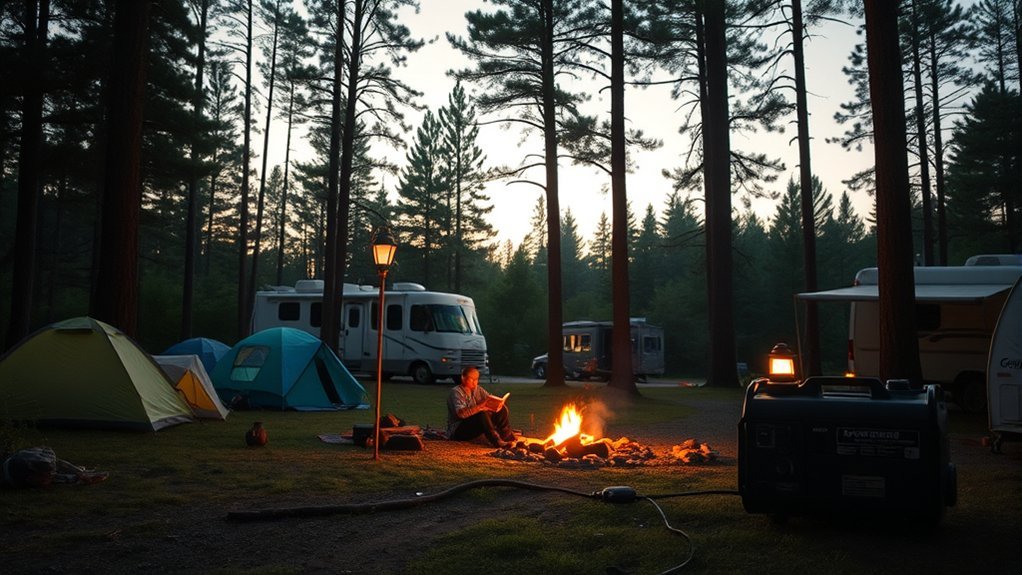
Generators and amplified electronics can disrupt a large part of a campground. Generator rules often differ from general quiet hours. A campground may permit operation only during short morning, midday, and evening windows, prohibit it overnight, or ban generators completely in selected loops.
For example, Yosemite limits generator operation to three scheduled periods, while Great Smoky Mountains National Park prohibits generator use from 8 p.m. to 8 a.m. Generator-free areas may also prohibit charging batteries by idling a vehicle.
Before setting up, check your site or loop description for generator restrictions. A device marketed as quiet is not automatically permitted outside the campground’s approved hours. Follow the posted rule even when your generator produces less noise than a larger model.
Warning: Portable generators produce carbon monoxide. The CDC advises operating them outdoors, more than 20 feet from windows, doors, and vents. At a campsite, keep the generator and its exhaust away from tent openings, RV doors, windows, vents, cabins, and other occupied areas. Never run one inside a tent, vehicle, RV compartment, shed, or enclosed shelter.
If you depend on powered equipment overnight, reserve an electric campsite when possible and contact the campground before booking. Do not assume that a personal need automatically permits generator use during restricted hours.
Respect Other Campers’ Space
Quiet-hour etiquette includes more than sound. Small, consistent habits protect privacy and make the campground more comfortable for everyone.
- Keep your gear within your assigned campsite boundaries.
- Use designated roads and walkways instead of crossing occupied sites.
- Keep voices, music, lights, pets, and equipment under control.
- Clean shared spaces promptly and dispose of pet waste properly.
- Do not aim lanterns, flashlights, or vehicle headlights into nearby tents.
- Respect vegetation, wildlife, and campground facilities.
Children and Pets During Quiet Hours
Explain the campground’s rules to children before bedtime rather than waiting until noise becomes a problem. Finish active games earlier, prepare sleeping areas in advance, and provide quiet activities for children who are not ready to sleep.
Pet rules vary, but many campgrounds require pets to remain leashed and prohibit leaving them unattended. Give your pet exercise, food, water, and a bathroom break before quiet hours. Keep the animal close and bring it inside your tent, RV, or other permitted sleeping area if it starts barking or whining.
Do not allow a pet to wander between sites, approach wildlife, or disturb other campers. Quiet-hour expectations apply to animal noise as well as human activity at many campgrounds.
Tips for Hosting Gatherings Responsibly
When hosting a gathering, choose a permitted location that limits the impact on neighboring sites. Stay aware of how voices, music, cookware, vehicles, and cleanup activity affect people nearby. Planning the ending is as important as planning the event.
Use Designated Gathering Areas Correctly
- Check campground policies on group and gathering areas before your trip.
- Confirm occupancy limits, visitor deadlines, parking rules, and fire restrictions.
- Schedule the gathering to finish before quiet hours begin.
- Keep music and conversations at a level that does not carry into nearby sites.
- Ask guests to leave calmly without shouting, slamming doors, or sounding vehicle horns.
- Clean up before the restricted period instead of handling cookware and bins late at night.
Manage Volume Before It Becomes a Complaint
Do not wait until the official cutoff to begin lowering the volume. Give guests a reminder 20 to 30 minutes beforehand, turn off music, and begin cleanup early. Shut down generators according to their separate schedule, which may begin before quiet hours.
A brief conversation with nearby campers earlier in the evening can help set expectations, but it does not replace campground rules or give a group permission to remain loud.
How to Handle Noise From Another Campsite
Start by confirming that quiet hours have begun and that the sound is more than a brief, unavoidable disturbance. A child crying, an emergency, or a camper arriving late may create temporary noise that stops without intervention.
- Make a calm request when it feels safe. Speak quietly from the edge of the campsite and avoid entering another person’s site.
- Be specific. Politely identify the sound, such as music, shouting, barking, or a running generator.
- Do not argue or escalate. Return to your campsite if the person becomes aggressive, intoxicated, or confrontational.
- Contact the campground host, ranger, office, security service, or posted after-hours number. Give your site number and the location of the disturbance.
- Call emergency services for immediate danger. Use emergency assistance for threats, violence, fire, suspected carbon-monoxide exposure, or another urgent safety risk.
Note: Earplugs or low-volume white noise may help with ordinary campground sounds, but they are not substitutes for reporting an ongoing rule violation or unsafe situation.
How Quiet-Hour Rules Are Enforced
Enforcement depends on the campground operator, local regulations, staff availability, and seriousness of the disturbance. A host or ranger may begin with a verbal request, but repeated or severe violations can result in a formal warning, citation, removal, reservation cancellation, or involvement by law enforcement.
Do not assume that every campground follows a warning-first policy. Read the terms attached to your reservation and comply promptly when a staff member asks you to lower the noise.
Frequently Asked Questions
What time are campground quiet hours?
Many campgrounds begin quiet hours at 10 p.m. Ending times commonly range from 6 to 8 a.m. The exact schedule is set by the campground, park, resort, or managing agency, so verify the posted rule for your location.
What are the consequences of violating campground quiet hours?
Consequences vary by location and severity. Campground staff may issue a verbal or written warning, citation, or fine. Repeated, dangerous, or serious disturbances may lead to removal, cancellation of the reservation, or law-enforcement involvement.
Can I have a campfire during quiet hours?
Possibly. A quiet campfire may be allowed when fires are currently permitted and contained in an approved ring or grill. Quiet hours do not override burn bans, fire restrictions, extinguishing requirements, visitor deadlines, or campground-specific rules. Keep voices low and never leave the fire unattended.
Are pets allowed outside during quiet hours?
That depends on the campground’s pet policy. Where pets are allowed, they usually must remain controlled, leashed, supervised, and quiet. Bring your pet into its permitted sleeping area if it begins barking, whining, wandering, or reacting to wildlife.
Can I run a quiet generator during quiet hours?
Usually not when generator operation is prohibited. A low-noise model does not override posted hours. Some campgrounds use shorter generator windows, restrict generators to selected loops, or prohibit them completely.
What should I do when arriving after quiet hours?
Follow the campground’s late-arrival instructions. Know your site number in advance, use dim lighting, avoid unnecessary engine idling, and complete only the setup needed for sleeping. Save hammering, leveling, slide-outs, and other noisy work for permitted hours.
What should I do if noise keeps me awake?
If it feels safe, make one brief and polite request. Do not enter the other campsite or continue an argument. Contact the campground host, ranger, office, security service, or posted after-hours number if the disturbance continues. Call emergency services when there is an immediate threat or safety hazard.
Respecting campground quiet hours is not only about following a clock. It means controlling voices, music, pets, vehicles, lights, generators, and nighttime activity so other campers can rest. Check the exact rules before arriving, complete noisy tasks early, and contact campground staff when a disturbance cannot be resolved safely.
Sources
- National Park Service: Camp Etiquette — general guidance on quiet hours, noise, lighting, and campsite courtesy
- Yosemite National Park: Campground Regulations — official quiet-hour and generator schedules
- Great Smoky Mountains National Park: Campground Regulations — quiet hours, generator restrictions, and noise-producing equipment rules
- Bryce Canyon National Park: Campground Regulations — example of quiet hours extending until 8 a.m. and loop-specific generator rules
- California State Parks: Camping Rules and Safety — guidance on electronics, campsite noise, generators, and campfires
- Centers for Disease Control and Prevention: Carbon Monoxide Poisoning Basics — official portable-generator placement and carbon-monoxide safety guidance
