

Last Updated on July 28, 2026 by Daniel Globe
Choosing the right tent stake can make the difference between a secure shelter and one that works loose when the wind picks up. Y-stakes, V-stakes, shepherd’s hooks, nail stakes, and dedicated sand or snow anchors all behave differently because their shape, length, material, and surface area determine how well they penetrate and grip the ground.
Quick Answer
Y-stakes are a strong all-around choice for many campers because their three-sided profile balances holding power, durability, and weight. V-stakes are another lightweight option, while shepherd’s hooks favor minimum pack weight and nail stakes penetrate firm ground well. For loose sand or snow, use wide specialty stakes or deadman anchors instead.
Key Takeaways
- Y-stakes combine good soil contact with strong resistance to twisting, making them useful across many common campsites.
- V-stakes save weight and provide more soil contact than thin wire stakes, but very light models can bend if forced against rocks.
- Shepherd’s hooks are excellent for ultralight setups in penetrable soil, but their narrow profile gives them less grip in loose ground.
- Nail-style stakes penetrate firm and compacted soil easily but generally offer less loose-soil holding area than Y- or V-shaped stakes.
- Sand and snow require wider anchors or deadman techniques; material alone does not determine holding power.
Disclosure: As an Amazon Associate I earn from qualifying purchases. Some links on this page are affiliate links, at no extra cost to you.
Tent Stake Types at a Glance
| Stake Type | Best For | Main Strength | Main Limitation |
|---|---|---|---|
| Y-Stake | Medium to firm soil; mixed terrain | Strong all-around grip and good resistance to twisting | Wide profile can be difficult to work around buried rocks |
| V-Stake | Soft to medium soil | Good soil contact at low weight | Thin models may bend if hammered against rock |
| Shepherd’s Hook | Firm, penetrable soil and low-load tie-outs | Very low weight and easy packing | Limited surface area in loose soil |
| Nail Stake | Firm or compacted ground | Slim profile penetrates dense soil well | Less gripping area in loose soil |
| Sand/Snow Stake | Sand, snow, and very loose ground | Wide profile creates much more anchoring area | Bulkier and heavier than typical backpacking stakes |
Y-Stake Tent Stake
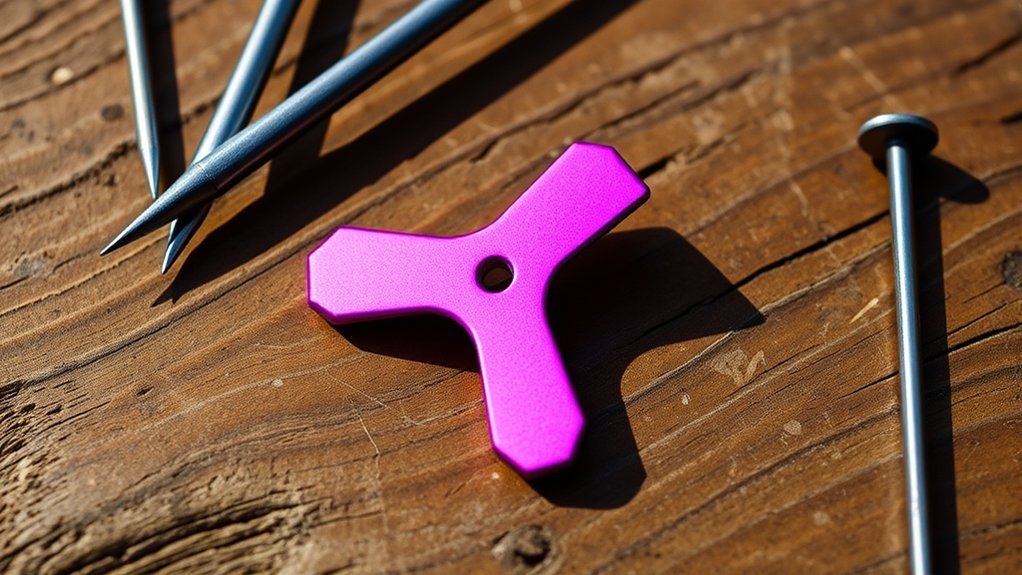
Y-stake tent stakes use three fins to create more soil contact than a thin round stake while also resisting rotation. That makes them one of the most useful general-purpose designs for medium and firm soils.
A current example is the MSR Groundhog. MSR lists the standard 7.5-inch Groundhog at 13.95 grams per stake and constructs it from 7000-series aluminum. The smaller Mini Groundhog weighs 9.40 grams per stake and is intended for medium-to-firm soil.
The main advantage of a Y-profile is balance. It provides substantially more contact area than a thin wire stake without becoming as bulky as a dedicated sand or snow anchor. The fins also make the stake less likely to rotate when a guyline changes direction in gusty weather.
The trade-off is penetration. A wide Y-profile can stop abruptly when it encounters buried stone. When that happens, move the stake a few inches rather than repeatedly pounding a lightweight aluminum stake against the obstruction.
V-Stake
V-stakes use a folded or angled profile to increase the amount of metal pressing against the soil. They provide a useful compromise between the narrow shape of a wire hook and the larger cross-section of a Y-stake.
- Holding Power: The broad face gives the soil more area to push against than a thin round stake.
- Low Weight: Aluminum and titanium versions can be very light, making them popular with backpackers.
- Corrosion Resistance: Titanium is highly corrosion-resistant, while anodized aluminum also performs well when properly cared for.
- Packability: Flat V-shaped stakes usually nest together more neatly than bulky utility stakes.
V-stakes work especially well in soft to medium soil. Thin ultralight versions should not be forced aggressively into rocky ground because the wider blade can catch a buried stone and bend. In hard terrain, a slimmer nail-style stake may penetrate more easily.
Shepherds Hook Stake
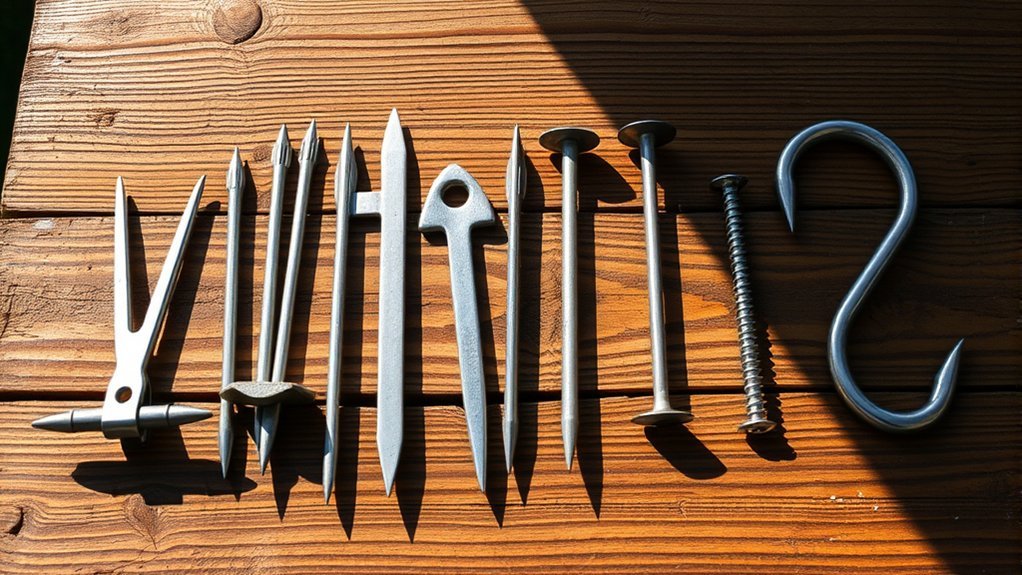
Shepherd’s hook stakes are built around a simple wire profile with a curved top. Their biggest advantage is low weight. For example, the Vargo Titanium Tent Stake is 6.5 inches long and weighs 8 grams.
| Advantages | Disadvantages | Best Use |
|---|---|---|
| Extremely lightweight | Limited surface area in loose soil | Ultralight backpacking |
| Compact and easy to pack | Thin models can flex or bend | Firm, penetrable soil |
| Simple curved head retains cord | Poor choice for very loose sand or deep snow | Secondary or lower-load tie-outs |
These stakes can work very well when the ground is dense enough to grip the shaft. Their weakness appears when the soil becomes loose, wet, sandy, or otherwise unable to press firmly against the narrow wire. They also require more care around rocks than heavier stakes designed to take repeated hammering.
Warning: Tent stake tips can cause puncture injuries. Store them together with the points protected, keep exposed stakes out of normal walking paths, and make pull cords easy to see. At established campgrounds, follow site rules about where stakes may be driven; on private property, be cautious anywhere buried utilities or irrigation lines may be present.
Nail Type Stake
Nail stakes use a slim, straight shaft with a head or cord-retention feature at the top. Their narrow profile makes them easier to insert into firm or compacted soil, but it also gives loose ground less surface area to grip.
Weight and Portability Benefits
Choosing lightweight equipment can reduce overall pack weight, and some nail-style stakes are exceptionally light. The MSR Carbon-Core Stake, for example, weighs 5.75 grams and is 6 inches long. It uses a carbon-fiber core with an aluminum covering.
Key benefits include:
- Minimal Weight: Ultralight models add very little to a backpacking shelter system.
- Compact Size: Straight stakes bundle efficiently in a stake bag.
- Easy Penetration: The narrow profile can enter firm soil more easily than a wide-bladed stake.
- Simple Setup: A defined head provides a clear point for securing the tent loop or guyline.
Limitations in Holding Power
The same narrow shape that helps a nail stake penetrate compacted ground limits the amount of soil it can engage. In loose dirt, mud, or sand, a smooth straight stake may pull upward more readily than a Y-, V-, screw-, or broad sand-stake design.
That does not mean nail stakes are inherently weak. Their performance depends on shaft diameter, length, construction, ground density, and the load from the shelter. Their real trade-off is penetration versus surface area: a narrow stake can be excellent in compact ground while being a poor match for loose sand.
Pro Tip: Match both stake length and profile to the ground. Short, narrow stakes can work well where the soil is firm enough to grip them. In loose sand or snow, move to a longer, wider specialty stake or bury a suitable anchor horizontally as a deadman instead of relying on an ordinary narrow stake.
How to Choose Tent Stakes by Terrain
Terrain matters more than brand name. A stake that feels exceptionally secure at a forest campsite may pull out quickly on a beach because the ground is applying a completely different amount of resistance.
Medium Soil and Typical Campsites
For loam, established tent pads, and normal forest soil, Y-stakes and V-stakes provide a useful balance of penetration and gripping area. This is where a general-purpose aluminum Y-stake often makes the most sense.
Hard or Rocky Ground
A slim nail-style stake can often find its way through compact soil more easily than a broad Y- or V-stake. If you hit a solid rock, stop. Move the stake slightly and try again rather than increasing hammer force until a lightweight stake bends.
If usable soil is extremely shallow, a freestanding tent may be easier to manage. Where local rules permit, guylines can sometimes be secured to stable natural anchors rather than forcing stakes where they cannot penetrate.
Soft or Loose Soil
More surface area usually helps. Longer Y-stakes, V-stakes, spiral stakes, or other broad profiles can engage more soil than thin wire hooks. MSR, for example, describes its Cyclone spiral stake as an option for additional holding power in soft soil and for larger shelters.
Sand and Snow
Ordinary narrow stakes are often a poor match for sand and deep snow. Purpose-built anchors are longer and wider so they engage more material. The MSR Blizzard is one current example: it is 9.5 inches long, weighs 27 grams, uses a broad 7000-series aluminum profile, and is designed specifically for sand and snow.
A wide stake can also be buried horizontally as a deadman anchor. Attach the guyline securely, bury the anchor across the direction of pull, pack the snow or sand firmly, and allow snow to consolidate when conditions permit before applying maximum tension.
Note: A heavier stake is not automatically a stronger anchor. In loose terrain, the amount of surface area engaging the ground often matters more than the material’s weight.
Tent Stake Materials Compared
Stake shape determines much of the holding behavior, while material affects weight, stiffness, durability, corrosion resistance, and price.
- Aluminum: Common in backpacking stakes because it offers a strong weight-to-durability balance. Thin aluminum can still bend if forced directly against rock.
- Titanium: Lightweight, tough, and highly corrosion-resistant. It is frequently used for wire hooks and ultralight V-stakes.
- Steel: Heavier but well suited to robust car-camping stakes and repeated hammering. Steel does not automatically provide more holding power in loose soil; the stake still needs enough length and surface area.
- Plastic or Composite: Can provide broad profiles at reasonable weight, but durability varies substantially by design and material.
The best material therefore depends on the job. Backpackers often prioritize aluminum or titanium, while car campers may accept heavier steel stakes in exchange for durability.
How to Stake a Tent for Better Holding Power
Even a good stake performs poorly when it is only halfway inserted or when the guyline pulls it in an unfavorable direction. REI’s current tent setup guidance recommends driving stakes fully vertical in most soil types for maximum holding power, leaving only enough exposed to secure the tie-down cord.
- Position the shelter first: Orient it for the expected wind and follow the tent manufacturer’s pitching instructions.
- Push the stake fully into suitable soil: Leave only the head or attachment point exposed.
- Pull guylines outward: Run each line away from the shelter in the direction that properly tensions its guyout point.
- Use critical guylines in wind: Pay particular attention to the windward side of the shelter, then balance tension around the tent.
- Do not over-tension: A taut shelter is useful, but excessive force can stress fabric, seams, poles, and stakes.
- Recheck after weather changes: Rain, wet fabric, wind shifts, and softening soil can alter tension during the night.
A mixed stake kit can be useful. Stronger Y- or V-stakes can secure the highest-load corners and windward guylines, while lighter hooks can handle vestibules or secondary points where the soil is suitable.
Performance Metrics and Testing Methodology
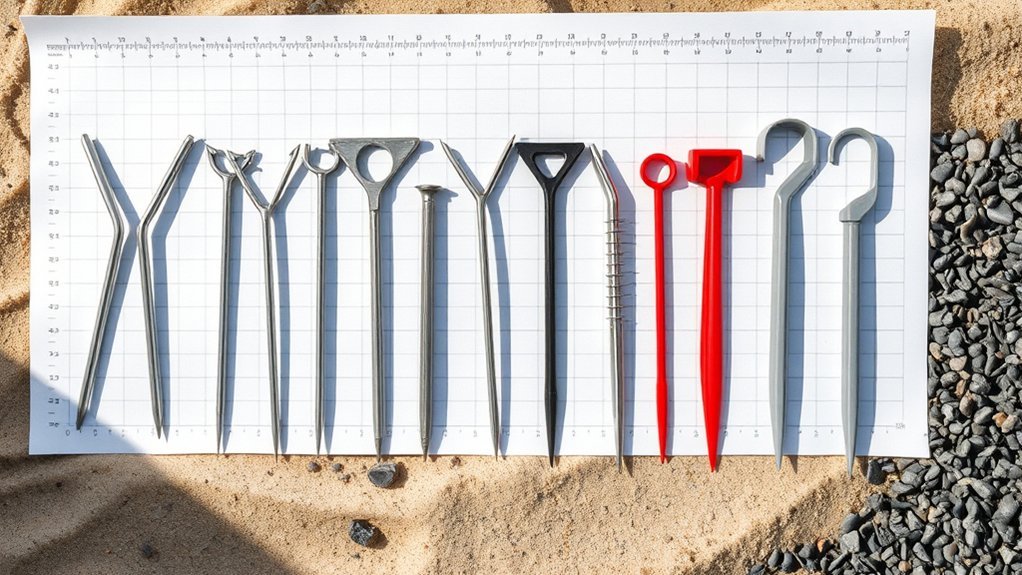
Tent stakes can be compared across five practical metrics: durability, packability, holding power, versatility, and ease of use. Testing across soft, firm, compacted, and rocky ground is important because no single soil type represents every campsite.
No single stake shape wins everywhere: narrow stakes favor penetration, wider profiles favor soil contact, and dedicated sand or snow anchors trade extra bulk for substantially more anchoring area.
Useful evaluation criteria include:
- Durability: Whether the stake bends, twists, cracks, or damages its head after repeated insertion and removal.
- Packability: Weight, packed length, sharp edges, and how neatly several stakes bundle together.
- Holding Power: How well the stake resists pulling out when the guyline is loaded.
- Versatility: Whether the same stake works across several realistic soil types.
- Ease of Use: How easily the stake can be inserted, attached to a line, found, and removed.
Testing should also separate penetration from holding power. A stake that enters hard soil easily is not necessarily the design that grips loose soil most securely.
Best Tent Stakes Recommendations
The right recommendation depends on where you camp most often rather than on one universal winner.
- Best all-around design: A quality aluminum Y-stake such as the standard MSR Groundhog provides a useful combination of moderate weight, durability, and soil contact.
- For lightweight backpacking: The Mini Groundhog reduces weight while retaining a Y-profile for medium-to-firm soil.
- For minimum packed weight: Titanium shepherd’s hooks or ultralight nail stakes can make sense when ground conditions are predictable and suitable.
- For hard or compacted ground: A robust narrow nail-style stake can penetrate more easily than a wide blade.
- For soft soil: Longer Y-shaped, V-shaped, or spiral anchors provide more contact area.
- For sand or snow: Use a broad specialty stake such as a snow/sand anchor or a properly buried deadman.
For trips through varied terrain, carrying more than one stake shape can be smarter than trying to make the same ultralight design handle every surface.
Durability, Packability, Holding Power, Versatility, and Ease of Use
These five factors help explain why a stake that looks excellent on a scale may not be the most dependable option in the field. Saving a few grams matters less if the stake cannot penetrate your campsite or repeatedly pulls free.
Performance Ratings Overview
- Durability: Look for a design that tolerates realistic insertion and removal without permanent bending.
- Packability: Consider both weight and shape; broad stakes may take up more room even when they are light.
- Holding Power: Longer length and greater soil-contact area generally become more valuable as the ground gets softer.
- Versatility: General-purpose stakes should cope with several soil types rather than excelling in only one.
- Ease of Use: A visible head, pull cord, and secure line-retention point make setup and teardown easier.
Stake Design Impact
Stake geometry strongly affects performance. Y-stakes use three fins to create soil contact and resist rotation. V-stakes use a broad blade while remaining relatively compact. Shepherd’s hooks minimize material and weight but have little surface area. Nail stakes emphasize easy penetration. Sand and snow stakes go in the opposite direction, using long, broad profiles to create as much anchoring area as practical.
That is why there is no honest “best tent stake” for every camper. A Y-stake is an excellent general-purpose starting point, but specialized terrain can justify a different design.
Visibility and Weight Considerations
Weight matters most to backpackers, but visibility and handling can matter just as much once camp is set up.
- Stake Visibility: Bright finishes make stakes easier to spot in grass, leaves, and soil.
- Weight Efficiency: Modern backpacking stakes can weigh well under half an ounce each, but lower weight should not come at the expense of suitable terrain performance.
- Reflective Features: Reflective pull cords make stakes easier to locate after dark and can reduce trip hazards.
- Removal Loops: A strong cord loop lets you pull on the stake head rather than yanking a guyline or bending the shaft sideways.
Before leaving camp, count your stakes and inspect the site. A forgotten metal or plastic stake becomes litter and can injure people, wildlife, or equipment later.
Frequently Asked Questions
Can I use tent stakes in rocky terrain?
Yes, provided there is enough soil between the rocks. A narrow nail-style stake may penetrate compacted ground more easily than a wide stake. If you hit solid rock, move the stake instead of repeatedly hammering it. Where permitted, a stable natural anchor can sometimes replace a stake when usable soil is too shallow.
How do I choose the right stake length?
Longer stakes generally engage more material and can improve holding power in soft ground, but shape matters too. A 7.5-inch Y-stake can be a good general-purpose option, while deep snow or loose sand benefits from a longer, wider specialty anchor such as a 9.5-inch snow or sand stake.
Are there biodegradable tent stakes available?
Products marketed as biodegradable or made from wood and degradable plastics do exist, but biodegradable does not mean a stake should be left behind. Decomposition conditions vary, and fragments can still become litter. Pack out every stake you bring and choose the material primarily for reliable, safe use.
What materials are tent stakes typically made from?
Common materials include aluminum, titanium, steel, plastic, and composite constructions. Aluminum offers a useful balance of weight and strength, titanium is light and highly corrosion-resistant, and steel adds durability at greater weight. Plastic and composite stakes vary widely in strength and are often shaped to provide extra surface area.
How do I safely remove tent stakes after use?
Pull from the stake head or its dedicated removal loop using steady upward pressure. A stake puller or camping-hammer hook can help with stubborn stakes. Avoid pulling hard on the tent fabric or guyline and avoid levering a lightweight stake sharply sideways, which can bend it.
Should tent stakes go straight down or at an angle?
For ordinary soil, REI recommends driving a tent stake fully vertical for maximum holding power in most conditions. Follow your shelter manufacturer’s instructions when they specify otherwise, and position the guyline so it pulls outward cleanly from the intended guyout point.
Do I need the same type of stake for every tent tie-out?
No. A mixed stake set can work well when terrain varies or some anchor points carry more load than others. You might use stronger Y- or V-stakes for important corners and windward guylines while using lighter hooks for vestibules or secondary tie-outs where the soil provides adequate grip.
Conclusion
Choosing the correct tent stake starts with the ground beneath your tent. Y-stakes are strong general-purpose anchors, V-stakes balance surface area and weight, shepherd’s hooks favor ultralight packing, and nail stakes work well when easy penetration matters. Sand and snow call for wider specialty anchors. Match the stake to the terrain, insert it correctly, tension the shelter evenly, and carry more than one design when conditions are likely to vary.
Sources
- MSR Groundhog Tent Stakes — current weight, length, construction, and Y-beam specifications
- MSR Mini Groundhog Tent Stakes — current weight and recommended medium-to-firm soil use
- MSR Carbon-Core Tent Stakes — weight, length, and carbon-core/aluminum construction
- MSR Blizzard Tent Stakes — broad-profile sand and snow stake specifications and deadman use
- Vargo Titanium Tent Stake — current shepherd’s-hook dimensions and weight
- REI Expert Advice: How to Set Up a Tent — stake placement, guyline use, wind setup, and sand/snow anchor guidance

