

Last Updated on July 30, 2026 by Mason Reed
A hydrostatic head rating tells you how much water pressure a fabric resisted in a laboratory test, but it is not a guarantee that a tent, jacket, or boot will keep you dry in every storm. For heavy rain, use the number as a starting point, then check seam sealing, construction, fit, ventilation, condition, and the manufacturer’s test method.
Quick Answer
For sustained heavy rain, a practical shopping target is about 1,500–3,000 mm for a well-designed tent fly, 3,000–5,000 mm or more for a tent floor on wet ground, and around 10,000 mm or more for a rain jacket. These are guidelines, not guarantees; test methods, seams, design, wear, and care also matter.
Key Takeaways
- Hydrostatic head measures resistance to water pressure, not rainfall depth or the number of hours gear will remain dry.
- There is no universal 3,000 mm cutoff for heavy rain because brands may use different test methods and pass criteria.
- Tent floors usually benefit from a higher rating than rainflies because knees, sleeping pads, and saturated ground create contact pressure.
- For jackets, compare seam sealing, hood and cuff design, breathability data, and vents along with the waterproof rating.
- Cleaning, drying, seam repair, and compatible reproofing can preserve performance, but a surface spray does not automatically restore a damaged waterproof membrane or coating.
At a Glance
| Tent Fly for Heavy Rain | About 1,500–3,000 mm is a useful starting range when the fly is fully seam-taped or properly sealed and the shelter has a stormworthy pitch. |
| Tent Floor for Wet Ground | About 3,000–5,000 mm or more provides extra pressure resistance, although floor shape, abrasion, site drainage, and a correctly sized footprint also matter. |
| Rain Jacket for Sustained Rain | Around 10,000 mm or more is a conservative shopping target, not an industry-wide requirement. Fully sealed seams and protective openings are essential. |
| Do Not Judge by HH Alone | Check the test method, seams, zippers, hood or fly coverage, ventilation, fabric condition, warranty, and intended use. |
Disclosure: As an Amazon Associate I earn from qualifying purchases. Some links on this page are affiliate links, at no extra cost to you.
Understanding Hydrostatic Head Ratings

Hydrostatic head, often shortened to HH, measures a fabric’s resistance to water penetration under pressure. In the ISO 811 hydrostatic-pressure test, water pressure is increased against a fabric specimen until penetration is observed. The result may be reported as the height of a water column in millimeters.
A 3,000 mm rating therefore means the test fabric resisted pressure equal to a 3,000 mm column of water under that test’s conditions. It does not mean the fabric can sit under 3,000 mm of rain, nor does it predict an exact number of dry hours in a storm.
Note: Standardized hydrostatic-pressure methods exist, including ISO 811 and AATCC TM127, but brands may use different specimen preparation, pressure rates, endpoints, or in-house standards. Treat cross-brand comparisons as approximate unless the same test method is stated.
| Hydrostatic Head | Approximate Pressure | How to Read It |
|---|---|---|
| 1,500 mm | 2.1 psi | Used by some current waterproof tents when paired with taped seams and suitable construction. |
| 3,000 mm | 4.3 psi | A useful extra margin for tent flies or floors, but not a guarantee by itself. |
| 5,000 mm | 7.1 psi | Commonly sought for floors, wet ground, and more demanding exposure. |
| 10,000 mm | 14.2 psi | A common published rating on technical rain shells; compare construction and test method too. |
| 20,000 mm | 28.4 psi | Often marketed for prolonged or severe exposure, but the larger number alone does not prove better comfort or durability. |
Importance of Hydrostatic Head for Heavy Rain
Hydrostatic head matters in heavy rain because water does not always press against gear gently. Wind can drive rain against a fly or jacket, while kneeling, sitting, pack straps, and saturated soil can add pressure to waterproof fabric.
A hydrostatic head rating describes the tested fabric. Staying dry depends on the complete product: fabric, seams, openings, design, setup, condition, and ventilation.
- Pressure resistance: A higher HH result gives the material more laboratory-tested resistance before water penetration begins.
- Floor protection: Tent floors face concentrated pressure from knees, elbows, sleeping pads, pets, and gear, so they often benefit from more pressure resistance than a fly.
- Performance margin: Abrasion, dirt, ultraviolet exposure, repeated folding, and age can reduce real-world performance. A rating above the bare minimum may provide useful margin, but it cannot compensate for holes or failed seams.
The best rating is therefore the one matched to your use. A fair-weather camper on well-drained sites has different needs from a backpacker expecting days of wind-driven rain or a camper pitching on saturated ground.
Recommended Hydrostatic Head Ratings for Heavy Rain
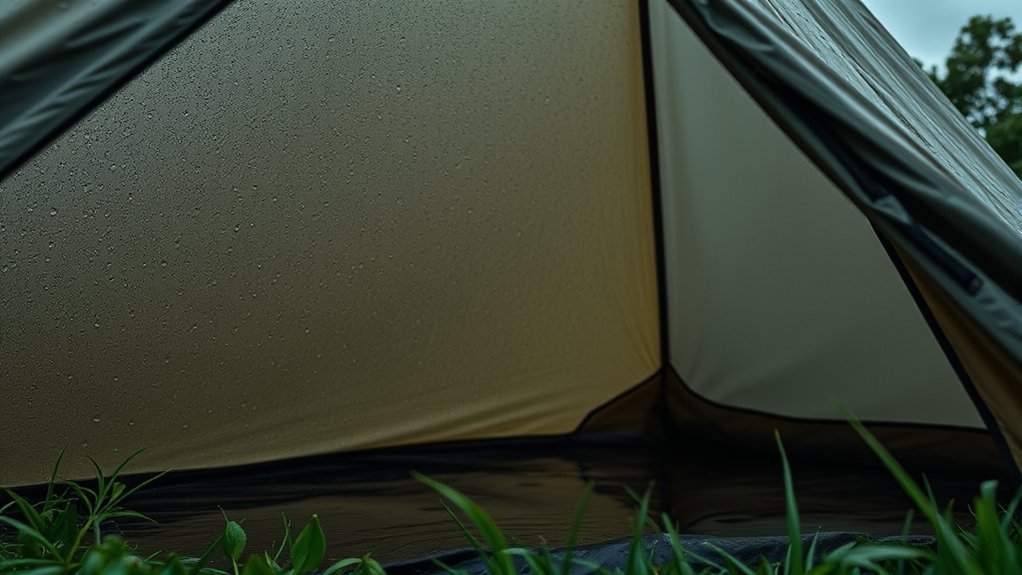
There is no single rating that guarantees heavy-rain performance. The following ranges are practical buying guidelines, not formal pass/fail standards. Current products show why context matters: some reputable lightweight tents use 1,500 mm fly and floor fabric with waterproof taped seams, while other storm-oriented models use different ratings, fabrics, and designs.
Tent Fly Ratings
- About 1,200–1,500 mm: Can work for three-season tents when the coating is sound, seams are sealed, the fly is tensioned correctly, and the site drains well.
- About 1,500–3,000 mm: A useful target for frequent rain and a sensible starting point for a tent intended for sustained downpours.
- Above 3,000 mm: Adds pressure margin, but pole strength, fly coverage, ventilation, seam construction, and pitching stability still determine storm performance.
Tent Floor Ratings
- About 1,500–3,000 mm: Common for lightweight tents and generally suitable when the floor is undamaged and the campsite does not collect water.
- About 3,000–5,000 mm or more: A stronger target for saturated soil, prolonged wet weather, heavier occupants or gear, and frequent use.
A bathtub-style floor with raised seams is more useful than a high number on a flat floor that allows runoff to reach vulnerable stitching. A correctly sized footprint can reduce abrasion, but it must not extend beyond the tent floor, where it could collect rainwater.
Waterproof Jacket Ratings
- About 5,000 mm and above: May be adequate for lighter duty, short exposure, and everyday use when seams and openings are protected.
- About 10,000 mm and above: A conservative shopping target for hiking and sustained heavy rain.
- About 20,000 mm and above: Common among shells designed for prolonged, technical, or severe conditions, but comfort still depends on moisture-vapor performance and mechanical ventilation.
REI notes that rainwear brands do not share one industry-wide performance threshold, so a 10,000 mm claim from one brand may not be directly comparable with another. Look for fully sealed seams, a well-shaped hood, storm-protected zippers, adjustable cuffs and hem, and vents that can release heat.
Factors Influencing Hydrostatic Head Performance
The fabric rating is only one part of waterproof performance. These factors can change what happens in the field:
- Test method: ISO 811, AATCC TM127, and in-house methods can differ. The stated number is most useful when the manufacturer identifies the test.
- Waterproof layer: Polyurethane coatings, silicone coatings, and waterproof membranes resist water in different ways and require different repair products.
- Seam construction: Needle holes can leak even when the surrounding fabric has a high HH rating. Taped, welded, or correctly sealed seams are essential.
- Openings and design: Zippers, vents, doors, cuffs, hoods, hems, vestibules, and fly coverage can admit water before the main fabric leaks.
- Contact pressure: Knees on a tent floor, backpack straps on a jacket, or water trapped beneath a groundsheet can raise local pressure.
- Age and abrasion: Scrapes, pinholes, delamination, peeling seam tape, ultraviolet exposure, and repeated creasing can weaken waterproof layers.
- Setup and fit: A loose fly can touch the inner tent and flap in wind. A poorly fitted hood or open cuff can funnel water inside an otherwise waterproof jacket.
Real-World Implications of Hydrostatic Head Ratings

In real storms, a lower-rated but well-built and well-maintained product can outperform a higher-rated product with exposed seams, poor coverage, or damaged coating. MSR’s tent guidance, for example, explains waterproofness as a combination of coated external fabric and watertight seams rather than the millimeter number alone.
Is It a Leak or Condensation?
Moisture inside a tent or jacket is not always rain passing through the fabric. Warm, humid air can condense on a cool waterproof surface, especially when vents are closed or wet clothing is stored inside.
| Sign | More Likely Cause | What to Check |
|---|---|---|
| Droplets spread across a cool inner surface | Condensation | Open protected vents, increase airflow, separate wet gear, and avoid touching the fly. |
| Water follows one seam, zipper, patch, or pinhole | Leak | Inspect seam tape, sealant, zipper flaps, coating, and fabric damage. |
| Jacket face fabric turns dark and feels clammy, but no water path is visible | DWR wet-out or trapped perspiration | Clean and dry as directed, restore DWR if needed, vent the jacket, and reduce layers or pace. |
Warning: No hydrostatic head rating makes a campsite safe from flooding. Do not pitch in a drainage channel, depression, dry creek bed, or area exposed to flash floods. Move to higher ground when severe weather or rising water threatens.
Comparing Hydrostatic Head Ratings for Tents and Jackets
Tents and jackets use waterproof fabrics differently, so their numbers should not be interpreted in exactly the same way.
| Factor | Tent | Jacket |
|---|---|---|
| Main pressure | Wind-driven rain on the fly; body and gear pressure on the floor | Rain, pack straps, elbows, and repeated movement |
| Critical construction | Taped or sealed seams, fly coverage, bathtub floor, pole structure, guy points, ventilation | Sealed seams, hood, cuffs, hem, zipper protection, face fabric, vents |
| Comfort issue | Condensation from occupants, wet gear, and limited airflow | Sweat buildup and wet-out during exertion |
| How to compare | Compare fly and floor separately, then assess complete storm design | Compare HH, breathability method, seam sealing, features, fit, and intended activity |
A jacket rated at 10,000 mm does not automatically outperform a tent fabric with the same rating. The products face different pressures, use different constructions, and may have been tested under different methods.
Potential Downsides of High Hydrostatic Head Ratings
A very high number can be useful, but it may also tempt buyers to overlook comfort, weight, durability, and design. The rating itself does not automatically create every trade-off; the complete fabric system does.
Reduced Breathability Issues
High hydrostatic head does not directly prove poor breathability. Waterproofness and moisture-vapor transfer are separate properties, and brands use several breathability tests that are not always comparable. Still, any waterproof barrier can feel humid when your body produces moisture faster than the fabric and vents can move it out.
- Moisture buildup: Sweat vapor can condense inside a shell or shelter during hard activity, cold weather, or high humidity.
- Limited mechanical ventilation: A jacket without pit zips or a tent with inadequate protected vents may feel damp even when the fabric is highly breathable.
- Face-fabric wet-out: When a jacket’s durable water-repellent finish stops beading, the outer fabric can saturate and feel cold or clammy even if the membrane has not leaked.
Compare published breathability data only when the test method is identified, and give practical features such as vents, double sliders, adjustable openings, and layering room equal weight.
Increased Material Weight
A higher rating does not automatically mean a heavier or stiffer product. Weight depends on fabric denier, weave, coating or membrane chemistry, backing layers, reinforcements, zippers, poles, and hardware. Some manufacturers achieve high pressure resistance with thin modern laminates, while some durable low-cost fabrics are heavier despite more modest ratings.
The more useful question is whether the product balances waterproofness, tear strength, abrasion resistance, repairability, packed size, and price for your trip. Ultralight gear may save weight but require more careful site selection and handling.
Choosing the Right Gear for Heavy Rain Conditions
Use the hydrostatic head number as one line on a broader checklist.
- Waterproof jacket: For sustained heavy rain, start around 10,000 mm or above, then confirm fully sealed seams, a protective hood, adjustable cuffs and hem, storm-protected zippers, and useful vents. Check the stated breathability method when available.
- Tent: Look for a fully covering fly, protected vents, strong guy points, taped or factory-sealed seams, a raised bathtub floor, and separate fly and floor ratings. For wet ground, a floor around 3,000–5,000 mm or more offers a useful margin.
- Footwear: Many boots do not publish HH figures. Focus on a waterproof membrane or bootie construction, gusseted tongue, adequate shaft height, sealed seams, secure fit, and compatible care instructions.
- Use and exposure: A commute, a day hike, a multi-day backpacking trip, and an exposed alpine route require different levels of durability and backup protection.
- Warranty and repair: Favor products with clear care directions, repair support, replacement parts, and transparent test information.
Pro Tip: Before a wet trip, pitch the tent or wear the shell during a controlled hose test. Use gentle spray rather than a pressure washer, check seams and openings, and allow the item to dry completely before packing.
Maintenance Tips for Optimal Hydrostatic Head Performance
Maintenance preserves the waterproof system, but there is no reliable universal schedule such as “reproof every 6–12 months.” Service gear according to use, visible wet-out, contamination, seam condition, coating condition, and the manufacturer’s instructions.
Regular Reproofing Techniques
- Clean first: Dirt, body oils, smoke, sunscreen, and detergent residue can reduce water repellency and moisture transfer. Use the cleaner and wash method approved for the specific product.
- Restore jacket DWR when needed: If water no longer beads after cleaning and drying, use a compatible DWR treatment. Patagonia explains that DWR helps the face fabric shed water, while the internal membrane is the main waterproof barrier.
- Use the correct tent treatment: Silicone-coated and polyurethane-coated fabrics need different sealants and recoating products. Confirm the fabric and coating before applying anything.
- Dry completely: Store tents and rain gear clean and fully dry in a cool place. Long-term damp storage can encourage mildew, odor, coating damage, and delamination.
- Avoid harsh treatment: Do not use bleach, fabric softener, strong solvents, high-pressure spray, or uncontrolled heat unless the manufacturer specifically permits it.
Note: A DWR spray can restore surface beading and reduce wet-out. It does not repair a torn membrane, peeling coating, delaminated fabric, open seam, or puncture.
Inspect Seams Frequently
Inspect gear before and after demanding trips. Look for lifted seam tape, cracked or sticky coatings, flaking sealant, pinholes, worn floor corners, zipper damage, and abrasion beneath pack straps or sleeping pads.
- Clean and dry the area before repair.
- Identify whether the material is silicone-coated, polyurethane-coated, or laminated.
- Use a compatible seam sealer, tape, or manufacturer-approved patch.
- Allow the repair to cure for the full stated time.
- Retest with gentle water exposure before relying on the gear in remote conditions.
If a coating is peeling across a large area or a laminated jacket is broadly delaminating, spot treatment is unlikely to restore dependable performance. Contact the manufacturer or a specialist repair service.
Frequently Asked Questions
Can I test the hydrostatic head rating at home?
You can build a small water-column setup to compare samples or locate obvious weakness, but the result is only a rough screening test. A valid laboratory rating requires controlled specimen preparation, pressure application, leakage criteria, and repeat testing under a recognized method such as ISO 811 or AATCC TM127.
How do I know if my gear is waterproof?
Check the manufacturer’s waterproof claim, stated test method, seam construction, condition, and care instructions. Then perform a controlled hose or shower test before a trip. Water entering at a zipper, seam, cuff, door, or hole is a construction or maintenance issue even when the main fabric has a strong HH rating.
Does hydrostatic head rating affect breathability?
Not in a simple one-to-one way. Waterproofness and breathability are measured separately, and fabric construction varies. A high-HH shell can also have strong moisture-vapor performance, but exertion, humidity, layers, DWR condition, and ventilation often determine how clammy it feels.
Are there different ratings for different materials?
Yes. Nylon, polyester, coated fabrics, and waterproof laminates can achieve different results depending on weave, denier, coating thickness, membrane, backing, finish, age, and test method. Compare the complete product and intended use rather than assuming one fiber is always more waterproof.
Can I use waterproofing sprays to improve the rating?
A compatible treatment can improve surface water repellency or renew some coatings, but it does not automatically raise the product to a verified new HH rating. DWR products mainly help water bead on a jacket’s face fabric. Use only a treatment approved for the material and repair structural damage first.
Is 3,000 mm enough for heavy rain?
It can be enough for a tent fly or other well-designed product with sound seams and good coverage, but it is not a universal guarantee. A floor exposed to saturated ground and concentrated pressure may benefit from 3,000–5,000 mm or more. Always assess construction, condition, and test method.
Why am I wet if the fabric is waterproof?
The moisture may be condensation or sweat, or water may be entering through seams, zippers, cuffs, doors, vents, or damaged areas. Check for a clear water path, improve ventilation, reduce overheating, dry wet gear separately, and inspect the waterproof layer and seam tape.
Conclusion
For heavy rain, do not treat 3,000 mm, 5,000 mm, or 10,000 mm as a universal guarantee. A well-designed tent fly may perform reliably around 1,500–3,000 mm, a floor on wet ground benefits from roughly 3,000–5,000 mm or more, and a rain jacket around 10,000 mm or above is a practical starting point for sustained exposure. The final choice should also account for seams, openings, ventilation, pressure points, condition, care, and the stated test method.
Sources
- ISO 811:2018 — Textiles: Hydrostatic Pressure Test — defines the standardized method for measuring resistance to water penetration.
- AATCC TM127 — Water Resistance: Hydrostatic Pressure — documents another recognized textile hydrostatic-pressure test method.
- REI Co-op: How Rain Gear Works — explains rainwear testing, cross-brand comparison limits, breathability, ventilation, and care.
- MSR Access 2 Tent Guidance — explains how coating ratings, watertight seams, care, and repair contribute to tent waterproofness.
- Big Agnes Copper Spur UL3 Specifications — current example of a waterproof tent using 1,500 mm fly and floor fabric with taped seams.
- Patagonia: How to Wash a Waterproof Jacket — distinguishes DWR surface repellency from the waterproof membrane and gives condition-based care guidance.
