
Last Updated on July 27, 2026 by Daniel Globe
Southwest allows every ticketed passenger to bring one free carry-on and one free personal item. Your carry-on must meet Southwest’s published size limit, while your personal item must fit under the seat. The airline also introduced assigned seating, new boarding groups, updated checked-bag prices, and stricter power-bank rules in 2026.
Quick Answer
Southwest lets every ticketed passenger bring one free carry-on measuring up to 24 x 16 x 10 inches plus one smaller personal item that fits under the seat. Southwest publishes no carry-on weight cap. Basic fares receive a seat at check-in, and each passenger is limited to one power bank.
Key Takeaways
- Your carry-on can measure up to 24 x 16 x 10 inches, including its wheels, handles, pockets, and attachments.
- Southwest allows one free carry-on and one free personal item with every fare.
- Southwest currently describes a personal item by under-seat fit rather than publishing a separate numeric size limit.
- Basic-fare passengers normally receive a Standard seat at check-in or at the gate rather than selecting one free at booking.
- Effective April 20, 2026, each passenger may carry only one power bank, limited to 100 Wh and stored under the seat.
What’s in This Article
- Size and Weight Restrictions for Carry-On Baggage
- Number of Carry-On Items Allowed
- Personal Item Guidelines
- Electronics, Batteries, and Power Banks
- Special Items and Equipment
- Prohibited and Restricted Items
- Tips for Packing Efficiently
- Assigned Seating, Boarding, and Stowing Bags
- Checking Carry-On Baggage at the Gate
- Fees for Carry-On and Checked Baggage
- Partner-Airline Itineraries
- Frequently Asked Questions
Disclosure: As an Amazon Associate I earn from qualifying purchases. Some links on this page are affiliate links, at no extra cost to you.
Size and Weight Restrictions for Carry-On Baggage
According to Southwest’s current carry-on policy, your bag cannot exceed 24 inches long, 16 inches wide, and 10 inches high. Measure the bag after packing it because wheels, handles, exterior pockets, and other attachments count toward the limit.
Southwest does not publish a specific carry-on weight limit. However, the bag must be safe to handle and stow. Pack it lightly enough that you can place it in the overhead bin without dropping it or injuring yourself or another passenger. Flight attendants can provide disability-related assistance when required, but passengers should not assume routine lifting assistance will be available.
| Baggage Type | Allowance | Where It Goes |
|---|---|---|
| Carry-on bag | One bag, up to 24 x 16 x 10 inches | Overhead bin |
| Personal item | One smaller item that fits under the seat | Under the seat in front of you |
| Published carry-on weight limit | None stated by Southwest | The bag must still be handled and stowed safely |
Number of Carry-On Items Allowed
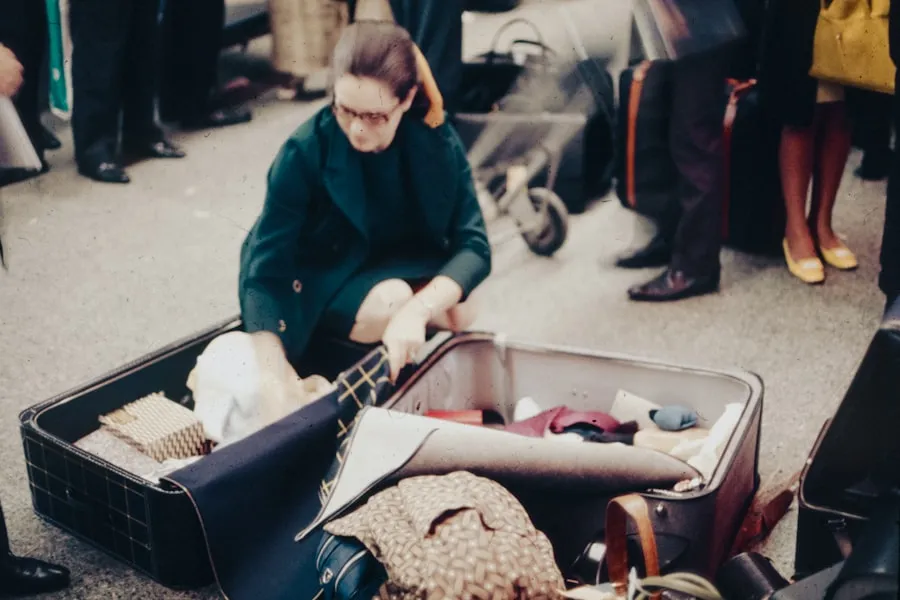
Each ticketed Southwest passenger may bring one carry-on bag and one personal item onboard at no additional charge. The carry-on belongs in the overhead bin, while the personal item should fit completely under the seat in front of you.
Common personal items include purses, briefcases, laptop cases, backpacks, small cameras, blankets, and pillows. A neck pillow does not count toward the carry-on allowance, but a larger pillow may be treated as a personal item.
If you bring more than one full-size carry-on or your bag exceeds the 24 x 16 x 10-inch limit, Southwest may require you to check an item. Measuring your packed bag before leaving home can prevent delays at the ticket counter or gate.
Personal Item Guidelines
Southwest’s current public policy does not give a separate maximum measurement for ordinary personal items. Instead, the item must be small enough to fit safely under the seat in front of you without blocking the aisle, your feet, or an evacuation path.
| Item | Carry-On Status | Important Condition |
|---|---|---|
| Laptop, phone, or tablet | Allowed | Large electronics must be secured for taxi, takeoff, and landing. |
| Power bank | Allowed with restrictions | One per passenger, no more than 100 Wh, and stored under the seat. |
| Medication | Allowed | Keep essential medication with you rather than in a checked bag. |
| Solid food and snacks | Generally allowed | Liquid or gel foods may be subject to the TSA liquid limit. |
| Pet carrier | Allowed with a pet reservation and fee | The carrier counts as either your carry-on or your personal item. |
| Most knives and sharp tools | Not allowed in carry-on baggage | Pack permitted sharp items securely in checked baggage. |
Pack your personal item with items you may need during the flight, including identification, travel documents, medication, headphones, and a small snack. A soft-sided bag can be practical, but it must still fit completely within the under-seat space.
Electronics, Batteries, and Power Banks
Southwest introduced stricter power-bank rules on April 20, 2026. Each passenger is limited to one portable charger or power bank, and it cannot exceed 100 watt-hours.
- The power bank must remain in the aircraft cabin and cannot travel in checked baggage.
- Store it in your personal item under the seat rather than in an overhead bin.
- Do not recharge the power bank using the aircraft’s in-seat power.
- When using it, keep it visible rather than enclosed inside a bag.
- If your carry-on is gate-checked, remove the power bank before handing over the bag.
Spare lithium batteries, e-cigarettes, vaporizers, and battery-powered lighters also belong in the cabin rather than in checked or gate-checked baggage. Protect exposed battery terminals against short circuits.
Warning: Do not leave a power bank, spare lithium battery, e-cigarette, or lighter inside a carry-on that is being checked at the gate. Remove these items and keep them with you in the cabin.
Special Items and Equipment
Sports Equipment
Golf clubs, skis, snowboards, and many other large sports items must travel as checked baggage because they cannot fit safely within the carry-on allowance. Southwest applies standard checked-bag and applicable overweight fees to many accepted sports items, while waiving the oversize charge for equipment listed in its sports-equipment policy.
Rules differ by equipment type. For example, golf equipment and ski equipment can have specific packaging, weight, size, and limited-liability conditions. Review the policy for your exact item before traveling.
Musical Instruments
A small musical instrument may count as your carry-on or personal item if it can be placed safely under a seat or in an available approved overhead compartment. Cabin storage is not guaranteed solely because the item is an instrument.
Under the U.S. Department of Transportation’s musical-instrument rule, a larger instrument may travel in a purchased seat when it is properly covered, meets applicable weight and safety requirements, and can be restrained safely.
If an instrument is checked, Southwest’s standard checked-bag fee may apply. The airline currently waives the oversize charge for accepted musical instruments measuring up to 150 linear inches, but overweight charges apply above 50 pounds.
Medication and Assistive Devices
Southwest recommends keeping medication in your carry-on or personal item. Medication needed for a disability does not count toward the standard baggage limit when it is packed separately from ordinary personal belongings. Review Southwest’s medication and assistive-device guidance for needles, refrigerated medicine, and onboard assistance.
Small assistive devices can generally be carried in addition to your standard baggage allowance. Mobility aids and other disability-related equipment receive separate protections and handling.
Strollers, Child Restraint Systems, and Pet Carriers
Southwest allows each ticketed customer traveling with a child to check one stroller and one child restraint system free of charge. An FAA-approved child restraint system used onboard for a ticketed child does not count toward the carry-on limit. See Southwest’s stroller and child-item policy for handling details.
A pet carrier counts as either your carry-on bag or personal item. Southwest allows one approved carrier per ticketed passenger with a pet reservation, subject to its pet-carrier size and safety requirements.
Prohibited and Restricted Items
Southwest follows federal hazardous-material rules and TSA security requirements. However, an item that is prohibited in a carry-on is not automatically prohibited in checked baggage.
- Explosives and dangerous fuels: Fireworks, dynamite, gasoline, and many similar hazardous materials are prohibited from both carry-on and checked baggage.
- Firearms: Firearms are prohibited in ordinary carry-on baggage. They may be accepted in checked baggage only when unloaded, declared, secured in an approved locked hard-sided case, and transported under all applicable laws and airline rules.
- Knives and sharp objects: Most knives and many sharp tools cannot travel in a carry-on. Permitted items should be sheathed or securely wrapped in checked baggage.
- Large sporting items and tools: Baseball bats, golf clubs, power tools, and similar objects generally belong in checked baggage.
- Hazardous aerosols and flammable materials: Rules vary by product. Some limited medicinal and toiletry aerosols are allowed, while dangerous flammable products are not.
Use the TSA’s What Can I Bring? tool to check a specific item. The TSA officer at the checkpoint makes the final decision about whether an item may pass through security.
TSA Liquid Rules
Most liquids, gels, creams, pastes, and aerosols in carry-on baggage must be in containers holding 3.4 ounces or 100 milliliters or less. Place the containers in one clear, quart-sized bag, with one bag permitted per passenger.
The TSA 3-1-1 rule has exceptions. Medically necessary liquids, breast milk, formula, and certain infant or child nourishment may exceed 3.4 ounces when declared for separate screening. Duty-free liquids can also qualify under specific packaging and receipt conditions.
Warning: Bringing a prohibited item to a security checkpoint can result in confiscation, delays, missed flights, or civil penalties. Check uncertain items before leaving home.
Tips for Packing Efficiently
Choose clothing that can be combined into several outfits, and wear your bulkiest shoes or outer layer while traveling. Packing cubes can separate clothing, electronics, and toiletries, while rolling some soft garments may reduce unused space.
Keep heavy items near the wheeled end of a rolling bag so it remains balanced. Place liquids where you can remove them easily for screening, and avoid overfilling exterior pockets because they count toward the carry-on dimensions.
- Place identification, medication, keys, and travel documents in your personal item.
- Keep your single permitted power bank and spare lithium batteries under the seat.
- Use protective sleeves or cases for laptops, tablets, cameras, and fragile equipment.
- Carry a reusable empty water bottle and fill it after security.
- Leave enough room to repack your bag after a security inspection.
If your trip includes hiking or wildlife viewing, small compact binoculars for hiking may fit in your carry-on or personal item. Protect the lenses and account for the case when checking the bag’s final size.
If your itinerary includes Georgia, you can also explore guided tours in Georgia for help planning cultural visits, mountain routes, scenic day trips, and regional travel experiences.
Pro Tip: Pack your under-seat item as though your full-size carry-on may be checked. Keep medication, documents, batteries, valuables, and anything needed during the flight in the smaller bag.
Assigned Seating, Boarding, and Stowing Bags
Note: Southwest transitioned to assigned seating on January 27, 2026. All Southwest flights now use assigned seats and Groups 1 through 8 rather than the former A/B/C boarding-position system.
Your ability to choose a seat depends on your fare, Rapid Rewards tier, eligible Southwest credit card, and seat availability. Under Southwest’s current assigned-seat policy:
- Basic: A Standard seat is normally assigned at check-in or at the departure gate. Eligible tier members or cardmembers may receive additional options.
- Choice: You may select an available Standard seat at booking.
- Choice Preferred: You may select an available Preferred or Standard seat at booking.
- Choice Extra: You may select an available Extra Legroom, Preferred, or Standard seat at booking.
Southwest assigns boarding groups according to factors that include your fare, seat type and location, Rapid Rewards status, and eligible credit-card benefits. Checking in earlier does not recreate the former numbered boarding-position advantage.
If available, Priority Boarding can be purchased beginning 24 hours before departure and provides earlier access to the aircraft and overhead-bin space.
Once onboard, go to your assigned seat and place your full-size carry-on in an available overhead bin. Put your personal item completely under the seat in front of you. Do not place a power bank in the overhead bin.
Checking Carry-On Baggage at the Gate
On a full flight, Southwest may check a carry-on because overhead-bin space is unavailable. A gate agent will attach a bag tag and tell you where to collect the bag after arrival. Follow the instructions on the claim tag because the collection point can depend on how the item is handled.
Before handing over the bag, remove:
- Power banks and spare lithium batteries
- E-cigarettes, vaporizers, and battery-powered lighters
- Medication and medical supplies needed during the trip
- Passport, identification, boarding documents, and keys
- Cash, jewelry, electronics, cameras, and other valuables
- Items needed during a connection or immediately after landing
Your personal item will normally remain with you if it fits safely under the seat. Keep it within the permitted space and follow any instructions from the gate or cabin crew.
Fees for Carry-On and Checked Baggage
Southwest does not charge for one compliant carry-on bag and one personal item. This free allowance applies to Basic, Choice, Choice Preferred, and Choice Extra fares.
Checked-bag pricing is separate. For U.S. mainland travel booked, ticketed, or changed on or after April 9, 2026, Southwest’s published optional charges include:
| Fare or Eligibility | First Checked Bag | Second Checked Bag |
|---|---|---|
| Basic, Choice, or Choice Preferred | $45 each way | $55 each way |
| Choice Extra | Free | Free |
| Rapid Rewards A-List | Free, subject to eligibility | Published fee may apply |
| Rapid Rewards A-List Preferred | Free, subject to eligibility | Free, subject to eligibility |
| Eligible primary Rapid Rewards credit cardmember | Free, subject to account and reservation requirements | Published fee may apply |
Different prices can apply to reservations booked before April 9, 2026, interisland Hawaii travel, active-duty military customers, group travel, vacation packages, partner-airline bookings, and passengers with eligible status or card benefits.
Partner-Airline Itineraries
If your itinerary includes another airline, that carrier may have different carry-on dimensions, personal-item requirements, battery rules, checked-bag fees, or seat-assignment procedures. Review the operating carrier shown for each flight segment rather than assuming Southwest’s rules apply to the full trip.
Frequently Asked Questions
What is Southwest’s carry-on size limit?
A Southwest carry-on can measure up to 24 inches long, 16 inches wide, and 10 inches high. Wheels, handles, pockets, and attachments count toward those measurements.
What is Southwest’s personal-item size limit?
Southwest’s current public carry-on policy does not list a numeric maximum for an ordinary personal item. It must be smaller than your carry-on and fit completely under the seat in front of you.
Does Southwest have a carry-on weight limit?
Southwest does not publish a specific carry-on weight cap. Your bag must still be manageable and safe to place in the overhead bin.
Can I bring a power bank on Southwest?
Yes, but Southwest limits each passenger to one power bank of no more than 100 Wh. It must stay in the cabin, should be stored under the seat, cannot be charged from in-seat power, and must remain visible while being used.
Are liquids allowed in a Southwest carry-on?
Yes. Most liquids, gels, creams, and aerosols must be in containers of 3.4 ounces or 100 milliliters or less and fit in one clear quart-sized bag. Medically necessary liquids, breast milk, formula, and certain child-nourishment items can qualify for exceptions and separate screening.
Can I bring food and snacks on Southwest?
Yes. Solid foods and ordinary snacks are generally allowed in carry-on baggage. Liquid or gel foods over 3.4 ounces may be restricted at the TSA checkpoint. International destinations may also impose agricultural or customs restrictions.
What happens if my Southwest carry-on is too large?
If your bag exceeds 24 x 16 x 10 inches or cannot be stowed safely, Southwest may require you to check it. Applicable checked-bag, overweight, oversize, or special-item charges can apply depending on the bag and your eligibility.
Do medical devices or pet carriers count as carry-on items?
Disability-related medication and assistive devices may be exempt from ordinary baggage limits when packed separately as required. A pet carrier is different: it counts as either your carry-on bag or your personal item and requires compliance with Southwest’s pet policy.
Plan Your Carry-On Before You Fly
Measure your packed carry-on, keep your personal item small enough for the under-seat space, and place essential items where you can reach them. Remember that Southwest does not currently publish a separate numeric limit for ordinary personal items.
Pay special attention to the 2026 rules. Southwest now uses assigned seats and Groups 1 through 8, Basic customers normally receive their seat at check-in, and each passenger can carry only one qualifying power bank. Before a bag is gate-checked, remove batteries, medication, documents, valuables, and anything needed during the flight or a connection.
Sources
- Southwest Carryon and Personal Item Policy — carry-on dimensions, number of items, placement, and pet-carrier counting
- Southwest Assigned Seat Selection and Southwest Boarding Process — fare-based seating and current boarding groups
- Southwest Optional Travel Charges — carry-on, checked-bag, sports-equipment, and musical-instrument charges
- Southwest Lithium Battery and Power-Bank Policy — April 2026 portable-charger restrictions
- Southwest Medication and Assistive-Device Guidance — medication, medical supplies, and baggage-limit exceptions
- TSA Liquids Rule and TSA What Can I Bring? — checkpoint restrictions, liquid limits, batteries, food, and prohibited items


1 Comment
Pingback: Complete West Palm Beach Flights Guide [2026]