
Last Updated on September 11, 2026 by Daniel Globe
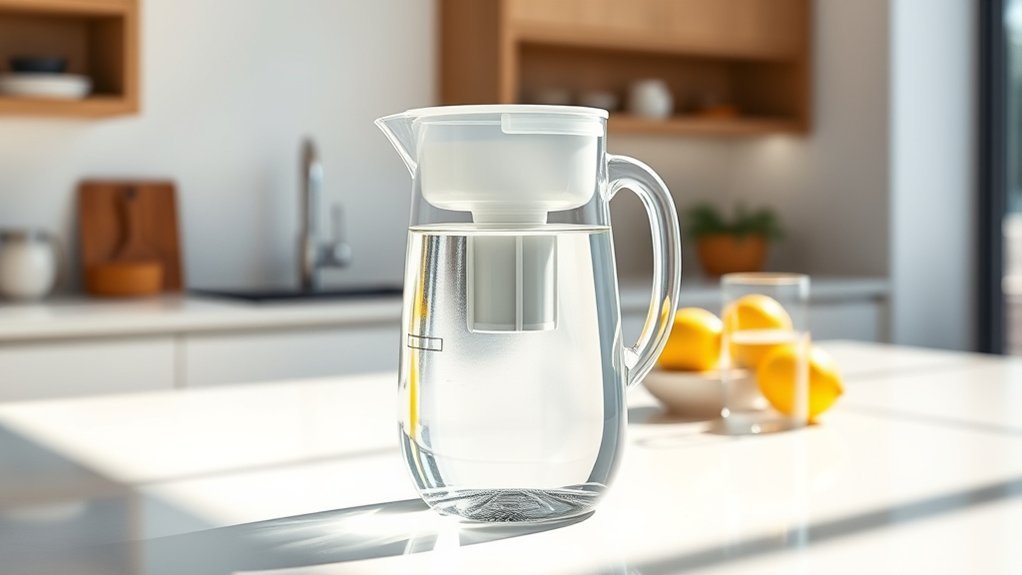
The LifeStraw Home 7-Cup Glass Water Filter Pitcher combines a hand-blown borosilicate glass carafe with two filtration stages. Its membrane microfilter targets bacteria, parasites, microplastics, dirt, and cloudiness, while its activated carbon and ion exchange filter reduces chlorine, selected chemicals, and several heavy metals. It offers broader protection than many basic carbon-only pitchers, but its slower flow, small capacity, glass weight, and contaminant limits will not suit every household.
Quick Answer
The LifeStraw 7-Cup Glass Pitcher is a strong choice for one- or two-person households that want a glass pitcher with tested reduction of bacteria, parasites, microplastics, lead, chlorine, and selected chemicals. Expect several reservoir fills and roughly 20 to 25 minutes to produce seven cups after the filters are conditioned.
Key Takeaways
- The 0.2-micron membrane removes bacteria, parasites, and microplastics, while the carbon and ion exchange filter reduces chlorine, heavy metals, and selected chemicals.
- The glass model has a nominal 7-cup capacity, weighs about 2 pounds 4 ounces, and requires multiple reservoir top-ups.
- The carbon filter lasts up to 40 gallons or two months; the membrane lasts up to 264 gallons or one year.
- It does not remove viruses, salt, fluoride, arsenic, or every chemical that may be present in water.
- The slower flow and breakable glass body make it better for small households than for high-volume use.
Disclosure: As an Amazon Associate I earn from qualifying purchases. Some links on this page are affiliate links, at no extra cost to you.
What the LifeStraw 7-Cup Glass Removes
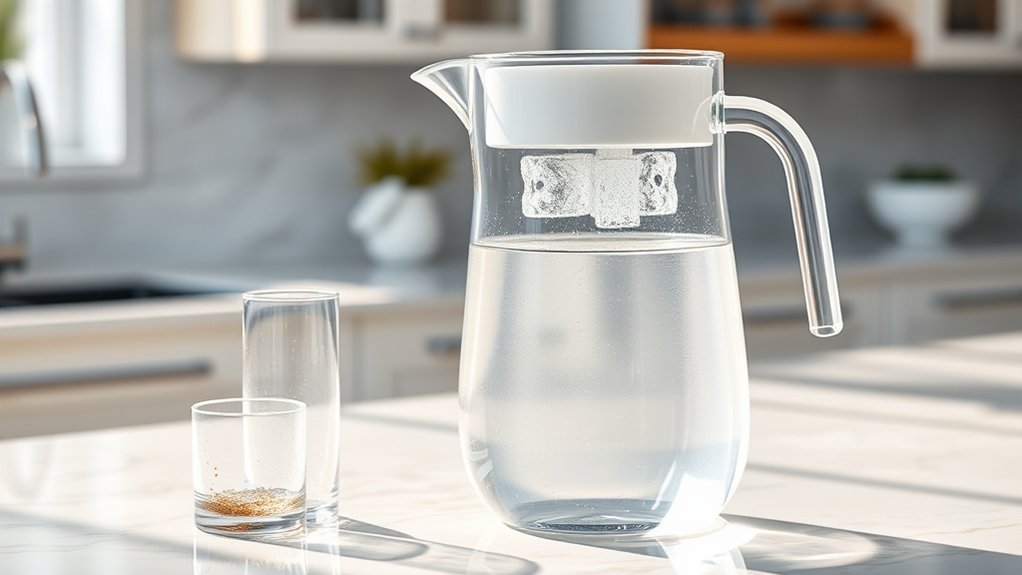
The LifeStraw Home pitcher uses two different filters, so it is important to distinguish between contaminants the system removes and contaminants it reduces. The membrane physically blocks microorganisms and particles. The second filter uses activated carbon and ion exchange media to lower concentrations of tested chemicals and metals.
How the Two-Stage Filter Works
The 0.2-micron membrane microfilter uses hollow-fiber pores to block particles that are larger than the pores. According to LifeStraw’s current product specifications, it removes:
- 99.999999% of bacteria, including test organisms such as E. coli
- 99.999% of parasites, including Giardia and Cryptosporidium
- 99.999% of microplastics
- Dirt, sand, cloudiness, and other suspended particles covered by the product’s testing
The activated carbon and ion exchange filter serves a different purpose. It reduces chlorine and odors, selected pesticides and herbicides, PFOA and PFOS, and tested heavy metals such as lead, mercury, cadmium, copper, and chromium III.
Note: A claim that a filter reduces “PFAS,” “pharmaceuticals,” or “pesticides” does not mean it removes every compound in that broad category. Check the current performance data sheet for the specific tested substances.
Contaminant Performance Summary
| Contaminant Group | Filter Stage | Published Claim |
|---|---|---|
| Bacteria | Membrane microfilter | Removes 99.999999% |
| Giardia and Cryptosporidium | Membrane microfilter | Removes 99.999% |
| Microplastics | Membrane microfilter | Removes 99.999% |
| Lead and selected heavy metals | Ion exchange filter | Reduces tested metals |
| Chlorine and odor | Activated carbon | Reduces chlorine for improved taste and odor |
| PFOA, PFOS, pesticides, and selected emerging contaminants | Activated carbon and ion exchange | Reduces specifically tested compounds |
What the LifeStraw Pitcher Does Not Remove
The pitcher should not be treated as a universal purifier. LifeStraw states that its Home filters do not remove viruses, dissolved salt, fluoride, arsenic, or chloramine. They are also not designed to make urine, sewage, seawater, brackish water, petroleum-contaminated water, or every chemically polluted source safe.
Warning: Do not rely on this pitcher when viruses, salt, sewage, industrial chemicals, fuel, or an unknown contaminant may be present. During a boil-water advisory, continue following the local authority’s instructions. If viral contamination is possible, boil the water or use a treatment method specifically rated for virus removal.
If you use private-well water, have it tested and compare the results with the pitcher’s current performance sheet. A filter can only address contaminants included in its tested claims.
Why the LifeStraw Glass Pitcher Stands Out
Many ordinary pitcher filters rely mainly on activated carbon for taste and odor. The LifeStraw Home adds a membrane stage designed to remove bacteria, parasites, and microplastics. That broader filtration is its main advantage.
Certification and Testing
Current LifeStraw documentation describes the glass pitcher as WQA certified for specified NSF/ANSI 42, 53, and 401 reduction claims. These include chlorine, particulates, selected metals, cysts, turbidity, microplastics, and named emerging contaminants. Its bacteria and parasite performance is described as meeting US EPA and NSF P231 testing protocols.
Certification language matters. “WQA certified,” “tested to,” and “meets a standard” describe different levels of verification. LifeStraw’s current PFAS clarification also states that its documentation is specific to PFOA and PFOS and is not marketed as certification to the expanded PFAS requirements introduced in 2022.
Glass Design, Capacity, and Fit
The carafe is made from hand-blown, food-grade borosilicate glass and sits in a removable silicone base. LifeStraw lists the glass model at approximately 11.25 by 5.8 inches and 2 pounds 4 ounces before it is filled.
The nominal capacity is seven cups. However, the upper reservoir does not hold the entire finished capacity at once, so you must refill it several times. Measure your refrigerator shelf before buying because the pitcher’s height, lid, and slight hand-blown variations may affect the fit.
Glass avoids a plastic carafe and gives the pitcher a clean appearance, but it is heavier and more breakable than a plastic model. Slight variation in shape is normal because the carafe is hand blown.
LifeStraw also states that each product purchase supports one year of safe water for a child through its Give Back program. That social program is separate from the pitcher’s filtration performance.
What’s Included and How to Set It Up
The pitcher arrives with the main filtration parts needed for first use. Setup is simple, but correct alignment and an initial discarded batch are necessary.
Box Contents
The current glass-pitcher package includes:
- 7-cup hand-blown glass carafe
- Removable silicone base
- Easy-fill lid
- Filter housing and housing cap
- LifeStraw membrane microfilter
- Activated carbon and ion exchange filter
- User manual
Inspect the glass, housing, seals, and filters before assembly. Do not use the pitcher if the glass is cracked or if a seal or housing component appears damaged.
Filter Installation
Before installation, remove the filter housing and rinse it with clean water. Wash the carafe, lid, silicone base, housing, and seals with warm water and mild dish soap, then rinse thoroughly. Do not use soap on the membrane or carbon filter.
Install the activated carbon and ion exchange filter in the housing as shown in the user manual. Place the assembled housing in the pitcher and align the water spouts correctly. Press evenly rather than forcing the housing into the hand-blown glass.
Pro Tip: If the housing seal feels tight, wet the seal lightly with clean water before removing or reinstalling it. Do not pry it with a knife, screwdriver, or another sharp tool.
First Use Steps
| Step | Action | Purpose |
|---|---|---|
| 1 | Remove and rinse the filter housing. | Prepare the housing for assembly. |
| 2 | Wash and rinse the non-filter parts. | Remove dust and handling residue. |
| 3 | Install the carbon filter and confirm the membrane is seated correctly. | Complete both filtration stages. |
| 4 | Insert the housing and align the spouts. | Support proper flow and prevent bypass. |
| 5 | Fill the reservoir and let the first batch filter completely. | Condition the new filters. |
| 6 | Discard the first filtered batch. | Complete the manufacturer’s initial-flush procedure. |
Do not drink the initial discarded batch. Refill the reservoir and begin normal use after the first cycle is complete.
How the LifeStraw Pitcher Changes Taste
The activated carbon stage reduces chlorine and odors that can make municipal water taste or smell sharp. Taste results still depend on the source water, filter condition, cleaning schedule, and which dissolved substances are present.
Chlorine Reduction
The pitcher’s chlorine claim is primarily a taste-and-odor benefit. Less chlorine taste may make the water more pleasant, especially if your municipal supply has a noticeable pool-like smell.
- Reduces tested levels of chlorine
- Reduces chlorine-related odor
- May produce a cleaner-tasting glass of water
- Does not remove chloramine, according to LifeStraw’s current support information
Chlorine is also used to control germs in public water systems, so chlorine reduction should not be presented as proof that the original regulated level was harmful.
Smoother Pour and Mouthfeel
Removing particles, odors, and compounds that affect taste can make the water seem smoother or less harsh. The membrane, not the carbon filter, is responsible for removing microplastics and suspended particles.
The silicone base helps steady the glass carafe, but the pitcher is heavier than many plastic models. Hold the handle securely, support the carafe when it is full, and avoid striking it against a sink or countertop.
Cleaner Flavor
Cleaner flavor comes mainly from reducing chlorine, odors, and specifically tested organic compounds. The pitcher does not add flavor or remove all dissolved minerals. LifeStraw states that common minerals such as magnesium and potassium remain in the filtered water.
Replace the carbon filter on schedule because exhausted carbon may no longer provide the same taste and odor reduction. Cleaning the housing and seals also helps prevent stale smells or buildup.
How Fast the LifeStraw Pitcher Filters Water
The LifeStraw Home filters more slowly than a basic carbon-only pitcher because the water must pass through a dense carbon and ion exchange stage and a 0.2-micron membrane.
Normal Filtering Time
According to LifeStraw’s current flow guidance, a new filter may be slow during its first three batches. After conditioning, expected flow is approximately 85 to 225 milliliters per minute, or about one-third cup to one cup per minute.
| Stage | What to Expect | Practical Step |
|---|---|---|
| First three batches | Flow may be slower while the filters hydrate. | Complete the initial cycles before judging performance. |
| One reservoir batch | Approximately seven minutes under typical conditions. | Refill after the upper reservoir empties. |
| Seven finished cups | Approximately 20 to 25 minutes. | Filter water before you urgently need it. |
| Older or dirty filter | Flow may gradually slow. | Clean, rehydrate, or replace the correct filter. |
How to Fix Slow Flow
Slow flow does not always mean that the membrane has reached the end of its life. Water quality, trapped air, mineral buildup, poor cleaning, and letting the membrane dry can all reduce flow.
- Rinse the membrane: Remove it and rinse it with clean water. Do not use soap.
- Rehydrate a dry membrane: Soak it in clean water for approximately 30 minutes.
- Check the assembly: Make sure the housing, cap, spouts, filters, and seals are seated correctly.
- Clean the non-filter parts: Buildup in the housing or around seals can interfere with normal operation.
- Deep-clean when needed: Follow the current manufacturer instructions if mold, algae, mineral buildup, or persistent odor appears.
- Replace the membrane if flow remains poor: A heavily clogged or exhausted membrane may require replacement.
How to Clean and Store the LifeStraw Pitcher
Routine Cleaning
LifeStraw recommends regular cleaning approximately every one to two weeks.
- Discard the remaining water.
- Remove the membrane and carbon filters.
- Rinse both filters with clean water only.
- Wash the carafe, lid, housing, silicone base, and seals with warm soapy water.
- Rinse all non-filter parts thoroughly.
- Reassemble the pitcher and discard the first filtered batch after cleaning.
Warning: Never wash either filter with soap, place a filter in a dishwasher, or use oil or grease to lubricate a tight seal.
Deep Cleaning
Deep-clean the system every few months or sooner if you notice mold, algae, persistent odor, or visible buildup. LifeStraw’s current cleaning guide instructs users to prepare a solution of one-quarter teaspoon of household bleach in two cups of warm water.
Disassemble the pitcher and set the carbon filter aside. Soak the applicable internal components, excluding the carbon filter, for 10 minutes. Rinse every part thoroughly afterward. Wash non-filter pieces with soap and water, but rinse the membrane with clean water only.
Long-Term Storage
If you will not use the pitcher for more than two weeks, do not simply let the membrane dry out. A dry membrane may become difficult to rehydrate and may filter more slowly.
- Empty and disassemble the pitcher.
- Remove the carbon filter and let it air-dry for approximately 30 minutes.
- Store the dry carbon filter in a sealed container in a cool, dry place. If storage will exceed two months, plan to install a new carbon filter when you resume use.
- Rinse the membrane with clean water.
- Disinfect it according to LifeStraw’s current long-term storage procedure.
- Prepare a storage solution with one teaspoon of salt in two cups of clean water.
- Keep the membrane fully submerged in the salt solution inside a sealed container.
- When restarting, rinse the membrane, reassemble the pitcher, run two batches, and discard the first batch.
Review the latest LifeStraw storage instructions before extended storage because cleaning procedures can change.
When to Replace the LifeStraw Filters
The two filters have different service lives:
- Activated carbon and ion exchange filter: up to 40 gallons, 150 liters, or approximately two months.
- Membrane microfilter: up to 264 gallons, 1,000 liters, or approximately one year.
Replace each filter when it reaches either its volume limit or time limit, whichever comes first. Actual life may be shorter when source water contains more sediment, minerals, or other filter-loading material.
Possible signs that maintenance or replacement is needed include:
- Persistent slow flow after rinsing and rehydrating the membrane
- Return of chlorine taste or odor
- Visible damage to a filter or seal
- Reaching the stated gallon or time limit
- Persistent smell or buildup that remains after proper cleaning
Write the installation date on your calendar or phone. Tracking time is easier than trying to estimate gallons after several weeks of use.
Who the LifeStraw Glass Pitcher Is Best For
Best For
The LifeStraw 7-Cup Glass Pitcher is most suitable for:
- One- or two-person households with moderate daily water use
- People who prefer a glass carafe instead of a plastic pitcher body
- Homes concerned about tested bacteria, parasites, microplastics, lead, chlorine, PFOA, PFOS, and selected chemicals
- Users willing to wait for membrane filtration
- People who can maintain two separate filter-replacement schedules
- Households that have tested their water and confirmed that the pitcher’s claims match their concerns
Who Should Skip It
Consider another treatment system if you:
- Need virus removal
- Need to remove fluoride, arsenic, chloramine, nitrates, salt, or total dissolved solids
- Want instant or high-volume filtered water
- Have a large household that regularly empties seven cups
- Need a lightweight or shatter-resistant pitcher
- Want a filter for seawater, brackish water, sewage, urine, or unknown industrial contamination
People with weakened immune systems should discuss water-treatment needs with a healthcare professional and a qualified water specialist, especially when Cryptosporidium or another waterborne pathogen is a concern.
Frequently Asked Questions
What are the downsides of the LifeStraw 7-Cup Glass Pitcher?
Its main drawbacks are slow filtration, a small seven-cup capacity, multiple reservoir top-ups, a heavy and breakable glass body, and two filter-replacement schedules. It also does not remove viruses, fluoride, arsenic, chloramine, or salt.
How long does it take to filter a LifeStraw glass pitcher?
After the first three conditioning batches, one upper-reservoir batch may take about seven minutes. Because the reservoir requires several refills, producing the full seven cups commonly takes about 20 to 25 minutes under normal conditions.
Can you drink urine through a LifeStraw?
No. LifeStraw filters do not remove the dissolved salts in urine and are not designed to make urine safe to drink. Filtering other liquids can also clog or damage the membrane.
Can you drink any water with the LifeStraw Home Pitcher?
No. Use it only when the source and expected contaminants match its tested claims. It should not be used for seawater, brackish water, sewage, urine, fuel-contaminated water, or water with unknown industrial chemicals. Surface water may also require virus treatment.
Does the LifeStraw Home Pitcher remove viruses?
No. The 0.2-micron membrane removes tested bacteria and parasites but is not rated for virus removal. Follow boil-water notices and use an additional virus treatment when local authorities or water conditions require it.
Does the LifeStraw glass pitcher remove fluoride?
No. LifeStraw states that its products do not remove fluoride. A different treatment technology, selected according to a tested water report, is needed if fluoride reduction is your goal.
How often should you clean the LifeStraw pitcher?
Clean the pitcher, lid, housing, base, and seals about every one to two weeks. Rinse the filters with clean water only. Deep-clean the system every few months or sooner if mold, algae, odor, or visible buildup appears.
Can the LifeStraw glass pitcher go in the dishwasher?
LifeStraw’s current primary product specifications recommend hand-washing the pitcher and housing after removing the filters. Hand-washing is the conservative choice. Never place either filter in a dishwasher or clean a filter with soap.
Conclusion
The LifeStraw Home 7-Cup Glass Pitcher offers broader filtration than many standard carbon pitchers. Its membrane removes tested bacteria, parasites, and microplastics, while the carbon and ion exchange stage reduces chlorine, several heavy metals, PFOA, PFOS, and selected chemicals.
It is a practical fit for a small household that values a glass carafe and can plan around a 20- to 25-minute fill time. It is less suitable when you need high capacity, fast flow, virus removal, desalination, fluoride reduction, or treatment for unknown chemical contamination. Proper setup, regular cleaning, moist membrane storage, and on-time filter changes are essential for steady performance.
Sources
- LifeStraw Home 7-Cup Glass Water Filter Pitcher — product materials, dimensions, filter life, included components, filtration claims, and standards.
- LifeStraw Home Pitcher Product Guide — setup, filter replacement, cleaning, and storage guidance.
- LifeStraw PFAS Testing and Certification Clarification — PFOA/PFOS scope and updated PFAS-certification context.
- LifeStraw Home Flow-Rate Guidance — normal filtering speed and full-pitcher timing.
- LifeStraw Pitcher Cleaning and Maintenance Guide — routine and deep-cleaning procedures.
- CDC Guide to Choosing Home Water Filters — selecting treatment according to the germs and chemicals present in your water.
