
Last Updated on July 28, 2026 by Daniel Globe
The wrong tent fabric can make a good trip harder. Nylon may loosen after a wet, humid night, while some polyester shelters add weight or bulk. The better choice depends on more than the fiber name: denier, weave, coating, seams, tent design, weather, and how far you carry the shelter all affect real-world performance.
Quick Answer
Choose nylon when low weight, packability, and strength for the weight are your main goals. Choose polyester when you want a fly that absorbs less water and stays more stable in rain or humidity. Do not judge by fiber alone: coating, denier, weave, seams, and total tent weight can change the result.
Key Takeaways
- Nylon usually offers excellent strength and abrasion resistance for its weight, which is useful for lightweight shelters.
- Polyester absorbs less water and stretches less when damp, so a polyester fly usually holds a tighter pitch in wet weather.
- Polyester is not automatically heavy, cheap, or more UV-resistant; modern lightweight polyester and poly-nylon blends can compete with nylon.
- Denier describes yarn linear density, not finished-fabric weight, waterproofness, or overall durability.
- The waterproof coating, seam construction, ventilation, and quality of the finished fabric can matter as much as whether the yarn is nylon or polyester.
What’s in This Article
- Nylon vs. polyester at a glance
- What determines tent-fabric performance
- Advantages of nylon tents
- Disadvantages of nylon tents
- Advantages of polyester tents
- Disadvantages of polyester tents
- Waterproofing, coatings, and condensation
- Which tent fabric should you choose?
- Care and maintenance
- Frequently asked questions
Disclosure: As an Amazon Associate I earn from qualifying purchases. Some links on this page are affiliate links, at no extra cost to you.
Nylon vs. Polyester Tents at a Glance
Nylon and polyester are both synthetic fibers used in tent flies, floors, and bodies. Neither is waterproof on its own when woven into a typical lightweight tent fabric. Manufacturers add silicone, polyurethane, polyether urethane, or another coating or laminate to block water.
| Trait | Nylon | Polyester |
| Strength for the weight | Usually excellent, especially with high-tenacity nylon yarns | Can be excellent, but performance varies widely by yarn, weave, and coating |
| Wet stretch | Absorbs more moisture and may loosen in rain or high humidity | Absorbs less moisture and usually stays more dimensionally stable |
| Abrasion resistance | Generally very good for its weight | Good in suitable weights, but not automatically equal at the same denier |
| UV performance | Can degrade with long sun exposure; coating, color, yarn type, and thickness matter | Often has a good reputation for UV stability, but finished-fabric tests do not support a blanket rule |
| Best fit | Backpacking, compact shelters, and designs that prioritize strength-to-weight | Wet or humid trips, low-maintenance pitching, car camping, and many modern lightweight shelters |
Polycotton is another option for large base-camp and family tents. It can feel cooler and quieter than thin synthetic fabric, but it is heavier, bulkier, slower to dry, and usually more expensive. It does not melt like nylon or polyester, but it can still burn and should never be treated as fireproof.
What Actually Determines Tent-Fabric Performance?
The fiber name is only the starting point. A well-made polyester fabric can outperform a poor nylon fabric, and the reverse is also true. Compare the complete specification rather than choosing from the words “nylon” or “polyester” alone.
What Does Denier (D) Mean?
Denier is a measure of yarn linear density. One denier means 9,000 meters of the yarn weighs one gram. A higher number usually means a thicker, heavier yarn within the same material family, but denier does not tell you the fabric’s finished weight, weave density, coating weight, tear strength, or waterproof rating.
| Example | What it usually signals |
| 7D | Extremely fine yarn used in specialized ultralight fabrics; careful handling is important |
| 10D–20D | Common range for many lightweight flies, canopies, and floors |
| 40D–75D | Often used where durability matters more than minimum weight, including many camping-tent flies and floors |
Note: A 20D nylon and a 20D polyester are not direct durability equivalents. Compare grams per square meter, tear-strength data, coating type, waterproof rating, and warranty when the manufacturer provides them.
Weave, Ripstop, and Coatings
Ripstop fabric contains reinforcing yarns in a grid. The grid can help limit the spread of a small tear, but it does not make a fabric puncture-proof or waterproof. Waterproofness comes mainly from a coating, film, or laminate and from well-sealed seams.
Coatings also change weight, stretch, tear behavior, aging, repair methods, and drying time. Silicone-coated fabrics often need a silicone-compatible seam sealer, while polyurethane-coated fabrics require a different product. Check the tent maker’s instructions before treating the fly or floor.
The Tent Part Matters
A fly needs low water absorption, reliable waterproofness, and stable tension. A floor needs puncture, abrasion, and water-pressure resistance. An inner canopy needs airflow and moisture management. For that reason, one tent may combine a nylon floor, polyester fly, mesh panels, and reinforced fabric at stress points.
The best tent fabric is a finished system—not just a fiber name. Yarn, weave, coating, seams, ventilation, and design work together.
Advantages of Nylon Tents
Nylon remains common in backpacking and mountaineering tents because high-quality nylon can deliver strong tear and abrasion performance at a low fabric weight. It is also flexible and packs into a small space.
Strong and Packable for Its Weight
Nylon’s strength-to-weight ratio gives designers room to build light shelters without relying on thick fabric. Its ability to stretch under load can help spread stress rather than failing suddenly. The total tent weight still depends on poles, zippers, floor size, architecture, and accessories, so the fabric name alone does not guarantee an ultralight tent.
How Nylon Handles Rough Use
Nylon generally has good abrasion resistance, which is useful at floors, pole sleeves, guy-out points, and reinforced corners. Thin ultralight nylon is still vulnerable to sharp rocks, thorns, careless packing, and repeated rubbing. A suitable footprint and a cleared campsite can reduce damage.
Disadvantages of Nylon Tents
Nylon takes up more moisture than polyester. In a rainfly, that can lead to water-weight gain, stretching, and a looser pitch. Long exposure to sunlight can also weaken many nylon fabrics, although the actual rate depends on yarn type, denier, color, coating, and the quality of the finished material.
Why Nylon Can Sag When Wet
Moisture can change nylon’s dimensions and tension. A wet or humid fly may loosen enough to flap, touch the inner tent, or create places where water can pool. Proper initial tension and adjustable guylines help, and some silicone-coated or blended fabrics reduce the effect.
Do not assume every nylon tent will sag by the same amount. Published percentages from one yarn or laboratory test do not automatically apply to every coated tent fabric.
How Sunlight Affects Nylon
Ultraviolet exposure damages outdoor textiles over time. Nylon has a reputation for weaker UV resistance than polyester, but real finished-fabric testing shows that coating chemistry, fabric thickness, color, additives, and construction can outweigh the base-fiber difference. Both materials last longer when you avoid unnecessary all-day exposure.
Warning: Do not leave any lightweight tent pitched in direct sun for weeks at a time unless it is designed for long-term use. UV damage can weaken nylon, polyester, stitching, seam tape, and waterproof coatings.
Advantages of Polyester Tents
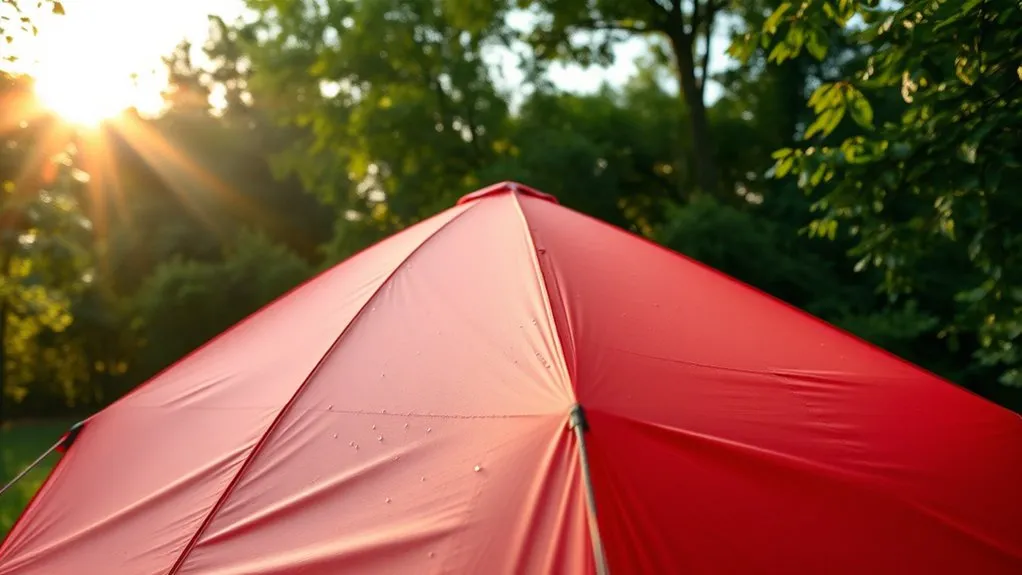
Polyester absorbs less water and has lower wet stretch than nylon. A polyester fly usually stays tighter in rain and humidity, needs less mid-storm adjustment, and carries less absorbed water when packed. These benefits now appear in both roomy camping tents and modern lightweight backpacking shelters.
A More Stable Pitch in Wet Weather
Lower moisture uptake helps polyester keep its dimensions. This can reduce flapping, limit contact between the fly and inner tent, and make a trekking-pole shelter feel more structurally consistent through a wet night.
Drying and Sun Exposure
Polyester yarn absorbs less water, so it often dries faster than a comparable nylon fabric. Polyester is also commonly selected for outdoor products that need dimensional stability and weather resistance. Still, no polyester tent is immune to UV damage, coating failure, or mildew caused by wet storage.
Disadvantages of Polyester Tents
Basic polyester has historically offered lower strength for a given weight than premium nylon, so many budget tents use thicker polyester fabric. That can add weight and packed bulk. However, this is not a universal rule: high-tenacity polyester, better weaves, and modern coatings have made lightweight polyester competitive in backpacking tents.
Strength, Weight, and Packability Vary
Compare finished specifications rather than assuming polyester is heavy. A well-designed 20D polyester fly may be lighter than a 40D nylon fly, while a large 75D polyester family tent will be much heavier than either. Fabric hand also differs: some polyester feels stiffer or noisier than nylon, but coating and weave influence that feel.
Color and Finish Quality
All dyed outdoor fabrics can fade after long sun exposure. Dye migration or color transfer is more closely tied to dye quality, coating, heat, moisture, and storage than to polyester alone. Dry the tent fully before storing it and follow the manufacturer’s cleaning instructions.
Waterproofing, Coatings, and Condensation
Woven nylon and polyester tent fabrics need a waterproof treatment. Common systems include silicone, polyurethane, polyether urethane, mixed coatings, and laminated films. Their hydrostatic-head rating shows how much water pressure the finished fabric resists in a laboratory test, but seam design, aging, abrasion, and workmanship also affect leaks in the field.
Use the Right Repair Product
Do not apply a general spray simply because the tent is nylon or polyester. First identify the coating. Silicone-treated fabric needs a silicone-compatible sealer; polyurethane-coated fabric needs a compatible urethane product. Refresh treatment when water stops beading, seam tape peels, or the coating becomes flaky—not automatically every season.
Condensation Is Not Just a Fabric Problem
Polyester does not automatically create more condensation than nylon. Condensation is driven by humidity, temperature, wet ground or gear, occupants’ breath, and airflow. Tent shape, double-wall spacing, vents, doors, and how tightly the fly is pitched usually matter more than the base fiber.
Pro Tip: To reduce condensation, pitch on higher, drier ground, keep the fly taut, open opposing vents, and preserve an air gap between the fly and inner tent whenever weather allows.
Which Tent Fabric Should You Choose?
Start with the type of trip, then compare the whole tent. Weather, distance, campsite exposure, packed size, repairability, warranty, and total weight are more useful than a simple “nylon is best” or “polyester is best” rule.
| Use case | Good starting choice | What to verify |
| Ultralight backpacking | High-tenacity nylon or lightweight polyester | Total trail weight, tear strength, wet stretch, floor durability, and repair method |
| Frequent rain or humidity | Polyester or a low-wet-stretch blend | Coating, hydrostatic head, seam sealing, vents, and fly coverage |
| Car camping | Durable polyester is often practical | Ventilation, pole strength, floor rating, packed size, and ease of setup |
| Long base-camp stays | Heavy polyester, specialty UV-treated fabric, or polycotton | Manufacturer’s intended use, UV treatment, fire warnings, repair support, and packed weight |
| Four-season or high-wind use | Choose the proven tent design, not fiber alone | Pole structure, guy points, snow loading, test history, and weather rating |
Nylon is still a strong choice when every ounce and cubic inch matter. Polyester is often easier to live with in prolonged rain because it keeps a steadier pitch. A modern polyester backpacking tent or poly-nylon blend may give you both low weight and reduced wet stretch, so compare actual specifications before buying.
How to Care for Nylon and Polyester Tents
- Shake out grit and remove sap, bird droppings, or heavy dirt with a soft cloth and a tent-safe cleaner.
- Do not machine-wash or machine-dry the tent unless the manufacturer specifically allows it.
- Dry the tent completely after every wet trip. If you pack it wet, unpack and dry it as soon as possible.
- Store it loosely in a cool, dry place rather than compressed in a hot attic, damp basement, or car trunk.
- Inspect seam tape, coatings, zippers, pole sleeves, and guy points before a major trip.
- Use only cleaners, DWR treatments, and seam sealers compatible with the tent’s coating.
Warning: Assume a tent can burn unless its label says otherwise. Keep stoves, heaters, lanterns, candles, cigarettes, and campfires away from the shelter. Never use an open-flame appliance inside a standard tent.
Frequently Asked Questions
Can I add more waterproofing to a nylon or polyester tent?
Yes, but match the product to the coating rather than the base fiber. Silicone-treated fabric needs a silicone-compatible sealer, while polyurethane-coated fabric needs a compatible urethane treatment. Clean the area, follow the tent and product instructions, and let it cure fully before packing.
How do I clean and maintain my tent?
Use lukewarm water, a soft sponge or cloth, and a cleaner approved for tents. Avoid bleach, strong detergent, washing machines, and dryers. Rinse well, dry the shelter completely, and store it loose in a cool, dry place.
Do eco-friendly nylon and polyester tents exist?
Yes. Current options include recycled nylon, recycled polyester, solution-dyed yarns, PFAS-free water-repellent finishes, and blended fabrics. Compare the percentage of recycled content, durability, repair support, and recognized textile certifications rather than relying on a broad “eco” claim.
How do temperature swings affect nylon and polyester tents?
Nylon can change tension as temperature and humidity shift, so a fly may need adjustment overnight. Polyester is usually more dimensionally stable. Pole contraction, wind, wet ground, and the tent’s geometry can also change the pitch.
How long do nylon and polyester tents last?
There is no reliable universal lifespan. Use frequency, UV exposure, abrasion, wet storage, coating chemistry, seam quality, and repair history can change service life from a few hard seasons to many years. Inspect the fly and floor for peeling, stickiness, brittleness, pinholes, or seam failure.
Is polyester always heavier than nylon?
No. Polyester has often been used in thicker, lower-cost camping fabrics, which created that reputation. Modern low-denier polyester can be used in lightweight backpacking tents. Compare the complete tent weight and the finished fabric’s grams per square meter, not the fiber name alone.
Is ripstop fabric waterproof?
Not by itself. Ripstop describes a reinforcing weave intended to slow tear growth. Waterproofness comes from a coating, membrane, or laminate, plus sealed or taped seams and sound construction.
Your best choice depends on how you camp. Nylon remains excellent when packability and strength for the weight lead the list. Polyester is attractive when a stable wet-weather pitch and low water absorption matter most. Compare the finished fabric and the complete tent—not one material label—and you will make a more reliable choice.
Sources
- SlingFin: Tent Fabric 101 — nylon and polyester strength, stretch, water absorption, and UV-performance caveats
- SlingFin: Waterproof Fabric Coatings 101 — coatings, hydrostatic-head testing, tear behavior, and coating aging
- NEMO Equipment: OSMO Fabric Development — current poly-nylon blends, wet stretch, coatings, and recycled yarns
- REI Co-op: Tent Care — cleaning, drying, and storage guidance
- REI Co-op: Preventing Tent Condensation — ventilation and pitch practices
- U.S. Consumer Product Safety Commission: Camping Hazards — tent fire and open-flame safety

