
Last Updated on July 28, 2026 by Ethan Caldwell
Some ferry trips are more than a way to get from one port to another. The best scenic ferry routes combine memorable coastlines, comfortable cabins, good food, and time to slow down. This guide compares standout overnight and daytime crossings, then explains how to choose, budget, book, and prepare for a smoother journey.
Quick Answer
Top scenic ferry routes include Copenhagen–Oslo for Oslofjord views, Stockholm–Helsinki for Baltic archipelagos and spa-style ships, Hull–Rotterdam for an entertainment-filled overnight crossing, Oarai–Tomakomai for Japan’s Pacific coast, and the Alaska Marine Highway for long stretches of rugged wilderness.
Key Takeaways
- Choose the route for its scenery first, then compare schedule, cabin type, vehicle rules, accessibility, and port location.
- Use the ferry operator’s website for current sailing times, fares, weather notices, and check-in deadlines.
- Overnight prices may include a required cabin, while meals, parking, pets, vehicles, and port transfers can cost extra.
- Pack medicine, documents, chargers, and overnight essentials in a small bag you can take from the vehicle deck.
Disclosure: As an Amazon Associate I earn from qualifying purchases. Some links on this page are affiliate links, at no extra cost to you.
Top Global Ferry Routes for Scenic Travel
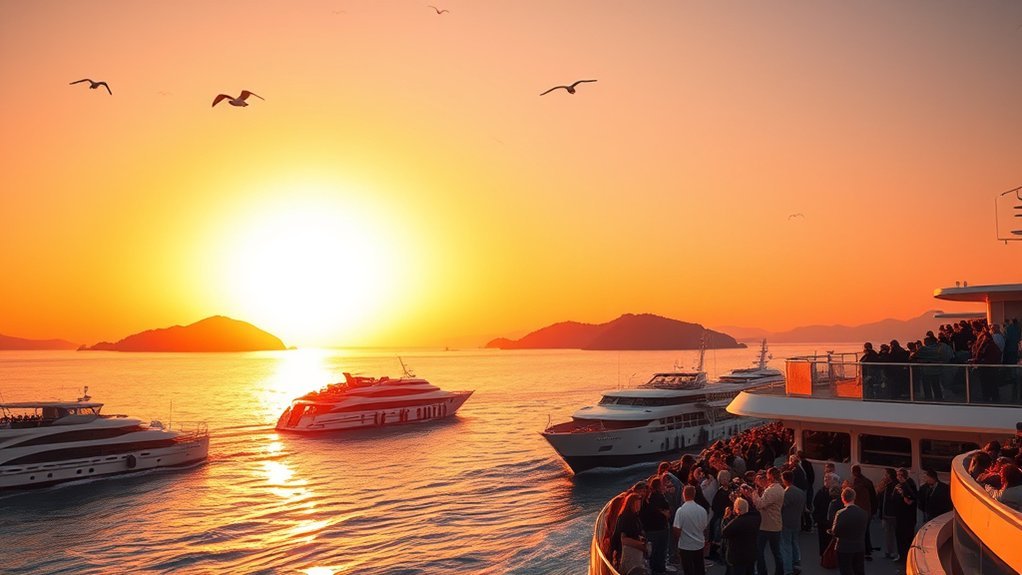
The best route depends on whether you want dramatic landscapes, a relaxing overnight stay, family entertainment, or a practical vehicle crossing. Times and onboard facilities can change by season and vessel, so treat the comparison below as a planning guide and confirm the exact sailing before you book.
| Route | Typical Time | Best For | What Stands Out |
|---|---|---|---|
| Copenhagen–Oslo | About 17.5 hours | Comfortable overnight travel | Oslofjord views, cabins, restaurants, live entertainment, and children’s activities |
| Stockholm–Helsinki | About 17 hours | Archipelago scenery and spa time | Island views, cabins, buffets, fine dining, saunas, pools, and live shows on selected ships |
| Hull–Rotterdam | About 12 hours overnight | Entertainment and vehicle travel | En-suite cabins, restaurants, bars, live shows, cinema, arcade, and duty-free shopping |
| Oarai–Tomakomai | About 18–19 hours | Japan road trips and sea views | Private rooms, public spaces, baths on selected vessels, and direct access between the Tokyo region and Hokkaido |
| Alaska Marine Highway | Varies from hours to multiple days | Wild landscapes and remote communities | A state ferry network covering about 3,500 miles of coastline and more than 30 communities |
Copenhagen to Oslo: Best for an Overnight Mini-Cruise
The Copenhagen–Oslo route is now operated as Go Nordic Cruiseline, not DFDS. Its standard schedule is roughly 17.5 hours, with afternoon departure and morning arrival. The most scenic part is the approach through the Oslofjord, so wake early and head to an outside deck before docking.
Cabins range from practical inside rooms to upgraded sea-view options. Restaurants include buffet and à la carte choices, while entertainment may include live music, bingo, dancing, and family activities. This route works well when the journey itself is part of the vacation.
Stockholm to Helsinki: Best for Archipelagos and Spa Facilities
The overnight crossing between Stockholm and Helsinki usually takes about 17 hours. Both Viking Line and Tallink Silja operate in this market, and facilities depend on the ship. Tallink’s current Helsinki–Stockholm ships advertise restaurants, live entertainment, cabins, and spa areas, while Viking Line’s Gabriella has a sauna, steam bath, whirlpool, and dining venues.
For the best scenery, spend time on deck while leaving Stockholm. The route threads through a long chain of islands before reaching open Baltic waters. Book a sea-view cabin when daylight hours line up with departure or arrival.
Hull to Rotterdam: Best for Onboard Entertainment
The P&O Ferries Hull–Rotterdam route is an overnight North Sea crossing of about 12 hours. Cabins are central to the experience, and the ships offer several restaurants and bars. Current onboard listings include live music, shows, quizzes, a cinema, and an arcade, although programs can vary by sailing.
This route is especially useful for travelers taking a car, camper, or motorcycle between the United Kingdom and continental Europe. Compare the cabin price with the cost of a flight, hotel, baggage, and ground transportation before deciding which option offers better value.
Oarai to Tomakomai: Best for a Japan Road Trip
MOL Sunflower links Oarai in Ibaraki Prefecture with Tomakomai in Hokkaido. Depending on the sailing, the crossing takes about 18 to 19 hours. It can replace a long overland trip and allows travelers to bring a vehicle between the Tokyo region and Hokkaido.
Facilities differ between evening and late-night services. Available options can include private cabins, tourist-class spaces, restaurants or vending areas, lounges, and public baths on selected vessels. Check the exact ship before booking rather than assuming every sailing has the same amenities.
Alaska Marine Highway: Best for Remote Coastal Scenery
The Alaska Marine Highway System is not one single crossing. It is a network covering about 3,500 miles of coastline and serving more than 30 communities from the Pacific Northwest through Alaska. Travelers can build an itinerary from short regional legs or longer journeys lasting several days.
This is the strongest choice for rugged scenery, wildlife watching, and access to communities that may not be connected by road. Service is seasonal on some segments, and cabins can sell out, so plan well ahead and study connection times carefully.
Pro Tip: For better ferry photos, clean your lens, avoid shooting through dirty glass, brace your phone or camera against a rail, and use the soft light near sunrise or sunset. Keep a safe distance from restricted deck areas and never lean over a railing for a shot.
Key Factors for Choosing the Right Ferry
A scenic route can still be a poor fit if the schedule, port, cabin, or vehicle rules do not match your trip. Compare these points before paying:
- Route and scenery: Check which part of the crossing happens in daylight. An overnight trip may pass the best coastline while you are asleep.
- Total travel time: Include check-in, boarding, port transfers, possible vehicle queues, and disembarkation—not only the published sailing time.
- Frequency: Some routes sail daily, while remote or seasonal services may run only on selected dates.
- Cabin or seat: Confirm whether a cabin is required, included, or optional. Recliner lounges may cost less but provide less privacy.
- Foot passenger or vehicle: Vehicle space can sell out before passenger space. Measure motorhomes, roof boxes, trailers, and bicycles accurately.
- Arrival port: Some terminals are far from the city named in the route. Add the time and cost of buses, taxis, parking, or transfers.
- Accessibility and medical needs: Ask about elevators, accessible cabins, boarding help, refrigerated medicine, and onboard medical support before booking.
- Pet policy: Rules may require a kennel, pet-friendly cabin, vehicle stay, vaccination records, or advance reservation.
Note: Published departure frequency is not permanent. Ship maintenance, winter schedules, weather, and demand can change the number of weekly sailings, so use the operator’s live timetable for your travel date.
Essential Amenities to Look for on Ferries
On a short commuter ferry, a sheltered seat and restroom may be enough. On an overnight crossing, cabin quality, food, showers, charging, and quiet space can make a major difference.
Dining Options Available
Large overnight ferries may have buffet restaurants, cafés, bars, and à la carte dining. Smaller vessels may offer only vending machines or a snack counter. Pre-booked meal packages can be cheaper than buying meals separately, but compare the menu, service hours, and cancellation terms first.
Travelers with allergies or dietary needs should contact the operator before sailing. Even when vegetarian, vegan, gluten-free, or child-friendly food is advertised, the selection may be limited late at night or on reduced-service sailings.
| Route | Typical Dining | Planning Tip |
|---|---|---|
| Copenhagen–Oslo | Buffet, family meals, and à la carte options | Reserve popular dinner times in advance |
| Stockholm–Helsinki | Buffets, cafés, casual meals, and fine dining | Check which restaurants are on your assigned ship |
| Hull–Rotterdam | Self-service and sit-down restaurants, cafés, and bars | Compare meal packages with onboard prices |
| Oarai–Tomakomai | Restaurants on some ships; vending or lighter service on others | Bring snacks when taking a reduced-service sailing |
Entertainment Facilities Onboard
Entertainment ranges from simple viewing decks to live shows, cinemas, children’s clubs, arcades, spas, saunas, karaoke, and public baths. Go Nordic Cruiseline promotes live music and family activities; Tallink and Viking Line offer entertainment and spa facilities on selected Baltic ships; P&O lists shows, a cinema, and an arcade on Hull–Rotterdam.
Do not choose a sailing only from a general fleet page. Check the vessel assigned to your date because amenities may differ, and entertainment can be reduced outside peak periods.
Cabins, Seating, Wi-Fi, and Charging
For overnight travel, compare inside and sea-view cabins, bed layout, private bathroom, accessible features, noise location, and whether towels and bedding are included. A cabin near elevators or entertainment spaces may be convenient but noisier.
Wi-Fi at sea may be slower or more expensive than on land. Download tickets, maps, movies, and destination information before departure. Bring a charged power bank and the correct plug adapter, but follow the operator’s battery and electrical-device rules.
How to Budget for Your Ferry Adventure
Ferry prices vary widely by date, route, cabin, passenger count, and vehicle size. A low headline fare may exclude the costs that matter most to your trip.
- Start with the base fare: Enter every passenger’s age and the correct travel direction.
- Add the vehicle: Include exact length, height, trailer, roof box, bicycle, or motorcycle details.
- Add accommodation: Compare an inside cabin, sea-view cabin, accessible cabin, pet cabin, or recliner lounge.
- Estimate food: Price dinner, breakfast, snacks, and drinks, or pre-book a meal package.
- Add land costs: Include terminal parking, tolls, fuel, buses, taxis, and transfers from remote ports.
- Allow for changes: Flexible fares and travel insurance may cost more upfront but can reduce losses after a covered delay or cancellation.
The original idea of an $8 round trip on the Seattle–Bainbridge ferry is no longer current. In July 2026, Washington State Ferries listed an adult passenger fare of $11.35 from Seattle, while the return passenger direction was not separately charged; vehicle fares were much higher. Because tariffs and payment surcharges change, use the official Washington State Ferries fare tools instead of copying an old price.
Pro Tip: Price the whole door-to-door trip. An overnight ferry can replace a hotel night and transport a vehicle, while a cheap flight may still require baggage fees, airport transfers, car rental, and lodging.
What You Can Expect on Your Ferry Ride
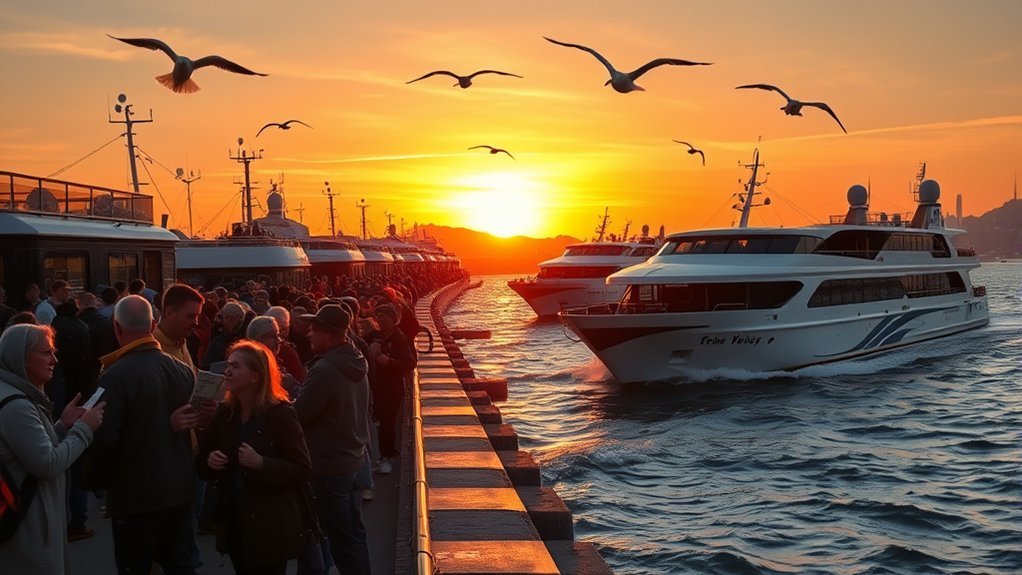
At the terminal, foot passengers and vehicles usually follow separate check-in and boarding lanes. Staff may verify tickets, identification, passports, vehicle details, or pet documents. International routes can include border and customs checks.
Once a vehicle is parked, access to the car deck may be restricted for part or all of the voyage. Take medicines, documents, valuables, chargers, warm layers, toiletries, and anything needed overnight before leaving the vehicle. Follow crew directions, note the deck and stairwell where you parked, and switch off the engine when instructed.
On deck, wind can make the temperature feel much colder than it did at the terminal. Wear layers and secure hats, phones, and loose items. Inside, expect safety announcements, restaurant opening times, and instructions about arrival and disembarkation.
The best ferry trip is not always the one with the most amenities. It is the one whose route, daylight, schedule, port access, and cabin match the way you actually want to travel.
Documents, Vehicles, Pets, Accessibility, and Health
Travel Documents and Border Rules
Domestic ferries may require only a ticket, while international sailings can require a passport, visa, residence document, or proof related to a vehicle or pet. The ferry company does not replace border authorities, so check official entry rules for every country on the itinerary.
Vehicle Reservations and Size Limits
Do not assume all vehicle ferries have the same limits. The often-quoted 12-foot-6-inch height and 16-ton weight limits in the original article apply to the Jamestown–Scotland Ferry in Virginia, not to ferries worldwide. Every operator sets its own rules for height, length, weight, trailers, propane, hazardous materials, and oversized vehicles.
Vehicle travelers should arrive together when they must board the same sailing. Separate cars may be split if space runs out. Security or safety inspections can also add time, especially on international or high-security routes.
Pets and Accessibility
Pet rules may require advance booking, a kennel, a designated lounge, a pet-friendly cabin, or leaving the animal in the vehicle. International travel can also require microchip, vaccination, health-certificate, or parasite-treatment records.
Travelers who need step-free boarding, an accessible cabin, an elevator near the vehicle deck, a service-animal arrangement, or help with luggage should contact the operator before booking. Ask what assistance is available at both ports, not only onboard.
Motion Sickness
Even large ferries can move in rough conditions. The CDC recommends looking at the horizon, lying down or closing your eyes when possible, drinking water, eating small amounts, and limiting alcohol and caffeine. Ask a pharmacist or clinician about medicine before travel, especially for children, pregnancy, older adults, or anyone taking other medication.
Warning: Do not wait until the ferry is underway to ask about a serious medical, mobility, or pregnancy concern. Some ships have limited medical support, and operators may apply late-pregnancy restrictions. Discuss travel with your clinician and confirm the ferry company’s policy before booking.
Top Mistakes to Avoid When Traveling by Ferry
Most ferry problems come from using an old schedule, arriving after check-in closes, misunderstanding vehicle rules, or leaving essential items in an inaccessible car.
Arrive Early for Boarding
There is no universal “arrive 30 minutes early” rule. A local passenger ferry may need little lead time, while an international overnight ferry with a vehicle may require much earlier check-in. Follow the deadline on your booking confirmation and add time for traffic, parking, security, passport control, and seasonal queues.
- Verify the sailing: Check the operator’s live timetable and alerts on the day of travel.
- Allow a buffer: Peak-season traffic can fill vehicle staging lanes before departure.
- Keep the group together: Arrive together when separate vehicles need to board the same sailing.
- Prepare documents: Keep tickets, passports, vehicle details, and pet papers easy to reach.
Check Weather Conditions
Wind, waves, fog, ice, tides, and poor visibility can delay or cancel ferries. Monitor the operator’s alerts rather than relying only on a general weather app. Dress in layers, protect electronics from spray, and leave enough time for a missed connection.
Travel insurance can help with covered disruptions, but policies differ. Check whether the policy covers ferries, weather delays, missed connections, vehicle travel, pregnancy, and prepaid accommodation.
Understand Ferry Rules
Read the route-specific rules for identification, luggage, alcohol, smoking, batteries, fuel containers, propane, hazardous materials, pets, and vehicle dimensions. Follow crew instructions about engines, alarms, restricted decks, and emergency procedures.
Google Maps can help estimate travel to the terminal, but it should not be your main source for sailing times. Operator websites and official transport agencies are more reliable for cancellations, seasonal timetables, and check-in requirements.
Do Not Leave Essentials in the Vehicle
Many ferries close the vehicle deck after departure. Carry a small overnight bag with medicines, documents, keys, warm clothing, baby supplies, toiletries, and valuables. Photograph the deck number and nearby stairwell marker so you can find the vehicle after arrival.
Where to Find Ferry Schedules and Booking Resources
Start with the ferry operator or government transport agency. Third-party comparison sites can help discover routes, but the operating company is the best source for current schedules, assigned ships, check-in times, accessibility, pet rules, and disruption notices.
| Resource Type | Best Use |
|---|---|
| Official operator website | Booking, check-in deadlines, cabins, vehicles, pets, and onboard facilities |
| Government ferry agency | Live alerts, fares, schedules, terminal information, and accessibility |
| Official mobile app | Digital tickets, real-time changes, and boarding information |
| Maps and transit apps | Getting to the terminal and planning onward transport; verify ferry times separately |
| Service hotline | Same-day disruption, special assistance, oversized vehicles, and complex bookings |
Useful official resources include Washington State Ferries, NYC Ferry, the Steamship Authority, Go Nordic Cruiseline, Tallink Silja, Viking Line, P&O Ferries, MOL Sunflower, and the Alaska Marine Highway System.
Frequently Asked Questions
Which NYC Ferry route has the best views?
The St. George route is one of the best choices for broad harbor views. NYC Ferry says it is the system’s only route along Manhattan’s west side and offers views of the Statue of Liberty while crossing New York Harbor. Route patterns can change, so check the current map before traveling.
Which ferry should I take to Martha’s Vineyard?
The Steamship Authority’s traditional ferry from Woods Hole takes about 45 minutes and serves Vineyard Haven year-round, with Oak Bluffs service offered seasonally. Foot passengers generally do not need reservations, but vehicle space requires an advance reservation.
Can I take a ferry when pregnant?
Ferry travel is often possible during an uncomplicated pregnancy, but the answer depends on your health, stage of pregnancy, route length, sea conditions, and the operator’s policy. The American College of Obstetricians and Gynecologists recommends discussing travel plans with your obstetric care provider. Ask the ferry company about pregnancy limits and onboard medical help before booking.
What is the best ferry out of Seattle?
Seattle–Bainbridge Island is a strong first choice for a shorter trip with skyline and mountain views. Seattle–Bremerton is longer and gives you more time on the water. Check Washington State Ferries schedules and service alerts because vessel assignments and departure patterns can change.
How can I reduce seasickness on a ferry?
Look at the horizon, stay where motion feels lower, drink water, eat small light meals, and limit alcohol. Ask a pharmacist or clinician about medication before the trip because some products cause drowsiness or are not suitable for every traveler.
Do I need to reserve a ferry when traveling with a car?
It depends on the route. Some ferries load vehicles first come, first served, while others require reservations. The Steamship Authority, for example, requires reservations for vehicle travel between Woods Hole and Martha’s Vineyard. Always enter the vehicle’s correct size and arrive by the stated check-in time.
Conclusion
A memorable ferry journey starts with the right route and realistic planning. Copenhagen–Oslo, Stockholm–Helsinki, Hull–Rotterdam, Oarai–Tomakomai, and the Alaska Marine Highway each offer a different mix of scenery, comfort, and onboard experience. Confirm the current operator, sailing time, cabin, fare, weather, and vehicle rules before departure, then leave room to enjoy the view.
Sources
- Go Nordic Cruiseline — Copenhagen–Oslo Journey — route schedule, cabins, dining, entertainment, and family facilities.
- Tallink Silja Line — Stockholm–Helsinki Ferry — approximate crossing time, ships, dining, entertainment, and spa facilities.
- P&O Ferries — Onboard Services — Hull–Rotterdam cabins, restaurants, live entertainment, cinema, and arcade.
- MOL Sunflower — Oarai–Tomakomai Timetable — current crossing times and vessel information.
- Alaska Marine Highway System — Route Guide — 3,500-mile network and communities served.
- Washington State Ferries — official fares, schedules, alerts, tickets, and vehicle information.
