

Last Updated on October 11, 2026 by Daniel Globe
You care about reducing water use, simplifying off-grid sanitation, or finding a low-odor solution for camping or an RV. Composting toilets cut your water footprint, remove dependence on septic hookups, and can save you money and hassle over time.
This guide highlights reliable options and a foundational resource so you can choose the system that fits your lifestyle and maintenance preferences.
Top Picks
|
Category |
Product |
Score |
|---|---|---|
|
🏆 Best for Full-Time Use |
95/100 |
|
|
🎒 Best Portable |
82/100 |
|
|
📘 Best Composting Guide |
89/100 |
How We Tested
How you use a composting toilet determines whether it will succeed for you, so we prioritized criteria that reflect real-world performance. We evaluated odor control, capacity and throughput, build quality and materials, ease of installation and routine maintenance, portability for travel or camping, warranty and manufacturer support, and overall value for the price.
You can expect recommendations that balance everyday reliability with the practical tradeoffs of cost and weight.
Nature’s Head

You get a rugged, self-contained composting toilet built for regular use in boats, RVs, tiny homes, and cabins. The close-quarters spider handle design makes it easier to operate in tight spaces, and the unit focuses on odor control and simple emptying rather than complicated compost management.
Installation is straightforward if you are reasonably handy, and strong manufacturer support and a five-year warranty mean you have backup when you need it. If you want a dependable household-level composting toilet that keeps maintenance predictable, this is a practical choice.
What People Say
Customers commonly praise the unit’s lack of odor and the sizable holding capacity, noting that empties are quick and manageable. Many buyers appreciate the company’s support and clear installation guidance, while a few mention the product’s weight and the need for a dedicated mounting or stable location.
Overall Sentiment: Positive

|
Pros |
Cons |
|---|---|
|
✅ Effective odor control for indoor use |
❌ Relatively heavy compared with portable options |
|
✅ High capacity reduces empty frequency |
❌ Higher upfront cost than simple portable toilets |
|
✅ Easy to install for a reasonably handy person |
❌ Requires periodic emptying and a stable installation |
|
✅ Five-year warranty and strong customer support |
|
|
✅ Quick, straightforward emptying process |
Health Benefits
|
Benefit |
Description |
|---|---|
|
Water Conservation |
You avoid flushing with potable water, which reduces household water use and lowers strain on septic or municipal systems. |
|
Reduced Pathogen Risk |
When used and emptied correctly, composting systems limit wastewater exposure compared with some primitive waste disposal methods. |
|
Improved Sanitation Access |
You gain a sanitary, odor-controlled toilet option in locations without reliable plumbing, improving hygiene and comfort. |
Maintenance
Expect a simple routine: check moisture and ventilation, empty solids every few weeks for one to two users, and clean the seat and exterior as needed. The design minimizes compost handling, but you should follow the manufacturer’s emptying and disposal guidance to stay hygienic.
Key Benefits
- Reliable odor control so you can use it indoors without worry
- Large holding capacity that suits daily use by one or two people
- Backed by responsive customer support and a 5-year warranty
Rating: 4.5 (total: 1109+)
TRELINO Evo

You get a compact, travel-friendly composting toilet that’s built around portability and simple use. It’s light enough to move between a camper, boat, or campsite and packs the basics you need: a solid waste bin, urine canister, and replacement bags.
It won’t replace a full household unit, but when you need a low-odor, easy-to-store option for short trips or occasional off-grid stays, this model makes sense. If you camp often or need a temporary sanitary solution where plumbing isn’t available, it’s a pragmatic pick that keeps setup and teardown straightforward.
What People Say
Buyers commonly note how handy the Evo is for travel and camping because it’s light and easy to stow. People appreciate the included urine canister and bags, and many say odor stays under control with the separation system.
A few users mention that durability and fit vary, so tidier setup and careful handling improve results.
Overall Sentiment: Positive

|
Pros |
Cons |
|---|---|
|
✅ Compact and lightweight for transport |
❌ Smaller capacity means more frequent emptying |
|
✅ Separation system reduces smell during use |
❌ Plastic parts feel less robust than heavier units |
|
✅ Ready-to-use kit with canister and bags included |
❌ Not ideal for full-time household use |
|
✅ Suitable for short trips and occasional off-grid needs |
Health Benefits
|
Benefit |
Description |
|---|---|
|
Improved Hygiene |
You get a sanitary place to go when plumbing isn’t available, reducing exposure to unsanitary alternatives. |
|
Lower Water Use |
The dry system avoids flushing, which conserves freshwater resources during travel or in remote settings. |
|
Controlled Waste Handling |
Separation and contained storage limit direct contact with waste, making transport and disposal safer. |
Maintenance
You should empty the solid and urine containers regularly depending on use, replace bags as provided, and rinse or wipe components between trips. Store dry and clean parts to avoid odor buildup and check seals periodically.
Key Benefits
- Very portable for camping, RVs, and short-term use
- Simple separation system helps control odor when used correctly
- Includes urine canister and bags so you can start using it right away
Rating: 4.1 (total: 99+)
Humanure Handbook

You get a hands-on manual that walks through the how and why of composting human waste, with clear steps you can apply at home, on a small farm, or at a remote site. The book balances practical procedures, safety considerations, and long-term system planning so you can set up a reliable composting process rather than guessing as you go.
It’s useful whether you’re learning basic sanitation practices or refining an existing system, and it reads like a seasoned practitioner talking you through each stage.
What People Say
Readers frequently praise the book for its detailed, no-nonsense approach and the way it translates composting theory into real steps you can follow. Many highlight the safety guidance and practical examples as the most valuable parts, while a few note the direct style and explicit content may not suit every reader.
Overall Sentiment: Positive

|
Pros |
Cons |
|---|---|
|
✅ Thorough coverage of composting methods and safety |
❌ Direct language and frank topics may be off-putting to some |
|
✅ Practical, actionable guidance you can implement |
❌ Not a quick read; requires attention to procedures |
|
✅ Accessible writing that connects theory to practice |
❌ Does not replace checking local regulations for waste handling |
|
✅ Serves both novices and experienced users |
Health Benefits
|
Benefit |
Description |
|---|---|
|
Improved Sanitation |
You gain methods to reduce exposure to untreated waste by following safe composting and handling procedures. |
|
Pathogen Reduction |
The book teaches temperature and time-based practices that lower pathogen risk when you manage compost correctly. |
|
Sustainable Resource Use |
You learn how to turn waste into stable compost, promoting soil health and reducing reliance on conventional disposal. |
Maintenance
To use the guidance effectively, expect regular attention to compost pile conditions: monitor moisture and temperature, layer carbon materials, and follow timelines for curing and safe use. Ongoing record-keeping and adherence to safety steps are part of responsible maintenance.
Key Benefits
- Clear, practical instructions that make composting approachable
- Focus on safety and pathogen reduction for responsible handling
- Useful for beginners and experienced practitioners alike
Rating: 4.8 (total: 543+)
FAQ
How Do Composting Toilets Work?
Composting toilets use biological decomposition and separation to turn human waste into a more stable, dry material rather than flushing it away. Solid and liquid waste are typically separated so solids can compost with added carbon materials while liquids are vented or stored separately; ventilation, aeration, and the right carbon balance support aerobic breakdown and reduce smells. You manage moisture, add bulking material as recommended, and allow solids to cure to lower pathogen risk before final disposal or reuse.
How Much Maintenance Will You Need?
Maintenance depends on the model and how often you use it, but expect routine checks rather than constant work. For household-grade units you’ll do periodic emptying and inspect ventilation and seals every few weeks to months depending on occupancy, while portable models need more frequent bag or container changes. Keep fan vents clear, monitor moisture, and follow the manufacturer’s emptying and handling guidance; regular emptying and proper carbon management are the simplest ways to avoid problems.
Are Composting Toilets Sanitary And Odor-Free Indoors?
When installed and managed correctly, composting toilets can be sanitary and effectively odor-free indoors because separation, ventilation, and correct carbon use control smells and discourage pests. Choose a unit suited to your usage level, ensure proper venting or a small fan, and follow curing and disposal advice to minimize health risks.
If you’re unsure about local disposal rules or want extra confidence, consult the manufacturer’s support or a practical guide to safe composting practices.
Customer Preferences
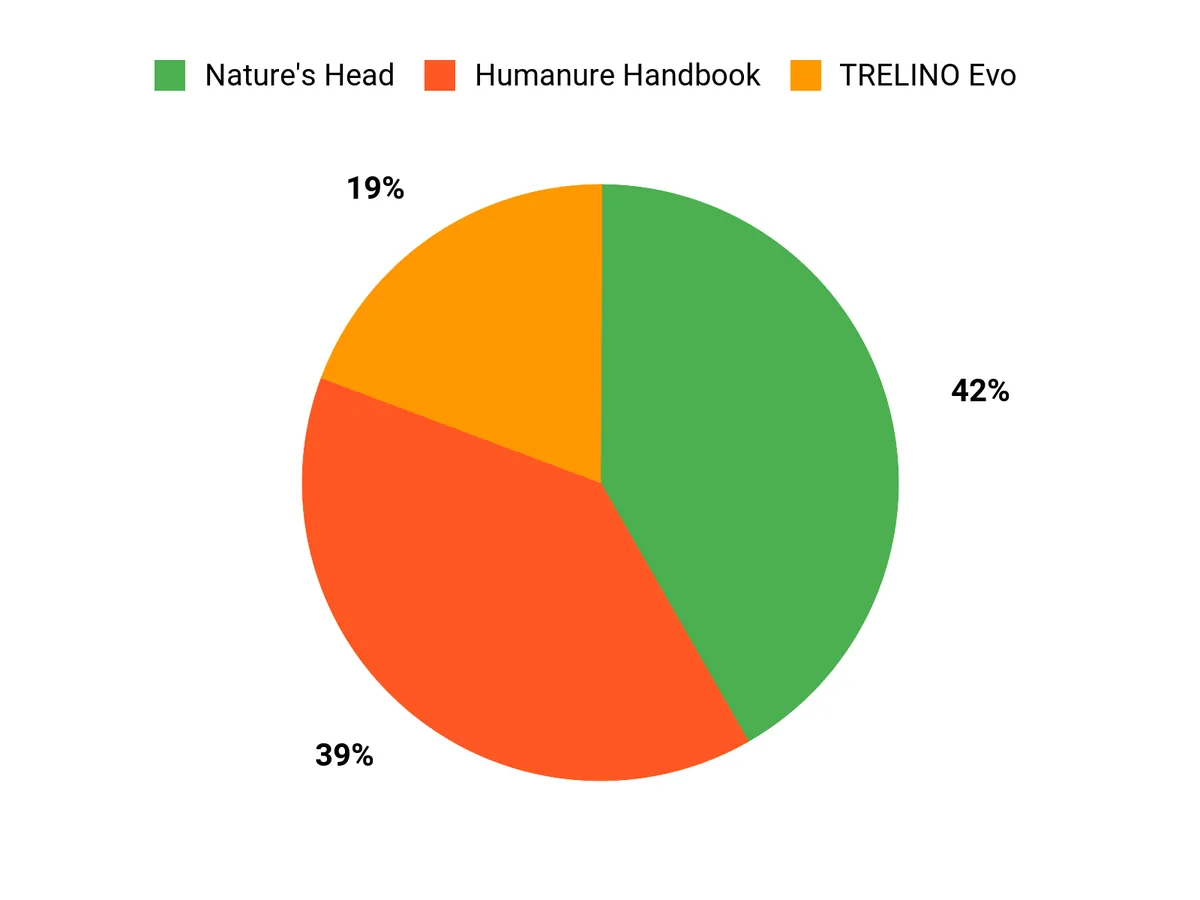
When choosing among these options you usually prioritize fit for your use case: you pick Natures Head for full-time or household use because of its capacity, proven odor control, and strong manufacturer support, the TRELINO Evo when portability and easy setup for trips matter most, and the Humanure Handbook when you want practical guidance on safe composting practices. You also weigh maintenance needs, installation complexity, and long-term reliability so you end up choosing the solution that matches how often you’ll use it and how much hands-on management you’re willing to do.
Wrapping Up
If you live off-grid or need a reliable household unit, Nature’s Head delivers capacity, proven odor control, and strong manufacturer support so you spend less time troubleshooting. If portability and simple setup matter most because you camp or travel, the TRELINO Evo gives you a compact, odor-reducing option at a lower price point. If you want to understand composting principles and safe handling before you buy or to improve system performance, the Humanure Handbook is the practical reference you should read.
| Nature’s Head Self Contained Composting Toilet with Close Quarters Spider Handle Design Rectangular | TRELINO Composting Toilet Evo S Gray, Portable Toilet for Camping & Outdoor | The Humanure Handbook, 4th Edition: Shit in a Nutshell | |
|---|---|---|---|
|
|
|
|
|
| Rating | 4.5/5 (1,109 reviews) | 4.1/5 (99 reviews) | 4.8/5 (N/A) |
| Capacity | 2 people using full-time can empty every 4-6 weeks | 1.2 gal & 1.6 gal | N/A |
| Dimensions | 20.98″D x 19.02″W x 20.98″H | 15.35″D x 12.99″W x 11.65″H | 6 x 0.75 x 8.97 in |
| Weight | 28 lbs | 3.9 kg | 2.31 lbs |
| Shop Now | Shop Now | Shop Now |
This Roundup is reader-supported. When you click through links we may earn a referral commission on qualifying purchases.
