

Last Updated on July 29, 2026 by Mason Reed
Morning frost on a tent is usually a mix of cold fabric, humid air, and moisture from breathing or wet gear. You may not be able to prevent every ice crystal, but you can greatly reduce interior buildup by choosing a dry campsite, tensioning the rainfly, opening protected vents, and keeping wet items outside the sleeping area. In the morning, remove loose frost gently and dry the shelter before long-term storage.
Quick Answer
Keep your tent vents open, reduce wet gear inside, and pitch on dry ground with the rainfly pulled taut. In the morning, gently shake, tap, or brush off loose frost before it melts. Do not aggressively scrape coated fabric, cook inside the tent, or use a fuel-burning heater while sleeping.
Key Takeaways
- Frost forms when the tent surface becomes cold enough for water vapor or existing condensation to turn into ice.
- Ventilation reduces moisture from breathing and wet gear, but it cannot prevent frost in every weather condition.
- Remove loose frost while it is still solid, using gentle shaking, tapping, or brushing rather than a sharp scraper.
- Keep sleeping bags and clothing away from frosted walls, then air them out when conditions allow.
- Never use an ordinary camping stove, charcoal device, lantern, or fuel-burning heater inside a tent.
At a Glance
| Time Required | About 5–10 minutes of active frost removal, plus weather-dependent drying time |
| Difficulty | Easy |
| Tools Needed | Gloves, a soft cloth or brush, and an optional smooth camp cup for collecting loose frost |
| Cost | $0 when using gear already in your camping kit |
Disclosure: As an Amazon Associate I earn from qualifying purchases. Some links on this page are affiliate links, at no extra cost to you.
Understanding Tent Frost Formation
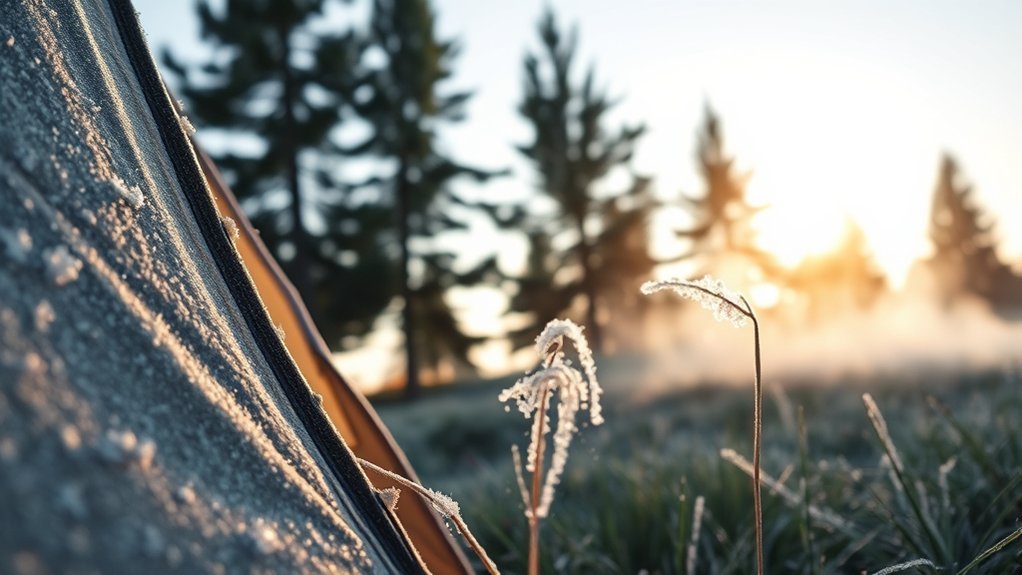
Frost forms when a surface becomes cold enough for water vapor to deposit as ice. According to the National Weather Service, the exposed surface must be at or below 32°F and below the frost point. The air temperature reported by a nearby weather station can remain above freezing while your tent fabric becomes colder through overnight radiative cooling.
Ice inside a tent can also begin as condensation. Warm, moist air from breathing, damp clothing, wet boots, or humid ground touches the cold rainfly or single-wall fabric. The moisture condenses and may later freeze as the shelter cools. In a double-wall tent, much of this moisture should collect on the underside of the rainfly rather than directly on the inner tent.
Note: Frost on the rainfly does not automatically mean the tent is leaking. Condensation is a normal result of warm, moist air contacting cold fabric, although good setup and ventilation can reduce it.
As sunlight and air temperature increase, frost melts. If it is allowed to melt inside the shelter, it may drip onto sleeping bags, clothing, and other equipment. The goal is therefore to limit moisture overnight, keep gear away from the walls, and remove loose ice before it turns into liquid water.
Importance of Proper Ventilation
Ventilation replaces humid interior air with outside air and is one of the most useful ways to reduce condensation caused by occupants. It does not guarantee a frost-free tent, especially when the outside air is already humid, but it usually lowers the amount of moisture that collects near sleepers and equipment.
Tent Door Opening
Use the door opening that your tent design and weather conditions allow. Instead of relying on a fixed measurement, open a protected upper section of the door, vestibule, or window enough to support airflow without allowing rain or blowing snow inside. Do not seal the shelter completely simply to make it feel warmer; trapped breath and body moisture can create more condensation on the cold fabric.
Orienting a suitable door or vent toward a light breeze may improve crossflow, but always consider wind-driven precipitation and the tent manufacturer’s setup instructions. In stronger weather, use protected vents rather than exposing a large doorway.
Utilizing Tent Vents
Open high and low vents when conditions allow. Warm, humid air can leave through upper vents while replacement air enters lower openings. Opposing vents are especially useful because they create a path through the shelter rather than allowing damp air to collect at the roof.
Make sure sleeping bags, clothing, snow, or sagging fabric do not block the vents. The MSR tent-care manual recommends pitching on dry ground, leaving damp items outside, orienting the shelter to use available breezes, and venting when appropriate.
Reduce Moisture Inside the Tent
- Change out of damp clothing before entering the sleeping bag.
- Keep wet boots, rainwear, and towels outside the sleeping compartment, using a vestibule or waterproof storage method when appropriate.
- Do not hang wet clothing inside the tent to dry overnight.
- Keep snow from entering on boots or clothing, because it will melt and add moisture.
- Avoid breathing into the sleeping bag. Exhaled moisture can collect in the insulation and freeze in cold conditions.
- Allow more ventilation when several people or pets share the shelter.
Keep the Rainfly Taut
Stake the tent and tension the rainfly according to its instructions. A taut fly maintains space between the waterproof outer layer and the breathable inner tent, improving airflow and making it less likely that wet outer fabric will press against the inner canopy. Recheck the guylines if fabric loosens as temperature or humidity changes.
Pro Tip: Set the vents before getting into your sleeping bag. Waiting until condensation is already dripping makes moisture harder to manage and requires opening the shelter during the coldest part of the night.
Techniques for Scraping Frost
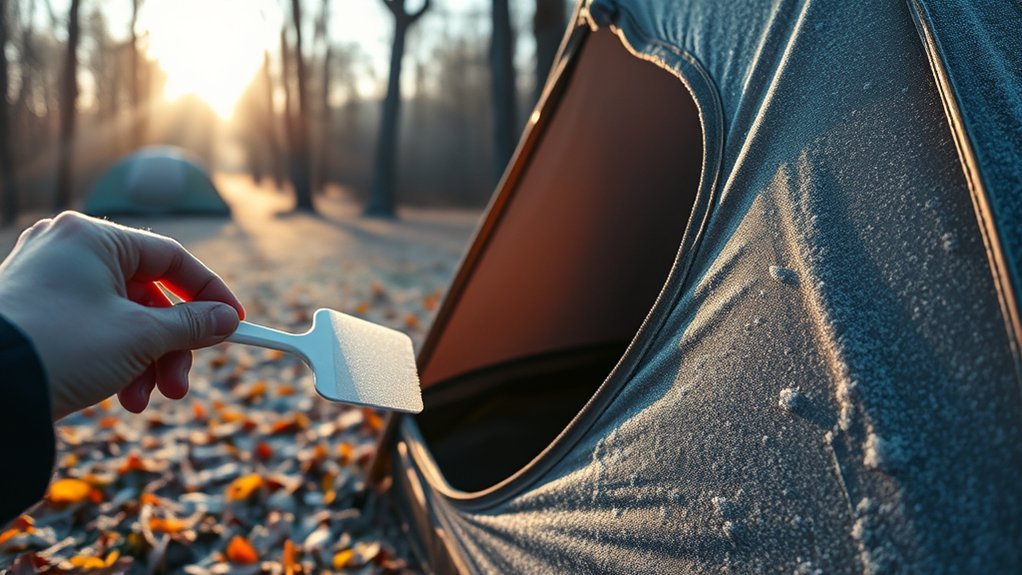
Remove loose frost before it melts, but treat lightweight tent fabric gently. Start by moving sleeping bags, clothing, and electronics away from the walls. If the rainfly can be reached safely, lightly tap or shake it so loose crystals fall outside. A soft glove, cloth, or brush can lift remaining frost without dragging a hard edge across the coating.
Use a Camp Cup
A smooth camp cup can help collect loose frost from the inner tent or rainfly. Hold the rounded edge nearly flat and use very light pressure. The cup should guide already-loose crystals into a container; it should not be used like an ice scraper on a windshield.
- Move gear away from the section being cleaned.
- Support the fabric gently with one hand when needed.
- Collect loose crystals before they fall onto the sleeping area.
- Dispose of the collected ice outside on a durable surface.
- Stop if the ice remains firmly bonded to the fabric.
Timing Is Key
The best time to remove frost is usually soon after waking, while loose crystals are still solid and before sunlight turns them into drips. However, do not force ice that is bonded to the fabric. Open the shelter, allow the material to warm slightly, and try again after the ice loosens.
After the loose frost is gone, use morning sun and moving air to finish drying the fly and tent body. Detach the rainfly when the design allows so both sides can receive airflow.
Avoid Gear Contact
- Keep the sleeping bag footbox and hood away from the tent walls.
- Move clothing and packs before tapping the rainfly.
- Do not use a knife, metal scraper, tent stake, or sharp-edged plastic tool.
- Do not twist or sharply fold fabric while thick ice remains bonded to it.
- Wipe liquid condensation with an absorbent cloth instead of allowing it to soak into bedding.
Dry the Tent Before Packing
Shake off loose ice and water, then air-dry the tent as much as conditions permit. Sea to Summit recommends drying tent fabric in the morning and, when possible, packing a wet rainfly separately from the inner tent. If you must leave before everything is dry, place the damp components where they will not wet your sleeping bag and dry them fully at the first safe opportunity.
Warning: Never store a damp or frosted tent for an extended period. Trapped moisture can cause mildew, odor, staining, and premature breakdown of waterproof coatings.
Choosing the Right Tent Location
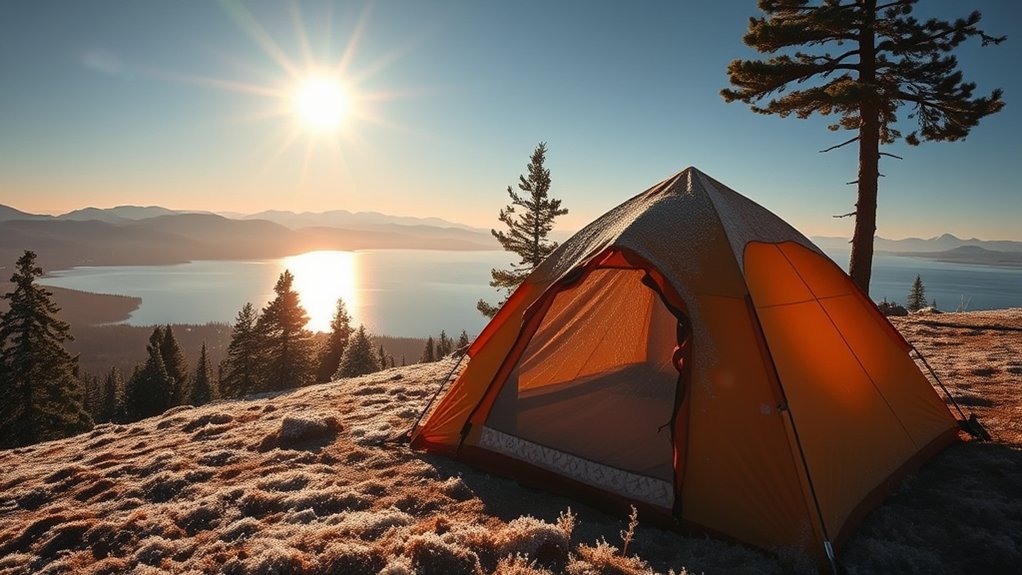
Choose an established, durable, and well-drained campsite whenever one is available. Avoid depressions, drainage channels, saturated soil, and low areas where cold, damp air can collect. Slightly higher dry ground may expose the shelter to less ground moisture and can reduce the amount of condensation that develops as temperatures fall.
Morning sunlight helps melt and dry frost, so an east-facing opening or a site that receives early sun can make the morning routine easier. A healthy tree canopy may also limit some radiative cooling on clear nights, but inspect the area for dead limbs, damaged trees, and other overhead hazards before pitching.
Keep environmental impact and local rules in mind. In undeveloped backcountry areas, Leave No Trace recommends camping on durable surfaces and generally staying at least 200 feet from lakes and streams. Use designated sites when regulations require them, and do not clear living vegetation to create a warmer or drier spot.
- Use an established campsite, rock, gravel, dry grass, or another durable surface.
- Avoid frost hollows, wet meadows, stream banks, and places where rainwater may pool.
- Look for morning sun without placing the shelter beneath unsafe branches.
- Use natural wind protection while preserving a path for the tent vents to exchange air.
- Follow park, campground, and backcountry rules even when another location appears drier.
Alternative Shelter Options
A tarp shelter can provide excellent airflow because it has large open sides. This may reduce occupant-generated condensation in suitable weather, but a tarp does not guarantee a dry sleep system. Wind shifts, blowing snow, rain splash, ground moisture, and exposed sleeping bags can create other problems. Tarps also offer less insect protection and may require more skill to pitch securely.
Single-wall tents save weight and can be useful in cold, dry environments, but any condensation forms directly on the shelter wall. Careful vent management and keeping gear away from the fabric are especially important. Double-wall tents create separation between the sleeping area and the waterproof rainfly, so much of the condensation can collect on the fly instead of contacting the occupants.
Four-season tents are designed for more demanding wind and snow conditions, but they can still develop frost and condensation when vents are closed or moisture builds inside. Choose a shelter for the expected weather, number of occupants, campsite exposure, and manufacturer-stated use rather than assuming a heavier tent will eliminate frost.
Cooking Precautions to Minimize Moisture
Warning: Never operate a portable camping stove, charcoal device, gas lantern, or ordinary fuel-burning heater inside a tent. These appliances can cause fire, burns, oxygen depletion, and deadly carbon-monoxide poisoning. A partly opened door or vent does not remove the danger.
The Centers for Disease Control and Prevention says never to use a portable camping stove inside a tent or camper. The U.S. Consumer Product Safety Commission also warns against using fuel-burning portable heaters or lanterns while sleeping in enclosed spaces such as tents.
Cook outside in open air on a stable surface, at the distance required by the stove and tent manufacturers. Keep flames, hot cookware, and fuel away from tent fabric and dry vegetation. If severe weather prevents safe outdoor cooking, use a no-cook meal, move to an approved cooking shelter, or wait until conditions improve.
- Light and operate the stove only where there is unrestricted outdoor ventilation.
- Follow the stove manual’s required clearances and cookware limits.
- Keep fuel containers upright and away from heat.
- Use a pot lid outside to reduce cooking time and fuel consumption.
- Allow hot cookware and the stove to cool before storing them.
- Never release cooking steam into the tent as a warming method.
Carbon monoxide is colorless and odorless. Headache, dizziness, weakness, nausea, chest pain, and confusion can be signs of exposure. Move to fresh air and seek emergency help immediately if carbon-monoxide poisoning is suspected.
Managing Condensation Throughout the Night
Condensation management works best when several small steps are used together. No single vent position or tent type can overcome every combination of humidity, wind, temperature, wet ground, and occupant moisture.
Ventilation manages moisture; it does not create heat. Stay warm with the correct sleeping bag, insulated pad, clothing, food, and trip planning rather than sealing or heating the tent.
- Open protected upper and lower vents before going to sleep.
- Keep the rainfly tensioned and separated from the inner canopy.
- Store wet items outside the sleeping compartment.
- Keep sleeping bags from touching the walls.
- Check that snow, clothing, or gear has not blocked a vent.
- Increase airflow when more people or pets occupy the tent.
- Wipe heavy liquid condensation if you wake during the night and can do so safely.
During rain or very humid weather, the outside air may already contain so much moisture that additional ventilation provides limited improvement. Continue using protected vents, but expect some condensation and plan to dry the shelter when the weather changes.
Why Frost May Persist Despite Ventilation
The Night Is Clear and Calm
Exposed fabric can lose heat to the night sky and become colder than the surrounding air. Frost may therefore form even when you have ventilated well and the weather forecast stays slightly above freezing. A safe canopy or a less exposed site may reduce this effect, but frost can still occur.
The Outside Air Is Already Humid
Ventilation works best when the replacement air is drier than the air inside the tent. Near water, over wet ground, during fog, or after rain, outdoor humidity may be high enough for condensation to continue. Focus on keeping gear away from the walls and preparing for morning drying.
There Are Too Many Moisture Sources
Several sleepers, pets, wet rainwear, snow-covered boots, and damp soil can overwhelm a small tent’s vents. Remove wet items, clear blocked vents, and create more crossflow where the weather permits. A larger or better-ventilated shelter may be more suitable for the group.
The Rainfly Is Sagging
A loose fly reduces the air gap between tent layers and may touch the inner canopy. Retension the corners and guylines according to the manufacturer’s instructions. Check the pitch again after the fabric becomes wet or the temperature changes.
Tips for a Warmer Morning Experience
A tent blocks wind and precipitation, but your sleeping system provides most of the insulation. Use a sleeping bag suited to the expected conditions and an insulated sleeping pad appropriate for the ground temperature. A footprint or ground tarp can protect the tent floor and reduce contact with damp soil, but it provides little insulation by itself.
- Keep a dry base layer, hat, and socks available for sleeping.
- Protect the sleeping bag from contact with frozen walls.
- Fluff the bag before bed so the insulation can regain its loft.
- Store the next morning’s clothing where it will remain dry.
- Remove loose tent frost before it melts onto your gear.
- Move the fly or tent body into morning sun when practical.
- Air the sleeping bag and pad before packing them.
Do not try to warm the tent by allowing steam from boiling water to enter it. That moisture can condense or freeze on the fabric. If you use a purpose-made hot-water bottle as part of your sleeping system, fill it outside the tent, follow the bottle manufacturer’s temperature limits, confirm that the cap does not leak, wrap it to prevent burns, and keep it away from down insulation if leakage is possible.
Note: Persistent shivering, confusion, poor coordination, slurred speech, or unusual drowsiness can indicate dangerous cold exposure. Do not treat a frosted tent as merely a comfort problem when someone may be developing hypothermia; seek shelter and emergency assistance.
Frequently Asked Questions
Can I use a heater inside my tent to prevent frost?
Do not operate an ordinary fuel-burning heater inside a tent or while anyone is sleeping. Ventilation does not guarantee protection from carbon monoxide or fire. Use a suitable sleeping bag, insulated pad, dry clothing, and a shelter rated for the conditions. Follow the exact heater and shelter instructions for any specialized system.
What types of tents are best for cold-weather camping?
Choose a tent based on expected wind, snow load, temperature, humidity, and exposure. Four-season tents are intended for more demanding winter conditions, while double-wall construction helps separate sleepers from condensation on the rainfly. No tent eliminates the need for ventilation or a properly rated sleeping system.
How can I prevent frost on my sleeping bag?
Keep the bag away from tent walls, reduce wet gear inside, use the tent vents, and avoid breathing into the bag. Air it out each morning. In severe conditions, use only a breathable overbag or vapor-management system designed for the purpose and follow its instructions rather than covering the bag with ordinary plastic.
Is it safe to touch frozen tent fabric?
Light contact is generally not a problem, but frozen coated fabric should be handled gently. Do not drag a sharp scraper across it, force a zipper through ice, or sharply fold a section with bonded ice. Let stubborn ice loosen as the fabric warms.
What time of night does frost typically form?
There is no fixed time. Frost starts whenever the tent surface cools below freezing and below the frost point. This often happens overnight and may become most noticeable near the coldest pre-dawn period, but humidity, clouds, wind, terrain, and shelter exposure all affect the timing.
Can my tent frost when the air temperature is above freezing?
Yes. On a clear, calm night, exposed tent fabric can lose heat and become colder than the air measured several feet above the ground. The fabric may fall below 32°F and develop frost even when the reported air temperature remains in the mid or upper 30s.
Can I pack a tent while frost is still on it?
Remove as much loose frost and water as possible first. If conditions prevent complete drying, pack the damp fly separately from the dry inner tent and sleeping equipment. Unpack and dry every component fully at the first safe opportunity, and never place a damp tent into long-term storage.
Conclusion
Morning frost on a tent is manageable when you control the moisture you can control and prepare for the moisture you cannot. Pitch on dry, durable ground, tension the rainfly, keep protected vents open, and move wet equipment outside the sleeping area. In the morning, remove loose ice gently, protect your sleeping gear, and dry the shelter before storage. Most importantly, do not trade condensation control for fire or carbon-monoxide risk by cooking or operating an ordinary fuel-burning heater inside the tent.
Sources
- National Weather Service — Dew and Frost Development — explains frost-point, surface cooling, and above-freezing air temperatures.
- Centers for Disease Control and Prevention — Carbon Monoxide Safety — warns against using portable camping stoves inside tents.
- U.S. Consumer Product Safety Commission — Portable Heaters and Camping Equipment — covers heater, lantern, and carbon-monoxide hazards.
- MSR Tents and Shelters Manual — supports ventilation, dry-ground setup, safe appliance use, and proper drying.
- Sea to Summit — Condensation and What You Can Do About It — explains tent, sleeping-bag, and sleeping-pad condensation management.
- Leave No Trace — Travel and Camp on Durable Surfaces — supports responsible campsite selection and waterway separation.
