
Last Updated on July 29, 2026 by Mason Reed
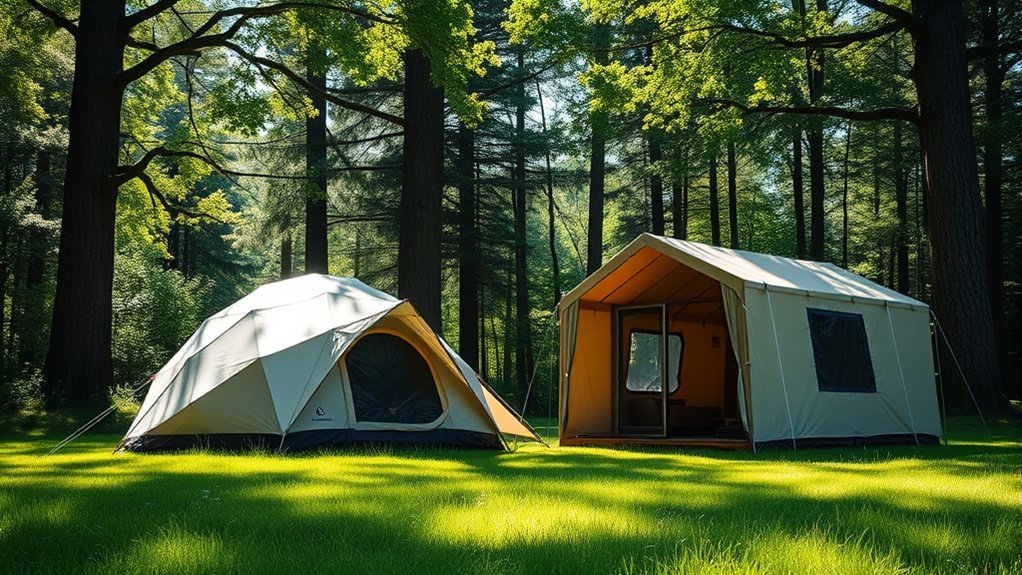
Choosing between a dome tent and a cabin tent comes down to how and where you camp. Dome tents usually offer a lower profile, smaller packed size, and better wind-shedding shape. Cabin tents provide straighter walls, more standing room, and a more comfortable layout for families, cots, and extended campground stays. The individual tent’s season rating, materials, rainfly, and pole structure still matter more than its shape alone.
Quick Answer
Choose a dome tent for backpacking, smaller campsites, easier transport, or exposed and windy locations. Choose a cabin tent for family car camping, standing headroom, cots, air mattresses, and longer campground stays. For winter storms or heavy snow, use only a tent specifically rated for those conditions, regardless of shape.
Key Takeaways
- Dome tents usually pack smaller and have sloped walls that shed wind better, but they offer less standing room near the edges.
- Cabin tents provide more usable headroom and furniture space, but their tall walls can catch more wind and their packed size is usually larger.
- An instant cabin tent may pitch faster than a conventional dome tent, so always compare the actual setup system.
- Capacity labels show how many sleeping pads may fit closely together, not how many people can live comfortably with gear.
- For snow, severe wind, or exposed winter camping, rely on the manufacturer’s season and weather rating—not the word “dome.”
Dome Tent vs. Cabin Tent at a Glance
| Priority | Better Starting Point |
| Backpacking or compact transport | Dome tent, especially a backpacking-specific model |
| Standing room and vertical walls | Cabin tent |
| Cots, air mattresses, and room dividers | Cabin tent |
| Exposed or windy campground | Lower-profile dome tent with a suitable weather rating |
| Fastest possible setup | Compare specific models; instant cabins and instant domes can both be quick |
| Heavy snow or alpine winter use | A purpose-built four-season tent; shape alone is not enough |
| Small campsite or limited storage | Usually a smaller dome tent |
Tent shape affects comfort and wind exposure, but season rating, pole geometry, rainfly coverage, materials, correct staking, and campsite selection determine how the shelter performs.
Disclosure: As an Amazon Associate I earn from qualifying purchases. Some links on this page are affiliate links, at no extra cost to you.
Overview of Dome Tents
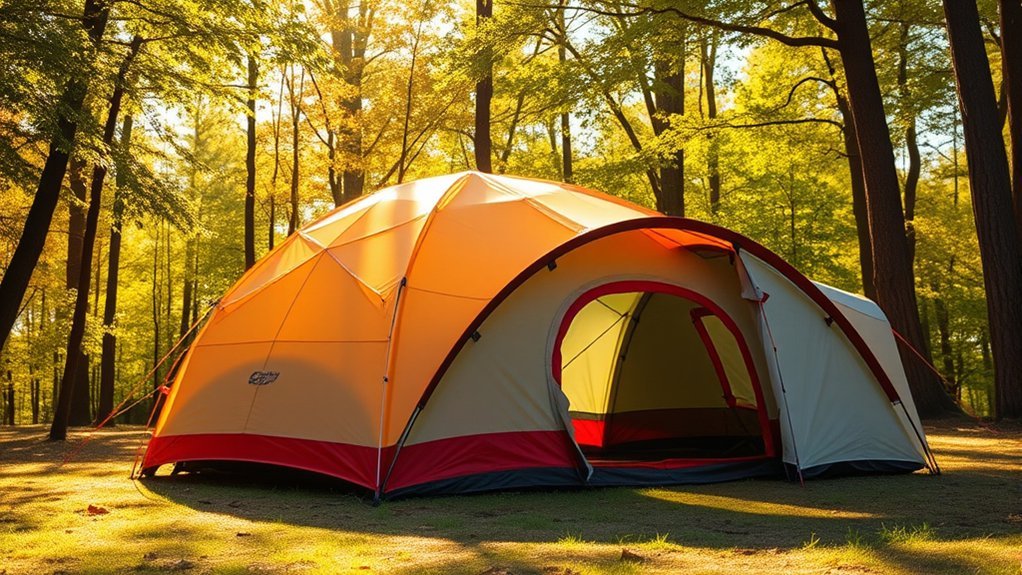
A dome tent normally uses two or more flexible poles that cross above the sleeping area to form a curved roof. This creates a freestanding or mostly freestanding structure with its greatest height near the center.
The rounded profile gives a dome tent less broad, vertical fabric for the wind to push against. According to REI’s camping-tent guide, dome-style tents generally offer good strength and wind-shedding performance, although their sloping walls reduce usable headroom near the edges.
Dome tents range from compact one-person backpacking shelters to large campground models. Do not assume that every dome tent is light enough for hiking. A large car-camping dome may still be heavy and bulky, so check the packaged weight and packed dimensions before buying.
Main Advantages of Dome Tents
- Lower profile: Curved walls usually expose less flat surface to wind than tall cabin walls.
- Compact options: Backpacking dome tents are widely available in small, lightweight packages.
- Simple layouts: Many models use only a few crossing poles and can be pitched by one person after practice.
- Efficient center space: The highest point is often over the main sleeping area.
- Broad selection: Dome-style designs are available for casual camping, backpacking, extended-season use, and purpose-built four-season use.
Main Limitations of Dome Tents
- Reduced edge headroom: Sloping walls can press close to your head when you sit on a cot or tall mattress.
- Less furniture flexibility: Large airbeds, chairs, and storage units may not fit efficiently near the walls.
- Limited privacy: Small domes rarely include room dividers.
- Model-dependent weather protection: A roof-only rainfly and light fiberglass poles may provide less protection than a full-coverage fly and stronger pole structure.
Overview of Cabin Tents
A cabin tent uses straighter walls and a high roof to create more usable interior volume. The boxier layout can make the shelter feel like a small room rather than a sleeping pod. Cabin tents are commonly designed for car camping because their frames, fabric, and packed bags are often too heavy or bulky for backpacking.
The main benefit is not merely floor area. It is the ability to use more of that floor area while standing, changing clothes, sitting on a cot, or placing gear near the walls. This makes cabin tents attractive to families, groups, campers with large air mattresses, and anyone who values indoor living space.
Spacious Design Benefits
Vertical or near-vertical walls let you stand and move closer to the edge of the floor without leaning into the fabric. Depending on the model, a cabin tent may also provide wide doors, multiple rooms, storage pockets, awnings, or a screened porch.
That extra space brings trade-offs. Large cabin tents require a bigger level area, take up more room in a vehicle, and may be awkward for one person to erect. REI notes that some large 8- to 10-person camping tents can be difficult for one person to assemble and may not fit smaller campground tent pads.
Ideal for Family Camping
Cabin tents work especially well when a family plans to remain at one campground for several nights. The open interior can support different sleeping arrangements and give everyone room to organize clothing, bedding, and personal gear.
- Vertical walls and high ceilings make changing clothes and moving around easier.
- Room dividers can separate adults, children, sleeping areas, or gear.
- Wide doors simplify moving air mattresses and cots inside.
- Awnings or screened rooms may provide covered space for relaxing or storing nonfood equipment.
A cabin tent is not automatically the best choice for every family. A smaller dome may be easier for a couple with one child, a short weekend, or a compact campsite. Base the choice on the actual number of occupants, sleeping system, gear, and available site space.
Key Differences in Setup
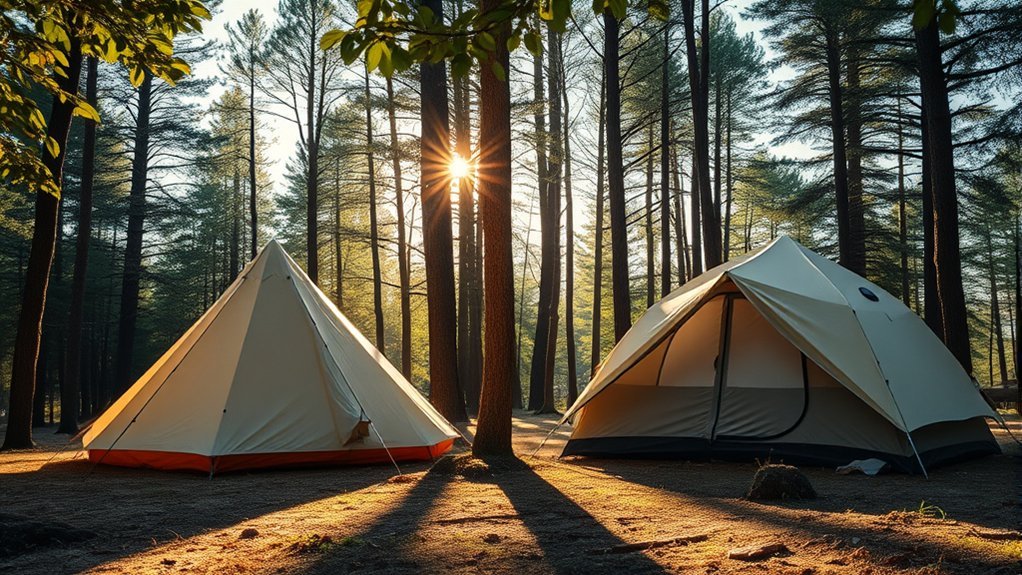
Traditional dome tents often have fewer poles and a lower roof, which can make them easier for one person to pitch. However, shape does not determine setup time by itself. Pole sleeves, clips, color coding, pre-attached poles, tent size, and the number of guylines all affect the process.
A conventional cabin tent with separate roof and wall poles may take two people and more time. An instant cabin tent, however, uses a pre-attached frame that unfolds and extends. Coleman’s current tent-buying guide notes that instant tents are designed for fast setup, showing why buyers should compare the frame system rather than assuming every cabin is slow.
Setup Factors to Compare
- Number of poles and whether they are pre-attached
- Clips versus long pole sleeves
- Color-coded corners and pole sections
- Whether the rainfly is integrated or separate
- Number and position of stakes and guylines
- Whether one person can reach the roof clips or hubs
- Space required to spread out the tent before raising it
Pro Tip: Pitch a new tent at home before the trip. Confirm that all poles, stakes, guylines, rainfly parts, and repair pieces are present, and practice packing it back into the bag.
Even a freestanding tent should be staked and guyed when the ground permits. “Freestanding” means the pole structure can support the basic shape; it does not mean the tent is secure against wind.
Durability and Weather Performance
Dome tents usually have an advantage in wind because their lower, curved walls reduce the amount of flat fabric exposed to gusts. Cabin tents have taller wall panels that can behave like sails. A well-designed and correctly pitched cabin may perform adequately in ordinary campground weather, but it is usually less suitable for exposed ridges, beaches, or consistently windy sites.
Weather performance still varies greatly within each category. Check:
- Season rating: Three-season tents are generally intended for spring, summer, and fall. Extended-season models add support for stronger winds and light snow. Four-season tents are designed for severe wind and substantial snow loads.
- Rainfly coverage: A full-coverage fly normally protects better from wind-driven rain than a small roof cap.
- Pole geometry and material: More crossing points can add support. Aluminum poles are generally stronger and more durable than comparable fiberglass poles.
- Seams and floor construction: Protected or sealed seams and a durable floor reduce common leak points.
- Guyline points: Properly tensioned guylines transfer wind forces through the frame and anchors.
- Ventilation: Mesh, roof vents, and low vents help manage moisture that would otherwise condense inside.
Tent Shape Is Not a Season Rating
Many mountaineering tents have rounded profiles because curves and intersecting poles help manage wind and snow. That does not make every recreational dome suitable for a blizzard. MSR’s all-season tent guidance describes winter models as using reinforced construction, stronger materials, added pole support, and weather-specific features.
A basic three-season dome can be appropriate for a calm winter campground night when no meaningful snow or severe wind is expected. It should not be treated as a substitute for a four-season shelter in accumulating snow, exposed alpine terrain, or a forecast storm.
Warning: Never rely on a tent as a safe lightning shelter. When thunder is heard, move to a substantial building or an enclosed metal-topped vehicle when one is available. Do not burn charcoal or operate an unapproved fuel-burning stove or heater inside a tent; fire and carbon monoxide can be fatal.
Choosing a Safer Campsite
The tent cannot compensate for a hazardous location. The National Park Service advises campers to consider flooding, lightning, wind, cliffs, and dead trees or branches when selecting a site.
- Use level ground that is not in a depression where water can collect.
- Look overhead and avoid dead or damaged branches.
- Stay away from ravines, drainage channels, cliff edges, and exposed high points.
- Confirm that the entire tent and all guylines fit within the designated pad.
- Use stakes designed for the surface, such as sand or snow stakes where appropriate.
- Follow local food-storage, fire, and campground regulations.
Comfort and Space Considerations
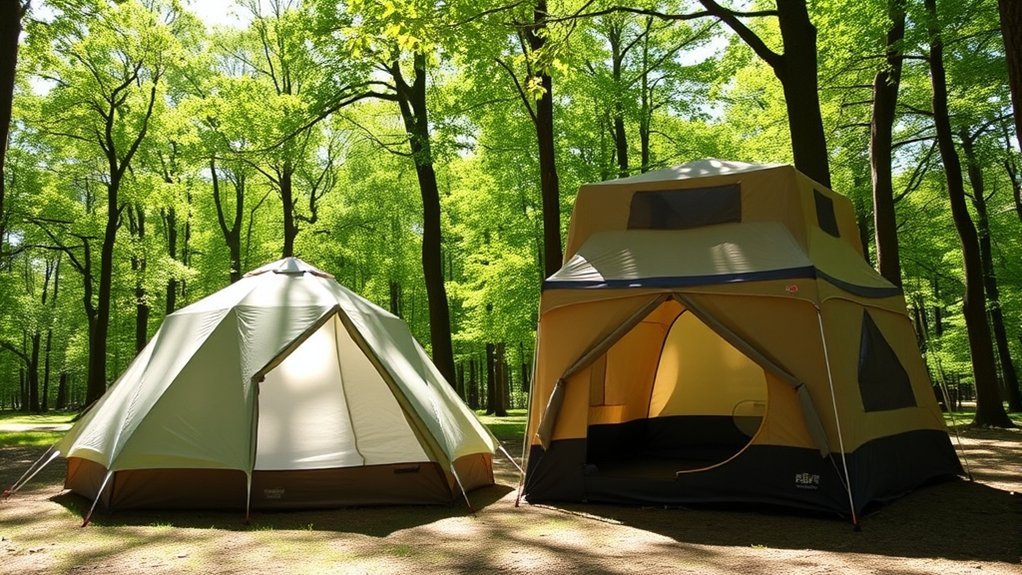
Cabin tents generally provide more usable standing room because their walls remain nearly vertical. They are easier to arrange with cots, tall air mattresses, chairs, and storage bins. Room dividers can also improve privacy for families and larger groups.
Dome tents concentrate their headroom near the center. This is comfortable for sleeping on pads, but a cot raises the sleeper into the narrowing part of the wall. A dome may list generous floor dimensions while still feeling cramped when tall furniture is placed around the perimeter.
How to Read Capacity Ratings
A tent’s person rating usually represents the number of sleeping-pad-sized spaces that fit on the floor with limited room between them. It does not promise comfortable living space or account for luggage, pets, a portable crib, or large mattresses.
For car camping, many people choose a tent rated for one or two more occupants than will normally sleep inside. For example, two adults who want room for gear may prefer a four-person model. A family of four using air mattresses may be more comfortable in a six- or eight-person tent.
Measurements That Matter
- Floor length and width: Confirm that every pad, cot, or mattress fits without pressing hard against the walls.
- Peak height: Check whether the tallest camper can stand upright.
- Wall angle: Look beyond peak height to see how much of the room remains tall away from the center.
- Door dimensions: Wide doors are helpful for large mattresses and family traffic.
- Vestibule area: Covered exterior storage can keep boots and packs out of the sleeping area.
- Interior pockets and loops: These keep small equipment off the floor.
Note: Store food, trash, toiletries, and other scented items according to the campground’s wildlife rules. A large cabin tent may have room for food, but that does not make indoor food storage safe in bear or rodent habitat.
Ventilation and Condensation
Both dome and cabin tents can collect condensation. Moisture from breathing, wet clothing, damp ground, and humid air can settle on the inner fly or walls when warm interior air meets a cooler surface.
A cabin tent may have large windows and vents, while a double-wall dome may use a mesh inner body beneath a separate rainfly. Neither design is automatically better in every climate. Look for adjustable vents that can remain open during rain, mesh positioned for cross-flow, and enough space between the tent body and rainfly.
- Open opposing vents or windows when weather allows.
- Stake the rainfly so it does not rest against the inner tent.
- Keep wet clothing and muddy footwear in a vestibule or covered area when practical.
- Avoid pressing bedding against the walls.
- Do not close every vent solely to trap warmth; reduced airflow may increase condensation.
Maintenance Requirements
Dome and cabin tents need the same basic care. A cabin tent may require more physical space to clean and dry because it is larger, but its shape alone does not make it less durable or more expensive to maintain.
Care After Each Trip
- Remove dirt, leaves, sand, and other debris.
- Let the tent, rainfly, poles, stakes, and storage bag dry completely.
- Clean dirty areas with cool or lukewarm water and a cleaner approved for tent fabric.
- Wipe dirt and salt from poles and zipper teeth.
- Inspect seams, mesh, pole sections, clips, and guylines for damage.
- Store the dry tent loosely in a cool, dry location rather than leaving it tightly compressed for months.
REI’s tent-care guidance emphasizes complete drying before storage because trapped moisture can encourage mildew and damage waterproof coatings. It also advises gentle handling of zippers, poles, and coated fabrics.
Repairs and Waterproofing
Carry a basic repair kit appropriate for your model. Useful items may include fabric repair tape, a pole splint, spare cord, and replacement zipper pulls. At home, repair small fabric tears, replace damaged shock cord, and renew seam sealant or water-repellent treatments according to the manufacturer’s instructions.
Do not apply random household coatings or wash the tent in a machine unless the manufacturer specifically permits it. Heat, agitation, bleach, and strong detergents can damage fabrics, seams, and waterproof layers.
Pricing and Value Comparison
Neither tent shape has a dependable universal price range. A basic family cabin tent may cost less than an ultralight backpacking dome, while a reinforced four-season dome may cost much more than either. Capacity, fabric, poles, season rating, weight, rainfly coverage, room dividers, instant frames, and warranty support all affect price.
Compare value by asking what you receive for the money:
- Does the tent fit the people, mattresses, cots, and gear you plan to use?
- Will the packed bag fit in your vehicle or home storage area?
- Is its season rating appropriate for your normal camping conditions?
- Does the rainfly provide enough coverage for likely rain and wind?
- Are replacement poles, repair services, or spare parts available?
- Can the intended campers pitch it without excessive difficulty?
- Will it fit the tent pads at the campgrounds you visit?
A less expensive tent that meets your actual needs can provide better value than a large shelter with unused features. Conversely, paying more for lower weight, stronger poles, a full rainfly, or better repair support may be worthwhile when those features solve a real problem.
Ideal Uses for Dome Tents
A dome tent is usually the stronger starting point when portability, a compact footprint, or a lower wind profile matters more than standing room.
Lightweight Backpacking Adventures
Backpacking-specific dome tents use compact poles and light fabrics to reduce carried weight and packed volume. Many can be pitched by one person and fit into relatively small backcountry sites.
- Check trail weight: Do not judge portability only by the word “dome.”
- Check packed length: Pole sections must fit your backpack, bicycle luggage, or other transport system.
- Plan for close quarters: Backpacking models prioritize low weight over standing room and furniture space.
- Use the vestibule: Covered exterior storage helps keep packs and wet footwear outside the sleeping area.
Extreme Weather Conditions
A low, rounded profile can be useful in exposed weather, but the correct tent must be chosen for the forecast. For strong wind and light shoulder-season snow, consider an extended-season model with additional pole support. For substantial snow loads, alpine use, or severe winter wind, use a purpose-built four-season tent.
Read the manufacturer’s limitations and pitching instructions. Clear accumulating snow when it is safe to do so, keep required vents open, use every specified guy point, and change plans when conditions exceed the shelter’s intended use.
Other Good Uses for Dome Tents
- Solo or two-person weekend trips
- Campgrounds with small tent pads
- Road trips with limited cargo space
- Beach or open-country camping with the correct anchors
- Campers who mainly sleep inside rather than use the tent as a living room
Ideal Uses for Cabin Tents
Cabin tents are best suited to car camping, especially when comfort inside the shelter is a high priority. Their straighter walls and high ceilings make it easier to organize several occupants and use bulky sleep systems.
- Family campground stays: Extra headroom and floor access make daily routines easier.
- Cots and tall air mattresses: Vertical walls provide better clearance than steep dome walls.
- Longer trips: More livable space is helpful when campers remain at one site for several days.
- Privacy for groups: Some models include removable room dividers.
- Accessible movement: Tall doors and standing room may help campers who find crawling into a low tent difficult.
- Organized gear storage: Pockets, wall space, and multiple rooms can reduce floor clutter.
Before choosing a large cabin tent, confirm that its floor dimensions fit the campsite, its packed bag fits your vehicle, and the intended users can raise and secure the frame. A large shelter also creates more fabric to dry and more bulk to store after the trip.
How to Choose Between a Dome and Cabin Tent
- Identify your camping style. Backpacking favors low weight and compact packing. Drive-up camping allows more emphasis on comfort.
- Count people and equipment. Include pets, cots, mattresses, cribs, bags, and any required medical equipment.
- Measure the sleeping layout. Compare actual floor length and width rather than relying only on the person rating.
- Check headroom needs. Decide whether standing, changing clothes, or sitting on a cot matters.
- Review expected weather. Compare season rating, pole structure, rainfly coverage, seams, vents, and guy points.
- Check the campsite footprint. Large cabin tents may not fit smaller pads even when the campground allows the stated number of occupants.
- Compare setup systems. An instant cabin may be easier than a traditional multi-pole tent, while a small dome may be easiest of all.
- Check packed specifications. Verify weight, bag dimensions, and pole length.
- Read care and repair information. Look for replacement parts, warranty terms, and clear waterproofing instructions.
- Practice before departure. A familiar tent is faster to pitch correctly when daylight or weather is limited.
Frequently Asked Questions
Can dome tents be used for winter camping?
Yes, but only when the specific model is suitable for the conditions. A three-season dome may work on a calm, snow-free winter campground night. Heavy snow, strong wind, alpine terrain, and winter storms require an extended-season or four-season shelter designed for those loads.
What are the best brands for cabin tents?
There is no single best brand for every camper. Established outdoor companies such as Coleman and REI Co-op offer family-oriented cabin or cabin-like shelters, but available models change. Compare floor dimensions, center height, rainfly coverage, packed size, pole material, warranty support, and verified owner instructions rather than choosing by brand alone.
How many people can fit in a dome tent?
Dome tents are sold in many capacities, from solo shelters to large family models. The listed capacity normally reflects closely arranged sleeping pads, not spacious occupancy with luggage. Car campers often size up by one or two people when they want room for gear, pets, cots, or larger mattresses.
Are cabin tents easier to pack and carry?
Usually not. Cabin tents tend to have larger frames, more fabric, and bulkier storage bags, which is why they are mainly used for car camping. Instant frames can make setup easier but may increase packed bulk. Check the listed weight and packed dimensions for the exact model.
What accessories improve a dome tent?
Useful additions include a correctly sized footprint, surface-appropriate stakes, reflective guylines, sleeping pads, a small battery-powered light, a gear loft, a ground mat, and a model-compatible repair kit. Avoid open flames and unapproved fuel-burning appliances inside the tent.
Are cabin tents waterproof?
Cabin tents can provide good rain protection, but the shape alone does not make one waterproof. Look for protected seams, a durable floor, suitable coatings, and a rainfly that covers exposed walls and doors. Pitch and tension the tent according to its instructions before rain arrives.
Which tent is better for sleeping on a cot?
A cabin tent is usually more cot-friendly because its straighter walls preserve headroom above the raised sleeping surface. In a dome tent, a cot can place your head and feet close to the sloping walls. Compare the cot dimensions with the tent floor and wall angle before buying.
Do cabin tents stay cooler than dome tents?
Not automatically. Interior temperature depends on shade, fabric, ventilation, rainfly design, ground conditions, sun exposure, and airflow. A cabin may have large windows, while a mesh-heavy dome may ventilate very well. Compare vents and window placement instead of relying on shape alone.
Conclusion
A dome tent is usually the better choice for backpacking, compact transport, small sites, and windy or exposed campgrounds. A cabin tent is usually better for family car camping, standing room, cots, large mattresses, and longer stays.
Do not make the final decision from shape alone. Compare the tent’s floor dimensions, peak height, packed size, setup system, season rating, pole material, rainfly coverage, ventilation, and campsite requirements. The best tent is the one that fits your real sleeping arrangement and expected conditions without exceeding its design limits.
Sources
- REI Co-op: What to Look for in a Camping Tent — tent shapes, capacity, seasonality, dimensions, materials, poles, rainflies, and ventilation
- Coleman: Tent Buying Guide — cabin layouts, instant setup systems, capacity, materials, and buying considerations
- MSR: Ultimate Guide to MSR Tents — purpose-built all-season and winter-tent construction
- National Park Service: Finding and Setting Up a Campsite — flooding, wind, falling branches, food storage, and campsite selection
- National Weather Service: Outdoor Lightning Safety — why tents are not safe lightning shelters
- REI Co-op: Tent Care Basics — cleaning, drying, storage, zipper care, and fabric protection
