

Last Updated on July 24, 2026 by Daniel Globe
You have decided to get outside and camp. Now comes the harder question: should you drive to a campsite, unload your gear, and sleep in comfort, or carry everything on your back and hike until the road disappears? Car camping and backpacking can both deliver a great trip, but they differ sharply in comfort, cost, effort, access, and required skills. This guide compares those trade-offs so you can choose the better fit for your first or next overnight adventure.
Quick Answer
Choose car camping when you want easy access, more comfort, family-friendly space, and room for heavier gear. Choose backpacking when you want remote campsites, longer trail travel, and solitude. Beginners usually find car camping simpler, while backpacking requires lighter equipment, stronger navigation and safety skills, and more careful planning.
Key Takeaways
- Car camping offers more comfort, storage, and flexibility because your vehicle carries the load.
- Backpacking gives you better access to remote places, but every item must earn its place in your pack.
- Backpacking tents favor low weight and compact size; car camping tents favor headroom, floor space, and convenience.
- Practice pitching your tent at home so setup stays manageable when weather or daylight changes quickly.
- For either style, confirm local rules, check the forecast, store food correctly, and choose legal ground without flood or overhead hazards.
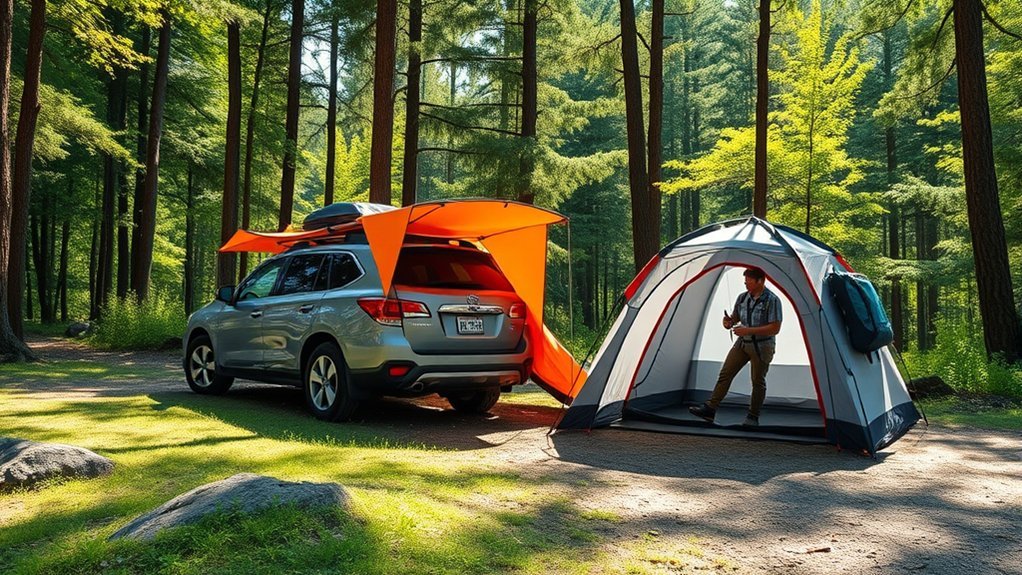
Quick Verdict: Car camping is the better starting point for comfort, families, groups, and relaxed weekends. Backpacking is the better choice for remote access, quiet campsites, and the challenge of traveling light.
Disclosure: As an Amazon Associate I earn from qualifying purchases. Some links on this page are affiliate links, at no extra cost to you.
Car Camping vs. Backpacking at a Glance
| Factor | Car camping | Backpacking |
|---|---|---|
| Access | Drive to or park close to camp | Hike to camp, often away from roads |
| Comfort | Roomier tent, thicker bedding, chairs, cooler | Compact shelter and lighter sleep system |
| Gear limits | Limited mainly by vehicle space | Limited by what you can carry safely |
| Planning | Usually simpler, especially at developed sites | More route, water, weather, permit, and emergency planning |
| Best for | Beginners, families, groups, base camps | Remote travel, solitude, multi-day routes |
Understanding Car Camping
Car camping usually means driving to a campground or legal dispersed site and setting up near your vehicle. You do not carry your full kit for miles, so you can bring a roomier tent, thicker sleeping pads, extra clothing, camp chairs, a larger stove, and more food and water.
At many developed campgrounds, a site may include a parking space, tent pad, picnic table, fire ring, restroom access, or potable water. Amenities vary, so check the official campground page before leaving. Car camping also works well as a base camp: you hike, fish, paddle, or explore during the day, then return to a comfortable setup at night.
Advantages of Car Camping
- Easier packing: You can carry backups and comfort items without weighing every ounce.
- Simpler exits: Your vehicle gives you a faster way to leave if weather, illness, or gear failure ends the trip.
- Better group comfort: Larger tents and shared cooking equipment work well for families and groups.
- Lower skill barrier: Developed sites often reduce the demands of navigation, water sourcing, and remote emergency planning.
Limitations of Car Camping
- Popular campgrounds can feel busy, noisy, and less private.
- Reservations may fill early, especially on weekends and holidays.
- Vehicle access does not guarantee a flat, quiet, or weather-protected site.
- Dispersed vehicle camping may involve rough roads, limited services, and area-specific stay rules.
Sleeping in Your Car vs. Using a Tent
Some people use “car camping” to mean sleeping inside the vehicle instead of pitching a tent. A hard-sided vehicle can offer useful protection from rain and wind, and it may reduce setup time. It can also feel cramped, collect condensation, and become dangerously hot or cold depending on the season.
A basic setup may include a level sleeping platform or mattress, window screens or rain guards for controlled ventilation, insulated bedding matched to overnight temperatures, and a way to keep keys, shoes, and emergency gear within reach.
Warning: Never run the engine, stove, heater, grill, or any fuel-burning device while sleeping in a vehicle. Carbon monoxide is colorless and odorless, and exhaust can enter the cabin. Keep the tailpipe clear, especially in snow, and sleep only where overnight parking or camping is legal.
| Aspect | Sleeping in your car | Backpacking |
|---|---|---|
| Setup | Often quick after leveling and arranging bedding | Pitch shelter, stake it, and organize gear |
| Weather protection | Hard-sided, but temperature and condensation still matter | Depends on shelter, campsite, and pitching quality |
| Gear flexibility | High because the vehicle carries the load | Low because you carry the complete system |
| Legal access | Depends on campground, land agency, and parking rules | May require a backcountry permit or designated site |
Always follow posted campground rules, land-management regulations, and overnight parking restrictions. On public land, rules and stay limits can vary by area, so verify them with the responsible agency before the trip.
What Is Backpacking?
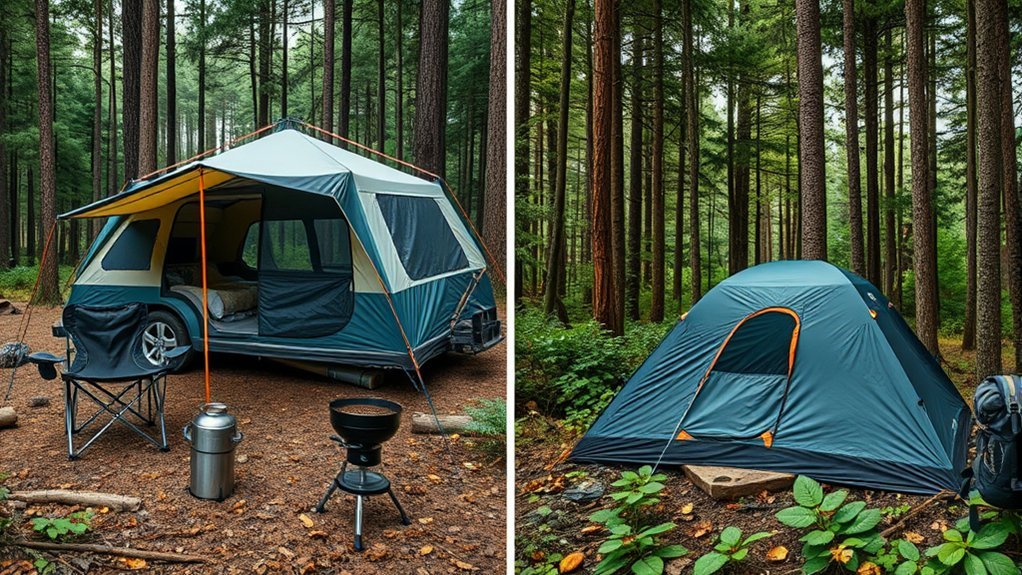
Backpacking is overnight or multi-day hiking in which you carry your shelter, food, sleep system, clothing, and other essentials. You travel on foot and may camp far from roads, buildings, and reliable cell service. This style demands lighter gear, a realistic route, weather awareness, water planning, navigation, food storage, and a backup plan.
Why People Backpack
| Backpacking benefit | Typical gear focus | Campsite reality |
|---|---|---|
| Deeper nature immersion | Light shelter and sleep system | Remote, with fewer amenities |
| More mobility on foot | Compact, multi-use items | More planning and area-specific rules |
| Longer trail routes | Efficient packing and layering | Weather and water play a larger role |
Essential Gear for Backpacking
Backpacking gear should be light enough to carry, compact enough to pack, and dependable for the expected conditions. Focus on complete systems rather than chasing one target weight:
- Backpack: Choose a properly fitted pack with enough capacity for your trip length, food, water, weather, and required bear-resistant storage.
- Shelter: Balance packed weight, interior room, storm protection, durability, and setup simplicity. Shared shelters can split weight between hikers.
- Sleep system: Pair a sleeping bag or quilt with an insulated sleeping pad suited to the expected overnight low.
- Water system: Carry enough water between reliable sources and bring an appropriate treatment method. Clear-looking backcountry water can still contain harmful germs.
- Food and cooking: Pack enough calories, a legal stove or no-cook plan, and the food-storage method required for the area.
- Navigation and emergency gear: Carry a map or downloaded offline map, compass skills, light, first-aid supplies, repair items, weather protection, and an emergency communication plan.
Pro Tip: Do not treat a fixed percentage of body weight as a universal safe limit. Pack comfort depends on fitness, terrain, trip length, water needs, and pack fit. Weigh your loaded pack, take a short practice hike, and remove nonessential items before committing to a remote route.
Skills and Preparation You Will Need
Backpacking rewards planning and honest limits. Practice pitching the shelter, treating water, using the stove, packing food, and navigating before the trip. Start with a short route and reach camp with enough daylight to choose a legal site and finish setup.
At camp, check slope and drainage, wind exposure, flash-flood risk, and overhead hazards such as dead branches. Follow Leave No Trace principles, including camping on durable surfaces, packing out waste, and respecting wildlife.
Key Differences in Gear Requirements
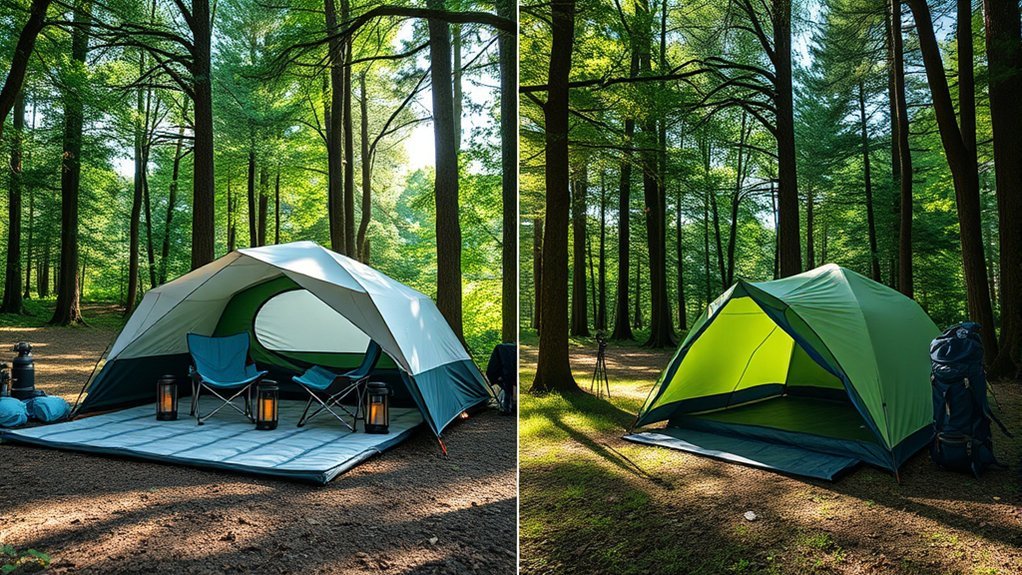
Tent Size and Livability
- Backpacking tents are compact and efficient, with enough room to sleep and protect a limited amount of gear.
- Car camping tents are often taller and roomier, with more floor area, larger vestibules, and features such as awnings or room dividers.
A tent labeled for two people may feel tight with two adults and gear. For car camping, many people size up for comfort. For backpacking, hikers often accept a closer fit to reduce packed weight.
Weight and Portability Trade-offs
| Factor | Backpacking tent | Car camping tent |
|---|---|---|
| Packed weight | Low enough for trail carry | Often heavier because comfort matters more |
| Packed size | Compact enough to fit in or on a pack | Bulkier and transported in a vehicle |
| Pole design | Light, segmented, and packable | Often longer or thicker to support a larger structure |
| Setup style | Fewer components, but careful staking matters | More components and more interior room |
Cost and Budget
Car camping often has a lower entry barrier because weight and packed size matter less. You can use bulkier household items, borrow gear, or buy durable equipment without paying a premium for ultralight materials. Backpacking equipment can cost more when you reduce weight while keeping weather protection and durability. However, either style can become expensive, so rent or borrow before buying a complete kit.
Comfort, Privacy, and Access
Car camping usually wins on bedding, cooking space, clothing options, and easy access to supplies. Backpacking usually wins on solitude and access to locations beyond roads. The trade-off is that a remote site can be harder to leave when weather, injury, or equipment trouble develops.
Fitness and Daily Effort
Car camping may involve only a short walk from the parking area. Backpacking adds the weight of your shelter, food, water, and safety gear to every climb and descent. Route distance alone does not show difficulty, so also consider elevation gain, trail surface, heat, altitude, and water availability.
Planning and Safety for Both Camping Styles
Confirm Rules, Reservations, and Permits
Check the official land-manager page for campsite reservations, backcountry permits, dispersed-camping boundaries, parking rules, fire restrictions, pet rules, food-storage orders, and stay limits. The Bureau of Land Management notes that dispersed-camping rules can vary by state and local office.
Check Weather and Site Hazards
Review the forecast before leaving and again when service is available. At camp, avoid low areas exposed to flash flooding, exposed ridges during storms, unstable trees, and dead branches overhead. The National Park Service campsite guide recommends checking for flooding, lightning, wind, and tree hazards.
Plan Water, Food, and Wildlife Storage
Car campers can often bring all needed water, but they should confirm whether campground taps are available and operating. Backpackers must identify reliable sources and carry enough water between them. The CDC advises treating water when you are unsure it is safe; boiling is the best way to kill germs, followed by filtration and disinfection when boiling is not practical.
Store food, trash, toiletries, and other scented items exactly as local rules require. In some areas that means a food locker, locked hard-sided vehicle, approved bear-resistant container, or another specified method. Do not assume a tent is secure food storage.
Share an Emergency Plan
Tell a reliable person where you are going, your route, where you plan to camp, who is with you, your vehicle information, and when they should seek help if you do not return. Carry lighting, first-aid supplies, weather protection, and a communication option suited to the area. A phone may not have service in the backcountry.
Note: A vehicle makes evacuation easier only when the road remains passable and the vehicle is reliable. Remote car camping can still require self-recovery planning, extra water, a full-size spare, and conservative route choices.
Choosing the Right Camping Style for You
- Pick car camping if you want comfort, simpler logistics, family-friendly space, or a relaxed base camp for day trips.
- Pick backpacking if you want distance, quiet, and access to places that vehicles cannot reach.
- Try a hybrid approach by driving to a trailhead, hiking a short distance, and camping at a legal walk-in site.
Choose Car Camping First If You Are Unsure
For many beginners, one or two car-camping trips are the safest way to test a tent, sleep system, stove, lighting, and clothing. You can learn what keeps you comfortable without committing to a long walk from the vehicle.
Choose Backpacking When Your Skills Match the Route
Start with a short, well-marked route in mild conditions. Keep the mileage conservative, verify water, obtain any permit, and turn around when weather, fatigue, injury, or navigation uncertainty makes the plan unsafe.
Budget Note: Car camping can cost less to start because bulky equipment is acceptable. Lightweight backpacking gear often costs more, but renting, borrowing, and buying used gear can reduce the upfront cost for either style.
How Tent Design Affects Setup
Backpacking tents often use short pole segments, clips, and color-coded components to reduce packed size and simplify pitching. Many need firm staking and correct tension to hold their intended shape in wind and rain.
Car camping tents may use more poles, larger rainfly panels, and taller walls. They can take longer to assemble, but the extra size gives you more standing room, storage, and space to wait out poor weather.
When it is windy, keep the tent body controlled, stake the upwind corners first, and add poles without letting fabric blow loose. Install the rainfly before rain starts, then tension the shelter evenly. Never pitch below dead branches or in a drainage channel.
Before You Leave: Final Checklist
- Confirm the campsite, permit, parking, fire, pet, and food-storage rules.
- Check the forecast, overnight low, wind, rain, heat, and current alerts.
- Practice tent setup and inspect poles, stakes, zippers, seams, and rainfly.
- Test your sleep system for the expected temperature.
- Carry enough water or a verified treatment plan.
- Pack food securely and keep scented items out of the sleeping area where required.
- Download maps for offline use and carry backup navigation.
- Share your route and return time with a reliable person.
- Leave room to turn back when conditions exceed your skills or equipment.
Frequently Asked Questions
Can I use a backpacking tent for car camping?
Yes. A backpacking tent works well for car camping, especially for a quick overnight or when vehicle space is limited. You may miss the standing room, wider floor, and storage features of a larger car camping tent.
How long does tent setup usually take?
Setup time varies by tent design, size, weather, ground, and experience. A practiced camper may pitch a simple shelter quickly, while a large family tent or difficult weather can take much longer. Practice at home instead of relying on a fixed time estimate.
What tent weight suits a beginner backpacker?
There is no single ideal weight. Compare the tent’s complete packed weight, capacity, weather protection, durability, price, and how the load will be shared. Weigh your full pack and take a practice hike before the trip.
How do weather conditions change your setup plan?
In wind, control loose fabric and stake the shelter early. In rain, install the rainfly before organizing gear. In heat, seek legal shade and maximize ventilation. During thunder, follow local safety guidance; a tent is not reliable lightning protection.
What are the best practices for tent maintenance after a trip?
Shake out debris, spot-clean dirty areas with the method recommended by the tent maker, and dry the tent fully before storage. Store it loosely in a cool, dry place and repair small tears, bent poles, or damaged cord before the next trip.
Do I need a permit for backpacking or car camping?
It depends on the location. Developed campgrounds may require a reservation or fee, and many backcountry areas require an overnight permit. Dispersed-camping, parking, fire, and stay-limit rules also vary. Check the official land-manager page for the exact site and dates.
Is it safe to sleep in a car while camping?
It can be safe in a legal location with suitable temperatures and ventilation, but never sleep with the engine or a fuel-burning heater running. Keep the exhaust pipe clear, avoid enclosed spaces, manage heat and cold, and leave the area if you feel unsafe.
Which Camping Style Fits You Best?
Car camping and backpacking both reward you, but they suit different goals. Car camping makes comfort easier and gives most beginners a forgiving place to learn. Backpacking demands more fitness, planning, and self-reliance, but it opens remote places and longer routes that roads cannot reach.
The Dyrt’s 2026 Camping Report found that RVs and trailers remained the most popular camping type among its survey respondents, with 52.2% taking at least one such trip in 2025. That statistic is broader than tent-based car camping, but it confirms that vehicle-supported camping is a common way to enjoy the outdoors. Try both styles when your skills and plans allow; many campers switch between them based on the season, destination, and people joining the trip.
Sources
- National Park Service: Finding and Setting Up a Campsite – campsite selection, drainage, flooding, wind, lightning, and overhead hazards
- National Park Service: Camping Safely During Your Stay – campsite alerts, food storage, cooking-area safety, and wildlife precautions
- CDC: Water Treatment When Hiking, Camping, or Traveling – safe treatment of uncertain backcountry water
- CDC: Carbon Monoxide Poisoning Basics – carbon monoxide risks from fuel-burning equipment and vehicle exhaust
- Leave No Trace: Seven Principles – low-impact travel, durable surfaces, waste, wildlife, and planning
- Bureau of Land Management: Camping – dispersed-camping rules, local variation, vehicle access, and stay limits

