
Last Updated on July 29, 2026 by Mason Reed
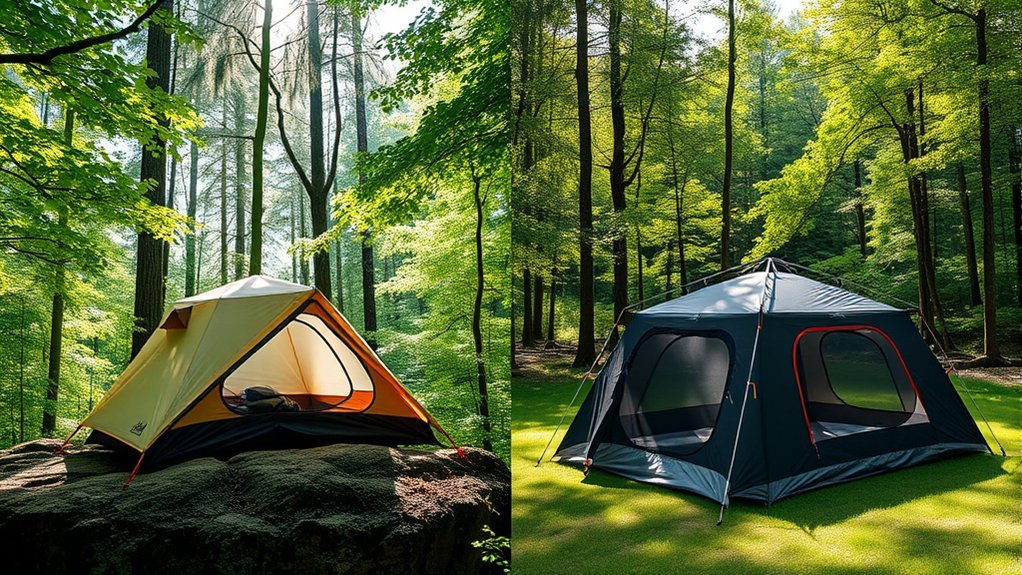
Choosing between a backpacking tent and a camping tent comes down to how far you will carry it and how much living space you want at camp. Backpacking tents prioritize low weight, compact storage, and efficient use of space. Car-camping tents prioritize room, comfort, easy access, and extra features because you normally transport them in a vehicle.
Quick Answer
Choose a backpacking tent when you must carry the shelter for miles; it is lighter, smaller when packed, and usually snugger. Choose a camping tent when you can drive close to the site and want more floor space, height, storage, and comfort. Season rating—not category—determines winter suitability.
Key Takeaways
- Backpacking tents are designed around low weight, small packed size, and efficient sleeping space.
- Car-camping tents are generally roomier, taller, and more feature-rich because they do not need to be carried far.
- A tent’s listed capacity is a maximum sleeping fit, not a promise of roomy comfort.
- Compare the season rating, floor dimensions, peak height, vestibules, pole design, and packaged weight—not just the marketing category.
- A backpacking tent works well for car camping, but a heavy or bulky camping tent is rarely practical for a long hike.
At a Glance
| Best Use | Backpacking tent: Hike-in camps and trips where every pound matters. Camping tent: Drive-up campsites, family trips, festivals, and base camps. |
| Weight and Packed Size | Backpacking tent: Lower weight and a smaller bundle. Camping tent: Heavier and bulkier, with less emphasis on packability. |
| Interior Space | Backpacking tent: Efficient and often snug at full capacity. Camping tent: More floor area, headroom, storage, and space for larger sleeping pads. |
| Typical Features | Backpacking tent: Lightweight poles, compact vestibules, and fewer extras. Camping tent: Larger doors, more pockets, room dividers, awnings, and taller walls. |
| Weather Use | Either category may be three-season or four-season. Check the manufacturer’s season rating, pole structure, ventilation, and snow or wind limits. |
| Main Tradeoff | Backpacking tent: Less living space for easier carrying. Camping tent: More comfort at the cost of weight and storage space. |
Disclosure: As an Amazon Associate I earn from qualifying purchases. Some links on this page are affiliate links, at no extra cost to you.
Differences Between Backpacking and Camping

Backpacking combines hiking with overnight camping. You carry your shelter, sleep system, food, water, and other equipment in a backpack. A tent for this use must be light enough to carry and compact enough to fit inside or outside the pack.
Traditional camping in this comparison means car camping or base camping. You drive to or near the campsite, so the tent may be much heavier and larger. This lets manufacturers add taller walls, wider doors, more storage pockets, larger vestibules, and room dividers.
The difference is therefore not whether you are camping—you camp with both kinds of tents. The difference is how you transport the shelter and which tradeoffs matter most.
A backpacking tent is designed to travel efficiently. A car-camping tent is designed to make the campsite more comfortable.
Differences Between Backpacking Tents and Camping Tents
According to REI’s camping-tent guidance, car-camping shelters tend to be heavier, more affordable for their size, and equipped with more comfort features than tents made for backpacking. Weight-saving fabrics and pole systems often make backpacking models more expensive for the amount of interior room they provide.
Backpacking Tent Design
A backpacking tent usually has a low profile, a compact pole set, and enough floor space for the listed number of sleepers. Vestibules provide protected storage for footwear and packs without increasing the sleeping area. Many models use lighter fabrics and fewer convenience features to reduce packaged weight.
Some are fully freestanding and can hold their basic shape without stakes. Semi-freestanding models need a few corners staked out to reach their full floor area. Non-freestanding shelters depend on stakes, guylines, or trekking poles. Freestanding does not mean stake-free: every tent should be secured when wind is possible.
Car-Camping Tent Design
A car-camping tent can use heavier poles, larger fabric panels, taller walls, and a wider floor because it does not need to fit comfortably in a backpack. Cabin-style and dome-style models may include standing height, multiple doors, awnings, room dividers, electrical-cord ports, and extensive interior storage.
The extra space is useful for families, children, pets, cots, wide sleeping pads, and longer stays. However, a large shelter needs more room in the vehicle, more home-storage space, and a campsite or tent pad wide enough for its footprint.
Note: “Camping tent” is not a weather rating. A tall six-person tent may be designed only for mild three-season use, while a compact backpacking tent may be built for severe alpine conditions.
Factors to Consider When Deciding Between a Backpacking or Camping Tent

The right shelter should match your transportation method, group size, weather, campsite, sleeping system, and budget. Avoid choosing from the capacity number or total weight alone.
Tent Usage Scenarios
Choose a backpacking tent when you will carry the shelter for a meaningful distance, have limited pack volume, or need to divide the tent components between hikers. It is usually the better fit for backcountry routes, thru-hikes, bikepacking, and trips that involve public transportation or limited luggage space.
Choose a car-camping tent when the vehicle does most of the carrying and comfort matters more than pack weight. It is well suited to campgrounds, family weekends, festivals, hunting camps, and multi-day base camps.
A backpacking tent can serve both roles. It may feel cramped at a drive-up campsite, but it remains easy to pitch and transport. A car-camping tent can work for a very short walk from a parking area, but its weight and packed length usually make it impractical for a long trail.
Weight and Portability
Backpacking tents are built to reduce both scale weight and packed volume. However, there is no universal rule that every backpacking tent weighs between one and five pounds. Current models include ultralight shelters below two pounds and roomier designs above five pounds.
Compare these specifications:
- Packaged weight: The total supplied package, generally including the body, rainfly, poles, stakes, guylines, stuff sacks, and repair items.
- Minimum trail weight: Commonly the tent body, rainfly, and poles, although definitions can vary by manufacturer.
- Packed dimensions: The length and diameter of the stored bundle.
- Weight per sleeper: The packaged weight divided by the number of people who will actually share it.
- Split-carry options: Whether one person can carry the body and fly while another carries the poles and stakes.
REI’s backpacking-tent guide distinguishes minimum trail weight from packaged weight and recommends comparing exact specifications rather than relying on the category name.
Note: Use packaged weight when planning what you will carry unless you already know which stakes, sacks, or accessories you will leave at home.
Space and Comfort
A capacity label tells you approximately how many sleepers can fit, but it does not describe how comfortable the tent will feel. A two-person backpacking tent may fit two standard sleeping pads with little unused floor space. Tall campers, wide pads, bulky gear, or a pet can make the same shelter feel crowded.
Check the following measurements:
- Floor length: Important for tall sleepers and thick sleeping bags.
- Floor width: Compare it with the combined width of your sleeping pads.
- Peak height: Shows the maximum height at one point, not the amount of usable sitting or standing room.
- Wall shape: Near-vertical walls feel roomier than steeply sloped walls with the same floor area.
- Vestibule area: Provides protected storage for packs, boots, and wet gear.
- Number of doors: Two doors reduce the need to climb over another sleeper.
Pro Tip: Place your sleeping pads side by side at home and measure their total width. Compare that number with the tent’s floor width at both the head and foot ends.
For backpacking, sizing up by one person can provide useful room for gear or a pet if the added weight is acceptable. For car camping, choosing a tent rated for one or two more people than your group often improves comfort. Doubling the capacity is not a universal requirement and may create storage or tent-pad problems.
Season Rating and Weather Protection
Most recreational tents are three-season tents intended for spring, summer, and fall. They provide rain protection and ventilation but are not normally engineered for heavy snow loading or prolonged severe wind.
Extended-season or three-to-four-season tents add structural support and fabric coverage for colder, windier shoulder-season trips. Four-season tents use stronger pole structures, less exposed mesh, and shapes designed to handle harsher alpine conditions.
Warning: Do not assume a heavy, tall, or large camping tent is safe for snow or severe wind. Follow the manufacturer’s season rating and setup instructions, use every required stake and guyline, and change plans when the forecast exceeds the shelter’s intended use.
Setup Style and Campsite Requirements
Backpacking tents often use fewer poles and a low profile, but ultralight models may require careful staking and tensioning. Large camping tents may have more pole sections, sleeves, hubs, or clips and can take two people to pitch efficiently.
Practice setting up any new tent before the trip. Confirm that the footprint, poles, rainfly, stakes, guylines, and repair sleeve are present. At camp, use an established or durable surface and avoid damaged trees, low drainage channels, and areas that show signs of flooding. Leave No Trace guidance recommends established sites or durable surfaces such as rock, gravel, dry grass, and compacted ground.
Usage

Each tent type serves a different priority, but the categories can overlap.
- Solo hiking: A one-person or compact two-person backpacking tent keeps pack weight and volume low.
- Two-person backpacking: Compare the floor width with both sleeping pads and consider a three-person model if comfort matters more than minimum weight.
- Family camping: A larger car-camping tent provides room for children, gear, changing clothes, and bad-weather downtime.
- Camping with a pet: Size up, protect the floor from claws, and look for a vestibule or washable floor area.
- Festival or backyard use: A basic camping tent may offer better value and easier access than a premium ultralight shelter.
- Occasional crossover use: A roomy backpacking tent can cover both trail and campground trips if you accept less standing room.
- Winter camping: Choose by the manufacturer’s season rating and expected wind and snow—not by whether the tent is labeled backpacking or camping.
Whichever shelter you choose, follow local campsite and food-storage rules. The National Park Service campsite guide recommends separating sleeping, cooking, and food-storage areas in backcountry settings, but exact requirements vary by park and wildlife conditions.
Price
Tent prices change frequently and vary by capacity, materials, pole system, season rating, features, and brand. Fixed price ranges can become inaccurate quickly, so compare current models that meet the same use case instead of assuming one tent category is always cheaper.
Budget Considerations for Tents
Basic car-camping tents often provide the most floor space for the money because weight-saving materials are not essential. Backpacking tents may cost more per square foot because manufacturers must balance low weight, strength, weather protection, and a compact packed size.
Your budget should also include any items not supplied with the tent:
- A fitted footprint or groundsheet
- Terrain-appropriate stakes
- Extra guylines
- A pole-repair sleeve
- Seam sealer when required by the manufacturer
- A gear loft or vestibule accessory
- A larger storage bag for loose long-term storage
Long-term Investment Value
The best value is the shelter you will use regularly and can maintain. A premium ultralight tent may be worthwhile for a hiker who carries it hundreds of miles. A heavier family tent may deliver better value for a group that spends long weekends at developed campgrounds.
Before paying more, check whether the upgrade improves something you will notice, such as lower packaged weight, shorter pole sections, stronger weather performance, two doors, better ventilation, more vestibule space, replaceable poles, or a stronger warranty.
Price Range Comparison
Instead of relying on a rigid dollar range, think in practical tiers:
- Entry-level camping tents: Prioritize low cost and basic fair-weather shelter, often with more weight and simpler components.
- Mainstream backpacking tents: Balance weight, durability, livable space, and weather protection.
- Premium ultralight tents: Use specialized fabrics and pole systems to save weight, often with a higher price and more careful handling requirements.
- Large premium camping tents: Add standing height, multiple rooms, large vestibules, durable frames, or inflatable structures.
- Four-season tents: Cost more because of their stronger structures and specialized cold-weather design, whether intended for backpacking or base camping.
Capacity
Backpacking tents commonly serve one to three people, while car-camping tents are available in sizes for couples, families, and large groups. These are common patterns, not strict limits.
A tent’s capacity is normally based on the number of sleeping pads the manufacturer expects to fit on the floor. At full capacity, there may be little room left for bags, clothing, or a pet. Current tent-selection guidance recommends comparing exact dimensions and considering a larger capacity when you need more personal space.
Choose capacity with these questions:
- How many people will sleep inside?
- How wide and long are their sleeping pads?
- Will backpacks stay in the vestibule or inside the tent?
- Does anyone need extra length or room to move?
- Will a child or pet share the floor?
- Does the campground have a maximum tent-pad size?
- Can your vehicle and home-storage area hold the packed tent?
For two backpackers, a two-person tent saves weight, while a three-person model adds comfort. For a family of four traveling by car, a five- or six-person tent often provides more practical living space than a tight four-person model.
Materials
Tent performance depends on the complete construction rather than one fabric name. Both backpacking and camping tents may use nylon, polyester, mesh, aluminum, fiberglass, steel, or composite parts.
Compare these material and construction details:
- Fabric denier: A higher denier often indicates thicker yarn, but weave and coating also affect strength.
- Rainfly coverage: A full-coverage fly generally protects more of the tent body than a small roof fly.
- Waterproof coatings: Check the floor and fly specifications and whether the seams are factory-taped or require sealing.
- Floor design: A raised bathtub-style floor helps keep seams and vulnerable fabric away from shallow runoff.
- Pole material: Aluminum is common in quality backpacking tents, while fiberglass, aluminum, steel, or air beams may appear in camping models.
- Zippers and clips: Smooth operation, replaceable parts, and accessible repair service affect long-term value.
- UV exposure: Long periods in direct sun weaken tent fabrics over time.
Backpacking tents often use lower-weight fabrics and should be handled carefully around sharp rocks, branches, pets, and abrasive ground. Car-camping models may use heavier components, but weight alone does not guarantee better wind or snow performance.
Weight
Weight matters most when the tent must travel on your back. For a car-camping trip, packed dimensions, ease of loading, and setup effort may matter more than the number on a scale.
When comparing backpacking shelters, use packaged weight for realistic trip planning. Minimum trail weight is useful for comparing basic structures, but it may exclude stakes, sacks, guylines, or other items you still need in the field.
Also consider the total shelter system. A very light tent that requires a separate groundsheet, extra stakes, trekking poles, or a large number of guylines may not save as much total weight as the headline figure suggests.
For group trips, divide the components. One hiker can carry the tent body and rainfly, while another carries the poles, stakes, and footprint. This makes a slightly larger shelter more manageable without forcing one person to carry the entire load.
Which Tent Should You Choose?
Use this decision checklist before buying:
- Choose a backpacking tent if you will carry it for miles, have limited pack space, or regularly change campsites.
- Choose a camping tent if you can park close by and value standing height, wide doors, large sleeping pads, or room for children and gear.
- Choose a crossover backpacking tent if you want one shelter for both trails and campgrounds.
- Choose a four-season model only when your expected snow, wind, and cold conditions require its stronger structure.
- Size up carefully when you need more comfort, but confirm the added weight, packed size, and campsite footprint.
- Compare exact specifications for floor length, width, peak height, vestibule area, doors, packaged weight, and packed dimensions.
- Practice the pitch before relying on the tent away from home.
Pro Tip: Build a short list of three tents, then compare them using the same specifications. Marketing labels such as “ultralight,” “spacious,” and “all-weather” are less useful than measured weight, dimensions, season rating, and pole design.
Frequently Asked Questions
Can I use a backpacking tent for car camping?
Yes. A backpacking tent works well for car camping and is easy to transport and pitch. The main drawbacks are less headroom, a tighter floor, smaller vestibules, and fewer comfort features than a typical car-camping tent.
Can I take a camping tent backpacking?
You can carry a light camping tent for a short distance or split it among several hikers, but most car-camping tents are too heavy and bulky for long routes. Check packaged weight, pole length, packed diameter, and each person’s total load before deciding.
What are the best brands for backpacking tents?
There is no single best brand for every camper. Big Agnes, MSR, NEMO, REI Co-op, Sea to Summit, SlingFin, Tarptent, and other established manufacturers offer strong models for different needs. Compare individual tents by weight, dimensions, season rating, setup style, warranty, and repair support rather than choosing from the logo alone.
How do I maintain my camping tent?
Shake out loose debris and let the tent dry completely after every trip. Spot-clean dirt with cool or lukewarm water, a soft cloth, and a cleaner approved for outdoor gear. Do not machine-wash or machine-dry it. Store the clean, fully dry tent loosely in a cool place instead of leaving it compressed in its stuff sack.
Are there weather-resistant backpacking tents?
Yes. Backpacking tents range from ventilated three-season shelters to strong four-season alpine models. Check the season rating, pole layout, rainfly coverage, seam treatment, ventilation, and manufacturer instructions. Correct staking and guyline use are also essential in wind and rain.
Can children sleep comfortably in a camping tent?
Yes. Choose enough floor space for every sleeping pad, leave a clear path to the door, and keep sharp or hot equipment outside the sleeping area. A tent rated for one or two more people than the group often gives families more room for clothing, nighttime movement, and wet-weather downtime.
Is a two-person tent comfortable for two adults?
Sometimes, but many two-person backpacking tents are intentionally snug. Add the widths of both sleeping pads and compare the result with the tent floor. Also check floor length, wall angle, door placement, and vestibule space. A three-person model may be more comfortable when the extra weight is acceptable.
Do I need a four-season tent for winter camping?
Not for every mild winter campground, but a four-season or winter-specific tent is the safer choice when heavy snow, exposed terrain, or severe wind is expected. A three-season tent may be suitable for calm conditions below tree line only when the manufacturer permits that use and the forecast remains within its limits.
Conclusion
A backpacking tent is the better choice when low weight, compact storage, and trail mobility come first. A car-camping tent is usually better when you can drive close to camp and want more room, height, storage, and comfort.
Do not choose from weight or capacity alone. Compare packaged weight, packed dimensions, floor measurements, vestibules, doors, season rating, pole structure, setup requirements, and campsite size. The best tent is the one that fits your actual trip, sleeping system, weather, and group—not simply the lightest or largest model.
Sources
- REI Co-op: How to Choose a Backpacking Tent — capacity, season ratings, dimensions, minimum trail weight, and packaged weight.
- REI Co-op: What to Look for in a Camping Tent — car-camping versus backpacking design, capacity, features, and campsite-size considerations.
- REI Co-op: Tent Care Basics — cleaning, drying, waterproofing, UV protection, and long-term storage.
- U.S. National Park Service: Finding and Setting Up a Campsite — campsite organization, sleeping-area safety, and food-storage planning.
- Leave No Trace: Travel and Camp on Durable Surfaces — responsible campsite selection and protection of natural areas.

