
Last Updated on September 11, 2026 by Daniel Globe
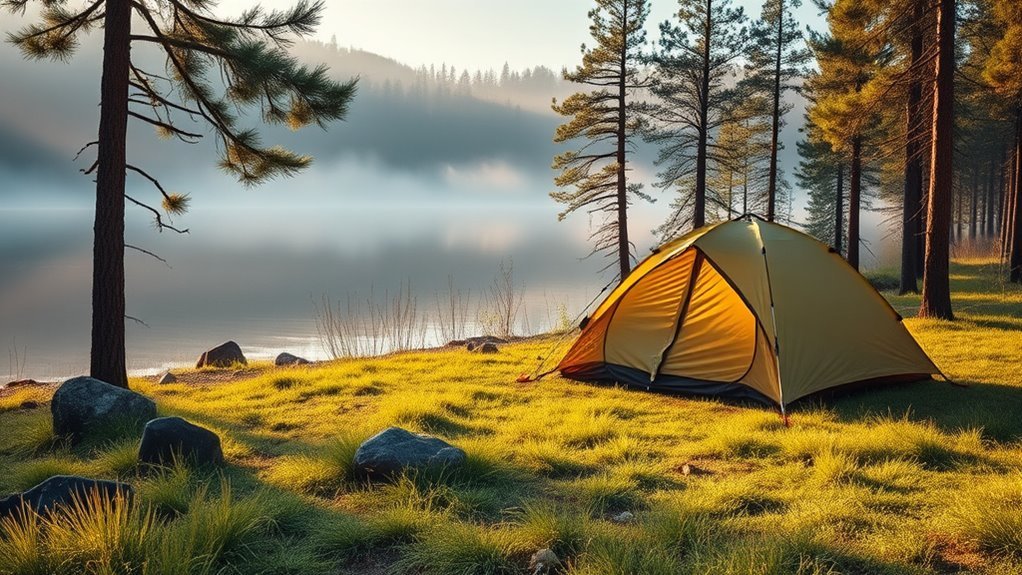
For most dispersed and backcountry camping, 200 feet, or about 61 meters, is the best general distance to keep between your tent and lakes, rivers, streams, and springs. However, that distance is a low-impact guideline rather than a universal law. Posted regulations, permits, designated campsites, closures, and ranger instructions always come first.
Quick Answer
For dispersed or backcountry camping, use 200 feet, about 61 meters or 70 adult steps, from lakes and streams as the default low-impact buffer. It is not a universal law. Follow posted rules, permits, and designated campsites, which may require a shorter or longer setback or place you in an established site near water.
Key Takeaways
- Use 200 feet as your starting point: Leave No Trace recommends this distance for protecting lakes, streams, and riparian areas.
- Follow local rules first: A permit, sign, designated campsite, seasonal closure, or ranger instruction overrides general advice.
- Choose safe ground: Avoid dry washes, ravines, unstable banks, low areas, dead trees, and places that may flood.
- Keep pollutants away: Wash dishes, dispose of wastewater, and handle human waste well away from natural water.
- Do not rely on a universal tent-spacing number: Use designated pads, maintain clear exits, manage guy lines, and follow fire and wildlife rules.
Disclosure: As an Amazon Associate I earn from qualifying purchases. Some links on this page are affiliate links, at no extra cost to you.
How Far Should You Camp From Water?
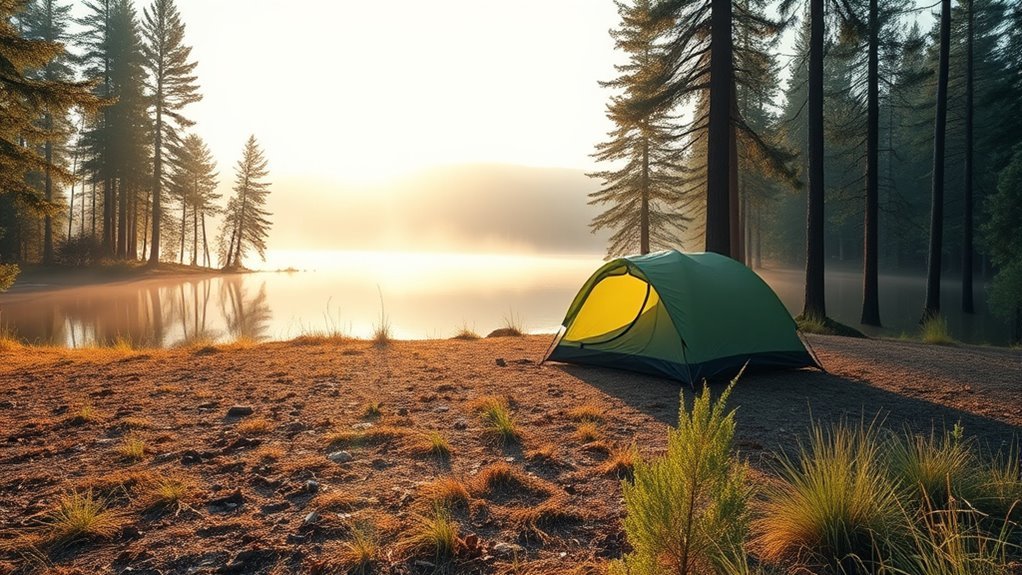
A good default is to camp at least 200 feet from lakes and streams. That equals approximately 61 meters and is the distance recommended by Leave No Trace for protecting riparian areas.
The recommendation is most useful when you are choosing your own dispersed or backcountry campsite. It gives vegetation, wildlife, and other visitors space while reducing repeated foot traffic along fragile shorelines.
However, 200 feet is not a rule that applies identically on every property. A park may require you to use a designated campsite that sits closer to water. Another area may require a longer setback because of wildlife, desert springs, sensitive plants, cultural resources, erosion, or sanitation concerns.
Warning: Never ignore a sign, permit condition, emergency closure, campground boundary, or ranger instruction because you measured 200 feet. The managing agency’s rule always overrides the general recommendation.
Is 200 Feet a Rule or a Recommendation?
The answer depends on where you camp. Leave No Trace presents 200 feet as a low-impact outdoor practice. Some land managers also adopt that distance as an enforceable regulation, while others use a different setback.
For example, some National Park Service backcountry areas use a 100-foot minimum. Mojave National Preserve requires campsites to be more than 200 yards from water sources, which is more than 600 feet. Other locations restrict camping around specific springs, shorelines, archaeological sites, trails, or developed areas.
Before leaving home, check the official page for the park, forest, monument, wilderness area, or BLM field office you plan to visit. Also review your permit, current alerts, fire restrictions, food-storage orders, and any seasonal wildlife closures.
Note: In a developed campground, use the assigned tent pad or campsite boundary even when it is closer than 200 feet to water. The site was selected and managed for concentrated use. Do not create a new campsite farther into surrounding vegetation unless the campground permits it.
How to Measure 200 Feet From Water
You do not need to carry a long measuring tape. Leave No Trace commonly describes 200 feet as roughly 70 adult steps. Your stride may be shorter or longer, so treat this as an estimate rather than a survey measurement.
- Start at the water’s edge or obvious high-water area. Do not begin from the center of a wide beach that may flood when the water rises.
- Walk directly away from the water. Count approximately 70 normal adult steps.
- Inspect the ground. Look for an established durable site rather than stopping exactly where your count ends.
- Check your surroundings. Avoid unstable banks, animal paths, dead trees, low ground, and channels that could carry runoff.
- Confirm the local rule. A map, permit, sign, or ranger may require a different distance.
Pro Tip: Measure the approximate distance before unpacking. It is much easier to move an empty backpack than a pitched tent, sleeping system, kitchen, and scattered gear.
Why the 200-Foot Camping Rule Matters
The buffer protects more than the appearance of a shoreline. It reduces concentrated trampling, limits the creation of informal paths, gives wildlife room to approach water, and keeps cooking, washing, and sanitation activities away from lakes and streams.
- Less shoreline damage: Repeated footsteps can crush plants and loosen soil around banks and roots.
- Lower contamination risk: Keeping wastewater and human waste away from water allows soil to help filter contaminants.
- More wildlife access: Animals can reach water without passing directly through a sleeping area.
- Lower flood exposure: Moving away from shore may reduce risk, although distance alone does not make a low or flood-prone site safe.
- Better privacy: Keeping camps away from shorelines helps preserve views and reduces crowding around popular water access points.
Think of 200 feet as a low-impact starting point, not permission to ignore a stricter local rule or an obvious campsite hazard.
Distance works best when combined with another Leave No Trace principle: camp on a durable surface. Established campsites, rock, gravel, sand, dry grass, and snow usually tolerate use better than wet meadows, shoreline plants, desert soil crusts, or areas where vegetation is beginning to wear away.
When You Need More Than 200 Feet
You may need to camp farther away when a local regulation requires it or when the first suitable ground beyond 200 feet is still fragile, unsafe, or heavily used.
Increase your distance or choose another area when:
- A permit, sign, map, or official regulation specifies a longer setback.
- You are near a desert spring, water hole, seep, or other scarce wildlife water source.
- The shoreline contains nesting, breeding, or sensitive wildlife habitat.
- The ground near the water is muddy, eroded, covered in fragile plants, or showing new campsite damage.
- You would be camping in a floodplain, dry wash, narrow canyon, ravine, drainage channel, or below an unstable bank.
- Your tent, cooking area, or group would block a trail or commonly used wildlife route.
- A larger setback is needed to remain out of sight of the water, trail, road, or other campers under local rules.
Do not choose a longer distance merely to create a private campsite in untouched vegetation. In popular areas, using an established durable site can cause less damage than spreading into a pristine location.
How Close Can Tents Be at a Campsite?
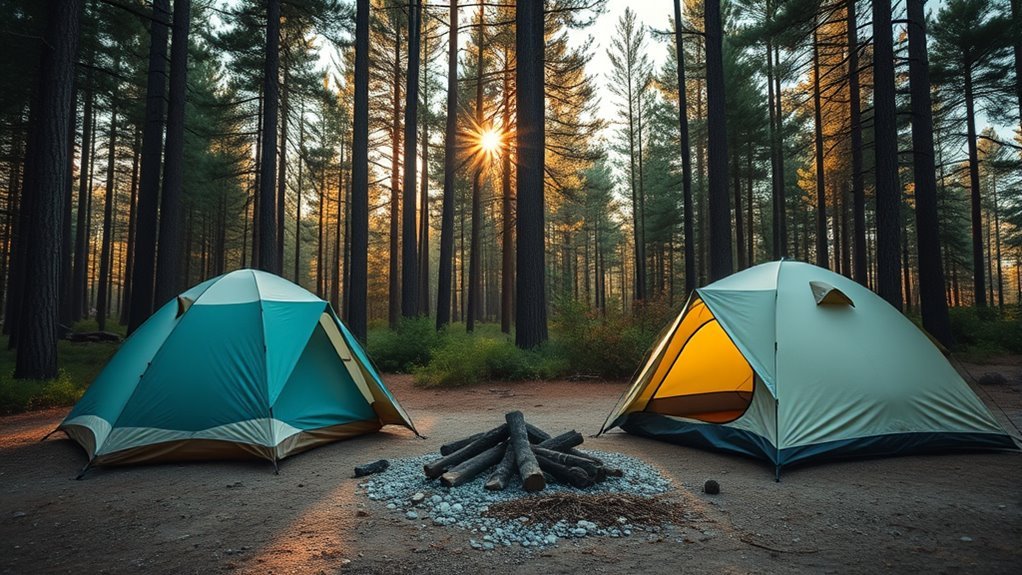
There is no universal rule requiring 10, 15, 25, or 30 feet between ordinary tents. The correct layout depends on the campground boundary, tent pads, group size, fire rules, terrain, weather, guy lines, emergency access, and wildlife requirements.
Use these practical guidelines:
- Keep every tent within the assigned campsite or designated camping area.
- Use established tent pads when they are provided.
- Leave enough space to open doors and exit without stepping over another tent or its guy lines.
- Keep a clear walking route through camp, especially at night.
- Do not place tents where vehicles, falling branches, rolling rocks, rising water, or cooking sparks could reach them.
- Keep stoves, grills, lanterns, and fires the distance required by the campground and equipment manufacturer.
- Do not exceed the site’s people, vehicle, or tent limit.
In bear country, tent-to-tent spacing may be less important than separating the sleeping area from food, cooking, garbage, and scented items. The National Park Service campsite guide advises maintaining distance between sleeping, cooking, and food-storage areas and checking the park’s specific food-storage rules.
If you are camping with friends, tents can be relatively close as long as everyone has a clear entrance, safe walking space, and room for guy lines. For privacy, spread out only when the designated site and durable ground allow it.
Keep Waste and Washing Away From Water
The 200-foot principle also applies to many activities that could pollute water. Do not wash dishes, bathe, brush your teeth, or pour soapy water directly into a lake or stream, even when the soap is labeled biodegradable.
Follow these low-impact practices:
- Use toilets or established sanitation facilities whenever available.
- Carry washing water at least 200 feet away from lakes and streams.
- Use as little soap as possible.
- Strain food particles from dishwater, pack the particles out, and scatter the water broadly where local rules permit.
- Keep toileting areas away from water, trails, campsites, and food-preparation areas.
- Where catholes are permitted, follow the local depth, location, toilet-paper, and pack-out rules.
- Use a waste bag or portable toilet where burial is prohibited or unsuitable.
Leave No Trace waste guidance recommends placing catholes 6 to 8 inches deep and at least 200 feet from water, camp, and trails where burial is allowed. Some destinations require all solid waste and toilet paper to be packed out, so check the rule before your trip.
What Safety Rules Apply Near Water?
A 200-foot buffer does not protect you from every water-related hazard. Before pitching your tent, look at the terrain, weather, vegetation, trees, and possible escape routes.
Stay Out of Flood-Prone Ground
Choose level ground that is not in a ravine, dry wash, drainage channel, low depression, or narrow canyon. Rain falling miles upstream can cause water to rise even when the sky above your campsite looks clear.
If water begins rising, becomes muddy, carries debris, develops a stronger current, or produces a growing roar, leave your gear and move to higher ground immediately. Never enter or attempt to cross floodwater.
Look Above and Around the Tent
Avoid dead trees, hanging branches, unstable slopes, loose rocks, eroding banks, cliff edges, and exposed high points. Wind, rain, saturated soil, and changing water levels can turn a poor site into a serious hazard.
Store Food Correctly
Keep food, garbage, cookware, toiletries, pet food, and other scented items secured according to local wildlife rules. Use required lockers, bear-resistant containers, vehicles, cables, or storage systems. Never keep food in your sleeping tent in bear country.
Treat Natural Water Before Drinking
Clear-looking water can still contain germs. The Centers for Disease Control and Prevention recommends boiling uncertain water or using an appropriate combination of filtering and disinfection. Follow the directions for your treatment product and carry a backup method.
Check Conditions Before Setting Up
Review the weather forecast, flood alerts, fire restrictions, campground notices, wildlife requirements, and permit conditions. If a ranger or campground host tells you to move, follow the instruction promptly.
Frequently Asked Questions
Is the 200-foot camping rule a law everywhere?
No. It is a widely used Leave No Trace recommendation and an enforceable rule in some locations, but individual parks, forests, wilderness areas, and campgrounds may use different setbacks. Always follow posted regulations, permits, designated-site rules, closures, and ranger instructions.
Can I use a designated campsite that is closer than 200 feet to water?
Yes, when the managing agency officially provides or assigns that campsite. Use the designated tent pad and remain inside the site boundary. Do not abandon it to create a new campsite in nearby vegetation unless local rules specifically allow dispersed camping.
What Is the 3-3-3 Rule for Camping?
The 3-3-3 rule is an informal RV travel guideline. A common version means driving no more than 300 miles in a day, arriving by about 3 p.m., and staying for at least three days. Variations exist, and it is unrelated to how far a tent should be from water.
What Are the 7 C’s of Camping?
The North American Family Campers Association’s Camper’s Code of Ethics uses Care, Caution, Courtesy, Cleanliness, Cooperation, Conservation, and Common Sense. Other camping and survival checklists sometimes use different C-based mnemonics, so the meaning can depend on the source.
What Is the 2-2-2 Rule for Camping?
The 2-2-2 rule is another informal RV pacing guide. It generally means driving no more than 200 miles, arriving by about 2 p.m., and staying for at least two nights. It is a trip-planning idea, not a campsite-distance regulation.
What Is the 4-4-4 Rule for Camping?
The 4-4-4 rule is commonly described as an RV travel guideline: drive no more than about 400 miles, arrive before 4 p.m., and stay for roughly four days. It does not mean that tents must remain 400 feet from water, trails, or other campsites.
Sources
- Leave No Trace: Travel and Camp on Durable Surfaces — supports the 200-foot recommendation and durable-surface guidance.
- National Park Service: Finding and Setting Up a Campsite — supports campsite-layout, flood, falling-tree, food-storage, and bear-country guidance.
- Mojave National Preserve Camping Regulations — provides an example of a local water setback that is longer than 200 feet.
- CDC: Water Treatment When Hiking and Camping — supports boiling, filtering, and disinfecting natural water before use.
- North American Family Campers Association — provides the organization’s 7 C’s Camper’s Code of Ethics.
- KOA RV Traveling Guide — explains the informal 2-2-2, 3-3-3, and 4-4-4 RV travel guidelines.
Conclusion
So, how far should you camp from water? For dispersed or backcountry camping, begin with a distance of at least 200 feet, or about 61 meters. Then check the official rule for your destination and choose durable, elevated ground away from flood channels, unstable banks, dead trees, and sensitive vegetation.
Use designated campsites when required, keep washing and human waste away from natural water, treat water before drinking it, and follow local wildlife and food-storage rules. A suitable campsite is not simply a measured distance from shore. It must also be legal, durable, and safe.
