
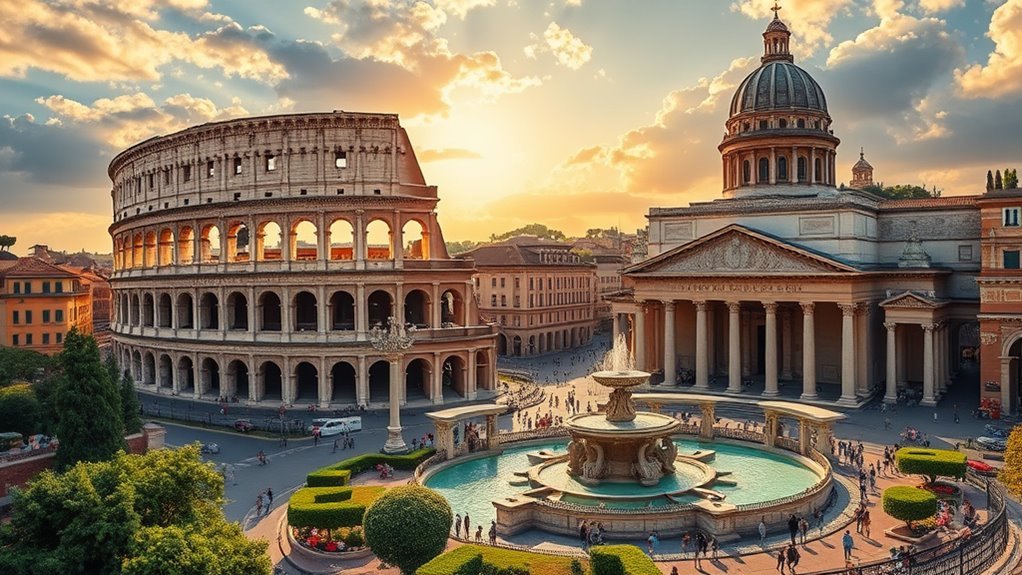
Last Updated on July 28, 2026 by Daniel Globe
Rome rewards travelers who combine its famous ancient ruins with churches, fountains, public squares, parks, and neighborhood life. The Colosseum, Roman Forum, Vatican Museums, St. Peter’s Basilica, Pantheon, and Trevi Fountain deserve priority, but places such as Piazza Navona, Castel Sant’Angelo, Villa Borghese, and Trastevere give the city its broader character. Careful ticket planning will help you spend less time in lines and more time exploring.
Quick Answer
Rome’s essential sights are the Colosseum and Roman Forum, Vatican Museums and St. Peter’s Basilica, Pantheon, Trevi Fountain, Piazza Navona, Spanish Steps, Castel Sant’Angelo, Villa Borghese, and Trastevere. Allow at least three days, reserve timed-entry attractions early, cover shoulders and knees at Vatican sites, and expect extensive walking.
Key Takeaways
- Book the Colosseum, Vatican Museums, Pantheon, and Borghese Gallery through their official ticket channels.
- Group nearby landmarks together instead of crossing the city several times in one day.
- St. Peter’s Basilica is free to enter, but security lines, the dome, guided visits, and optional timed-access services are separate considerations.
- The Trevi Fountain can be viewed from the surrounding square, while access to its inner basin area costs €2 for most tourists and non-residents.
- Wear supportive shoes, carry water, and protect valuables in crowded squares, stations, buses, and metro cars.
At a Glance
| Time Required | Three full days for the main sights; four or five days for a less rushed visit |
| Walking Level | Moderate to strenuous, with cobblestones, stairs, hills, and uneven archaeological ground |
| What to Bring | Supportive shoes, water, sun protection, charged phone, official tickets, photo ID, and clothing that covers shoulders and knees for Vatican sites |
| Typical Cost | Many squares and churches are free; major museums and archaeological sites require separate admission |
Disclosure: As an Amazon Associate I earn from qualifying purchases. Some links on this page are affiliate links, at no extra cost to you.
How to Plan Rome’s Must-See Attractions
Rome’s historic center is walkable, but its headline attractions are not all next door to one another. A simple three-day plan reduces backtracking:
- Day 1—Ancient Rome: Colosseum, Roman Forum, Palatine Hill, Capitoline area, and an evening walk toward the Pantheon.
- Day 2—Vatican and the Tiber: Vatican Museums, Sistine Chapel, St. Peter’s Basilica, Castel Sant’Angelo, and Piazza Navona.
- Day 3—Historic center and neighborhoods: Trevi Fountain, Spanish Steps, Villa Borghese, and Trastevere in the evening.
Reserve fixed-time attractions first and build the rest of each day around them. The Colosseum, Vatican Museums, Pantheon, and Borghese Gallery are the most important bookings. Check official websites again shortly before visiting because hours, entrances, religious services, restoration work, and special events can change.
Pro Tip: Do not schedule the Vatican Museums and Colosseum back-to-back. Both require substantial walking, security checks, and focused viewing. Placing them on separate days makes the trip far less tiring.
The Colosseum: Rome’s Essential Ancient Landmark
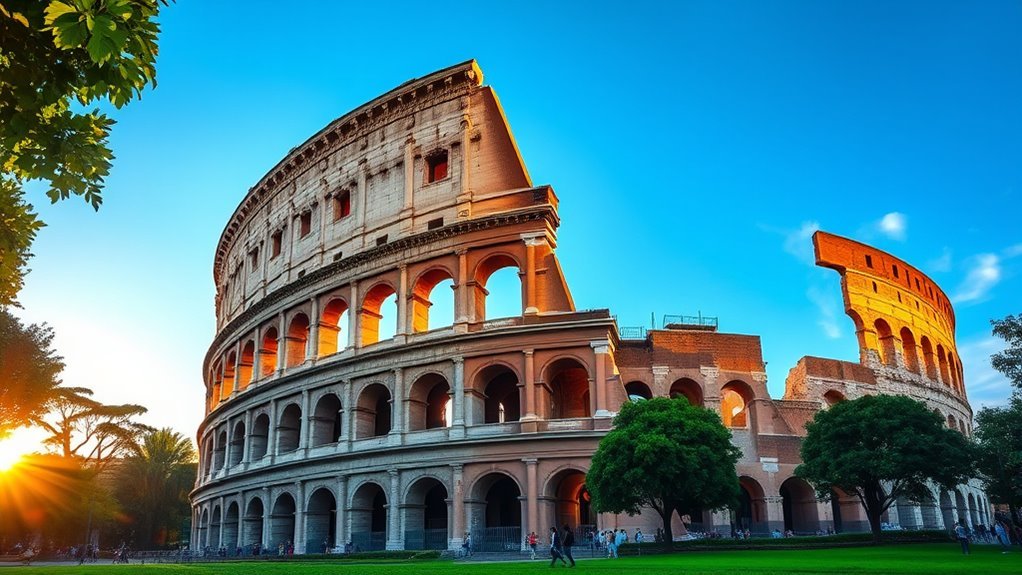
When you enter the Colosseum, you are stepping into the largest amphitheater built in the Roman world. The Flavian emperors commissioned it in the first century AD, and Emperor Titus inaugurated it in AD 80. Tens of thousands of spectators once watched gladiatorial contests, animal hunts, public ceremonies, and other spectacles inside its tiered seating.
The arena’s underground service area, now known as the hypogeum, contained passages, holding areas, hoists, and platforms used to move scenery, animals, and performers. The official Colosseum Archaeological Park explains how this complex machinery supported the shows staged above.
A standard timed ticket normally combines the Colosseum with the Roman Forum and Palatine Hill. The official 24-hour ticket is listed at €18 as of July 2026, while expanded experiences covering areas such as the arena or underground levels cost more. Verify current availability through the official ticket office.
Warning: Buy only through the archaeological park or an accredited partner. Unofficial sellers may charge large markups, advertise misleading “skip-the-line” access, or sell a tour that does not include the area you expected.
Allow about 75–90 minutes inside the amphitheater and at least two additional hours for the Forum and Palatine Hill. Arrive before the time printed on your ticket because security screening is required and late entry is not guaranteed.
Roman Forum and Palatine Hill: The Center of Ancient Rome
From the Colosseum, continue to the Roman Forum, the civic, political, commercial, and religious center of ancient Rome. Its temples, basilicas, arches, and public spaces make more sense when viewed as parts of a working city rather than isolated ruins.
| Key Structure | Why It Matters | What to Notice |
|---|---|---|
| Curia Julia | Meeting place associated with the Roman Senate | Its restrained brick exterior and preserved interior proportions |
| Temple of Saturn | A major temple whose podium also housed the state treasury | The surviving columns near the western end of the Forum |
| Arch of Titus | A triumphal monument commemorating the Flavian victory in Judaea | The relief showing spoils from the Jerusalem Temple |
| Palatine Hill | Traditional birthplace of Rome and later home to imperial palaces | Views over the Forum and Circus Maximus |
The site has little shade and many uneven paths. Bring water, use sun protection, and wear shoes with stable soles. A guide or reliable audio guide can help identify buildings that otherwise look like disconnected walls and columns.
Vatican City: Art, Architecture, and Religious Heritage
Vatican City combines a major museum complex, the Sistine Chapel, St. Peter’s Square, and St. Peter’s Basilica. Although the museums and basilica are often treated as one stop, they have separate entrances, rules, and ticket systems. Plan at least half a day, and allow longer if you intend to climb the dome.
Note: Visitors to the Vatican Museums, Sistine Chapel, and St. Peter’s Basilica must dress appropriately. Cover your shoulders and knees, avoid low-cut or sleeveless clothing, and remove hats inside sacred spaces.
St. Peter’s Basilica
St. Peter’s Basilica is one of the largest churches in the world and the spiritual center of the Roman Catholic Church. Its present structure was built between the 16th and 17th centuries with contributions from Bramante, Raphael, Michelangelo, Maderno, and Bernini.
Inside, look for Michelangelo’s Pietà, Bernini’s bronze baldachin above the papal altar, the vast nave, and the decorated dome. The dome reaches 136.57 meters from its base to the top of the cross, according to the official basilica.
General admission to the basilica is free. An optional paid reservation can provide a specific access window and digital audio guide, while the dome, Treasury Museum, guided tours, and necropolis have separate booking arrangements. Every visitor must still pass through security screening in St. Peter’s Square.
The dome climb requires a separate ticket. Even when using the elevator to the terrace, visitors must climb roughly 320 additional steps to reach the outer viewing level. The narrow, sloping staircase can feel difficult for people with limited mobility or claustrophobia.
Vatican Museums Highlights
The Vatican Museums contain extensive papal collections spanning classical sculpture, Renaissance painting, tapestries, maps, archaeology, and decorative art. The standard visitor route leads through many galleries before reaching the Sistine Chapel.
Major highlights include the Pio-Clementine Museum, Gallery of Maps, Raphael Rooms, and Michelangelo’s Sistine Chapel ceiling and Last Judgment. The museum route is long and often crowded, so choose a small number of priorities instead of trying to study every room.
From Monday through Saturday, the official 2026 schedule lists opening from 8:00 a.m. to 8:00 p.m., with final admission at 6:00 p.m. The last Sunday of most months has shorter hours and free entry, but it is usually extremely busy. Confirm dates through the official Vatican Museums schedule.
Purchase tickets only through tickets.museivaticani.va. The museums specifically warn that similar-looking third-party domains may charge much higher prices.
The Pantheon: Ancient Engineering Still in Use
The Pantheon is among the best-preserved buildings from ancient Rome. Marcus Agrippa built an earlier temple on the site in the late first century BC, but the structure visitors see today is primarily Emperor Hadrian’s reconstruction, completed between approximately AD 118 and 125.
Architectural Significance
The Pantheon’s most remarkable feature is its unreinforced concrete dome. The dome spans slightly more than 43 meters, and the interior height is almost the same, allowing the rotunda to suggest a complete sphere.
A circular opening called the oculus provides the main source of natural light. It is open to the sky, so rain can enter the building. The gently sloped floor and drainage system help carry the water away.
The dome becomes lighter toward the top through changes in material and thickness. Its recessed coffers reduce weight while creating the geometric pattern visible across the ceiling.
Historical Context
The building was originally associated with Roman worship and later became the Christian church known as the Basilica of Santa Maria ad Martyres. Its continued religious use helped preserve it through centuries when many ancient monuments were dismantled or heavily altered.
The Pantheon also contains the tomb of the Renaissance artist Raphael and the tombs of several Italian monarchs. Religious services still take place, so tourist entry may pause before Masses or special ceremonies.
Visiting Tips
As of July 2026, standard admission costs €7, following an increase that took effect on July 1, 2026. Reduced and free categories are available for eligible visitors. Buy through the Italian Ministry of Culture’s official Pantheon information, the Musei Italiani platform or app, or the authorized on-site ticket facilities.
Allow 30–45 minutes inside. Visit earlier in the morning for a calmer atmosphere, then walk to Piazza Navona, which is less than ten minutes away. The closest metro stations are not immediately beside the Pantheon, so buses or walking are usually more convenient.
Trevi Fountain: Baroque Sculpture and a Roman Tradition
The Trevi Fountain is Rome’s best-known Baroque fountain. Nicola Salvi designed the main project in the 18th century, and Giuseppe Pannini completed it in 1762. The fountain stands against Palazzo Poli and marks the monumental endpoint of the Acqua Vergine aqueduct.
At the center is Oceanus, not Neptune, riding a shell-shaped chariot. One horse appears calm while the other is restless, suggesting the changing moods of the sea. Tritons guide the horses, while figures representing Abundance and Health occupy the side niches.
| Element | Description |
|---|---|
| Central Figure | Oceanus riding a shell-shaped chariot |
| Horses and Tritons | Contrasting calm and turbulent water |
| Side Figures | Allegories of Abundance and Health |
| Traditional Coin Toss | Use the right hand to toss a coin over the left shoulder |
| Inner Basin Access | €2 for most tourists and non-residents since February 2, 2026 |
You may still view the fountain from the surrounding public square without entering the closest controlled area. The €2 ticket applies to the inner perimeter near the basin. Residents of Rome and its metropolitan area, children under six, eligible visitors with disabilities and one companion, and licensed guides qualify for free access under the city’s rules.
Current access details and tickets are available from the official Trevi Fountain website. Entry hours may change for cleaning, coin collection, maintenance, or special events.
Pro Tip: Visit shortly after opening or later in the evening for easier photographs. Keep moving after taking your picture so the narrow viewing area does not become blocked.
Piazza Navona: Baroque Art in an Ancient Stadium
Piazza Navona follows the long, curved shape of the ancient Stadium of Domitian. Today it is one of Rome’s most theatrical public spaces, lined with fountains, palaces, cafés, churches, portrait artists, and street performers.
At its center stands Bernini’s Fountain of the Four Rivers. Its figures represent the Danube, Ganges, Nile, and Río de la Plata, symbolizing four parts of the world known to 17th-century Europeans. The obelisk rising above the fountain strengthens the square’s dramatic vertical design.
At the southern end, the Fountain of the Moor features a muscular central figure wrestling a dolphin. The Fountain of Neptune anchors the northern end. The Church of Sant’Agnese in Agone, associated with architects including Girolamo and Carlo Rainaldi and Francesco Borromini, dominates the western side.
Piazza Navona is free to enter at any time. Visit in the morning for clearer views of the architecture or after sunset for a lively atmosphere. Restaurants directly on the square charge for the location as much as the food, so compare menus before sitting down.
The Spanish Steps: Views, Architecture, and City Life
The Spanish Steps connect Piazza di Spagna with the Trinità dei Monti church above. Built between 1723 and 1726, the staircase uses broad curves, terraces, and changing widths to turn a steep slope into one of Rome’s most recognizable urban spaces.
Architectural Design
Architect Francesco De Sanctis designed the staircase as a graceful link between the square and the church. Its 135 steps create shifting viewpoints rather than one straight climb. At the base is the Barcaccia fountain, designed by Pietro Bernini with contributions traditionally associated with his son Gian Lorenzo Bernini.
The name comes from the nearby Spanish Embassy to the Holy See, not from Spanish ownership of the staircase. In spring, displays of white and purple azaleas often decorate the steps.
Vibrant Social Atmosphere
Piazza di Spagna remains a major meeting point surrounded by luxury shopping, historic streets, cafés, and hotels. Via dei Condotti extends from the square and contains many international fashion houses.
Visitors may walk up and down the staircase, but sitting on the steps is prohibited under Rome’s public-space rules. Follow directions from local officers and avoid eating, drinking, or blocking the route.
| Feature | Highlight | Nearby Stop |
|---|---|---|
| 135 Steps | Curving Baroque staircase | Trinità dei Monti |
| Piazza di Spagna | Barcaccia fountain and people-watching | Via dei Condotti |
| Upper Terrace | Elevated view across central Rome | Villa Medici and Pincio |
Scenic Viewpoints Above
The top of the staircase provides a broad view over Piazza di Spagna and Rome’s rooftops. Continue toward the Pincio promenade for more open viewpoints and an easy connection to Villa Borghese.
Sunrise offers softer light and fewer people. Sunset is more atmospheric but much busier. Travelers who cannot manage the staircase can approach the upper area by road or use nearby transport, although street gradients and temporary lift outages may still affect accessibility.
Castel Sant’Angelo: From Imperial Tomb to Fortress
Castel Sant’Angelo began as Emperor Hadrian’s mausoleum and was completed in AD 139 by his successor, Antoninus Pius. Over the centuries, the cylindrical monument became a fortress, prison, papal refuge, residence, and military stronghold.
The fortified Passetto di Borgo linked the castle with the Vatican and offered popes a protected escape route during periods of danger. Inside, visitors move through Roman foundations, defensive passages, courtyards, decorated papal rooms, and museum displays.
A statue of the Archangel Michael crowns the upper terrace, referring to a tradition that the archangel appeared above the monument as a plague ended. The terrace offers excellent views of St. Peter’s Basilica, the Tiber, Ponte Sant’Angelo, and central Rome.
Allow 90 minutes to two hours. The route contains ramps, stairs, narrow passages, and changes in level. Check the official museum page for current opening days, temporary exhibitions, special evening access, and ticket conditions.
Villa Borghese: Art, Gardens, and a Break from Crowds
After Rome’s dense streets and archaeological sites, Villa Borghese provides welcome open space. Covering approximately 80 hectares, it is one of the city’s largest and most central public parks rather than Rome’s single largest park.
Villa Borghese combines gardens, museums, shaded paths, fountains, viewpoints, and family activities within walking distance of the Spanish Steps.
- Walk or cycle along broad park avenues.
- Rent a small rowboat on the lake when the service is operating.
- Visit the Pincio Terrace for views toward Piazza del Popolo.
- Explore museums and cultural venues throughout the park.
- Reserve the Borghese Gallery well in advance.
The Borghese Gallery contains major works by Bernini, Caravaggio, Raphael, Titian, and Canova. Reservations are mandatory for every ticket category, including free tickets, and standard visits follow fixed two-hour sessions. Review the current rules through the official gallery website.
The park itself is free and has several entrances. It is a practical place to schedule a slower afternoon after visiting the Spanish Steps or a demanding morning inside a museum.
Trastevere: Historic Streets and Roman Food
Trastevere sits across the Tiber from Rome’s historic center. Its narrow lanes, warm-colored buildings, small squares, churches, restaurants, bars, and residential streets create a different atmosphere from the monumental districts.
The Basilica of Santa Maria in Trastevere is one of the neighborhood’s central landmarks. Its medieval mosaics reward a quiet visit before the streets become busier in the evening.
Trastevere is known for Roman dishes such as carbonara, amatriciana, cacio e pepe, saltimbocca, supplì, and seasonal artichokes. Well-known restaurants such as Tonnarello and Otello attract visitors, but queues, service, prices, and individual experiences vary. Compare menus and consider smaller trattorias a few streets away from the busiest squares.
Visit in the late afternoon to explore before dinner. The neighborhood becomes lively after dark, especially around Piazza di Santa Maria in Trastevere. Keep noise low on residential streets and remember that Trastevere is a lived-in neighborhood, not only an entertainment district.
Practical Tips for Visiting Rome’s Top Sights
Tickets and Bookings
- Reserve the Colosseum, Vatican Museums, Pantheon, and Borghese Gallery through official channels.
- Check whether a ticket covers only the main monument or also special areas, guided visits, museums, or archaeological zones.
- Save digital tickets offline and carry any ID required for named, reduced, or age-based admission.
- Do not assume a guided tour eliminates security screening.
Walking and Public Transport
Many central sights are connected by short walks, but a full sightseeing day can easily exceed several miles. Rome’s ATAC network includes buses, trams, and Metro lines A, B/B1, and C. Contactless Tap & Go payment is available across much of the system, but every traveler should use a separate payment card or device.
The Colosseum is near Metro B, while the Vatican area is served by Metro A stations such as Ottaviano. Piazza Navona, the Pantheon, and Trevi Fountain usually require a walk from a metro station or a bus connection. Check live service information through ATAC, especially when construction or maintenance affects routes.
Heat, Accessibility, and Safety
Summer heat can make the Forum, Palatine Hill, and long outdoor queues exhausting. Begin early, refill water regularly, and schedule indoor attractions or shaded parks during the hottest part of the afternoon.
Accessibility differs widely. Museums may provide lifts and step-free routes, while archaeological areas contain slopes, cobbles, loose surfaces, and unavoidable changes in level. Check each attraction’s accessibility page before buying a specialized ticket or fixed-time tour.
Warning: Pickpocketing is common in congested tourist areas, train stations, and public transport. Keep phones and wallets out of open pockets, close bags fully, and be cautious when someone creates a distraction or presses close to you.
Frequently Asked Questions
What can you not miss in Rome?
First-time visitors should prioritize the Colosseum, Roman Forum and Palatine Hill, Vatican Museums and Sistine Chapel, St. Peter’s Basilica, Pantheon, Trevi Fountain, Piazza Navona, and Spanish Steps. Add Castel Sant’Angelo, Villa Borghese, and Trastevere when time allows.
What are the top five attractions in Rome?
A practical top five is the Colosseum and Roman Forum complex, Vatican Museums and Sistine Chapel, St. Peter’s Basilica, Pantheon, and Trevi Fountain. These sites cover ancient Rome, Renaissance art, religious history, engineering, and Baroque design.
When should you avoid Rome in 2026?
Avoid the busiest periods when possible, including Easter week, major Italian holidays, peak summer weekends, and the Christmas–New Year period. July and August also bring intense heat. Exact crowd patterns and closures vary, so check the city and attraction calendars before booking.
Is there one of the New Seven Wonders in Rome?
Yes. The Colosseum was selected as one of the New Seven Wonders of the World in the international campaign announced in 2007. The designation is popular and promotional rather than a UNESCO classification.
How many days do you need for Rome’s main attractions?
Three full days are enough for the headline sights at a steady pace. Four or five days are better if you want museum time, relaxed meals, parks, neighborhoods, and room for delays or schedule changes.
Which Rome attractions need advance tickets?
Advance booking is most important for the Colosseum, Vatican Museums, Pantheon, and Borghese Gallery. The Borghese Gallery requires reservations. St. Peter’s Basilica is free to enter, although optional timed services and separate attractions such as the dome have their own bookings.
Can you walk between Rome’s main attractions?
Many historic-center landmarks are walkable, including the Pantheon, Piazza Navona, Trevi Fountain, and Spanish Steps. The Colosseum, Vatican, and Villa Borghese are farther apart, so combine walking with the metro or buses to reduce fatigue.
Conclusion
Rome’s appeal comes from the way ancient ruins, Renaissance art, Baroque squares, active churches, parks, restaurants, and residential neighborhoods share the same streets. Prioritize the Colosseum, Forum, Vatican, Pantheon, and Trevi Fountain, then use Piazza Navona, the Spanish Steps, Castel Sant’Angelo, Villa Borghese, and Trastevere to shape a broader experience.
The most successful visit is not the one that forces every landmark into a single day. Reserve the hardest tickets first, group nearby sights, leave room for security delays and long walks, and pause often enough to notice the details that make Rome memorable.
Sources
- Parco Archeologico del Colosseo — official Colosseum, Roman Forum, and Palatine Hill hours and ticket information
- Vatican Museums Visitor Information — official access, clothing, and visitor rules
- St. Peter’s Basilica FAQ — official entry, hours, security, dress, and booking guidance
- Italian Ministry of Culture: Pantheon — official admission, religious-service, and ticket information
- Official Trevi Fountain Website — current inner-area fee, access rules, and operating information
- U.S. Department of State: Italy Travel Information — travel-security and pickpocketing guidance
