
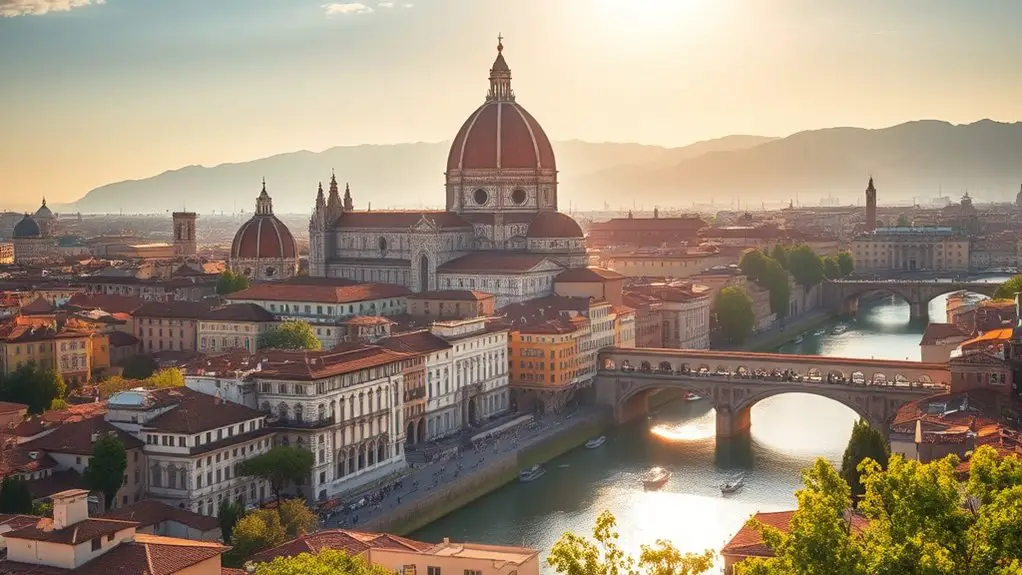
Last Updated on July 24, 2026 by Daniel Globe
For a first trip to Florence, three full days is a strong starting point. That gives you enough time for the Uffizi Gallery, Duomo, Accademia Gallery, Santa Croce, Oltrarno, local markets, and a few slower neighborhood walks without turning the trip into a race. Stay four days or longer if Siena, Chianti, or another major day trip is a priority.
Quick Answer
Three full days is a good minimum for a first visit to Florence. Spend one day around the Uffizi, Duomo, and Piazza della Signoria; one exploring Santa Maria Novella and Oltrarno; and one visiting the Accademia, Santa Croce, and Sant’Ambrogio. Add a fourth day for Siena or Chianti.
Key Takeaways
- Plan on three full days for Florence itself and four or more if you want a major Tuscany day trip.
- Reserve the Uffizi, Accademia, and any Duomo climb early, especially in busy travel months.
- Do not treat Day 1, Day 2, and Day 3 as fixed weekdays. The Uffizi and Accademia normally close Mondays, while the Brancacci Chapel closes Tuesdays.
- Keep the schedule flexible. Florence rewards slow walks, neighborhood meals, and time to enjoy the art rather than checking off every attraction.
At a Glance
| Time Required | 3 full days in Florence; 4+ days if adding Siena, Chianti, or another major day trip |
| Difficulty | Moderate because of long walking days, cobblestones, museum time, and optional tower or Dome climbs |
| Tools Needed | Timed-entry tickets, comfortable shoes, water bottle, phone or offline map, and clothing that covers shoulders and knees for church visits |
| Cost | Varies by attraction. As of July 24, 2026, adult full-price benchmarks include Uffizi €25 same-day/€29 advance, Accademia €20, Brunelleschi Pass €30, Santa Croce €10, and Santa Maria Novella €7.50, plus food, lodging, and transport. |
Disclosure: As an Amazon Associate I earn from qualifying purchases. Some links on this page are affiliate links, at no extra cost to you.
How Much Time to Spend in Florence?
Three full days gives most first-time visitors a good balance between Florence’s major museums, churches, neighborhoods, markets, and outdoor spaces. Two days can work for a highlights-only trip, but you will need to make harder choices. Four or five days gives you room for a slower pace or a day trip into Tuscany.
A three-day Florence itinerary should focus first on the historic center, which UNESCO recognizes for its exceptional concentration of Renaissance art and architecture. You can then move across the Arno into Oltrarno and finish with Santa Croce, Sant’Ambrogio, and the Accademia.
Three days is enough to see Florence’s essential sights, but the best itinerary leaves room to stop for a meal, linger over a favorite artwork, and wander without a checklist.
If you have only three days, think carefully before sacrificing a full day to Siena or Chianti. Fiesole is easier to fit into a half-day because it is close to Florence, while a major Tuscany excursion is more comfortable on Day 4 or later.
Book These Florence Tickets First
Florence is compact, but its most popular attractions have different hours, closure days, and reservation systems. Build the itinerary around your fixed museum slots instead of buying tickets after you arrive.
- Uffizi Gallery: The official Uffizi Galleries list normal opening from Tuesday through Sunday, 8:15 a.m.–6:30 p.m., with Monday closure. Current full-price admission is €25 when bought on the day or €29 when purchased before the visit date.
- Accademia Gallery: The official Accademia website currently lists Tuesday–Sunday opening from 8:15 a.m.–6:50 p.m. and strongly recommends reservations. Regular admission is €20 before any applicable reservation fee.
- Florence Duomo: The Cathedral itself is free and does not require a ticket, but the Dome, Bell Tower, Baptistery, Opera del Duomo Museum, and Santa Reparata require one of the official passes. The Opera del Duomo visitor guide lists the Brunelleschi Pass at €30, Giotto Pass at €20, and Ghiberti Pass at €15.
- Brunelleschi’s Dome: The Dome requires a fixed timed entry. It has 463 steps and no elevator. Medium and large bags must be left at the designated luggage storage before entry.
- Brancacci Chapel: Advance planning is wise because visits use controlled entry times. The chapel normally closes Tuesdays.
Warning: Do not attach the itinerary below to specific weekdays until you check your travel dates. The Uffizi and Accademia normally close Mondays, the Brancacci Chapel closes Tuesdays, and Florence Cathedral is normally closed to tourist visits on Sundays and religious holidays.
Note: As of July 2026, the mosaics in the vault of the Baptistery are not visible because restoration work is underway. Check the official Duomo site for updates before your visit.
Where to Stay in Florence
For a first visit, the historic center is the easiest base. Much of central Florence can be explored on foot, and major attractions such as the Duomo, Uffizi, Piazza della Signoria, Santa Maria Novella, and Ponte Vecchio sit within a relatively compact area.
Condotta 16 offers apartment-style accommodation with one- and two-bedroom options that can suit couples, families, or groups. The Artists’ Palace is a renovated boutique property in Piazza San Lorenzo, close to the Basilica di San Lorenzo, Medici Chapels, and Duomo.
If you prefer a quieter atmosphere, consider the Oltrarno neighborhood on the south side of the Arno. It combines artisan workshops, local restaurants, Santo Spirito, Palazzo Pitti, and easy access to Boboli Gardens.
FuordArno B&B sits near the Arno and includes breakfast in its published rates. Casa Botticelli is a boutique option close to Palazzo Pitti in the Santo Spirito area.
AdAstra Suites offers another boutique-style Oltrarno stay overlooking the Torrigiani Garden. Its official website currently states that breakfast is included in its direct-booking rate.
The tradeoff is simple: stay in the historic center for maximum sightseeing convenience or choose Oltrarno for a slightly calmer neighborhood feel while remaining within walking distance of the main sights.
Day 1: Uffizi, Duomo, Palazzo Vecchio & Ponte Vecchio
Begin your first major sightseeing day at the Uffizi Gallery. An early reserved entry gives you time to see Renaissance highlights by Botticelli, Leonardo da Vinci, Michelangelo, Raphael, and other major artists before museum fatigue sets in.
Allow roughly two and a half to three hours if the Uffizi is one of your priorities. Trying to see every room is not necessary. Choose the works and periods that interest you most.
Next, walk toward Piazza del Duomo. If you only want to enter Florence Cathedral, admission is free during tourist visiting hours. If you want to climb Brunelleschi’s Dome or Giotto’s Bell Tower, organize the rest of the day around your reserved climbing time.
Pro Tip: The Brunelleschi Pass remains valid for three calendar days, although the Dome itself must be visited at the exact reserved time. You do not have to squeeze every Duomo monument into this one afternoon.
For lunch, Rivoire or another café around Piazza della Signoria keeps you close to the afternoon sights. After eating, explore Piazza della Signoria and take a guided or independent visit through Palazzo Vecchio, where the civic history of Florence and the Medici era come together.
Finish by walking toward the Arno and crossing the Ponte Vecchio. Continue into Oltrarno for an evening stroll, aperitivo, or dinner.
| Time | Activity |
|---|---|
| 8:15 AM | Reserved Uffizi Gallery visit |
| 11:15 AM | Walk to the Duomo complex |
| 1:30 PM | Lunch near Piazza della Signoria |
| 3:00 PM | Palazzo Vecchio and Piazza della Signoria |
| 5:30 PM | Ponte Vecchio and Oltrarno evening |
Day 2: Markets, Santa Maria Novella & Oltrarno Gardens
Use your second day for a mix of food, churches, neighborhood streets, and outdoor space. Start around Santa Maria Novella, then visit Florence’s San Lorenzo market area before crossing the Arno into Oltrarno.
Santa Maria Novella Visit
Santa Maria Novella combines Gothic and Renaissance architecture with one of Florence’s strongest collections of church art. Highlights include Masaccio’s Holy Trinity, Giotto’s Crucifix, Brunelleschi’s Crucifix, and Ghirlandaio’s fresco cycle in the Tornabuoni Chapel.
The official Santa Maria Novella visitor information explains that admission covers the basilica, frescoed chapels, museum, cloisters, Spanish Chapel, and other parts of the complex. Current full admission is €7.50.
Opening times vary according to the day of the week and religious calendar, so place this visit where it fits your actual dates rather than relying on one universal start time.
San Lorenzo and Mercato Centrale
From Santa Maria Novella, walk toward San Lorenzo and Mercato Centrale. The traditional ground-floor food market operates mainly during the morning and early afternoon, while the upstairs food hall has longer hours.
The official Florence tourism portal currently lists the traditional ground floor Monday–Friday from 9:00 a.m.–3:00 p.m., Saturday from 9:00 a.m.–5:00 p.m., and closed Sundays and holidays. This is a good stop for produce, meats, cheeses, prepared foods, or a casual lunch before continuing south.
Oltrarno Exploration Experience
Cross the Ponte Santa Trinita into Oltrarno and continue toward Santa Maria del Carmine. The major artistic draw here is the Brancacci Chapel, where frescoes by Masaccio, Masolino, and Filippino Lippi became landmarks in Renaissance painting.
Masaccio’s famous scene is properly known as the Expulsion from the Garden of Eden. Because the Brancacci Chapel normally closes Tuesdays, swap this stop with another day when necessary.
Continue to Palazzo Pitti and the Boboli Gardens. Do not feel obligated to tour every museum inside Pitti Palace and then cover the full garden. For a three-day itinerary, choose the palace collections that interest you most or devote more time to Boboli’s terraces, sculpture, fountains, and views.
The official Boboli Gardens information lists seasonal closing times, so afternoon timing matters more in winter than summer.
As the day winds down, head toward Piazzale Michelangelo for a broad view over Florence. Sunset is popular, so arriving before the peak crowd gives you time to find a comfortable viewpoint.
| Stop | What to See |
|---|---|
| Santa Maria Novella | Masaccio’s Holy Trinity, Tornabuoni Chapel, cloisters |
| Mercato Centrale | Food stalls, Tuscan ingredients, casual lunch |
| Brancacci Chapel | Masaccio, Masolino, and Filippino Lippi frescoes |
| Palazzo Pitti & Boboli | Medici palace collections, gardens, fountains, sculpture |
| Piazzale Michelangelo | Late-day or sunset city view |
Day 3: Accademia, Santa Croce & Sant’Ambrogio
Start Day 3 at the Accademia Gallery. This corrects one of the biggest weaknesses in many rushed Florence itineraries: mentioning Michelangelo’s David without actually leaving time to see it.
An early timed entry works well. Besides David, leave enough time for Michelangelo’s unfinished Prisoners and the museum’s other painting and musical-instrument collections.
Next, walk toward the Santa Croce neighborhood. At the Basilica di Santa Croce, you can see major artworks and memorials associated with figures including Michelangelo and Galileo.
As of July 24, 2026, the official Santa Croce visitor page lists €10 full-price individual admission. Normal visitor hours are 9:30 a.m.–5:30 p.m. Monday–Saturday and 2:00 p.m.–5:30 p.m. on Sundays and specified religious holidays.
For lunch, continue to Sant’Ambrogio Market. It is one of Florence’s historic neighborhood markets, with food counters and stalls inside and additional vendors outside.
The official FeelFlorence listing gives regular market hours as Monday–Saturday, 7:00 a.m.–2:00 p.m., with closure on Sundays and holidays. Plan to arrive well before closing if lunch here matters to you.
Note: If this day falls on Sunday, Sant’Ambrogio is closed and Santa Croce does not begin regular tourist visiting hours until the afternoon. Swap this day with another part of the itinerary rather than forcing the schedule.
If you still have energy and daylight, you can use the afternoon for Fiesole. Otherwise, stay in Florence and enjoy a slower final afternoon around Santa Croce, the Arno, or the historic center.
A Visit to Fiesole
Fiesole sits on the hills above Florence and works better as a half-day excursion than a full Tuscany day trip. Its elevated setting gives you broad views toward Florence and the surrounding countryside.
The official Musei di Fiesole directions recommend bus 7 from Florence, getting off at the Fiesole, Piazza Mino terminus.
The archaeological area contains an Etrusco-Roman temple, Roman baths, and a Roman Theatre—not an amphitheater. According to the Musei di Fiesole, the theatre was built between the 1st century B.C. and 1st century A.D.
Seasonal opening hours vary. From April through September, the Archaeological Area and Archaeological Museum are currently listed as open daily from 9:00 a.m.–7:00 p.m.; shorter schedules apply during other parts of the year.
You can also stop at a café or restaurant in town and enjoy the slower pace before returning to Florence. On a packed three-day itinerary, however, skipping Fiesole is perfectly reasonable if you would rather spend more time in the city’s museums and neighborhoods.
Day Trip Options From Florence
Florence makes a good base for Tuscany, but a first-time visitor with only three full days should usually spend those three days in the city. Treat the trips below as better options for Day 4 or later, or as substitutes for Florence attractions you are comfortable skipping.
Chianti Wine Region
The Chianti wine region combines vineyards, hill towns, rural roads, and wine estates between Florence and Siena. Greve and Castellina are two popular stops, and the SR222 is one of the best-known routes through the area.
Wine lovers will encounter plenty of Sangiovese. For Chianti Classico, the official consortium states that Sangiovese must make up at least 80% of the wine.
Small-group tours and private drivers can be easier than managing several wineries yourself. They also remove the stress of navigation, parking, and coordinating tasting appointments.
Warning: If your Chianti day includes wine tastings, do not plan to drive afterward. Use a sober designated driver, organized tour, taxi/private driver, or another appropriate transport option.
Take time to explore wine cellars, local food, and village streets instead of trying to visit as many wineries as possible. Chianti is most enjoyable as a relaxed countryside day.
Historic Siena Visit
Siena is one of the strongest cultural day trips from Florence. Its historic center is a UNESCO World Heritage Site known for its preserved medieval urban form, Gothic architecture, and streets centered on Piazza del Campo.
Do not miss Siena Cathedral and Piazza del Campo. The square is also the setting for the Palio di Siena. The regular Palio races are traditionally scheduled for July 2 and August 16, although weather or other circumstances can affect the actual running of an individual race.
Allow more than an hour each way when traveling from Florence and give Siena most of a day rather than treating it as a quick side stop. Once there, leave time to wander the narrow streets, browse local shops, and try Tuscan specialties.
Combining Siena and the Chianti countryside in one organized tour is possible, but visiting Siena independently gives you more time to absorb the city.
Tips for Visiting Florence
A few planning choices can make three days in Florence much easier.
| Tip | Why It Matters | When to Do It |
|---|---|---|
| Buy key tickets in advance | Protects your Uffizi, Accademia, and Dome plans | Before your trip |
| Check weekly closures | Prevents arriving at a closed museum | Before assigning itinerary days |
| Visit early or later | Can reduce peak-hour congestion | Morning or late afternoon |
| Wear comfortable footwear | Florence involves long walks and uneven paving | Every sightseeing day |
| Dress for churches | Shoulders and knees should be covered at religious sites | Duomo and church days |
Staying in the historic center or Oltrarno makes it easy to explore much of Florence on foot. Leave gaps between reservations so a delayed lunch, favorite museum room, or unexpected shop does not throw off the entire day.
For travelers planning many paid museums, the Firenzecard is worth comparing with individual tickets rather than buying automatically. As of July 2026, it costs €85. Reservations are still required for several high-demand attractions, including the Uffizi, Accademia, Palazzo Vecchio, and Brancacci Chapel.
Most importantly, do not mistake a packed schedule for a better trip. Aimless wandering through Florence’s side streets, piazzas, artisan areas, and riverfront is part of the experience.
Frequently Asked Questions
How to Plan 3 Days in Florence?
Use Day 1 for the Uffizi, Duomo, Piazza della Signoria, Palazzo Vecchio, and Ponte Vecchio. Use Day 2 for Santa Maria Novella, Mercato Centrale, the Brancacci Chapel, Pitti Palace, Boboli Gardens, and Oltrarno. Use Day 3 for the Accademia, Santa Croce, and Sant’Ambrogio, with Fiesole optional. Swap the order to match museum closure days.
Is 3 Full Days in Florence Enough?
Yes. Three full days is enough for a strong first visit if you focus on Florence rather than taking a full-day trip. You can see the Uffizi, Accademia, Duomo, Santa Croce, Oltrarno, Pitti or Boboli, major piazzas, and local markets without rushing every hour.
How Many Days to Spend in Florence for the First Time?
Plan at least three full days for a first visit. Two days works for highlights, while four or five days gives you more museum time and makes it easier to add Fiesole, Siena, Chianti, or another Tuscany excursion.
What Not to Miss in Florence, Italy?
For a first trip, prioritize the Uffizi Gallery, Michelangelo’s David at the Accademia, Florence Cathedral and the Duomo complex, Piazza della Signoria, Ponte Vecchio, Santa Croce, and at least part of Oltrarno. Add Pitti Palace, Boboli Gardens, Santa Maria Novella, and a panoramic viewpoint as time allows.
Which Florence Attractions Should I Book in Advance?
Prioritize reservations for the Uffizi Gallery, Accademia Gallery, and Brunelleschi’s Dome if you plan to climb it. A reserved Brancacci Chapel visit and Palazzo Vecchio booking are also useful when your schedule is tight. Buy through official attraction websites whenever possible.
Should I Take a Day Trip If I Only Have 3 Days in Florence?
Usually not on a first visit. Florence can comfortably fill all three days. Fiesole is the easiest extra because it can fit into part of an afternoon. Siena or Chianti is better saved for a fourth day unless you deliberately choose to skip some Florence museums and neighborhoods.
Conclusion
Three days in Florence gives you enough time to experience the city’s great Renaissance art, historic churches, markets, riverfront, and neighborhood life without reducing everything to a checklist. Reserve the hardest tickets first, arrange the days around closures, and leave breathing room between major sights. With that balance, Florence becomes more than a collection of famous landmarks—you also have time to enjoy the streets, food, views, and small discoveries between them.
Sources
- Uffizi Galleries — official Uffizi opening hours and visitor information.
- Opera di Santa Maria del Fiore — Duomo monument hours, passes, rules, and visitor planning.
- Galleria dell’Accademia di Firenze — current opening hours, admission, and reservation guidance.
- Opera di Santa Croce — official Santa Croce opening hours and ticket prices.
- FeelFlorence / Comune di Firenze — Sant’Ambrogio Market location and opening schedule.
- Musei di Fiesole — official information on Fiesole’s Roman Theatre and archaeological area.

