
Last Updated on August 2, 2026 by Daniel Globe
Capri packs dramatic sea cliffs, Roman ruins, gardens, beaches, and two distinct town centers into a small island. The best visit mixes one major boat experience with a few places you can reach on foot or by local bus. Start early, choose priorities before you arrive, and keep a backup plan in case wind or rough water closes the Blue Grotto.
Quick Answer
The best things to do in Capri are seeing the Faraglioni by boat, visiting the Blue Grotto when sea conditions allow, walking through the Gardens of Augustus, exploring Capri town and Anacapri, riding to Monte Solaro, visiting Villa Jovis, swimming at Marina Piccola, and trying ravioli capresi and fresh seafood.
Key Takeaways
- Start early if you are visiting on a day trip; ferry arrivals can make Capri town and the main attractions crowded by late morning.
- Treat the Blue Grotto as weather-dependent, not guaranteed. Rough seas or an unfavorable tide can close the entrance.
- Use buses, the funicular, walking routes, and the Monte Solaro chairlift rather than trying to see the island by car.
- A full day covers the main highlights, but two or three days allow time for beaches, Roman sites, and quieter evenings.
At a Glance
| Time Required | One full day for major sights; two to three days for a relaxed visit |
| Difficulty | Easy to moderate, with steep lanes, stairs, and some uphill walks |
| Tools Needed | Comfortable shoes, water, sun protection, a light layer, and a payment card |
| Cost | A mix of free viewpoints and paid attractions; boat trips, beach clubs, transport, and meals cost extra |
Disclosure: As an Amazon Associate I earn from qualifying purchases. Some links on this page are affiliate links, at no extra cost to you.
How to Get to Capri
Capri has no airport, so every visitor arrives by boat. Regular ferries and faster hydrofoils run to Marina Grande, the island’s main port, from Naples, Sorrento, and Positano, with additional seasonal connections from other points along the Amalfi Coast. Sorrento generally offers the shortest crossing, which makes it a popular base for a Capri day trip. Buy tickets at the departure port or in advance during peak summer months, since popular morning departures can sell out.
Once you land at Marina Grande, a funicular railway climbs quickly to Capri town, while buses and taxis connect to Anacapri and other parts of the island. Private cars are not a practical way to see Capri; the road network is narrow, parking is limited, and most visitors rely on public transport, walking, or licensed taxis instead.
Best Time to Visit Capri
Late spring (May to June) and early fall (September to early October) tend to bring warm weather, calmer seas, and thinner crowds than peak summer. July and August are the busiest months, with the largest number of day-trip ferries and the longest lines at the Blue Grotto and Monte Solaro chairlift. Visiting outside these peak weeks generally makes it easier to enjoy the gardens, viewpoints, and Piazzetta without heavy foot traffic.
Winter brings a quieter island, but some attractions reduce their hours, and rougher seas make Blue Grotto closures more frequent. If your schedule is flexible, aim for a weekday visit and an early ferry to get ahead of the largest crowds.
Plan Your Capri Visit Before You Arrive
Capri is small, but steep terrain and summer crowds can slow you down. Most visitors arrive at Marina Grande, then continue by funicular, bus, taxi, or on foot. Capri town is the best base for the Piazzetta, Gardens of Augustus, Belvedere di Tragara, and Villa Jovis. Anacapri is better for Monte Solaro, Villa San Michele, and the land entrance near the Blue Grotto.
For a day trip, choose either a morning boat circuit or the Blue Grotto, then spend the afternoon on land. Trying to combine every attraction often leads to more time in lines than at the sights. In warm months, carry water and plan the steepest walks before midday.
Warning: The Blue Grotto may close without much notice when sea or weather conditions make the low entrance unsafe. Do not build a nonrefundable schedule around it, and follow the rowboat skipper’s instructions during entry.
Pro Tip: Save a land-based backup such as Anacapri, Villa San Michele, or the Gardens of Augustus. That way, a canceled boat visit will not ruin your day.
Explore Capri’s Iconic Faraglioni Rock Formations
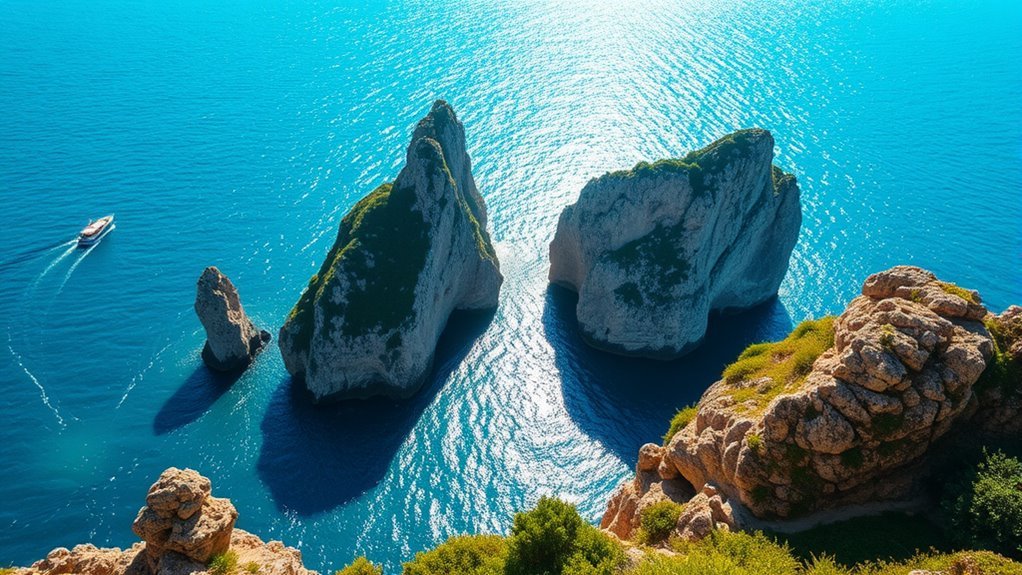
The Faraglioni are Capri’s best-known coastal landmarks. The three main stacks are Faraglione di Terra, Faraglione di Mezzo, and Faraglione di Fuori. According to the Comune di Capri, the outer stack is the habitat associated with Capri’s blue lizard.
A boat tour gives you the closest view and may pass through the natural arch in Faraglione di Mezzo when conditions and the route allow. From land, the Gardens of Augustus, Belvedere di Tragara, and several coastal paths offer strong photo angles without the cost of a boat.
The Faraglioni are not one rock but a group of sea stacks, each with its own position, shape, and local name.
Discover the Enchantment of the Blue Grotto
The Blue Grotto, or Grotta Azzurra, is a sea cave known for the bright blue light reflected through a partly submerged opening. Visitors enter only in small rowboats. The official cultural-site admission and the rowboat service are ticketed separately, so check the current total before joining the line.
The Italian Ministry of Culture states that access depends on tide, weather, and sea conditions. It also lists seasonal hours and explains that adverse marine conditions can close the site. Because the experience inside is brief, the visit is most worthwhile when the queue is manageable.
If the Blue Grotto is closed or the line is too long, Capri has smaller sea caves that make reasonable alternatives on a boat tour, including the White Grotto (Grotta Bianca) and the Green Grotto (Grotta Verde). Neither draws the crowds of the Blue Grotto, and both can usually be seen from the boat without a separate rowboat transfer.
| Tip | What to Know | Best Approach |
|---|---|---|
| Timing | Lines are often longest around the main day-trip arrival period. | Go early and check whether the cave is open before committing time. |
| Tickets | Cultural-site admission and the required rowboat service are separate charges. | Confirm the full day-of price at the official ticket point. |
| Access | You can approach by boat from Marina Grande or by road and stairs from Anacapri. | Choose the route that fits your island itinerary and mobility. |
| Conditions | Wind, swell, and tide can prevent safe entry. | Keep a backup attraction and avoid a tight onward connection. |
The cave was used in Roman times as a decorated marine nymphaeum linked to an imperial villa above it. That history adds useful context, but the changing light on the water is still the main reason people visit.
Stroll Through the Giardini di Augusto
The Gardens of Augustus offer broad views of the Faraglioni, Marina Piccola, and the switchbacks of Via Krupp. The terraces are compact, so most visitors can see them in about 30 minutes, although photographers may stay longer.
The gardens occupy land once connected with the early-20th-century Capri property of German industrialist Friedrich Alfred Krupp. Contrary to the original claim that they are always free, the Comune di Capri lists paid adult admission and notes that prices and hours can vary. Check the official page before visiting.
Note: Via Krupp can be closed for safety or maintenance. The gardens are still worth visiting even when the road below is not open.
Visit the Vibrant Piazzetta di Capri
Piazza Umberto I, better known as the Piazzetta, is the social center of Capri town. Cafés, narrow shopping streets, the clock tower, and the nearby Church of Santo Stefano frame the square. It is lively during the day and becomes more relaxed after many day-trippers leave.
Stop for an espresso if the atmosphere appeals to you, but check menu prices before ordering at a table. The Piazzetta is also a useful starting point for Via Camerelle, the Gardens of Augustus, Belvedere di Tragara, and the walking route toward Villa Jovis.
Take in Views From Belvedere di Tragara
Belvedere di Tragara is one of the easiest free viewpoints to pair with Capri town. The walk follows polished lanes and passes villas, shops, and Mediterranean plants before opening to a direct view of the Faraglioni.
Visit in the morning for clearer light on the rocks or near sunset for softer colors. The viewpoint itself is peaceful, but the route includes slopes and uneven sections. Wear shoes with grip rather than relying on beach sandals.
Visit Historical Villa Jovis
Villa Jovis is the largest and most imposing of the imperial residences on Capri associated with Emperor Tiberius. The site stands about 334 meters above sea level on Monte Tiberio and includes cisterns, ramps, baths, residential areas, and terraces overlooking the Gulf of Naples. The Museums and Archaeological Parks of Capri provides current visitor information.
From the Piazzetta, expect an uphill walk of roughly 35 to 45 minutes each way, depending on pace. There is no quick road transfer to the entrance, so allow time for the climb, the ruins, and the return. Bring water, especially in summer.
| Feature | What You Will See | Why It Matters |
|---|---|---|
| Central complex | A large quadrangular layout organized around water cisterns | Shows how the mountaintop residence managed water and space |
| Baths | Remains of Roman bathing rooms, including a heated chamber | Provides insight into elite Roman daily life |
| Residential rooms | Private and service areas with traces of marble decoration | Helps explain the scale and status of the imperial complex |
| Terraces | High views across the Gulf of Naples | Connects the archaeology with Capri’s strategic position |
Relax at Marina Piccola Beach
Marina Piccola is a sheltered bay on Capri’s south side with clear water and views toward the Faraglioni. It has paid beach clubs as well as small public-access areas, and the shoreline is pebbly rather than a wide stretch of soft sand.
- Swim when conditions are calm: Enter carefully because rocks and pebbles can be slippery.
- Choose paid or public access: Beach clubs offer sunbeds, umbrellas, changing facilities, and food, while free sections have fewer services.
- Eat nearby: Several waterfront restaurants serve seafood and pasta, but prices reflect the location.
The bay is reachable by bus, taxi, or a steep walking route from Capri town. It can feel quieter than Marina Grande, but popular beach areas still fill quickly in summer.
Head Up to Monte Solaro for Stunning Views
Monte Solaro is Capri’s highest point at about 589 meters. The easiest route is the single-seat chairlift from Piazza Vittoria in Anacapri. The official Monte Solaro chairlift site describes an ascent of about 13 minutes and provides current operating information.
You can also hike, but the route is steeper and takes more effort than the chairlift. At the summit, look for views of the Faraglioni, Marina Piccola, the Bay of Naples, and the surrounding coast. The Eremo di Cetrella can be reached by trail from the mountain area, though opening access may be limited.
Pro Tip: Go early for cooler temperatures and shorter chairlift lines. The chairlift is open-sided, so travelers with a strong fear of heights may prefer a lower viewpoint.
Explore Anacapri and Its Charms
Anacapri feels quieter and more residential than Capri town. Its pedestrian lanes hold artisan shops, simple cafés, churches, and whitewashed homes. It is also the practical base for Monte Solaro and Villa San Michele.
Anacapri rewards slower travel: leave room to wander between the major sights instead of treating it only as a transfer point.
- Villa San Michele: Visit the home, collection, and gardens created by Swedish physician and author Axel Munthe. The official Villa San Michele site lists seasonal hours, tickets, and accessibility information.
- Church of Santa Sofia: Step inside the historic church near Piazza Diaz and notice its patterned floor and Baroque details.
- Punta Carena Lighthouse: Travel to the island’s southwest side for sea views, swimming spots, and sunset. Allow extra time for the bus journey back.
Travelers with strong knees and good shoes can also consider the steep Phoenician Steps between Marina Grande and Anacapri. They are not a practical route with luggage, in heat, or for anyone with mobility concerns.
Savor Fresh Seafood and Local Dishes
Capri’s food is built around tomatoes, herbs, local cheese, lemons, pasta, and seafood from the surrounding coast. A sea view can make a meal memorable, but it can also raise the price. Read the menu, cover charge, and service details before sitting down.
Local Seafood Specialties
- Spaghetti alle vongole: Pasta with clams, garlic, olive oil, and parsley is common across coastal Campania.
- Grilled or baked fish: Ask what is available and whether the menu price is per portion or by weight.
- Seafood risotto or pasta: Recipes vary by restaurant and the day’s catch.
- Limoncello: This lemon liqueur is commonly served chilled after a meal; it contains alcohol and is for adults of legal drinking age.
Traditional Capri Dishes
Ravioli capresi are a stronger answer to “What is Capri’s typical dish?” than Caprese salad alone. They are usually filled with caciotta and Parmesan cheeses and scented with marjoram, then served with tomato sauce or butter and herbs.
Also try Caprese salad with tomato, mozzarella, basil, and olive oil, plus torta caprese, a chocolate-and-almond cake. Spaghetti alla Nerano, made with zucchini and cheese, is popular around the Sorrento Peninsula and Gulf of Naples, but it comes from Nerano rather than Capri itself.
Suggested Capri Itineraries
Products Worth Considering
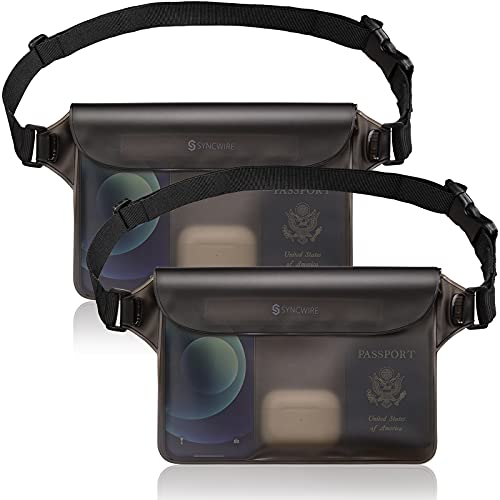
Screen Touchable: The Translucent design of the pouch allows you to browse and text messages without taking your phone out of the pouch(not supported fingerprint unlock and...
One Day in Capri
- Arrive early at Marina Grande and take a boat trip around the island or attempt the Blue Grotto if it is open.
- Continue to Capri town for the Piazzetta, Gardens of Augustus, and Belvedere di Tragara.
- Choose one final stop: Marina Piccola for a swim or Anacapri for Monte Solaro.
- Return to Marina Grande with enough time for transport lines and ferry boarding.
Three Days in Capri
- Day 1: Capri town, the Gardens of Augustus, Belvedere di Tragara, and a relaxed evening in the Piazzetta.
- Day 2: Anacapri, Villa San Michele, Monte Solaro, and sunset near Punta Carena.
- Day 3: A boat circuit or Blue Grotto attempt, followed by Marina Piccola or the uphill walk to Villa Jovis.
This plan keeps weather-dependent boating separate from the most demanding land walk, making it easier to adjust without losing an entire day.
Frequently Asked Questions
What should you absolutely do in Capri?
See the Faraglioni from a boat or viewpoint, visit either the Blue Grotto or Monte Solaro, walk through the Gardens of Augustus, spend time in Capri town or Anacapri, and try a traditional dish such as ravioli capresi.
What is the typical dish of Capri?
Ravioli capresi are one of the island’s signature dishes. The pasta is commonly filled with caciotta and Parmesan cheeses and flavored with marjoram. Caprese salad and torta caprese are also closely associated with the island.
What can you do in Capri in one day on foot?
From Capri town, walk through the Piazzetta to the Gardens of Augustus, continue to Belvedere di Tragara, and explore Via Camerelle and nearby lanes. Villa Jovis is possible for fit walkers, but its uphill route takes roughly 35 to 45 minutes each way from the center.
What should you do during three days in Capri?
Use one day for Capri town and nearby viewpoints, one for Anacapri and Monte Solaro, and one for a boat trip, the Blue Grotto, a beach, or Villa Jovis. This leaves room to adjust for weather and crowds.
Is the Blue Grotto guaranteed to be open?
No. The entrance is low and exposed to the sea, so wind, swell, tide, or poor weather can close the grotto. Check the official status on the day and keep a land-based backup plan.
Is Capri easy to visit with limited mobility?
Some central areas are manageable, but steep slopes, stairs, boat transfers, and uneven paths create barriers. Contact attractions and boat operators in advance, use taxis where practical, and avoid assuming every viewpoint or historic site is step-free.
Conclusion
Capri is most rewarding when you choose a balanced plan instead of racing through a checklist. Pair one sea experience with a viewpoint, a historic site, and time in either Capri town or Anacapri. Start early, prepare for slopes and sun, and stay flexible if marine conditions affect boat visits. With that approach, the island’s scenery, history, beaches, and food can fit naturally into one memorable day or a slower multi-day stay.
Sources
- Comune di Capri — Faraglioni — names, location, access, and blue-lizard habitat
- Italian Ministry of Culture — Grotta Azzurra — admission, access method, history, hours, and weather-related closures
- Comune di Capri — Giardini di Augusto — location, admission guidance, hours, and access
- Museums and Archaeological Parks of Capri — Villa Jovis — archaeological features, elevation, and official visitor information
- Monte Solaro Chairlift — official chairlift access and operating information
- Villa San Michele — history, collection, gardens, hours, tickets, and accessibility
