
Last Updated on September 27, 2026 by Ethan Caldwell
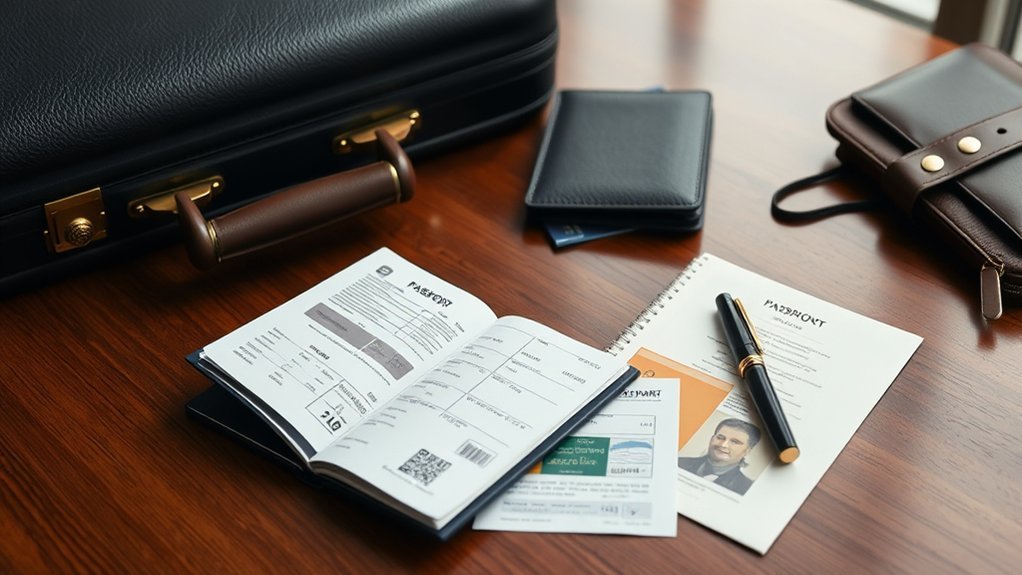
Your travel documents checklist should start with a valid passport and any visa or electronic travel authorization your destination requires. Depending on your itinerary, you may also need health certificates, proof of onward travel, child consent forms, or driving permits. Preparing these documents before departure helps you avoid boarding problems, border delays, and preventable travel disruptions.
Quick Answer
For international travel, carry your passport, any required visa or electronic travel authorization, and your flight and accommodation details. Depending on your destination, you may also need vaccination certificates, prescription documentation, travel insurance, child consent forms, or an International Driving Permit. Keep original documents accessible and store backup copies separately.
Last checked: September 28, 2026. Dates and figures were verified against official sources.
Disclosure: As an Amazon Associate I earn from qualifying purchases. Some links on this page are affiliate links, at no extra cost to you.
Check Your Destination’s Entry Rules

Your destination determines which travel documents you need. Requirements depend on your nationality, passport, purpose of travel, length of stay, and sometimes your country of residence.
Use the IATA Travel Centre to review passport, visa, and health requirements for your itinerary. Its information comes from the Timatic database used by airlines.
Check these details before booking and again before departure:
- Passport validity: Confirm how long your passport must remain valid after arrival or departure.
- Visa requirements: Determine whether you need a visa, electronic visa, or electronic travel authorization.
- Transit rules: Check whether connecting through another country requires additional permission.
- Health requirements: Confirm whether vaccination certificates or other health documents are mandatory.
- Entry and exit documents: Check whether immigration officials require proof of accommodation, onward travel, or sufficient funds.
- Traveling with minors: Review any consent or guardianship documentation requirements.
Review the rules for every country on your route, not just your final destination. A connecting flight can create additional documentation requirements.
For final confirmation, consult the destination country’s embassy or consulate. Entry rules can change, and approval to board a flight does not guarantee admission at the border.
Travel Documents Checklist: What to Gather
Build your document folder around the papers you must present and those you might need during your trip. Separate essential entry documents from supporting records so you can find each item quickly.
Use this checklist before leaving home:
- Passport: Your original, valid travel document.
- Visa or travel authorization: Any approval required for your destination or transit country.
- Identification: A national ID card or driver’s license when relevant.
- Flight documents: Booking confirmation, itinerary, and boarding pass when available.
- Accommodation details: Hotel reservations or your host’s address and contact information.
- Travel insurance: Policy certificate, policy number, and emergency assistance contacts.
- Health documents: Required vaccination certificates, prescriptions, and relevant medical records.
- Additional permissions: Child consent forms, custody documents, or driving permits when applicable.
Use a travel document app or a secure folder on your phone to organize digital copies. Label files clearly so you can identify your passport, visa, insurance, and reservations without opening every document.
Keep paper copies of important records separately from your originals. Digital backups are useful, but they do not replace physical documents when immigration authorities require originals.
Confirm Passport, Visa, and ID Requirements
Your passport and entry permission are the most important documents for most international trips. Check both before departure because a valid passport alone does not always establish your right to enter another country.
How Long Must Your Passport Be Valid?
There is no universal six-month passport rule. Some countries require six months of remaining validity, while others apply different periods.
For short visits to the Schengen Area, the European Union’s passport requirements generally state that a non-EU visitor’s passport must:
- Remain valid for at least three months after the intended departure from the EU.
- Have been issued within the previous 10 years.
Other destinations may require six months of validity beyond arrival or the planned stay. Some also require blank passport pages for visas or entry stamps.
Check your passport’s expiration date, issue date, physical condition, and available pages before applying for travel permission.
Do You Need a Visa or Electronic Travel Authorization?
Visa requirements depend primarily on the passport you hold, your destination, and the purpose of your visit. Having a residence permit in another country does not automatically give you that country’s citizens’ visa privileges.
For example, U.S. citizens can generally visit the Schengen Area without a visa for short stays of up to 90 days in any 180-day period.
ETIAS is a separate electronic travel authorization intended for eligible visa-exempt travelers. As of September 28, 2026, it is not yet operational, and applications are not being collected. The European Union will announce its confirmed launch date through the official ETIAS information portal.
If you need a visa, confirm its validity dates, number of permitted entries, and allowed length of stay.
Finally, make sure the name on your flight reservation matches your passport. Carry relevant supporting documents if your name has changed.
Pack Health Forms and Prescription Proof
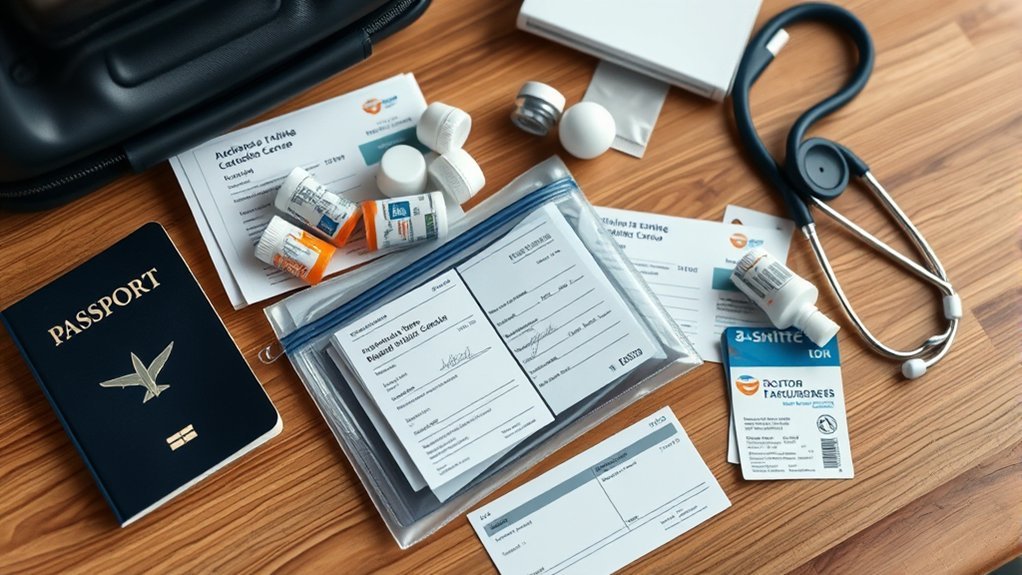
Some destinations require health documentation in addition to your passport and visa. The documents depend on your destination, travel history, medical needs, and applicable entry rules.
Vaccination Certificates
Certain countries require proof of yellow fever vaccination, particularly when travelers arrive from countries with a risk of transmission.
The official document is the International Certificate of Vaccination or Prophylaxis (ICVP), often called the yellow card.
According to the CDC’s vaccination certificate guidance, a yellow fever certificate becomes valid 10 days after vaccination and remains valid for the vaccinated person’s lifetime.
Requirements may also depend on your transit history, including certain airport layovers.
Other health documentation, including COVID-19 vaccination or testing records, should be carried when required by your destination’s current rules. Do not assume that requirements from an earlier trip still apply.
Prescription and Medication Documents
Medicines that are legal in your home country may be restricted or prohibited abroad. This can include prescription drugs and over-the-counter products.
Follow the CDC’s guidance on traveling with medicine when preparing your medication documents.
- Carry medicines in their original, labeled containers.
- Bring copies of written prescriptions, including generic medication names.
- Ask your healthcare provider for a letter if you use controlled medicines or injectable medications.
- Check medication restrictions in both destination and transit countries.
- Keep essential medication and documentation in your carry-on luggage.
If you use special medical equipment, carry a medical letter explaining why you need it.
Note: If you take controlled medication, need medical equipment, or have a condition that affects travel, consult your healthcare provider before departure. A prescription or doctor’s letter does not automatically override another country’s medication restrictions.
Save Your Itinerary and Insurance Details
Your itinerary and insurance documents support your travel plans and help you respond to unexpected problems. Keep the most useful information available in both digital and printed form.
Travel Itinerary and Booking Confirmation
Save your flight itinerary, accommodation confirmation, and transportation reservations. These documents can help establish your travel purpose and intended length of stay.
Your itinerary should include:
- Flight numbers, dates, and booking references.
- Hotel names, addresses, and reservation details.
- Return or onward transportation arrangements.
- Contact information for your accommodation or host.
- Emergency contacts at home and abroad.
Some immigration authorities may request proof of onward travel, accommodation, or sufficient funds. Keep the relevant records ready if your destination requires them.
Travel Insurance Documents
Travel insurance is not universally required for international travel, but it can help protect you against eligible medical expenses and travel disruptions.
The U.S. Department of State’s travel insurance guidance recommends reviewing coverage for medical care, evacuation, and other travel expenses.
Before departure, check whether your policy includes:
- Emergency medical treatment abroad.
- Medical evacuation or emergency transportation.
- Trip cancellation or interruption.
- Lost, stolen, or delayed baggage.
- Coverage for every country you plan to visit.
Coverage differs between policies. Trip cancellation insurance, for example, does not necessarily pay for medical treatment.
Save your insurance certificate, policy number, emergency assistance telephone number, and claims instructions.
Keep these details accessible offline so you can retrieve them without mobile data or an internet connection.
Prepare Child Consent Forms and Driving Permits
Traveling with children or driving abroad can require documents beyond the standard passport and visa. Prepare these additional permissions before departure to avoid problems with airlines, border authorities, or vehicle rental companies.
Child Consent Forms
A Child Travel Consent form confirms that a parent or legal guardian has authorized a child’s journey with another adult or without both parents.
Requirements vary between countries. Some destinations request formal permission even when a child travels with one parent.
The U.S. Department of State’s guidance on traveling with minors recommends carrying evidence of your legal relationship to the child and reviewing destination-specific consent requirements.
Depending on your circumstances, prepare:
- The child’s passport and any required visa.
- A copy of the child’s birth certificate or other relationship documentation.
- A Child Travel Consent form signed by the appropriate parent or guardian.
- Relevant custody or guardianship documents.
- Parent or guardian contact information.
- A Child Medical Consent form when another adult may need to authorize medical care.
A medical consent form addresses treatment decisions. It does not replace a travel consent document where border authorities require one.
Notarized Permission Letters
Some countries require a notarized permission letter when a child travels without one or both parents. Others accept a signed consent letter or require different evidence of legal authority.
A useful permission letter should identify:
- The child’s full name.
- The accompanying adult and their relationship to the child.
- The destination and travel dates.
- The consenting parent or guardian.
- Contact information for the parent or guardian.
- The specific travel permission being granted.
Arrange notarization before departure when required. Carry the original signed letter and keep additional copies available.
If the child’s circumstances involve sole custody, guardianship, or another legal arrangement, carry the relevant supporting documents.
International Driving Permits
An International Driving Permit (IDP) translates your driver’s license into multiple languages. Some countries require one, while others accept certain foreign licenses without it.
An IDP does not replace your original license. You must carry both documents when driving.
For travelers holding U.S. licenses, AAA’s International Driving Permit guidance explains that an IDP is valid for one year from its effective date, provided the underlying driver’s license remains valid.
AAA and the American Automobile Touring Alliance are authorized U.S. IDP issuers.
Before driving abroad, prepare:
- Your valid original driver’s license.
- An IDP if required by the destination.
- Vehicle rental or registration documents.
- Insurance that meets local legal requirements.
Obtain the appropriate permit before leaving your home country. Check local driving laws and rental company requirements, including any restrictions affecting your license.
Keep Copies Safe and Accessible
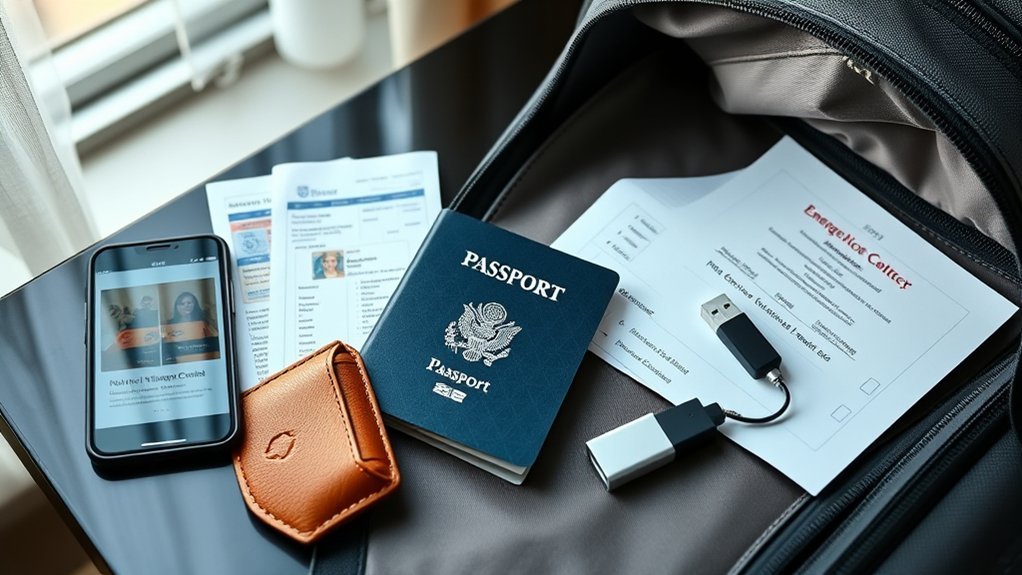
Store your original travel documents securely while keeping essential copies easy to reach. A simple backup system can help if your passport, visa, or insurance papers are lost or stolen.
Organize your documents using these steps:
- Scan important papers. Make clear copies of your passport information page, visas, insurance certificate, and booking confirmations.
- Save secure digital backups. Store encrypted copies on your phone or in a protected cloud account. Keep essential files accessible offline.
- Separate physical copies. Keep photocopies away from the originals so one lost bag does not take everything.
- Leave a backup at home. Give a trusted friend or family member access to important document copies and emergency contact details.
- Carry spare passport photos. They may be useful when applying for replacement documents abroad, depending on your country’s requirements.
Use a travel wallet or document pouch for the papers you need at airports and border checkpoints.
Keep your original passport and other essential documents in your carry-on luggage rather than checked baggage.
If your passport disappears abroad, contact your country’s nearest embassy or consulate about replacement or emergency travel documentation. Copies can help establish your identity, but they are not substitutes for an original passport.
Frequently Asked Questions
What Are the Types of Travel Documents?
Travel documents include passports, visas, electronic travel authorizations, identification cards, and health certificates. Supporting documents include travel insurance, booking confirmations, child consent forms, and driving permits. The exact combination depends on your nationality, destination, and travel plans.
What Are the Five Travel Documents?
Five useful travel documents are your passport, any required visa or travel authorization, flight itinerary, travel insurance details, and applicable health records. This is a preparation checklist, not a universal legal requirement. Your destination may require additional documents or fewer documents.
What Is the Most Common Travel Document?
A passport is the standard travel document for most international journeys. It establishes your identity and nationality and is normally required when crossing international borders. Certain travelers may use other recognized travel documents or identification under specific agreements.
What Are the Documents Required for Travel?
International travelers generally need a valid passport and any entry permission required by their destination. Depending on the country and circumstances, you may also need health certificates, proof of accommodation, onward travel details, or additional legal documents. Domestic travel requirements are different.
Is a Passport Photocopy Enough for International Travel?
No, a passport photocopy generally cannot replace your original passport for international travel. Copies are useful for identification and replacement procedures if the original is lost. Carry your valid passport unless a specific travel arrangement permits another recognized document.
Do You Need a Visa for an Airport Layover?
You may need a transit visa for an airport layover, depending on your nationality, connecting country, and itinerary. Requirements can differ if you leave the international transit area, collect checked baggage, or change airports. Confirm your specific transit permissions before departure.
Conclusion
A complete travel documents checklist should cover both mandatory entry papers and documents needed for your personal circumstances. Prepare your passport, entry permission, health records, insurance details, and applicable child consent or driving documents before departure.
Keep your originals secure, organize copies separately, and confirm the entry requirements for every country on your itinerary. These simple preparations can help prevent avoidable travel delays.
Sources
- IATA Travel Centre: Passport, visa, and health documentation requirements.
- European Union — Travel Documents for Non-EU Nationals: Passport validity, visa requirements, and Schengen short-stay rules.
- European Union — ETIAS: Official information about European electronic travel authorization and implementation status.
- CDC — International Certificate of Vaccination or Prophylaxis: Yellow fever documentation and certificate validity.
- CDC — Traveling Abroad with Medicine: Medication restrictions, prescriptions, and safe preparation.
- U.S. Department of State — Travel Insurance: Medical coverage, evacuation insurance, and travel protection.
- U.S. Department of State — Travel with Minors: Child consent and guardianship documentation.
- AAA — International Driving Permits: Permit requirements, validity, and authorized issuance.


2 Comments
Pingback: Cooling Travel Pillow Guide [2026]: How To Choose Best
Pingback: Southwest Drink Coupons Guide [2026]: Rules & Perks