
Last Updated on July 28, 2026 by Daniel Globe
Italy gives families an unusual amount of choice in one country. You can hike beneath the Dolomites, swim from sandy island beaches, stay on a Tuscan farm, ride roller coasters beside Lake Garda, or explore Venice by boat. The best destination depends on your children’s ages, your preferred pace, and how much summer heat and travel time your family can comfortably handle.
Quick Answer
Italy’s best family summer destinations depend on your pace: choose the Dolomites or Umbria for cooler outdoor days, Sardinia or Liguria for beaches, Tuscany or Puglia for food and farm stays, Lake Garda for water sports and theme parks, and Venice or the Amalfi Coast for culture and scenery.
Key Takeaways
- Families who enjoy hiking and cooler evenings should consider the Dolomites, Umbria, or the Tuscan hills.
- Sardinia, Liguria, Puglia, and parts of the Amalfi Coast work well for beach time, but sand, access, waves, and facilities vary by location.
- Lake Garda combines swimming, boat trips, cycling, and Gardaland, making it one of the easiest all-round choices for school-age children.
- Cinque Terre and the Amalfi Coast have steep paths, stairs, crowded transport, and limited stroller access, so they require more planning.
- For a one-week trip, choose one region or two nearby bases instead of trying to cover the entire country.
At a Glance
| Dolomites | Best for hiking, cable cars, mountain playgrounds, and cooler evenings; check trail difficulty and weather. |
| Liguria | Best for colorful coastal towns, beaches, trains, and short boat trips; popular resorts become busy in midsummer. |
| Tuscany | Best for farm stays, pools, villages, cycling, and relaxed meals; a car is useful outside major cities. |
| Umbria | Best for medieval towns, countryside stays, local food, and a quieter pace; hill towns can involve steep streets. |
| Cinque Terre | Best for older children who enjoy trains, boats, stairs, and hiking; trail openings and reservations can change. |
| Sardinia | Best for a beach-focused holiday, snorkeling, and road trips; reserve cars and coastal lodging early. |
| Amalfi Coast | Best for scenery, boats, food, and coastal towns; steep terrain and crowded roads make slow travel essential. |
| Lake Garda | Best all-round choice for water sports, ferries, cycling, lakeside towns, and Gardaland. |
| Puglia | Best for food, whitewashed towns, trulli, and long coastal drives; many rural areas are easiest with a car. |
| Venice | Best for canals, museums, island trips, and car-free exploration; bridges and crowds can challenge stroller users. |
Disclosure: As an Amazon Associate I earn from qualifying purchases. Some links on this page are affiliate links, at no extra cost to you.
How to Choose an Italian Summer Destination for Your Family
Start with your children’s ages and the type of day they enjoy. Toddlers usually benefit from a single base, short outings, a pool or shallow beach, and easy access to food and naps. School-age children often enjoy cable cars, boat rides, farms, castles, and theme parks. Teenagers may prefer longer hikes, kayaking, cycling, markets, and time in lively towns.
Trip length matters just as much as the destination. For seven days, stay in one region or use two nearby bases. For 10 to 14 days, you can combine destinations linked by a direct train or ferry, such as Venice and Lake Garda or Tuscany and Umbria. Trying to include the Dolomites, Venice, Tuscany, Rome, and the Amalfi Coast in one short trip creates more packing and transit than family time.
A slower Italian itinerary usually gives children more time to swim, rest, explore, and enjoy the place instead of spending each day moving to the next hotel.
Products Worth Considering

Italy Souvenir Gift: A beautifully designed watercolor makeup bag inspired by Italian scenery: a thoughtful keepsake for travelers, friends, moms, sisters, wives, teachers, coworkers, or yourself


Train, Car, or Boat?
Trains work well for Venice, Ligurian coastal towns, Cinque Terre, and many larger Tuscan cities. A rental car is more useful for agriturismo stays, rural Umbria, inland Puglia, the Dolomites, and remote Sardinian beaches. Boats and ferries can reduce road travel around Lake Garda, the Amalfi Coast, Venice, and Liguria, but schedules and weather conditions can change.
When driving, watch for limited-traffic zones in historic centers, reserve parking where possible, and confirm that your accommodation can be reached by car. Italy’s official driving guidance says children under 1.5 metres must use an approved child restraint. Review the current rules before collecting a rental vehicle through the official Italy tourism driving guide.
Pro Tip: Reserve a family room, apartment, agriturismo, rental car, and major attraction tickets early for July and August. Flexible cancellation can be valuable because mountain weather, ferry operations, and family plans can change.
Warning: Summer heat can make exposed hikes, stone towns, and crowded transport harder for children. Carry water, use sun protection, avoid strenuous midday activity, and check local weather, trail, fire-risk, water, and transport notices each day.
Explore Family-Friendly Adventures in the Majestic Dolomites
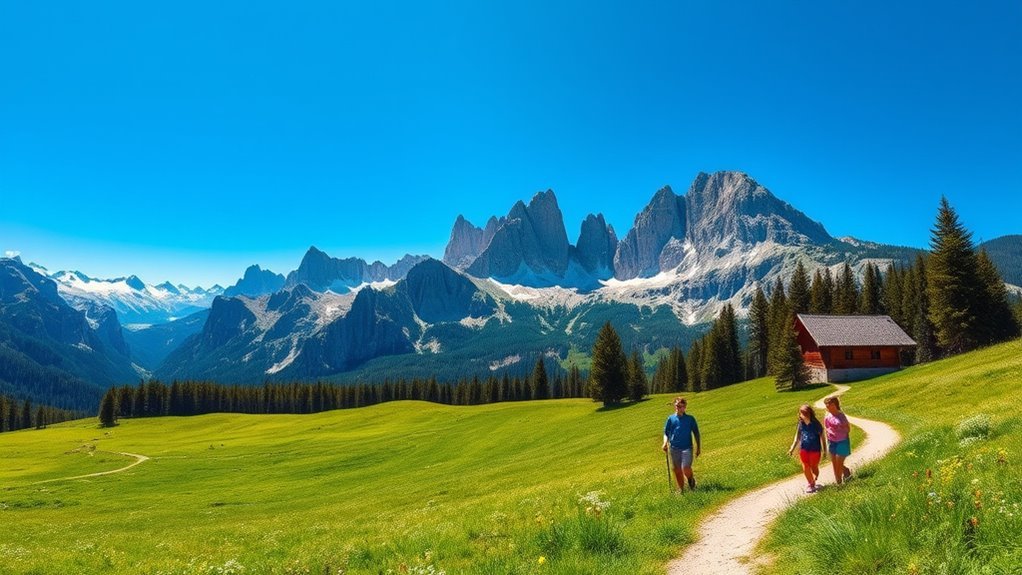
The Dolomites are a strong choice for families who want mountain scenery without spending every day on a difficult hike. The range is part of a UNESCO World Heritage property spread across several northern Italian regions. Family activities include cable-car rides, short nature paths, cycling routes, alpine lakes, farm visits, and mountain playgrounds.
Lago di Braies is one of the best-known lakes in the area. Families can walk part of the shore and, when seasonal services are operating, may be able to rent a rowboat. Because access, parking, and crowd controls can change, check local arrangements before setting out rather than treating the lake as an unplanned roadside stop.
Sesto, San Candido, and other towns in the Puster Valley provide access to accommodation, food, cycling, and mountain transport. A hut-to-hut route can suit experienced families with older children, but it is not the only way to enjoy the region. Younger children may be happier with one mountain base, a cable-car outing, and a short marked walk.
Mountain weather can change quickly, even in summer. Carry an extra layer and rain protection, choose a route that matches the least-experienced family member, and confirm the final lift time before relying on a cable car for your return.
Discover the Coastal Charm of Liguria for Family Fun
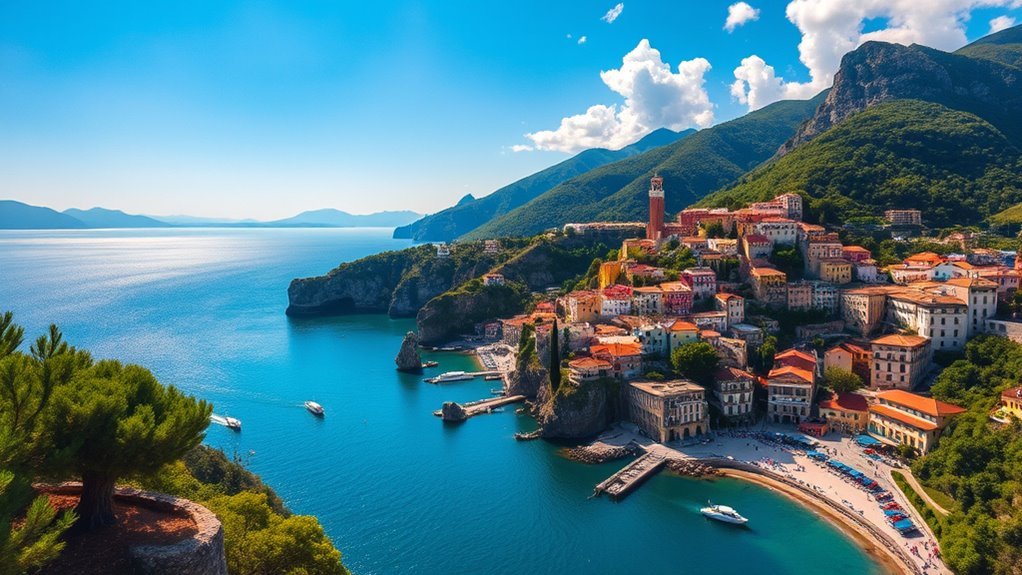
Liguria combines colorful ports, compact towns, beaches, trains, and boat trips along a narrow stretch of coast. It works well for families who want seaside time without renting a car for every outing. Towns such as Sestri Levante, Finale Ligure, Levanto, and others along the regional rail line can serve as practical bases.
- Choose a beach after checking whether it has sand, pebbles, rocks, shallow entry, lifeguard coverage, and nearby restrooms.
- Use trains for town-to-town trips when road traffic and parking are heavy.
- Take boat trips only when sea conditions and the operating schedule are suitable.
- Look for evening markets, local festivals, playgrounds, and pedestrian waterfront areas.
- Try regional foods such as focaccia, pesto, fresh pasta, and seafood while keeping simple options available for younger children.
July and August can be hot and crowded, especially on weekends. Book beach clubs or accommodation early where necessary, but keep at least one flexible day in case waves or weather affect boating and swimming.
Experience Family Fun in Picturesque Tuscany
Tuscany suits families who want to combine countryside time with historic towns. An agriturismo with a pool can provide a calm base between outings to villages, farms, gardens, and art cities. The hills may feel more comfortable than dense city streets during the late afternoon, although summer days can still be hot.
| Activity Type | What Families Can Do |
|---|---|
| Outdoor Adventures | Short hikes, cycling, farm visits, gardens, and adventure parks |
| Family-Friendly Tours | Cooking classes, village walks, and farm or vineyard visits that explicitly welcome children |
| Agriturismo Stays | Countryside accommodation that may include pools, meals, animals, or open space |
San Gimignano offers towers, narrow streets, and broad countryside views, while smaller towns can provide a gentler pace. Florence and Siena add major cultural sights, but they require more planning for heat, queues, and parking. Reserve timed museum admission and avoid driving into restricted historic zones.
Wine-focused properties are not automatically child-friendly. Confirm that children are accepted and that the visit includes something they can enjoy, such as a farm walk, food tasting, garden, or cooking activity. Alcoholic tastings are for adults.
Uncover Umbria’s Hidden Gems for a Relaxing Getaway
Umbria offers medieval towns, wooded hills, lakes, farms, and a slower atmosphere than Italy’s most famous coastal destinations. It is well suited to families who value local meals, historic streets, and countryside accommodation more than nightlife or large theme parks.
- Explore Gubbio, Spello, Assisi, or another hill town at a relaxed pace.
- Choose short woodland walks rather than exposed midday hikes.
- Stay at an agriturismo that offers a pool, meals, or outdoor space.
- Visit local markets, workshops, churches, and small museums.
- Allow extra time for steep lanes, steps, and parking outside old centers.
Umbria is not crowd-free, especially in famous religious or festival destinations, but it can feel calmer when you stay outside the busiest centers. A car gives families more freedom in the countryside, while trains can work for selected towns.
Venture to the Stunning Cinque Terre for Outdoor Activities
Cinque Terre is part of Liguria, but its five villages require their own planning. Monterosso al Mare, Vernazza, Corniglia, Manarola, and Riomaggiore are connected by rail, boat services when conditions permit, and a network of walking routes. The area is most suitable for families comfortable with stairs, slopes, busy platforms, and limited road access.
Products Worth Considering

DELIGHTFUL ILLUSTRATIONS: Featuring a beautifully crafted 3D scene of hikers exploring a scenic trail surrounded by lush mountains and trees. Ideal for adventurers, nature lovers, or anyone celebrating a journey or milestone, this card brings the excitement of a hiking adventure to life, making it a thoughtful and memorable keepsake.

High quality printed artwork stretched to fit on durable and shrink-resistant canvas. 3 pieces of set and each piece is 24"x36".
High quality printed artwork stretched to fit on durable and shrink-resistant canvas. 3 pieces of set and each piece is 16"x24".
Hiking Trail Planning
The Sentiero Verde Azzurro, often called the Blue Trail, is a series of coastal sections rather than a path that families should assume is continuously open. Landslides, maintenance, weather, crowd controls, and one-way systems can change access. Check the official Cinque Terre National Park trail network on the day of the walk.
- Choose one section based on distance, elevation, heat, and your children’s experience.
- Wear closed shoes with reliable grip and carry water.
- Avoid exposed hiking during the hottest part of the day.
- Do not rely on a stroller for steep village lanes or hiking paths.
- Turn back when weather, fatigue, or trail conditions become unsuitable.
The park sells different products. The Trekking Card covers designated trail and park services, while the Train Card adds eligible regional train travel within its stated conditions. Review the current inclusions and prices on the official Cinque Terre Card page before buying.
Note: Access to the Via dell’Amore uses reserved time slots and a one-way route beginning in Riomaggiore under the current park system. Check the official Via dell’Amore instructions because procedures can change.
Coastal Village Experiences
Families do not have to hike between every village. Trains make it possible to explore one or two towns at a time, while seasonal boats provide a different view of the cliffs when the sea is calm enough for service. Monterosso has the broadest conventional beach setting of the five villages, although space is limited in peak season.
Look for local crafts and dishes such as focaccia, trofie with pesto, and anchovy specialties. Plan meal stops before children become tired because queues and crowded lanes can make last-minute decisions difficult.
Relax on Sardinia’s Pristine Beaches With Kids
Sardinia is one of Italy’s strongest choices for a beach-centered family holiday. The island offers white sand, rocky coves, snorkeling areas, resort beaches, and quieter stretches of coast. Conditions differ widely, so choose the exact beach rather than relying on a general description of the region.
- Look for a gradual entry, manageable waves, shade, restrooms, parking, and lifeguard coverage where available.
- Keep young children within direct reach in or beside the water.
- Follow local flags and instructions and leave the water when wind, waves, or visibility worsen.
- Use reef-safe sun habits, protective clothing, and frequent water breaks.
- Reserve rental cars, family rooms, and popular coastal stays well before a July or August trip.
Families can also explore the Gennargentu massif, but its mountain routes are separate from a relaxed beach day and can be demanding. Select a clearly described walk, check weather and fire-risk information, and consider a qualified local guide for unfamiliar or remote terrain.
Sardinia rewards a slower road trip. Rather than crossing the island repeatedly, select one section of coast and combine beach days with a town, archaeological site, boat excursion, or short nature outing.
Marvel at the Scenic Amalfi Coast and Its Family Activities
The Amalfi Coast offers cliffside towns, boat trips, small beaches, gardens, and memorable views. It can also involve stairs, congested roads, crowded buses, and expensive high-season accommodation. Families generally enjoy it more when they stay in one practical base and avoid changing towns every night.
Breathtaking Coastal Views
Positano and Amalfi are the best-known stops, while Ravello, Maiori, Minori, Cetara, and Vietri sul Mare provide different combinations of views, beaches, gardens, and local life. A ferry can be more pleasant than a road journey, but services depend on the route, season, weather, and sea conditions.
- Take family photos from safe viewpoints rather than narrow road edges.
- Choose beaches after checking access steps, facilities, and swimming conditions.
- Use boats or ferries when they fit the weather and timetable.
- Reserve restaurants and transport during the busiest weeks.
- Carry only what the family can manage on stairs and uneven lanes.
Family-Friendly Activities
Younger children may enjoy a short boat ride, a calm beach session, Ravello’s gardens, or an early-evening walk. Marina Grande and other beaches may have clubs and services, but conditions and entry depth vary, so supervise children closely and check the water before swimming.
The Path of the Gods is better suited to sure-footed older children and adults with hiking experience. Italy’s official tourism guidance notes that it is not recommended for people with vertigo and is more comfortable in spring or autumn than in summer heat. Review the official hiking guidance before treating it as a family activity.
Families with younger children can choose a shorter village walk, garden visit, ferry ride, or the less exposed Lemon Path area after checking current route conditions.
Culinary Delights to Savor
The coast’s food can be as memorable as its views. Families can try seafood pasta, pizza, pastries, lemon desserts, and simple local dishes. Markets and food tours can introduce children to regional ingredients without requiring a formal multi-course meal.
- Try spaghetti alle vongole or another local seafood dish where appropriate.
- Look for lemon cakes, granita, gelato, and pastries for a family-friendly taste of the region.
- Visit a market or food shop for picnic supplies.
- Book a cooking activity that clearly accepts children.
- Adults may sample limoncello, while children can try a non-alcoholic lemon drink or dessert.
Try Exciting Water Sports and Attractions at Lake Garda
Lake Garda combines lakeside towns, beaches, mountain views, ferries, cycling, and water sports. That variety makes it one of the easiest destinations for families whose members want different activities.
Windsurfing, sailing, kayaking, and stand-up paddleboarding are available in suitable areas through local operators. Choose an activity based on age, swimming ability, equipment, weather, and instructor requirements. Even on calm-looking water, children should use properly fitted safety equipment and follow the operator’s instructions.
Gardaland is a major draw for families. The park’s official 2026 information advertises more than 40 attractions, rides, and shows. Check the official Gardaland attraction list for height restrictions, accessibility information, operating dates, and ticket options before promising a particular ride to a child.
Boat services connect several towns around the lake, including Sirmione and Malcesine. Build spare time into the day because distances, queues, weather, and ferry connections can make a lake outing longer than it looks on a map.
Savor Unique Culture and Cuisine in Puglia
Puglia offers a mix of whitewashed towns, long coastlines, farms, olive groves, Baroque architecture, and distinctive food. It suits families who enjoy road trips and want to balance beach days with short cultural outings.
- Explore Alberobello’s trulli while respecting that many buildings are homes, shops, or working properties.
- Try orecchiette with cime di rapa, focaccia, fresh cheese, fruit, and seafood.
- Visit Lecce for Baroque streets, craft shops, and an evening walk after the strongest heat.
- Choose a masseria or countryside stay with clearly listed family facilities.
- Combine one coastal base with nearby towns rather than driving across the region every day.
A car is useful for many rural and coastal locations, but parking and historic-center restrictions still apply. Confirm whether a beach is sandy or rocky, public or serviced, and easy to reach with children and beach equipment.
Discover Venice: A Family-Friendly Summer Experience
Venice can feel magical to children because normal streets are replaced by canals, boats, bridges, and narrow lanes. It is also physically demanding: families may encounter heat, crowds, steps, and long walks between vaporetto stops and accommodation.
A gondola ride can be memorable, but the public vaporetto offers a more practical way to move around the lagoon. Burano adds colorful houses and lace-making traditions, while Murano is known for glass. Keep island plans simple and allow extra time for boarding, transfers, and queues.
The Natural History Museum of Venice Giancarlo Ligabue offers fossils, natural-history collections, and scientific displays that can break up a day of outdoor sightseeing. Check opening days and book major museums or attractions through their official sites.
Strollers can be awkward on bridges, although they remain useful for naps and longer flat sections. A lightweight folding model is easier to carry. Families using wheelchairs or other mobility equipment should consult official accessible-route information before choosing accommodation and daily routes.
Note: Venice’s announced 2026 Access Fee trial concluded on July 26, 2026. The official site stated that visits from July 27 onward did not require payment or an exemption under that trial. Rules for later years may change, so check the official Venice Access Fee website before travel.
The 83rd Venice International Film Festival is scheduled for September 2–12, 2026, on the Lido. Families traveling during those dates should review the official La Biennale program and expect added activity around festival venues.
Frequently Asked Questions
Where is the best place for a family summer vacation in Italy?
Lake Garda is one of the best all-round choices because it combines swimming, boats, towns, cycling, and Gardaland. Choose Sardinia for a beach-first trip, the Dolomites for mountain activities, Tuscany for a farm stay, or Venice for a short culture-focused visit.
Is $10,000 enough for a family trip to Italy?
It can be enough, but the answer depends on family size, trip length, airfare, season, and accommodation. A one-week trip with moderate flights and midrange lodging is more realistic than a two-week luxury coastal holiday. Price flights first, then add lodging, local transport, meals, tickets, insurance, and a contingency fund.
When should families avoid Italy in 2026?
Avoid late July and August when possible if your family struggles with heat, high prices, or crowds. The period around the August 15 Ferragosto holiday can be especially busy in resort areas. Late May, June, and September often provide a better balance, although weather and school schedules vary.
Which is better for families, Venice or the Amalfi Coast?
Venice is better for a short, car-free trip based around boats, museums, and canals. The Amalfi Coast is better for coastal scenery, ferry trips, beaches, and food. Both have stairs and crowds, but the Amalfi Coast adds difficult road travel, while Venice adds frequent bridges and limited stroller convenience.
Which Italian destinations are easiest with toddlers?
A Tuscan or Umbrian agriturismo, a serviced beach resort in Sardinia or Liguria, and a family hotel near Lake Garda can work well with toddlers. Prioritize one base, a pool or easy beach, air conditioning, short transfers, nearby food, and space for naps.
How many Italian destinations should a family visit in one week?
Most families should choose one region or two nearby bases. Staying in fewer places reduces packing, hotel changes, and missed naps while leaving room for weather changes and spontaneous activities.
Sources
- UNESCO World Heritage Centre: The Dolomites — UNESCO status and the protected mountain property.
- Italia.it: Beaches for Families in Italy — official family-beach planning context.
- Cinque Terre National Park: Cinque Terre Card — current card types, inclusions, and park services.
- Italia.it: Driving in Italy — road guidance and child-restraint requirements.
- Gardaland: Official Park Guide — attractions, ride categories, and visitor planning.
- City of Venice: Access Fee — official visitor-fee dates, exemptions, and updates.
Conclusion
Italy can provide a relaxed beach holiday, an active mountain break, a countryside stay, or a culture-filled city trip. The best family destination is not always the place with the longest list of sights; it is the place that matches your children’s ages, your transport plan, and the pace your family can enjoy.
Choose one region or two nearby bases, reserve the essentials early, and leave room for rest and weather changes. Whether your family settles beside Lake Garda, explores the Dolomites, stays on a Tuscan farm, or travels through Venice by boat, a well-paced plan will create more enjoyable memories than a rushed tour of the whole country.
