
Last Updated on September 11, 2026 by Daniel Globe
Outdoor padlocks with keys need to handle two jobs at once: resist forced entry and keep working through rain, dust, heat, freezing temperatures, and road salt. Amazon has many keyed padlocks, but labels such as “heavy duty,” “waterproof,” and “high security” are not standardized. The best choice depends on the value of what you are securing, the weather exposure, the hasp or chain, and how many people need access.
Quick Answer
Choose an outdoor keyed padlock with a corrosion-resistant body, a hardened short or shrouded shackle, a protected keyway, and dimensions that fit the hasp closely. For higher-risk locations, look for independent testing such as ASTM F883, EN 12320, or a recognized third-party security rating.
Key Takeaways
- Match the padlock to the risk level, climate, and value of the property.
- A short, closed, shrouded, or concealed shackle leaves less metal exposed to cutters and pry tools.
- Brass, stainless steel, protective coatings, sealed keyways, and drainage channels improve corrosion resistance.
- Keyed-alike sets simplify access, but one lost key can affect every lock in the set.
- The hasp, chain, gate, or storage door must be at least as strong as the padlock.
- Use a lock-specific lubricant sparingly and follow the manufacturer’s maintenance instructions.
Disclosure: As an Amazon Associate I earn from qualifying purchases. Some links on this page are affiliate links, at no extra cost to you.
What to Look for in Outdoor Padlocks
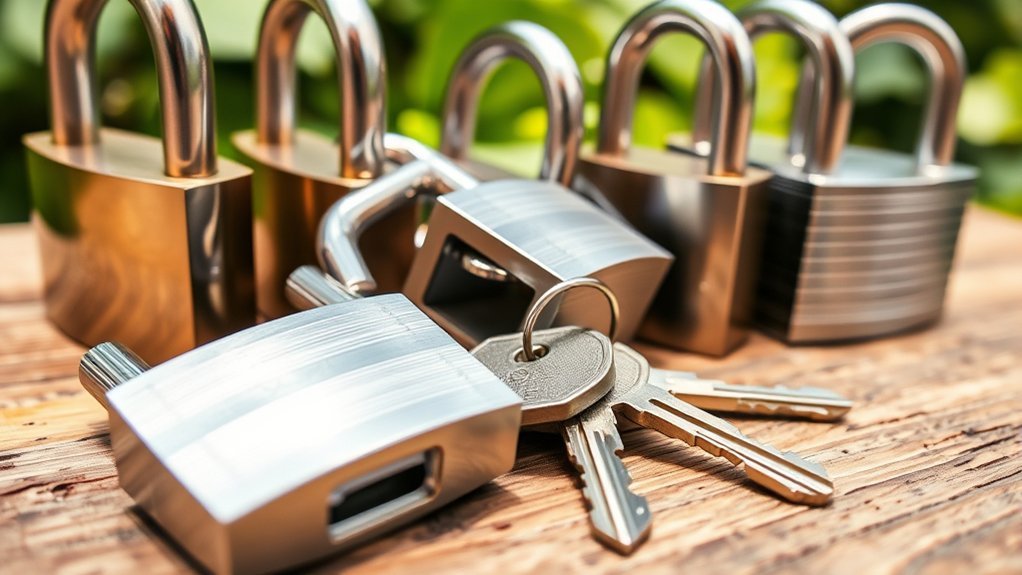
Start with the application. A small lock for a low-value garden box does not need the same attack resistance as a lock for a trailer, commercial gate, or expensive tool shed. Before buying, measure the hasp opening and decide how much shackle clearance you actually need. Extra shackle length may make a lock easier to fit, but it also gives cutting and prying tools more room.
| Feature | What to Check | Why It Matters |
|---|---|---|
| Lock body | Brass, stainless steel, laminated steel with a weather-resistant coating, or a sealed body | Balances strength with resistance to rust and contamination |
| Shackle | Hardened steel or boron-alloy steel, adequate diameter, and limited exposed length | Improves resistance to cutting, sawing, and leverage attacks |
| Shackle style | Standard, closed, shrouded, concealed, or disc-style | Less exposed shackle generally means less tool access |
| Weather protection | Keyway cover, sealed shackle holes, drainage channels, rust-resistant internals, and an outdoor-use statement | Helps keep water, salt, grit, and dirt away from moving parts |
| Locking mechanism | Ball-bearing locking, anti-drill features, controlled keyway, and a tested cylinder | Improves resistance to pulling, prying, drilling, picking, and key duplication |
| Keying | Keyed alike, keyed different, master keyed, rekeyable, or interchangeable core | Determines convenience, access control, and replacement options |
| Independent testing | ASTM F883, EN 12320, Sold Secure, or another recognized scheme that applies to the exact model | Provides more useful evidence than seller phrases such as “unbreakable” or “high security” |
Note: A four-pin cylinder can be suitable for basic use, but pin count alone does not prove that a padlock is hard to pick. Cylinder design, tolerances, key control, anti-drill protection, and independent test results matter too.
Essential Features of Durable Outdoor Padlocks
Laminated steel bodies are widely used because they provide good physical strength, but exposed steel can still corrode if the coating is damaged. Solid brass and stainless-steel components usually handle wet or salty conditions better. Purpose-built marine locks may add a protective shell, sealed openings, drainage channels, and rust-resistant internal parts. ABUS, for example, lists these features on its outdoor Aqua Safe model rather than relying only on the word “waterproof.”
The shackle deserves equal attention. Hardened steel improves cut resistance, while hardened boron-alloy shackles may offer even greater resistance on some models. A thick shackle is useful only when it fits the hasp correctly. Do not force a large shackle through a thin, worn, or poorly mounted staple.
Look for a locking mechanism that resists pulling and prying. Dual ball-bearing locking is stronger against these attacks than simple spring-loaded locking on many basic padlocks. For higher-security use, also check for anti-drill plates, restricted or controlled keyways, replaceable cylinders, and a published test rating.
Warning: Do not protect valuable property with a strong padlock attached to a weak hasp, thin chain, exposed screws, or damaged gate. An attacker will normally target the easiest part of the complete locking system.
Benefits of Keyed Alike Systems for Convenience
A keyed-alike set lets one key open every padlock in that set. This is useful for several gates, storage bins, toolboxes, or work areas managed by the same person or team. It reduces key clutter and makes spare-key planning easier. Master Lock’s official keying guide defines keyed alike as multiple locks opened by the same key.
| Keying Type | Best For | Main Tradeoff |
|---|---|---|
| Keyed alike | One owner or team managing several locks | A lost or copied key may expose every lock in the set |
| Keyed different | Separate users, tenants, or security zones | More keys to label, store, and replace |
| Master keyed | Businesses that need individual access plus supervisor access | Requires careful key control and a properly planned system |
| Rekeyable or interchangeable core | Sites where staff, tenants, or access rights change | Higher purchase cost and possible service tools or locksmith support |
Pro Tip: Do not use one keyed-alike group for every high-value area. Divide locks into separate key groups so one missing key does not compromise the entire property.
Weatherproofing Your Outdoor Padlocks
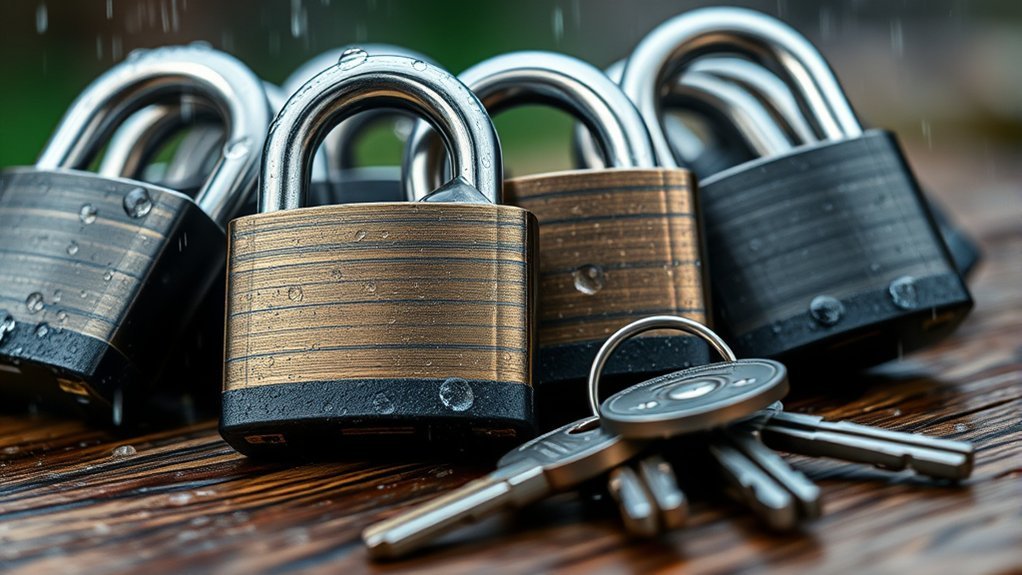
Good weather resistance starts with buying the right lock, but regular cleaning and lubrication help prevent grit, corrosion, and freezing from interfering with the cylinder and shackle.
At a Glance
| Time Required | About 5 to 10 minutes per lock |
| Difficulty | Easy |
| Tools Needed | Pressurized air, a clean cloth, the key, and manufacturer-approved lock lubricant |
| Cost | Low; it depends on the lubricant and cleaning products you choose |
- Remove loose dirt. Brush or wipe the outside, then use pressurized air to clear dust from the keyway and shackle openings.
- Check the manufacturer’s instructions. Use the lubricant type approved for that lock. Master Lock recommends a PTFE lock lubricant for its padlocks.
- Apply a small amount. Put a light spray or a few drops into the keyway and around the shackle openings. Do not flood the lock.
- Work the mechanism. Insert the key, lock and unlock the padlock several times, and move the shackle to distribute the lubricant.
- Drain and wipe. Let excess lubricant drain, wipe the lock and key, and allow the padlock to air-dry before putting it back into service.
- Inspect the mounting hardware. Tighten or repair the hasp, staple, chain, gate, or latch if it is loose or damaged.
Warning: Do not tape over the keyway and then fill the cylinder with penetrating fluid. Do not mix several lubricants. Master Lock advises against dry graphite and silicone lubricant for its padlocks because excess material can interfere with moving parts.
WD-40 may be used as a cleaner or moisture-displacing flush on some locks when the manufacturer allows it, but it is not a replacement for proper lock lubricant. After flushing, apply the recommended lubricant. PB Blaster is a penetrating product for loosening corroded parts, not a universal routine padlock lubricant.
| Environment | Suggested Inspection and Service |
|---|---|
| Covered residential use | Inspect every few months and lubricate when operation becomes less smooth or according to the manufacturer’s schedule |
| Normal outdoor exposure | Clean and lubricate about every 3 to 6 months |
| Coastal, dusty, industrial, or road-salt exposure | Inspect and service about every 3 months, or more often if contamination is visible |
| Freezing conditions | Service before winter and after severe moisture or freeze-thaw exposure |
Easy Tips to Keep Your Padlocks Working Great
Routine checks take only a few minutes and can reveal a failing lock before it traps you outside a gate or storage unit.
- Test every key. A bent, cracked, or badly worn key can damage the cylinder or break inside it.
- Keep spare keys secure. Do not hide them beside the gate, shed, or storage box.
- Check for red rust, white corrosion, or bubbling coatings. Surface damage may show that the lock is no longer suitable for its environment.
- Make sure the shackle closes fully. Dirt, a misaligned hasp, or side pressure can prevent proper locking.
- Do not hammer a frozen or stuck key. Warm the lock safely, remove moisture, and use the approved lubricant.
- Replace unreliable locks. If the key binds, the shackle does not latch consistently, or corrosion has weakened the body, replacement is safer than repeated temporary fixes.
| Problem | Likely Cause | What to Do |
|---|---|---|
| Key is hard to insert | Dirt, corrosion, ice, or a damaged key | Clean the keyway, try an undamaged spare, and lubricate correctly |
| Key inserts but will not turn | Cylinder contamination, side pressure, or internal damage | Relieve pressure on the shackle, service the lock, and replace it if operation remains unreliable |
| Shackle will not close | Misaligned hasp, debris, or damaged locking parts | Realign the hardware, clean the openings, and do not force the shackle |
| Lock freezes repeatedly | Water entering the body or keyway | Use a protected-keyway outdoor model, improve drainage, and service before winter |
Pro Tip: Photograph the model number, key code, and packaging when you buy a padlock. Store the information securely so you can order compatible locks or replacement keys without exposing the code near the lock.
Best Use Cases for Outdoor Padlocks
Outdoor keyed padlocks work well on gates, sheds, storage units, trailers, job boxes, lockers, and equipment cabinets when the lock style matches the hardware and risk level. They should be one part of a broader security setup that may also include strong hinges, concealed fasteners, lighting, alarms, cameras, anchors, or chains.
Ideal Locations for Use
- Residential gates and fences: Use a weather-resistant lock with a short shackle and a strong, properly mounted hasp.
- Sheds and garages: A closed- or shrouded-shackle padlock limits access for bolt cutters and pry tools.
- Storage units: Confirm the facility’s allowed lock shape and dimensions. Disc-style or concealed-shackle locks may fit some storage latches better.
- Trailers and moving equipment: Use locks designed for the coupler, latch, or cargo door rather than forcing a general padlock into an unsuitable opening.
- Warehouses and factories: Consider commercial key control, master-key systems, rekeyable cylinders, and documented key issue procedures.
- Marine or coastal locations: Choose solid brass, stainless steel, sealed openings, drainage, and rust-resistant internal components.
Types of Items Secured
Padlocks can secure toolboxes, job boxes, outdoor cabinets, gates, chains, storage doors, trailers, and equipment cages. The lock must fit without leaving unnecessary shackle space. For portable high-value items, connect the padlock to a rated chain or anchor that cannot be removed with ordinary hand tools.
Schools, gyms, and shared facilities may value easy key management, but a basic locker lock is not automatically suitable for an exposed shed or trailer. Check the product’s stated environment and security use before moving it outdoors.
Weather Resistance Considerations
“Weather resistant” does not always mean submersible or suitable for saltwater. Match the design to the actual exposure:
- Rain and garden use: Look for a covered keyway, coated body, and drainage.
- Coastal air or salt spray: Favor brass or stainless-steel components and corrosion-resistant internals.
- Dust and construction sites: Use sealed openings and clean the lock more often.
- Snow and freezing rain: Choose a protected mechanism and maintain it before winter.
- Direct ground contact or standing water: Relocate the lock or improve the installation. Most padlocks are not designed for long-term immersion.
How to Choose the Right Size and Shackle Style
Measure before ordering. Product photos can make a 40 mm body or a long shackle look larger or smaller than it is.
- Measure the hasp hole. The shackle diameter must fit without scraping or binding.
- Measure horizontal clearance. This is the inside width of the shackle.
- Measure vertical clearance. This is the usable inside height from the lock body to the top of the shackle.
- Choose the shortest workable shackle. Leave enough room to close the lock without leaving large gaps.
- Check movement and alignment. The locked shackle should not carry the weight of a sagging gate or twisted latch.
| Shackle Style | Advantage | Limitation |
|---|---|---|
| Standard open shackle | Fits many gates, chains, and latches | Leaves more shackle exposed |
| Long shackle | Reaches through thick or awkward hardware | Provides more room for cutters and leverage |
| Closed or shrouded shackle | Limits access to the shackle | May not fit wide or poorly aligned hasps |
| Disc or concealed shackle | Very little shackle is exposed | Requires compatible latch geometry |
Security Ratings and Certifications
Independent standards make product comparisons more meaningful. ASTM F883 covers environmental, operational, functional, and security performance for padlocks. EN 12320:2021 includes requirements for strength, durability, corrosion resistance, and security grades.
Some products also carry third-party ratings such as Sold Secure. A seller’s own “security level” can still be useful within that brand, but it may not be directly comparable with another manufacturer’s scale.
The lock is only one part of the system. ASTM F2155 separately grades hasps and other padlock attachment devices because weak mounting hardware can defeat a strong padlock.
For a gate, shed, or storage door, pair the padlock with a closed, concealed, or shrouded hasp that covers its mounting screws. Police security guidance also recommends closed or concealed shackles because they reduce access for cutting and leverage tools.
Highlighting Key Differences Among Outdoor Padlock Brands
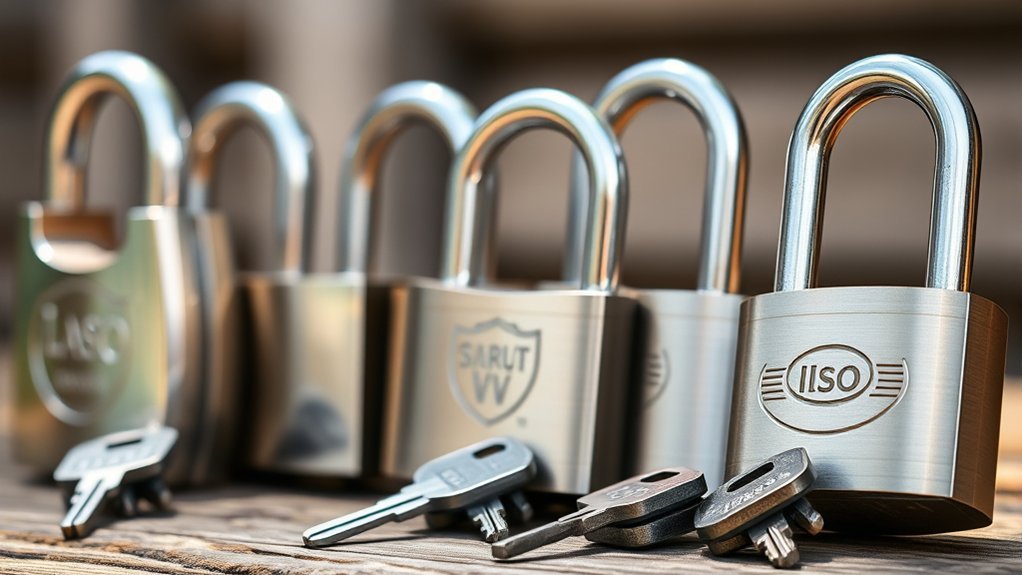
Brand names matter less than verified model details. Established manufacturers often publish shackle dimensions, materials, keying options, maintenance instructions, and test ratings. Smaller marketplace brands may provide only seller-written claims, so examine the exact Amazon listing carefully.
For brands such as SafiSwords and ZEERSHEE, treat statements such as “waterproof,” “high security,” pack quantity, key count, and return period as listing-specific. Confirm the exact ASIN, seller, package contents, warranty, and live return terms before ordering. Marketplace listings can change, and one seller’s description may not apply to another variation.
| Listing Claim | Evidence to Look For |
|---|---|
| Waterproof or all-weather | Named materials, sealed keyway, covered shackle openings, drainage channels, corrosion test, and manufacturer outdoor-use guidance |
| Hardened steel shackle | Shackle material, diameter, exposed length, and whether it is boron alloy, stainless, coated, closed, or shrouded |
| High security | Independent rating, test standard, anti-drill protection, ball-bearing locking, controlled keyway, and a model-specific data sheet |
| Keyed alike | Clear statement that every lock in the selected variation uses the same key, plus the exact number of included keys |
| Four-pin brass cylinder | Cylinder design, anti-pick features, keyway type, drill resistance, and whether replacement keys or matched locks are available |
| 30-day return | The current Amazon return message for the exact seller and variation at checkout |
Common Outdoor Padlock Mistakes
- Buying the longest shackle for convenience. Use only the clearance you need.
- Ignoring the hasp or chain. Upgrade weak attachment hardware before buying a stronger lock.
- Assuming every laminated-steel lock is weatherproof. Check the coating, keyway protection, internal materials, and outdoor-use rating.
- Using a safety lockout padlock for theft protection. Lockout/tagout locks are designed for worker identification and energy control, not necessarily high attack resistance.
- Using one keyed-alike code everywhere. Separate high-value areas into different key groups.
- Over-lubricating. Excess product can hold dust and interfere with the mechanism.
- Trusting “uncuttable” or “unbreakable” claims. Every portable lock has limits, and determined attackers may use power tools or attack the surrounding hardware.
- Failing to test the lock after installation. Confirm that the shackle closes completely and that the key operates without side pressure.
Frequently Asked Questions
What is the best padlock for outdoor use?
There is no single best model for every location. Look for a corrosion-resistant body, protected keyway, hardened short or shrouded shackle, secure locking mechanism, correct dimensions, and an independent security rating that matches the value and risk of the property.
What padlock cannot be cut with bolt cutters?
No honest manufacturer can guarantee that a portable padlock is impossible to cut. A thick hardened or boron-alloy shackle with a closed, shrouded, or concealed design can greatly reduce access and increase the time and tool strength needed for an attack.
What is safer, a key lock or a combination lock?
Neither type is automatically safer. A well-built keyed padlock with a tested cylinder and controlled keyway can provide strong security. A high-quality combination lock avoids lost keys but may expose dials to dirt, ice, observation, or decoding. Compare the complete lock design and test rating, not only the opening method.
What is the most secure padlock on the market?
The answer depends on the application, hasp, chain, environment, and available clearance. For high-risk use, compare models with top independent ratings, hardened closed or concealed shackles, anti-drill protection, ball-bearing locking, controlled keys, and a compatible rated hasp.
How often should an outdoor padlock be lubricated?
Follow the exact manufacturer’s instructions. Master Lock recommends cleaning and lubrication every three to six months, and every three months in very dusty or corrosive environments. Inspect sooner after salt spray, flooding, heavy dust, or repeated freezing.
Can you use WD-40 on an outdoor padlock?
Some manufacturers allow WD-40 to flush moisture or clean a sticky mechanism, but it should not replace the recommended lock lubricant. Check the instructions for your model, apply the correct lubricant afterward, and avoid flooding or mixing products.
Sources
- Master Lock: Care & Service of Padlocks: cleaning, lubrication type, amount, and service frequency
- ASTM F883 Standard Performance Specification for Padlocks: environmental, operational, and security performance testing
- ASTM F2155-01(2024): performance of hasps and other padlock attachment devices
- EN 12320:2021: strength, durability, corrosion resistance, and security grades for padlocks and fittings
- ProtectUK: Locks: closed, concealed, and shrouded shackle guidance
- ABUS 70IB Aqua Safe Product Information: examples of outdoor corrosion protection, sealing, drainage, and material specifications
Conclusion
The right outdoor padlock is not simply the heaviest or the one with the strongest marketing claim. Choose a corrosion-resistant body, a hardened shackle with minimal exposure, a secure cylinder, and dimensions that fit the hasp closely. Use keyed-alike locks only where the convenience matches the access risk, verify model-specific claims on the live listing, and maintain the lock with the lubricant and schedule recommended by its manufacturer. Most importantly, strengthen the hasp, chain, gate, or storage door so the entire locking system works together.
