

Last Updated on July 27, 2026 by Mason Reed
A campfire should never sit close to your tent, sleeping gear, dry vegetation, or other materials that can ignite. Distance matters, but so do wind direction, ground clearance, fire size, and local restrictions. Set up the fire carefully, keep it attended at all times, and extinguish it completely before you leave the campsite or go to sleep.
Quick Answer
Keep a campfire at least 15 feet from your tent under National Park Service guidance, but 25 feet is the safer default because the U.S. Fire Administration recommends 25 feet from tents, shrubs, and anything that can burn. Follow stricter campground rules, keep your tent upwind, and fully extinguish the fire before sleeping.
At a Glance
| Tent-to-Fire Distance | 15 feet minimum under NPS guidance; 25 feet is the more conservative USFA recommendation |
| Clear Area Around Fire | About 10 feet cleared of leaves, twigs, dry grass, and other combustible ground material |
| Tools Needed | Plenty of water, a shovel or trowel, and an established fire ring or approved fire pit |
| Before Lighting | Check campground rules, burn bans, wind, surrounding vegetation, and fire-danger conditions |
Key Takeaways
- NPS guidance says tents and other flammable objects should be at least 15 feet away and upwind; USFA recommends at least 25 feet.
- When no stricter site rule applies, 25 feet gives you the more conservative buffer.
- Clear about a 10-foot circle around the fire of dry leaves, twigs, grass, and other loose fuel.
- Keep the fire small, supervised, and away from overhanging branches.
- Check burn bans and weather before lighting anything.
- Extinguish the fire completely before leaving the campsite or going to sleep.
Disclosure: As an Amazon Associate I earn from qualifying purchases. Some links on this page are affiliate links, at no extra cost to you.
Importance of Maintaining Distance
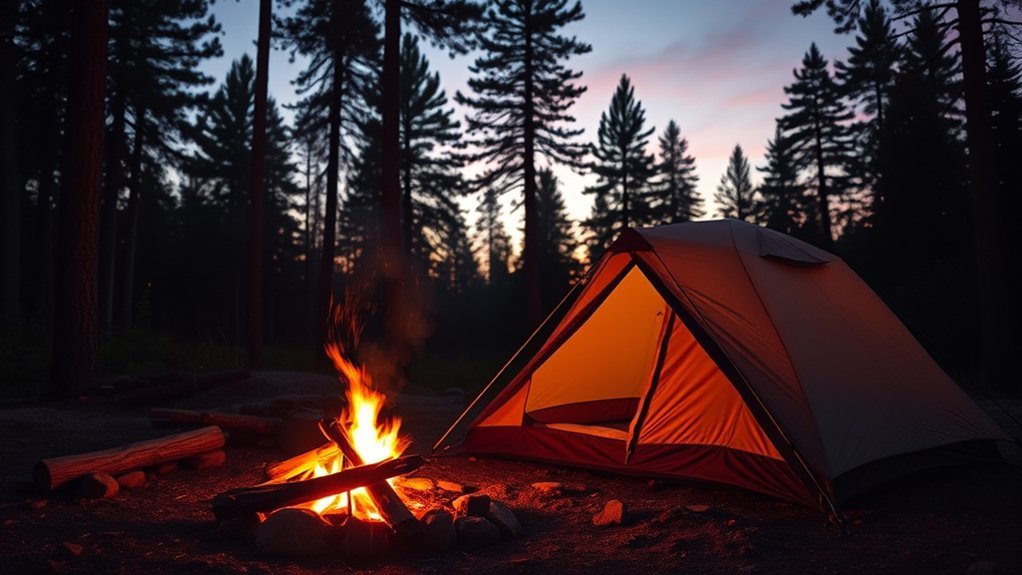
When you’re enjoying a campfire, distance protects your tent, sleeping bags, clothing, firewood, and other combustible gear from sparks and radiant heat. The National Park Service says tents, gear, and other flammable objects should be at least 15 feet away and upwind of the firepit.
The U.S. Fire Administration uses a more conservative recommendation: build campfires at least 25 feet from tents, shrubs, and anything that can burn. These recommendations are not really contradictory; they come from different safety guidance. When your campground does not specify a distance, using 25 feet provides the larger buffer.
Distance alone is not enough. A large fire, a sudden wind shift, dry grass, or low branches can still create danger. Keep the fire modest, use an established fire ring when available, and place your sleeping area upwind so smoke and flying embers are carried away from the tent.
Note: Campground, park, tribal, county, state, or federal restrictions always take priority over general distance guidance. A site may require a larger buffer or prohibit fires entirely.
Recommended Distance Guidelines
For practical campsite planning, think of 15 feet as the NPS minimum recommendation and 25 feet as the more conservative target. If the campground posts a greater distance, follow the posted requirement.
Measure from the edge of the fire ring or burning area to the nearest part of the tent or other combustible item. Do not use extra distance as an excuse to build a larger fire; small fires are easier to control and extinguish.
Pro Tip: Position your tent upwind of the campfire whenever possible. Also keep unused firewood away from the fire so a drifting ember cannot ignite the whole pile.
Low-hanging branches, dry brush, dead grass, leaves, tents, tarps, camp chairs, clothing, and sleeping gear can all become ignition points. Give the fire open space above as well as around it.
Most importantly, never rely on distance to protect you while sleeping. Extinguish the campfire completely before going to bed.
Assessing Environmental Conditions
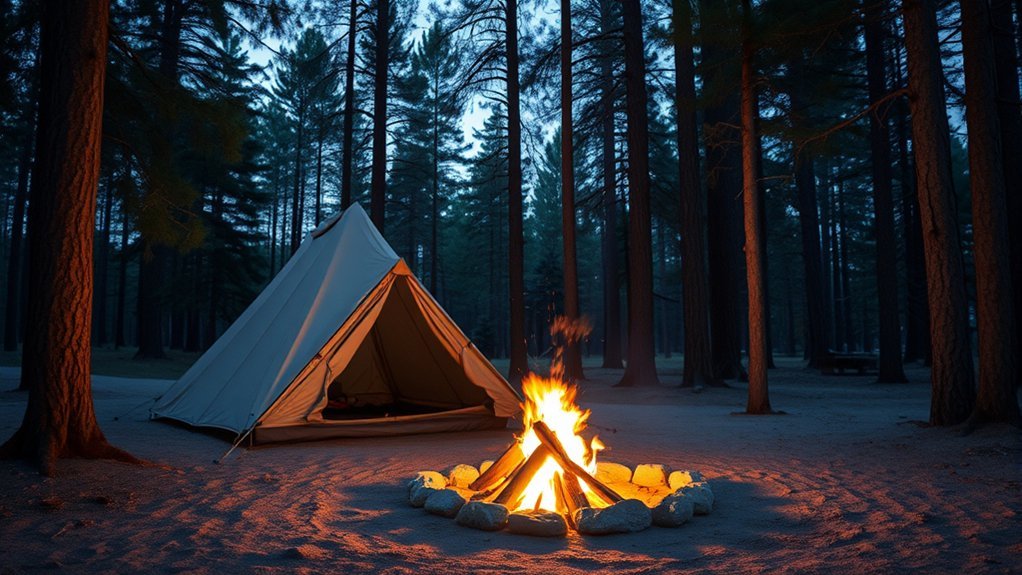
Before lighting your campfire, evaluate the environmental conditions around the campsite. Fire behavior can change quickly when vegetation is dry or wind increases.
- Check for low-hanging branches, dead limbs, roots, logs, and shrubs that could ignite.
- Avoid areas covered with dry grass, leaves, pine needles, or other easily burned material.
- Clear roughly a 10-foot circle around the fire pit of loose litter, leaves, twigs, and other combustible ground material.
- Keep tents, tarps, sleeping gear, spare firewood, and other combustible equipment outside the fire buffer.
- Check wind direction before lighting the fire and continue watching it while the fire burns.
- Check current fire restrictions, campground notices, and burn bans before striking a match.
Warning: Do not build a campfire when fires are prohibited. Strong wind and very dry vegetation are also good reasons to skip the fire, even when no formal ban has been posted.
Choosing the Right Campsite
Choosing the right campsite starts with the fire feature that is already there. Use an established fire ring or designated fire pit whenever one is provided. Do not move the ring closer to your tent for convenience.
Set your tent at least 15 feet away under NPS guidance and preferably around 25 feet away when the campsite layout allows. Keep the tent upwind of the fire, and avoid pitching directly beside dry brush, dead vegetation, or other fuels that could carry a fire toward your sleeping area.
If a campsite does not have an established fire ring, first confirm that creating a fire is legal. Some public lands prohibit new fire rings or restrict fires to designated locations.
Setting Up Your Fire Pit Safely
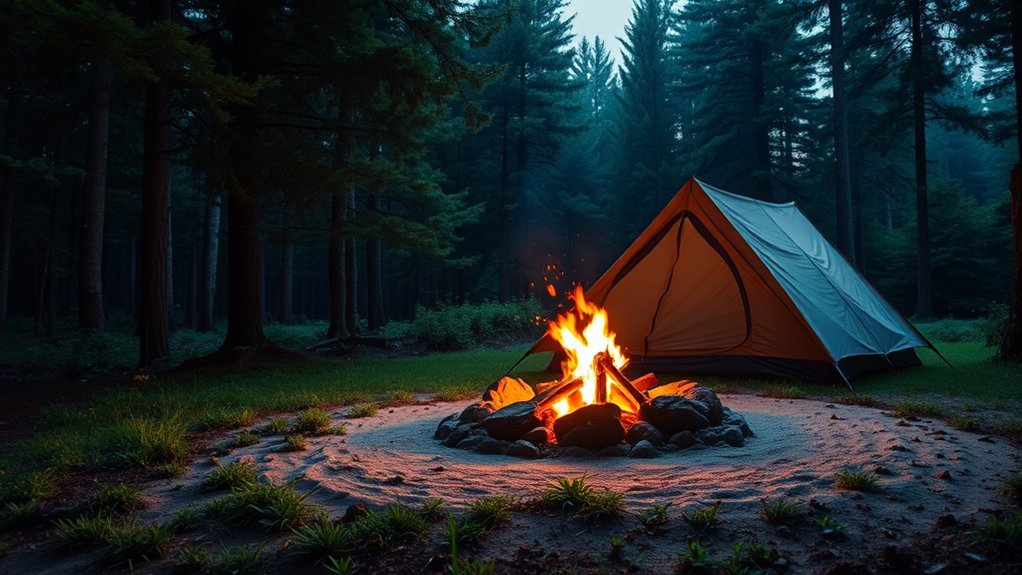
When setting up your fire pit, placement and preparation matter as much as the distance from your tent.
- Keep the fire at least 15 feet from tents and combustible gear; use about 25 feet where possible or when required.
- Use a designated fire pit or ring whenever one is available.
- Clear roughly a 10-foot area around the fire of leaves, twigs, dry grass, and other loose fuel.
- Look overhead for branches that could be reached by flames, heat, or sparks.
- Keep plenty of water and a shovel or trowel nearby before lighting the fire.
- Build a small fire that stays comfortably inside the fire ring.
Choose Safe Firewood
Use dry firewood and kindling that is permitted at the campsite. Buying firewood locally is generally better than transporting untreated wood over long distances because insects and plant diseases can travel in firewood.
Do not burn garbage, plastics, painted or pressure-treated lumber, or other questionable materials in the campfire. They can create harmful smoke and leave contaminated ash or debris.
Monitoring the Campfire
Once your campfire is burning, stay with it. A fire that was calm when you lit it can behave differently after a gust of wind or after new fuel is added.
Campfire Size Control
A smaller fire is easier to manage, cook over, and extinguish. Keep these habits in mind:
- Add only enough fuel to maintain the fire you actually need.
- Keep burning wood fully inside the fire ring.
- Do not build flames high enough to threaten branches or nearby vegetation.
- Watch for wind shifts and drifting embers.
- Keep spare firewood well away from sparks and flames.
Constant Supervision Required
Never leave a burning campfire unattended, even for a quick walk away from the site. Keep water within reach so you can respond immediately if embers escape or the wind changes.
Children and pets need especially close supervision around open flames, fire rings, hot stones, ashes, and coals. Serious burns can happen from falls or contact with hot coals even after visible flames have disappeared. Staying vigilant protects your campsite and lets everyone enjoy nature more safely.
Warning: Never use a charcoal grill, camp stove, fuel-burning heater, or similar combustion device inside a tent or enclosed vestibule. Fuel-burning equipment can produce carbon monoxide, an odorless gas that can cause severe poisoning or death.
Proper Fire Extinguishing Techniques
Do not wait until bedtime to start putting out a large fire. Stop adding wood early enough to let the fire burn down, then extinguish the remaining coals thoroughly.
- Drown the fire with water. Wet the coals, embers, sticks, and surrounding hot material until the hissing subsides.
- Stir the ashes and coals. Use a shovel or stick to expose material that may still be hot underneath.
- Add more water. Continue wetting and stirring until you no longer see smoke, glowing embers, or steam.
- Check for heat. Hover the back of your hand above the ashes without touching them. If you still feel heat, add more water and stir again.
- Leave only when completely cool. A fire that still gives off heat is not ready to be left unattended.
No flames does not mean no fire. Hot coals can remain capable of causing burns or reigniting long after the visible flames disappear.
What to Do If the Fire Escapes the Ring
If a spark starts a tiny spot fire and it is safe to do so, immediately soak it with water and make sure every ember is out. Do not put yourself in danger trying to fight a growing wildfire.
If flames begin spreading beyond your ability to control them, move people away from danger, note your location, and call 911 where service is available. In a campground or park, alert the nearest ranger, campground host, or fire authority as quickly as possible.
Understanding Local Regulations
General distance recommendations cannot replace local fire regulations. Rules can change by campground, land-management agency, season, weather, and current wildfire danger.
Campground Fire Guidelines
Before starting a fire:
- Read the campground’s posted fire rules.
- Confirm whether wood fires are currently allowed.
- Use designated fire rings or pits when required.
- Check whether portable fire pits are permitted.
- Ask a campground host or ranger if any rule is unclear.
Local Fire Restrictions
When planning a camping trip, check the park, forest, campground, county, or land-management website shortly before departure. Fire restrictions can tighten quickly during periods of drought, heat, strong wind, or elevated wildfire danger.
Restrictions may prohibit wood fires while still allowing certain contained stoves, or they may prohibit nearly all open flames. Never assume rules from a previous trip are still in effect.
Safety Distance Requirements
Use these distance principles as a practical hierarchy:
- First: Follow the specific legal or campground requirement.
- Second: When no site-specific distance is posted, remember that NPS guidance uses at least 15 feet from flammable objects.
- Third: USFA’s 25-foot recommendation provides the more conservative buffer and is the better target where the site has room.
- Keep tents, gear, vehicles, spare firewood, and other combustible items outside the fire area.
Note: For a minor thermal burn, place the area under clean, cool running water for about 5–20 minutes. Do not use ice. Seek prompt medical care for deep or extensive burns or burns involving the face, hands, joints, groin, airway, or other sensitive areas.
Educating Fellow Campers on Fire Safety
Make sure everyone in the group understands the fire plan before the campfire is lit. That includes the tent buffer, where water and the shovel are kept, who is supervising children, and how the fire will be extinguished before bed.
Remind fellow campers that 15 feet comes from NPS guidance while 25 feet is the more conservative USFA recommendation. Keep the fire small, use established fire rings, watch the wind, and never leave flames or hot coals unattended.
Good campfire safety is not one person’s job. When the whole group understands the rules, it becomes much easier to prevent burns, damaged gear, and escaped fires.
Frequently Asked Questions
Can I use portable fire pits near my tent?
Only where portable fire pits are allowed. Follow campground rules and the manufacturer’s clearance instructions. As a conservative campsite practice, keep the device well away from your tent and other combustible material rather than treating a portable pit as safe to place beside the tent.
What materials are safe for campfire fuel?
Use dry firewood and kindling permitted by the campground. Buy firewood locally when possible rather than transporting untreated wood over long distances. Never burn garbage, plastic, painted lumber, pressure-treated wood, or other materials that can release harmful smoke.
How do wind conditions affect campfire safety?
Wind can carry sparks and embers beyond the normal fire buffer. Set your tent upwind of the fire, monitor conditions continuously, and skip the campfire when strong or gusty wind makes ember control uncertain.
What should I do if sparks reach my tent?
Extinguish the ember immediately if it is safe to do so, then inspect the fabric and nearby gear for heat, melting, holes, or smoldering material. Move the tent farther away before continuing to use the fire, and put the fire out if wind keeps carrying sparks toward the sleeping area.
Are there specific regulations for campfires in national parks?
Yes. Each national park can set its own rules on where fires are permitted, what type of fire may be used, and whether temporary restrictions or burn bans are in effect. Check the specific park’s current rules shortly before your visit.
Is 15 feet or 25 feet the correct campfire distance?
Both figures appear in U.S. safety guidance. The National Park Service says tents, gear, and other flammable objects should be at least 15 feet away and upwind. The U.S. Fire Administration recommends at least 25 feet from tents, shrubs, and anything that can burn. Use the stricter campground rule whenever one exists; otherwise, 25 feet is the more conservative target.
Can I leave the campfire burning while I sleep?
No. A campfire should never be left unattended. Before sleeping, drown and stir the fire until the coals, ashes, and surrounding material are fully cool and no heat remains.
Conclusion
A campfire can be one of the best parts of camping, but a few extra feet of separation can make a big difference. NPS guidance uses at least 15 feet from tents and other flammable objects, while USFA recommends 25 feet. When possible, use the larger buffer and always follow stricter local rules.
Keep your tent upwind, clear combustible material from around the fire, supervise it continuously, and keep water nearby. Most importantly, put the fire completely out before leaving or going to sleep. Safe campfire habits protect your tent, your group, other campers, and the landscape around you.
Sources
- National Park Service — Campfires — 15-foot distance, upwind placement, supervision, small-fire guidance, and extinguishing practices
- U.S. Fire Administration — Outdoor Fire Safety — 25-foot recommended campfire distance from tents, shrubs, and combustible material
- Scouting America — Campfire Safety — general campsite fire-safety practices and supervision
- Western Fire Chiefs Association — Campfire Safety Tips — fire-site clearance, wind awareness, local firewood, and extinguishing guidance
- San Bernardino County Fire Protection District — Camping and Boating Safety — 10-foot ground clearance, upwind tent placement, supervision, and before-bed extinguishing guidance
