
Last Updated on July 29, 2026 by Mason Reed
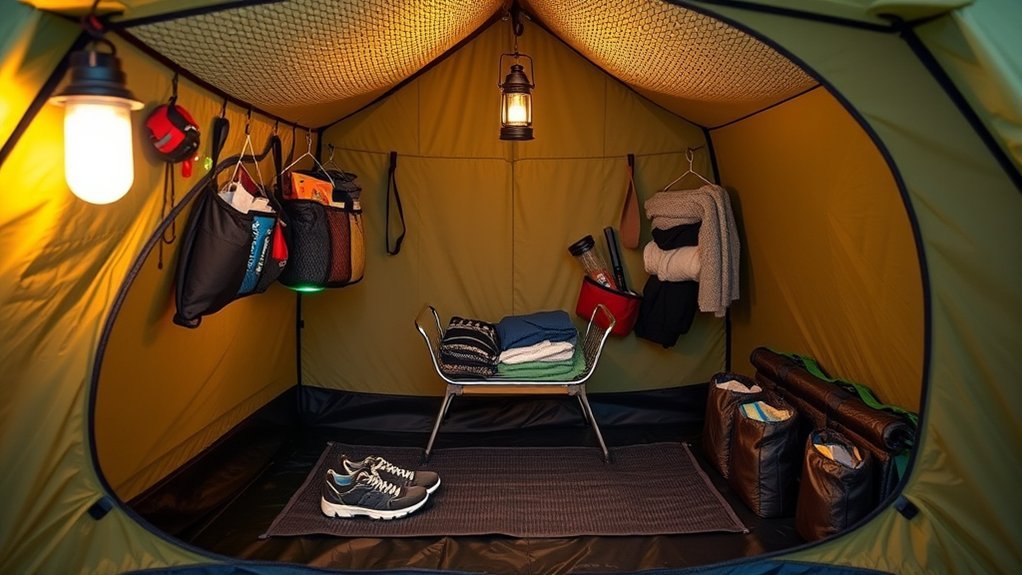
A tidy tent is easier to move through, keeps important gear within reach, and helps separate clean sleeping equipment from wet or dirty items. The simplest approach is to divide the shelter into clear zones, give every item a consistent home, and move food, fuel, shoes, and bulky equipment out of the sleeping area whenever conditions allow.
Quick Answer
Organize a tent by dividing it into four zones: sleeping, quick-access, wet or dirty, and bulk storage. Keep the floor and doorway clear, use built-in pockets or a light gear loft for small items, store boots and packs in the vestibule, and keep food, scented products, fuel, and cooking gear out of the sleeping area.
Key Takeaways
- Create separate zones for sleeping, nighttime essentials, wet gear, and bulky equipment.
- Use the vestibule for boots, gaiters, and packs while keeping the doorway clear.
- Hang only lightweight items from manufacturer-designated pockets, lofts, and loops.
- Keep rainwear, a headlamp, warm layers, and other urgent items easy to reach.
- Follow local rules for food, scented products, drinks, trash, and bear-resistant storage.
At a Glance
| Time Required | About 10–20 minutes after the tent is pitched |
| Difficulty | Easy |
| Tools Needed | Stuff sacks or dry bags, tent pockets, optional gear loft, and a small ground cloth for the vestibule |
| Cost | $0 using existing bags and pockets; approximately $10–$40 for optional organizers |
Disclosure: As an Amazon Associate I earn from qualifying purchases. Some links on this page are affiliate links, at no extra cost to you.
The Importance of Tent Organization
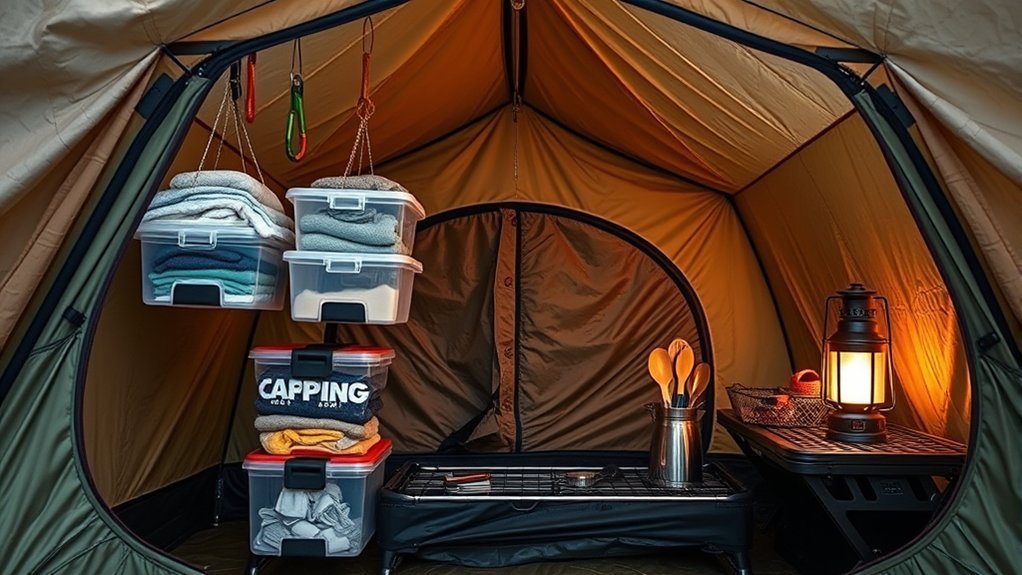
Good tent organization is about more than appearance. A clear floor helps prevent trips, protects fragile equipment, and lets you find a headlamp or warm layer without emptying every bag in the dark.
Organization also helps protect the tent. Sharp buckles, trekking-pole tips, uncovered tools, and heavy bins can press into the floor or walls. Wet clothing can dampen sleeping gear and add moisture to the shelter. Food crumbs and scented products may attract wildlife.
A reliable system should answer four questions:
- Where will each person sleep?
- Which items may be needed during the night?
- Where will wet, muddy, or bulky gear go?
- Which items must be stored outside the tent under local wildlife rules?
A practical tent has four zones: sleep, quick access, wet or dirty gear, and bulk storage.
Use a Four-Zone Tent Organization System
1. Sleeping Zone
Reserve the main floor for sleeping pads, sleeping bags or quilts, pillows, and clean sleep clothing. Position each pad so people can reach the door without climbing over another camper. In a narrow backpacking tent, laying pads straight usually uses the floor more efficiently than placing them at sharp angles.
Keep the pillow at the head of the sleeping pad inside the tent. A clean clothing sack can serve as a backup pillow, but dirty or damp clothing should stay in a separate bag.
2. Quick-Access Zone
Place small nighttime essentials in one pocket or stuff sack beside your head. Useful items may include:
- Headlamp with the controls locked, if the model has a lockout mode
- Eyeglasses or contact-lens case
- Phone in a protective pouch
- Required medication
- Watch or small thermometer
- Earplugs
- A clean bandana or small towel
Keep the collection small. A crowded “nightstand” becomes another bag to search through.
3. Wet or Dirty Zone
Use the vestibule as a mudroom when the tent design and weather allow. Vestibules are intended to provide sheltered space for boots and other gear without taking up sleeping-room floor area. REI’s backpacking-tent guidance identifies the vestibule as covered storage for boots and equipment.
Place boots sole-down on a small ground cloth, opened trash bag, or manufacturer-approved footprint section. Put gaiters, trekking-pole baskets, and muddy camp shoes beside them. Do not block the door, zipper, or the path out of the shelter.
If wet equipment must come inside during severe weather, seal it in a waterproof sack and keep it away from sleeping bags and tent walls.
4. Bulk-Storage Zone
Store a backpack, clothing bag, and other bulky equipment at the foot of the sleeping area or beneath the vestibule. Keep sharp or hard objects covered. Do not lean a loaded pack against a tent pole, unsupported wall, or rainfly because the pressure can deform the shelter or transfer condensation to the pack.
Pro Tip: Assign one sack color to each category—for example, blue for sleep clothes, red for first aid, and yellow for electronics. Consistent colors are faster to recognize in low light.
Effective Sleeping Area Setup
Set up the sleeping area before unpacking small gear. Inflate or unfold sleeping pads, spread quilts or sleeping bags so their insulation can loft, and check that no buckles, stones, or hard objects are trapped beneath them.
For two or more campers, agree on a shared center aisle or door route. Each camper should have one personal pocket or small sack. Shared equipment should have a separate location so no one has to search another person’s bedding.
Keep Nighttime Essentials Within Reach
A headlamp should be the first item you can find. Hang it from a designated lightweight gear loop or keep it in the same pocket every night. A small battery lantern can provide softer light in a family tent, but it should not obstruct the ceiling, door, or ventilation panels.
Keep emergency communication equipment dry and charged. Store a whistle where it will not be buried, and make sure every adult knows where the first-aid kit is located.
Note: Emergency equipment is only useful when everyone in the tent knows where it is. Review the location of the headlamps, first-aid kit, vehicle keys, and exit before going to sleep.
Handle Bear Spray Safely
In bear country, carry bear spray in a quick-draw belt or chest holster while hiking and moving around camp. The National Park Service advises campers to know how to use it and warns that it is not a repellent for tents, packs, or people.
Do not leave a canister loose beneath a pillow, inside bedding, or where a child could reach it. Keep the safety clip installed, protect the trigger from pressure, orient the nozzle away from people, and follow the label and local park rules. Never store bear spray in a hot vehicle.
Strategic Gear Placement
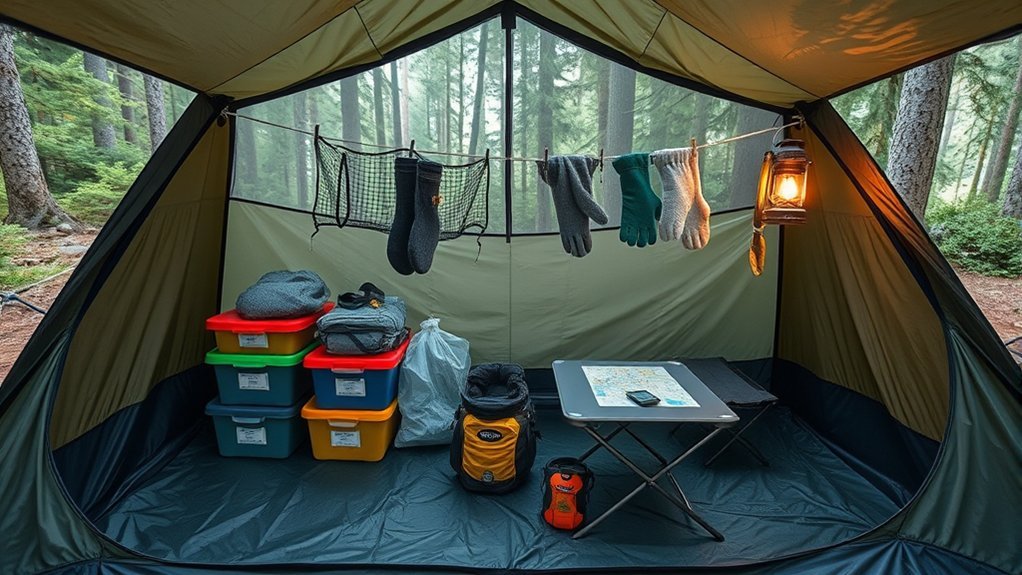
Place equipment according to how soon you may need it. Items required during the night belong in a pocket or bedside sack. Morning-only items can go at the foot of the tent. Bulky or dirty equipment belongs in the vestibule or another protected storage area.
| Gear | Best Location | Reason |
|---|---|---|
| Headlamp and glasses | Built-in pocket near the sleeper | Immediate nighttime access |
| Clean sleep clothing | Dry sack near the sleeping pad | Keeps insulation dry and organized |
| Boots and gaiters | Vestibule, clear of the exit | Keeps mud away from bedding |
| Backpack | Vestibule or foot of tent | Preserves floor and aisle space |
| Food and scented products | Required wildlife-safe storage | Protects people, gear, and wildlife |
| Fuel and cooking equipment | Outside the tent | Reduces fire, spill, and vapor hazards |
Clothing and Warmth Management
Separate clothing into three groups: dry sleep clothes, active clothing, and wet or dirty clothing. This prevents a damp hiking shirt from soaking the layer you need for warmth overnight.
Easy-Access Clothing
Roll or fold tomorrow’s hiking clothes and place them in one dry sack. Keep socks and base layers together so you can dress without spreading clothing across the floor.
A dedicated clothing sack also makes morning packing faster. Compress it only as much as the fabric allows; excessively tight compression can make it harder to find small items.
Quick Warmth Solutions
Keep a puffy jacket, fleece, or insulated layer near the door or at the top of the clothing bag. It should be reachable without stepping on another camper or unpacking the backpack.
Do not place damp insulation against a tent wall. Condensation can collect on the inner surface, particularly in humid, cold, or rainy weather.
Organized Rain Gear
Rainwear belongs in a fast-access location—not at the bottom of the pack. During the day, use a top lid, protected outer pocket, or another compartment you can reach before the rest of the equipment gets wet. REI’s pack-loading guide likewise lists a rain jacket among readily accessible items.
At night, shake off excess water outside and place the rain jacket in the vestibule. If strong wind or driving rain requires bringing it inside, seal it in a waterproof bag.
Hydration and Pack Management
Pre-Fill Water Bottles
Fill and treat water before settling in so you do not have to leave the tent or operate a filter in the dark. Close every lid tightly and place the bottle upright where it cannot roll onto sleeping gear.
Local wildlife rules determine where water and beverages may be stored. Plain water may be permitted in some tents, while flavored drinks, drink mixes, and bottles with food residue should be treated as scented items. In some areas, even water must be secured. Check the campground or land manager’s current rules.
Pack Organization Strategies
A pack liner or waterproof internal sacks usually protect essential gear better than relying only on a rain cover. At camp, place the pack under the vestibule without pressing it against the tent wall or blocking the zipper.
If the pack must come inside, wipe away mud and water first. Position it at the foot of the tent, cover exposed trekking-pole tips or tools, and keep the main exit open.
Quick-Access Solutions
Before bed, identify the items needed for the next twelve hours:
- Water, when allowed by local storage rules
- Headlamp
- Warm layer
- Rain jacket
- Medication
- Phone or communication device
- Footwear
- First-aid kit
Everything else can remain packed. Fewer loose objects mean fewer items to lose and less work in the morning.
Keep Food, Scented Items, and Fuel Out of the Tent
Do not organize food as if it were ordinary sleeping gear. The National Park Service says campers should secure food, garbage, and scented items and should not store food in a tent or backpack. Requirements vary by location and may call for a food locker, locked hard-sided vehicle, approved bear-resistant container, or another specified method.
Scented items may include:
- Food and snacks
- Flavored drinks and drink mixes
- Trash and food wrappers
- Toothpaste and toiletries
- Lip balm and sunscreen
- Pet food and bowls
- Cookware with food residue
- Clothing that absorbed cooking odors, where required
Warning: Never operate a fuel-burning stove, grill, lantern, or heater inside a tent. These devices can cause fires and produce deadly carbon monoxide. The U.S. Consumer Product Safety Commission warns that camping equipment used in tents, campers, and vehicles causes fatal carbon-monoxide poisonings.
Keep fuel containers upright and outside the sleeping area. Follow the equipment manufacturer’s clearance, ventilation, and storage instructions. Battery-powered lights are safer for ordinary tent illumination.
Utilizing Vertical Space in Tents
Built-in pockets, gear lofts, and designated hanging loops can free floor space, but they are intended mainly for lightweight objects. Suitable items include a headlamp, glasses case, empty hat, map, or small pouch.
Do not overload a gear loft with water bottles, full toiletry bags, cookware, tools, or large battery packs. Heavy objects can sag onto sleepers or strain the tent structure.
Use only attachment points identified by the tent manufacturer. Some exterior loops are guyout or ventilation points rather than storage hooks. Do not hang equipment from the rainfly fabric, poles, guylines, or unsupported seams.
In a family tent, a lightweight hanging shoe organizer can hold small objects, but secure it to an approved point and distribute the weight evenly. Keep it away from doors, mesh panels, and sleeping faces.
Adjust the System to the Tent Size
Small Backpacking Tents
In a one- or two-person backpacking tent, keep almost everything packed. Use one bedside pocket, one clothing sack, and the vestibule. Avoid extra bins and organizers that add weight or reduce living space.
Place the backpack beneath the vestibule, shoes near the outer edge, and frequently used objects near the door. Keep a narrow route from the sleeping pad to the zipper.
Family and Car-Camping Tents
Larger tents benefit from clearly assigned spaces. Give each person a duffel, sleeping area, and pocket. Use one shared location for lights, first aid, and weather gear.
Keep hard plastic bins outside the sleeping area when possible because their corners and weight can wear the tent floor. A vehicle cargo area or properly installed cargo box can hold durable, nonessential equipment, but food must still follow local wildlife-storage regulations.
Organizing a Tent With Children
Place children’s pajamas, headlamps, and water where an adult can reach them quickly. Keep cords, small batteries, medication, knives, lighters, bear spray, and fuel completely out of children’s reach.
Use picture labels or colored sacks so children can return clothing and toys to the correct place. Limit each child to one small personal bag inside the tent.
Organize for Wind, Rain, and Condensation
Windy Conditions
Stake and guy out the tent according to the manufacturer’s instructions before organizing the interior. Secure empty bags, hats, ground cloths, and other loose items so they cannot blow away.
Keep equipment away from tent walls and guylines. Do not hang objects outside the shelter where they can flap, catch wind, damage waterproof fabric, or pull on structural points.
Rainy Conditions
Create a dry-entry routine:
- Remove muddy shoes beneath the vestibule.
- Shake water from rainwear outside.
- Place wet items in the vestibule or a waterproof sack.
- Enter the sleeping area in clean socks or bare feet.
- Keep dry clothing sealed until needed.
A tarp can provide a separate covered gear area when it is permitted, pitched securely, and positioned so runoff does not flow beneath the tent. Do not attach a heavy tarp to the tent unless the manufacturer specifically supports that setup.
Reduce Condensation
Open available vents and maintain airflow without allowing rain to enter. Stake and tension the rainfly so it remains separated from the inner tent. REI’s condensation guidance recommends opening fly vents and inner windows to improve air movement.
Wet clothing and gear add moisture, so isolate them whenever possible. Avoid pressing sleeping bags, packs, or clothing against damp tent walls.
Creative Solutions for Tent Organization
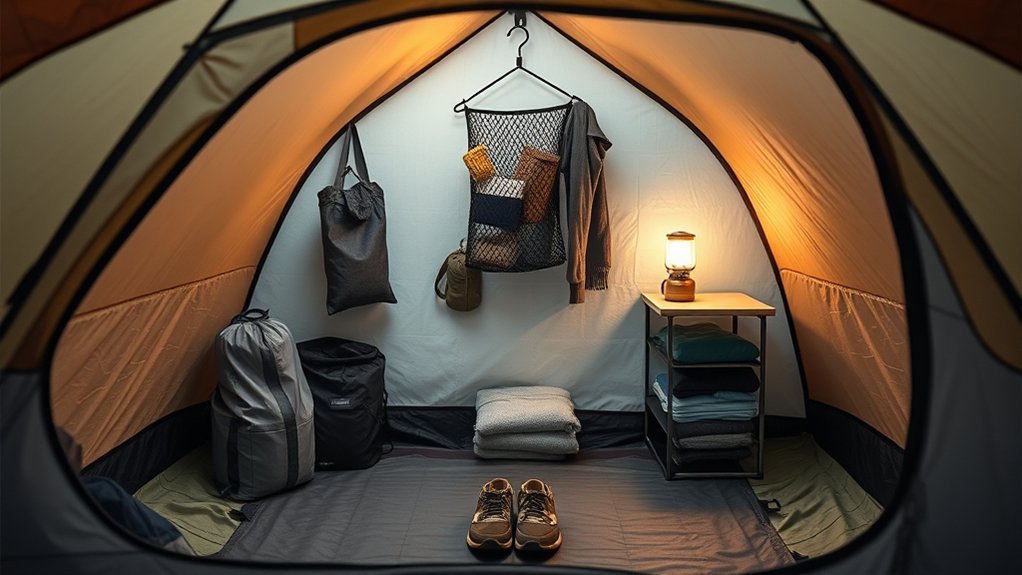
Simple items often work better than specialized organizers:
- Use a soft stuff sack as a bedside organizer.
- Place a small ground cloth beneath vestibule footwear.
- Use different-colored dry bags for clothing, electronics, and first aid.
- Store keys in a zippered pocket rather than loose on the floor.
- Put tomorrow’s clothing in one bundle for a faster start.
- Use a mesh bag for dry items that benefit from airflow.
- Use a waterproof sack for damp clothing until it can be dried.
- Keep a small repair kit in a consistent, labeled pouch.
Do not add an organizer simply because the tent has an empty surface. Every bag, pocket, and hanging accessory should make an item easier to find without adding excessive weight or blocking airflow.
Use a Simple Morning Pack-Up Routine
- Put away nighttime essentials before leaving the sleeping area.
- Change into the clothing bundle prepared the previous evening.
- Pack sleeping bags or quilts while they are dry.
- Deflate and roll sleeping pads.
- Check every pocket, corner, and gear loft.
- Remove interior bags and packs.
- Shake dirt from the tent only where doing so will not scatter trash.
- Allow the shelter to dry when conditions and time permit.
- Pack stakes, poles, rainfly, footprint, and tent body using the manufacturer’s method.
- Make a final sweep for trash, food scraps, stakes, and personal items.
Pro Tip: Count tent stakes before the trip and again before leaving camp. A written stake count on the tent bag makes missing hardware easier to notice.
Troubleshooting Common Organization Problems
The Tent Still Feels Cluttered
Move nonessential objects back into the pack, vestibule, or vehicle. Keep only sleep equipment, one clothing bag, and true nighttime essentials on the main floor.
Gear Keeps Getting Wet
Check for contact with tent walls, an open vestibule, poor rainfly tension, or water entering beneath the footprint. Use waterproof internal sacks and increase ventilation to control condensation.
Items Are Hard to Find at Night
Reduce the number of storage locations. Keep the headlamp in one pocket, warm clothing in one sack, and footwear in one vestibule position every night.
The Doorway Is Blocked
Move boots to one side and the pack to the opposite side. The zipper and exit path should remain clear enough for every camper to leave quickly.
The Gear Loft Sags
Remove heavy equipment. Gear lofts are best for lightweight objects. Consult the tent manual before adding any aftermarket organizer.
Frequently Asked Questions
How can I keep my tent organized in windy conditions?
Stake and guy out the tent according to its instructions before unpacking. Secure lightweight objects, keep gear away from the walls and guylines, and avoid hanging items from the exterior. Store loose bags inside a pack or vestibule so they cannot blow away.
What storage containers work best for camping gear?
Use soft stuff sacks or dry bags in small tents because they fit around sleeping equipment. Mesh bags work for clean, dry items that need airflow. Hard bins are useful for vehicle camping but are usually better outside the sleeping area because their weight and corners can wear the tent floor.
How do I prevent moisture buildup inside my tent?
Open available vents, tension the rainfly, keep wet gear in the vestibule or a waterproof sack, and avoid pressing bedding against tent walls. Choose a reasonably dry campsite and follow the manufacturer’s ventilation instructions. Condensation can be reduced, but it cannot always be eliminated.
Can I use a tarp for additional organization outside the tent?
Yes. A properly pitched tarp can create a covered area for packs and wet gear. Secure it independently where possible, direct runoff away from the tent, keep the tent exit clear, and follow campground rules. Do not load the tent with a tarp unless its manufacturer approves that setup.
What are some quick packing tips for tent gear after camping?
Pack dry sleeping equipment first, check every pocket, count the stakes, and inspect the floor for trash. Let the tent dry before long-term storage. If it must be packed wet, unpack and dry it as soon as possible to help prevent mildew and coating damage.
Should I keep food or toiletries in my tent?
Generally, no. Store food, trash, flavored drinks, toiletries, and other scented items using the method required by the campground or land manager. Depending on the location, that may be a food locker, locked hard-sided vehicle, approved bear-resistant container, or another designated system.
How do I organize a very small backpacking tent?
Keep most equipment packed. Use one pocket for nighttime essentials, one dry sack for clothing, and the vestibule for shoes and the backpack. Avoid bins, large organizers, and unnecessary loose items. Preserve a clear route from the sleeping pad to the door.
Conclusion
An organized tent does not need dozens of accessories. Start with four zones, keep only essential equipment on the sleeping-area floor, and use the vestibule for boots and bulky gear. Place warm layers, rainwear, a headlamp, and medication where they are easy to reach, while storing food, scented products, fuel, and cooking equipment according to safety rules.
Use the same locations each night, keep the doorway clear, and pack in a consistent order each morning. That simple routine saves time, protects sleeping equipment, and makes even a compact tent feel easier to use.
Sources
- National Park Service: Storing Food — food, garbage, backpack, and scented-item storage guidance.
- National Park Service: Carry Bear Spray—Know How to Use It — bear-spray handling, storage, and misuse warnings.
- U.S. Consumer Product Safety Commission: Portable Heaters and Camping Equipment — carbon-monoxide risks from camping equipment in tents and enclosed spaces.
- REI Expert Advice: How to Choose a Backpacking Tent — vestibules and sheltered gear storage.
- REI Expert Advice: How to Prevent Condensation in a Tent — ventilation, fly tension, and moisture-control guidance.
- National Park Service: Finding and Setting Up a Campsite — wind, trip hazards, tent placement, and campsite safety.

