
Last Updated on July 29, 2026 by Mason Reed
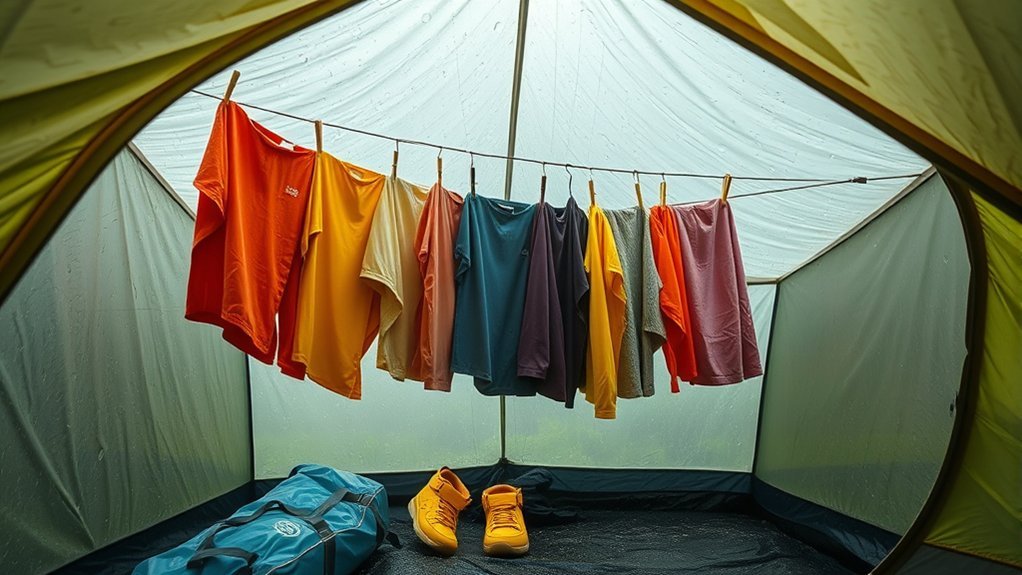
Keeping clothes dry inside a tent during wet weather starts with one rule: bring as little water into the sleeping area as possible. Remove surface water outside, separate wet gear from dry sleep clothing, and use airflow rather than direct heat. A tarp-covered drying area is usually safer and more effective than filling the tent with damp clothes.
Quick Answer
To keep clothes dry inside a tent, store clean sleep layers in a waterproof bag, press water from wet clothes outside, roll them in a dry towel, and hang them under a ventilated tarp or in the vestibule. Dry clothes inside the tent only as a last resort, with vents open and no flame or heater.
Key Takeaways
- Keep one complete sleep outfit sealed in a waterproof dry bag and never use it for hiking or camp chores.
- Press or gently wring out wet clothes, then use the towel-roll method before hanging them.
- Dry wet gear under a tarp, in a vestibule, or beneath another covered area before using the main tent.
- Open opposing vents and keep damp items away from tent walls, sleeping bags, and down insulation.
- Never hang clothes over a campfire or use a fuel-burning heater, stove, or lantern while sleeping in a tent.
At a Glance
| Time Required | About 5–10 minutes to set up; drying time depends on fabric, airflow, temperature, and humidity. |
| Difficulty | Easy |
| Tools Needed | Dry towel or microfiber towel, clothesline, clips, tarp and guy lines, waterproof dry bag, and a small drip towel or container. |
| Cost | $0 if you already carry the gear; otherwise, the cost varies by towel, line, clips, and tarp. |
Warning: Wet clothing can quickly chill you in cool, windy, or rainy conditions. Change into dry layers and seek shelter if you begin shivering, lose coordination, feel confused, or cannot warm up. The National Park Service advises replacing wet clothing with dry clothing during the early stages of hypothermia.
Disclosure: As an Amazon Associate I earn from qualifying purchases. Some links on this page are affiliate links, at no extra cost to you.
Create a Wet and Dry Zone First
Before you start drying anything, divide your campsite into a wet zone and a dry zone. The wet zone may be a vestibule, a tarp-covered area, or a protected spot near the tent entrance. The dry zone is the sleeping area, where your sleeping bag, pad, electronics, and dry clothing stay protected.
- Keep one complete set of sleep clothing in a waterproof dry bag.
- Leave rain jackets, wet shoes, and soaked outer layers in the wet zone.
- Use a small groundsheet, plastic tub, or waterproof bag to contain drips.
- Do not place wet clothes on a sleeping bag or insulated jacket.
This simple system prevents a single wet item from soaking the gear you need most at night.
Squeeze Out Excess Water
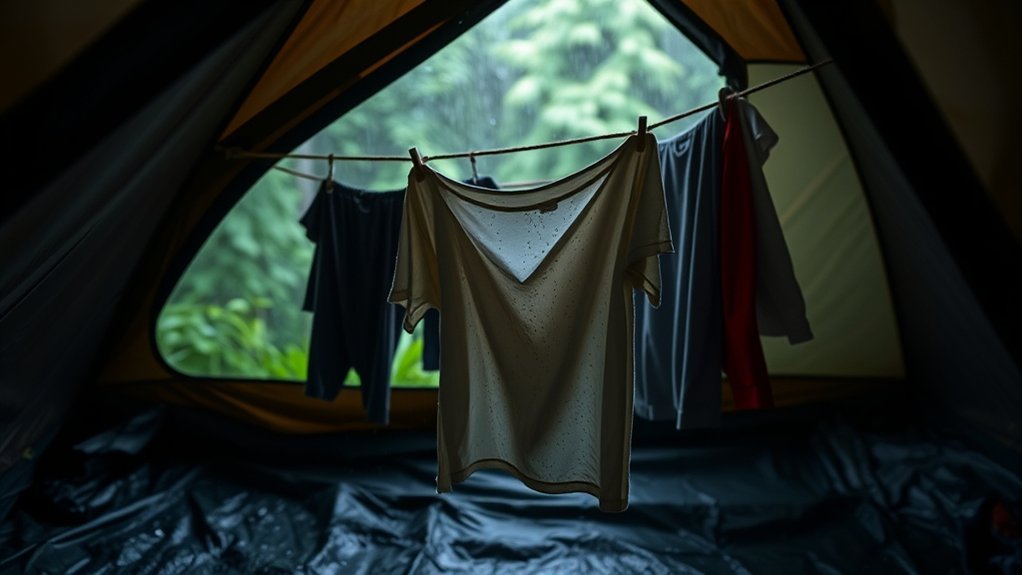
Remove as much water as possible before bringing damp clothes under cover. Start outside the tent and gently press the garment from top to bottom. For sturdy socks, synthetic shirts, and towels, a light wringing motion can help. Avoid aggressive twisting because it can stretch seams, damage waterproof membranes, distort wool, and clump down insulation.
- Shake off loose rain and mud.
- Press the item between your hands or against a clean surface.
- For sturdy garments, gently wring from one end to the other.
- Stop if the care label warns against wringing or twisting.
- Move immediately to the towel-wrap method.
Towel Wrap Technique
The towel wrap technique removes water mechanically, so it still helps when humid air makes evaporation slow. Use a clean, dry towel whenever possible. A microfiber camp towel packs small and dries quickly, while a regular bath towel may absorb more water but takes longer to dry.
Moisture Absorption Method
Lay the towel flat, place the damp garment on top, and roll the towel and garment together. Press firmly along the roll with your hands, knees, or body weight. The towel absorbs water that would otherwise enter the tent air. Unroll the bundle, shake out the garment, and repeat with a dry section of towel if needed.
High humidity still slows the final air-drying stage, so do not leave the garment tightly wrapped. Once you have pressed out the water, hang the item with as much exposed surface area as possible.
Effective Wrapping Technique
- Use a towel that is clean and as dry as possible.
- Roll rather than knotting or tightly twisting delicate clothing.
- Press the thickest areas, such as waistbands, cuffs, pockets, and sock toes.
- Swap to a dry towel or dry section when the first section becomes saturated.
- Hang both the clothing and the towel afterward so neither stays wet in a pile.
Pro Tip: Pack two small camp towels. Use one for your body and reserve the other for wet gear. A dry towel works far better than one that has already absorbed rain or condensation.
Hanging Clothes on a Clothesline
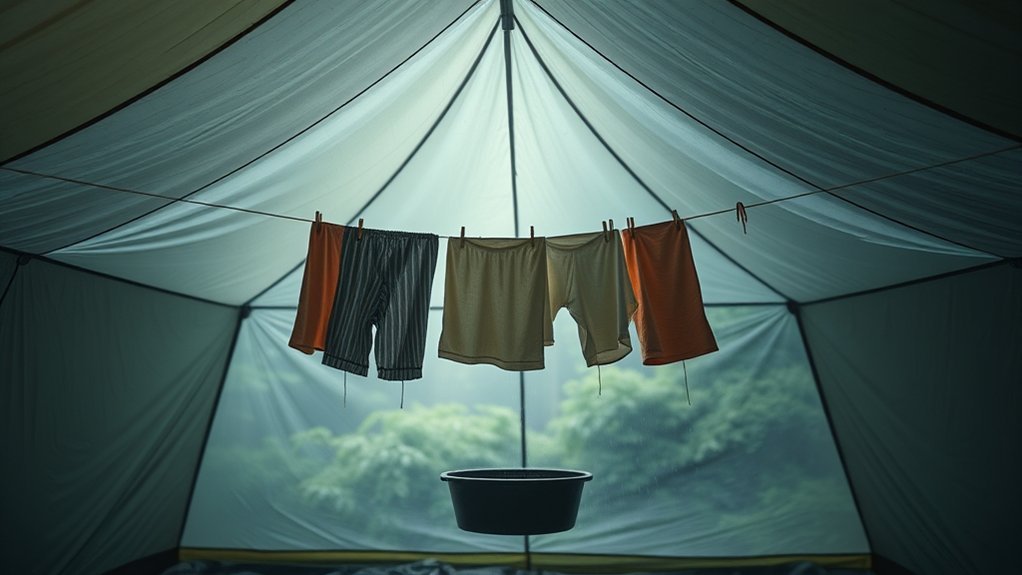
A clothesline improves airflow around each garment. Paracord, a spare guy line, or a purpose-made camp line can work, but the line must be attached to strong external anchors such as trees, tarp poles, or dedicated shelter points. Follow local rules before tying anything to trees.
- Use clips or clothespins so clothes do not blow away.
- Leave several inches between items instead of stacking them.
- Open zippers, pockets, cuffs, and waistbands.
- Turn thick items inside out after the first side has partly dried.
- Hang heavy clothing on an outside line, not from tent poles or unsupported fabric.
Inside the tent, use only manufacturer-provided gear loops and only for lightweight items. A saturated jacket or pair of pants can place too much load on tent fabric and poles.
Creating a Sheltered Hang Station
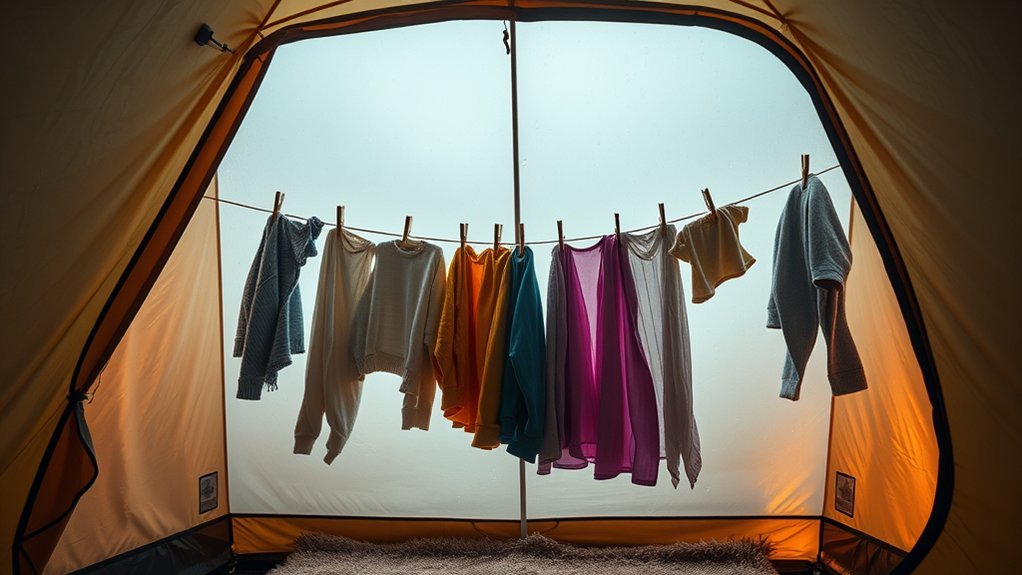
A sheltered hang station is usually the best place to dry wet clothes during steady rain. Set it up outside the main sleeping compartment, using a tarp, awning, vestibule, or covered picnic shelter. The goal is to block falling rain while keeping the sides open enough for air to move through.
Tarp Setup Techniques
- Choose a spot on firm ground where runoff will not flow through the drying area.
- Pitch the tarp with one side higher than the other so water runs off.
- Tension the ridgeline and corners to prevent pooling and flapping.
- Run a separate clothesline beneath the tarp instead of hanging clothes from the tarp fabric.
- Keep the line high enough that clothing does not touch the ground.
- Leave the tarp sides open unless wind-driven rain requires more coverage.
Position the station near the tent entrance for easy access, but keep enough clearance that dripping clothes cannot touch the tent wall or doorway.
Guy Line Utilization
Guy lines keep the tarp stable and create anchor points for a separate drying line. Use reflective cord or mark low lines so campers can see them after dark. Stake lines away from the main walking path and retension them after heavy rain or strong wind.
Do not hang heavy garments directly from a tent guy line if doing so changes the tent’s shape or loosens the rainfly. A distorted fly can touch the inner tent, reduce ventilation, and allow condensation to transfer inward.
Ventilation Importance
Air movement matters more than heat. Keep opposite sides of the hang station open and spread garments apart. If wind is blowing rain into the shelter, lower the windward edge while leaving the leeward side open. This balances rain protection with cross-ventilation.
The fastest way to keep clothes dry inside a tent is to keep most wet clothing outside the sleeping area in the first place.
Hang Drying Inside the Tent
Dry clothes inside the tent only when there is no safer covered option. Wet items release moisture into the air, which can increase condensation on the rainfly and walls. REI’s condensation guidance identifies wet gear as a major source of extra moisture inside a tent and recommends strong ventilation.
- Open all built-in roof and rainfly vents that can remain open in the rain.
- Use opposing vents or mesh panels for cross-ventilation.
- Hang only one or two lightweight items at a time.
- Use manufacturer-provided gear loops; do not tie a loaded line to poles or fabric.
- Keep garments away from tent walls so they do not wick condensation.
- Place a towel, shallow container, or waterproof mat underneath to catch drips.
- Remove damp items from the sleeping area before you go to sleep whenever possible.
Never place wet clothing next to or inside a sleeping bag to “dry with body heat.” The added moisture can reduce comfort and may compromise the performance of down or other insulation.
Utilizing Campfire Warmth Safely
Campfire warmth should not be your main drying method. Sparks, radiant heat, and open flames can ignite fabric or melt synthetic clothing. The National Park Service advises keeping tents, gear, and other flammable objects at least 15 feet away and upwind of a firepit.
If campfires are allowed, keep the drying station outside that 15-foot zone, monitor clothing continuously, and watch for shifting wind or sparks. Never hang clothes over a fire, on a fire ring, or from a branch above the flames. Do not move the tent closer to the fire to warm the interior.
Check current campground rules and fire restrictions before lighting any flame. Extinguish the fire completely before sleeping or leaving the site.
Warning: Never use a stove, charcoal grill, fuel-burning lantern, or fuel-burning heater to dry clothing inside a tent. Carbon monoxide is colorless and odorless, and the U.S. Consumer Product Safety Commission warns that people die from using camping heaters, lanterns, and stoves in enclosed tents, campers, and vehicles.
Managing Moisture With Absorbents
Absorbent materials help remove liquid water, but they do not replace ventilation. Once a towel, cloth, or absorbent pad becomes saturated, it must be wrung out or dried outside the sleeping area.
Use Microfiber Towels
Microfiber towels are useful because they are lightweight, compact, absorbent, and generally faster to dry than a thick cotton towel. Quality varies, so choose one large enough to roll around a shirt or pair of socks.
- Press wet clothes inside the towel before hanging them.
- Wipe condensation from tent walls and the floor.
- Place a towel beneath hanging items to catch drips.
- Hang the towel immediately after use so it does not become another moisture source.
Employ Absorbent Materials
A dry cloth at the entrance can remove water from shoes, rain pants, and packs before they enter the tent. Small silica-gel packets may help protect electronics or other items inside a sealed container, but a few packets cannot meaningfully dry the air in an open, ventilated tent. Keep desiccants sealed away from children and pets and follow the package directions.
Keep Wet Items Outside
Store wet shoes and outer layers in a sheltered vestibule or under the tarp, not in the main sleeping area. A waterproof bag can contain dripping clothing during travel, but sealed wet garments should be opened and aired as soon as conditions allow. Leaving them sealed for long periods encourages odor and mildew.
- Hang damp clothing under cover whenever possible.
- Keep wet gear off bare ground with a mat, tub, or bag.
- Separate wet clothing from dry sleep layers and food.
- Do not block the tent door or create a tripping hazard.
Ventilation Strategies for Reducing Humidity
Ventilation lets moisture-laden air escape. Keep rainfly vents open, tension the fly so it stays separated from the inner tent, and use opposing openings for cross-ventilation. Mesh doors can stay zipped for insect and security control while solid fabric panels remain open when weather permits.
Site choice also matters. Avoid depressions where cool, damp air and rainwater collect. Pitch on firm, well-drained ground, orient the tent so a safe opening faces a gentle breeze, and keep the rainfly taut. Wipe visible condensation with a towel before it drips onto clothes or bedding.
Note: A waterproof tent can still develop condensation. Drips on the inside of a rainfly do not automatically mean the fabric is leaking; check ventilation, wet gear, fly tension, and contact between the fly and inner tent first.
Choosing Quick-Dry Fabrics
Fabric choice can make wet-weather camping much easier. Polyester and nylon usually dry faster than cotton and are common in moisture-wicking outdoor clothing. Merino wool may dry more slowly than lightweight synthetics, but it can retain useful insulation when damp and often manages odor well.
- Polyester and nylon: Fast-drying choices for shirts, pants, underwear, and socks.
- Merino wool: A good option for base layers and socks when warmth and odor control matter.
- Fleece: A quick-drying synthetic mid layer that can remain useful when damp.
- Cotton and denim: Slow to dry and poor choices for cold, wet conditions.
- Waterproof shells: Keep rain out, but still need ventilation to move sweat and condensation.
The National Park Service recommends wool or synthetic clothing rather than cotton for wet and cold conditions, and REI identifies polyester, nylon, and merino wool as useful moisture-managing outdoor fabrics.
Drying Socks, Shoes, and Waterproof Gear
Thick socks, shoes, gloves, and waterproof shells need a slightly different approach.
Socks and Gloves
Press socks and gloves in a towel, open the cuffs, and hang them so air can reach the inside. Turn them inside out once the outer surface is partly dry. Keep at least one dry pair of socks sealed for sleeping.
Shoes and Boots
Remove the insoles and loosen the laces. Wipe out standing water, then loosely stuff the shoes with a dry cloth or paper that can be replaced when damp. Place footwear under cover with the opening facing moving air. Avoid direct flame, a hot stove, or intense heat, which can damage adhesives, leather, foam, and waterproof membranes.
Waterproof Shells and Insulation
Shake water from rain jackets and pants, hang them fully open, and follow the care label. Do not aggressively wring waterproof-breathable shells. Treat down jackets and sleeping bags with extra care: blot moisture, keep them away from drips, and dry them thoroughly at the first safe opportunity.
Packing and Storing Wet Clothing Safely
When you must pack before clothing is dry, contain the moisture without forgetting about it. Use the following methods:
| Technique | Best Use |
|---|---|
| Sealed Bags | Contain wet clothing during travel, then open and air it as soon as possible. |
| Ventilated Areas | Keep damp items in a vestibule, under a rainfly, or beneath a tarp away from bedding. |
| Microfiber Towels | Press water from garments before packing and use as a drip catcher. |
| Dedicated Dry Bag | Protect sleep clothes, spare socks, and other items that must remain dry. |
Label or color-code wet and dry bags so they cannot be confused in the dark. Never put wet clothing in the same bag as a sleeping bag, down jacket, electronics, or first-aid supplies.
What to Do When Clothes Will Not Dry Overnight
In cold rain or high humidity, clothing may remain damp until conditions improve. Focus on staying warm and protecting your dry reserve rather than trying to force everything dry inside the tent.
- Change into your sealed sleep layers.
- Towel-press the wettest items and move them to the sheltered wet zone.
- Open vents and remove any dripping gear from the sleeping area.
- Rotate socks and base layers so one set can air while another is worn.
- At the first dry break, spread gear in sun and moving air.
- Use a campground laundry room or heated public facility when available.
If you cannot get warm, or if shivering, confusion, stumbling, or poor hand control develops, treat the situation as a cold-weather emergency. Replace wet clothing with dry layers, get out of wind and rain, and seek help.
Troubleshooting Common Drying Problems
| Problem | Likely Cause | Fix |
|---|---|---|
| Clothes stay wet for hours | Items are bunched together or humidity is high. | Towel-press again, spread items apart, open cuffs and pockets, and increase airflow. |
| Condensation gets worse | Too much wet gear is inside or vents are closed. | Move wet items outside the sleeping area, open opposing vents, and wipe the fly or walls. |
| Water drips onto bedding | Clothes touch the wall or have not been pressed enough. | Move the line inward, use a drip towel, and remove more water before rehanging. |
| Clothes smell musty | Wet garments stayed sealed or piled together. | Air them immediately, rinse or wash when possible, and dry completely before long-term storage. |
| The line sags or tent shape changes | The line is overloaded or attached to the wrong point. | Move heavy items to an external line and use only approved internal gear loops. |
Frequently Asked Questions
Can I use a hairdryer to dry clothes inside my tent?
Do not use a hairdryer inside a wet tent. Water, damp ground, cords, and high-wattage electrical equipment create shock and fire risks; OSHA recommends GFCI protection and equipment approved for wet or damp locations. Use a campground restroom, laundry room, or other dry building with a proper outlet and ground-fault protection instead. Keep the dryer away from wet fabric and follow its instructions.
What types of fabrics dry the fastest in wet conditions?
Lightweight polyester and nylon usually dry fastest. Merino wool can remain comfortable and insulating when damp, but it may dry more slowly than thin synthetics. Cotton and denim absorb more water and take much longer to dry, especially in cool or humid weather.
How can I prevent my clothes from smelling musty in the tent?
Do not leave damp clothing sealed or piled together. Press out water, hang each item with space around it, ventilate the tent or tarp shelter, and wash clothing when possible. Dry garments completely before storing them for the trip home.
Is it safe to use a portable heater inside the tent?
The safest choice is not to use a portable heater as a clothes dryer inside a tent. Never use a fuel-burning heater, stove, lantern, or charcoal device while sleeping in a tent. Even electric heaters can ignite nearby fabric or bedding. Use properly rated sleeping gear and dry layers instead, and follow both the tent and heater manufacturers’ instructions.
How do I maintain airflow without compromising tent security?
Use built-in roof vents, rainfly vents, and mesh doors. Keep the mesh zipped while opening the solid fabric panels when weather permits. Tension the rainfly and use opposing vents for cross-flow rather than leaving the main door unsecured.
Can I dry clothes in the tent vestibule?
Yes, a vestibule is often better than the sleeping compartment because it keeps drips and wet gear away from bedding. Maintain a clear exit, keep clothing away from any stove or flame, and open the vestibule vent or door enough to allow airflow without letting rain blow in.
How long can wet clothes stay in a sealed bag?
Use a sealed bag only for temporary transport or drip control. Open it at the first practical opportunity, because warm, wet clothing can develop strong odors and mildew when left sealed. Wash and fully dry the items as soon as you return to suitable facilities.
Conclusion
Keeping clothes dry inside a tent is less about adding heat and more about controlling where water goes. Press out moisture, use the towel-roll method, create a tarp-covered wet zone, and ventilate the shelter. Protect one dry sleep outfit at all times, keep heavy wet gear out of the sleeping area, and never trade fire or carbon-monoxide safety for faster drying.
Sources
- National Park Service: Campfires — fire restrictions, supervision, and the 15-foot clearance for tents, gear, and flammable objects.
- U.S. Consumer Product Safety Commission: Portable Heaters and Camping Equipment — carbon-monoxide risks from heaters, lanterns, and stoves in tents and other enclosed spaces.
- REI Co-op: How to Prevent Condensation in a Tent — moisture sources, wet gear, tent pitch, and ventilation practices.
- National Park Service: Hypothermia — wet-weather risk, early warning signs, and changing into dry clothing.
- REI Co-op: Hiking Clothes and Fabric Choices — drying and moisture-management differences among polyester, nylon, merino wool, and cotton.
- Occupational Safety and Health Administration: Using Portable Generators Safely — GFCI use and electrical-equipment precautions in wet or damp locations.

