

Last Updated on August 23, 2026 by Mason Reed
Rain does not have to ruin a tent camping trip. With waterproof gear, smart campsite selection, proper tent setup, and safe cooking habits, you can stay warm and comfortable even during wet weather. The key is preparing before the rain arrives and managing moisture throughout your trip.
Quick Answer
To tent camp successfully in the rain, use waterproof layers, choose higher well-drained ground, protect your tent with a properly adjusted rainfly, keep sleeping gear dry, and cook safely outside. Good preparation turns rainy weather into a comfortable outdoor experience.
Key Takeaways
- Choose elevated, well-drained campsites away from runoff areas.
- Use waterproof storage bags and quick-drying clothing layers.
- Set up your rainfly correctly to improve drainage.
- Avoid cooking inside enclosed tent spaces because of fire and carbon monoxide risks.
At a Glance
| Time Required | Setup depends on campsite and weather conditions. |
| Difficulty | Beginner to moderate with proper preparation. |
| Tools Needed | Rainfly, tarp, dry bags, waterproof clothing, stove, and stakes. |
| Cost | Varies depending on existing camping equipment. |
Disclosure: As an Amazon Associate I earn from qualifying purchases. Some links on this page are affiliate links, at no extra cost to you.
Gear and Prep
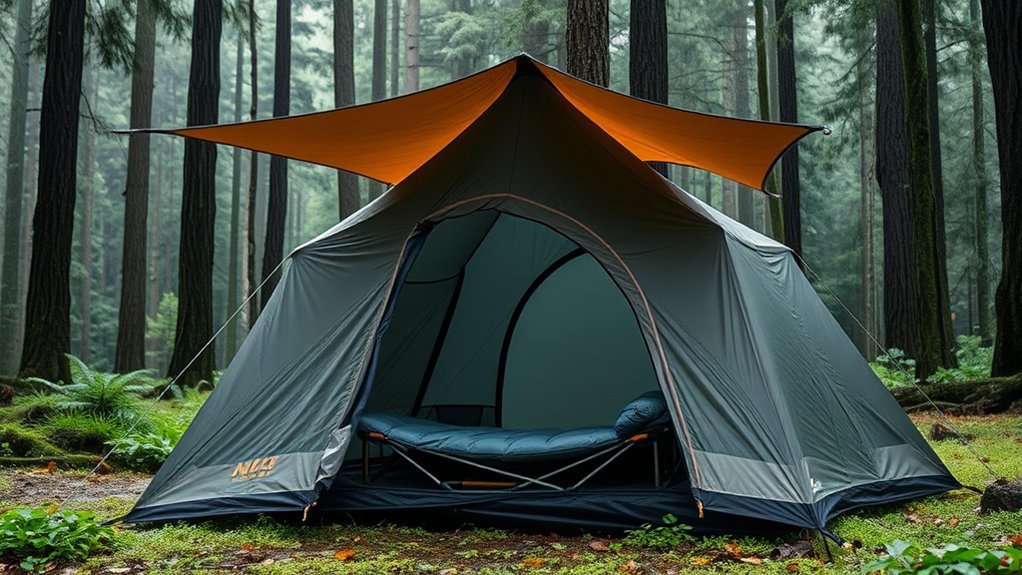
The right gear makes rainy camping much easier. Pack quick-drying clothing layers, extra socks, waterproof footwear, and synthetic insulation that continues working when damp. A quality waterproof shell jacket and brimmed rain hat can also make wet conditions more comfortable.
Protect important items by storing clothing, electronics, and sleeping gear in waterproof bags or dry sacks. Keeping wet and dry equipment separated helps prevent your entire pack from becoming damp.
Pro Tip: Pack one complete dry outfit that stays sealed until bedtime. Having guaranteed dry clothes can make a rainy trip much more comfortable.
Campsite Selection
A good campsite is one of the biggest factors in staying comfortable during rain. Choose higher ground with natural drainage and avoid valleys, depressions, or areas where water collects.
Look for signs of runoff, such as channels in the soil or muddy paths created by previous rainfall. Avoid camping beneath damaged trees or branches that could fall during storms.
When possible, follow Leave No Trace guidance and camp away from lakes, rivers, and streams to reduce environmental impact and avoid rising water risks.
Tent Setup
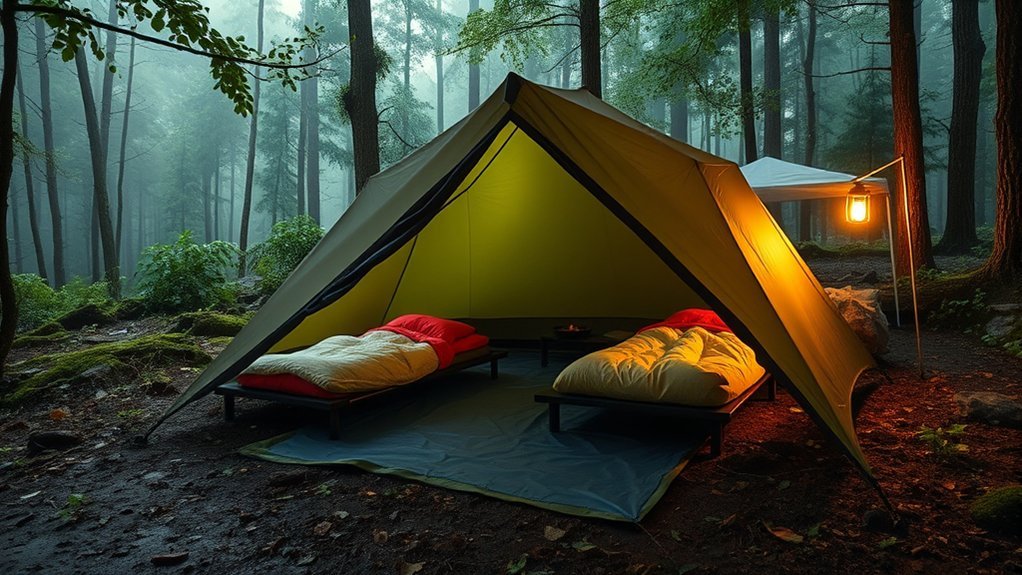
Start by placing a waterproof ground tarp under your tent, making sure the edges do not extend beyond the tent floor where water can collect underneath.
Adjust the rainfly so rain runs away from the tent walls. Tighten guylines and secure stakes firmly because wind and wet soil can weaken tent stability.
Warning: Do not use fuel-burning stoves inside a closed tent. Carbon monoxide buildup and fire hazards can occur even in poor-weather conditions.
Mealtime Strategies
Rainy camping meals are easier when you choose simple foods. Dehydrated meals, ready-to-eat foods, and quick-cooking options reduce cleanup and shorten time spent exposed to bad weather.
Set up a tarp outside your tent as a cooking area. A portable stove with a windscreen can help maintain steady heat, but always cook in an open, well-ventilated area.
Enjoying the Outdoors in Rainy Weather
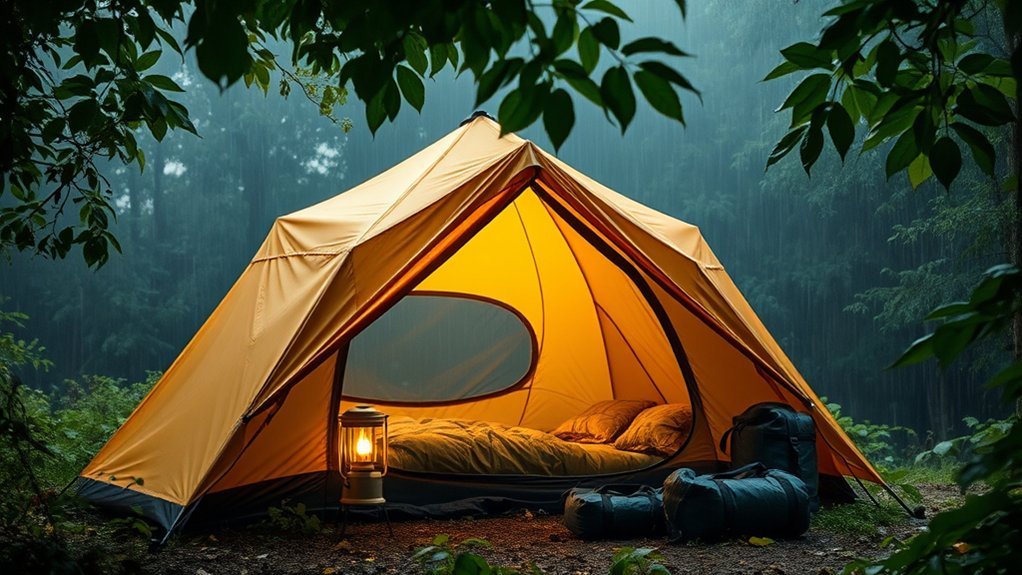
Rain can create a different kind of outdoor experience. Waterproof clothing allows you to explore trails, photograph changing landscapes, or relax under a tarp while listening to the weather.
Simple activities such as nature walks, photography, reading, games, and camp conversations can make rainy days enjoyable.
Frequently Asked Questions
How do I keep my clothes dry while camping in rain?
Store extra clothes in waterproof bags and separate wet clothing from dry layers. Quick-drying fabrics are usually easier to manage in rainy conditions.
What footwear is best for wet camping?
Waterproof boots combined with moisture-wicking socks help keep feet comfortable during muddy or rainy conditions.
How can I dry wet gear inside a tent?
Improve ventilation, hang damp items carefully, and avoid creating excessive moisture inside the tent. Keep wet gear away from sleeping bags whenever possible.
Conclusion
Tent camping in the rain becomes much easier when you prepare properly. The right clothing, campsite choice, waterproof setup, and safe cooking habits help you stay comfortable even when the weather changes. Instead of avoiding rainy adventures, use smart preparation to enjoy the unique atmosphere that wet-weather camping provides.
Sources
- Leave No Trace — campsite selection and outdoor ethics guidance.
- National Park Service Risk Management — outdoor safety information.
