
Last Updated on July 29, 2026 by Mason Reed
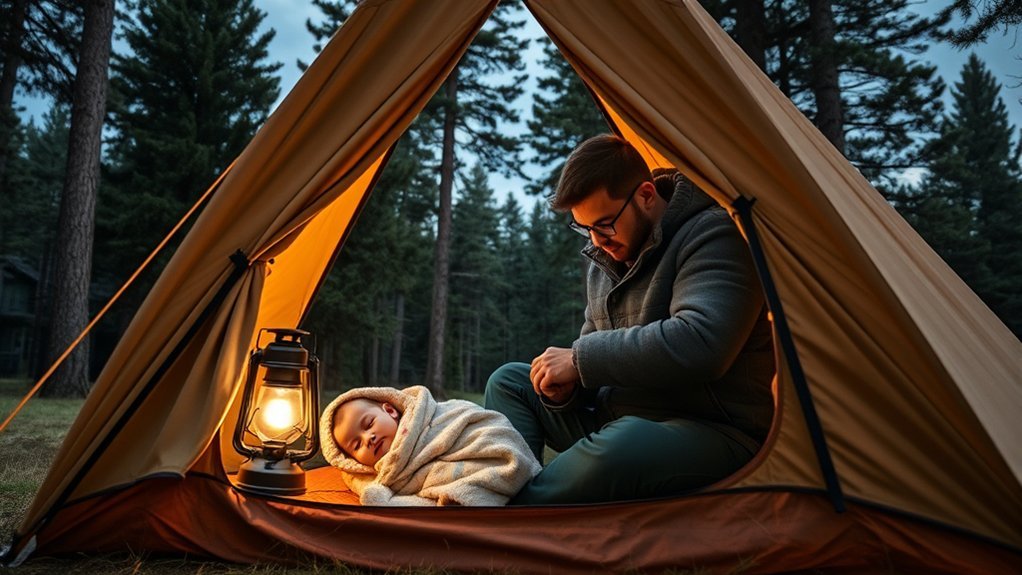
Camping with a baby in a tent can be enjoyable, but it requires more planning than an ordinary family camping trip. The most important priorities are a separate, approved infant sleep space, mild weather, dry clothing, safe feeding supplies, and a quick way to reach warm shelter or medical care. This guide provides general safety information; families with a premature, medically fragile, or very young infant should discuss the trip with their pediatrician first.
Quick Answer
A baby can sleep in a tent only when you can provide the same safe-sleep conditions used at home: a separate compliant crib, bassinet, or play yard; a firm, flat surface; a fitted sheet; no loose bedding; and comfortable, dry sleepwear. Choose mild weather and leave if conditions become cold, wet, smoky, windy, or unsafe.
Key Takeaways
- There is no universal safe nighttime temperature for every infant. Consider the full forecast, wind, rain, humidity, your baby’s health, and how quickly you can reach shelter.
- Use a separate CPSC-compliant crib, bassinet, portable crib, or play yard exactly as the manufacturer directs.
- Place your baby on their back with only a fitted sheet in the sleep space. Keep adult sleeping bags, blankets, pillows, hats, toys, and crib covers out.
- Dress your baby in light, removable layers and check the chest or upper back for sweating, heat, or unusual coolness.
- Never operate a fuel-burning stove, heater, lantern, or charcoal grill inside a tent.
- Pack enough safe water, feeding supplies, diapers, clothing, and emergency gear to handle delays or an early departure.
At a Glance
| Time Required | Several days of planning plus 30–60 minutes to inspect and arrange the campsite |
| Difficulty | Moderate; a nearby drive-in campground is best for a first trip |
| Tools Needed | Weather-ready tent, approved infant sleep space, fitted sheet, wearable sleep clothing, thermometer, feeding kit, diapers, first-aid kit, lighting, and emergency communication |
| Cost | Varies; avoid buying unapproved sleep accessories or devices that claim to make ordinary camping gear safe for infants |
Disclosure: As an Amazon Associate I earn from qualifying purchases. Some links on this page are affiliate links, at no extra cost to you.
Is It Safe to Camp With a Baby in a Tent?
Tent camping may be reasonable for a healthy infant when the trip is short, the weather is mild, the campsite is easy to leave, and you can recreate a safe home sleep environment. A remote backpacking trip is much harder to manage because feeding supplies, clean water, temperature control, communication, and emergency transportation are limited.
For a first trip, choose a drive-in campground close to home. A site near your vehicle, potable water, toilets, and ranger or campground staff gives you more options if your baby becomes wet, cold, overheated, ill, or unable to settle.
Ask your pediatrician before camping if your baby was born prematurely, has a heart or lung condition, has trouble maintaining body temperature, has feeding or growth concerns, has a weakened immune system, or is recovering from an illness.
Note: A backyard practice night can reveal problems with the crib fit, feeding routine, nighttime lighting, noise, and clothing before you travel away from home.
What Temperature Is Too Cold to Camp With a Baby?
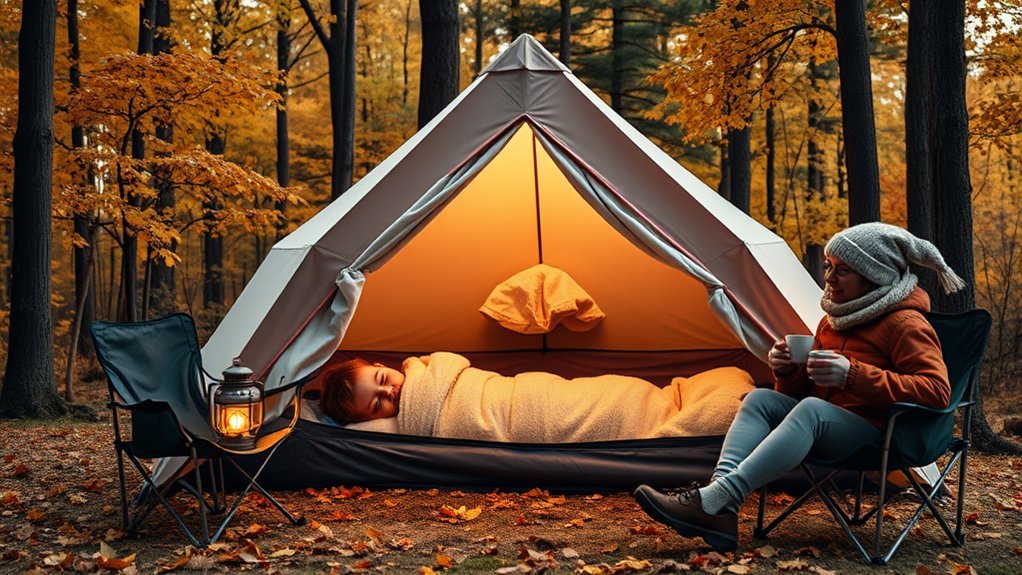
There is no single outdoor temperature that is safe for every baby. The original idea that temperatures above 20°F to 30°F are generally acceptable is too broad. A damp, windy 45°F night may be more difficult to manage than a dry, calm night at the same temperature, and an infant’s age, health, clothing, and sleep setup also affect risk.
For a baby’s first tent trip, choose a mild, dry forecast that does not require extreme clothing or a heater. Check the hourly forecast rather than relying only on the daytime high. Pay attention to:
- Expected overnight low and wind chill
- Rain, thunderstorms, snow, or heavy dew
- Wind strong enough to damage or flatten the tent
- Smoke, poor air quality, or wildfire conditions
- Extreme heat and direct afternoon sun
- The distance to a heated building or vehicle
- Whether roads could become muddy, flooded, icy, or blocked
Cancel or leave early when you cannot keep your baby dry, cannot maintain a safe separate sleep space, need a fuel-burning heater to make the tent tolerable, or cannot reach reliable shelter quickly.
The safest weather decision is not based on one temperature. It is based on whether you can keep the baby dry, comfortably dressed, safely sleeping, and close to dependable shelter all night.
Signs a Baby Is Too Cold
Cold hands and feet alone do not always mean a baby’s core is dangerously cold. Check the chest or upper back under the clothing. Move the baby into warm shelter when the torso feels unusually cool, clothing is damp, or the baby is not acting normally.
The CDC lists bright red, cold skin and very low energy as warning signs of hypothermia in babies. A body temperature below 95°F is a medical emergency.
Warning: If your baby has very low energy, cold or discolored skin, trouble breathing, poor responsiveness, or a temperature below 95°F, call 911 or seek emergency medical care. Move into warm shelter, remove wet clothing, and warm the baby’s chest and torso gently while help is coming. Do not use direct high heat, hot water, or a hot heating pad.
Signs a Baby Is Too Warm
More clothing is not always safer. Overheating can occur in a closed tent even when the evening began cool. Signs include sweating, damp hair, a hot chest, flushed skin, heat rash, and rapid breathing. Remove a layer, improve ventilation, and move to a cooler setting when needed.
Essential Gear for Keeping a Baby Comfortable at Night
Warmth should come from dry, properly fitted clothing and an approved sleep setup—not from loose blankets, adult camping bags, hot-water bottles, electric pads, or fuel-burning heaters.
- Approved sleep space: A crib, bassinet, portable crib, or play yard intended for infant sleep and used within its height, weight, and developmental limits.
- Original mattress or pad: Use only the sleep surface supplied or specifically approved by the manufacturer.
- Fitted sheet: Use the correct fitted sheet for that product, if permitted by its instructions.
- Wearable sleep clothing: Use fitted pajamas or a correctly sized, non-weighted wearable blanket or sleep sack.
- Dry backup layers: Pack at least one complete nighttime clothing change in a waterproof bag.
- Weather thermometer: Use it as one planning tool, not as proof that the baby is comfortable.
- Battery lighting: Keep a headlamp or lantern available for feeding and diaper changes without bringing flames into the tent.
A Therm-a-Rest Z Lite foam pad can be useful for an adult camper, but it should not be placed inside a portable crib or used as an extra crib mattress. Do not put an adult 20° down sleeping bag around or beneath an infant. Adult bags are too loose and bulky to serve as infant sleepwear.
Pro Tip: Pack the baby’s sleepwear and fitted crib sheet in a separate waterproof sack. You will still have a dry sleep setup if a bottle leaks or rain enters the tent while unloading.
Tips for Dressing Your Baby for Camping
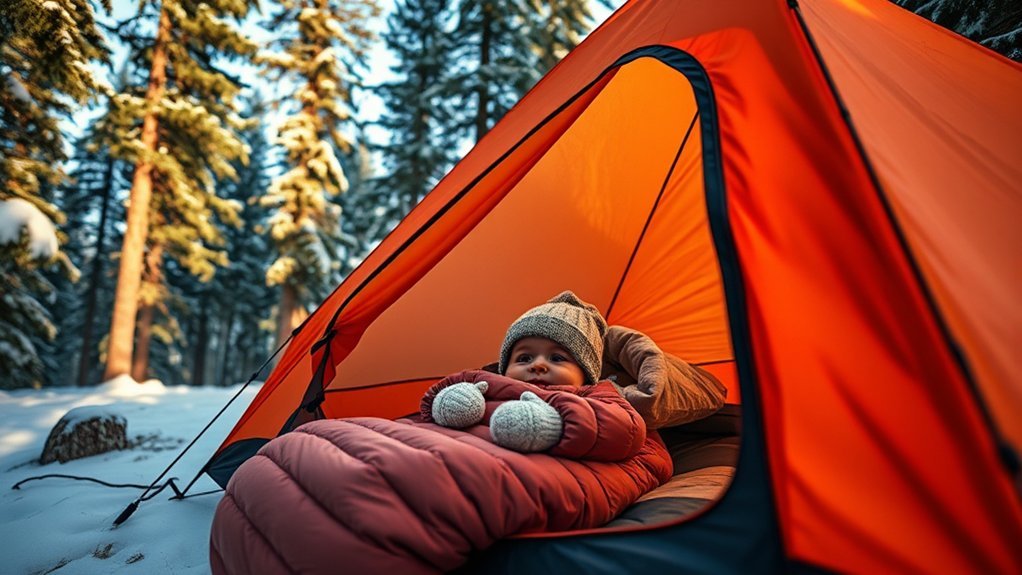
Use several light layers that can be removed as conditions change. Wool or synthetic base layers can help manage moisture, but no fabric removes the need to check the baby regularly. Cotton that becomes wet can stay cold, so change damp clothing promptly.
Layering for Warmth
A practical starting point is one more light layer than a comfortably dressed adult would wear in the same environment. This is a starting point, not a guarantee. Check the baby’s chest or upper back and adjust before the baby becomes sweaty or chilled.
- Base layer: A fitted merino-wool or moisture-managing bodysuit or sleeper.
- Middle layer: A light fleece or wool layer when the weather requires it.
- Outer layer while awake: A weather-resistant layer for supervised time outdoors.
- Sleep layer: Fitted pajamas and, when needed, a correctly sized non-weighted wearable blanket.
Do not put loose blankets over the baby in the crib. Do not use weighted sleep sacks, weighted swaddles, or clothing that can ride over the face.
Essential Clothing Items
- Long-sleeved base layers
- Footed pajamas or sleepers
- Light fleece or wool middle layer
- Warm socks or booties for awake time
- Mittens for supervised outdoor time
- Sun hat with a brim for daytime
- Warm outdoor hat that covers the ears
- Rain cover or weather shell appropriate for supervised use
- Two or more complete dry clothing changes
A warm hat is useful outdoors while the baby is awake and directly supervised. Remove it before placing the baby in the crib. Never pull a hat, blanket, neck gaiter, or sleeping-bag hood over the baby’s face.
Swaddling While Camping
Swaddling does not make an unsafe sleep surface safe. A swaddled baby must always be placed on their back, and swaddling must stop as soon as the baby shows signs of trying to roll. Do not use weighted swaddles, and watch carefully for overheating.
Safe Sleeping Arrangements for Babies in Tents
The safest camping sleep setup follows the same principles used at home. The baby sleeps on their back in a separate, firm, flat space that is intended for infant sleep. The sleep area remains bare except for the product’s fitted sheet.
Use the Product’s Original Sleeping Surface
A compliant portable crib or play yard is an acceptable option when it fits inside the tent and is used exactly as directed. A travel crib such as the Guava Lotus may be suitable if the model is intended for sleep, is within its product limits, is not recalled, and is assembled according to its current manual. Brand name alone does not establish that every setup is safe.
Place the unit on the flattest, driest part of the tent floor. Keep it away from tent walls where condensation may collect and away from cords, gear, battery packs, lanterns, pockets, and adult bedding.
Do not add a Therm-a-Rest pad, folded blanket, pillow, mattress topper, wedge, or second mattress inside the crib. Do not alter the base to make it feel softer or warmer. Added materials can create gaps, change the sleep angle, or interfere with the product’s stability.
Room-Sharing Instead of Bed-Sharing
Room-sharing means keeping the baby’s separate sleep space inside the same tent where the caregiver sleeps. It makes feeding and comforting easier without placing the baby among adult sleeping bags, pillows, soft pads, or exhausted adults.
The American Academy of Pediatrics recommends room-sharing rather than bed-sharing. After feeding or soothing the baby, return them to their own sleep space before you go back to sleep.
Warning: Do not sleep with an infant on an adult camping mattress, inflatable pad, hammock, cot, sleeping bag, pillow, or pile of blankets. These surfaces can create suffocation, entrapment, overlay, and fall hazards.
Safe Crib and Play-Yard Checklist
Before the trip, confirm that the sleep product:
- Is intended for infant sleep
- Meets current federal requirements
- Has not been recalled
- Is within the child’s weight, height, and developmental limits
- Includes all required locking parts and supports
- Uses only the supplied or approved mattress or pad
- Has no torn mesh, broken hardware, missing fasteners, or gaps
- Fits fully inside the tent without touching a heater, lantern, cord, or tent wall
The U.S. Consumer Product Safety Commission advises using a crib, bassinet, play yard, or bedside sleeper intended for sleep, placing the baby on their back, and keeping the space bare.
How to Set Up a Baby’s Sleep Space in a Tent
- Choose level, dry ground. Avoid low spots where rainwater can pool and areas beneath dead branches.
- Pitch and secure the tent first. Stake the tent and rainfly correctly, then confirm that water cannot run beneath the floor.
- Ventilate the tent. Use the tent’s vents to reduce condensation while maintaining weather protection.
- Assemble the sleep product. Follow every locking and setup step in the manufacturer’s instructions.
- Use only the approved sleep surface. Add the correct fitted sheet only when the product permits one.
- Clear the surrounding area. Remove adult bedding, cords, toys, bags, bottles, lights, and loose fabric from the baby’s reach.
- Dress the baby for the actual conditions. Use fitted sleepwear and a correctly sized wearable blanket when needed.
- Place the baby on their back. Keep the head and face uncovered.
- Check conditions during normal waking periods. Look for wet clothing, sweating, unusual coolness, or changes in behavior.
Enhancing Sleep Quality While Camping With a Baby
A familiar routine often helps more than adding extra sleep products. Follow the usual order of feeding, diapering, pajamas, a quiet song or story, and placement in the crib.
A portable noise machine may soften unfamiliar campground sounds, but keep it outside the crib and away from the baby’s head. Use the lowest practical volume and do not attach it to the crib. The AAP warns that prolonged excessive noise can harm hearing.
Do not drape a blanket, tarp, blackout fabric, or aftermarket cover over the crib. It can reduce airflow, trap heat, fall into the sleep space, or create an entanglement hazard. Use the tent’s own rainfly and vents to control light and airflow. A cover should be used only when it was supplied or expressly approved for that exact sleep product and does not conflict with safe-sleep guidance.
Expect more wake-ups than at home. Keep a headlamp, diapers, wipes, feeding items, and dry clothing in fixed locations so you do not search through the tent in the dark.
Pro Tip: Keep nighttime tasks simple. Prepare the changing area, water, bottles, burp cloths, and clean clothes before sunset while you can still see the campsite clearly.
Feeding and Hygiene Supplies for Camping With Infants
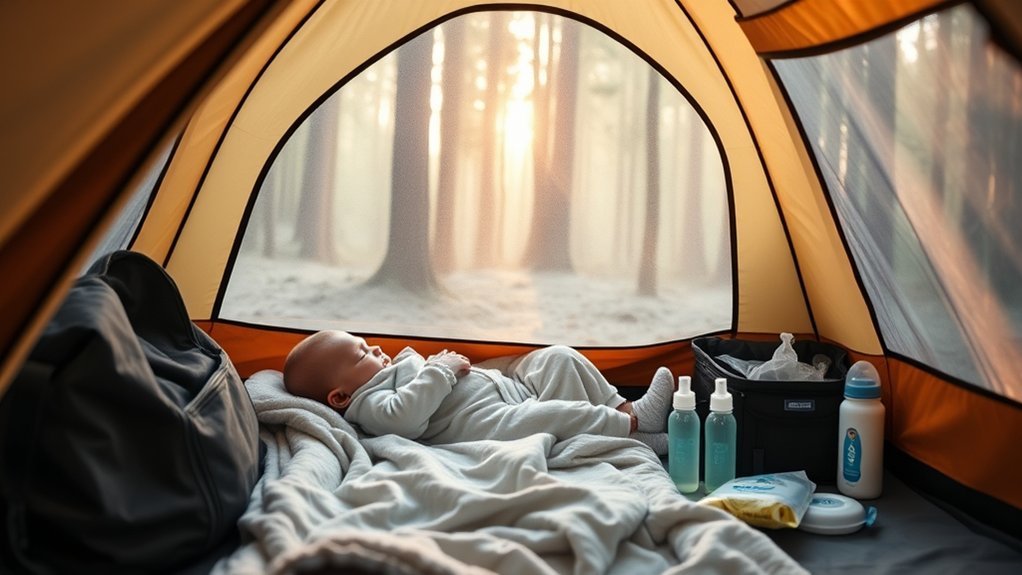
Bring more feeding and hygiene supplies than you expect to use. Weather delays, spills, road closures, or an extra night can quickly exhaust a tightly packed supply.
Breastfeeding and Pumped Milk
- Pack drinking water and food for the breastfeeding parent.
- Bring clean pump parts, storage containers, and a method for washing hands.
- Use an insulated cooler with enough ice packs to maintain safe storage temperatures.
- Keep milk separate from raw food, leaking containers, and melted cooler water.
- Follow the storage instructions given by the baby’s health-care provider and the milk-storage guidance you use at home.
Formula Feeding at a Campsite
Ready-to-feed formula is often the simplest option when the campsite lacks reliable safe water, refrigeration, or a clean bottle-washing area. It does not require mixing, but opened containers still require proper handling according to the label.
When using powdered formula, follow the CDC’s current formula-preparation guidance:
- Wash your hands and use clean, sanitized feeding equipment.
- Use water from a confirmed safe source.
- Measure the water first, then add the exact amount of powder listed on the formula container.
- Do not add extra water or extra powder.
- Use prepared formula within two hours of making it and within one hour after feeding begins.
- Discard formula left in the bottle after a feeding.
- If a prepared bottle is refrigerated before feeding begins, use it within 24 hours.
Powdered formula is not sterile. Babies younger than two months, babies born prematurely, and babies with weakened immune systems may require extra preparation precautions. Discuss the safest travel method with the baby’s clinician before the trip.
Warning: Boiling can kill many germs, but it cannot remove fuel, pesticides, heavy metals, or other chemical contamination. Do not use lake, river, or campground water for formula unless an appropriate authority confirms that it is safe and you follow the required preparation method.
Bottle and Pump-Part Cleaning
Clean and sanitize bottles and pump parts before departure. At camp, use a dedicated clean basin rather than placing feeding equipment directly in a shared campground sink. Wash with safe water and dish soap, rinse with safe water, and let parts air-dry completely in a protected area.
If you cannot reliably clean feeding equipment, pack enough sterile or clean supplies for the full trip or use single-use feeding items recommended by your health-care provider.
Diapering and Waste
Set up a portable changing area on a clean waterproof mat. Keep diapers, wipes, barrier cream, clean clothing, and sealable disposal bags within reach. Never leave a baby unattended on a picnic table, cot, vehicle seat, or other raised surface.
Seal dirty diapers and follow campground waste rules. Do not burn diapers or wipes. Wash or sanitize your hands after every change and before preparing food, milk, or formula.
Clothing and Safety Items to Pack for Your Baby
| Item | Purpose | Safety Note |
|---|---|---|
| Merino-wool or synthetic base layers | Manage moisture and provide removable warmth | Change wet clothing promptly |
| Fitted sleepers and sleep sack | Nighttime warmth without loose blankets | Use the correct size; no weighted products |
| Bamboo or lightweight sleepers | Comfort during mild or warm conditions | Check for overheating inside the tent |
| Wide-brim sun hat | Shade for the face, ears, and neck | Use while awake and supervised; remove for sleep |
| Mosquito netting | Protect a stroller or carrier from insects | Keep it taut, intact, ventilated, and outside the baby’s reach |
| Family first-aid kit | Minor injuries and routine care | Include only age-appropriate medicines approved by the baby’s clinician |
| Digital thermometer | Check the baby when illness or abnormal temperature is suspected | Know how to use it before leaving home |
| Emergency contact information | Fast access to help | Save the campground address, nearest emergency department, and ranger number offline |
Sun, Heat, and Insect Protection
Sun Protection
Keep babies younger than six months out of direct sunlight as much as possible. Use natural shade, the stroller canopy, lightweight protective clothing, and a wide-brim hat during supervised daytime activity.
The FDA recommends asking a doctor before applying sunscreen to a baby younger than six months. For older babies, use a broad-spectrum product as directed on the label and reapply according to its instructions.
Never cover a stroller or carrier with a blanket to create shade. A blanket can trap heat and reduce airflow. Use a ventilated canopy or sunshade designed for that product.
Insect Protection
Dress the baby in lightweight clothing that covers the arms and legs and use fitted mosquito netting around a stroller or carrier. Inspect the netting for gaps and keep it away from the baby’s face.
Follow the CDC’s guidance for preventing mosquito bites in babies and children. For young infants, clothing and mosquito netting are the first line of protection. For older infants, use an EPA-registered repellent only as permitted by the label. Do not apply repellent to a child’s hands, eyes, mouth, cuts, or irritated skin. Do not use products containing oil of lemon eucalyptus or PMD on children younger than three years.
Do not rely on ultrasonic devices, repellent wristbands, scented candles, or unregistered “natural” products when mosquito- or tick-borne disease is a concern.
Campsite, Fire, Carbon Monoxide, and Wildlife Safety
Choose a Low-Risk Campsite
- Select level ground away from low drainage areas.
- Look overhead for dead or damaged branches.
- Keep the tent away from cliffs, moving water, steep drop-offs, and vehicle traffic.
- Check campground rules, quiet hours, water availability, wildlife notices, and fire restrictions.
- Keep the car positioned for a quick departure when permitted.
- Download maps and emergency information before entering an area without service.
Carbon Monoxide and Heaters
Warning: Never use a propane heater, camping stove, charcoal grill, hibachi, fuel lantern, or generator inside a tent. Do not place one near the tent entrance where exhaust can blow inside. Opening doors or vents does not prevent dangerous carbon-monoxide buildup.
The CPSC warns that portable heaters, lanterns, and stoves can cause fatal carbon-monoxide poisoning in tents, campers, and vehicles. If the night is too cold without a fuel-burning heater inside the tent, move to a heated building or end the trip.
Campfires and Stoves
- Keep the baby well outside the cooking and fire area.
- Have one adult responsible for the baby while another handles fire or hot food.
- Do not hold a baby while cooking, pouring boiling water, or tending a fire.
- Turn pot handles inward and keep fuel beyond a child’s reach.
- Extinguish the fire completely before sleeping or leaving the site.
- Keep matches, lighters, axes, knives, and fire starters locked away.
Food and Wildlife
Store food, formula, milk, trash, diapers, sunscreen, toothpaste, wipes, and other scented items according to the campground’s wildlife rules. In bear country, use required bear-resistant storage rather than keeping scented supplies in the tent.
A Simple Nighttime Camping Routine
- Check the updated hourly forecast and air quality.
- Confirm that the tent, rainfly, stakes, and sleep product remain secure and dry.
- Prepare feeding and diaper supplies before darkness.
- Feed the baby and complete the normal bedtime routine.
- Change into completely dry sleep clothing.
- Check the baby’s chest or upper back and adjust one light layer at a time.
- Place the baby on their back in the separate bare sleep space.
- Keep a headlamp, phone, vehicle keys, dry clothing, and emergency contacts accessible.
- During normal feeding and waking periods, check for wetness, sweating, unusual coolness, poor feeding, or abnormal behavior.
- Leave for warm shelter if conditions deteriorate or the safe-sleep setup cannot be maintained.
When to End the Camping Trip
Ending a trip early is a sound safety decision, not a failed camping experience. Pack up or move to reliable shelter when:
- The baby or sleep clothing becomes wet and cannot be dried.
- The tent leaks, floods, collapses, or cannot remain ventilated.
- The baby is unusually sleepy, difficult to wake, feeding poorly, breathing abnormally, or acting ill.
- The baby has bright red cold skin, very low energy, or suspected hypothermia.
- The baby remains sweaty or overheated after layers are removed.
- Smoke, severe weather, high wind, wildfire, flooding, or falling branches threaten the site.
- You would need a fuel-burning heater inside the tent.
- Clean water, formula, diapers, or necessary medication runs low.
- A caregiver is too exhausted to maintain safe feeding or sleep practices.
Frequently Asked Questions
Can I use a regular sleeping bag for my baby?
No. Adult sleeping bags are loose, bulky, and not designed as infant sleepwear. Use fitted pajamas and, when extra warmth is needed, a correctly sized non-weighted infant wearable blanket or sleep sack. Keep the baby’s head and face uncovered.
What should I do if my baby gets too cold?
Move into warm, dry shelter and remove wet clothing. Add dry layers and warm the baby’s torso gently. Bright red cold skin and very low energy can be signs of hypothermia. Call 911 or seek emergency care for abnormal responsiveness, breathing trouble, serious illness, or a temperature below 95°F.
How can I keep my baby entertained while camping?
Use short supervised nature walks, songs, board books, a clean play mat, and simple sensory activities such as looking at leaves or listening to birds. Keep small objects, plants, stones, firewood, insects, and campground debris out of reach.
Are certain campgrounds better for families with infants?
A drive-in campground close to home is usually the easiest first choice. Look for potable water, toilets, nearby staff, reliable roads, shade, cell service or emergency communication, and enough level tent space for a separate infant sleep product.
How do I manage diaper changes while camping?
Use a waterproof changing mat on the tent floor or another stable ground-level surface. Keep diapers, wipes, clean clothes, barrier cream, and sealable waste bags together. Never leave the baby on a picnic table, cot, or vehicle seat, and wash or sanitize your hands after every change.
Can my baby sleep in a pack-and-play inside the tent?
A compliant play yard intended for infant sleep can be used when it fits safely inside the tent and is assembled according to the manufacturer’s instructions. Use only its approved mattress or pad and fitted sheet. Do not add camping pads, blankets, toppers, pillows, or wedges.
Should my baby wear a hat while sleeping in the tent?
No. A hat can contribute to overheating or shift toward the face. Use hats for supervised outdoor activity, then remove them before sleep. Keep the baby’s head and face uncovered in the crib.
Is it safe to use a tent heater near a baby?
Do not use a fuel-burning heater inside a tent or near an opening where exhaust may enter. Carbon monoxide is odorless and can become fatal before sleeping occupants recognize symptoms. Move to a heated building or end the trip when the tent is too cold without one.
Conclusion
Camping with a baby is less about handling extreme conditions and more about choosing conditions that are easy to manage. Start with a short trip, mild weather, a campsite close to dependable shelter, and the same separate safe-sleep setup you use at home.
Keep the baby dry, use removable layers, protect the face and airway, follow safe feeding practices, and be willing to leave when the weather or the baby’s condition changes. A calm decision to end the trip early protects your family and makes future camping experiences more likely to be positive.
Sources
- American Academy of Pediatrics: How to Keep Your Sleeping Baby Safe — separate sleep spaces, back sleeping, clothing layers, overheating, and bed-sharing guidance
- CDC: Preventing Hypothermia — infant warning signs and emergency response
- CDC: Infant Formula Preparation and Storage — safe water, mixing, storage limits, and precautions for high-risk infants
- FDA: Sunscreen and Infant Sun Protection — shade, clothing, and guidance for babies younger than six months
- CDC: Preventing Mosquito Bites — clothing, netting, repellent application, and age-related precautions
- U.S. Consumer Product Safety Commission: Portable Heaters and Camping Equipment — carbon-monoxide hazards in tents and campers

