
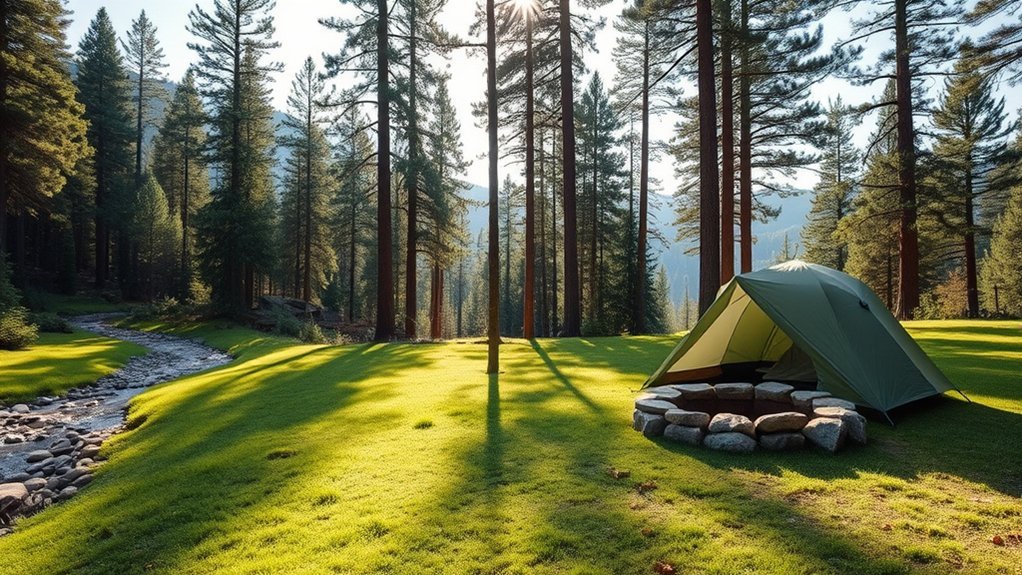
Last Updated on July 29, 2026 by Mason Reed
Choosing a campsite is about more than finding an attractive view. The safest tent site is permitted, large enough for your shelter, well drained, protected from avoidable hazards, and located where your group will not damage vegetation or interfere with wildlife. A careful inspection before unpacking can prevent a wet, windy, noisy, or unsafe night.
Quick Answer
Choose a legal, previously established campsite on level or gently sloped, durable ground with good drainage. Look up for damaged trees, check nearby slopes and waterways, and avoid dry washes, flood-prone banks, animal activity, and exposed ridges. Confirm the weather, fire rules, food-storage requirements, and emergency shelter before pitching your tent.
Key Takeaways
- Use a designated tent pad or an existing durable campsite instead of clearing a new area.
- Choose ground that is comfortable, slightly raised, and not shaped like a bowl where rain can collect.
- Inspect the full area around and above the tent for falling branches, unstable trees, rockfall, insects, and wildlife signs.
- In backcountry settings, camping about 200 feet from lakes and streams is a useful Leave No Trace rule of thumb, but posted local rules always take priority.
- Know where you will shelter from lightning and how you will leave the area if water, wind, fire, or falling-tree conditions worsen.
At a Glance
| Time Required | 10–20 minutes for an on-site inspection, plus pre-trip research |
| Difficulty | Easy in a developed campground; more judgment is required in dispersed or backcountry areas |
| Tools Needed | Campground map or permit, local rules, weather forecast, flashlight, and your tent dimensions |
| Cost | No extra site-selection cost; reservation, permit, or campground fees vary |
Disclosure: As an Amazon Associate I earn from qualifying purchases. Some links on this page are affiliate links, at no extra cost to you.
How to Choose a Tent Campsite
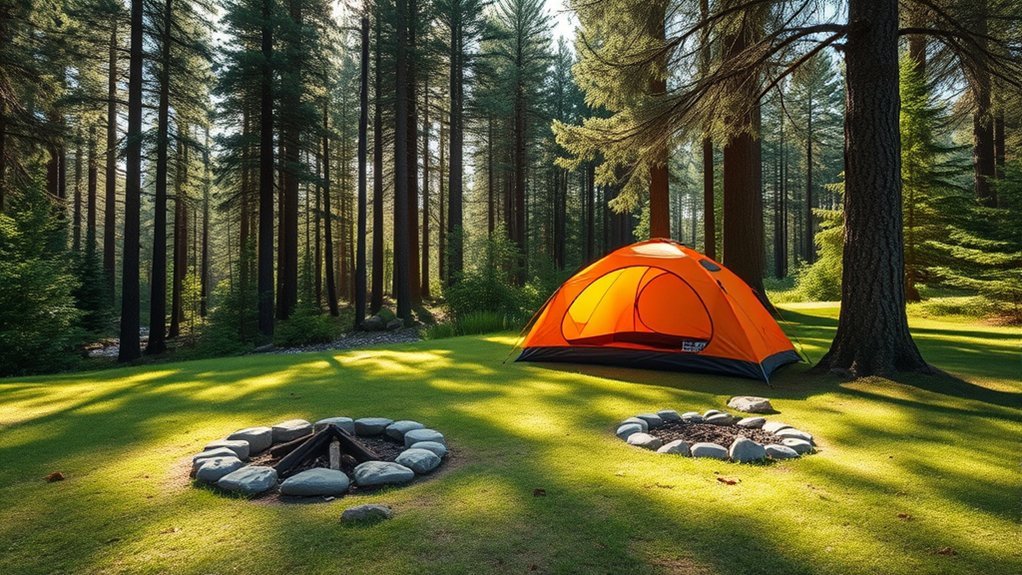
Begin with the rules for the land you are visiting. A developed campground may assign you a numbered site with a prepared tent pad, while a primitive or backcountry area may require a permit and restrict camping to specific zones. Dispersed camping may be permitted only along certain roads or outside protected areas. Check the land manager’s current map, closures, group limits, fire rules, pet policy, and food-storage requirements before leaving home.
Plan to arrive with enough daylight to inspect the entire site. The U.S. Forest Service camping-safety guidance recommends arriving early, checking the weather, and examining the area for sharp objects, branches, insects, poisonous plants, and flood-prone terrain.
- Confirm that camping is allowed: Use the assigned pad, permit zone, or existing legal campsite.
- Check the ground: Look for a level or gently sloped sleeping area that drains away from the tent.
- Look up and around: Inspect trees, branches, cliffs, hillsides, animal activity, and nearby hazards.
- Check water and weather exposure: Avoid flood routes, dry washes, banks, exposed ridges, and areas below the high-tide line.
- Plan the campsite layout: Make sure the tent, cooking area, fire ring, food storage, and walking routes can be used safely.
- Identify an emergency exit: Know how to reach a substantial building, hard-topped vehicle, ranger station, or safer ground.
A good campsite is found through careful inspection—not created by cutting plants, digging trenches, moving rocks, or reshaping the land.
A tent footprint can help protect the tent floor from abrasion and moisture, but it is not mandatory for every tent. Follow the tent manufacturer’s instructions, and make sure no part of the footprint extends beyond the rainfly or tent floor, where it could catch and channel rainwater underneath you.
Different Types of Campgrounds
The right type of campground depends on your experience, desired amenities, equipment, and tolerance for noise or isolation. Do not assume that a campground provides drinking water, toilets, fire rings, showers, or mobile service. Verify each feature before booking.
Public Campgrounds
Public campgrounds are operated by agencies such as the National Park Service, Forest Service, Bureau of Land Management, and state or local park systems. They may offer anything from a marked patch of ground and a vault toilet to electric hookups, showers, picnic tables, and staffed visitor facilities.
Public sites often provide direct access to hiking trails, lakes, rivers, or scenic areas. Popular locations may require advance reservations, timed check-in, entrance fees, parking permits, or bear-resistant food storage. Read the individual campground listing rather than relying on general assumptions about amenities.
Private Campgrounds
Private campgrounds may offer additional services such as pools, laundry facilities, stores, cabins, organized activities, Wi-Fi, equipment rentals, or full hookups. These features can be useful for families and first-time campers, but site size, quiet hours, pet rules, vehicle limits, and tent placement still vary.
| Feature | Possible Examples | Best Check Before Booking |
|---|---|---|
| Comfort facilities | Showers, laundry, cabins, Wi-Fi | Hours, fees, availability, and distance from the site |
| Activities | Swimming, boating, fishing, games, or group events | Season, age limits, reservations, and equipment rules |
| Reservations | Site-specific booking or first-come selection | Tent-pad size, cancellation terms, and check-in time |
Before reserving any campground, compare photographs and maps for shade, slope, neighboring RV sites, generators, roads, playgrounds, bathrooms, dumpsters, water access, and nighttime foot traffic. A convenient site for one group may be too bright, busy, or noisy for another.
What to Look for in a Tent Site
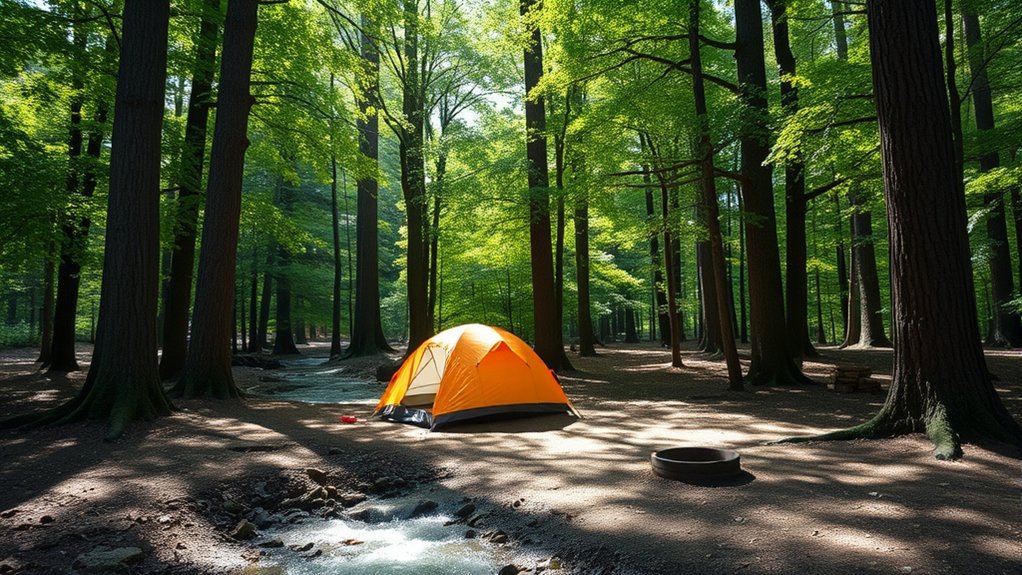
Inspect more than the exact patch where the tent will sit. A branch, rolling rock, drainage channel, ant nest, or busy footpath just outside the footprint can still affect your safety and comfort.
Ground Surface and Tent Fit
Use a designated tent pad whenever one is provided. In backcountry areas, favor an existing campsite or another surface allowed by the land manager. Leave No Trace guidance recommends concentrating use on established sites in popular areas and using durable surfaces such as rock, gravel, sand, dry grass, or compacted soil where appropriate.
Measure the usable area against the tent’s full dimensions, including the rainfly, vestibules, stakes, and guylines. Remove loose sticks, pinecones, or litter by hand, but do not cut vegetation, dig trenches, pull plants, or move large natural features to force the tent to fit.
A small, consistent slope can be manageable if you sleep with your head slightly uphill. Avoid side slopes that make everyone slide into one tent wall. Also avoid roots, pointed rocks, depressions, saturated soil, fresh mud, and places where runoff from a road or hillside enters the pad.
Pro Tip: Before unpacking, place the empty tent or footprint on the ground and lie down where your torso will rest. This quickly reveals hidden roots, uncomfortable slopes, and low spots that are easy to miss while standing.
Overhead and Surrounding Hazards
Look for dead, leaning, burned, cracked, uprooted, or storm-damaged trees. Scan every tree whose trunk or branches could reach the tent if it fell. Broken limbs suspended in the canopy are often called “widow makers,” but healthy-looking trees and branches can also fail without warning.
The National Park Service warns that trees and branches may fall whether or not they appear dead and even when there is no wind. Move to another site if you cannot confidently stay outside the fall zone.
In mountainous terrain, inspect the slope above you for loose rocks, unstable soil, avalanche debris, broken trees, or channels that funnel snow, mud, and stones. Avoid camping directly below cliffs, steep gullies, or rock faces. In recently burned areas, watch for weakened roots, unstable trees, stump holes, and debris-flow channels.
Check for beehives, wasp nests, ant mounds, animal dens, game trails, droppings, tracks, freshly dug soil, or strong odors. Do not block a wildlife travel route or place the tent beside a feeding or nesting area.
Warning: A tent does not protect you from lightning, and sheltering under a tall or isolated tree increases danger. Before a storm, move to a substantial building or a hard-topped vehicle with the windows closed.
Distance From Water and Flood Risk
Water is useful for drinking, cooking, and recreation, but the shoreline is rarely the best place to sleep. In many backcountry settings, camping at least 200 feet—about 70 to 80 adult steps—from lakes and streams is a sound Leave No Trace rule of thumb. This protects fragile riparian areas and preserves access routes for wildlife.
Note: The 200-foot guideline is not universal law and does not override a designated campground layout. Use an assigned tent pad when required and follow the exact distance, sanitation, and access rules posted by the land manager.
Distance alone does not make a site flood-safe. Avoid riverbanks, gravel bars, dry washes, narrow drainages, low islands, bowl-shaped ground, and areas marked by flattened vegetation, silt, debris lines, eroded soil, or water stains. A storm upstream can raise a river even when the weather at your campsite is dry.
On a beach, camp only where it is legal and above the highest recent tide and storm-debris line. Check the full tide cycle rather than judging the shoreline at one moment.
| Factor | Recommendation | Reason |
|---|---|---|
| Backcountry water distance | Use 200 feet as a rule of thumb unless local rules specify another distance | Protects riparian areas and wildlife access |
| Flood exposure | Choose raised, well-drained ground outside banks and drainages | Water can rise or flow beyond the immediate shoreline |
| Insects | Avoid stagnant water and dense brush where practical | These areas may have heavier mosquito or tick activity |
| Recreation access | Use established paths and launch points | Reduces trampling and keeps shorelines open |
Wind, Sun, Shade, and Noise
Terrain, boulders, and healthy lower vegetation can reduce wind exposure, but do not trade wind protection for a falling-tree or lightning hazard. Face the tent according to its manufacturer’s wind instructions, stake every required point, and tension the rainfly without distorting the tent poles.
Consider how conditions will change during your stay. Morning sun can help dry condensation and damp gear. Afternoon shade can keep a basecamp cooler, but dense tree cover may drip after rain and conceal damaged branches. Low basins can collect cold air at night, while exposed ridges receive stronger wind and weather.
In a campground, notice the position of roads, generators, bathrooms, water taps, dumpsters, playgrounds, lights, and walking routes. A site near facilities may suit children or campers with limited mobility, while a site farther away may offer more quiet and privacy. Make sure guylines will not cross a shared path.
Terrain Considerations
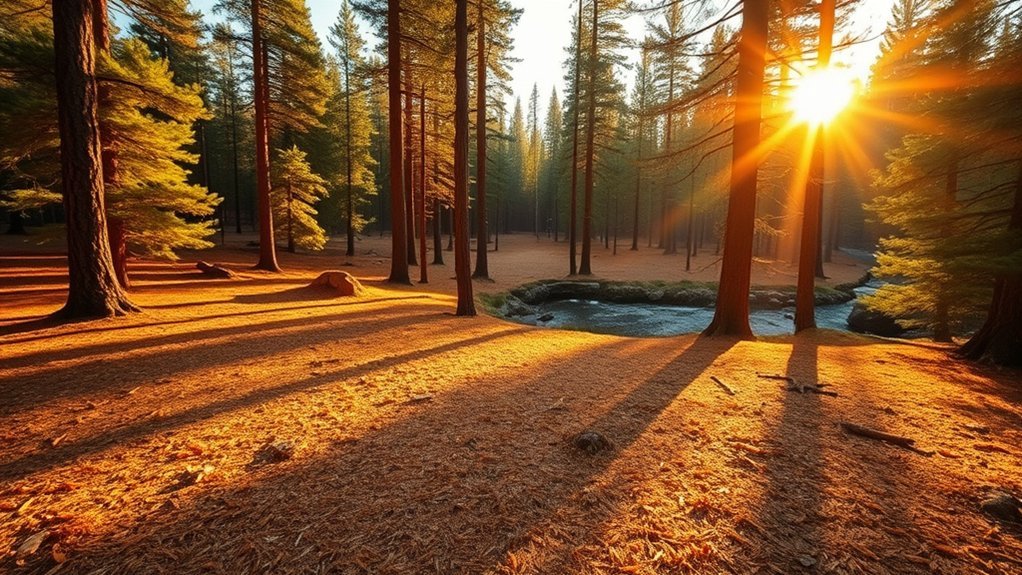
The ideal tent area is not perfectly flat at any cost. It is stable, comfortable, and positioned so rainwater continues past the shelter instead of stopping beneath it. Look at the contour of the surrounding land, not just the four corners of the tent.
Avoid placing the tent at the bottom of a slope, below a road culvert, across a shallow channel, or inside a depression. Check whether leaves, twigs, sand, or silt form a line pointing toward the site; this can reveal the path of earlier runoff. Damp soil and green vegetation in an otherwise dry area may also indicate recurring water.
Different environments require different checks:
- Desert: Never camp in a dry wash, drainage, narrow canyon bottom, or area with flash-flood debris.
- Mountain: Avoid exposed ridges, avalanche paths, rockfall zones, and slopes beneath unstable cliffs.
- Forest: Stay outside the fall zone of damaged trees and be especially cautious in burned, drought-stressed, or storm-damaged areas.
- Coast: Confirm tides, storm surge potential, wind exposure, and legal setback rules.
- Snow: Check avalanche conditions, hidden water, cornices, tree wells, and the stability of the snow platform.
Do not dig drainage trenches around a tent. Trenches damage the campsite and often fail in heavy rain. Choose a naturally better-drained site or move to a prepared pad.
Check Weather and Emergency Access
Review the destination-specific forecast before departure and again before setting up. Conditions at a mountain, coast, canyon, or forest campground can differ sharply from conditions at home. Watch for thunderstorms, high-wind advisories, heavy rain, extreme heat, freezing temperatures, wildfire smoke, red-flag warnings, and rapidly changing river levels.
The National Weather Service advises campers to use a substantial building or hard-topped vehicle during lightning. A tent and an open-sided picnic shelter are not safe. Stay in safe shelter until at least 30 minutes after the last thunder.
Before unloading, identify the route to your vehicle, ranger station, storm shelter, or higher ground. Avoid parking where rising water, falling branches, mud, or another vehicle could block your exit. In remote areas, leave your itinerary with a responsible person and carry navigation, lighting, first-aid, communication, and emergency supplies suitable for the location.
Safety and Environmental Concerns
A clean, compact campsite protects both visitors and wildlife. Use existing paths, keep activity on durable surfaces, and avoid expanding the site into surrounding plants. Pack out trash, food scraps, foil, cord, and other small items that animals may investigate.
Food-storage rules vary. The National Park Service advises visitors to check the exact requirements for their destination. Some places require a food locker or approved bear-resistant container, while others permit a specific hanging method. Food should never be stored inside a tent.
Treat coolers, garbage, dishes, cooking equipment, toothpaste, deodorant, sunscreen, insect repellent, pet food, and other scented items as attractants. Secure them whenever they are not in active use. Do not burn food scraps or garbage in a campfire.
Use only existing fire rings where fires are permitted, and check current restrictions before lighting one. Keep flames, sparks, stoves, lanterns, and hot cookware away from tents, dry grass, shrubs, vehicles, and overhanging branches. Never operate a stove, charcoal grill, heater, candle, or open flame inside a tent.
Warning: Move to another site when you find an active flood channel, unstable tree, hanging branch, fresh rockfall, animal den, illegal fire setup, blocked exit, or no practical route to safe lightning shelter. Convenience is not a reason to accept a preventable hazard.
Use the following checks to reduce your impact:
| Action | Purpose | Benefit |
|---|---|---|
| Use an existing legal site | Concentrate impact where allowed | Protects intact soil and vegetation |
| Store food and scented items correctly | Prevent animals from obtaining human food | Protects campers and wildlife |
| Keep the site compact | Avoid widening paths and activity areas | Reduces long-term campsite growth |
| Inspect wildlife and insect signs | Avoid dens, nests, feeding areas, and travel routes | Reduces disturbance and unwanted encounters |
| Pack out all waste | Leave the site clean for others | Prevents litter, odors, and animal attraction |
Additional Considerations
Match the site to everyone in your group. Families may need safe space away from roads and water, a manageable route to toilets, and enough room to supervise children. Campers with mobility limitations may need a firm path, accessible facilities, a nearby parking space, and a tent pad without roots or abrupt edges.
Pet owners should confirm leash rules, wildlife risks, heat exposure, ground temperature, water availability, and whether pets are permitted on nearby trails. Keep pet food and waste secured because they can attract wildlife.
For comfort, consider privacy, views, sunrise, shade, nighttime temperature, nearby lights, and expected noise. These concerns matter only after the site passes the legal and safety checks. Never choose a dramatic view over a stable surface, safe tree zone, reliable exit, or weather protection.
Before committing to a site, ask:
- Is this the assigned or legally permitted place to camp?
- Does the full tent and rainfly fit without touching vegetation or blocking a path?
- Where will rainwater go?
- What can fall, roll, flow, or blow into the tent?
- Are there signs of animals, insects, flooding, fire, or unstable ground?
- Where will food, cooking equipment, and scented items be stored?
- Where will we go if thunder, high wind, fire, or rising water develops?
- Can everyone safely reach the vehicle, toilet, and campsite after dark?
Find the Right Tent Site at Lamb City Campground
Lamb City Campground in Phillipston, Massachusetts, is listed as a private lakeside campground with tenting, shaded and level sites, cabins, pools, boating, and other amenities. Because facilities, site availability, and operating rules can change, review the campground’s current information or contact it before traveling. The regional listing is available through Visit North Central Massachusetts.
When choosing among available sites at Lamb City or another developed campground:
- Use the designated pad: Do not move into an unassigned area merely to create more distance from the lake.
- Check the dimensions: Confirm that the tent, rainfly, vestibule, and guylines fit inside the usable site.
- Inspect drainage: Look for a slightly raised pad without depressions, fresh mud, or runoff entering from the road.
- Review tree cover: Shade is helpful, but move or request another site if branches or trees appear damaged.
- Compare activity levels: Decide whether you prefer proximity to pools, recreation halls, bathrooms, roads, or quieter campground edges.
- Confirm fire and food rules: Use only permitted cooking areas, fire rings, and storage methods.
In a developed lakeside campground, the correct water setback is the one established by the campground and local authorities. Stay inside the assigned site, use marked access routes, supervise children near water, and do not create a new shoreline campsite.
Frequently Asked Questions
What should I pack for a comfortable camping experience?
Pack a weather-appropriate tent, stakes and guylines, sleeping bag, insulated sleeping pad, headlamp, spare clothing, first-aid supplies, water, navigation, and an approved method for storing food. A correctly sized footprint is useful when recommended for your tent, but it should remain completely under the tent floor. Add equipment required by the destination, such as a bear-resistant container or water-treatment system.
How can I prevent insect bites while camping?
Avoid placing the tent beside stagnant water, dense brush, ant mounds, or active nests. Wear long, loose-fitting clothing and use an EPA-registered repellent according to its label. The CDC recommends registered repellents and allows 0.5% permethrin products for treating clothing and camping gear. Do not apply permethrin directly to skin, and check people, pets, clothing, and gear for ticks.
What are the best times of year for camping?
There is no single best season for every destination. Spring and fall may offer mild temperatures in some regions, but they can also bring flooding, storms, freezing nights, insects, or seasonal closures. Summer may have heat, crowds, thunderstorms, and fire restrictions. Check local climate, elevation, road access, water availability, wildfire conditions, and the limits of your equipment before choosing dates.
How do I set up my tent correctly?
Follow the manufacturer’s instructions. Place the tent on the selected durable surface, keep the footprint underneath the floor, assemble the poles fully, stake the corners, and attach every required guyline. Position the tent for expected wind according to its design, maintain space between the rainfly and inner tent, and keep the entrance clear of runoff, fire, cooking equipment, and busy paths.
What cooking gear is essential for tent camping?
A basic kit may include an outdoor camp stove, the correct fuel, lighter or matches, pot, pan, utensils, heat-resistant gloves, food-storage containers, drinking water, and cleanup supplies permitted by the campground. Operate stoves only outdoors on a stable surface away from the tent, dry plants, and overhanging branches. Never cook with a stove, charcoal, or open flame inside a tent.
Conclusion
The best tent site is legal, durable, well drained, large enough for your shelter, and free from avoidable hazards above, below, and around it. Check the weather and local rules before arriving, then inspect the site in daylight before unloading your gear. If you find unstable trees, flood channels, rockfall, wildlife activity, or no safe emergency route, choose another site.
Comfort matters, but it comes after safety and environmental protection. Once a site passes those checks, use sun, shade, wind, privacy, facility access, and noise to choose the spot that best fits your group. Keep the campsite compact, store food correctly, and leave the area clean for the people and wildlife that come after you.
Sources
- Leave No Trace: Travel and Camp on Durable Surfaces — supports durable-surface selection, established-site use, water distance, and low-impact camping.
- U.S. Forest Service: Camping Safety — supports weather checks, daylight inspections, site hazards, wind exposure, fire safety, and wildlife precautions.
- National Park Service: Camping Safety — supports falling-tree, lightning, wildlife, fire-restriction, and food-storage guidance.
- National Weather Service: Outdoor Lightning Safety — supports the requirement to seek a substantial building or hard-topped vehicle instead of relying on a tent.
- National Park Service: Storing Food in Bear Country — supports destination-specific storage rules for food, garbage, coolers, and scented items.
- Centers for Disease Control and Prevention: Preventing Tick Bites — supports EPA-registered repellents, protective clothing, tick checks, and permethrin-treated gear.
