
Last Updated on July 29, 2026 by Mason Reed
Where you place your tent matters as much as the gear you bring. A flat patch can still be dangerous if it sits in a dry wash, beneath dead limbs, on an exposed ridge, beside an active wildlife route, or inside a closed area. Before unpacking, inspect the sky, ground, drainage, trees, nearby water, animal signs, and posted rules.
Quick Answer
Do not set up a tent in dry washes, floodplains, low depressions, beneath dead or damaged trees, on exposed ridges, near cliffs or rockfall zones, on wildlife routes, beside polluted water or trash, or anywhere camping is closed. Choose legal, durable, level ground with safe drainage and no overhead hazards.
Key Takeaways
- Reject any site with flood debris, runoff channels, unstable slopes, loose rock, dead trees, or hanging branches.
- Avoid exposed ridges and ledges where wind and lightning can become serious hazards.
- Use established or durable surfaces and follow the land manager’s exact rules for water setbacks, permits, fires, food storage, and closures.
- Do not pitch beside dens, nests, burrows, carcasses, heavily used game trails, trash, standing water, or polluted runoff.
- Recheck the site when weather, wind, water levels, wildfire conditions, or wildlife activity changes.
At a Glance
| Time Required | 5–10 minutes before unloading or staking the tent |
| Difficulty | Easy, but it requires careful observation |
| Tools Needed | Phone or printed map, current weather information, and a headlamp for low-light checks |
| Cost | $0 if you already carry basic navigation and weather tools |
Disclosure: As an Amazon Associate I earn from qualifying purchases. Some links on this page are affiliate links, at no extra cost to you.
Natural Hazard Zones
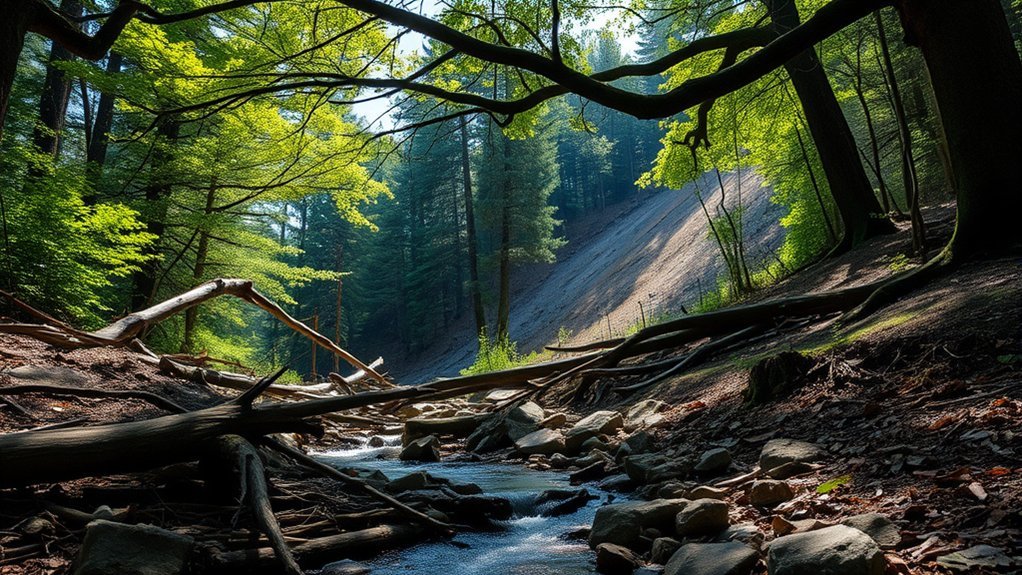
Natural hazards are the first reason to reject a campsite. The National Park Service advises campers to consider flash flooding, lightning, wind, and dead trees or branches before setting up. In the backcountry, avoid ledges and high peaks where exposure can make storms more dangerous. See the National Park Service campsite-selection guidance.
Floodplains, Dry Washes, and Low Ground
Never pitch in a dry creek bed, wash, drainage channel, canyon bottom, floodplain, or low depression that collects runoff. Rain may fall miles upstream while your campsite remains dry. Warning signs include fresh silt, driftwood or debris caught above the current waterline, mud lines on trees or rocks, flattened vegetation, scoured soil, and multiple channels crossing the site.
Choose higher ground with a clear route away from water. Check the forecast for the campsite and the upstream watershed when possible. The National Weather Service warns campers not to stay along streams and washes during threatening conditions and to move to higher ground when flooding is possible.
Exposed Ridges, Ledges, and Wind Funnels
A windy hilltop may look dry and scenic, but it can expose your tent to strong gusts and lightning. Avoid narrow ridges, ledges, saddles, open summits, and gaps that funnel wind. A lower site behind solid terrain can provide shelter, but do not trade wind exposure for a spot beneath damaged trees.
Unstable Slopes, Cliffs, and Rockfall Areas
Stay away from cliff bases, steep cut banks, talus slopes, landslide scars, loose boulders, eroded gullies, and undercut riverbanks. Reject ground with fresh cracks, slumping soil, exposed roots, saturated mud, rolling rocks, or recent debris. Pressing one foot into the soil is not a reliable stability test; inspect the wider slope and drainage instead.
Dead Trees and Falling Branches
Look up before looking down. Do not camp beneath dead, cracked, leaning, burned, uprooted, or storm-damaged trees. Also avoid hanging limbs, broken tops, split trunks, peeling bark around a rotten base, and any tree that could fall across the tent. Increase your distance during high winds because even healthy-looking trees can shed limbs.
Warning: If a flash-flood warning is issued, water starts rising, thunder moves close, or trees begin cracking in strong wind, leave the campsite and move to a safer area immediately. Do not wait to see whether the hazard reaches your tent.
Environmental Concerns
A safe campsite should also limit damage to soil, plants, water, and cultural resources. In developed campgrounds, keep all equipment on the assigned pad. In the backcountry, use an established site when required or choose a durable surface such as rock, gravel, sand, compacted soil, dry grass, or snow.
Leave No Trace guidance recommends camping at least 200 feet from lakes and streams to protect riparian areas. Treat that as a general backcountry guideline, not a universal law. Some parks, forests, wilderness areas, and shorelines require a different distance or limit camping to designated sites.
Note: Follow the posted or permit-specific rule when it differs from the 200-foot guideline. Local regulations control where you may camp, collect water, wash, dispose of wastewater, and bury or pack out human waste.
Avoid fragile meadows, wetlands, moss, alpine plants, cryptobiotic soil crusts, restoration areas, archaeological sites, and places where new tent scars are beginning. Do not cut vegetation, move large rocks, dig drainage trenches, or build furniture. Keep the campsite compact and pack out food scraps, trash, and hygiene waste.
A good campsite is one you can use safely without creating a new scar on the landscape.
Wildlife Habitats
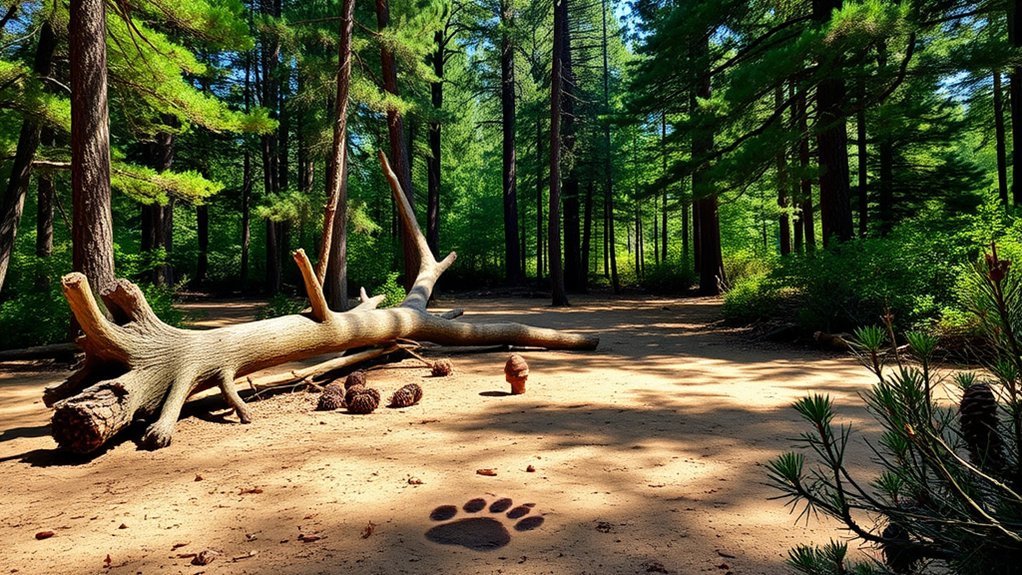
Tracks, droppings, hair, digging, nests, burrows, rub marks, crushed vegetation, and strong animal odors can show that wildlife uses the area. There is no universal rule requiring a tent to be exactly 200 feet from every animal trail. Instead, move away from any clearly active route, den, nest, burrow, feeding area, carcass, food cache, or path leading to water.
| Wildlife Sign | What It May Mean | Safer Response |
|---|---|---|
| Repeated tracks or droppings | An active travel or feeding route | Move the tent well off the route |
| Burrows, nests, or disturbed vegetation | A denning, nesting, or resting area | Choose another site and do not block access |
| Carcass, food remains, or strong odor | Predators or scavengers may return | Leave the area rather than camping nearby |
| Trampled path to water or thick brush | A wildlife corridor with limited visibility | Camp in a more open area away from the corridor |
In bear country, follow the land manager’s food-storage rules exactly. Secure food, trash, pet food, cookware, toiletries, and other scented items in an approved bear-resistant container, locker, vehicle, or hang when required. Do not store attractants in the tent, and do not cook beside the sleeping area when local guidance calls for separation.
Pro Tip: Arrive before dark and walk a full circle around the proposed tent footprint. Tracks, hanging branches, drainage channels, nearby cliffs, and access signs are much easier to spot in daylight.
Prohibited or Restricted Sites
Before setting up, confirm who manages the land and whether overnight camping is allowed. A site can look unused and still be private property, a restoration zone, a seasonal wildlife closure, a day-use area, a trailhead, or a protected cultural site. Ignoring a closure can damage resources and may lead to removal, a citation, a fine, or other trespass enforcement.
Local Regulations Overview
Check the land manager’s current website, alerts, posted signs, permit terms, and fire restrictions. Rules may cover designated campsites, camping setbacks, group size, length of stay, vehicles, pets, quiet hours, campfires, food storage, human waste, and seasonal access. Conditions can change quickly during wildfire season, severe weather, construction, or wildlife activity.
Environmental Protection Areas
Do not camp in closed wildlife habitat, revegetation plots, research areas, wetlands, dunes, fragile alpine zones, archaeological sites, or places marked for restoration. In national parks, wildlife refuges, wilderness areas, and similar protected lands, use only the campsites or zones allowed by the permit or posted rule.
Restricted Access Zones
Look for boundary markers, gates, permit notices, no-camping signs, temporary closure orders, and private-property signs. When ownership or access is unclear, choose another legal site rather than assuming an unmarked area is open.
| Restricted Area | Possible Consequence |
|---|---|
| Wildlife reserve or seasonal closure | Disturbance to animals, removal from the area, citation, or fine |
| Conservation or restoration area | Damage to fragile resources and possible enforcement action |
| Private property | Trespass complaint, removal, citation, fine, or arrest depending on local law and circumstances |
Unsanitary or Uncomfortable Locations
Avoid pitching beside trash piles, overflowing dumpsters, wastewater outlets, manure, dead animals, latrines that are not part of a managed campsite, or polluted runoff. These areas can attract insects and wildlife and may expose you to contaminated soil or water. Clear-looking natural water can also contain harmful organisms, so use an appropriate treatment method rather than assuming distance from visible pollution makes it safe to drink.
Standing water and dense wet vegetation can increase mosquito exposure. Ant nests, wasp activity, thorny plants, poison ivy, poison oak, and sharp debris can make a flat site unusable. Inspect the entire tent footprint, vestibule, stake area, and the path you will walk at night.
For comfort and sleep, avoid high-traffic roads, parking areas, bright lights, generators, boat launches, busy trail junctions, and spots directly beside restrooms unless the convenience outweighs the noise. Choose a level surface without large roots, sharp rocks, hidden holes, or a slope that causes you to slide into one side of the tent.
Smart Campsite Selection Techniques
Use the same short inspection every time you choose a campsite. It is faster to reject a bad site before unloading than to move a fully pitched tent after dark or during a storm.
- Confirm the site is legal. Check ownership, permits, designated-site rules, closures, fire restrictions, and food-storage requirements.
- Check weather and water. Review current forecasts and alerts, then reject dry washes, floodplains, low depressions, shorelines with debris marks, and any site without a quick route to higher ground.
- Look up and uphill. Scan for dead branches, unstable trees, cliffs, loose rocks, avalanche paths, landslide scars, and anything that could fall or move toward the tent.
- Inspect the ground. Choose level, firm, durable ground with no runoff channel, sharp debris, large roots, deep holes, saturated soil, or steep side slope.
- Look for wildlife and sanitation problems. Move away from active game trails, dens, nests, burrows, carcasses, thick brush, trash, polluted runoff, standing water, and heavy insect activity.
- Check practical needs. Make sure the tent, stakes, vestibule, cooking area, and nighttime walking route fit without blocking trails, damaging plants, or placing food beside the sleeping area.
- Reassess after setup. Watch changing wind, water levels, thunder, fire alerts, and wildlife. Move early when conditions become unsafe.
As a final check, lie or kneel where the sleeping area will be. This reveals hidden slopes and pressure points, but it does not replace the wider hazard scan. Proper food storage, a clean site, and a clear exit route complete the setup.
Frequently Asked Questions
What Should I Do if I Encounter a Bear Near My Campsite?
Do not run. If the bear has not noticed you, leave quietly. If it is aware of you but not acting aggressively, speak calmly and back away slowly without sudden movements. Pick up small children and keep your pack. Follow National Park Service bear-safety guidance and the park’s local instructions because the correct response to an attack depends on the bear species and behavior.
How Can I Identify Poison Ivy or Poison Oak in the Area?
“Leaves of three, let it be” is a useful warning, but these plants vary by species, season, and location, and lookalikes are common. Poison ivy may grow as a vine or shrub; poison oak often has oak-like leaflets. Avoid touching uncertain plants and review the CDC/NIOSH identification guidance. Urushiol can remain on clothing, tools, and pet fur.
What Are the Signs of Unstable Ground When Selecting a Campsite?
Reject sites with fresh cracks, slumping soil, exposed or undercut roots, saturated mud, recent slide debris, loose rocks, eroded banks, or a steep slope above or below the tent. A spot that feels soft under one foot may only be wet soil, so inspect the entire landform rather than relying on a single step test.
How Do I Recognize Signs of Recent Flooding in the Area?
Look for water stains, fresh silt, mud lines, flattened plants, scoured soil, driftwood, and branches or trash caught above the current channel. Do not camp in a dry wash simply because it is dry when you arrive. The National Weather Service advises avoiding streams and washes during threatening conditions.
What Should I Bring to Ensure My Campsite Is Safe From Pests?
Bring a screened tent, long clothing, a head net when insects are heavy, secure food storage, and an EPA-registered skin repellent used according to its label. Permethrin-treated clothing or gear can add protection against ticks and mosquitoes, but permethrin products intended for fabric should not be applied to skin. See the EPA insect-repellent guidance.
How Far Should a Tent Be From Water?
Leave No Trace commonly recommends at least 200 feet from lakes and streams in the backcountry. However, the legal setback may be shorter, longer, or replaced by a designated-site rule. Follow the specific park, forest, wilderness, or permit requirement for your location.
Is It Safe to Camp Under Healthy Trees?
Trees can provide shade and some wind protection, but no tree is risk-free. Inspect trunks, roots, tops, and nearby limbs for damage, rot, cracks, leaning, fire scars, or hanging branches. Avoid wooded sites during severe wind, and move if you hear cracking or see limbs falling.
Conclusion
A safe campsite starts with a deliberate pause before you pitch the tent. Avoid flood channels, unstable slopes, exposed ridges, dead trees, wildlife routes, restricted land, polluted areas, and uncomfortable ground. Choose a legal, durable, level site with good drainage, no overhead hazards, secure food storage, and a clear way out. That careful choice reduces risk, protects the landscape, and creates the foundation for a better night outdoors.
Sources
- National Park Service: Finding and Setting Up a Campsite — campsite hazards, dead branches, wind, lightning, and legal site selection.
- Leave No Trace: Travel and Camp on Durable Surfaces — durable surfaces and the general 200-foot water-setback guideline.
- National Weather Service: Flooding Safety — avoiding streams and washes and moving to higher ground.
- National Park Service: Staying Safe Around Bears — safe behavior during bear encounters.
- CDC/NIOSH: Poisonous Plants — poison ivy and poison oak identification limits and exposure risks.
- U.S. Environmental Protection Agency: Insect Repellents — choosing and using mosquito and tick repellents.
