

Last Updated on July 29, 2026 by Mason Reed
Choosing the right tent stakes is less about finding one “best” model and more about matching the stake’s shape, length, strength, and weight to the campsite. A slim hook can work well in compact soil, while loose sand or snow needs a longer, broader anchor. Your tent design, expected wind, and required guylines also affect the choice.
Quick Answer
Choose tent stakes by matching their shape, length, and material to the ground. Use Y- or V-stakes for most soil, slim nail or hook stakes for hard ground, and long broad stakes, screws, or deadman anchors for sand and snow. Count every corner, vestibule, guyline, and one or two spares.
Key Takeaways
- Match the stake’s design and surface area to the ground instead of choosing by material alone.
- Six- to 7.5-inch stakes are common for backpacking, but soft soil, sand, and snow often need longer or broader anchors.
- Count the tent’s corners, vestibules, and required guylines, then carry one or two compatible spares.
- There is no universal installation angle for every stake; follow the tent and stake manufacturer’s instructions.
- Inspect and retension the pitch after wind, rain, or a noticeable change in soil firmness.
At a Glance
| Time Required | About 5–10 minutes to choose, count, and organize a suitable set |
| Difficulty | Easy once the expected ground type is known |
| Tools Needed | Tent instructions, stake bag, guylines, and an optional stake hammer or smooth-faced mallet |
| Cost | Low to moderate; specialty sand, snow, and screw anchors usually cost more |
Disclosure: As an Amazon Associate I earn from qualifying purchases. Some links on this page are affiliate links, at no extra cost to you.
Understanding the Importance of Tent Stakes
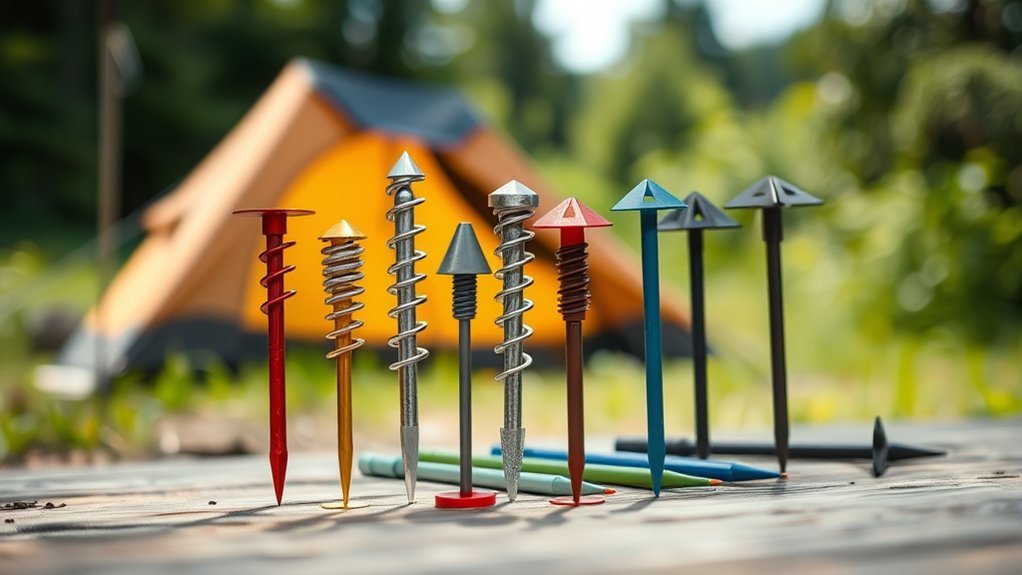
Tent stakes do more than keep a shelter from sliding. They hold the floor or footprint in shape, keep vestibules open, separate the rainfly from the inner tent, and transfer wind loads through the guylines into the ground. A well-staked rainfly can also improve ventilation by preventing wet fabric from resting against the tent body.
Stake performance depends on the complete system: the stake design, soil, insertion depth, guyline direction, shelter shape, and weather. A strong metal stake with little surface area may still pull from loose sand, while a broad aluminum stake can hold well in that same location.
Big Agnes recommends using the tent’s guylines because they work with the poles to maintain the shelter’s structure. In stronger weather, each important guyline should have a secure anchor rather than sharing a lightly loaded stake.
Warning: No stake can make a lightweight tent safe in every storm. If the poles deform, anchors keep pulling out, fabric begins tearing, or the site becomes exposed to falling branches, flooding, or severe wind, move to a safer location when conditions allow.
Common Tent Stake Materials
The material affects weight, stiffness, corrosion resistance, and price, but it does not determine holding power by itself. Shape and surface area are often more important in loose ground.
| Material | Strengths | Limitations | Best Fit |
|---|---|---|---|
| Aluminum | Light, widely available, and easy to form into Y-, V-, and broad-profile stakes | Thin shafts or notched heads can bend when struck against buried rocks | Backpacking and general three-season camping |
| Titanium | Very light, corrosion resistant, and often springier than aluminum | Thin hook designs provide limited surface area in loose soil | Ultralight trips on firm or rocky ground |
| Steel | Stiff, impact resistant, and suitable for robust nail-style stakes | Much heavier than aluminum or titanium; unprotected steel can corrode | Car camping, hard soil, and large shelters |
| Plastic or polycarbonate | Can be formed into broad fins or screw threads and will not rust | Bulkier than most backpacking stakes and poorly suited to rocky ground | Soft soil, grass, sand, and front-country camping |
| Composite or carbon-core | Extremely light when paired with a protective metal covering or molded head | Specialized, expensive, and less forgiving of incorrect hammering | Weight-focused backpacking in compatible soil |
Choose the material after selecting the appropriate shape. For example, a broad aluminum snow stake can outperform a narrow steel hook in loose snow because it contacts more material, even though the steel itself is stronger.
Common Tent Stake Designs
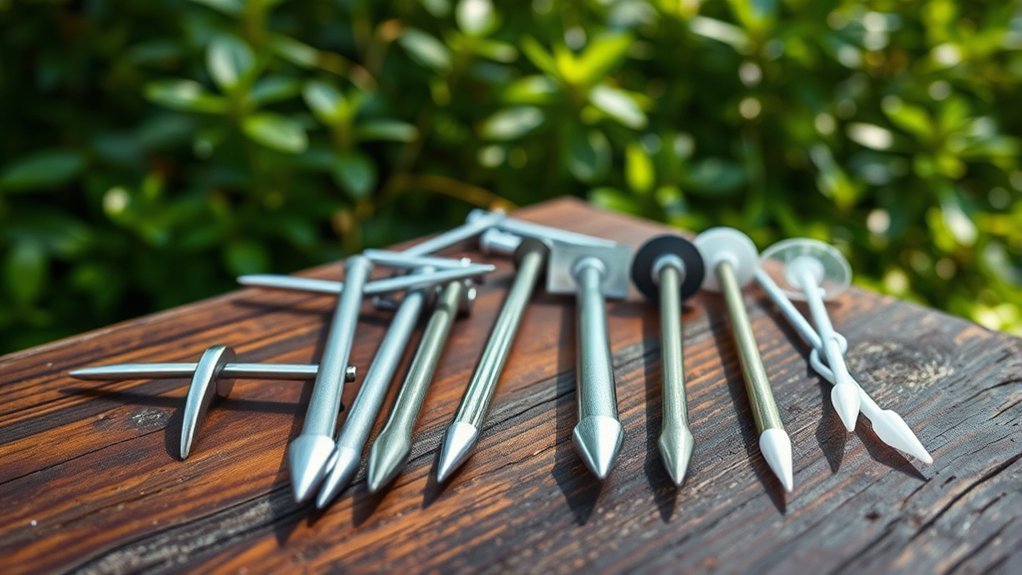
Stake design controls how easily the anchor penetrates the ground, how much soil it contacts, and how well it resists twisting or pulling out. A mixed stake kit is often more useful than a full set of one design.
Y-Shape Tent Stakes
Y-shape or tri-beam stakes use three fins to increase stiffness and soil contact without adding excessive weight. They are a dependable all-around choice for compact soil, forest campsites, and many established tent pads.
- Good holding area: The fins resist rotation and provide more contact than a thin wire hook.
- Useful strength-to-weight ratio: Aluminum Y-stakes are common in backpacking kits.
- Visible removal loop: Many models include reflective cord that also makes extraction easier.
- Main limitation: A buried rock can stop the stake abruptly or bend a thin fin if it is hammered carelessly.
Set the guyline into the intended notch or attachment point and keep the stake nearly buried to its head. Do not leave a long section of shaft exposed, where side loading can bend it.
V-Shape Tent Stakes
V-shape stakes offer a broad face with less material than a solid plate. They can hold well in medium or softer soil and often nest together neatly in a stake bag.
Unlike a symmetrical Y-stake, a V-stake may have a preferred orientation. Place its broad resistance surface according to the product instructions so the guyline load does not simply fold the stake through the soil. Weight varies widely by length, thickness, and material, so there is no single weight range for all V-stakes.
Shepherd’s-Hook Tent Stakes
Shepherd’s-hook stakes use a narrow round shaft with a curved top. They are easy to pack, easy to work between stones, and available in steel, aluminum, and titanium.
The narrow shaft creates less resistance in loose soil, making this design better for firm ground than sand or soft loam. The Vargo Titanium Tent Stake, for example, is a 6.5-inch shepherd’s-hook stake weighing 8 grams. Its low weight suits ultralight use, but a broader stake is a better choice for high-load guylines in loose sediment.
Nail-Style Tent Stakes
Nail stakes have a straight, stiff shaft and a defined head. Steel versions are useful for hard-packed soil and front-country campsites where weight is less important. Slim titanium nail pegs can also fit between stones.
A nail stake penetrates firm ground well, but its holding power still depends on shaft length, diameter, and soil density. It is not automatically the best choice for soft ground merely because the metal is strong.
Screw and Spiral Anchors
Screw or spiral anchors use threads or a twisted profile to develop grip in soft soil, turf, or sand. They generally take longer to install and are bulkier than backpacking stakes, but they can provide useful holding power for canopies and large front-country shelters.
Orange Screw lists polycarbonate anchors in 9.5- and 12.25-inch lengths for grass, beach sand, and firm or soft soil. Screw anchors should be installed using their intended tool and method rather than hammered like a straight stake.
Sand and Snow Stakes
Sand and snow stakes use extra length, broad faces, holes, or curved channels to contact more material. They may be driven normally when the surface is firm enough or buried sideways as a deadman anchor in loose sand or snow.
A deadman anchor is attached to the guyline, placed horizontally in a trench, buried, and compacted before tension is applied. Mark the location and retrieve the complete anchor when breaking camp.
Factors to Consider When Choosing Tent Stakes
Start with the ground, then consider the shelter and weather. Material should be the final filter rather than the first.
| Ground or Setup | Useful Starting Choice | Avoid or Watch For |
|---|---|---|
| Firm forest soil or established tent pad | Y-, V-, or medium-length nail stake | Roots and buried stones |
| Hard-packed or rocky soil | Stiff nail stake or slim titanium hook | Hammering lightweight fins directly against rock |
| Soft soil or loose loam | Long Y-, V-, spiral, or broad-profile stake | Short wire hooks with little surface area |
| Sand | Long broad stake, screw anchor, sandbag, or buried deadman | Standard short stakes in dry loose sand |
| Deep snow | Snow stake or buried broad deadman anchor | Tensioning before the buried snow is compacted |
| Frozen mineral soil | Stiff narrow nail stake or an approved alternative tie-off | Treating frozen soil like loose snow |
| Wooden platform | Approved deck anchors, platform hooks, or existing tie points | Driving stakes or screws into the decking |
| Exposed bedrock | Existing approved anchors or guylines secured around stable removable weights | Damaging rock, vegetation, or permanent site features |
Also consider the following:
- Forecast: Wind and saturated soil increase the need for secure, well-spaced anchors.
- Tent architecture: A trekking-pole tent or non-freestanding shelter may depend on stake placement for its basic shape.
- Shelter size: A large family tent presents more fabric to the wind and may have many required guylines.
- Pack weight: Backpackers usually favor aluminum or titanium, while car campers can carry longer steel or screw anchors.
- Removal: Reflective pull loops and defined heads reduce the chance of leaving stakes behind.
Pro Tip: Build a mixed kit. Place the strongest or broadest stakes at the windward corners, ridgeline guylines, and other high-load points. Use lighter stakes on low-load floor corners when the ground permits.
Recommended Length and Quantity of Tent Stakes
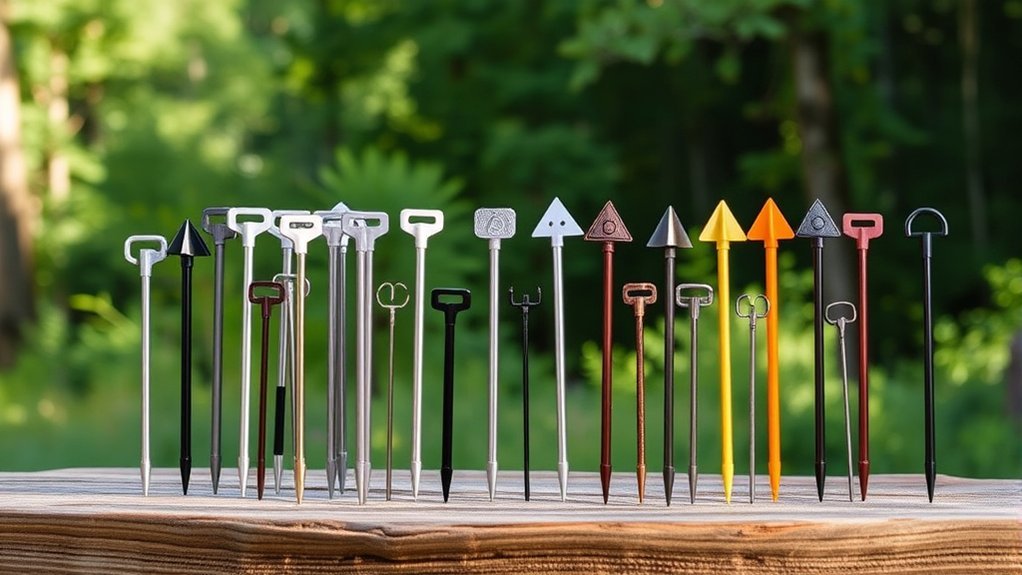
Length matters, but it must be considered with stake width, shape, soil density, and the direction of pull. A wider 7.5-inch stake can outperform a thin stake of the same length in soft soil, while the narrow model may be easier to place between rocks.
Optimal Stake Lengths
- About 6 to 7.5 inches: Common for compact backpacking stakes used in firm or moderately soft ground.
- About 8 to 10 inches: A useful starting range for softer soil, larger shelters, or higher-load guylines.
- About 9.5 to 12 inches or broader: Often better for sand, snow, and very loose soil, depending on the anchor design.
- Shorter, slim stakes: Can be easier to place in hard or rocky ground, but they offer less embedded area.
The MSR stake guide illustrates the difference: its 7.5-inch Groundhog is intended as an all-around stake, its 10-inch Cyclone targets firm sand and soft soil, and its broad 9.5-inch Blizzard stake is designed for snow and soft sand.
Quantity for Stability
Do not estimate stake quantity from tent capacity alone. Use this formula:
Required stakes = floor corners + vestibules + manufacturer-required guylines + one or two compatible spares.
For example, a tent with four floor corners, two vestibules, and four required storm guylines needs 10 working stakes. Carrying two spares produces a 12-stake kit. Another two-person tent may need only six or eight, while a large family shelter may use considerably more.
Check the setup diagram before leaving home. Some freestanding tents can stand without every stake in calm weather, but the rainfly, vestibules, and storm guylines may still need to be anchored for the shelter to perform as designed.
Proper Use of Tent Stakes
Correct installation protects both the shelter and the stakes. The goal is to align the anchor with the expected pull, insert it deeply, and apply even tension without creating a sharp bending point above the soil.
- Read the setup instructions. Identify every required corner, vestibule, and guyout point.
- Choose a durable site. Look for a level established tent area without obvious roots, fragile vegetation, drainage channels, or falling-branch hazards.
- Orient the shelter. When the design allows, place the narrower or lower end toward the prevailing wind.
- Pull each anchor point into position. Keep the floor properly shaped without overstretching it.
- Install the stake according to its design. Seat most of the shaft below ground and keep the hook, notch, or attachment eye correctly oriented.
- Tension gradually. Alternate between opposite corners so the shelter remains centered.
- Stake the guylines. Pull them in the direction intended by the shelter design and give major storm guylines their own anchors.
- Recheck the pitch. Inspect the stakes after wind begins, rain softens the soil, or fabric tension changes.
What Angle Should Tent Stakes Use?
There is no single answer for every design. Big Agnes recommends placing a stake at roughly 45 degrees, with the lower end angled toward the tent so the stake and guyline meet near a right angle. By contrast, REI reported that its wind-tunnel testing found stakes strongest when driven straight down.
The practical rule is to follow the instructions for the shelter and stake you are using. Whichever orientation is specified, insert the stake nearly to its head, avoid a long exposed lever arm, and keep the guyline pulling through the intended attachment point.
Warning: Do not kick or stamp on a stake. A narrow stake can slip or penetrate footwear, and a lightweight stake can bend suddenly. Use a proper stake hammer or smooth-faced mallet when hand pressure is not enough.
Maintenance Tips for Tent Stakes
Stakes are simple tools, but damage at the shaft, head, notch, or pull loop can cause failure when the anchor is loaded. Inspect and clean the set before storing it.
Regular Inspection Practices
- Count the stakes before and after every trip.
- Check shafts and fins for bends, cracks, sharp kinks, or deep gouges.
- Inspect notches and heads for deformation that could cut a guyline.
- Replace frayed or missing pull cords with cord of a suitable diameter.
- Retire any stake with a cracked head, split fin, sharp crease, or damaged attachment point.
- Store stakes in a puncture-resistant sack so the tips cannot damage the tent fabric.
Proper Cleaning Techniques
Rinse away mud, sand, salt, and organic debris after the trip. Use mild soap and a soft brush when necessary, then dry the stakes completely before storage.
Remove small burrs from metal stakes with an appropriate fine file at home, keeping the original shape intact. Do not grind away a large amount of material. If a stake has been sharply bent, repeatedly straightened, cracked, or heavily corroded, replacement is safer than another repair.
Note: Pull a stake in line with its shaft or use its removal loop. Jerking it sideways places extra stress on the head and can enlarge the hole in soft ground.
Staking in Different Ground Conditions
The best stake can change within the same campsite. A compact tent pad may have loose edges, buried gravel, or wet areas that require different anchors.
Grass and Firm Soil
Y-, V-, nail, and shepherd’s-hook stakes can all work in firm soil. Probe gently for stones and roots rather than forcing the first location. Use longer or broader stakes for major guylines if rain is likely to soften the ground.
Hard-Packed and Rocky Ground
Use a stiff nail stake or a slim hook that can fit between stones. If the stake stops abruptly, move it slightly instead of hitting it harder. Lightweight aluminum fins can bend when trapped against a rock.
Sand
Use broad sand stakes, long screw anchors, filled sandbags, or buried deadman anchors. Standard short hooks usually have too little surface area in dry loose sand. Bury deadman anchors well below the surface, compact the sand, and apply tension gradually.
Snow
Compact the tent area first. Use broad snow stakes in firm snow or bury them horizontally as deadman anchors in loose snow. Allow disturbed snow to settle and firm before applying full tension. Mark every buried anchor so it can be recovered.
Frozen Ground
Frozen soil is not the same as snow. A stiff narrow steel or titanium nail stake may penetrate where a broad aluminum stake cannot. When the surface is impenetrable, use an approved existing anchor or another non-damaging tie-off rather than repeatedly striking a lightweight stake.
Wooden Platforms and Bedrock
Use the platform’s installed rings, approved deck anchors, platform hooks, or guylines wrapped around stable removable weights. Do not drive stakes or screws into decking, buildings, trees, or permanent site features.
The National Park Service recommends camping on designated or durable surfaces. Use existing tent pads where provided, follow local rules, and remove every stake, cord, and temporary anchor when leaving.
Testing and Performance of Tent Stakes
A single overall rating cannot show whether a stake is right for your campsite. A backpacking test may reward low weight, while a car-camping test may value hammer resistance and maximum holding area.
Evaluate stakes using the following criteria:
| Test Area | What to Check |
|---|---|
| Holding power | Whether the stake rotates, rises, or cuts through the expected ground when the guyline is loaded by hand |
| Durability | Bending, cracked heads, damaged fins, worn threads, and guyline abrasion |
| Installation | How easily it penetrates the surface without unsafe kicking or excessive hammering |
| Removal | Whether the stake can be recovered without bending it or damaging the site |
| Packability | Per-stake weight, packed length, nesting, sharp-tip protection, and visibility |
| Versatility | Performance in the ground types expected during the trip—not every possible terrain |
Practice pitching the tent near home before relying on a new stake set. Test the actual corners and guylines, and confirm that every stake fits the tent’s loops, rings, and tensioners. A backyard test can reveal an unsuitable design, but it cannot guarantee performance in severe weather.
Top Tent Stake Recommendations
The most useful recommendation depends on the campsite rather than one overall score.
- All-around backpacking: An aluminum Y- or T-beam stake such as the MSR Groundhog family offers a practical balance of weight, stiffness, and holding area for many established campsites.
- Ultralight use in firm or rocky ground: A titanium shepherd’s-hook stake such as the Vargo model packs easily and works between stones, but it is not the first choice for loose sand.
- Soft soil or front-country sand: A long spiral or screw anchor such as an Orange Screw can provide more grip than a short hook, with extra bulk and slower installation.
- Snow and very soft sand: Use a broad dedicated snow or sand stake that can also be buried as a deadman anchor.
- Hard ground near the vehicle: A robust steel nail stake tolerates repeated mallet use better than many ultralight designs.
- Budget kits: Look for a clearly specified aluminum Y-stake set with published material, dimensions, per-stake weight, pull loops, and replacement availability.
Marketplace models such as Eurmax or All One Tech may change listings or suppliers over time. Check the current dimensions, material, included quantity, and seller documentation rather than relying on an old comparison score.
Frequently Asked Questions
Can I use regular garden stakes for my tent?
A strong garden stake may work as a temporary anchor if its shape fits the guyline and it can be installed without damaging the tent. However, garden stakes are not necessarily designed for repeated side loading, easy removal, or safe packing. Purpose-built tent stakes are the more predictable choice.
How many tent stakes do I need for a large tent?
Count every floor corner, vestibule, and guyline required by the setup instructions, then add one or two compatible spares. A large tent may need more than 12 stakes, but the exact number depends on its design rather than its sleeping capacity.
Are there eco-friendly tent stake options?
The most practical approach is to buy durable reusable stakes, maintain them, replace damaged pull cords, and pack out every component. Documented recycled content and long product life are more useful indicators than an unsupported “biodegradable” claim.
What should I do if a stake bends during use?
Reduce the guyline tension, remove the stake in line with its shaft, and replace it with a spare. A gently curved metal stake may be inspected and carefully straightened at home, but a cracked, sharply kinked, repeatedly bent, or damaged stake should be retired.
Can I make my own tent stakes at home?
It is possible, but a homemade stake needs a smooth guyline attachment point, a controlled tip, adequate strength, and no sharp burrs that could damage the tent or a person. Test it before a trip. Do not cut live branches or leave improvised anchors at the campsite.
Should tent stakes go straight down or at an angle?
Follow the instructions for the specific tent and stake. Some manufacturers recommend a roughly 45-degree installation, while other testing favors straight insertion. In either case, place most of the shaft below ground and align the guyline with the intended attachment point.
How do I secure a tent on a wooden platform?
Use installed rings, approved platform hooks, removable deck anchors, or guylines attached to permitted tie points. Do not hammer stakes or drive screws into the platform unless the campground explicitly provides and allows that system.
Conclusion
The right tent stakes match the ground, shelter, and expected weather. Y- and V-stakes are useful all-around choices, slim hooks and nail stakes suit firmer ground, and sand or snow requires broader or longer anchors. Count the tent’s actual attachment points, follow the manufacturer’s setup instructions, carry a spare or two, and recheck the pitch when conditions change.
Sources
- MSR: Which Tent Stake Is Right for You? — terrain-specific stake shapes, lengths, and recommended uses
- Big Agnes Tent Tips — guylines, wind orientation, staking, safety, and tent setup
- REI: Camping Setup Tests and Guyline Guidance — alternative straight-stake guidance and wind-load alignment
- Vargo Titanium Tent Stake — manufacturer dimensions, weight, material, and intended use
- Orange Screw Ground Anchors — official screw-anchor sizes, materials, and compatible ground types
- National Park Service: Travel and Camp on Durable Surfaces — low-impact campsite-selection guidance
