
Last Updated on July 29, 2026 by Mason Reed
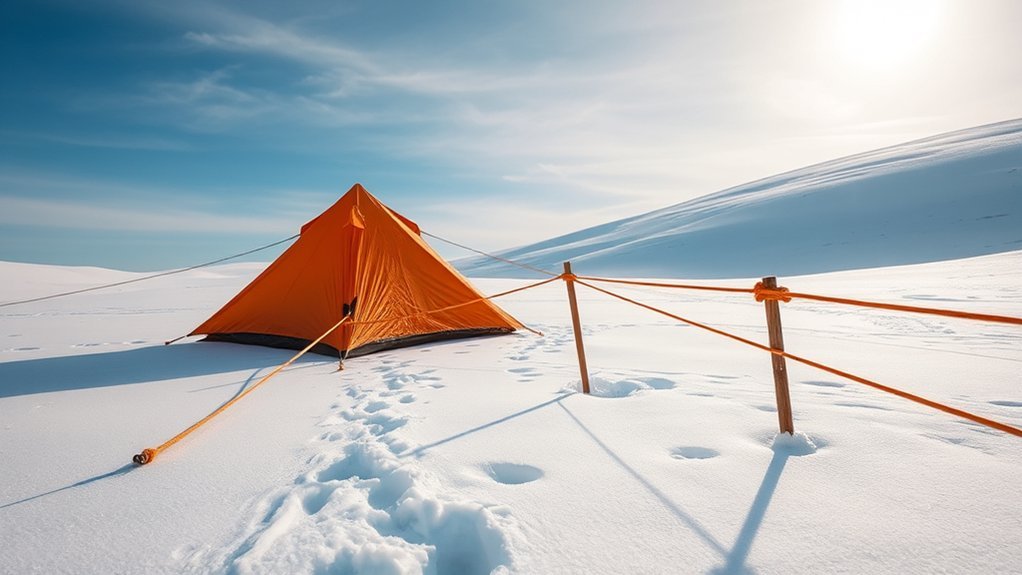
Snow makes ordinary tent stakes unreliable, but it also gives you several strong anchoring options. The safest setup starts with a stable campsite, a packed tent platform, and anchors matched to the snow. Use purpose-built snow stakes or buried deadman anchors, then tension every guyline evenly and inspect the shelter whenever wind, snowfall, or temperature changes.
Quick Answer
To stake a tent in snow, pack a level platform, pitch the tent, and bury snow stakes or sturdy objects horizontally as deadman anchors. Attach each guyline near the anchor’s center, backfill and compress the snow, then pull-test and tighten every line evenly. Recheck the setup after wind or snowfall.
Key Takeaways
- Use broad snow stakes or buried deadman anchors instead of narrow summer stakes in deep, soft snow.
- Bury deadman anchors across the direction of pull, with the guyline forming a T-shape at the anchor.
- Anchor every required point before applying final tension, then tighten the shelter evenly.
- Choose a site away from avalanche paths, cornices, dead trees, and snow-laden branches.
- Clear accumulating snow from the tent and keep vents open throughout the night.
At a Glance
| Time Required | About 20–45 minutes, depending on snow depth and wind |
| Difficulty | Moderate |
| Tools Needed | Tent, guylines, snow shovel, gloves, and snow stakes or suitable deadman objects |
| Cost | $0–$40 if you already own the tent and guylines |
Disclosure: As an Amazon Associate I earn from qualifying purchases. Some links on this page are affiliate links, at no extra cost to you.
Why Proper Tent Anchoring Matters in Snow
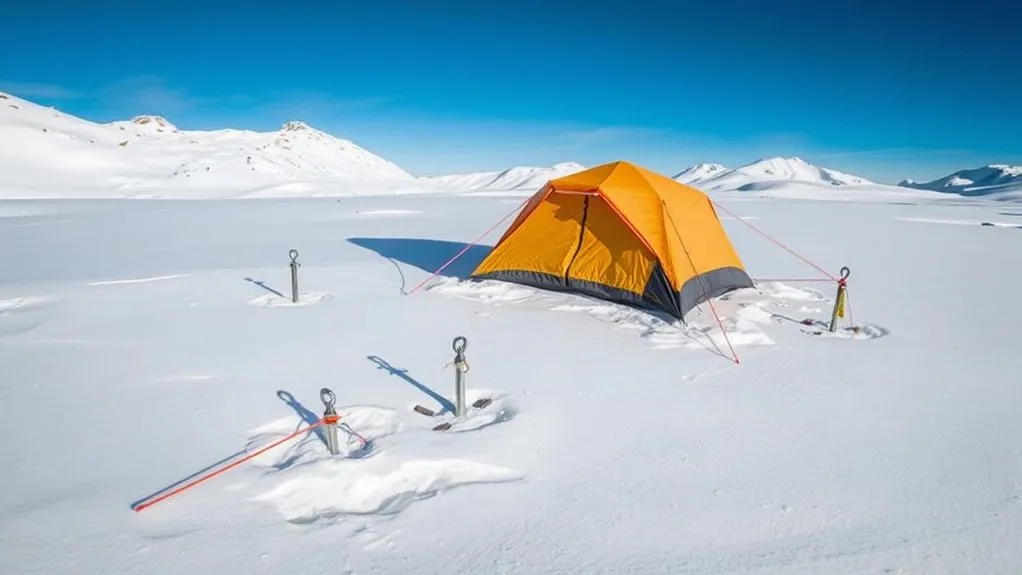
A freestanding tent still needs anchors in winter. Wind can slide, twist, or lift the shelter, while fresh snowfall can loosen buried points or add weight to the roof. Narrow three-season stakes may pull through soft snow because they do not have enough surface area.
Purpose-built snow stakes have broad faces that hold better in loose snow. Some models, including MSR’s Blizzard stake, can also be buried sideways as deadman anchors. Mountaineering tents may include reinforced loops that can be secured with buried stakes, skis, an ice axe, or ski poles, as shown in the Big Agnes Battle Mountain 2 specifications.
Warning: Do not camp in an avalanche path, beneath a cornice, under snow-loaded branches, or beside standing dead trees. A natural windbreak is useful only when the terrain and trees above it are safe.
Choose and Prepare a Safe Snow Campsite
Anchor strength does not make a dangerous campsite safe. Before unpacking the tent, check the terrain, current forecast, local rules, and escape options. Leave No Trace winter guidance recommends camping on durable surfaces such as deep snow, rock, or mineral soil, away from avalanche paths, cornices, steep slopes, and unstable snow. It also recommends staying at least 200 feet from recognizable lakes and streams.
- Find a stable area: Choose a level or gently sloping spot that is not in a drainage, creek bed, avalanche runout, or depression where drifting snow may bury the shelter.
- Check overhead hazards: Look for dead limbs, leaning trees, and heavy snow clumps that could fall.
- Use wind protection carefully: A low ridge, healthy tree stand, or terrain feature can reduce exposure, but avoid places where snow is loading or where falling objects are possible.
- Pack the platform: Walk over the tent footprint with snowshoes, skis, or boots, then level it with a shovel. Give very soft snow a little time to firm before pitching.
- Plan drainage and access: Keep the door and vents clear, and avoid placing the entrance where spindrift will collect.
Pro Tip: Pack a platform larger than the tent. The extra firm snow gives you room to work around the guylines without stepping into soft holes beside the shelter.
Effective Techniques for Snow Anchoring
The best anchor depends on snow depth, density, temperature, and the gear you carry. No single method is strongest in every condition, so test each anchor in the direction it will be loaded before trusting it.
Snow Stakes
Broad aluminum snow stakes are the simplest option in firm or moderately packed snow. Drive them at the angle recommended by the manufacturer and orient the broad face against the expected pull. In soft snow, tie the guyline through a lower hole and bury the stake horizontally as a deadman.
Deadman Anchors
A deadman anchor spreads the load across a buried object instead of relying on a narrow point. A snow stake, sturdy stick, ski, trekking pole, ice axe, or filled reusable stuff sack can work when placed correctly. Tie the line near the object’s center, bury it across the pull direction, and route the line out through a narrow slot.
Using Natural Resources and Carried Gear
Sticks and rocks can serve as anchors where their use is allowed and where collecting them will not damage the site. Skis, trekking poles, and ice axes are also useful, but place long objects horizontally for deadman use. A vertical picket-style placement can work in dense, supportive snow, but it is less forgiving and should not be treated as a universal method.
A sealed one-gallon freezer bag filled with snow can work as a last-resort buried anchor, but a durable reusable stuff sack is a better choice. Thin disposable bags may split, freeze in place, or leave plastic behind. Reinforcing a bag with duct tape does not make the anchor “bombproof.” Always retrieve every bag, cord, lid, or improvised item when breaking camp.
| Anchor Type | Best Use | Main Caution |
|---|---|---|
| Snow stake | Firm or moderately packed snow | A narrow stake may pull through soft snow |
| Buried stake or stick | General deadman anchor | Must be buried across the direction of pull |
| Ski, pole, or ice axe | Deep snow and mountaineering camps | Do not bury gear you may need for an emergency |
| Reusable snow-filled bag | Lightweight backup anchor | Retrieve it; thin plastic can tear |
| Large rock | Thin snow or rocky ground | Protect the line and tent fabric from sharp edges |
How to Build a Deadman Snow Anchor
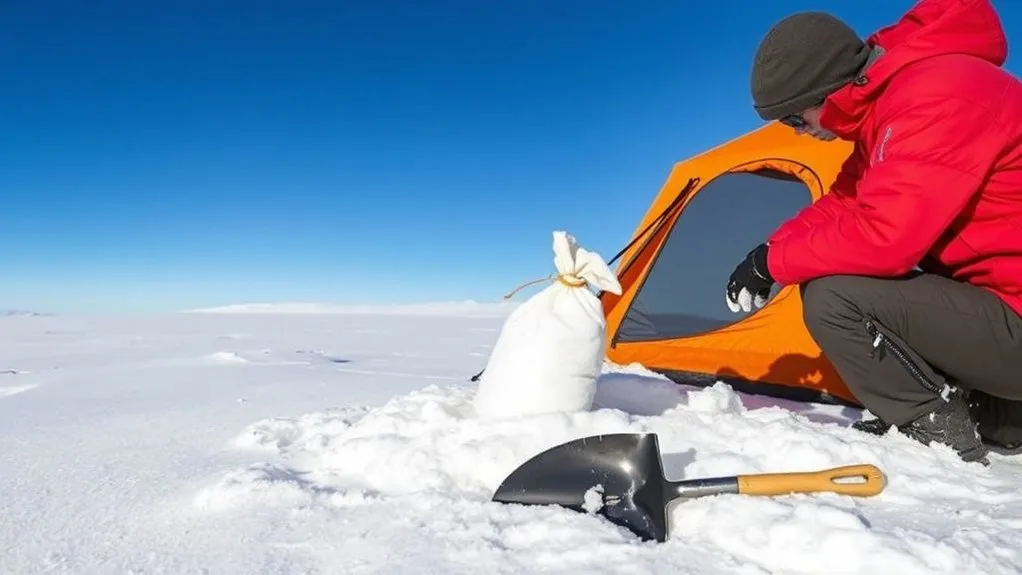
The deadman method is reliable because the buried object presents a wide surface to the snow. The correct depth is not a fixed number. Soft, dry powder usually needs a deeper and wider burial than dense wind-packed snow. Start deep enough to reach supportive snow, then test the result.
- Attach the guyline: Tie the line to the middle of the stake, stick, pole, or other object. The line and anchor should form a T when viewed from above.
- Dig a crosswise trench: Make the trench perpendicular to the direction the guyline will pull. It should be long enough for the anchor to sit flat without rotating.
- Cut a narrow line slot: Create a small channel from the center of the trench toward the tent. A narrow slot disturbs less snow than a wide open trench.
- Place the anchor: Lay it horizontally in the trench, route the line through the slot, and keep any buckle or tensioner above the snow.
- Backfill and compact: Replace the snow in layers and press it firmly with boots, a shovel, or gloved hands.
- Let the snow firm: In loose snow, give the packed area time to settle before applying full force.
- Pull-test the anchor: Load the guyline gradually in the same direction wind will pull it. If the snow cracks, lifts, or the anchor moves, rebury it deeper or use a larger object.
A snow anchor is not secure because it looks buried; it is secure only after it holds a firm pull in the direction of the expected load.
Note: Do not use the same burial depth for every campsite. Snow depth, grain type, temperature, and wind packing can change anchor strength within a few feet.
Adjust Guyline Tension for Stability
Set all anchors before fully tightening the tent. This prevents one side from carrying most of the load and reduces the chance of distorting poles or stressing fabric.
Start With Light, Even Tension
- Attach and lightly tension the corner anchors first.
- Add every manufacturer-required guyline and panel tie-out.
- Walk around the tent and tighten opposite sides in small steps.
- Keep the fly smooth and supported without pulling it drum-tight.
Hilleberg’s pitching guidance emphasizes tightening perimeter tensioners and properly adjusting all guylines for better performance in bad weather. Follow the instructions for your exact tent because pole layouts and preferred wind orientation differ by model.
Keep Adjusters Above the Snow
Place line locks, tautline hitches, or trucker’s hitches where you can reach them without digging. Snow may settle, blow away, or melt around anchors, so accessible adjustment points save time and prevent frozen knots.
Final Tightening Checklist
- Confirm each anchor is pull-tested and buried securely.
- Check that no guyline rubs against a sharp rock, ski edge, or tent fabric.
- Make sure doors open without loosening a main structural line.
- Verify that the fly is not touching the inner tent where condensation could transfer.
- Recheck tension after the first strong gusts and after new snow accumulates.
What to Do in Shallow Snow or Frozen Ground
Deadman anchors need enough snow to cover and support the buried object. When snow is shallow, look for firm ground, rock, or existing durable surfaces instead of scraping away vegetation.
- Frozen soil: Use stakes made for hard ground only if the tent and stake manufacturer allow it. Do not hammer lightweight aluminum snow stakes into frozen soil.
- Thin snow over rock: Wrap guylines around large stable rocks or use a rock-on-rock anchor. Pad sharp edges and keep rocks away from the tent body.
- Mixed snow and trees: A healthy trunk or exposed root can be an anchor if local rules allow it. Use a wide strap or protected line to avoid damaging bark.
- Hard wind slab: A snow stake may hold vertically or at an angle, but a buried deadman gives more surface area when conditions are uncertain.
Avoid burying your backpack unless there is no safer emergency option. It can become wet, frozen, damaged, or unavailable when you need insulation, food, navigation tools, or rescue gear.
Wind, Snowfall, and Overnight Safety
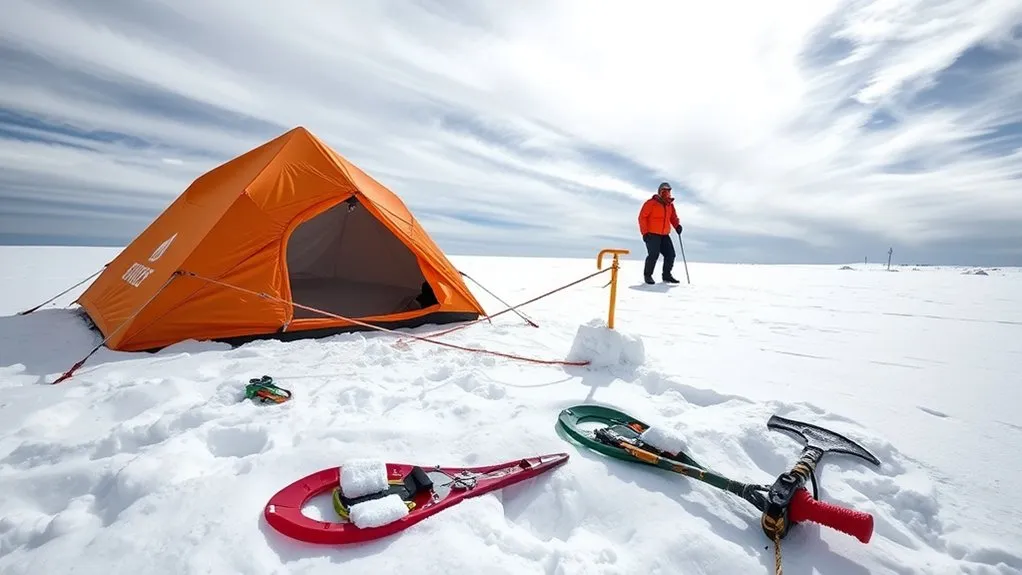
Use the tent’s strongest wind orientation, which is often—but not always—the narrowest or lowest end facing the wind. Follow the manufacturer’s pitching instructions, use all required poles and guylines, and keep loose equipment inside or securely stowed.
Do not remove the poles, flatten an occupied tent, and weigh it down with rocks. Rocks can tear the fly, damage poles, and injure anyone inside. If conditions reach a High Wind Warning or the shelter begins failing, the National Weather Service advises moving to a sturdy building when one is available. In remote terrain, use your emergency plan and leave exposed ground before the weather becomes unmanageable.
- Brush heavy snow from the roof before it overloads the poles.
- Dig out doors, lower vents, and perimeter gaps after drifting snow.
- Keep ventilation open even when it is cold. Mount Rainier National Park winter-safety guidance warns that snowy, windy conditions may require campers to go outside and clear tent or shelter vents.
- Do not cook with a fuel-burning stove in a closed tent.
- Recheck every anchor after a strong wind shift, warming period, or heavy snowfall.
Warning: A tent is not a safe shelter for extreme wind, lightning, avalanche exposure, or carbon monoxide. Anchoring improves stability; it does not remove those hazards.
Community DIY Anchor Ideas: What Works and What to Avoid
Outdoor campers have improvised anchors from plastic lids, reusable containers, bags, and even old discs. A wide object can act like a small parachute beneath the snow, but improvised anchors vary greatly in strength.
Use smooth, durable, reusable items that will not shatter in cold weather. Tie the guyline through a strong center point, bury the item flat, and pull-test it. Avoid brittle CDs, cracked lids, sharp metal, or any object that could cut the line. Never leave improvised anchors buried; winter litter often reappears during spring melt.
Troubleshooting Snow Anchors
The Anchor Pulls Out
Use a larger object, bury it deeper in supportive snow, compact a wider area, or add a second anchor. Check that the object is crosswise to the pull rather than pointing toward the tent.
The Guyline Keeps Going Slack
Look for settling snow, warming temperatures, fabric stretch, or an anchor that is slowly rotating. Retension the opposite side as well so the tent remains balanced.
The Anchor Is Frozen in Place
Dig around it with a shovel instead of yanking the line. Pulling hard can snap the cord, bend a stake, or damage a pole. Pouring hot water over the anchor creates more ice and wastes fuel.
Wind Changes Direction
Inspect the anchors that now carry the highest load. Add guylines or backup anchors if the new direction exposes a broad wall or door that was previously sheltered.
Snow Buries the Lower Vents
Clear the vents and dig a small air channel if the tent design requires one. Keep checking through the night during active snowfall or drifting wind.
Frequently Asked Questions
Can I use regular tent stakes in deep snow?
Narrow summer stakes usually have too little surface area for deep, loose snow. Use broad snow stakes or bury a regular stake horizontally as a deadman anchor if the stake is strong enough and the manufacturer permits it.
How deep should a deadman anchor be?
There is no universal depth. Bury it deep enough to reach supportive snow and fully cover the anchor, then compact the backfill and pull-test it. Soft powder needs a deeper or larger anchor than dense, wind-packed snow.
How do I know whether a snow anchor is secure?
Pull the guyline gradually in the direction the wind will load it. The anchor should not rotate, rise, crack the snow, or creep toward the tent. Rebury it deeper or use a larger object if it moves.
What materials work best for deadman anchors?
Purpose-built snow stakes are convenient. Sturdy sticks, skis, trekking poles, ice axes, and durable snow-filled stuff sacks can also work. Avoid burying essential gear, such as your backpack, unless it is an emergency.
Can I use rocks instead of sticks?
Yes, when local rules allow it and the rock is large and stable. Wrap or tie the guyline securely, protect it from sharp edges, and keep rocks far enough from the tent that they cannot roll into the fabric.
How do temperature changes affect tent stability?
Warming can soften or settle snow around anchors, while cooling can freeze lines and buried gear in place. Some tent fabrics also relax when wet. Recheck anchor movement and guyline tension whenever conditions change.
Should I build a snow wall around the tent?
A low wall can reduce drifting wind when it is placed far enough from the tent to avoid blocking vents or dumping snow onto the fly. Do not build beneath avalanche terrain, and dismantle constructed walls when leaving if local guidance requires it.
Conclusion
Staking a tent in snow is less about one exact depth and more about matching the anchor to the conditions. Pack a stable platform, use broad stakes or horizontal deadman anchors, keep adjusters accessible, and tension every side evenly. Then keep checking the shelter. Wind, new snow, and temperature changes can weaken a setup that felt solid an hour earlier.
Safe winter camping also depends on where you pitch. Stay away from avalanche terrain, unstable trees, and exposed sites during severe weather. Clear roof snow and vents, retrieve every buried anchor, and leave the campsite clean when you go.
Sources
- MSR Blizzard Tent Stakes — snow-stake design and deadman use
- Big Agnes Battle Mountain 2 — buried stakes and reinforced loops for skis, poles, and ice axes
- Leave No Trace: Winter Recreation — durable snow campsites, avalanche avoidance, distance from water, and packing out waste
- Hilleberg: Tips for a Better Tunnel Tent Pitch — perimeter tension and guyline adjustment
- Mount Rainier National Park: Winter Safety — ventilation and clearing snow-covered shelter vents
- National Weather Service: During a High Wind Event — seeking sturdy shelter during high-wind warnings
