
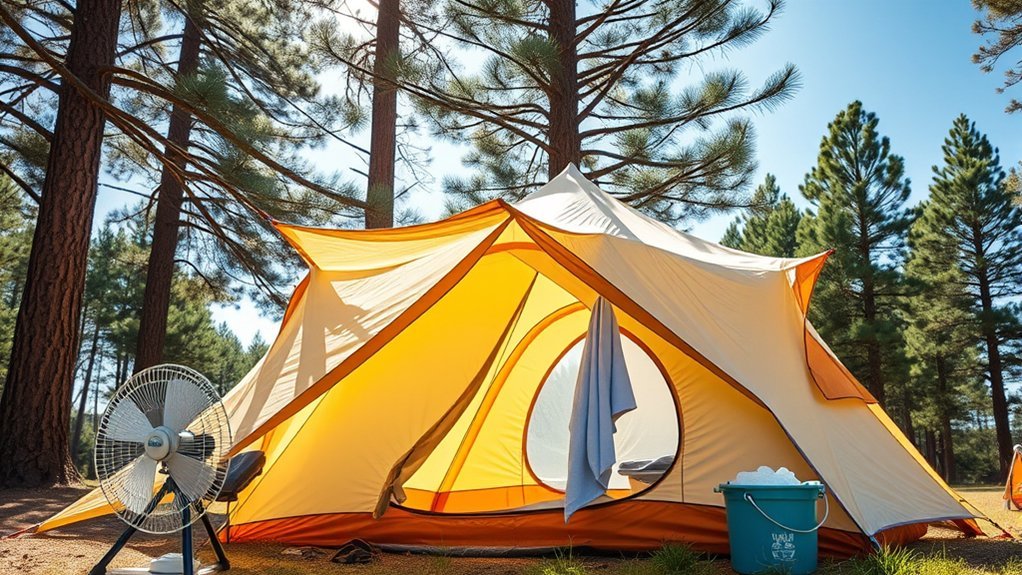
Last Updated on July 29, 2026 by Mason Reed
Keeping a tent cool in summer takes more than opening one door. The best results come from combining shade, cross-ventilation, a well-pitched rainfly, and smart timing. A reflective tarp and a small fan can help, but they cannot make a dangerously hot campsite safe. Plan for the forecast, drink regularly, and know when to leave the tent for a cooler place.
Quick Answer
To keep a tent cool, pitch it in safe shade, face doors and vents toward the breeze, create an air gap under a reflective overhead tarp, and ventilate when weather allows. Use a battery fan only as a comfort aid, not as protection from extreme heat, and move to a cooler location if conditions become unsafe.
Key Takeaways
- Shade the tent before trying gadgets; stopping direct sun usually makes the biggest difference.
- Choose a 3-season tent with large mesh panels, opposing openings, and adjustable rainfly vents.
- Leave space between a reflective tarp and the tent so trapped hot air can escape.
- Fans move air but do not lower the air temperature; do not rely on one when the tent is about 90°F or hotter.
- Watch for heat exhaustion and heat stroke, and leave the campsite when cooling measures are not enough.
At a Glance
| Time Required | 10–25 minutes beyond a normal tent setup |
| Difficulty | Easy to moderate |
| Tools Needed | Tent stakes, guylines, reflective tarp or canopy, water, and an optional battery or solar fan |
| Cost | $0–$80, depending on gear already owned |
Disclosure: As an Amazon Associate I earn from qualifying purchases. Some links on this page are affiliate links, at no extra cost to you.
Understanding Tent Warmth and Ventilation
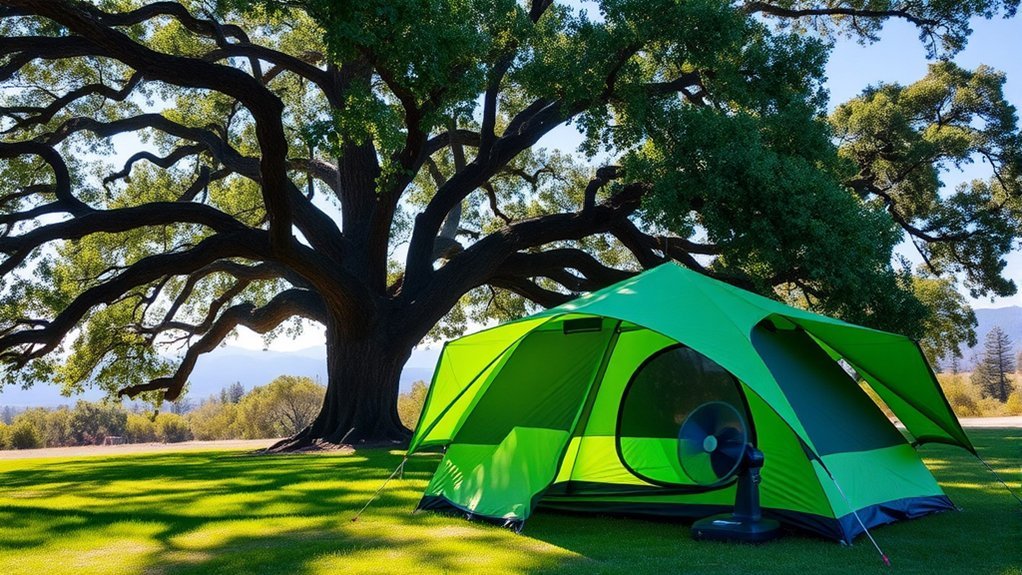
A tent warms when sunlight heats the rainfly, walls, floor, and objects inside. Warm air then becomes trapped when doors and vents are closed. People also add heat and moisture through breathing, so a sealed tent can feel hotter and more humid than the outdoor air.
Ventilation works best when air has a clear path in and out. Open opposing doors, windows, or vents to create cross-ventilation. Stake the tent and rainfly taut so there is an air gap between them. According to REI’s tent-selection guidance, large mesh panels in the ceiling, doors, and windows improve airflow in 3-season tents.
Face a main opening toward a safe, steady breeze when possible. Keep another vent open on the opposite side so warm air can escape. Avoid sealing the tent merely to keep dust out unless conditions require it.
Note: Remove or roll back the rainfly only when the forecast is dry and you do not need its protection from rain, dew, wind, or privacy. In uncertain weather, open its vents and doors instead of removing it completely.
Choosing the Right Tent and Utilizing Features
For warm-weather camping, a well-ventilated 3-season tent is usually more comfortable than a winter-focused shelter with limited mesh. Capacity alone does not guarantee good airflow. Look at the placement and size of vents, doors, and mesh panels.
| Feature | Why It Helps |
|---|---|
| Large mesh body panels | Allow warm, moist air to escape while keeping most insects out |
| Two doors or opposing windows | Create a more direct cross-breeze |
| Adjustable rainfly vents | Release warm air while preserving weather protection |
| Roll-back fly doors or panels | Increase airflow during dry conditions |
| Light-colored rainfly | May absorb less solar heat than a dark surface, although shade and ventilation matter more |
Test all vents before the trip and make sure gear does not block them. Store packs in a vestibule when conditions allow rather than filling the sleeping area with heat-absorbing equipment. Leave enough sleeping space so people are not pressed against the tent walls.
Campsite Selection and Setup
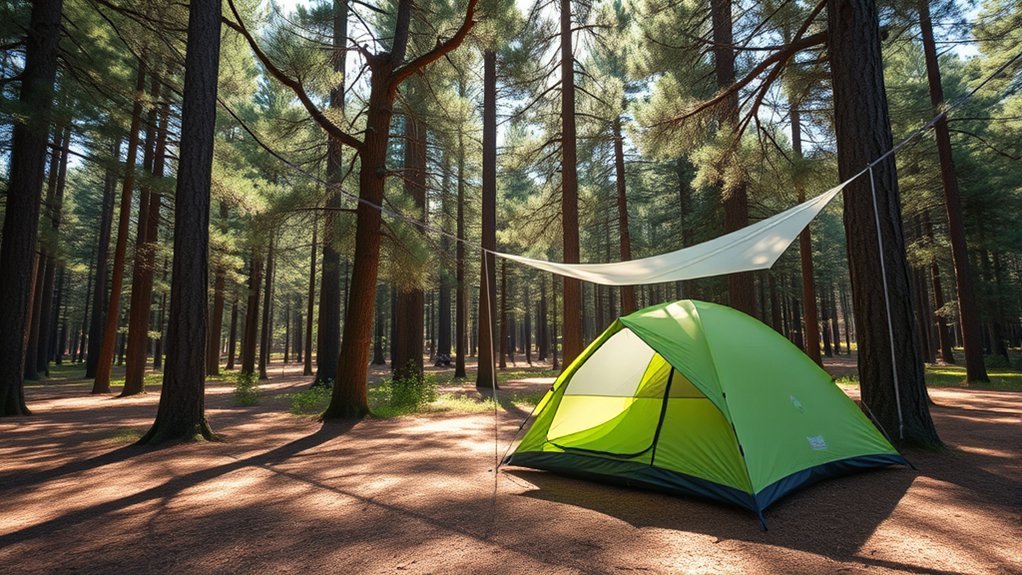
Choose an established campsite that receives shade during the hottest part of the day. Morning sun is often easier to manage than late-afternoon sun, which can heat the tent shortly before bedtime. Observe the sun’s path before pitching, and use a compass app only as a backup to what you see on site.
Look for natural airflow without placing the tent on an exposed ridge. Avoid low spots that can collect water during storms. The ground should be level, durable, and free of sharp debris. Before camping beneath trees, inspect the area for dead limbs, leaning trunks, or other overhead hazards.
Check the National Weather Service heat outlook and safety guidance before leaving and again when service is available. Pay attention to forecast highs, overnight lows, humidity, wind, thunderstorms, and heat alerts. A hot night with little wind may require a different campsite or lodging plan.
Warning: Never trade safety for shade. Do not pitch beneath dead branches, in a dry wash, next to an unstable rock face, or where a tarp could become a sail in strong wind. Leave the site when thunderstorms, flash flooding, wildfire smoke, or extreme heat make camping unsafe.
Additional Cooling Strategies and Summer Camping Tips
Use several small measures together instead of expecting one product to cool the entire shelter:
- Pitch late when practical: If campsite rules and daylight allow, set up in late afternoon so the tent spends fewer hours absorbing direct sun.
- Air out the shelter: Open doors and vents during cooler periods. If the tent is secure and weather is dry, roll back part of the rainfly.
- Keep hot gear outside: Store sun-warmed packs, shoes, and sealed containers in a shaded vestibule rather than beside the sleeping area.
- Use a warm-weather sleep system: Choose a light sheet, sleeping-bag liner, or summer-rated bag instead of a heavily insulated bag.
- Cool your body before bed: Rest in shade, change into dry clothing, and use a cool damp cloth on the neck, wrists, or face.
- Ventilate after sunset: Once the outdoor air is cooler than the tent interior, use openings and a fan to exchange the trapped warm air.
Pro Tip: Place a small thermometer inside the tent at sleeping height. It gives you a better basis for deciding whether a fan is helpful or whether you need to leave for a cooler location.
Towel Air Conditioner for Your Tent
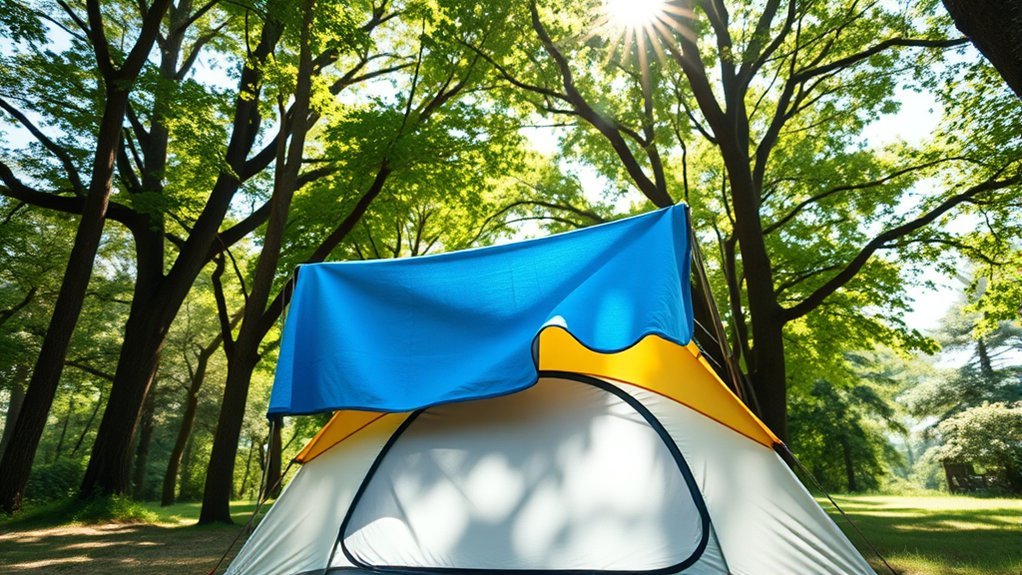
A damp towel near moving air can cool your skin through evaporation, especially in a hot, dry climate. It is not a true air conditioner and usually will not cool the whole tent. In humid weather, evaporation slows and the towel may simply add moisture to the shelter.
- Dampen a thin towel: Use clean water and wring the towel until it is moist but not dripping.
- Keep it away from gear: Hang it where it will not touch sleeping bags, electronics, tent walls, or the floor.
- Move air past it: Aim a low-speed battery fan across the towel or use the towel directly on your neck and arms.
- Stop if humidity builds: Remove the towel if the tent feels muggy or condensation forms.
- Dry it fully: Do not pack the towel wet, because prolonged moisture encourages odor and mildew.
Use a light-colored towel in direct sun. Dark fabric generally absorbs more solar energy and is not a cooling advantage. For most campers, applying the damp cloth to the body is simpler and more effective than hanging it inside the tent.
Use of Shade Canopies and Reflective Tarps
An overhead canopy or reflective tarp can reduce direct solar heating, but only when it is pitched with ventilation and wind safety in mind. The tarp should shade the roof and sun-facing wall without resting on the tent.
Benefits of Shade Canopies
- Less direct sun: The canopy absorbs or reflects part of the sunlight before it reaches the tent.
- A cooler living area: Extra shade gives campers a place to rest outside the tent during the day.
- Better weather flexibility: A properly pitched canopy can provide shade while allowing the tent’s own vents to remain open.
Choose a canopy rated for outdoor use and follow its wind limits. Stake every required point and lower or remove the canopy before strong wind or thunderstorms.
Effective Reflective Tarp Usage
Pitch the reflective side toward the sun and leave roughly 12–24 inches of open air between the tarp and tent roof when the site allows. Keep the sides open so hot air can escape. Angle the tarp so rain drains away from the tent entrance and does not pool overhead.
| Tarp Size | Best Use |
|---|---|
| 8 × 10 ft | Compact shade for a small backpacking or two-person tent |
| 10 × 10 ft | Common choice for a small car-camping tent |
| 12 × 12 ft | More coverage for a medium tent and a small shaded entry |
| 20 × 20 ft | Group shade when the site, anchors, and weather safely support a large tarp |
A footprint under the tent protects the floor from abrasion and moisture, but it is not a reliable way to cool the shelter. Keep every edge of the footprint tucked beneath the tent so it does not collect rainwater.
Staying Hydrated and Cool
There is no single daily water amount that fits every camper. Temperature, humidity, activity, body size, diet, health conditions, and sweat rate all matter. Carry more water than you expect to need, drink at regular intervals, and do not wait for severe thirst.
Importance of Hydration
For moderate activity in heat lasting less than two hours, NIOSH recommends about 8 ounces of water every 15–20 minutes. Prolonged heavy sweating may call for a balanced electrolyte drink. NIOSH also advises against excessive intake; generally, fluid consumption should not exceed 6 cups per hour.
- Start the day hydrated and keep water easy to reach.
- Take frequent breaks in shade, especially during the hottest hours.
- Avoid using alcohol as a cooling drink.
- People with fluid restrictions, heart disease, kidney disease, or medication-related concerns should follow their clinician’s advice.
Cooling Snacks and Drinks
Water-rich foods such as watermelon, oranges, cucumbers, yogurt, and chilled salads can add fluid and make hot-weather meals more comfortable. Freeze some water bottles before car camping so they help keep the cooler cold and become drinking water as they thaw.
Sports drinks are most useful during long periods of heavy sweating, not as a replacement for all water. Store food at safe temperatures, keep the cooler shaded, and limit cooking inside or next to the tent because stoves add heat and create fire and carbon-monoxide hazards.
Choosing Breathable Fabrics and Proper Clothing
Wear loose, lightweight clothing that allows sweat to evaporate. Light colors usually absorb less sunlight than dark colors. Choose garments that suit the climate and your activity:
- Moisture-managing fabric: Lightweight synthetic or merino layers can move moisture away from the skin. Cotton can feel comfortable in dry heat when wet, but it dries slowly and can become chilly after sunset.
- Sun coverage: A loose long-sleeved shirt, sunglasses, and a brimmed hat reduce direct sun exposure while you are outside the tent.
- Dry sleep clothes: Change out of sweat-soaked clothing before bed to reduce clamminess and nighttime chilling.
Use sunscreen on exposed skin and reapply according to the label. Clothing should protect you without trapping unnecessary heat.
Utilizing Portable and Solar-Powered Fans
Battery and solar-powered fans can improve comfort by moving air and helping sweat evaporate. They work best near an open door or vent, where they can draw in cooler air or push warm air out. A fan does not lower the actual air temperature.
Position one fan low near a shaded opening to bring in cooler air, or high near an opposite opening to exhaust warm air. Keep blades guarded, secure the fan so it cannot fall, and protect batteries and charging equipment from rain and condensation. Follow the manufacturer’s charging and temperature limits.
Warning: Do not rely on a fan when the tent is around 90°F or hotter. The EPA advises against using electric fans as the main cooling method in very hot enclosed spaces. Move to air conditioning, a cooling center, or another cooler location.
Recognizing Heat Illness
A cooler tent is a comfort measure, not a treatment for dangerous heat. The National Weather Service heat-illness guidance separates heat exhaustion from heat stroke:
| Condition | Common Signs | What to Do |
|---|---|---|
| Heat exhaustion | Heavy sweating, weakness, dizziness, headache, nausea, cool or clammy skin, or fainting | Move to a cooler place, loosen clothing, cool with wet cloths, and offer small sips of water if the person is fully conscious. Get medical help if symptoms worsen, vomiting occurs, or recovery is not prompt. |
| Heat stroke | Confusion, slurred speech, loss of consciousness, very high body temperature, or hot red skin that may be dry or damp | Call 911 immediately and begin rapid cooling. Do not give fluids to an unconscious or confused person. |
If the tent remains dangerously hot after sunset, the safest cooling strategy is to leave it and sleep somewhere cooler.
Warning: Never use a charcoal grill, camp stove, fuel-burning lantern, or unapproved heater inside a tent. The U.S. Consumer Product Safety Commission warns that camping equipment can produce deadly carbon monoxide in enclosed spaces.
Troubleshooting a Hot Tent
| Problem | Likely Cause | Fix |
|---|---|---|
| Tent is hottest before sunset | Late-afternoon sun hits the fly | Add west-side shade or choose a site shaded later in the day |
| Air feels still | Only one opening is exposed | Open an opposite vent and point a fan toward the exit |
| Tent feels muggy | High humidity, wet gear, or a damp towel inside | Remove wet items and maximize ventilation; skip evaporative cooling |
| Tarp makes the tent hotter | Tarp touches the roof or traps air at the sides | Raise it, open the sides, and maintain an air gap |
| Cooling measures are not enough | Extreme ambient heat or a hot overnight forecast | Leave for an air-conditioned or otherwise cooler location |
Frequently Asked Questions
Can I use a regular fan inside my tent?
A guarded battery or USB fan is the safest practical choice. A household fan requires a dry, properly rated power source and protected connections, which many campsites do not provide. Keep any fan away from wet fabric and do not rely on it when the tent is around 90°F or hotter.
What time of day is best for setting up my tent?
Late afternoon can reduce the number of hours the tent sits in direct sun, but do not wait until dark or an approaching storm. At reserved sites, arrive early enough to inspect overhead hazards, drainage, shade, and the sun’s path before pitching.
How much does tent color affect temperature?
A lighter outer fabric can absorb less sunlight than a dark one, but color is only one factor. Shade, coating, fabric thickness, airflow, rainfly spacing, and sun angle can matter more. Do not expect color alone to keep a tent safe in extreme heat.
Are there specific tent brands known for better ventilation?
Ventilation varies by model more than by brand. Compare the percentage of mesh, number and position of doors, adjustable fly vents, and the ability to roll back fly panels. Read the exact model’s manual and owner reviews rather than relying on a brand name alone.
Can I use ice packs to cool my tent?
Ice packs are better for cooling a person than an entire tent. Wrap one in cloth and apply it briefly to the neck, armpits, or groin during ordinary cooling, but avoid direct skin contact. For suspected heat stroke, call 911 and begin rapid cooling immediately.
Should I sleep without the rainfly in summer?
Only when the weather is reliably dry and the tent’s design allows it. The rainfly also protects against dew, windblown rain, and some ultraviolet exposure. Opening vents or rolling back fly doors is often a safer compromise.
Conclusion
Keeping a tent cool starts with site choice and shade, followed by cross-ventilation and a safe overhead tarp. Fans, damp towels, cold drinks, and light sleep gear can improve comfort, but none can make extreme heat harmless. Check the forecast, monitor the tent temperature, recognize heat-illness symptoms, and be ready to move to a cooler place when conditions exceed what camping gear can safely manage.
Sources
- CDC/NIOSH Workplace Recommendations for Heat Stress — hydration frequency, electrolyte use, and fluid-intake limits.
- National Weather Service: Heat Cramps, Exhaustion, and Stroke — symptoms and emergency actions.
- National Weather Service Heat Safety — forecasts, alerts, vulnerable groups, and heat planning.
- U.S. EPA: Extreme Heat and Indoor Air Quality — limits of electric fans in very hot enclosed spaces.
- U.S. Consumer Product Safety Commission: Portable Heaters and Camping Equipment — carbon-monoxide risks from fuel-burning camping devices.
- REI Expert Advice: What to Look for in a Camping Tent — mesh, doors, rainflies, and ventilation features.
