

Last Updated on July 29, 2026 by Mason Reed
Camping with your dog can be comfortable, clean, and low-stress when you plan the tent setup around your dog’s needs. The goal is not to keep every grain of dirt outside. It is to protect the tent floor, control food and waste, maintain airflow, and give your dog a familiar place to settle. A washable floor layer, dedicated bed, paw towel, secure food storage, and close supervision handle most problems before they start.
Quick Answer
To keep a tent clean when camping with your dog, cover the floor with a washable blanket or rug, give your dog a dedicated bed, wipe and inspect their paws before entry, and store food and waste securely. Keep the tent ventilated, supervise your dog, and sweep or shake out the floor layer each day.
Key Takeaways
- Check campground pet rules, trail restrictions, leash requirements, and wildlife-food regulations before leaving home.
- Use a washable tent-floor layer and a familiar dog bed to protect fabric and help your dog settle.
- Wipe paws, check for ticks and debris, and keep a towel near the tent door.
- Use resealable bags only for meal portions; place all food, treats, bowls, and scented chews in approved wildlife-safe storage.
- Never leave your dog unattended in a tent, at a tether, or in a parked vehicle.
At a Glance
| Time Required | 20–30 minutes for the initial setup, plus 3–5 minutes after each outing |
| Difficulty | Easy |
| Tools Needed | Washable blanket or rug, dog bed, absorbent towel or paw mitt, waste bags, leash, bowls, brush, and secure food container |
| Cost | About $0–$60, depending on what you already own |
Warning: A tent and a parked vehicle can both become dangerously hot. Never leave your dog unattended in either one. If your plans include places where dogs are prohibited, arrange safe care in advance or choose a different activity.
Disclosure: As an Amazon Associate I earn from qualifying purchases. Some links on this page are affiliate links, at no extra cost to you.
Check the Rules and Prepare Your Dog
Start by confirming that dogs are allowed at the campground and on the trails you plan to use. Rules vary by park and may cover leash length, restricted areas, pet limits, quiet hours, unattended animals, and food storage. The National Park Service recommends checking park-specific rules, controlling barking, cleaning up waste, keeping pets leashed where required, and never leaving them unattended.
Your dog should also be ready for the trip. Update the ID tag and microchip contact details, pack current medications and health records, and locate the nearest veterinary clinic before heading into a remote area. Bring more drinking water than you expect to need, a pet first-aid kit, a spare leash, and any veterinarian-recommended parasite prevention. A short practice night in the backyard can show whether your dog is comfortable with tent fabric, zipper sounds, nearby movement, and sleeping in a small space.
Dog Camping Packing List
- Regular food, treats, fresh water, and collapsible bowls
- Leash, harness, backup leash, ID tag, and current photo
- Dog bed, blanket, towel, and washable tent-floor cover
- Waste bags and a sealed container for carrying used bags
- Brush or comb, paw towel or mitt, and tick-removal tool
- Medications, health records, and a pet first-aid kit
- Wildlife-safe storage that meets the campground’s rules
Choose Your Dog’s Spot First
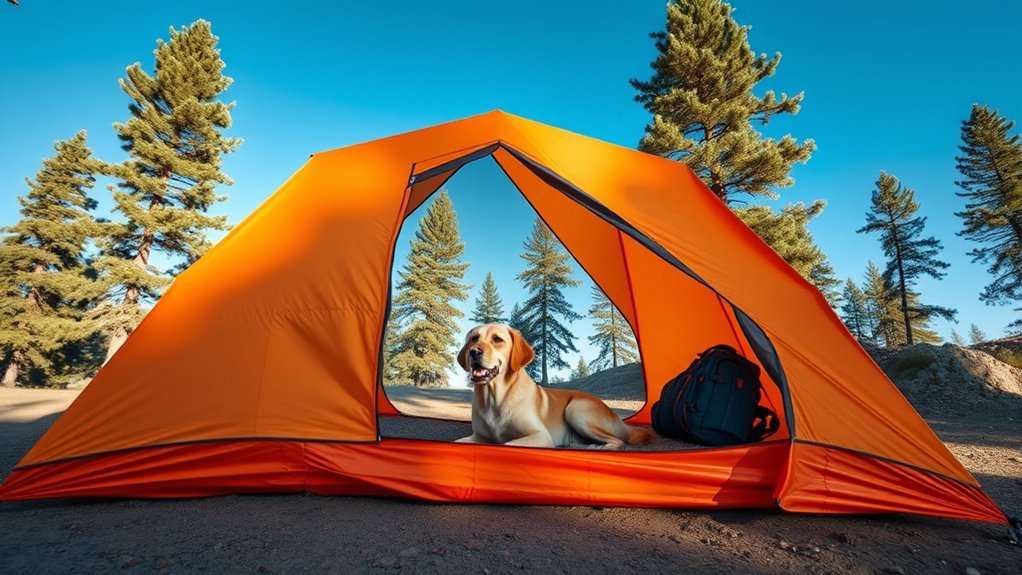
As soon as the tent is pitched, choose one interior corner for your dog. Keep it away from the door swing, stove or cooking gear, sharp objects, and any area where you need to step during the night. Place the dog’s bed and a familiar blanket there so the spot smells and feels like home.
Let your dog enter calmly on leash and reward quiet settling. Do not encourage digging, chasing shadows on the tent wall, or rushing through the doorway. A clear routine—enter, wipe paws, go to bed—helps reduce confusion and keeps dirt in one controlled area.
Pro Tip: Keep the dog’s bed on the side farthest from the tent door. Dirt and water stay near the entrance instead of being tracked across the entire floor.
Use Blankets or Rugs on the Floor of Your Tent
A washable blanket, low-pile rug, or fitted tent carpet protects the floor from claws, grit, moisture, and repeated turning. It also gives you one item to shake out instead of cleaning the entire tent every time your dog comes inside.
Protect Tent Material
Trim long nails before the trip and inspect them for sharp splits. Cover the main sleeping area, especially if you use an inflatable pad. A durable woven blanket can add a protective layer between claws and thin tent fabric, but avoid loose loops or fringe if your dog chews fabric or catches nails easily.
Keep the layer flat so it does not bunch against the tent wall or block vents. If it becomes soaked, remove it, dry the tent floor, and replace it with a dry layer. Trapped moisture can create odors and condensation.
Easy Clean-Up Solutions
Choose a cover you can shake, brush, or wash. Each morning, take it outside, remove hair and grit, and let it air out. Sweep or wipe the exposed tent floor before putting the cover back. At home, follow the tent manufacturer’s cleaning instructions; harsh household cleaners, bleach, and machine washing can damage coatings, seams, or mesh.
Bring a Dog Bed or Sleeping Bag for Comfort
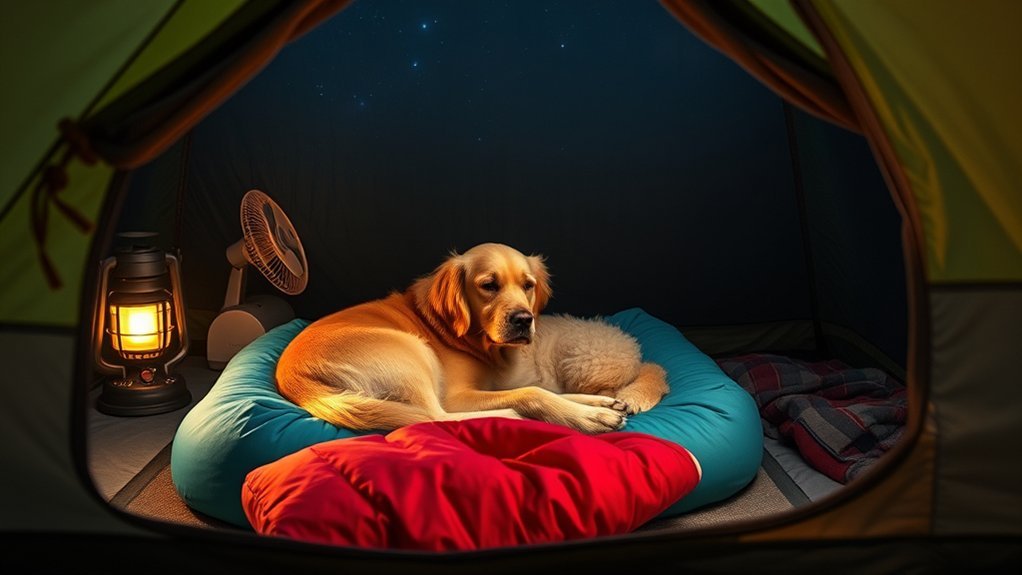
A familiar dog bed or insulated sleeping mat gives your dog a clear place to rest and adds warmth between their body and the ground. It may also reduce pacing, nesting, scratching, and repeated attempts to climb onto your sleeping bag.
Match the bedding to the weather. A thin mat may be enough on a warm night, while cold ground can require an insulated pad and dry blanket. Keep wet bedding out of the tent until it is dry. If your dog wears a coat or sweater, make sure it fits well and does not restrict breathing or movement.
Limit the View at Night Without Blocking Ventilation
Reducing your dog’s view of passing flashlights, people, or wildlife may lower alert barking, but do not seal the tent to do it. Keep roof vents and enough mesh open for airflow, and use the rainfly and door panels to block selected sight lines. Tent ventilation matters for heat control and condensation.
Minimize Outside Distractions
Position the dog’s bed away from the main window or door. Close only the panel facing the busiest path, then leave other mesh areas open. A familiar blanket placed beside the bed can create a visual barrier without covering the dog or obstructing vents.
Enhance Nighttime Comfort
Follow the same bedtime routine you use at home: a final bathroom break, water, a calm cue, and quiet rest. Keep the leash and a flashlight within reach in case your dog needs to go outside. Never attach a tether to your dog while everyone is sleeping; it can wrap around gear or become an entanglement hazard.
Reduce Barking Noise
Exercise and mental enrichment earlier in the day can help, but an exhausted or overstimulated dog may still bark. Reward quiet behavior and calmly redirect your dog before barking escalates. If your dog cannot settle, move farther from busy campsites when possible. Persistent fear, panic, or reactivity is a sign that the trip or location may not be suitable.
Use Low-Volume Sound to Mask Sudden Noise
A fan or low-volume sound machine may soften abrupt campground sounds for some dogs. Treat it as an optional masking tool, not a cure for anxiety. Watch your dog’s body language; panting when it is not hot, pacing, trembling, hiding, repeated lip licking, or refusal to settle may mean the sound or environment is adding stress.
| Option | Possible Benefit | Safe Use |
|---|---|---|
| Battery fan | Air movement and steady sound | Secure it, guard the blades, and keep cords out of reach |
| White noise | May mask footsteps or distant voices | Keep the volume low enough to hear weather, wildlife, alarms, and your dog |
| Familiar audio | May support a known bedtime routine | Stop if your dog becomes more alert or restless |
Bring Fans for Airflow, Not as a Heat-Safety Plan
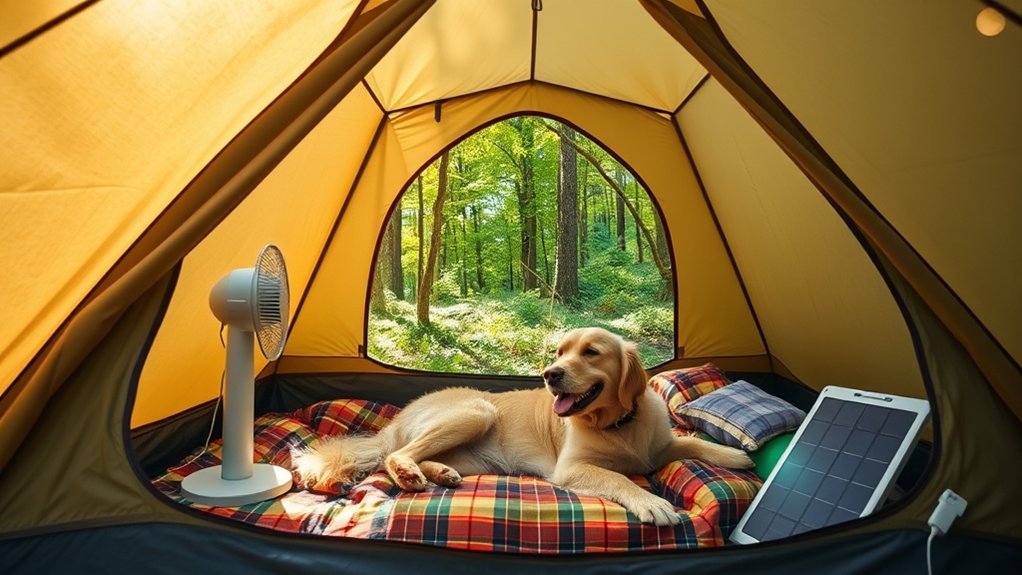
A battery-operated or rechargeable fan can improve air movement inside a ventilated tent. Place it on a stable surface where your dog cannot knock it over, chew a cord, or reach moving blades. A misting fan may add comfort in dry conditions, but it can also make bedding and tent fabric damp.
A fan does not make a hot tent safe. Move your dog to shade, stop strenuous activity, and provide fresh water before overheating begins. The American Animal Hospital Association lists heavy panting, thick drool, weakness, confusion, vomiting, diarrhea, collapse, and seizures among heatstroke warning signs. Heatstroke is an emergency; begin cooling with cool—not ice-cold—water and seek veterinary care immediately.
Warning: Do not rely on a fan, closed tent, or shaded vehicle during hot weather. If your dog is panting heavily, weak, confused, vomiting, stumbling, or collapsing, leave the campsite activity and seek urgent veterinary help.
Use Paw Cleaning Mitts After Outdoor Adventures
Keep an absorbent towel, paw mitt, or pet-safe unscented wipe near the tent entrance. Remove mud, sand, burrs, and moisture before your dog steps onto the floor cover. For heavy mud, rinse the paws outside, dry them well, and then enter.
Paw cleaning is also a quick health check. Look between the toes and around the pads for cuts, cracked skin, thorns, foxtails, insects, or tenderness. Check the rest of the coat at least once a day. The CDC recommends checking outdoor pets daily for ticks, including around the ears and eyelids, under the collar and front legs, between the toes and back legs, and around the tail.
Note: Avoid using strongly scented human wipes or cleaners on paws unless your veterinarian confirms the product is appropriate. A damp cloth and clean water are often enough for routine dirt.
Portion Dog Food, Then Store It Securely
Gallon-sized resealable bags can organize daily portions, but they are not odor-proof or wildlife-resistant. Keep the original pet-food label information or take a clear photo of the product name, lot number, best-by date, and manufacturer. The FDA advises keeping dry pet food cool and dry and preserving package information.
At camp, place portion bags inside the food locker, bear-resistant canister, hard-sided vehicle storage allowed by the site, or other method required by local rules. Store treats, scented chews, bowls, food scraps, and food-smeared towels the same way. Never leave food or water bowls outside overnight. In bear country, dog food must be managed like human food.
A resealable bag organizes meals; it does not replace a campground-approved wildlife-resistant storage method.
Never Leave Your Dog Alone in the Tent
Dogs can overheat, escape, become entangled, bark continuously, or damage tent fabric when left alone. Keep your dog with you and under control. A portable pen or tether can be useful only while you are present and actively supervising; check the campsite rules before using either one.
Minimize Anxiety and Stress
Use familiar bedding, quiet rewards, and short settling sessions. Do not force a frightened dog to remain in the tent. If your dog paces, claws at doors, tries to escape, trembles, or cannot rest, move to a calmer setting. Ask your veterinarian about severe travel or noise anxiety before the trip rather than trying unapproved supplements at camp.
Prevent Tent Damage
Supervision is the best protection. Keep food and chews away from tent walls, prevent digging, and redirect mouthing before it becomes chewing. Store poles, repair kits, batteries, toiletries, and sharp tools where your dog cannot reach them. A calm, trained place cue is safer than expecting a floor blanket to stop destructive behavior.
Ensure Your Dog’s Safety
Do not use a parked vehicle as a substitute for supervision. Vehicles can heat rapidly even when the outdoor temperature feels moderate. If an activity does not allow dogs, arrange a sitter, boarding, or another responsible adult before the trip, or choose a dog-friendly plan.
Clean Up After Your Dog Before Leaving
Bring more waste bags than you expect to use and pick up waste promptly. Follow the campground’s disposal rules; in most developed campgrounds, that means sealing the bag and placing it in a designated trash receptacle. Do not leave filled bags beside a trail or campsite. Leave No Trace advises picking up and packing out dog waste because it can pollute water and affect the outdoor environment.
Before packing the tent, shake out the floor cover, sweep the floor, wipe any damp spots, and allow the tent to dry. Remove hair from zippers and mesh, then inspect the floor for claw marks or small punctures. Pack wet bedding separately and dry everything fully at home before storage.
Troubleshoot Common Tent Problems
Your Dog Keeps Rushing the Door
Clip on the leash before opening the zipper, ask for a wait, and open the door only a few inches at first. Keep the sleeping area away from the exit and reward your dog for staying on the bed.
Your Dog Is Wet or Muddy
Use a two-step entry: rinse or brush outside, then towel-dry in the vestibule or at the doorway. Replace wet bedding instead of letting moisture soak into the tent floor.
The Tent Smells Like Dog
Increase ventilation, remove damp fabric, clean bowls, and shake out hair daily. At home, spot-clean according to the tent maker’s directions and dry the tent completely before storage.
Your Dog Barks at Every Sound
Block the busiest sight line while maintaining airflow, move to a quieter site if available, and use low-volume masking sound only if it helps. If barking continues, end the overnight stay rather than disturbing other campers or reinforcing panic.
Frequently Asked Questions
How can I prevent my dog from scratching the tent?
Trim sharp nails before the trip, cover the sleeping area with a durable washable layer, teach a place cue, and supervise your dog inside. Redirect digging or pawing immediately. A floor cover protects fabric, but training and supervision prevent repeated damage.
What should I pack for my dog’s first camping trip?
Pack regular food, extra water, bowls, a leash and backup leash, current identification, bedding, towels, waste bags, a brush, tick-removal tool, medications, health records, and a pet first-aid kit. Bring storage that meets the campground’s wildlife rules.
How do I manage my dog’s anxiety while camping?
Practice in the tent at home, bring familiar bedding, keep a predictable routine, choose a quiet site, and reward calm behavior. White noise may mask sudden sounds for some dogs, but it is not a treatment for severe anxiety. Discuss persistent fear or panic with your veterinarian before traveling.
Can I use regular cleaning supplies inside the tent?
Use as little cleaner as possible and follow the tent manufacturer’s directions. For routine dirt, start with water and a soft cloth. Avoid bleach, harsh detergents, heavily scented sprays, and products your dog may lick from paws or fabric.
What food and water supplies are best for camping with dogs?
Bring your dog’s normal food, more fresh water than you expect to use, and easy-to-clean bowls. Portion meals for convenience, preserve the food’s label and lot details, and store food, treats, bowls, and scented chews according to local wildlife rules.
Should my dog sleep inside the tent?
For most tent-camping trips, keeping your dog inside with you provides better supervision and reduces wildlife encounters. Make sure pets are allowed, maintain ventilation, give the dog a dedicated bed, and keep the leash ready for nighttime bathroom breaks.
What should I do if a trail does not allow dogs?
Do not leave your dog alone at the campsite, in the tent, or in a parked vehicle. Choose a dog-friendly trail, have another responsible adult stay with the dog, arrange professional care, or leave the dog safely at home.
Conclusion
Keeping a tent clean while camping with your dog comes down to a repeatable routine: prepare before the trip, create one sleeping zone, cover the floor, wipe and inspect paws, ventilate the tent, secure every food scent, and supervise your dog. A little dirt is part of camping, but mud, damaged fabric, wildlife attractants, overheating, and unattended-pet risks are preventable. When your dog feels secure and the campsite stays orderly, both of you can rest and enjoy the trip.
Sources
- National Park Service: Camping With Pets — campground rules, leashes, noise, waste, and supervision
- American Animal Hospital Association: Dog Camping Checklist — preparation, first aid, water, food storage, and pet safety
- American Animal Hospital Association: Heatstroke in Pets — warning signs and emergency response
- Centers for Disease Control and Prevention: Preventing Ticks on Pets — daily tick checks and common attachment areas
- U.S. Food and Drug Administration: Proper Storage of Pet Food and Treats — package information, temperature, and dry-food storage
- Leave No Trace: How to Camp With Your Dog — waste disposal and responsible outdoor behavior
