
Last Updated on July 29, 2026 by Mason Reed
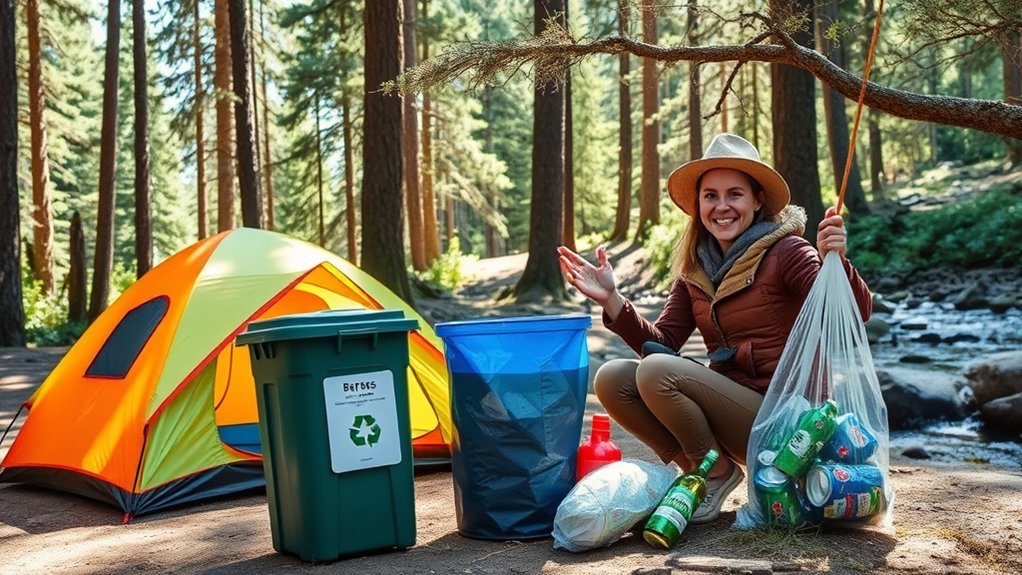
Managing trash while tent camping starts before you leave home. Reduce unnecessary packaging, carry a simple waste-sorting kit, and learn the rules for your campground or backcountry area. During the trip, seal food scraps and other scented waste immediately, protect natural water sources, and pack out anything the site cannot accept.
Quick Answer
Reduce packaging before your trip, sort waste into separate sealed containers, and store garbage with food and other scented items. Use only approved campground disposal facilities, follow local recycling and wildlife rules, strain dishwater, and pack out all remaining trash, food scraps, hygiene products, and hazardous items.
Key Takeaways
- Check the campground or land manager’s rules before deciding how to store food, garbage, recyclables, and wastewater.
- Pack out every food scrap unless the campground provides an official compost collection point.
- Store garbage with food and other scented items in the locker, vehicle, or bear-resistant container required for the area.
- Keep soap and dirty dishwater out of lakes and streams, even when the soap is labeled biodegradable.
- Never burn, bury, abandon, or secretly place trash beside a full receptacle.
- Do not refill disposable DOT-39 propane cylinders or place propane cylinders in ordinary recycling.
At a Glance
| Time Required | About 20–30 minutes to prepare; a few minutes after each meal |
| Difficulty | Easy |
| Tools Needed | Reusable food containers, sturdy waste bags, sealable food-scrap bag or container, recycling bag, wash basin, fine-mesh strainer, and any required wildlife-resistant storage |
| Cost | Often $0 with gear you already own; roughly $10–$40 if you need containers, a basin, or reusable bags |
Disclosure: As an Amazon Associate I earn from qualifying purchases. Some links on this page are affiliate links, at no extra cost to you.
Check the Rules and Pack a Waste Kit
Waste rules are not the same everywhere. A developed campground may have dumpsters, recycling bins, a utility sink, or a gray-water station. A backcountry site may require you to pack out everything. Some destinations also require a specific food locker or approved bear-resistant container.
Before leaving, check the website or contact the agency that manages your destination. Confirm:
- Whether trash, recycling, compost, and gray-water facilities are available
- Which recyclable materials the campground accepts
- Whether food, garbage, toiletries, and pet food require wildlife-resistant storage
- Whether toilet paper and human waste must be packed out
- How empty fuel cylinders, batteries, and other special waste must be handled
Build a compact waste kit with one sturdy outer bag or washable tote, several liners, a sealable container for food scraps, a separate recycling bag, a wash basin, and a fine-mesh strainer. Carry a small rigid container for broken glass, sharp can lids, or other items that could puncture a bag.
Pro Tip: Label your waste containers before the trip. A simple “trash,” “recycling,” and “food scraps” system prevents mistakes when the campsite is dark or busy.
Ditch Single-Use Disposables
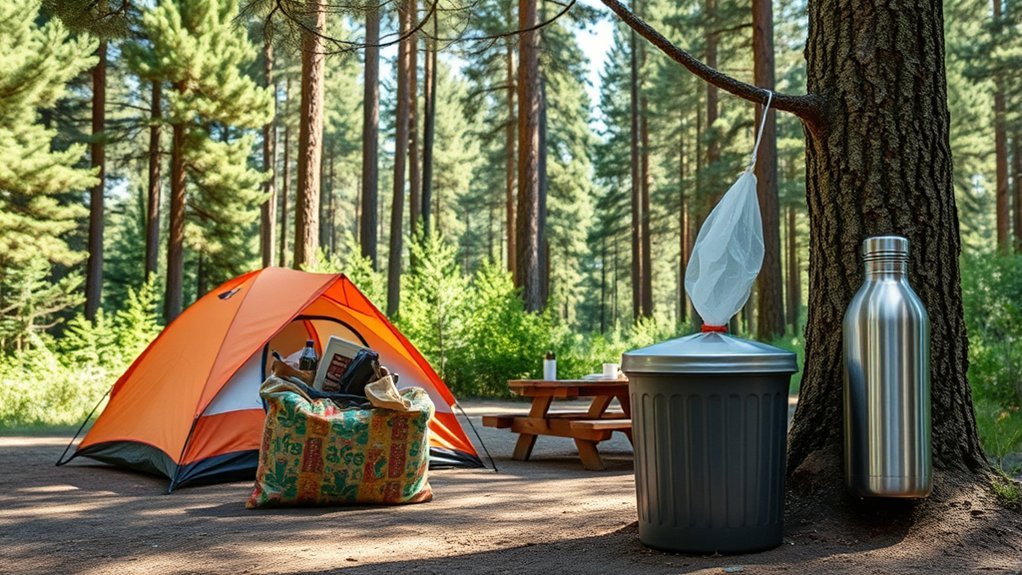
Reducing waste at the source is easier than managing a large trash bag later. Bring a washable plate or bowl, durable utensils, a mug, and a refillable bottle for each camper. Cloth napkins, silicone food bags, and reusable containers can replace many disposable items.
Avoid buying an item only because it carries a broad “eco-friendly” label. A reusable product helps most when it is durable, easy to clean, and likely to be used on many trips. Compostable plates, utensils, and bags may still need an industrial composting facility and should not be left at the campsite.
Remove unnecessary boxes, plastic trays, and other packaging at home. Keep cooking directions, allergy information, and expiration details when they are needed. Never transfer hazardous products into food or drink containers.
Prep and Pack Food From Home
Meal preparation at home can reduce wrappers, cans, and messy leftovers. Portion only what your group is likely to eat, but carry enough food for reasonable delays or emergencies. Place ingredients in clearly labeled, food-safe containers.
| Food Item | Low-Waste Storage Method |
|---|---|
| Chopped vegetables or kebabs | Rigid reusable food container |
| Hummus, sauce, or dressing | Leak-resistant reusable container |
| Pre-portioned dry meals | Reusable silicone bag or lightweight container |
| Bulk snacks | Reusable snack bag or screw-top container |
Plan one meal that uses ingredients left from earlier meals. For example, extra cooked vegetables can go into a wrap or soup. This reduces both food waste and the amount of scented garbage you must store.
Food scraps are still garbage in the outdoors. Orange peels, nut shells, coffee grounds, grease, bones, and crumbs should be sealed and packed out unless the campground provides an official collection system.
Eliminate Single-Use Plastic Water Bottles
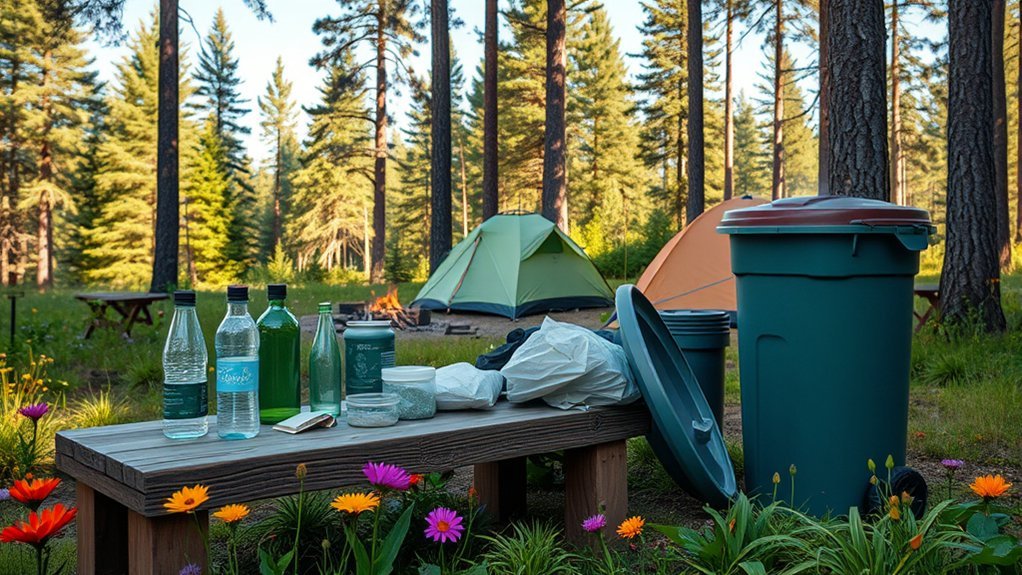
Carry a reusable bottle or hydration reservoir instead of a case of individual water bottles. At a developed campsite, refill only from a source marked as potable. In the backcountry, collect water only where permitted and treat it with a suitable filter, purifier, chemical treatment, or boiling method for the conditions.
Bring enough storage capacity for stretches without a dependable water source. A large refillable water container at camp can supply smaller bottles during the day while reducing packaging.
Note: A clear stream is not automatically safe to drink. Water treatment and trash reduction are separate tasks; follow the land manager’s water-safety guidance for your destination.
Avoid Miniature Toiletries
Refill small, durable containers from products you already use instead of repeatedly buying travel-size bottles. Take only the amount needed for the trip, and label every container clearly.
- Use refillable containers: Choose leak-resistant bottles or jars designed for the product.
- Limit duplicate products: A suitable multipurpose cleanser may reduce the number of containers you carry.
- Prevent leaks: Close lids tightly and keep liquids inside a secondary sealable bag.
- Treat scented products like food: In bear country, toothpaste, soap, sunscreen, lip balm, deodorant, wipes, and similar items may need to be stored with food and garbage.
A biodegradable label does not make soap harmless in a lake or stream. Use as little soap as practical and keep it away from natural water sources.
Use an Approved Refillable Propane Cylinder
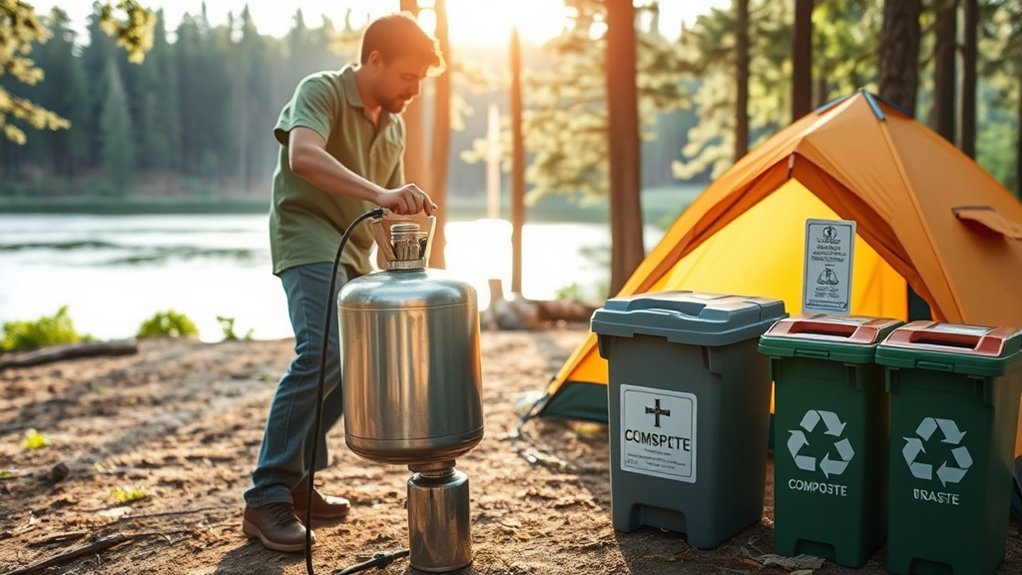
A cylinder manufactured and marked for repeated refilling can reduce the number of disposable cylinders you buy. Select a cylinder and adapter that are approved for your stove, and follow the appliance and cylinder manufacturers’ instructions.
Warning: Never refill a disposable DOT-39 cylinder, including the common disposable one-pound camping bottle. The Pipeline and Hazardous Materials Safety Administration states that DOT-39 cylinders are strictly non-refillable.
Inspect the cylinder, valve, hose, and connection before use. Do not use equipment that is corroded, damaged, leaking, recalled, or beyond its permitted service period. Keep cylinders upright, protect them from excessive heat, and use the stove only in the location and ventilation conditions specified by its manufacturer.
Do not place propane cylinders in ordinary campground recycling. Ask a propane dealer or local waste authority where cylinders are accepted. Do not puncture, crush, burn, or secretly discard a cylinder.
Manage Wastewater Effectively
Food particles, grease, soap, toothpaste, and personal-care products can pollute water and attract animals. The best disposal method depends on the campground and local regulations.
Use Designated Facilities First
If the campground provides a dishwashing sink, utility drain, or gray-water station, use it exactly as directed. Do not pour dishwater into a drinking-water fountain, storm drain, vault toilet, vegetation bed, or ordinary trash receptacle unless the site specifically instructs you to do so.
Use Biodegradable Soap Sparingly
“Biodegradable” does not mean safe for direct use in a stream or lake. Leave No Trace advises carrying wash water about 200 feet from natural water and using only a small amount of soap. In many cases, hot water, a scraper, and a little effort are enough for the first cleaning pass. See the official Leave No Trace soap guidance.
Follow Proper Washing Techniques
| Step | Action |
|---|---|
| 1 | Scrape all food and grease into the sealed food-scrap container. |
| 2 | Wash and rinse dishes in a basin rather than directly beside a water source. |
| 3 | Use the smallest practical amount of soap. |
| 4 | Strain food particles from the used wash and rinse water. |
| 5 | Put the strained particles in the sealed trash or food-scrap container. |
| 6 | Use the designated gray-water facility or follow the local disposal rule. |
Protect Water Sources
When no disposal facility is available and the managing agency allows dispersed gray-water disposal, carry the strained water at least 200 feet from water and camp and scatter it broadly over a durable area. Sensitive deserts, river corridors, alpine areas, and high-use camps may require you to carry gray water out instead. Review Leave No Trace gray-water guidance and the destination’s rules before your trip.
Separate Recycling and Food Scraps
Set up separate containers for ordinary trash, accepted recyclables, and food scraps. Separating them at the beginning prevents leaking food from contaminating otherwise recyclable cans, bottles, or cardboard.
Prepare Recycling Correctly
Recycling rules vary by campground and community. A recycling symbol or plastic resin code does not guarantee that the item is accepted locally. Check the labels on campground bins or take the material home for disposal through your regular program.
- Collect only materials that the receiving program accepts.
- Scrape containers clean so food does not contaminate the load.
- Keep paper and cardboard dry.
- Do not place loose plastic bags, propane cylinders, batteries, or unknown items in a recycling bin unless the program expressly accepts them.
The U.S. Environmental Protection Agency recycling guide explains that acceptance varies by local program and that food-contaminated items may not be recyclable.
Pack Out Food Scraps
Do not start a compost pile at a tent campsite. Vegetable peels, fruit cores, coffee grounds, shells, bones, grease, and leftover food can attract animals and may break down very slowly.
Place scraps in a seal-tight bag or container, store them with your other scented items, and carry them out. Compost the material at home or place it in an official campground compost container only when the campground operates one.
“Pack out all trash, leftover food, and litter.” — Leave No Trace
Reuse Bags and Containers for Trash
You can reuse clean packaging as an inner liner or small waste bag, but it still needs to go inside a sturdy outer container. Thin snack bags and ordinary zip bags can leak, tear, or release odors and should not be treated as wildlife-resistant storage.
- Dry trash: Place wrappers, clean packaging, and similar items in a sturdy lined bag.
- Wet or smelly trash: Double-bag it or place it in a leak-resistant container.
- Food scraps: Use a separate sealed bag or container stored with food.
- Sharp trash: Place broken glass, metal edges, or damaged utensils in a rigid puncture-resistant container.
- Reusable outer bag: Empty it at an approved facility, wash it after the trip, and let it dry completely.
Store Trash to Protect Wildlife
Garbage can contain crumbs, grease, food odors, toothpaste, wrappers, and other wildlife attractants. Store it according to the same local rules that apply to food and scented products.
Depending on the destination, acceptable storage may include:
- A campground food-storage locker
- A closed, locked vehicle where local rules permit vehicle storage
- An approved hard-sided bear-resistant container
- A park-provided bear pole or a specific tree-hanging method where the agency permits it
Check the destination before choosing a method. Some parks require canisters and do not accept improvised tree hangs. Keep a bear-resistant container properly closed and locked; a container cannot protect food or garbage while its lid is open. The National Park Service food-storage guide advises campers to pack out all uneaten food and food particles.
Warning: Never keep scented trash inside your sleeping tent. Do not leave a filled bag beside a picnic table, outside a full dumpster, or unattended overnight.
Handle Hygiene and Special Waste Safely
Some waste should be isolated from ordinary food packaging and recyclables.
Hygiene Waste
Seal and pack out wet wipes, diapers, menstrual products, dental floss, contact lenses, bandages, and similar items. “Flushable” or biodegradable wipes should not be buried or left in a toilet unless the facility specifically allows them.
Rules for toilet paper and human waste vary. Use a toilet where one is available. In the backcountry, follow the land manager’s instructions for catholes, waste bags, portable toilets, and toilet-paper disposal. Some fragile or high-use areas require all human waste to be packed out.
Pet waste also belongs in an approved trash receptacle or must be packed out. Do not leave filled pet-waste bags beside trails or campsites.
Hazardous and Unusual Waste
Keep batteries, chemicals, aerosol cans, stove fuel, damaged electronics, and propane cylinders separate. Retain original labels and do not mix leftover chemicals. Do not pour fuel, cleaners, or other hazardous liquids onto the ground or into a drain.
Ask the campground, local waste authority, propane dealer, or household hazardous-waste facility how to handle each item. The EPA household hazardous-waste guide recommends following product labels and consulting local environmental or solid-waste agencies.
Never Burn or Bury Trash
A campfire is not a garbage disposal system. Plastic, foil-lined packaging, cans, glass, batteries, and food may release harmful fumes, remain partly unburned, damage the fire ring, or attract wildlife. Pack them out instead.
Do not bury wrappers, food scraps, grease, or garbage. Animals may dig them up, and many materials remain in the soil for years. Use only an approved receptacle or carry the waste home.
Follow a Daily Cleanup Routine
A short cleanup after each meal keeps waste manageable:
- Scrape food particles into the sealed food-scrap container.
- Wash dishes using the approved wastewater method.
- Separate accepted recyclables from ordinary trash.
- Seal all bags and wipe crumbs or grease from the table and cooking area.
- Secure food, garbage, toiletries, and other scented items before leaving camp or going to sleep.
- Check the ground for twist ties, bottle caps, foil corners, food fragments, and other microtrash.
There is no universal rule that trash should be emptied every two days. At a developed campground, use an approved receptacle before the bag becomes overfilled or starts leaking. In the backcountry, keep all waste secured for the entire trip and pack it out.
Apply Leave No Trace Principles
Trash management is part of a larger minimum-impact camping routine. The actions below support the Leave No Trace principles without replacing local rules.
| Leave No Trace Principle | Trash-Management Action |
|---|---|
| Plan Ahead and Prepare | Check disposal, recycling, wastewater, and wildlife-storage rules. |
| Dispose of Waste Properly | Pack out trash, leftover food, hygiene products, and litter. |
| Minimize Campfire Impacts | Never burn food, plastic, cans, glass, foil-lined wrappers, or other garbage. |
| Respect Wildlife | Store food, trash, and scented items in the required secure system. |
| Be Considerate of Others | Leave receptacles usable and the campsite free of litter, odors, and spills. |
Inspect the Campsite Before Leaving
Walk the campsite slowly before departure. Look under the tent, table, vehicle, logs, rocks, and vegetation. Pick up microtrash such as torn wrapper corners, bits of foil, bread ties, fishing line, tissues, and food fragments.
Confirm that all waste containers, recycling, food scraps, wastewater equipment, fuel containers, and personal items are accounted for. Never leave a bag beside a full receptacle. Carry it to another approved facility or take it home.
Frequently Asked Questions
What should I do with food scraps while camping?
Seal food scraps in a bag or leak-resistant container, store them with food and other scented items, and pack them out. Do not create a campsite compost pile, bury scraps, scatter them, or burn them. Use a campground compost bin only when it is an official collection point.
How can I securely store trash to avoid wildlife?
Follow the destination’s food-storage rules and keep garbage with food and scented products. Use the required locker, approved bear-resistant container, vehicle, bear pole, or hanging method. A trash bag or ordinary plastic tote is not a bear-resistant container.
Are there eco-friendly alternatives to trash bags?
A washable outer trash tote can be reused for many trips, while clean food packaging can serve as an inner liner. Use a leak-resistant container for wet or smelly waste. Compostable or biodegradable bags still need proper disposal and should never be left outdoors.
How often should I empty my trash during the trip?
Seal and secure trash immediately after use. At a developed campground, move it to an approved receptacle before the bag leaks, overfills, or creates an odor problem. In the backcountry, keep it secured and pack it out at the end of the trip.
What are the best practices for disposing of hazardous waste?
Keep hazardous products in labeled containers, do not mix or pour out leftovers, and contact a local waste authority or household hazardous-waste facility. Propane cylinders, batteries, chemicals, and partly full aerosol cans should not be placed in ordinary campground recycling.
Can I burn or bury camping trash?
No. Burning garbage can release fumes and leave sharp or toxic residue, while buried food and trash may be uncovered by wildlife. Use an approved receptacle or pack the material out.
What should I do with wipes and toilet paper?
Pack out wet wipes, diapers, menstrual products, and other hygiene waste in a sealed bag. Toilet-paper and human-waste rules vary by location, so use provided toilets and follow the land manager’s instructions for catholes or required pack-out systems.
Conclusion
Good tent camping trash management is a simple routine: reduce packaging, sort waste, seal scented items, protect water, and follow the rules for the place you are visiting. Pack out food scraps and anything the site cannot accept, secure garbage from wildlife, and inspect the ground before leaving. A clean campsite protects animals, water, future campers, and the outdoor experience you came to enjoy.
Sources
- Leave No Trace: Dispose of Waste Properly — pack-it-out, food-scrap, dishwashing, and garbage guidance
- Leave No Trace: Gray-Water Disposal — wastewater facilities, straining, and dispersed disposal
- National Park Service: Bear Safety and Food Storage — secure storage of food, garbage, and scented items
- U.S. EPA: How to Recycle Common Materials — recycling acceptance and contamination guidance
- U.S. EPA: Household Hazardous Waste — safe handling and local disposal of hazardous products
- PHMSA: Never Refill DOT-39 Propane Bottles — federal propane-cylinder safety guidance
