
Last Updated on July 29, 2026 by Mason Reed
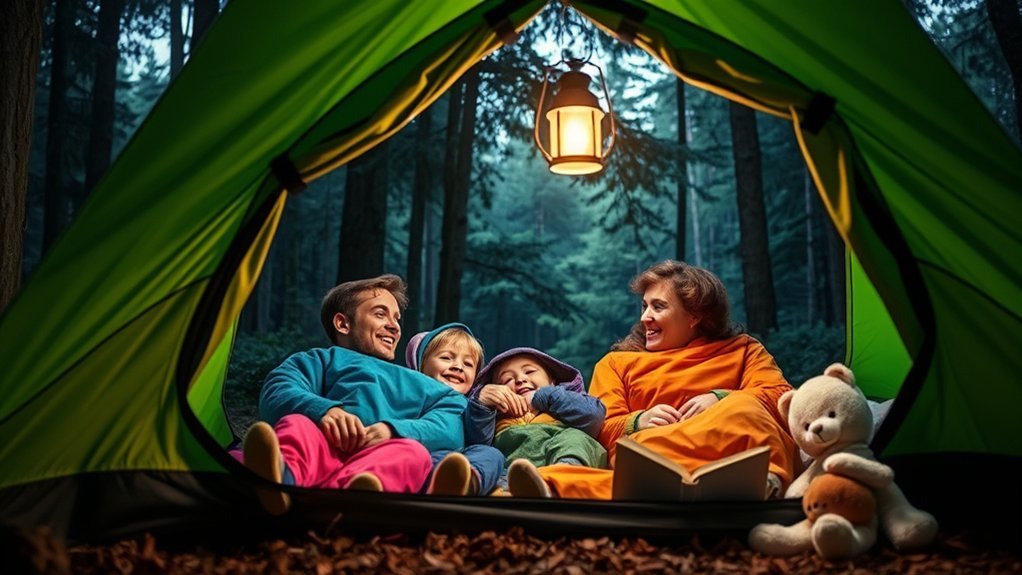
Camping with kids in a tent can lead to great family memories, but restful nights depend on more than bringing a large tent and a few snacks. A safe campsite, an insulated sleep system, familiar bedtime habits, weather planning, and a clear emergency plan will help everyone feel more comfortable after dark.
Quick Answer
To help kids sleep in a tent, choose a safe, well-drained campsite, test the tent and sleeping gear at home, use an insulated pad and weather-appropriate sleeping bag, keep bedtime familiar, and plan for cold, rain, bathroom trips, wildlife, and storms. Comfort matters, but safety always comes first.
Key Takeaways
- Pick a flat, durable, well-drained site away from overhead hazards, traffic, flood-prone ground, and unsafe water access.
- Warmth comes from the full sleep system: a suitable sleeping bag, an insulated sleeping pad, dry clothing, and good tent ventilation.
- Practice at home and keep bedtime familiar with the same stories, comfort items, bathroom routine, and approximate sleep schedule.
- Never cook or operate fuel-burning heaters, grills, stoves, or lanterns inside the sleeping tent.
- Check local rules for food storage, campfires, wildlife, water treatment, and human-waste disposal before leaving home.
At a Glance
| Time Required | About 1–2 hours to test gear and organize supplies at home, plus 30–60 minutes for a careful campsite setup |
| Difficulty | Easy to moderate; a developed campground close to home is usually simplest for a first trip |
| Tools Needed | Tent, stakes, repair kit, sleeping bags, insulated pads, lights, weather layers, water, food-storage equipment, first-aid kit, and sanitation supplies |
| Cost | Varies by campground and gear; borrowing, renting, or using equipment you already own can reduce the cost |
Note: This guide provides general family-camping information. Follow campground rules, current weather alerts, product instructions, fire restrictions, and advice from your child’s healthcare professional when medical needs, allergies, medications, or sleep concerns apply.
Disclosure: As an Amazon Associate I earn from qualifying purchases. Some links on this page are affiliate links, at no extra cost to you.
Choosing the Right Campsite
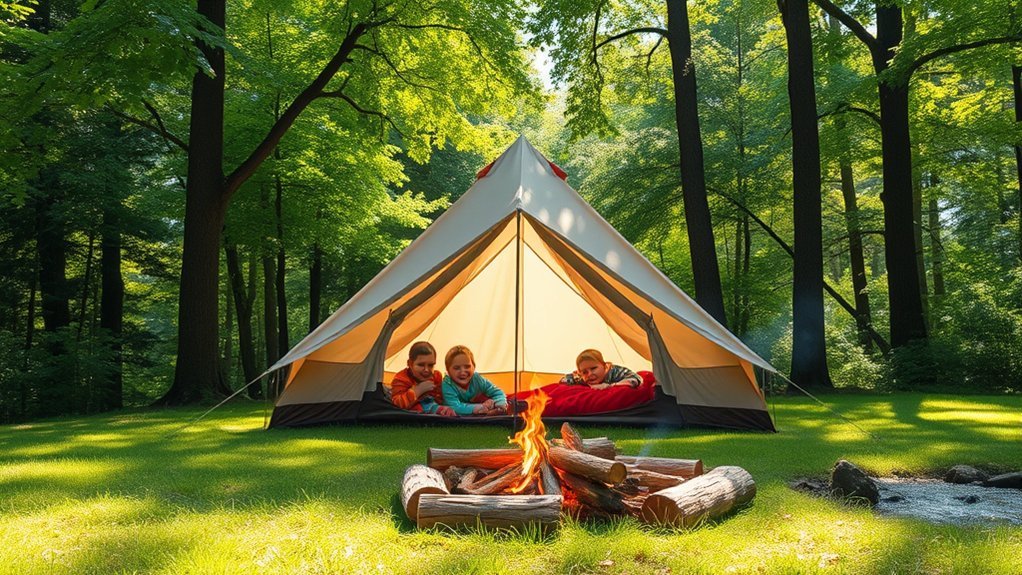
Start with a legal, designated campsite that matches your family’s experience. For a first trip, a smaller developed campground with potable water, restrooms, a camp host, and reasonable access to your vehicle is often easier than a remote dispersed site.
Place the tent on flat, durable, well-drained ground. Look for roots, sharp rocks, pinecones, animal holes, standing water, and low spots where rain could collect. A slight natural slope can help with drainage, but avoid a noticeable tilt that may cause everyone to slide during the night.
Look above the tent as well as below it. Do not pitch beneath dead branches, damaged trees, loose rock, or other overhead hazards. Keep children away from campground roads, steep drop-offs, fast-moving water, fire rings, and neighboring cooking areas.
Before setting up, check the campground notice board, park website, ranger station, or host for wildlife activity, fire restrictions, air-quality warnings, severe weather, flash-flood risk, closures, and food-storage rules. The National Park Service camping-safety guidance recommends checking for hazards such as lightning, flash flooding, wildlife, dead trees, rockfall, and poor air quality.
Camping Near Water Safely
A lake or river can add swimming, paddling, fishing, and wildlife-watching opportunities, but water access should not be the main reason to place a tent close to the shoreline. Choose a site where a young child cannot wander directly from the tent into the water unnoticed.
Warning: Stay within immediate reach of young children around natural water. Use properly fitted U.S. Coast Guard-approved life jackets for boating and appropriate activities in or around lakes and rivers. Inflatable arm bands and water wings are not substitutes for life jackets or active adult supervision.
About 40% of drowning deaths among children ages 5–14 occur in natural water, according to the CDC.
In the backcountry, follow the managing agency’s rules. Where no different regulation applies, camping about 200 feet from lakes and streams helps protect water quality and wildlife access. Developed campground sites may be closer because their locations have already been selected by the land manager.
Pro Tip: On the first trip, choose a site close enough to the restroom for an easy nighttime walk but far enough away to avoid bright lights, doors, hand dryers, and late-night foot traffic.
Prepare the Kids and Pack as a Family
A child who knows what to expect is more likely to settle into the new surroundings. Practice pitching the tent at home, let the kids spend quiet time inside it, and complete at least one trial nap or backyard night when practical. Test every zipper, pole, sleeping pad, headlamp, and battery before the trip.
Explain simple campsite rules before arrival:
- Stay where a caregiver can see or hear you.
- Do not enter another campsite without permission.
- Walk near tents, stakes, guy lines, stoves, and fire rings.
- Never touch wild animals, unfamiliar plants, mushrooms, or unattended food.
- If separated, stop moving, stay in a safe place, make noise, and use a whistle if one was provided.
Assign jobs based on age and ability. Younger children can carry light bedding, collect approved items, or help count stakes. Older children may help assemble poles, organize the sleeping area, fill water containers, or prepare food under adult supervision. The National Park Service guide to camping with kids also recommends involving children in packing and age-appropriate camp tasks.
Family Tent-Camping Checklist
- Shelter: Tent, rainfly, footprint, stakes, guylines, mallet if permitted, repair tape, pole sleeve, and a small brush.
- Sleep: Sleeping bags, insulated pads, pillows for older children, dry sleep clothes, warm socks, and familiar comfort items.
- Weather: Rain jackets, spare dry layers, sun hats, warm hats, gloves when needed, and waterproof footwear.
- Lighting: One headlamp or flashlight per person, spare batteries, and a low-output tent light.
- Food and water: Potable water, treatment equipment when needed, cooler, cooking equipment, age-appropriate food, and approved wildlife-resistant storage.
- Health and safety: First-aid kit, prescribed medicines, allergy supplies, sunscreen, insect repellent, emergency contacts, and health information.
- Sanitation: Soap, hand sanitizer, toilet paper, waste bags, diapers, wipes, menstrual supplies, and the equipment required by local human-waste rules.
- Activities: Books, cards, nature journals, binoculars, simple crafts, and quiet rainy-day games.
Selecting Comfortable Sleeping Gear
The right sleep system can make the difference between a restful family night and an early drive home. A sleep system includes the sleeping bag, sleeping pad, sleep clothing, tent ventilation, and the expected overnight conditions. Test these items together rather than judging each piece alone.
Choosing Sleeping Pads
A sleeping pad provides both cushioning and insulation. For car camping, a thicker self-inflating or insulated air pad may offer more comfort. Backpacking families usually need a lighter pad that balances packed size, durability, thickness, and insulation.
Check the pad’s ASTM-tested R-value when one is available. A higher R-value means greater resistance to heat loss into the ground. The right number depends on the season, expected ground temperature, and the rest of the sleep system. An uninsulated air mattress can feel cold even when it is thick and soft.
Lightweight models such as the Therm-a-Rest ProLite and Sea to Summit Ether Light XT illustrate two common pad styles, but product lines and specifications change. Compare current dimensions, R-value, weight, repairability, and manufacturer instructions rather than choosing by model name alone.
A closed-cell foam mat placed beneath an air or self-inflating pad can add insulation, protect the upper pad from debris, and provide a backup if the inflatable pad leaks. Test every pad at home, leave it inflated for several hours, and pack the correct repair materials.
Note: A tent footprint mainly protects the tent floor from dirt, moisture, and abrasion. It offers little thermal insulation compared with a properly rated sleeping pad.
Selecting Sleeping Bags
Choose a sleeping bag for the lowest realistic nighttime temperature, not the afternoon forecast. For adult ISO-tested bags, the comfort rating estimates the temperature at which a cold sleeper may remain comfortable, while the lower-limit rating applies to a warmer sleeper under standardized test conditions.
These ratings are comparison tools rather than promises. Clothing, wind, humidity, food intake, fatigue, pad insulation, bag fit, and personal metabolism all affect warmth. ISO testing also does not apply to children’s sleeping bags, so treat a child-bag temperature label as a manufacturer guideline and leave a sensible safety margin.
A bag should fit closely enough to avoid a large empty space that the child must warm, but it should not restrict movement or cover the face. Keep the bag dry and pair it with an insulated pad. Bags designed to zip together can create a cozy arrangement for adults and older children, but each sleeper still needs a safe exit and enough space to breathe and move freely.
Warning: Do not place an infant in an adult sleeping bag or surround an infant with loose pillows, quilts, or blankets. Use a flat product specifically designed and approved for infant sleep, follow its instructions, and keep the infant’s face and airway clear.
Enhancing Tent Comfort
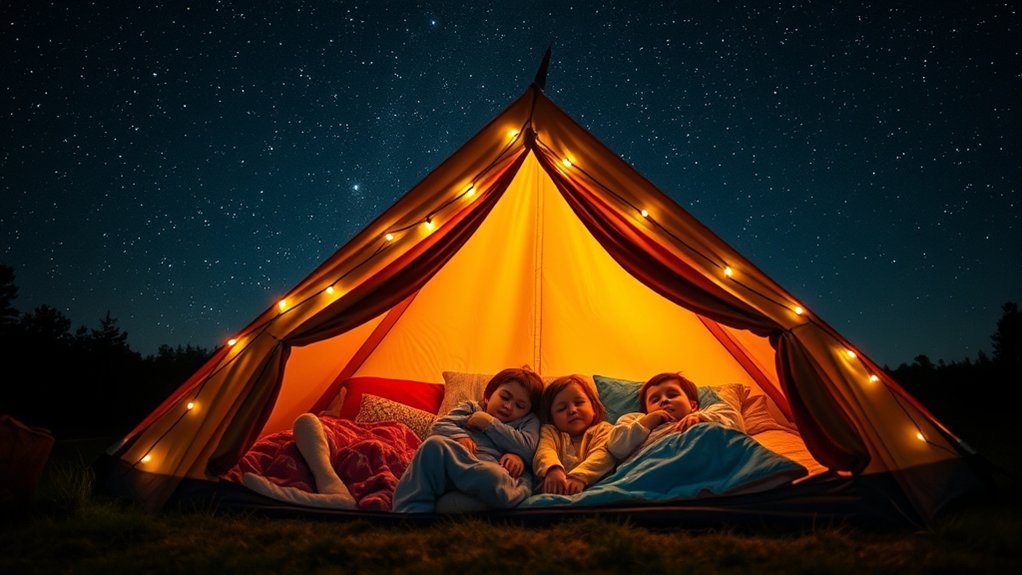
Give each person a clear sleeping space and keep walkways open. Store headlamps, water, eyeglasses, medicines, and other nighttime essentials in the same pockets every night. Place shoes in the vestibule or another covered area outside the sleeping compartment so mud, sharp debris, and insects stay out of the bedding.
Bring a familiar stuffed animal, small blanket for an older child, or favorite book when it can be used safely. A soft, battery-powered light can make the tent feel less unfamiliar, but turn bright lights off after everyone settles. Avoid candles and open flames.
Use the tent’s designed vents even on cool nights. Closing the door and insect mesh helps keep bugs and animals out, but sealing every vent can trap moisture from breathing and wet clothing. Condensation may then drip onto sleeping bags and make everyone colder.
For extra warmth, add dry socks, base layers, a warm hat, or a jacket draped over the outside of the sleeping bag. Do not bury the child’s face inside the bag or block airflow around the mouth and nose.
A leakproof bottle filled with warm water may help an older child or adult, but use only a bottle the manufacturer allows for hot liquids. An adult should fill it, tighten and test the cap, wrap it in fabric, and make sure it is warm rather than scalding. Do not place it against bare skin or use it with an infant or a child who cannot move it independently.
Keep Food and Scented Items Out of the Tent
Do not store meals, snacks, trash, toothpaste, scented wipes, pet food, or cooking equipment in the sleeping tent. Secure them immediately according to campground rules. Depending on the location, that may mean a provided bear box, an approved bear-resistant container, or another method required by the managing agency.
Food crumbs can also attract rodents and insects in areas without bears. Have children finish snacks at the table or cooking area, wash or wipe their hands, and check pockets before entering the tent.
Establishing a Relaxing Bedtime Routine
A familiar routine tells children that the day is ending even when the surroundings are new. Begin earlier than you would at home because changing clothes, finding the restroom, organizing gear, and settling everyone usually take longer at camp.
Consistent Pre-Bedtime Activities
- Finish active play: End running, climbing, and loud games before the final bathroom trip.
- Clean up: Wash hands and faces, brush teeth with potable water, and store scented toiletries with the food.
- Use the restroom: Make one planned trip before everyone changes into sleep clothes.
- Dress dry: Replace damp daytime clothes with clean, dry base layers and socks.
- Settle quietly: Read familiar books, tell one short story, or talk about the day.
- Check comfort: Confirm that pads are inflated, bags are dry, vents are open, and each child can reach a light.
- Dim the tent: Lower the light and use the same goodnight words or song used at home.
Some families enjoy a warm drink as part of the routine. For an older child, use only a caffeine-free drink the child has already tolerated and that is appropriate for the child’s age, allergies, medications, and medical needs. A camping trip is not a good time to introduce an unfamiliar herbal product.
Wind-Down Techniques
Quiet stargazing, gentle stretching, slow breathing, and listening to normal nature sounds can help everyone relax. Keep the activity brief so it does not become a new burst of excitement.
A favorite stuffed animal or familiar blanket can ease anxiety for an older child when used safely. If the campground is noisy, steady low-volume white noise from a battery-powered device may help, but keep the device away from the child’s head and preserve enough awareness to hear alarms, weather, wildlife, or someone calling for help.
Expect the first night to take longer. Respond calmly to questions and noises, but keep the routine predictable. Moving directly from an exciting campfire or game into the tent often makes settling harder.
Managing Temperature and Environment

Check the site-specific forecast before leaving and again when service is available. Mountain, desert, coastal, and canyon weather may differ sharply from conditions at home. Know the expected low, wind, rain, humidity, heat, and thunderstorm risk.
- Use layers: Dress children in dry layers that can be added or removed without replacing the whole outfit.
- Protect from the ground: Use a sleeping pad with enough insulation for the conditions.
- Ventilate: Keep designed roof and wall vents open enough to reduce condensation.
- Secure doors: Close tent doors and insect mesh to block bugs and animals while preserving ventilation.
- Keep bedding dry: Store sleeping bags in waterproof sacks during travel and keep wet clothing away from them.
- Watch the child: Do not rely only on the forecast or gear label. Check for shivering, unusual tiredness, confusion, damp clothing, overheating, or complaints of numb hands and feet.
What to Do if a Child Is Cold
Replace wet clothing with dry layers, add an insulated hat and socks, make sure the child is centered on the sleeping pad, and offer a suitable snack and warm drink if the child is fully awake and able to eat safely. Add insulation over the sleeping bag rather than packing bulky items inside until the child cannot move.
If the child continues shivering, becomes confused, unusually sleepy, clumsy, or difficult to wake, move to a warm, dry place and seek medical help. Do not remain in camp simply to complete the planned night.
Lightning and Severe Weather
Warning: A tent and an open-sided picnic shelter do not protect against lightning. At the first sound of thunder, move everyone to a substantial building or hard-topped vehicle. Wait at least 30 minutes after the final thunder before returning outside.
Review the National Weather Service outdoor lightning guidance before the trip. Avoid isolated trees, ridge tops, open fields, shorelines, and other exposed places during storms.
Do not pitch in dry washes, narrow canyons, depressions, or obviously flood-prone ground when rain is possible. If water begins rising, leave immediately for higher ground. Never drive or walk through moving floodwater.
Carbon Monoxide and Tent Heating
Warning: Never cook or operate a charcoal grill, camp stove, generator, or other fuel-burning appliance inside the sleeping tent. Do not use portable fuel-burning heaters or lanterns while sleeping in an enclosed tent, camper, or vehicle. Carbon monoxide has no color or odor and can cause headache, dizziness, nausea, confusion, unconsciousness, and death.
Follow the CPSC camping-equipment safety guidance and every warning supplied with the appliance. Ventilation is not a reason to ignore a product’s prohibition against enclosed-space use.
Food and Hydration Management
Food and water planning keeps children energized and reduces late-night requests. Bring more potable water than you expect to use when vehicle space allows, and confirm whether campground taps are currently safe and available.
A 5-gallon water holder with a spout can make handwashing and bottle filling easier at a drive-in campsite. Pre-chill drink bottles and use an insulated sleeve or cooler when cold drinks matter. Wrapping a bottle in a towel may slow warming slightly, but it does not replace proper insulation.
Never assume that clear lake, river, spring, or stream water is safe. When water safety is uncertain, follow the CDC’s backcountry water-treatment guidance. The CDC states that boiling is the best way to kill germs; filtering followed by disinfection is the next-best general option. Follow the exact directions for the treatment product you use.
Plan simple meals that limit raw ingredients, cleanup, and time near a hot stove. Let children help with safe tasks, such as assembling wraps or placing sealed items on the table, while an adult controls flames, boiling water, knives, and hot cookware.
| Meal Type | Low-Mess Ideas | Safety Reminder |
|---|---|---|
| Breakfast | Oatmeal, yogurt from a cold cooler, or soft fruit | Keep hot water and stove controls with an adult |
| Lunch | Sandwiches, wraps, cheese, or prepared vegetables | Keep perishable food properly chilled |
| Dinner | One-pot pasta, soup, rice dishes, or foil-packet meals | Cook outside the tent and supervise the stove continuously |
| Snacks | Soft fruit, crackers, bars, or age-appropriate trail mix | Avoid choking hazards for young children and check allergy labels |
Keep raw foods separate from ready-to-eat items, wash hands before food preparation, and keep cold foods chilled. Store food, trash, coolers, cookware, toiletries, and other scented items according to local wildlife rules. Never leave them unattended or inside the sleeping tent.
Campfire, Cooking, and Campsite Safety
Check current fire restrictions before lighting anything. Use only approved fire rings or cooking areas, and skip the campfire when fires are prohibited, wind is strong, vegetation is dry, or the family cannot supervise it closely.
- Assign one sober adult to watch the fire or stove continuously.
- Keep children outside a clearly marked safety zone.
- Keep water and the required extinguishing tools within reach.
- Turn pot handles away from walkways and use stable cooking surfaces.
- Store knives, lighters, fuel, matches, and hot tools where children cannot reach them.
- Never leave a fire unattended, even for a short bathroom trip.
- Extinguish the fire completely according to campground instructions before bed or departure.
The National Park Service campfire guide advises watching children closely, keeping water nearby, and never leaving a fire unattended.
Sun, Mosquito, and Tick Protection
Use shade, protective clothing, hats, and age-appropriate sunscreen. Apply an EPA-registered insect repellent according to its label. Do not apply repellent to a child’s hands, eyes, mouth, cuts, or irritated skin.
CDC guidance says not to use products containing oil of lemon eucalyptus or para-menthane-diol on children under age 3. Walk in the center of trails, avoid brushing against tall grass when possible, and complete a full tick check each day. Check the scalp, hairline, behind the ears, under the arms, around the waist, behind the knees, and between the legs. See the CDC tick-prevention guidance for current instructions.
First Aid and Emergency Planning
Carry a first-aid kit sized for the group and the distance from help. At minimum, consider adhesive bandages, sterile gauze, medical tape, antiseptic supplies, tweezers, disposable gloves, blister care, an elastic wrap, a cold pack, a thermometer, and medicines that are appropriate for your family.
Bring all prescribed medicines, inhalers, epinephrine auto-injectors, diabetes supplies, or other essential equipment in their original or clearly labeled containers. Keep them protected from heat, moisture, and unauthorized access. Do not rely on the campground store to stock a specific medicine.
Before leaving home:
- Share the campground, site number, route, vehicle description, and return time with an emergency contact.
- Download or print directions because mobile service may fail.
- Locate the nearest ranger station, urgent-care center, and emergency department.
- Record allergies, medical conditions, medicines, emergency contacts, and insurance information.
- Teach children what to do if separated and give capable children a whistle.
- Know when to call 911 and how to describe your exact campsite location.
Leave early or seek urgent help when a child has trouble breathing, a severe allergic reaction, uncontrolled bleeding, confusion, loss of consciousness, suspected poisoning, a serious burn, signs of heat illness or hypothermia, persistent vomiting, or any condition you cannot manage safely in camp.
Bathroom and Hygiene
Use campground restrooms when they are provided. Walk young children to the restroom, carry a light, and use a buddy system after dark. Choose a route that avoids roads, guy lines, roots, steep ground, and neighboring fire rings.
Portable toilets may be useful where they are permitted, but they are not a universal solution. In dispersed or backcountry settings, follow the exact human-waste rules of the park, forest, or land agency. Some places permit catholes under specific conditions, while others require all solid waste to be packed out.
Pack out diapers, wipes, menstrual products, toilet paper when required, and all other non-biodegradable waste. Do not bury wipes or leave waste near water, trails, campsites, or cooking areas.
Wash hands with soap and safe water after bathroom use, after changing diapers, before preparing food, and before eating. When soap and water are not available, use hand sanitizer until proper washing is possible.
Embracing Learning Opportunities
Camping gives children a hands-on way to learn about weather, plants, animals, maps, teamwork, and caring for public lands. Keep the lessons simple and suited to each child’s attention span.
- Try a nature scavenger hunt that asks children to observe without collecting protected plants, rocks, nests, or wildlife.
- Use a nature journal to draw tracks, leaves, clouds, or the moon.
- Practice reading a campground map and identifying the tent, restroom, water source, ranger station, and emergency exit.
- Let children help with age-appropriate tent setup, meal preparation, cleanup, and gear checks.
- Talk about why food is secured, fires are controlled, wildlife is not fed, and waste is packed out.
- Connect with other families while respecting quiet hours and campsite boundaries.
Morning workbooks or educational games can be useful during meal preparation or bad weather, but leave plenty of unstructured time for safe exploration. The goal is not to reproduce a school day outdoors.
Handling Rain and Nighttime Disruptions
Pack rain jackets where they can be reached quickly, not at the bottom of a bag. Use the tent’s full rainfly, tension it correctly, and keep bedding away from tent walls where condensation may collect. Store one complete set of dry sleep clothes in a waterproof bag.
If rain keeps everyone under cover, use storytelling, cards, drawing, simple crafts, audiobooks, or quiet games. Never cook inside the sleeping tent to escape the weather.
For nighttime bathroom trips, keep shoes, rain gear, and headlamps in the same place. An adult should accompany young children. Recheck the tent door, food storage, and each child’s dry layers after returning.
Common Sleep Problems and Fixes
| Problem | What to Check | Practical Fix |
|---|---|---|
| Child feels cold | Wet clothing, pad position, sleeping-bag rating, drafts, hunger | Change into dry layers, center the child on the pad, add safe insulation, and move to shelter if warming fails |
| Bedding is damp | Closed vents, contact with tent walls, wet gear inside | Open designed vents, separate wet items, wipe condensation, and use dry backup clothing |
| Child is afraid of sounds | Unfamiliar wildlife, wind, branches, neighboring campers | Explain normal sounds calmly, use a familiar item, and investigate only when it is safe |
| Sleeping pad loses air | Open valve, puncture, damaged seam | Close the valve, use the proper repair kit, and place a foam pad or folded clothing beneath the child temporarily |
| Repeated waking | Temperature, noise, bathroom need, thirst, poor pad comfort, anxiety | Solve the physical cause first, then return to the same calm bedtime routine |
Preparing for Future Adventures
Practice the tent setup at home before each season or after changing equipment. Let the kids spend time inside so the shelter feels familiar and so adults can find missing stakes, leaking pads, weak batteries, or damaged zippers before reaching camp.
Create a flexible itinerary that accounts for the slower pace of camping with children. Allow extra time for meals, bathroom trips, clothing changes, short hikes, rest, and unexpected weather. Plan one or two priority activities rather than filling every hour.
Outdoor fun such as stargazing, nature walks, simple cooking, and wildlife observation can build family confidence. Keep the first trip short and close to home if anyone is unsure. A successful one-night trip is better preparation than forcing a long stay after the children are cold, frightened, ill, or exhausted.
After returning home, note what worked, what went unused, what was missing, and what interrupted sleep. Dry the tent and sleeping gear completely before storage, replace used first-aid supplies, repair damaged equipment, and update the family packing list.
Frequently Asked Questions
What should we do if it rains during our camping trip?
Use the full rainfly, keep vents open, move wet gear away from bedding, and change children into dry layers before sleep. Use books, cards, drawing, storytelling, or simple crafts during downtime. Check for rising water and severe weather, and leave for safer shelter if the campsite begins flooding or thunderstorms develop.
How can we keep kids entertained during downtime at the campsite?
Try a nature scavenger hunt, cards, campsite crafts, binoculars, a nature journal, audiobooks, or quiet group games. Choose activities that do not require collecting protected natural objects or entering neighboring campsites. A few simple choices usually work better than packing a large box of toys.
Are there safety tips for camping near wildlife?
Never feed or approach wildlife. Store food, trash, coolers, toiletries, and other scented items exactly as the campground requires. Keep the tent free of crumbs, supervise children, and ask a ranger or camp host about recent sightings. Rules differ by animal and location, so use the managing agency’s instructions rather than relying on one universal response.
What first-aid items should we pack for camping with kids?
Bring wound-care supplies, gauze, tape, antiseptic, tweezers, gloves, blister care, a cold pack, a thermometer, and family-appropriate medicines. Include all prescriptions, inhalers, allergy supplies, and emergency health information. Adjust the kit for the trip length, activities, known conditions, and distance from medical care.
How do we handle bathroom needs while camping?
Use campground restrooms when available and accompany young children after dark. In remote areas, follow the land manager’s rules for toilets, catholes, or packing waste out. Pack out wipes, diapers, and other hygiene products. Keep all waste away from water, trails, campsites, and cooking areas.
How can we keep the tent warm without using a heater?
Use an insulated sleeping pad, a suitable sleeping bag, dry base layers, warm socks, and a hat. Keep bedding dry and reduce empty space in an oversized bag with dry clothing placed safely around the sleeper. Maintain ventilation to control condensation. Do not use a fuel-burning stove, grill, lantern, or unapproved heater inside the sleeping tent.
When should we end a family camping trip early?
Leave when the campsite becomes unsafe, severe weather approaches without suitable shelter, bedding cannot be kept dry, essential gear fails, food or water becomes unsafe, or a child cannot become warm, calm, hydrated, or medically stable. Ending one trip early is better than turning a manageable problem into an emergency.
Conclusion
Camping with kids rarely produces a perfectly quiet night, but good preparation can prevent most serious problems. Choose a safe site, test the gear, protect children around water and fire, keep the tent ventilated, use a complete sleep system, and follow a familiar bedtime routine.
Expect extra bathroom trips, questions, giggles, and a slower pace. Those moments are part of family camping. Stay flexible, solve discomfort early, and be willing to move to safer shelter or return home when conditions are no longer right. A short, safe trip that leaves children excited to camp again is a success.
Sources
- U.S. National Park Service — Camping Safely During Your Stay — campsite hazards, weather awareness, hydration, wildlife, layers, and general camp safety
- REI Co-op — Understanding Sleeping Bag Temperature Ratings — ISO comfort and lower-limit ratings and their practical limitations
- U.S. Consumer Product Safety Commission — Portable Heaters and Camping Equipment — carbon-monoxide risks from camping appliances
- National Weather Service — Outdoor Lightning Safety — safe shelter and the 30-minute thunder rule
- Centers for Disease Control and Prevention — Camping Water Treatment — boiling, filtering, disinfecting, and unsafe natural water
- Centers for Disease Control and Prevention — Summer Swim Safety — natural-water risk, supervision, and properly fitted life jackets

