
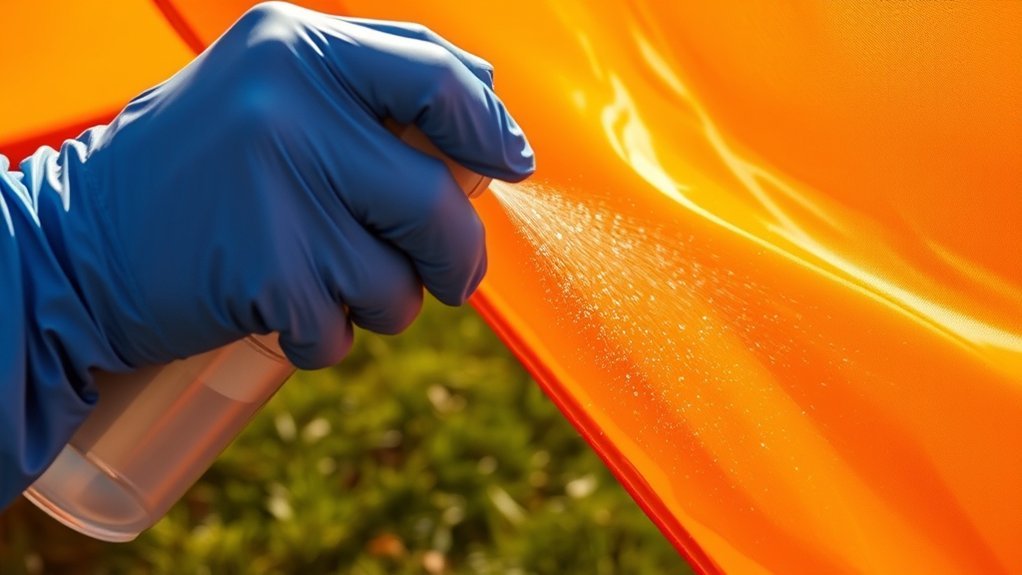
Last Updated on July 30, 2026 by Mason Reed
Restoring the durable water repellent finish on a tent rainfly can bring back clean water beading, but only when the fabric, cleaner, and treatment are compatible. The key is to diagnose the problem first: DWR treats the outside surface, while leaking seams, holes, and peeling inner coatings need different repairs.
Quick Answer
Clean the rainfly, confirm that its seams and inner waterproof coating are intact, and choose a tent-safe DWR spray approved for the fabric. Apply it exactly as the label directs—some products require wet fabric, while others allow wet or dry fabric—wipe away excess, air-dry fully, and test for even beading.
Key Takeaways
- DWR restores surface beading; it does not repair holes, failed seam tape, or a peeling waterproof coating.
- Check the tent maker’s care instructions and the treatment label before applying any product.
- Clean first, apply an even coat, remove surplus product, and let the rainfly dry completely before use or storage.
- Reapply based on performance—when clean fabric wets out instead of beading—not on a fixed six-month schedule.
At a Glance
| Time Required | 20–30 minutes of active work, plus several hours to 24 hours of drying |
| Difficulty | Easy |
| Tools Needed | Tent-safe cleaner, tent-compatible DWR spray, water, non-abrasive sponge, clean cloths, and optional gloves |
| Cost | About $10–$25 for a spray-on treatment, depending on brand and bottle size |
Disclosure: As an Amazon Associate I earn from qualifying purchases. Some links on this page are affiliate links, at no extra cost to you.
Importance of DWR Treatment
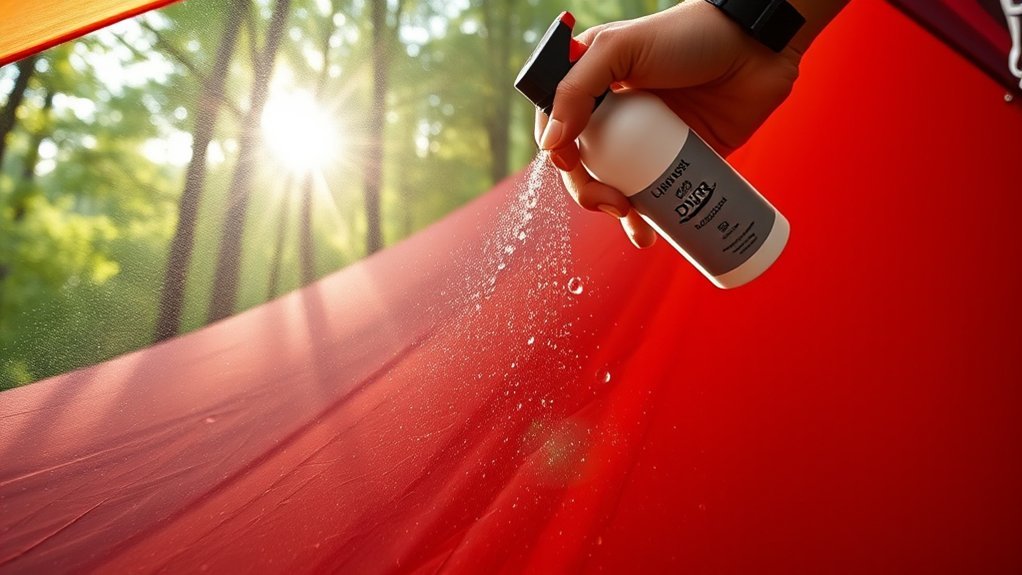
Durable Water Repellency, or DWR, is a thin finish on the outside of many synthetic rainflies. It lowers the fabric’s surface tension so rain forms droplets and rolls away instead of spreading into a dark, wet layer. You can read a manufacturer explanation of DWR in the Nikwax DWR FAQ.
DWR improves beading and helps the outer fabric resist wetting and dirt. It is not the main waterproof barrier. On many tents, the true waterproof layer is a polyurethane or other coating on the inside of the rainfly, along with sealed seams. That distinction matters because spraying DWR over damaged seam tape or a peeling inner coating will not stop a leak.
Note: If clean fabric still beads but water enters at a stitch line, zipper, hole, or flaking area, repair that defect instead of adding more DWR.
Preparing the Tent Rainfly
Preparation determines whether the treatment spreads evenly and bonds to the surface. Work in a shaded, well-ventilated place with enough room to pitch the tent or lay the rainfly flat. Keep the fly away from dust, leaves, and direct heat while it dries.
Check Whether DWR Is the Right Fix
- Test the outside: Mist clean sections with water. If droplets bead and roll off, the DWR is still working.
- Inspect the seams: Look for peeling seam tape, cracked sealant, pinholes, and loose stitching.
- Inspect the inner coating: Flaking, stickiness, or a strong sour odor can point to polyurethane coating failure.
- Rule out condensation: Moisture spread across the inside of the fly, especially without a clear entry point, may be condensation rather than rain penetration.
The REI tent-care guide separates exterior DWR renewal from seam sealing and recoating a failed polyurethane layer. Use the repair that matches the symptom.
Warning: Do not machine-wash, machine-dry, bleach, dry-clean, or scrub a rainfly with harsh household detergent unless the tent manufacturer specifically allows it. Heat and aggressive cleaners can damage fabric, seam tape, and waterproof coatings.
Clean the Rainfly First
Brush off loose dirt, then clean the outside with cool or lukewarm water and a tent-safe cleaner. A soft sponge or cloth is enough for most grime. Rinse away all cleaner because residue can interfere with water repellency.
- Use a non-abrasive sponge or microfiber cloth.
- Support coated fabric instead of pulling or stretching it while wet.
- Test cleaner and DWR on a hidden area if the label warns about color transfer.
- Leave the fly wet only when the chosen product requires wet-fabric application.
Choosing the Right Waterproofing Spray
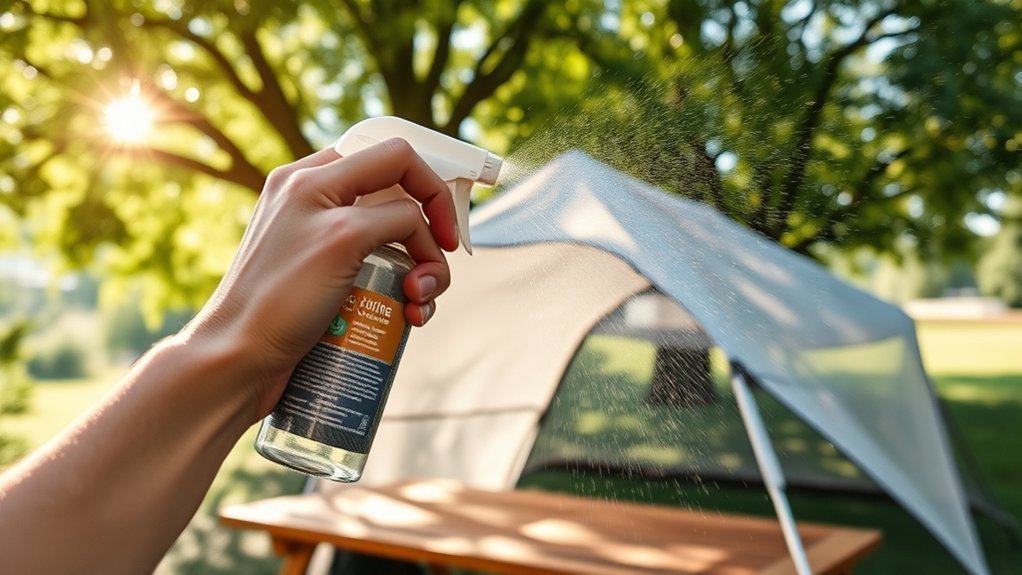
Choose a product that explicitly lists tents, tarps, or synthetic outdoor fabrics. Then compare its directions with the tent maker’s care instructions. Do not choose a product only because it says “waterproofing spray”; that label can describe several treatments with different jobs.
Spray Types Comparison
- DWR spray: Applied to the outside face to restore beading. Examples include Nikwax Tent & Gear SolarProof and GEAR AID Revivex Durable Water Repellent.
- Seam sealer: Used on leaking stitch lines or failed seam tape. Silicone-coated or silnylon fabrics need a silicone-compatible sealer; polyurethane-coated fabrics need a compatible urethane product.
- Fabric recoating compound: Used when the waterproof film on the underside is peeling or flaking. This is a different repair from DWR and must match the existing coating.
Nylon versus polyester alone does not determine compatibility. The factory coating, surface treatment, and product instructions matter more. When the fabric type is unknown, contact the tent manufacturer before applying a permanent coating or sealer.
Application Process Steps
Application directions are product-specific. Nikwax directs users to spray its tent treatment on clean, wet fabric, wait two minutes, remove surplus with a damp cloth, and air-dry. GEAR AID allows its DWR spray on wet or dry fabric and permits air drying for 24 hours. Follow one label from start to finish rather than mixing directions from different products.
- Shake the bottle when the label requires it.
- Use the stated spray distance; common directions range from about 6 to 10 inches.
- Work in small sections so you can see missed spots and runs.
- Apply enough to wet the surface evenly without soaking or puddling.
- Use the stated drying or curing method; do not add heat unless both the tent and treatment instructions allow it.
Environmental Considerations
When comparable products meet your tent’s needs, consider a water-based, non-aerosol, PFAS-free formula. The U.S. Environmental Protection Agency notes that PFAS are long-lasting chemicals that break down very slowly. Current tent treatments from Nikwax and GEAR AID are marketed as PFAS-free.
- Apply over pavement, a washable work surface, or a drop cloth rather than directly over soil or water.
- Prevent overspray from reaching skin, eyes, pets, food, and nearby gear.
- Follow the label for ventilation, personal protection, storage, and container disposal.
- Do not assume a general cleaning certification covers waterproofing products; verify claims on the exact product.
Application Process for DWR
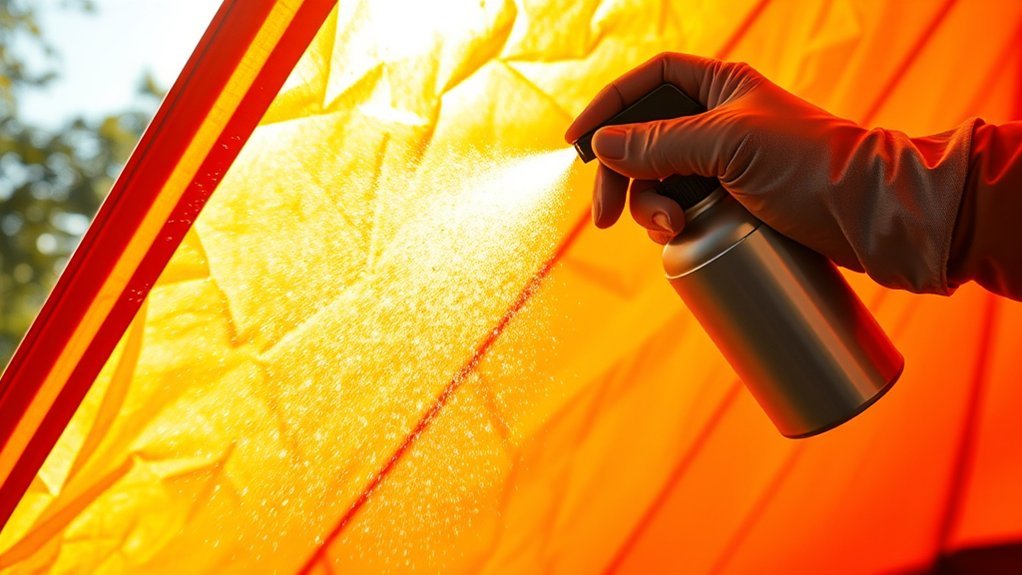
- Read both labels. Confirm that the DWR treatment is approved for the rainfly material and coating.
- Choose a work area. Pitch the tent or lay the fly flat in shade with good airflow and a clean surface.
- Inspect and repair first. Fix holes, failed seams, or peeling coatings before treating the outer face.
- Clean the rainfly. Remove dirt and cleaner residue with a soft sponge and clean water.
- Set the correct moisture level. Keep the fly wet for a wet-application product, or let it dry when the label calls for dry fabric.
- Spray evenly. Shake the container if directed and apply overlapping passes at the label’s recommended distance.
- Remove surplus. After the stated wait time, spread or wipe away drips and puddles with a damp clean cloth.
- Air-dry fully. Keep the fly open and ventilated until the treatment is completely dry, then perform a water-bead test.
Pro Tip: Work from the top of a pitched rainfly downward, one panel at a time. Side lighting makes untreated patches, streaks, and excess product easier to see.
Wiping and Drying the Fly
Uneven wiping can leave streaks, sticky spots, or areas with poor beading. Use a clean damp cloth to spread and remove surplus product at the time stated on the label. Do not wait until thick runs have dried.
- Check seams, hems, webbing attachment points, and low spots where liquid can collect.
- Air-dry the rainfly while it is pitched, hung loosely, or laid flat as the product directs.
- Keep it away from heaters, open flames, intense sun, and dirty surfaces.
- Turn or reposition a flat fly so trapped moisture can escape from both sides.
- Do not pack it until every panel, seam, and folded edge is dry.
Drying time depends on the formula, temperature, humidity, and airflow. Some products dry naturally in several hours, while others specify a full 24-hour air-dry period. The product label is the controlling instruction.
Maintaining Your Tent’s Water Resistance
There is no universal six-month reapplication schedule. Inspect the fly before a long trip and after cleaning. Reapply DWR when clean fabric consistently absorbs water instead of forming droplets. Treating too often can waste product and may leave residue.
Good storage matters as much as DWR. Dry the tent completely after every trip, store it loosely in a cool and dry place, and limit long exposure to direct sunlight. Damp storage can damage polyurethane coatings and encourage mildew, while ultraviolet light weakens many synthetic fabrics.
How to Test the Rainfly After Treatment
- Wait until the full drying or curing period has passed.
- Pitch the fly correctly so the fabric is taut.
- Mist several panels with a spray bottle or use a gentle hose spray.
- Look for round droplets that bead and run off instead of spreading into dark patches.
- Inspect the underside and seams for a clear entry point.
A low-pressure test is enough. A pressure washer or forceful nozzle can damage coatings and push water through areas that would not normally leak in rain.
Troubleshooting Poor Beading or Leaks
- The fly wets out evenly: Cleaner residue, dirt, missed coverage, or worn DWR may be the cause. Clean, rinse, and reapply only as the label permits.
- The finish looks streaky: Too much product or uneven wiping is likely. Follow the product’s cleanup instructions; a full clean and lighter reapplication may be needed.
- Water enters along stitches: Use a seam sealer compatible with the coating rather than more DWR.
- The underside flakes or feels sticky: The waterproof coating may be failing. Recoat with the correct system or replace the rainfly if damage is widespread.
- Water appears inside without an entry point: Increase ventilation and keep wet gear out of the tent to reduce condensation.
- Only one small area leaks: Check for a puncture, abrasion, damaged zipper flap, or missing patch.
Frequently Asked Questions
How Often Should I Apply DWR to My Tent Rainfly?
Apply it when a clean rainfly no longer beads water evenly. Usage, abrasion, dirt, cleaning, and sun exposure affect the interval, so a water-bead test is more reliable than a fixed calendar schedule.
Can I Use DWR on Other Outdoor Gear?
Only when the gear maker and treatment label list that item and fabric. Jackets, backpacks, sleeping bags, tents, and tarps may need different formulas or application methods, so do not assume one spray is safe for everything.
Is DWR Treatment Safe for All Tent Materials?
No. Compatibility depends on the face fabric, factory coating, and treatment chemistry. Silicone-treated fabrics, polyurethane-coated fabrics, canvas, and specialty laminates can require different products. Check the tent manual or ask the manufacturer when the material is uncertain.
What Should I Do if My Tent Leaks After Treatment?
Find the exact path of the water. Seal leaking seams with a compatible sealer, patch holes, address peeling inner coatings with the correct recoating product, and improve ventilation if condensation is the cause. DWR alone cannot repair those problems.
Can I Apply DWR in Cold Weather?
Apply it only within the temperature range on the product label and where the rainfly can dry fully. Cold, humid air slows drying. A ventilated garage or sheltered workspace is often better than freezing outdoor conditions, but keep sprays away from ignition sources.
Does DWR Repair a Peeling Waterproof Coating?
No. DWR treats the outer surface. A peeling, sticky, or flaking coating on the underside requires a compatible fabric recoating product, and severe or widespread failure may justify replacing the rainfly or tent.
Should I Use Heat to Activate DWR on a Rainfly?
Not unless both the DWR label and tent manufacturer permit it. Many tent makers warn against machine drying because heat can damage fabric and coatings. Air drying is the safest default for a rainfly.
Conclusion
A successful DWR treatment starts with the right diagnosis. Clean the rainfly, confirm that the seams and inner coating are sound, use a compatible tent treatment, and follow its directions exactly. Once the fly is evenly treated and fully dry, a simple water test should show droplets beading and rolling away. Continue to dry and store the tent carefully so the repair lasts.
Sources
- Nikwax Tent & Gear SolarProof — wet-fabric application, spray distance, wiping, air drying, and PFAS-free product information.
- GEAR AID Revivex Durable Water Repellent — tent suitability, wet-or-dry application, spray distance, and air-drying guidance.
- GEAR AID: How to Waterproof and Seam Seal a Tent — differences between DWR treatment, seam sealing, and polyurethane recoating.
- REI: How to Clean, Waterproof and Care for a Tent — cleaning, drying, storage, seam failure, and coating compatibility.
- U.S. EPA: PFAS Explained — persistence and environmental context for choosing PFAS-free products.
