
Last Updated on July 28, 2026 by Mason Reed
Keeping your gear safe while tent camping doesn’t have to mean lugging around an iron vault. A few smart habits — locking tent zippers, anchoring portable safes, and choosing the right campsite layout — go a long way toward keeping opportunistic thieves away from your outdoor setup. Whether you are car camping at a established park or walk-in camping off the grid, implementing layered security ensures your expensive equipment remains right where you left it.
Quick Answer
To secure gear while tent camping, lock zipper pulls together using TSA combination padlocks, store small high-value items in a steel-cabled portable safe or locked car trunk, and anchor large equipment like bikes and power stations to fixed objects with heavy-duty cable locks. Choose well-lit campsites with natural neighbor visibility, conceal high-value electronics out of sight, and place hidden Bluetooth tracking tags inside core gear bags.
Key Takeaways
- Lock tent zippers with small combination locks or carabiners threaded through multiple pull tabs to stop quick, casual intrusion.
- Secure electronics, cash, and keys inside a steel-tethered portable safe or inside a locked vehicle trunk out of plain sight.
- Anchor heavy gear—including kayaks, bikes, and portable power stations—to picnic tables or trees using cut-resistant cable locks.
- Opt for campsites with good visibility and friendly neighbors over completely isolated or hidden pitches.
- Store food and scented items in certified bear-resistant canisters or vehicle trunks to protect against wildlife.
- Conceal Bluetooth trackers (AirTags/SmartTags) inside expensive equipment and document serial numbers before heading out.
At a Glance
| Time Required | 10–15 minutes during campsite setup |
| Difficulty Level | Beginner / Easy |
| Key Security Tools | TSA combination locks, steel cable locks, tethered portable safe, Bluetooth tracking tags |
| Estimated Cost | $30–$120 (depending on lock types and portable safe models) |
Disclosure: As an Amazon Associate I earn from qualifying purchases. Some links on this page are affiliate links, at no extra cost to you.
The Importance of Tent Security
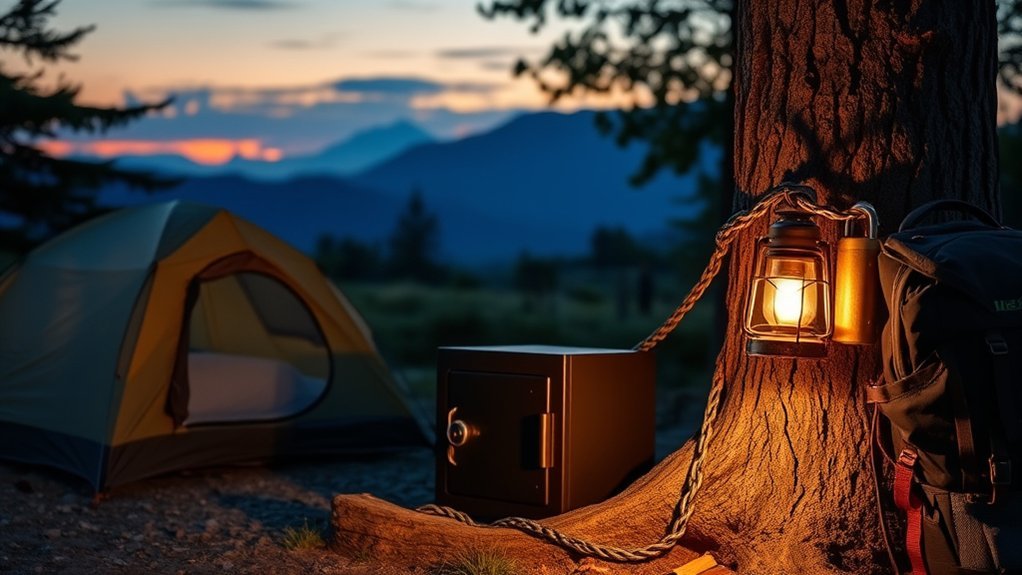
Tent security is essential for a worry-free camping trip. Outdoor theft is almost exclusively a crime of opportunity—thieves target easily accessible items left in plain view or inside unlocked shelters. Data from venue and festival security surveys published by YourMoney reveals that over 10% of outdoor event campers have experienced smartphone or equipment theft while leaving gear unattended.
Because fabric tent walls can be cut with a pocket knife, tent security relies on layered deterrence. The goal is not to build an impenetrable fortress, but to make your gear significantly harder and riskier to steal than an easy, unattended target. By combining visual barriers, locking mechanisms, and strategic gear placement, you effectively force potential thieves to move along.
Choosing the Right Campsite for Safety
Preventing campsite theft begins long before you set up your shelter. Selecting the right pitch within a campground plays a major role in deterring unauthorized visitors.
Opt for campsites with clear sightlines and good natural lighting. While deep, secluded campsites surrounded by thick vegetation seem appealing for privacy, hidden locations allow thieves to rifle through your belongings without fear of being seen. Position your tent door facing toward communal thoroughfares or neighboring camp setups rather than toward dense woods or dark perimeters.
When selecting your pitch:
- Check Recent Reviews: Read recent campground feedback on platforms like Hipcamp or The Dyrt to check for past security concerns or reports of theft.
- Leverage Mutual Vigilance: Pitch your tent within a comfortable distance of responsible neighboring campers. Introductions create a shared layer of awareness.
- Proximity to Staff: Sites situated closer to campground hosts or main ranger kiosks naturally experience lower theft rates due to regular foot traffic.
Effective Locking Techniques for Tents
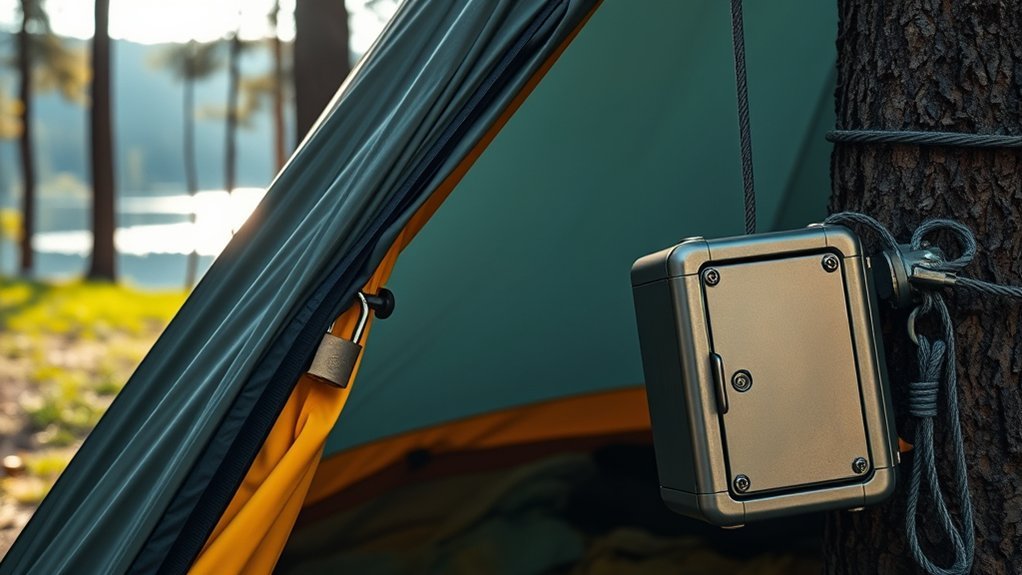
Securing your tent doors prevents casual snoopers from unzipping your shelter while you are away from camp or sleeping inside. Use small 3-digit combination TSA locks or keyless brass padlocks to join two zipper pull tabs together. Combination locks eliminate the risk of losing small keys in the woods.
For doors with three zipper sliders, thread a thin coated steel cable through all three pulls before setting the lock. This stops someone from sliding one zipper open while the other two remain locked together.
Pro Tip: A tent lock deters casual snoopers but won’t stop a determined thief with a knife — pair zipper locks with keeping high-value items out of sight or inside a locked vehicle or portable safe rather than relying on tent fabric alone.
For internal safety while sleeping, clip a locking carabiner or a strong double-sided S-biner across the interior zipper pulls. This prevents anyone from quietly opening your tent door from the outside while you sleep.
Using Portable Safes for Valuables
When camping without a vehicle nearby, a portable safe is one of the most reliable ways to safeguard cash, wallets, passports, cameras, and key fobs.
Types of Portable Safes
Portable safes for outdoor use typically fall into two main categories:
| Safe Category | Price Range | Best Used For | Key Security Features |
|---|---|---|---|
| Basic Steel Lockboxes | $20–$40 | Wallets, keys, small phones | Steel casing, simple combination lock, tether cable |
| Rugged Waterproof Safes | $50–$100 | Laptops, tablets, camera gear | IP67 water resistance, impact lining, heavy braided steel tether |
Securing With Lockboxes
A portable safe is only effective if it cannot be carried off. Always anchor your safe’s integrated steel cable around a structural anchor point, such as a tent frame pole base, a heavy wooden picnic table frame, or a tree root system. Hide the tethered safe under gear bags or inside your sleeping bag sack so it remains completely out of view.
Cable Lock Systems for Larger Gear
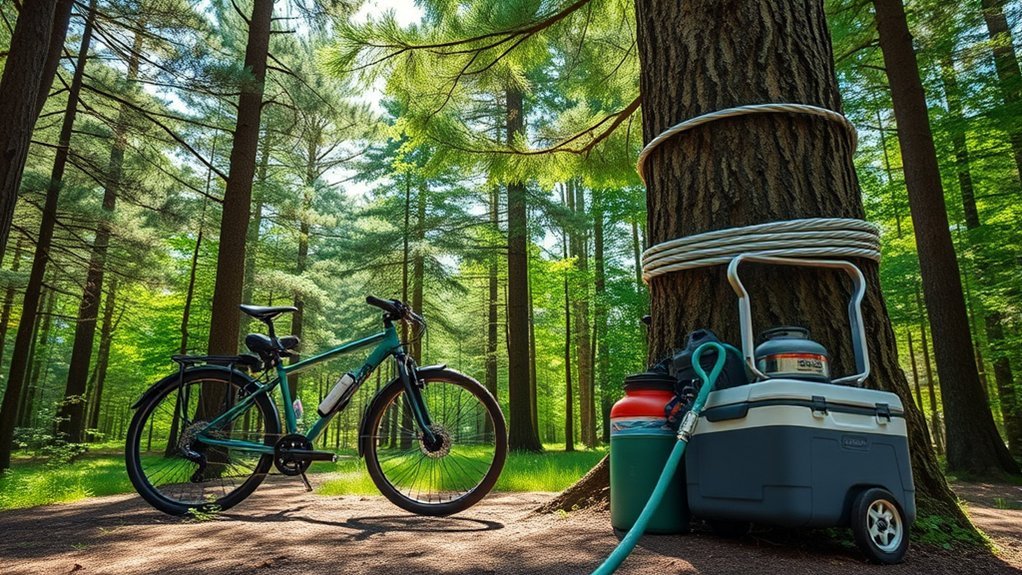
Large camping equipment—such as mountain bikes, kayaks, coolers, and portable power stations—are prime targets for quick snatch-and-grab theft. Securing them requires heavy-duty cable locks or braided steel security loops.
Select flexible braided steel cables at least 3/8-inch (10mm) thick covered in a protective vinyl jacket to prevent scratching your gear. Loop the cable through bike frames, kayak handles, or cooler tie-down slots, and lock it tightly around a mature tree or welded steel picnic table leg.
Securing Portable Power Stations and Solar Panels
Modern battery power stations (e.g., Jackery, EcoFlow, Anker) and foldable solar panels represent substantial investments. To secure these during day trips:
- Thread a steel security cable through the molded carrying handles of the power station.
- Place power stations inside your vehicle or a locked tent out of direct sunlight while charging.
- Use locking carabiners on solar panel grommets when tethering them to your tent or vehicle roof rack.
Securing Gear at Walk-In and Primitive Campsites
Backpackers and walk-in campers face unique security challenges because they cannot fall back on a locked car trunk. When camping in primitive settings, adopt these backcountry security habits:
- The Bundle Technique: Before leaving camp for a day hike, pack high-value loose items into your main backpack. Place the pack in the center of your tent and cover it with sleeping pads and blankets so the tent appears empty from the outside.
- Perimeter Bell Alarms: Attach small fishing bells or lightweight motion-activated camp alarms to your tent guy lines or entry vestibule zippers. Any sudden movement produces an immediate audible warning.
- Tethering Inside the Vestibule: Lock large backpacks or boots to tent aluminum poles inside the rainfly vestibule using lightweight cable locks.
Enhancing Security With Motion Detectors and Trackers
Combining physical security with electronic monitoring creates an active defense system around your campsite.
Battery-powered motion sensor alarms emit a 100+ dB chime when movement is detected within a 15-foot radius. Position motion sensors near entry pathways or over high-value gear setups while you are sleeping or away on brief errands.
Additionally, slip concealed Bluetooth tracking tags (such as Apple AirTags, Samsung Galaxy SmartTags, or Tile trackers) into hidden linings of expensive gear bags, bike frames, or power stations. If an item is displaced, tracking network coverage helps authorities locate your equipment quickly.
Strategies for Preventing Wildlife Encounters
Human thieves are not the only threat to your campsite; bears, raccoons, rodents, and camp scavengers are attracted by food smells and scented items. Proper food storage protects both your supplies and local wildlife.
| Strategy | Description | Benefits |
|---|---|---|
| Food Storage Containers | Store food in airtight containers or IGBC-certified bear canisters. | Locks in odors; prevents animal access. |
| Trash Management | Use animal-proof bins or double-bag waste in odor-proof sacks. | Minimizes attractants around living areas. |
| Cooking Distance | Cook and eat at least 100 feet away from your sleeping tent. | Keeps lingering food aromas away from your bed. |
| Scent Management | Store toiletries, toothpaste, and lip balms with food supplies. | Eliminates non-food odor attractants inside tents. |
Many state and national parks mandate the use of hard-sided bear canisters in backcountry zones. Official guidance from the National Park Service emphasizes keeping all food, trash, and scented items in bear-proof lockers or locked vehicle trunks in frontcountry sites. In backcountry areas without bear lockers, store bear canisters at least 100 feet downwind from your sleeping tent and water sources.
Warning: Never tie a rope or cord to a bear canister. A bear can easily grab or haul the cord to carry the canister away, and dragging food-scented gear back toward tent sites increases animal habituation risks.
Storing Valuables Out of Sight
Visual concealment is your primary defense against opportunistic theft. If a passerby cannot see high-value gear, they have no incentive to risk trespassing on your site.
Concealed Storage Solutions
- Vehicle Trunk Security: When car camping, store laptops, cameras, and extra cash inside your locked car trunk or covered cargo area before arriving at your campsite. Avoid opening your trunk in full view of the campground just before walking away.
- Interior Tent Hiding: Store small gear inside internal mesh tent pockets located high near the roofline rather than laying items flat on the floor near door mesh where they can be seen from outside.
- Unmarked Storage Bins: Use opaque, non-descript plastic totes rather than clear bins or branded gear bags to store stoves and cookware.
Hide Items Strategically
At night, tuck your smartphone, wallet, and keys inside the foot of your sleeping bag or under your pillow. This guarantees that your core essentials remain physically touched by you while sleeping.
Note: Don’t forget digital pre-trip documentation. Take photos of equipment serial numbers, receipts, and gear in use before leaving home. Having serial numbers readily available makes filing police reports and insurance claims straightforward if theft occurs.
Insurance Coverage for Stolen Camping Gear
Understanding how insurance applies to stolen outdoor equipment provides valuable financial protection:
- Homeowners & Renters Insurance: Most standard homeowners and renters policies include off-premises personal property coverage. If your camping gear or laptop is stolen from a tent or campsite, your policy generally covers the loss up to your personal property limit (minus your deductible).
- Auto Insurance Considerations: Auto insurance typically covers damage to the vehicle itself, but does not cover personal belongings stolen from inside the vehicle or tent. Stolen items inside a car fall under homeowners or renters policies.
- Filing a Claim: Insurance providers require an official police report case number. Always notify campground rangers or local law enforcement immediately to generate an incident report.
Building Community With Fellow Campers
Building rapport with neighboring campers creates a natural security alliance. Introducing yourself when setting up camp establishes mutual vigilance.
A friendly chat lets neighbors know who belongs at your site. Campers routinely watch out for one another’s setups, noticing suspicious activity or alerting you if sudden weather shifts threaten your gear. Simply saying, “We’re heading out for a couple of hours to hike the loop trail,” signals to nearby campers that anyone around your tent during that window may be unauthorized.
Preparing for Emergencies While Camping
Emergency preparedness keeps minor mishaps from escalating into major security or safety crises.
Being prepared for emergencies is crucial when adventuring outdoors — pack a first aid kit and know local emergency services contact paths.
Always keep a fully stocked outdoor first aid kit readily accessible near your tent entrance. Store important emergency contact numbers—including local sheriff dispatch and park ranger station numbers—offline on your mobile device or printed on paper inside your safe.
If theft occurs at your campsite:
- Document the scene immediately with photographs before moving remaining items.
- Report the incident to the campground host, head ranger, or local law enforcement authority.
- Obtain a copy of the official police incident report and case number for insurance filing.
Frequently Asked Questions
What are the best types of locks for tent camping?
For tent zippers, small 3-digit TSA combination locks or weather-resistant brass padlocks work best because they fit through standard zipper pulls without straining the slider. For larger equipment, cut-resistant vinyl-coated braided steel cable locks offer flexible and durable protection around trees or picnic tables.
Can I use a combination lock for my tent?
Yes, combination locks are ideal for tent camping because they eliminate the risk of losing small physical keys while hiking or swimming. Set a memorable code and use a 3- or 4-digit lock designed for luggage or backpacks.
How can I secure my bike while camping?
Secure your bicycle by threading a heavy cable lock or U-lock through both wheels and the main frame, anchoring it directly to a mature tree trunk or a heavy wooden picnic table. Park the bike in a well-lit area within sight of your tent door.
Are there portable safes that are waterproof?
Yes, many portable outdoor safes feature IP67-rated waterproof seals and impact-resistant plastic or steel shells. Brands like Master Lock, Pelican, and Vaultek produce portable safes equipped with heavy steel tether cables specifically engineered for outdoor environments.
What are effective ways to hide valuables in a tent?
The most effective ways to hide valuables inside a tent are keeping items in high internal mesh organizer pockets, tucking them inside opaque dry bags, or sliding them into your sleeping bag stuff sack. Never leave phones, cameras, or wallets sitting flat near mesh doors or windows where they remain visible from outside.
Conclusion
Protecting your gear in the great outdoors is just as vital as bringing the right sleeping bag or weather protection. By implementing simple locking habits, anchoring portable safes, securing heavy equipment with cable locks, and adhering to food storage rules, you can head out on day hikes with full confidence that your campsite remains secure. A small investment in physical locks and intentional gear storage lets you focus on enjoying nature without worrying about theft.
Sources
- National Park Service — Storing Food (Bears) — Official guidelines on food storage distances, bear lockers, and backcountry canister usage.
- REI Expert Advice — Bear-Resistant Canisters — Overview of IGBC testing standards and bear canister operation.
- YourMoney / Uswitch Survey Data — Statistical analysis of smartphone theft rates and unattended gadget risks at outdoor events.
