
Last Updated on July 29, 2026 by Mason Reed
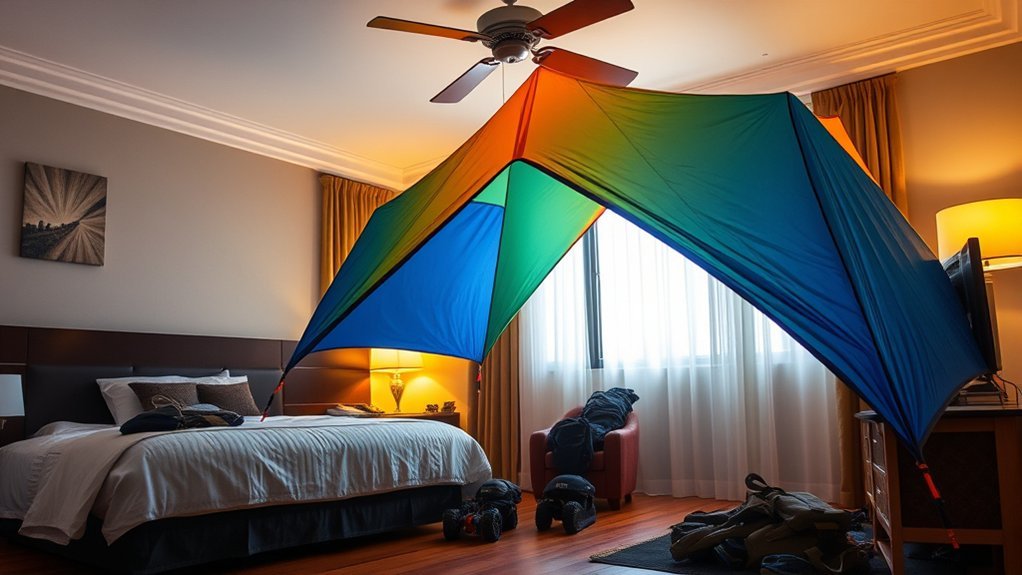
A rain-soaked tent can be difficult to manage between travel days, but a hotel room can work as a temporary drying space when you protect the room and use safe airflow. The key is to separate the tent layers, blot away standing water, spread the fabric without blocking exits, and avoid heat that could damage waterproof coatings.
Quick Answer
To dry a tent in a hotel room, separate the fly, body, and footprint; blot off water; spread each layer over safe, sturdy surfaces; and move dry air across both sides. Protect hotel furniture, keep exits and fire equipment clear, avoid direct heat, and do not store the tent until every seam and pocket is dry.
Key Takeaways
- Separate the rainfly, tent body, footprint, poles, and removable accessories so moisture cannot remain trapped between layers.
- Blot and wipe the fabric before hanging it; moving air works much faster after standing water is removed.
- Never hang a tent from sprinklers, sprinkler pipes, smoke detectors, lamps, or an entry door.
- Use unheated airflow rather than a radiator, space heater, hot hairdryer, iron, or hotel laundry dryer.
- Pack a damp tent only for temporary transport, then reopen and dry it as soon as possible.
At a Glance
| Time Required | About 15–30 minutes to set up, followed by several hours or overnight drying |
| Difficulty | Easy |
| Tools Needed | Microfiber or travel towels, removable hangers, luggage rack or bathtub, and optional room fan |
| Cost | Usually $0; about $5–$10 if you need extra towels or hangers |
Disclosure: As an Amazon Associate I earn from qualifying purchases. Some links on this page are affiliate links, at no extra cost to you.
Preparing Your Tent and Hotel Room for Drying
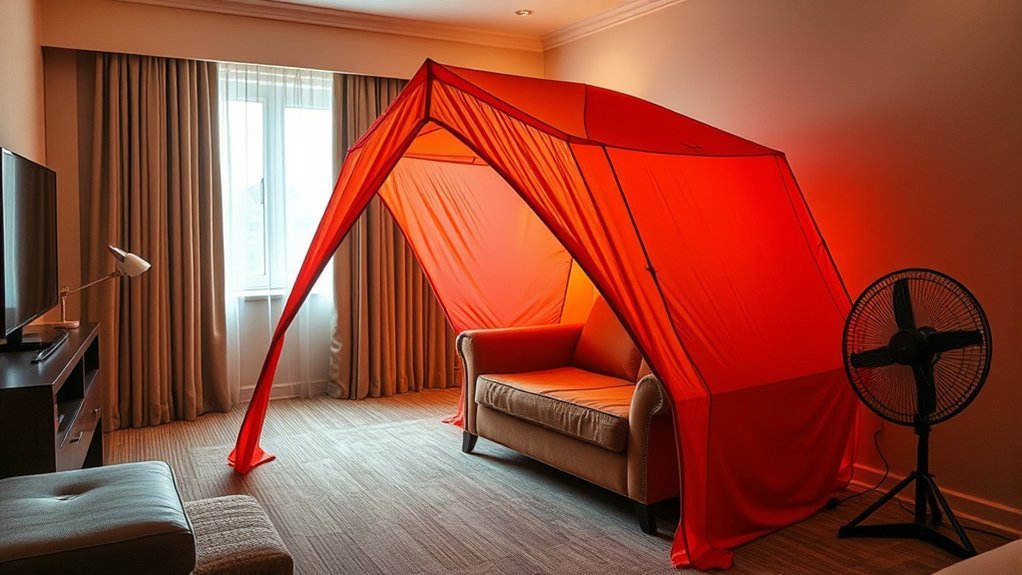
Before spreading wet camping gear through the room, check the hotel’s rules. Ask the front desk whether wet outdoor equipment may be dried in the room, bathroom, balcony, laundry area, or another designated space. Request extra towels if needed and avoid attaching anything to walls, ceilings, doors, or furniture.
- Remove loose dirt outdoors when possible. Shake off rainwater, leaves, sand, and mud before bringing the tent into the room. Do not shake a muddy tent over hotel carpeting or bedding.
- Separate every layer. Detach the rainfly, tent body, footprint, removable gear lofts, and storage pockets. Remove poles and stakes so they cannot tear the fabric or scratch hotel surfaces.
- Blot instead of wringing. Press a clean travel towel or microfiber cloth against both sides of the fabric. Wringing or twisting can strain seams, mesh, and waterproof coatings.
- Protect the room. Place towels beneath dripping sections and use the bathtub or shower floor as the first staging area. Keep wet fabric off carpet, upholstered furniture, wallpaper, and unfinished wood.
- Open doors and vents on the tent itself. Unzip tent doors, vents, pockets, and zipper flaps so trapped moisture can escape.
Manufacturer guidance from NEMO Equipment recommends removing excess liquid, air drying the tent, and allowing it to dry completely before storage. Check your own tent’s care label because coatings, electronic lighting systems, and specialty fabrics may require additional precautions.
Warning: Never hang a tent from a fire sprinkler, sprinkler pipe, smoke detector, ceiling fixture, lamp, HVAC unit, or electrical conduit. Do not cover fire-safety equipment or block the hotel entry door, windows used for emergency escape, or the path to an exit. Keep dripping fabric away from outlets, cords, fans, and other electrical devices.
Finding Suitable Hanging Locations
The safest drying location contains drips, allows air to reach both sides of the fabric, and does not place heavy wet material on a weak fixture. A large tent usually dries better in separate sections than when the entire shelter is hung from one point.
Best Hotel-Room Drying Spots
- Bathtub or shower area: Drape one section over the tub or place it across several removable hangers. Keep the drain clear and avoid putting electrical fans inside the splash area.
- Luggage rack: Cover the rack with a clean towel, spread one tent layer loosely over it, and leave space underneath for air movement.
- Two sturdy chairs: With hotel permission, protect the chair backs with towels and bridge a light section of fabric between them.
- Freestanding clothes rack: Use removable hangers to distribute the weight instead of placing the entire wet tent on one hook.
- Bathroom or closet door frame: Use only when the material is lightly damp, the door can still operate normally, and the setup does not affect the room’s exit path. Never drape the tent over the entry door.
- Balcony: Use it only when the hotel permits outdoor drying. Secure the fabric against wind, prevent water from dripping onto rooms below, and avoid leaving lightweight fabrics in strong or prolonged direct sunlight.
A fixed shower-curtain rod or towel bar may hold a small, lightly damp rainfly, but it should not support a saturated tent unless the fixture is clearly secure and the hotel allows it. Avoid spring-loaded tension rods, decorative hooks, curtain rails, and fixtures that move when gently tested.
Note: Spreading a wet tent directly over a bed or upholstered chair can transfer water, mud, odor, and waterproofing residue to hotel property. Use the bathtub or a towel-covered hard surface instead.
Ensuring Proper Air Circulation and Lower Humidity
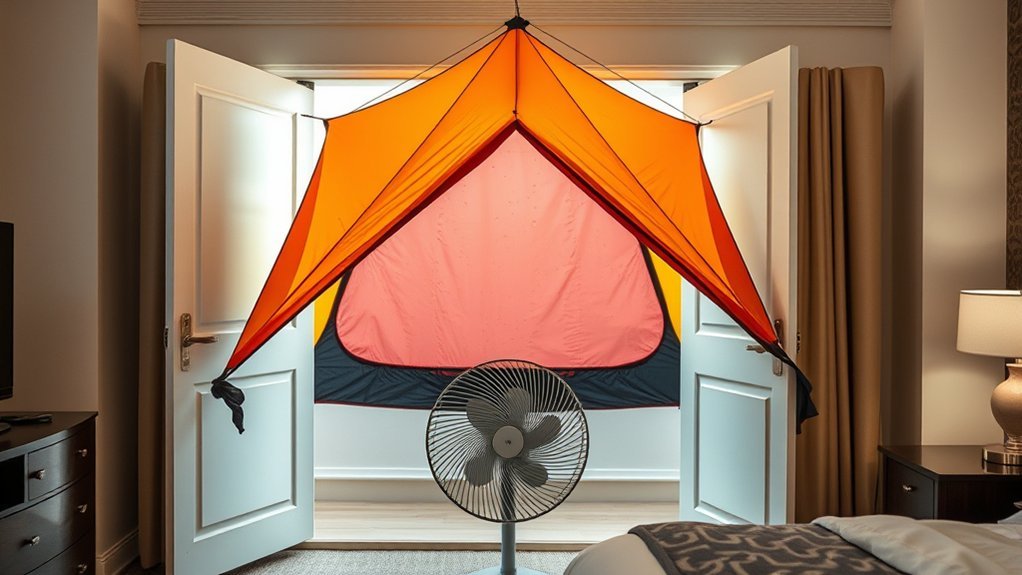
Air movement is most effective when the fabric is open, separated, and exposed on both sides. Do not leave the rainfly folded over the tent body or place the footprint underneath another wet layer.
- Run the bathroom exhaust fan while wet sections are over the tub, provided the fan vents normally and hotel policy permits extended use.
- Use the room’s air conditioner or dry mode to lower indoor humidity. Do not cover the HVAC unit or drape wet fabric over its vents.
- Open a window only when permitted and when the outdoor air is not rainy, foggy, or more humid than the room.
- Keep the hotel entry door closed. An open corridor door can interfere with hotel security and fire-door operation.
- Turn or reposition each layer periodically so seams, corners, and the underside receive moving air.
Open tent doors, mesh panels, vents, pole sleeves, pockets, and zipper covers. If the floor is waterproof, turn the tent body inside out after the first side dries so the coated floor and seam tape are exposed.
A tent is not ready for storage until the fly, body, floor, footprint, seams, sleeves, pockets, and storage sack are all dry.
Utilizing Fans for Efficient Drying
A fan speeds evaporation by replacing the humid air next to the fabric with drier room air. Position the fan outside any drip or splash zone and aim it across the tent rather than forcing one section tightly against a wall.
| Fan or Air Source | Best Direction | Best Use |
|---|---|---|
| Portable or desk fan | Across the surface | Targeting seams, corners, and a damp floor |
| Oscillating fan | Sweeping from side to side | Even coverage across several separated layers |
| Bathroom exhaust fan | Pulling humid air from the room | Containing drips and humidity in the bathroom |
| Ceiling fan | Room-wide circulation | Supplementing, rather than replacing, direct airflow |
| Air conditioner or dry mode | Through the room without obstruction | Reducing overall room humidity |
Keep the fan, plug, and cord on a dry surface. Do not place an electrical fan inside the bathtub or shower, and do not run a cord through a doorway where it could be pinched or create a trip hazard.
Pro Tip: Aim the fan parallel to the hanging fabric so air moves along both sides. A tent pressed flat against a wall, window, or bed can stay wet where the material touches the surface.
Checking for Trapped Moisture
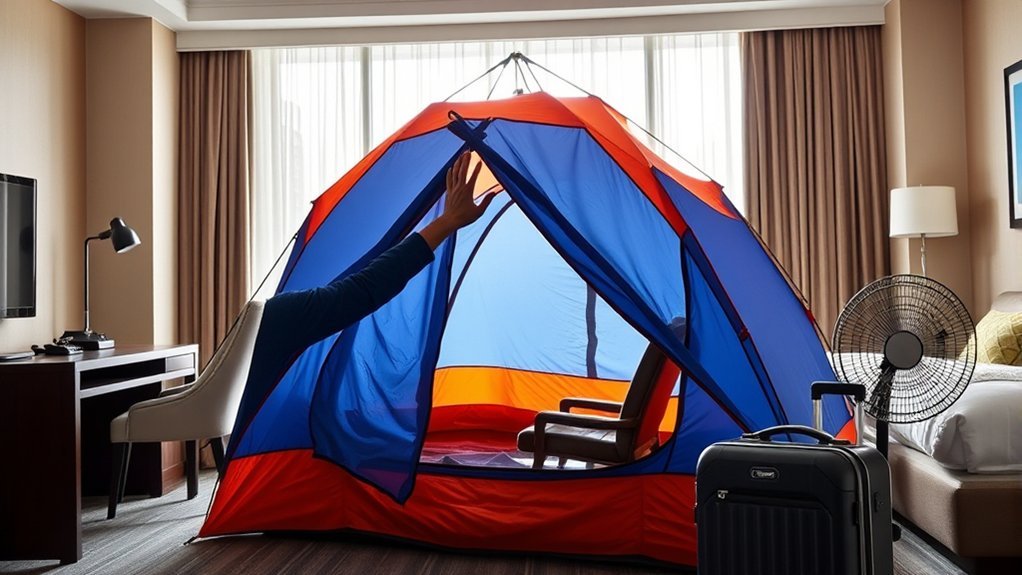
A tent can feel dry across its main panels while water remains inside folds, sleeves, and reinforced seams. Inspect it under bright room lighting and check each component separately.
Final Dryness Checklist
- Press a clean, dry towel against the floor, corners, and lower rainfly edges. Continue drying if the towel picks up moisture.
- Run your fingers along seam tape, zipper flaps, guyline attachment points, and reinforced patches.
- Open and feel inside storage pockets, pole sleeves, vents, and gear-loft attachment points.
- Check the footprint on both sides, especially where it was folded or touching the ground.
- Dry the stuff sack, pole sack, stake sack, guylines, and webbing before enclosing them with the tent.
- Turn the tent body and rainfly over and inspect the side that faced the wall, bed, rack, or bathtub.
Cool fabric can indicate continuing evaporation, but temperature alone is not a reliable test. Use a dry cloth and visual inspection to confirm that no surface leaves a damp mark.
Additional Tips for Quick Drying
When time is limited, increase exposed surface area rather than adding heat. A tent divided into separate, lightly draped layers will normally dry more evenly than a bundled tent hanging from one point.
- Replace saturated towels with dry ones after the first blotting pass.
- Move the rainfly, body, and footprint through the best airflow position instead of trying to fit everything there at once.
- Keep coated panels loose rather than tightly folded.
- Turn the fabric after one side no longer transfers moisture to a dry towel.
- Use indirect daylight when available, but avoid leaving technical fabrics in prolonged direct sun.
- Do not use a radiator, space heater, iron, heated towel rail, hot hairdryer, or hotel tumble dryer.
- Never apply bleach, household stain remover, fragrance spray, or ordinary laundry detergent unless the tent manufacturer specifically approves it.
NEMO’s tent-care guidance recommends air drying and warns that machine-dryer heat can melt technical fabrics. Normal room air, dehumidified airflow, and patience are safer than concentrated heat.
Note: There is no universal drying time. Light condensation may clear within a few hours, while a soaked double-wall tent may require most of the day or overnight. Pack based on the dryness check, not a fixed timer.
Storing Your Tent After Drying
How you pack the tent depends on whether you are leaving for another campsite, transporting it while still damp, or storing it for weeks or months.
Packing for the Next Travel Day
Once every component is dry, fold or roll the tent according to its manufacturer’s instructions and return it to its travel sack. Keep poles and stakes in their own sacks so sharp ends cannot rub against the tent fabric.
If checkout arrives before the tent is fully dry, place it temporarily in a waterproof sack or plastic liner and keep it separate from clothing and sleeping gear. This is transport only—not storage. Reopen and dry it at the next safe opportunity. Big Agnes advises that a tent packed wet because of time constraints should be fully dried before long-term storage.
Warning: Do not leave a wet tent sealed in a vehicle, roof box, suitcase, or stuff sack longer than necessary. Heat and trapped moisture can accelerate odor, mildew, coating damage, and seam-tape deterioration.
Ideal Storage Conditions
For long-term storage, first confirm that the tent body, rainfly, footprint, guylines, pockets, and sacks are completely dry. Store the clean tent loosely rolled, loosely folded, or hung in a breathable storage sack.
NEMO recommends a cool, dry, dark storage area and advises against leaving a tent compressed in its small stuff sack for long periods. Big Agnes also recommends a dry, temperature-controlled location rather than an attic or garage with large swings in temperature and humidity.
- Use a large breathable sack rather than an airtight plastic bag.
- Keep the tent away from direct sunlight, heaters, hot pipes, and damp exterior walls.
- Do not place heavy boxes on top of the stored tent.
- Store poles dry and partially relaxed according to the manufacturer’s guidance.
- Inspect stored gear periodically for odor, moisture, pests, coating flakes, or peeling seam tape.
Preventing Mildew Growth
The most reliable mildew-prevention step is complete drying before storage. A silica gel packet may help manage small changes in humidity inside a gear bin, but it cannot dry a damp tent and should never replace proper airflow.
If the tent develops a musty odor, unpack it in a ventilated area and inspect both sides for spots, discoloration, sticky coatings, peeling seam tape, or visible growth. Follow the tent manufacturer’s cleaning directions. Avoid scrubbing coated fabric aggressively or applying bleach unless the manufacturer specifically instructs you to do so.
Frequently Asked Questions
Can I use a hairdryer to dry my tent?
Avoid heated hairdryer settings because concentrated heat can damage technical fabric, seam tape, mesh, or waterproof coatings. A cool-air or no-heat setting may be used carefully if the appliance remains dry, stays outside the splash area, and is kept moving rather than aimed at one spot.
How long does it usually take to dry a tent?
There is no fixed drying time. A tent with light condensation may dry within a few hours, while a rain-soaked tent may need most of the day or overnight. Humidity, airflow, tent size, fabric layers, and the amount of trapped water all affect the result.
Is it safe to dry a tent indoors?
Yes, when the hotel permits it and you contain drips, ventilate the space, protect furniture, and keep exits and fire-safety equipment clear. Never hang fabric from sprinklers or cover smoke detectors. Keep wet material away from outlets, lamps, cords, fans, and HVAC equipment.
What if my tent smells musty after drying?
Air the tent in a ventilated area and inspect it for visible mildew, sticky coatings, peeling seam tape, or damp pockets. If the odor remains, clean it according to the manufacturer’s instructions. Fragrance sprays may hide the smell without addressing its cause, and prolonged direct sunlight can damage some fabrics.
Can I fold my tent while it is still slightly damp?
Only for temporary transport when you have no safe drying option. Isolate the damp tent in a waterproof liner, then unpack and dry it as soon as possible. Never treat a sealed damp tent as ready for overnight or long-term storage.
Can I place the tent near a heater or radiator?
No. Direct heat can overheat fabric, weaken coatings, damage seam tape, and create a fire risk. Use room-temperature moving air, a bathroom exhaust fan, or the hotel air conditioner instead.
What should I do if the tent is still wet at checkout?
Blot away as much water as possible, place the tent temporarily in a waterproof sack or liner, and keep it separate from dry gear. Unpack it at your next destination and resume drying immediately. Tell housekeeping about any wet towels or surfaces left in the room.
Conclusion
You can dry a tent in a hotel room without damaging the shelter or the room when you work in separate layers, remove standing water first, protect every surface, and use steady unheated airflow. Keep the entry route and fire equipment clear, inspect hidden seams and pockets, and pack the tent only after every component is dry. When complete drying is impossible before checkout, transport the tent temporarily and reopen it at the first safe opportunity.
Sources
- NEMO Equipment: Cleaning, Repairing, and Storing Your Tent — supports air drying, indirect sunlight, heat precautions, complete drying, and breathable long-term storage.
- Big Agnes: How to Pack Your Tent — supports shaking off moisture and reopening a tent that had to be packed wet.
- Big Agnes: Seasonal Tent Maintenance — supports dry, temperature-controlled storage and avoiding large temperature and humidity swings.
- U.S. Fire Administration: Hotel and Vacation Rental Fire Safety — supports identifying and maintaining access to hotel exits and fire-safety systems.
- National Park Service: Fire Sprinkler Safety — supports keeping sprinkler heads unobstructed and never hanging objects from them.

