
Last Updated on July 28, 2026 by Mason Reed
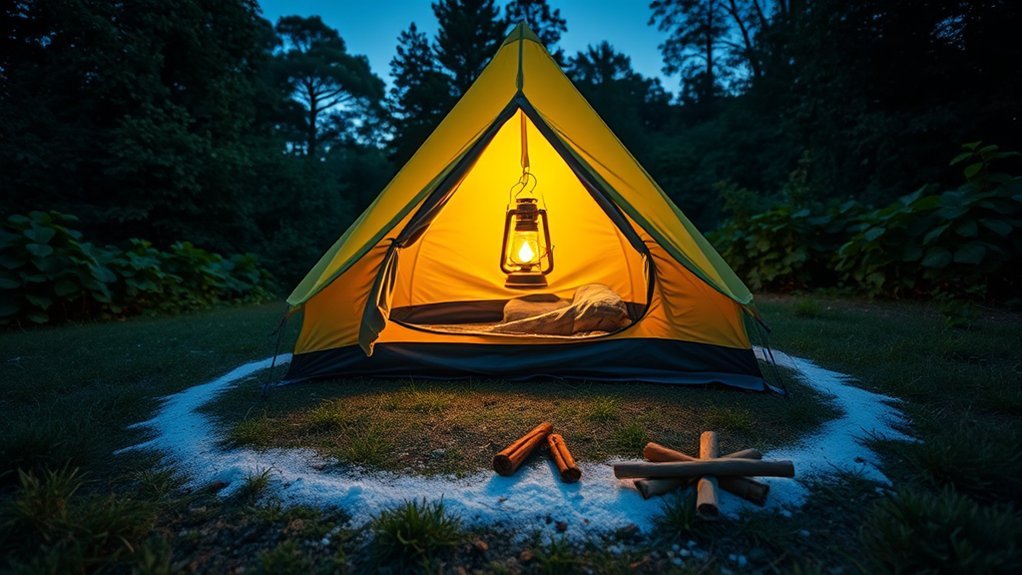
Ants can turn a peaceful campsite into a crawling nuisance fast, but a few smart habits keep them out of your tent for good. Start by choosing a campsite away from ant trails and nests, sealing food in airtight containers, cleaning up crumbs immediately, and laying down natural barriers like salt or diatomaceous earth around your tent’s base. Below is everything you need to camp ant-free.
Quick Answer
Keep ants out of your tent by camping away from visible ant trails, storing food in sealed airtight containers at least 200 feet from your sleeping area, cleaning up spills right away, and ringing your tent footprint with a dry barrier like salt or food-grade diatomaceous earth.
Key Takeaways
- Ants navigate by scent trails, so unsecured food, gear coated in food residue, and sweet spills draw them in fast.
- Campsite choice is your primary defense — pitching at least 200 feet from ant mounds, standing water, and dense vegetation prevents infestation.
- Diatomaceous earth and salt barriers work mechanical wonders, but must stay dry to remain effective.
- Keep DEET off tent fabrics to avoid damaging waterproof coatings; use permethrin on footprints or ground tarps instead.
- Closing micro-gaps in zippers, maintaining screen mesh, and establishing a zero-food tent rule form a complete barrier system.
At a Glance
| Time Required | 10–15 minutes to inspect campsite and set up ground barriers |
| Difficulty | Easy |
| Tools Needed | Food-grade diatomaceous earth or salt, airtight food canisters, tent footprint, spray bottle with diluted vinegar |
| Cost | Under $15 for barrier materials |
Disclosure: As an Amazon Associate I earn from qualifying purchases. Some links on this page are affiliate links, at no extra cost to you.
Understand Ant Behavior
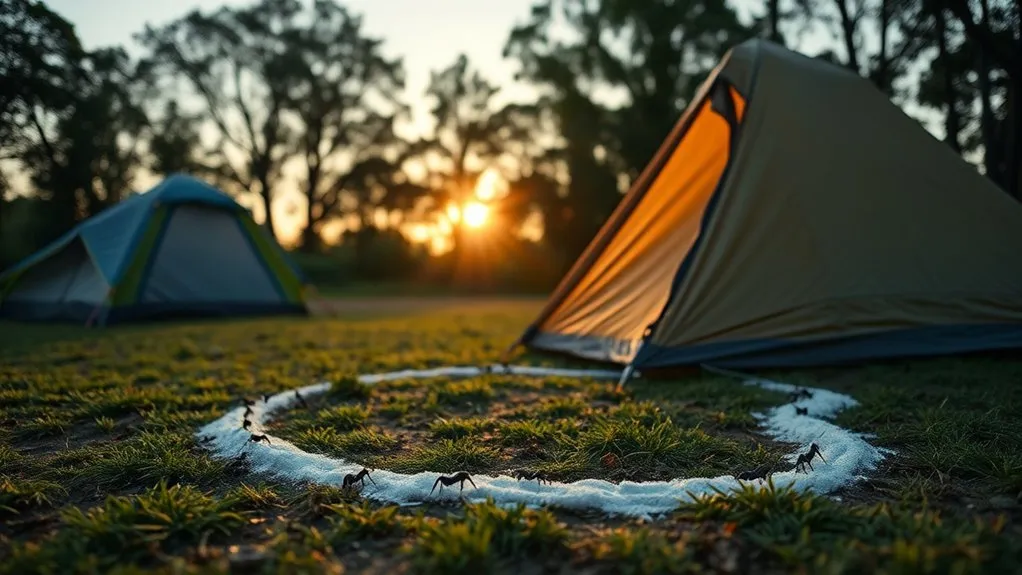
To effectively prevent ants from invading your tent, it helps to understand how they operate. Ants live in colonies that can number in the thousands or millions, and they’re constantly foraging for food and water. They communicate using pheromones, laying down invisible scent trails that guide scout ants and the rest of the colony straight to a food source. Leave food unsecured or waste lying around camp, and you’re likely to attract them within hours.
Pay attention to foraging patterns — many species are drawn to sugary or protein-rich substances. Moist conditions from damp gear, spilled drinks, or organic debris can also draw ants in, making your campsite an easy target. Recognizing these behaviors helps you manage food storage and minimize attractants so you can keep ants at bay while enjoying the outdoors.
Choose the Right Campsite
Choosing the right campsite can dramatically cut your odds of an ant encounter. Start your site selection by staying at least 200 feet from any visible ant trails, decaying logs, or active mounds. Open areas with good airflow are ideal, since they’re less attractive to ants and other insects, whereas camping directly near standing water invites a wider range of pests.
Where possible, opt for slightly elevated, dry ground where ant foraging activity tends to be lower. Before pitching your tent, carefully scan the ground for signs of activity — active trails, small mounds, or clusters of ants moving in a line — so you’re not setting up on top of a hidden nest. A little upfront scouting ensures you spend your trip relaxing rather than battling unwanted visitors.
Pro Tip: Use a ground tarp or tent footprint tucked slightly smaller than your tent’s floor perimeter. It prevents rainwater from pooling and keeps damp organic debris (which attracts scout ants) from collecting underneath your sleeping floor.
Secure Food Storage and Maintain Campsite Cleanliness
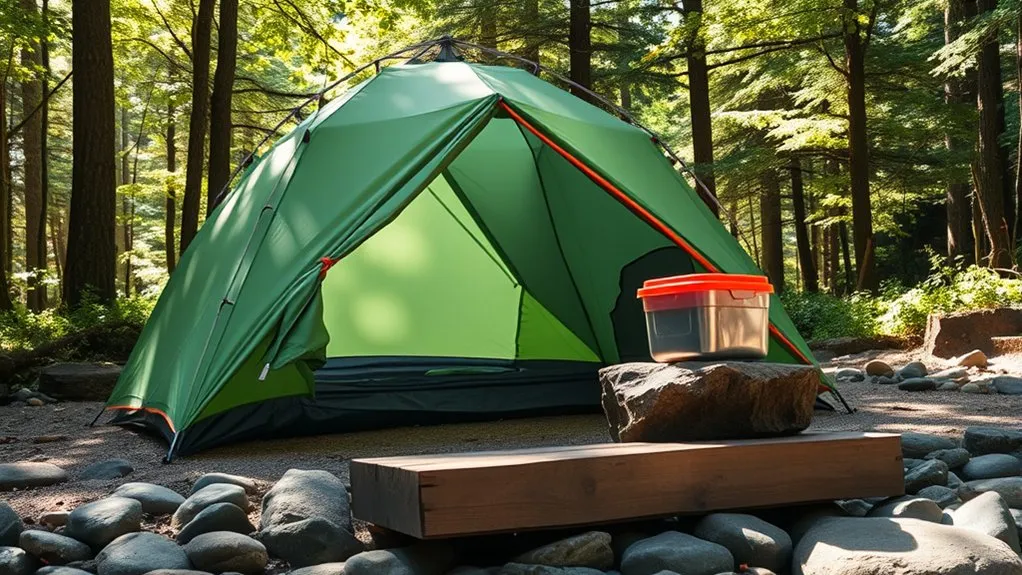
After picking a good campsite, securing your food storage and maintaining strict campsite cleanliness is your primary line of defense. Use heavy-duty, airtight plastic bins or glass jars to keep food odors contained. Store all food at least 200 feet away from your tent in a designated food prep area so crumbs and cooking residue stay localized.
Enforce a strict zero-food rule inside your sleeping tent. Eating or drinking anything other than plain water inside the tent creates microscopic crumb trails that lure scout ants inside. Clean up spills immediately, wash utensils promptly after meals, and seal trash in heavy-duty bags inside designated receptacles. If you’re camping in bear country, storing food in hard-sided bear canisters or hanging food bags handles both large wildlife and insect invaders simultaneously.
Use Natural Barriers and Deterrents
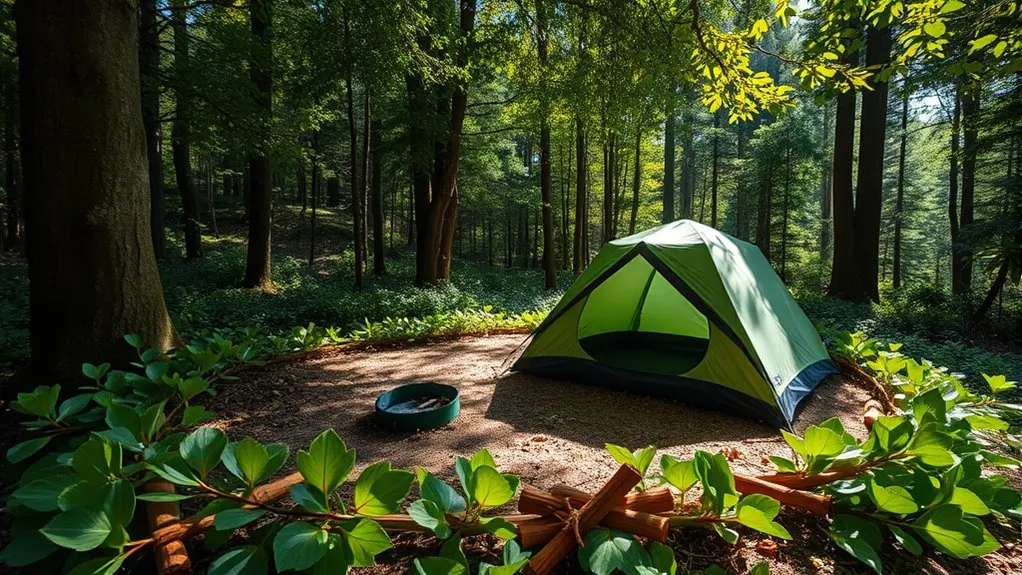
Even at a clean campsite, a physical or aromatic barrier around your tent perimeter provides extra insurance. A continuous line of table salt around your tent floor or footprint discourages ants from crossing. Food-grade diatomaceous earth (DE) works mechanically: its microscopic razor-sharp edges disrupt an ant’s waxy exoskeleton upon contact, leading to dehydration.
Note: Diatomaceous earth only works while completely dry. Rain, heavy morning dew, or wet soil causes DE to clump and lose its mechanical cutting efficacy. Reapply a fresh ring once the ground dries out.
Warning: Pouring boiling water on an active ant mound can kill ants on contact, but it also poses a severe burn risk on uneven terrain and damages local soil ecology and surrounding vegetation. Avoid boiling water treatments in wild environments to align with ecological conservation standards.
For an aromatic approach, natural household sprays can disrupt trail pheromones effectively:
| Deterrent | Method | Effectiveness |
|---|---|---|
| Table Salt | Pour a continuous line around tent base | Physical barrier; deters crossing |
| Vinegar Solution (1:1 with water) | Spray around footprint perimeter and gear | Erases chemical pheromone trails |
| Diatomaceous Earth (Food-Grade) | Sprinkle a thin, dry ring around tent edge | High mechanical mortality; requires dry conditions |
| Peppermint or Tea Tree Oil | Dilute 10–15 drops in water and spray perimeter | Masks foraging scent trails naturally |
| Crushed Bay Leaves / Citrus Juice | Scatter or spray around perimeter | Mild aromatic repellent |
Tent Maintenance & Chemical Repellent Safety
Preventing ants requires inspecting your shelter’s physical hardware. Small gaps where tent zippers meet at corners or unzipped mesh windows are prime entry points. Ensure all zipper pulls are pulled tightly closed to the end of their tracks, and inspect your no-see-um mesh netting for micro-tears before your trip. Repair any mesh holes with adhesive gear patches.
Warning: Never spray DEET-based insect repellents directly onto tent fabrics, rainflies, or zippers. DEET is a strong chemical solvent that chemically dissolves synthetic nylon, polyester, and waterproof polyurethane coatings. For gear protection, treat your ground tarp or footprint with fabric-safe Permethrin spray beforehand, and let it dry completely before pitching.
Additionally, avoid allowing tree branches, high grass, or camp gear to lean directly against your tent body. These create physical bridge highways that allow ants to bypass ground barriers and walk straight onto your tent roof or rainfly.
Redirecting Ants and Leave No Trace Principles
In frontcountry sites or established campgrounds, creating a decoy bait trail far away from your sleeping area can redirect foraging ants. Mixing sugar and water in a shallow container placed 50 feet away capitalizes on their natural foraging drive, drawing them away from your living space.
Warning: Leaving open sugar water unattended outdoors can violate Leave No Trace (LNT) principles by attracting bears, raccoons, wasps, and non-target wildlife. Use sweet bait stations strictly in controlled environments where permitted, and clean up decoy stations thoroughly before leaving camp.
Remember that complete eradication in the wild is neither realistic nor desirable. The objective is simply deterring and redirecting insects away from your immediate sleeping zone while leaving the surrounding ecosystem intact.
Troubleshooting: What to Do If Ants Get Inside Your Tent
If scout ants manage to breach your tent interior during the middle of the night, follow this quick emergency action plan to clear them out fast:
1. Evacuate Sleeping Gear: Take sleeping bags and pads outside immediately and shake them out vigorously to remove clinging ants.
2. Locate and Seal the Entry Point: Inspect tent corners, zipper junctions, and floor seams to identify where ants are entering, and zip or patch the gap shut.
3. Wipe Down Interior Surfaces: Spray interior tent floors and lower walls with a diluted vinegar-and-water solution or wet wipes to neutralize established pheromone scent trails.
4. Refresh External Ground Barriers: Inspect your outside perimeter and reapply dry salt or diatomaceous earth over any gaps caused by rain or foot traffic.
Community Awareness and Coexistence
Understanding ants’ ecological role helps put an occasional encounter into perspective. Practicing sustainable camping habits allows you to protect your campsite while respecting local biodiversity.
Ecological Role of Ants
Ants contribute significantly to soil aeration, organic decomposition, and nutrient cycling that supports healthy plant growth. Many native ant species also control other pest populations and assist in seed dispersal. Recognizing these environmental benefits encourages humane management — focusing on deterrents and redirection rather than indiscriminate chemical extermination.
Non-Invasive Species Awareness
Learning to recognize native, non-invasive ant species changes how you view minor insect activity near camp. Native species maintain forest ecosystem balance. Distinguishing them from aggressive invasive species (like introduced fire ants) helps prevent unnecessary chemical overuse and supports sustainable outdoor ethics.
Sustainable Camping Practices
Sustainable camping means avoiding harsh chemical sprays that linger in wild soil and harm non-target organisms. Natural physical barriers like salt and food-grade diatomaceous earth provide effective protection without leaving toxic residue behind. Combined with Leave No Trace food hygiene, these habits keep your shelter pest-free for your entire trip.
Frequently Asked Questions
What types of ants are most likely to invade tents?
Carpenter ants, fire ants, sugar ants, and pavement ants are the most common tent invaders. Carpenter ants seek damp wood and food, while fire ants aggressively defend territory. Keeping your campsite clean, dry, and fully sealed deters all common species effectively.
Can ant repellents harm the environment or pets?
Synthetic chemical sprays and DEET can harm aquatic life, soil microbes, and domestic pets. Food-grade diatomaceous earth and table salt are non-toxic, pet-safe alternatives. Always avoid pool-grade diatomaceous earth, which contains toxic crystalline silica unsuitable for camping environments.
How do I identify ant trails near my campsite?
Scan the ground for narrow, marching lines of ants following a distinct linear path across soil, rocks, or tree trunks. Following the line backwards leads to their nest, while following it forward reveals what attractant (crumbs or moisture) they are targeting.
Are certain tent materials more resistant to ants?
High-denier nylon or polyester tents featuring polyurethane (PU) waterproof coatings offer smooth surfaces that are difficult for ants to scale. However, physical integrity — such as fully taped floor seams and undamaged fine mesh screens — matters far more than the base fabric type.
What should I do if ants get inside my tent?
Immediately remove sleeping gear and shake it out away from camp. Wipe interior tent surfaces with a diluted vinegar-and-water solution to erase invisible scent trails, locate and close any open zipper gaps, and reapply dry ground barriers around your footprint.
Conclusion
It’s ironic how something as tiny as an ant can turn a peaceful outdoor retreat into a chaotic invasion. By understanding ant behavior and adopting proactive habits — selecting dry sites away from trails, securing food 200 feet away, and maintaining dry perimeter barriers — you can keep your tent completely ant-free without relying on harsh chemicals. Respecting nature and managing attractants ensures you spend your camping trip enjoying the wilderness rather than defending your shelter from it.
Sources
- Terminix: Diatomaceous Earth for Ants — Confirms diatomaceous earth dehydrates insects mechanically through exoskeleton disruption.
- National Pesticide Information Center: Diatomaceous Earth General Fact Sheet — Details safety profiles and application parameters for food-grade DE.
- Honor Services: Does Diatomaceous Earth Kill Ants? — Explains why DE loses mechanical efficacy when exposed to rain or heavy moisture.
- Leave No Trace Center for Outdoor Ethics — Authoritative guidelines for backcountry food hygiene and wildlife safety.
- PF Harris: How To Apply Diatomaceous Earth For Ants — Guidelines on creating non-toxic home and camp barriers.

