
Last Updated on July 28, 2026 by Mason Reed
Using a reflective tarp over your tent really can keep you cooler. It deflects sunlight, creating a shaded air gap that noticeably lowers the temperature underneath compared to a tent left in direct sun. How much cooler depends on the tarp’s material, its color, and how far above the tent you rig it.
Quick Answer
Yes. A reflective tarp rigged 6–12 inches above your tent can lower the temperature underneath by roughly 15–25°F compared to an unshaded tent, because it bounces solar radiation away instead of letting it heat the tent fabric directly.
Key Takeaways
- Reflective (silver, Mylar, or Aluminet) tarps bounce solar radiation away instead of absorbing it, preventing radiant heat buildup inside your tent.
- Leaving a 6–12 inch air gap between the tarp and the tent roof is essential — it allows trapped hot air to vent sideways via natural convection.
- Thicker poly tarps block more conductive heat, while mesh Aluminet tarps offer superior wind permeability for high-wind campsites.
- Always face the reflective side upward toward the sun to avoid reflecting heat downward onto your tent shelter.
Disclosure: As an Amazon Associate I earn from qualifying purchases. Some links on this page are affiliate links, at no extra cost to you.
Understanding the Basics of Reflective Tarps
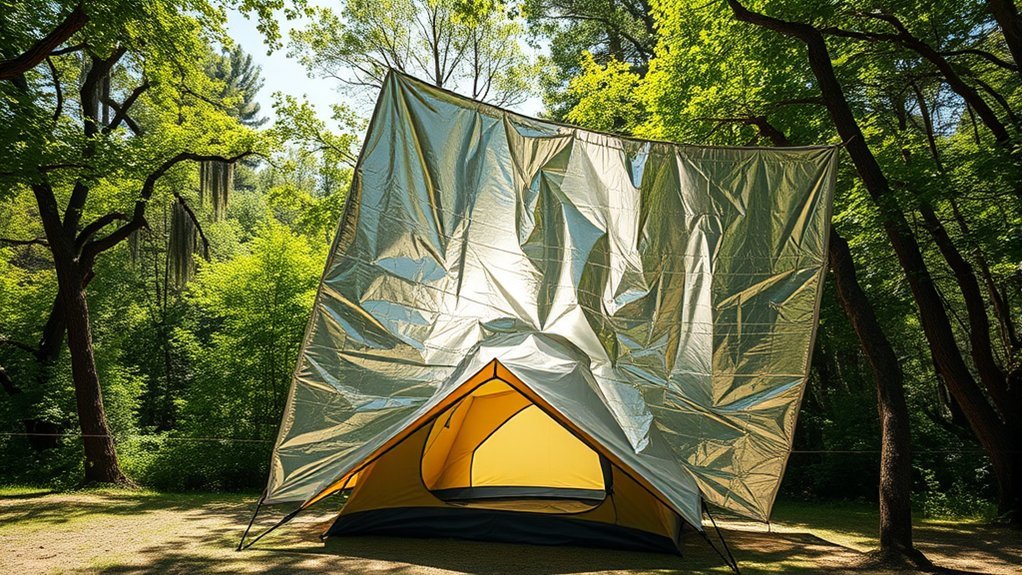
Reflective tarps are a fundamental tool for thermal management during summer camping, wilderness survival, and desert expeditions. They utilize highly reflective coatings — typically silver polyethylene, laminate Mylar, or woven aluminum strands — engineered to bounce shortwave solar radiation away before it reaches your tent’s rainfly.
Material thickness and density dictate how much thermal energy passes through. A heavy-duty reinforced silver poly tarp absorbs minimal heat and blocks transmission, whereas a ultra-thin emergency space blanket can tear easily in wind despite its high reflectivity. Placing the tarp directly in the sun’s path and comparing the shaded ground underneath to surrounding unshaded soil makes the cooling differential instantly noticeable.
Pro Tip: Keep the tarp’s reflective (silver) side facing up, toward the sun — not down toward the tent. Facing it downward traps body heat and re-radiates ground heat straight back into your sleeping area.
How Reflective Tarps Work to Reduce Heat
A reflective tarp acts as a radiation shield. Direct sunlight consists of electromagnetic radiation that hits tent fabric, converting light into heat energy through absorption. Dark tent materials absorb up to 90% of this energy, turning the inside of your tent into a solar oven.
By placing a reflective tarp between the sun and your tent, shortwave solar rays strike the metallic surface and bounce off (high albedo). The small amount of heat absorbed by the tarp itself is dissipated into the ambient air above the tent, rather than conducting directly into the tent’s interior.
Comparing Reflective Tarp Materials: Poly, Mylar, and Aluminet
Not all reflective shade systems perform identically in the field. Depending on pack weight limits, wind conditions, and durability needs, campers typically choose between three core materials:
| Material Type | Solar Rejection | Wind Resistance & Durability | Best Application |
|---|---|---|---|
| Heavy-Duty Silver Poly tarp | High (80–85%) | High tear resistance; acts like a solid sail in high wind | Car camping, rain/shade dual protection |
| Mylar Laminated Tarp | Very High (90–95%) | Moderate; lightweight material can puncture easily | Emergency survival, ultralight backpacking |
| Aluminet Shade Cloth | High (70–80%) | Exceptional in wind (open mesh allows air passage) | High-wind desert camping, long-term setups |
Setting Up Your Reflective Tarp for Maximum Effect
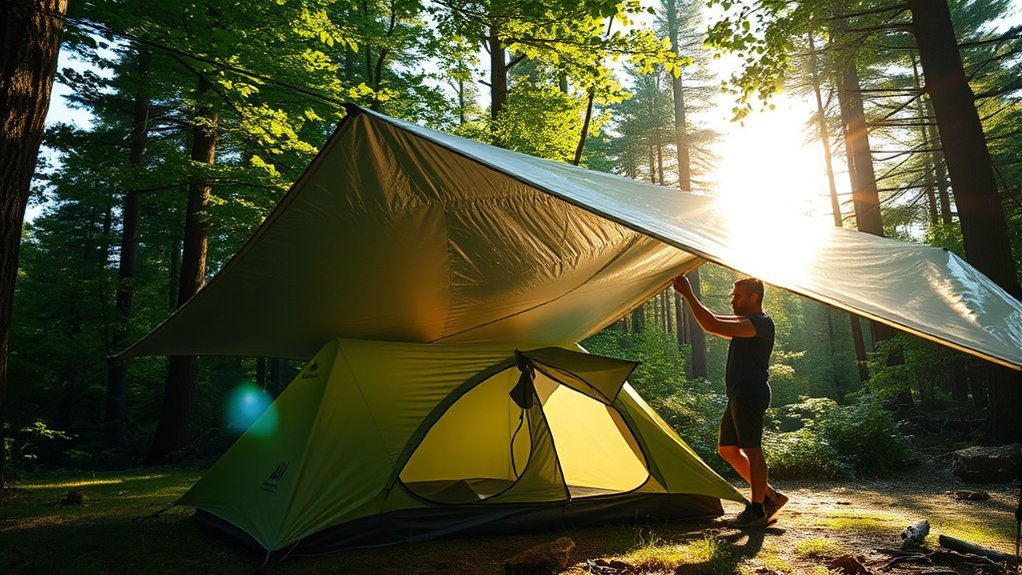
For maximum thermal reduction, rig the tarp overhead with a clear 6 to 12-inch air gap between the tarp material and your tent’s rainfly. Never lay a reflective tarp flat against the tent roof. Without an air gap, heat absorbed by the tarp will transfer directly into the tent fabric through conduction.
At a Glance
| Setup Time | 10–20 minutes using paracord, trekking poles, or trees |
| Difficulty | Easy — basic knot-tying and tensioning required |
| Tools Needed | Reflective tarp, 550 paracord, tent stakes, tarp poles or trees |
| Typical Cost | $15–$35 for a durable reinforced silver tarp system |
| Tarp Color Options | Reflective Performance | Ideal Positioning |
|---|---|---|
| Silver / Mylar | Best thermal reflection (deflects ~90% solar energy) | Directly overhead facing sun |
| White | Moderate reflection; creates comfortable shade | Angled to block low afternoon sun |
| Dark / Black | Poor (absorbs solar heat, radiates heat downward) | Avoid for heat management |
Warning: Keep reflective tarps well clear of camp stoves, fire pits, or lanterns. Reflective coatings can be flammable and may concentrate heat onto nearby equipment if placed too close to open flames.
Step-by-Step Pitch Configurations for Tent Cooling
How you pitch your tarp depends on tree coverage, wind conditions, and sun angle. Follow these configurations for optimal cooling performance:
Method 1: The Suspended Ridge-Line A-Frame
- String a Ridge Line: Tie a main 550 paracord ridge line between two sturdy trees roughly 2–3 feet above your tent roof using a bowline knot and a trucker’s hitch.
- Center the Tarp: Drape the reflective tarp over the ridge line with the silver side facing skyward.
- Anchor the Corners: Attach guylines to the four corner grommets and stake them into the ground at a 45-degree angle.
- Verify Air Gap: Ensure the tarp remains 6–12 inches clear of the tent’s rainfly along the entire length.
Method 2: The Angled Sun-Shield (Low Sun Angle)
- Identify Sun Direction: Determine where the sun will hit during the hottest period of the day (typically 12:00 PM to 4:00 PM).
- Raise Solar-Facing Edge: Support the side facing the sun using adjustable trekking poles or tarp poles elevated 6 feet high.
- Stake Rear Edge Low: Stake the opposite side of the tarp directly into the ground on the leeward side of the tent.
- Create Wind Tunnel: Ensure the open side allows prevailing cross-breezes to flow beneath the canopy.
Comparing Temperature Differences: Shaded vs. Non-Shaded Areas
Shaded areas beneath a reflective tarp run noticeably cooler than spots left in direct sun, even when the ambient air temperature is identical. Field testing shows that in 95°F ambient heat, an unshaded tent interior can reach over 115°F due to greenhouse heat trapping.
Under a properly rigged reflective tarp with an adequate air gap, interior tent temperatures remain within 1–3°F of the ambient shade temperature (~80–82°F) — representing an effective thermal drop of 15–25°F compared to an unshaded tent.
Practical Tips for Using a Reflective Tarp in Different Conditions
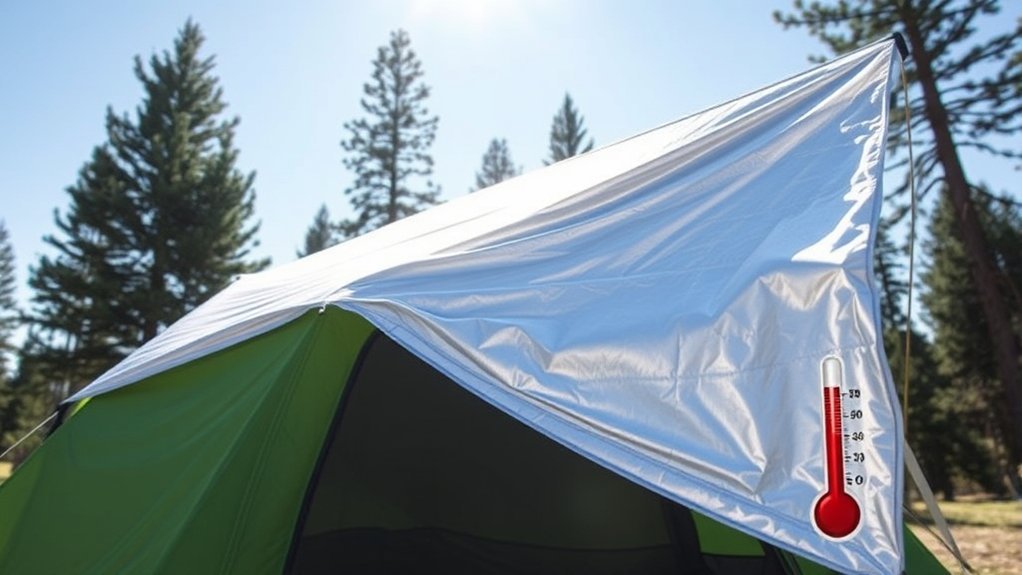
Placement, tarp thickness, and environmental monitoring dictate how well a reflective tarp performs.
Tarp Placement Strategies
Face the reflective side directly toward the sun to deflect heat rather than absorb it. Re-adjust your pitch angle during long stays to follow the sun’s trajectory across the sky. Pay attention to local vegetation and terrain features that can act as natural windbreaks or shade boosters.
Material Thickness Considerations
Thicker poly tarps block more heat conduction but add pack weight, which matters if you are carrying gear on foot.
- Test different tarp weights to find the right balance between durability and portability.
- Pair thin Mylar space blankets with standard nylon tarps for ultralight setups.
- Use elastic shock cords on guylines to absorb wind gusts and prevent grommet tear-outs.
Temperature Monitoring Techniques
To evaluate your setup, place a digital thermometer inside the tent and another in the shaded space directly outside. Track temperature readings at mid-day peak sun to verify that your air gap is maintaining adequate airflow.
A reflective tarp rigged with a proper 6–12 inch air gap can drop the temperature under your tent by 15–25°F compared to leaving it in direct sun.
Real-World Applications and Experiences in Survival Training
In desert survival training and hot-weather camping, managing heat exposure is critical to preventing heat exhaustion and dehydration. Key tactical setup takeaways include:
- Dual-Layering: Using a secondary emergency blanket suspended under an main tarp creates a double thermal barrier.
- Ground Cover Reflectivity: Placing a reflective mat on the ground beneath your tent further reduces radiant ground heat.
- Airflow Maximization: Aligning tarp pitch openings with natural terrain wind corridors speeds up hot air venting.
Frequently Asked Questions
Can I Use Any Tarp, or Does It Have to Be Reflective?
You can use any tarp to create shade, but reflective silver, Mylar, or Aluminet tarps perform noticeably better for temperature control. Non-reflective, dark-colored tarps absorb solar heat and re-radiate it downward, making the space underneath warmer. Reflective tarps bounce sunlight away before it turns into heat.
How Much Cooler Can I Expect My Tent to Be With a Tarp?
With a reflective tarp rigged 6–12 inches above the tent, you can expect an interior temperature drop of roughly 15–25°F compared to a tent left unshaded in direct sun. Maintaining an open air gap is essential so trapped hot air can vent freely.
Does Wind Affect the Effectiveness of a Reflective Tarp?
Yes. Moderate breezes enhance cooling by carrying away warm air beneath the tarp. However, strong winds can turn solid poly tarps into sails. In high-wind areas, use elastic shock cords on guylines or opt for a mesh Aluminet shade cloth that allows air to pass through.
Can I Leave My Tarp up During Rain or Storms?
Solid silver poly and Mylar tarps are completely waterproof and double as rain shelters. However, mesh Aluminet shade cloths are designed purely for sun shade and will let rain pass through.
Is It Safe to Use a Reflective Tarp in Winter Camping?
Yes. In winter, you can reverse the setup: face the reflective silver side inward/downward toward your tent to bounce escaping radiant body heat back down into your shelter.
Conclusion
A reflective tarp rigged with a proper 6–12 inch air gap above your tent is one of the most effective, low-cost methods to lower interior tent temperatures by 15–25°F during summer camping. By deflecting radiant solar energy before it reaches your rainfly and allowing convective breezes to flush away trapped heat, you can turn a hot solar oven into a comfortable shelter.
Sources
- Evapolar — How to Keep a Tent Cool While Camping — thermal reduction metrics and ventilation clearance guidelines
- Appalachian Outfitters — How to Cool a Tent While Camping — reflective tarp performance testing and rigging techniques
- Arcturus XL Survival Tarp Specifications — Mylar reflective layer heat rejection specs
