

Last Updated on July 29, 2026 by Mason Reed
A tent in full sun can heat up quickly, so the best cooling plan starts before you pitch it. Choose a shaded, well-drained site, block direct sunlight, align openings with safe airflow, and keep the shelter ventilated. Then use light bedding, cool water, and a battery fan to make the space more comfortable without relying on unsafe shortcuts.
Quick Answer
To keep a tent cool during the day, pitch it in afternoon shade, suspend a reflective tarp above it with an air gap, open mesh doors and high vents, and face an opening toward a safe breeze. Use light bedding and a battery fan, and leave the tent for a cooler place if heat becomes dangerous.
Key Takeaways
- Shade makes the biggest difference because it limits direct solar heating.
- A reflective tarp works best when it is suspended above the tent instead of touching the rainfly.
- Use doors, windows, ground vents, and roof vents together to create cross-ventilation.
- A fan improves air movement but does not make dangerously hot air safe.
- Hydration, rest, and knowing the signs of heat illness are as important as cooling the shelter.
At a Glance
| Time Required | 15–30 minutes for site selection, orientation, ventilation, and a shade tarp |
| Difficulty | Easy |
| Tools Needed | Reflective tarp or canopy, guylines, stakes, battery fan, water, and light bedding |
| Cost | $0–$60, depending on the gear you already own |
Warning: A tent is not a safe refuge from extreme heat. Leave the tent and move to an air-conditioned or substantially cooler place if anyone becomes confused, faints, has slurred speech, has a seizure, or cannot cool down. Call 911 for suspected heat stroke and begin rapid cooling while help is on the way, following CDC heat-illness guidance.
Disclosure: As an Amazon Associate I earn from qualifying purchases. Some links on this page are affiliate links, at no extra cost to you.
Choose a Breathable Tent
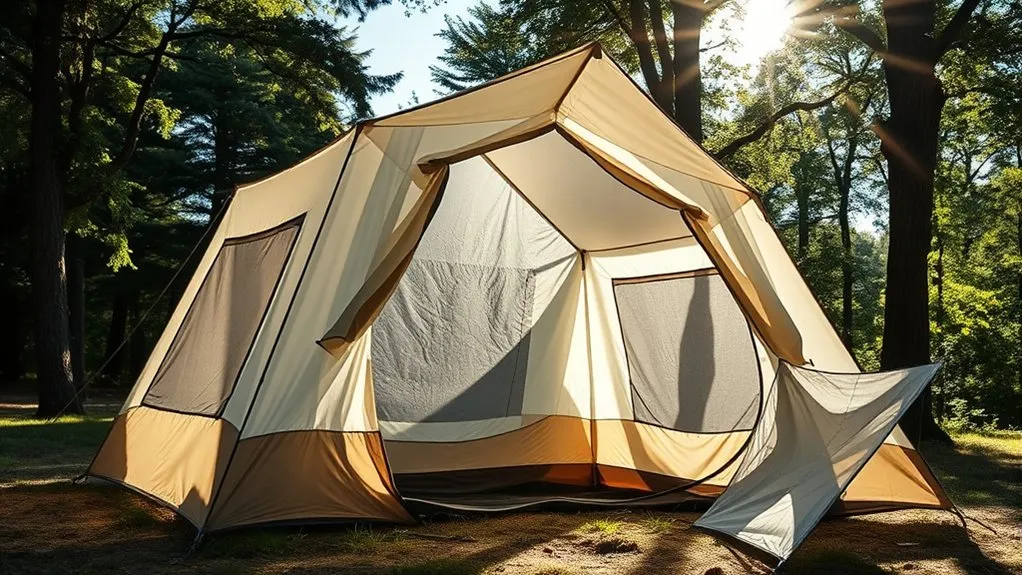
For hot-weather camping, focus less on one fabric name and more on the tent’s full ventilation design. Large mesh panels, two doors, adjustable low vents, and roof vents help air enter near the floor and let warmer air escape above. A coated synthetic tent with generous mesh can ventilate better than a canvas tent with few openings, so canvas is not automatically the coolest choice.
A double-wall tent gives you useful options. In dry, settled weather, you may be able to roll back vestibules or remove the rainfly to expose more mesh. Keep the fly ready for rain, dew, privacy, and sudden weather changes. When the fly stays on, tension it correctly and open every protected vent so air can move between the fly and inner tent.
Manufacturers use mesh bodies and vented designs specifically to increase airflow. For example, the MSR FreeLite tent uses a micromesh body for ventilation. A larger tent may feel less cramped and may provide more air volume, but size alone does not guarantee lower temperatures; shade, color, vent placement, and airflow matter more.
Note: Dark-room or blackout tents can reduce light and solar gain, but they still need open vents. No fabric technology replaces shade and airflow.
Seek Out a Shaded Campsite
Choose an established, durable campsite that receives shade during the hottest part of the afternoon. Shade from healthy trees, cliffs, boulders, or a permitted shelter reduces direct solar heating, but there is no reliable fixed promise that every shaded site will be exactly 10 or 15 degrees cooler. The result depends on air temperature, humidity, wind, ground surface, and how much sun reaches the tent.
Natural Shade Options
- Look for afternoon shade: West and southwest exposure often matters most because the tent has already absorbed heat for several hours.
- Inspect overhead hazards: Do not pitch under dead limbs, damaged trees, loose rocks, or anything that could fall in wind.
- Use existing campsites: Avoid clearing vegetation or moving branches just to create a cooler footprint.
- Add portable shade when needed: A tarp or canopy can protect the tent when natural shade is limited.
Elevation and Water Considerations
Regional elevation can affect temperature, but within one campground, “higher is cooler” is not a dependable rule. Cool, dense air often settles into low areas overnight, while exposed ridges may be hotter, windier, or less protected during the day. Choose a level, well-drained site that is not in a dry wash, flood channel, or low depression where rain can pool.
Water can make a site feel pleasant when a breeze develops, but camping close to a lake or river does not guarantee cooling. High humidity can reduce evaporative cooling, and shoreline sites may have insects, flooding risk, fragile vegetation, and setback rules. Follow campground regulations and use an established site rather than moving closer to water only for comfort.
Tent Placement Strategies
Before staking the tent, watch the sun path and imagine where shade will fall from late morning through late afternoon. Place the broadest tent wall away from the strongest direct sun when the site allows. Keep enough clearance around doors, vestibules, and vents so shrubs, gear, or a tightly draped tarp do not block airflow.
Also check drainage, surface temperature, wind exposure, and the route you will use after dark. A shaded site is not worth choosing if it sits below a dead branch, in a flood path, or on delicate vegetation.
Utilize Proper Tent Orientation
Orientation controls how much sun reaches the tent and whether the openings can catch a breeze. Test the wind before final staking, then balance ventilation with rain protection and structural safety. In gusty conditions, follow the tent manufacturer’s pitching instructions instead of turning a large door directly into strong wind.
Face Tent to Breeze
In light, stable weather, aim a mesh door or lower vent toward the breeze and open an outlet on the opposite side. This creates cross-ventilation. If the tent has both low and high vents, open them together so cooler air can enter below while warmer air escapes above.
- Open an intake: Use a windward door, window, or ground vent.
- Open an outlet: Use the opposite door, window, or roof vent.
- Keep the path clear: Move packs, bedding, and hanging clothes away from mesh panels.
- Adjust after sunset: Evening wind direction may differ from the daytime breeze.
Position Away From Sun
Turning the entrance away from early sun can help you sleep later, but morning orientation is only part of the plan. The hottest conditions often arrive after the tent has absorbed sunlight for hours. Give priority to afternoon shade, especially on the west side, and use a separate shade tarp when the site stays exposed.
Avoid sealing every opening to block sunlight. A closed tent may become darker while trapping warm air. Use shade outside the tent and ventilation through the tent.
Utilize Natural Shade Features
Tree canopies, boulders, and terrain can reduce direct exposure, but use them safely. Keep the tent away from unstable slopes and falling-object hazards. If a natural feature blocks the breeze, shift the tent slightly so you retain both shade and airflow. When natural shade moves away during the afternoon, a freestanding canopy or properly tensioned tarp can extend the shaded period.
Maximize Airflow With Vents and Openings
Open all weather-safe mesh panels, windows, doors, and roof vents. A single open door may not move much air if there is no outlet, so create a path through the tent. Use bug mesh rather than closing solid fabric panels whenever insects are the main concern.
If rain is possible, keep protected fly vents open and roll back vestibules only as far as conditions allow. Guy out the rainfly so it does not rest against the mesh inner. The gap helps air circulate and reduces trapped heat and condensation.
Humidity changes what ventilation can accomplish. In dry air, moving air and evaporative cooling can feel very effective. In humid air, airflow still helps, but sweat evaporates more slowly. On still, muggy days, combine full ventilation with shade, a fan, cool cloths, rest, and a cooler location outside the tent.
Pro Tip: Clip a small battery fan near a low opening and aim it across the sleeping area toward an upper or opposite opening. This supports the tent’s natural airflow instead of circulating the same pocket of warm air.
Use Reflective Materials Outside the Tent
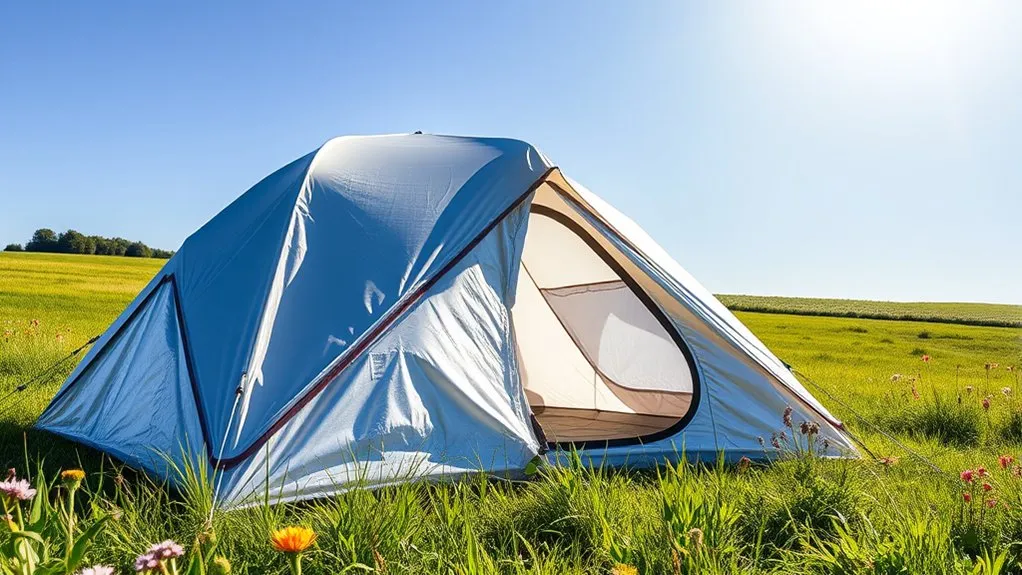
A reflective tarp, aluminized canopy, or light-colored sunshade can reduce solar heating, but claims such as “up to 20 degrees cooler” should not be treated as a guarantee. Performance changes with tarp color, reflectivity, sun angle, wind, air gap, tent fabric, and the way temperatures are measured.
For the best result, suspend the shade above the tent and leave a clear air gap. Do not wrap the tent tightly or lay a reflective blanket directly on the rainfly, because that can block vents and transfer heat to the fabric. Pitch the tarp high enough for air to move underneath but low enough to provide shade.
How to Pitch a Reflective Shade Tarp
- Check the sun path: Cover the tent during the late-morning and afternoon exposure, not just at sunrise.
- Create an air gap: Keep the tarp separated from the tent roof and rainfly.
- Angle the tarp: Let hot air escape and rain drain away from doors and the tent floor.
- Stake every corner: Use secure anchors and tension the tarp so it does not flap or collapse onto the tent.
- Manage reflected glare: Aim the reflective surface so it does not shine into neighboring campsites, roads, or trails.
- Lower or remove it in severe weather: A broad tarp can become a strong wind load.
Stay Hydrated to Combat Heat
A flat target of 2 to 3 liters per day is too broad for every camper. Fluid needs change with temperature, humidity, body size, health, altitude, activity, and sweat rate. As a practical benchmark for moderate activity in heat lasting less than two hours, NIOSH recommends 8 ounces of water every 15–20 minutes. It also advises balanced electrolytes when sweating continues for several hours and says fluid intake generally should not exceed six cups per hour.
Drink regularly instead of waiting until you feel very thirsty. Keep water in shade or an insulated bottle, and bring more than you expect to use. Eat normal meals or salty snacks unless a clinician has told you to limit sodium. People with heart, kidney, liver, or fluid-balance conditions should follow their clinician’s guidance rather than a generic hydration target.
For moderate activity in heat lasting under two hours, NIOSH recommends about 8 ounces of water every 15–20 minutes, while avoiding excessive fluid intake.
Recognize Heat Illness Early
Headache, nausea, dizziness, weakness, thirst, heavy sweating, irritability, or reduced urination can signal heat exhaustion. Stop activity, move to a cooler place, loosen clothing, cool the skin, and take frequent sips of cool water. Confusion, altered speech, loss of consciousness, seizures, or a very high body temperature can signal heat stroke; call 911 immediately and cool the person rapidly.
Consider Lightweight Sleeping Gear
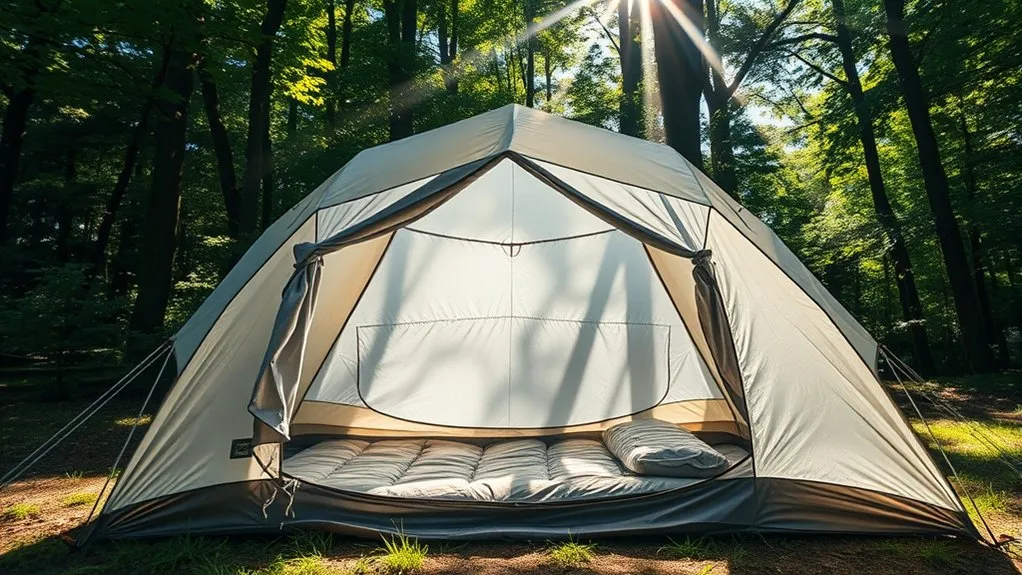
Choose bedding for the expected nighttime low, not the daytime high. In warm conditions, use a breathable sheet, an uninsulated liner, or a sleeping bag that can unzip fully. Keep a light layer nearby because temperatures can fall quickly after sunset or during a storm.
A sleeping pad’s R-value measures resistance to heat flow; it is not a cooling rating. The original advice to choose a high-R-value pad specifically to stay cooler is misleading. For warm-weather use, a thin, compact pad may be enough when conditions allow. As one manufacturer example, Therm-a-Rest describes its R-2 Z Lite SOL as suitable for warmer weather. Choose more insulation when the forecasted ground and overnight temperatures require it.
Cotton sheets can feel comfortable in a dry car-camping setup, but cotton absorbs moisture and dries slowly. For humid camps or backpacking, a lightweight synthetic or linen sheet may dry faster. Keep bedding loose so it does not cover mesh panels or block low vents.
Disassemble the Tent During the Day
If you will not use the tent for many hours, taking it down after waking and pitching it again near sunset can prevent all-day solar heating and reduce UV exposure. The National Weather Service includes this as a hot-weather camping option. It works best with a simple tent at a stable base camp.
Disassembly is not always practical. Do not leave bedding or valuables exposed, and do not take down a shelter when storms, strong wind, campsite rules, mobility needs, or a complicated setup make it unsafe. A good alternative is to remove heat-sensitive gear, open every safe vent, and shade the pitched tent until evening.
Check the Forecast and Heat Risk
Review the hourly temperature, humidity, wind, chance of storms, and overnight low before leaving home and again at the campsite. Pay attention to heat advisories and HeatRisk information. A cooling setup can improve comfort, but it cannot make every forecast safe.
Plan strenuous activities for the cooler part of the day, schedule rest in shade, and identify the nearest air-conditioned building, vehicle, visitor center, or town. When dangerous heat is forecast and reliable cooling is unavailable, change the trip date or choose a cooler destination.
Use a Battery Fan and Personal Cooling
A battery or rechargeable fan can improve comfort by moving air across damp skin and helping sweat evaporate. Place it where fresh air enters, not in a closed corner. Bring enough battery capacity for the expected runtime and protect the fan and power bank from rain.
Cool your body as well as the tent. Rest in deep shade, wet a bandana or towel, place cool cloths on the neck, and wear loose, light-colored clothing. Avoid strenuous camp chores during peak heat. A fan does not lower the actual air temperature and should never be the only plan during a heat emergency.
Avoid Unsafe Cooling Methods
Warning: Never use charcoal, a portable stove, lantern, fuel-burning heater, or generator inside a tent to power or create cooling. Carbon monoxide is colorless and odorless and can build up in enclosed or partly enclosed spaces. Follow the U.S. Consumer Product Safety Commission’s carbon-monoxide guidance.
- Do not seal the tent around an improvised air conditioner: This can block ventilation, create electrical hazards, and encourage unsafe generator placement.
- Do not drape reflective material over vents: Shade must not stop air movement.
- Do not rely on a ground tarp for cooling: A footprint mainly protects the floor from abrasion and moisture.
- Do not sleep through dangerous heat: Move to a cooler location when the shelter cannot cool adequately.
- Do not overdrink plain water: Excessive intake can also be harmful; follow balanced hydration guidance.
Troubleshooting a Hot Tent
| Problem | Best Fix |
| No natural shade | Suspend a reflective tarp or canopy above the tent with an air gap. |
| No breeze | Open high and low vents, clear blocked mesh, and use a battery fan near an intake. |
| High humidity | Increase airflow, use light bedding, cool your skin, and spend peak heat in a cooler location. |
| Rainfly traps heat | Open fly vents and vestibules, guy the fly away from the inner tent, or remove it only in settled, dry weather. |
| Tent is still dangerously hot | Leave the tent and move to air conditioning or another substantially cooler shelter. |
Frequently Asked Questions
What type of tent material is best for hot weather?
No single fabric is always best. Look for a light-colored or heat-blocking rainfly, extensive bug mesh, two doors, and adjustable high and low vents. Vent design and shade usually matter more than choosing canvas over nylon or polyester.
How can I create shade around my tent?
Pitch a reflective or light-colored tarp above the tent, leave an air gap, angle it for drainage, and stake it securely. Cover the side that receives afternoon sun while keeping doors and vents open.
Should I use a ground tarp to reduce heat?
Use a footprint to protect the tent floor from abrasion and ground moisture, not as a primary cooling tool. It will not meaningfully cool a sun-heated tent. Keep the footprint fully under the floor so it does not collect rainwater.
What time of day is hottest inside a tent?
It is often hottest in the mid-to-late afternoon after several hours of direct sun, but the exact time depends on shade, cloud cover, wind, humidity, and tent orientation. Check the hourly forecast and watch when shade leaves your site.
Can I use a fan inside my tent for cooling?
Yes. A battery fan can improve airflow and help sweat evaporate. Place it near an open door or vent and aim it toward another opening. It does not lower the actual air temperature and is not enough during dangerous heat.
Should I remove the rainfly in hot weather?
Remove or roll back the rainfly only when the forecast, privacy needs, and tent design allow it. Keep it attached and vented when rain, dew, or sudden weather is possible.
Is it safe to stay in a tent during extreme heat?
Not always. A tent can trap solar heat and is not a substitute for air conditioning. Leave for a cooler place if the tent remains hot or anyone shows symptoms of heat illness. Call 911 for suspected heat stroke.
Conclusion
The most effective way to keep a tent cool is to stop heat before it enters. Start with afternoon shade, add a reflective tarp with an air gap, and open high and low vents to create a clear airflow path. Use light bedding, a correctly chosen sleeping pad, cool water, and a battery fan for comfort.
Do not depend on unsupported temperature promises or unsafe improvised equipment. Check the heat forecast, know the symptoms of heat illness, and move to a cooler shelter when conditions exceed what shade and ventilation can handle.
Sources
- National Weather Service — Outdoor Activities: Heat Safety and Preparedness — camping shade, reflective sunshades, breeze orientation, and heat precautions.
- CDC/NIOSH — Heat Stress Recommendations — hydration, electrolyte, rest-break, and fluid-limit guidance.
- CDC/NIOSH — Heat-Related Illnesses — symptoms and first-aid actions for heat exhaustion and heat stroke.
- U.S. Consumer Product Safety Commission — Carbon Monoxide Fact Sheet — fuel-burning equipment and charcoal safety in tents.
- MSR FreeLite Tent Specifications — micromesh ventilation design.
- Therm-a-Rest Z Lite SOL Specifications — warm-weather sleeping-pad example and R-value details.

