
Last Updated on August 26, 2026 by Mason Reed
Camping in the desert can be comfortable and memorable, but staying cool takes more than opening a tent window. Direct sun, dry air, wind, limited water, sudden storms, and large temperature changes can turn a simple overnight trip into a serious safety problem. Plan around shade, reliable water, the local forecast, safe campsite terrain, and the ability to leave or cool down if conditions become dangerous.
Quick Answer
To stay cool while camping in the desert, pitch on a legal, durable site with afternoon shade and safe airflow, block direct sun with a securely rigged shade tarp, ventilate the tent when weather allows, drink regularly, avoid strenuous activity during peak heat, and never camp in a wash or drainage channel.
Key Takeaways
- Shade comes first: keeping direct sunlight off the tent is usually more useful than trying to cool an already overheated shelter.
- Carry dependable water: do not assume a desert spring, creek, or campground spigot will be available.
- Avoid washes and drainage channels: flash floods can arrive from storms that are miles away.
- Use fans for comfort, not safety: dangerous heat requires shade, rest, hydration, reduced activity, and sometimes leaving for a cooler location.
- Check local rules: campsite, fire, pet, waste, food-storage, and water regulations differ among parks and public lands.
At a Glance
| Time Required | Allow extra planning before the trip and about 15–30 minutes at camp to assess shade, drainage, wind, and secure shelter. |
| Difficulty | Moderate; conditions can become high-risk during extreme heat, strong wind, or thunderstorms. |
| Tools Needed | Suitable tent, stakes and guy lines, shade tarp or canopy, adequate drinking water, sun protection, cooler if carrying perishables, first-aid kit, and a reliable weather/communication plan. |
| Cost | Varies with the camping gear you already own; safe site selection, weather planning, and activity timing do not require specialized cooling equipment. |
Disclosure: As an Amazon Associate I earn from qualifying purchases. Some links on this page are affiliate links, at no extra cost to you.
Understanding Desert Conditions
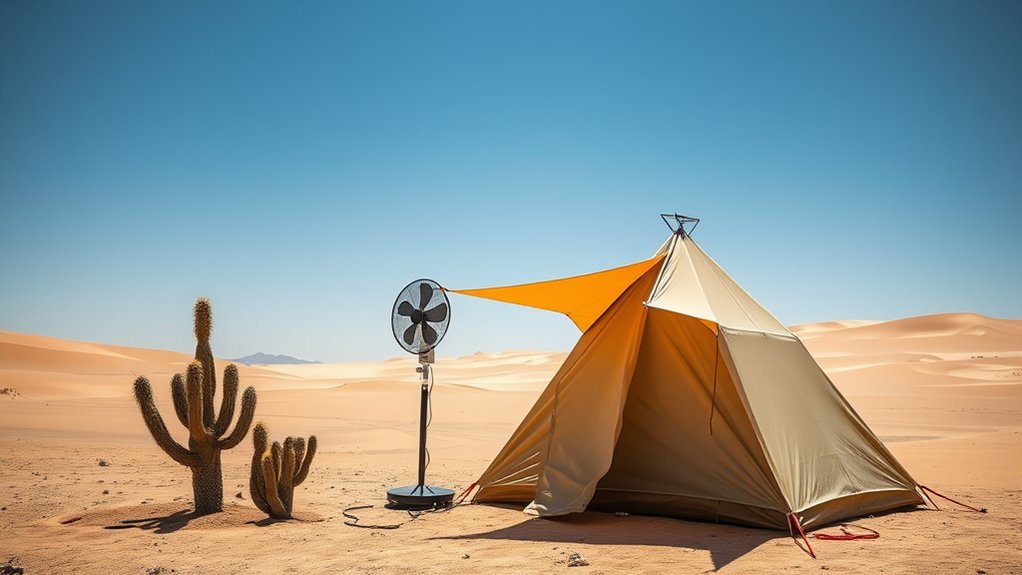
Desert weather is defined by extremes, but there is no single temperature pattern that applies everywhere. A low desert valley can remain dangerously hot after sunset, while a high desert campsite may become cold enough to require warm layers. Wind, altitude, cloud cover, season, and the type of ground around your campsite also affect how hot or cold it feels.
Check the forecast for the exact campsite and elevation rather than relying on a general desert temperature range. Look at the expected daytime high, overnight low, wind, thunderstorm chance, and any heat or flood alerts. Recheck conditions shortly before leaving because a comfortable forecast can change quickly.
Desert wildlife also becomes more active at cooler times of day. Snakes, scorpions, coyotes, rodents, and other animals vary by region, so avoid reaching into holes or rock gaps, keep food secured, use a light around camp at night, and give every wild animal plenty of space.
In desert heat, your safest cooling system is a combination of shade, water, reduced exertion, good timing, and a realistic escape plan—not one piece of gear.
Importance of Hydration
Staying hydrated is essential in hot, dry conditions because sweat can evaporate so quickly that you may not notice how much fluid you are losing. For very hot desert areas, one gallon or about 4 liters of drinking water per person per day is a useful planning baseline, but it should not be treated as a maximum. Hiking, cooking, remoteness, extreme heat, and unexpected delays may require substantially more.
Drink regularly instead of waiting until you feel very thirsty. During sustained activity in the heat, frequent drinking is generally easier to manage than trying to replace a large fluid deficit later. If you are sweating heavily for several hours, food and balanced electrolyte drinks can help replace salts lost through sweat.
Carry more water than your ideal itinerary requires. Natural springs and seasonal streams may be dry, contaminated, restricted, or much farther away than expected. For remote travel, also consider what you would need if a vehicle failed or the group had to remain out overnight unexpectedly.
Warning: Headache, dizziness, nausea, unusual weakness, muscle cramps, confusion, worsening coordination, or altered behavior can signal heat illness. Stop strenuous activity, move to shade or a cooler location, begin cooling, and seek emergency help if symptoms are severe, include confusion, or continue to worsen. A fan or cold drink alone does not make dangerous heat safe.
People with medical conditions or clinician-directed limits on fluid or sodium intake should follow individualized medical advice rather than generic hydration targets.
Choosing the Right Campsite
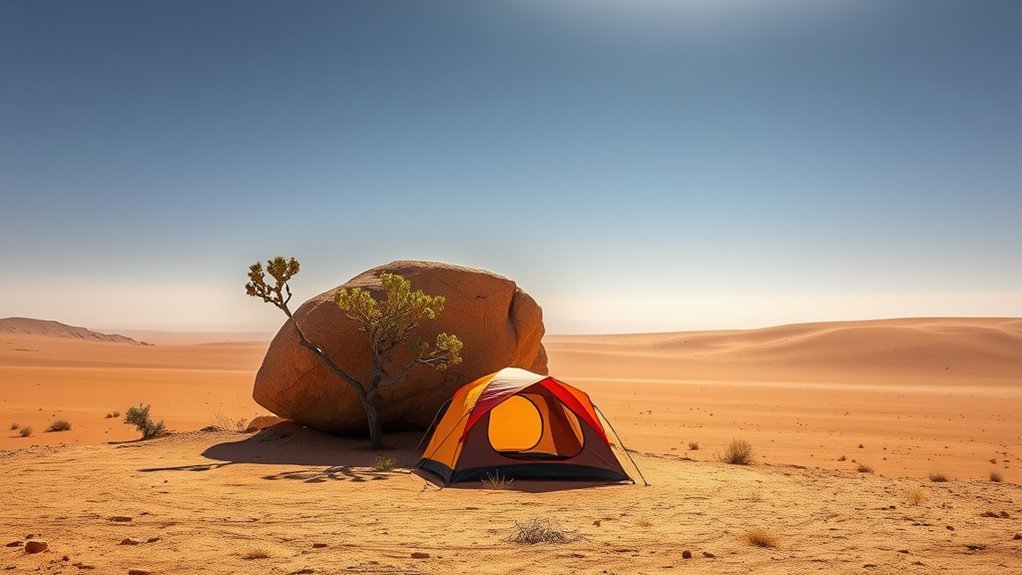
A good desert campsite protects you from more than sun. Before unloading your gear, check the ground for drainage channels, loose rock, dead branches, cactus or sharp plants, fragile soil crust, animal burrows, and signs that water has recently flowed through the area. Use a designated campsite whenever one is available.
Think about where the sun will be in the afternoon rather than judging shade only when you arrive. A site that is comfortable at 8 a.m. can be fully exposed by midafternoon. Also consider where you could retreat if the temperature becomes unsafe—a vehicle, visitor center, higher-elevation developed area, or other cooler location may be part of your heat plan.
Shade and Wind Direction
Natural shade from a safe rock formation or established vegetation can reduce direct solar heating, but do not pitch below unstable rock, dead limbs, or anything that could fall. If natural shade is unavailable, a properly secured tarp or canopy can create a cooler living area.
A breeze improves ventilation, but strong desert wind can damage tents and tarps. Orient openings to take advantage of gentle airflow when practical while keeping the structure securely anchored and following the tent manufacturer’s setup instructions. If winds are forecast to become severe, a sheltered legal campsite or a change of plans is safer than trying to force a lightweight shelter to remain standing.
| Campsite Factor | What to Look For |
|---|---|
| Shade | Afternoon protection without falling-rock or dead-branch hazards |
| Wind | Useful airflow without exposure to dangerous gusts |
| Ground | Established or durable surface outside drainage channels |
| Escape option | A realistic cooler or safer location if conditions deteriorate |
Proximity to Water Sources
Do not choose a desert campsite simply because it is close to a natural water source. Springs, seeps, and streams may be unreliable, and camping too close can damage sensitive habitat or violate local rules. Carry the drinking water your group expects to need and check the managing agency’s campsite setbacks before the trip.
When backcountry camping is allowed, use existing or durable sites such as rock, gravel, sand, or previously disturbed ground. Keep cooking, washing, and human waste away from natural water according to local regulations. Never assume that clear-looking desert water is safe to drink without appropriate treatment.
Stay Out of Dry Washes and Drainage Channels
A dry wash may look like a flat, convenient tent site, but it is a natural route for floodwater. Flash floods can develop quickly, and rain falling miles upstream may send water into a canyon or wash even if the sky above your camp is dry.
Before pitching, identify where runoff would travel during a heavy storm. Avoid canyon bottoms, dips, dry streambeds, and other obvious drainage paths. If a flood warning is issued or water begins rising, move to genuinely safe higher ground immediately rather than trying to protect equipment.
Pro Tip: Before you stake the tent, stand at the site and ask three questions: Where will the afternoon sun be? Where would stormwater flow? Where will I go if the heat or wind becomes unsafe? If any answer is unclear, keep looking.
Tent Design and Setup
For hot desert trips, prioritize a tent with good mesh ventilation, usable roof or side vents, and enough guy-out points for windy conditions. Light-colored shelter materials may absorb less solar energy than very dark fabric, but shade and ventilation usually matter more than color alone.
Use every structural component required by the manufacturer. Stake the tent securely and tension the guy lines without creating trip hazards. In loose sand, use anchors or stakes designed for soft ground where permitted. In hard desert soil, do not damage vegetation, cultural resources, or biological soil crust just to force a stake into a particular spot.
A footprint can protect the floor from sharp rocks and plants, but it should not extend beyond the tent floor where rain could collect on it. Keep doors and mesh panels arranged to allow cross-ventilation whenever weather, insects, and privacy permit.
Managing Temperature Fluctuations
Managing desert temperatures means planning separately for the hot part of the day and the coldest part of the night. Do not assume that a hot afternoon guarantees a warm night, and do not assume that a cool morning means the afternoon will remain comfortable.
Keep insulating layers and sleep equipment appropriate for the forecast even when your main concern is daytime heat. At the same time, avoid sealing the tent unnecessarily while the air outside is still warm.
Optimal Tent Placement
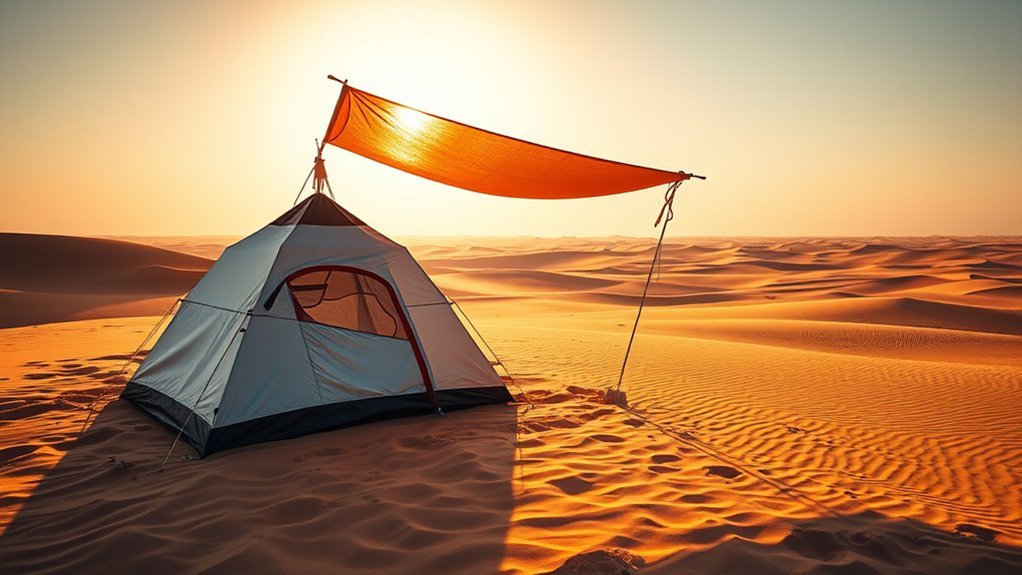
Pitch in legal afternoon shade when possible and leave space around the shelter for airflow. Avoid hot pavement and other artificial surfaces that can store large amounts of heat. If you are using a tarp for shade, suspend it independently above the tent rather than wrapping the tent tightly and blocking its vents.
Higher elevations are often cooler than nearby low valleys, but the actual temperature difference depends on elevation, weather, terrain, and time of day. Compare forecasts for the exact locations instead of assuming a fixed temperature drop.
Nighttime Cooling Techniques
Once the outside air becomes cooler than the tent interior, open mesh doors, windows, and roof vents to increase cross-ventilation. If the forecast is dry and calm and your tent can safely be used without its rainfly, removing or opening the fly can release trapped heat. Keep it in place when rain, blowing dust, strong wind, or the tent design makes removal a poor choice.
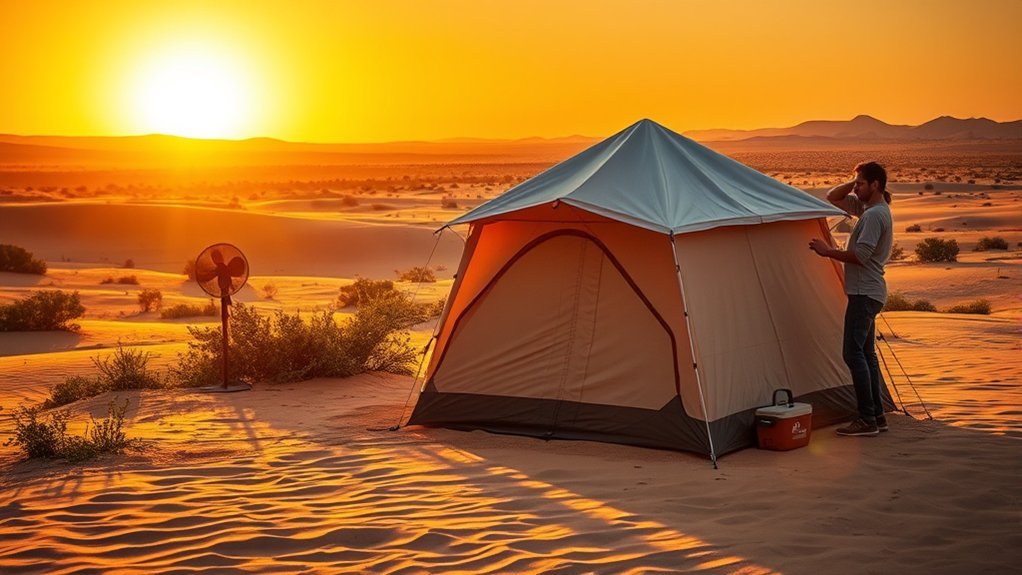
A rechargeable fan can move air across your skin and make a warm night more comfortable, especially when natural wind is weak. Treat it as a comfort tool rather than protection from extreme heat. If the tent remains dangerously hot or anyone develops heat-illness symptoms, move to a cooler location.
Creating Shade Solutions
Shade is one of the most effective ways to reduce direct solar heating at camp. Start with natural shade that does not expose you to falling branches or unstable rock. In open desert, a canopy or reflective/light-colored tarp can shade the tent and create a separate daytime living area.
When rigging a tarp above the tent, leave open space so heated air can escape from the sides. Do not drape material tightly over the tent in a way that blocks ventilation. Pitch the tarp with enough slope to shed unexpected rain and enough tension to reduce flapping.
Wind is the limiting factor. Use appropriate anchors and guy lines, inspect them during the day, and take a large tarp or canopy down if conditions exceed what the equipment can safely handle. Never rely on loose rocks placed where they could roll, fall, or damage natural or cultural resources.
Nighttime Comfort Strategies
After sunset, open the tent for cross-ventilation as conditions allow and let stored heat escape before going to bed. On a genuinely warm night, a light sheet or breathable sleep liner may be more comfortable than a heavy sleeping bag. Still keep an insulating layer available because high-desert and shoulder-season temperatures can drop quickly.
Choose sleep gear based on the forecasted overnight low, not the daytime high. Keep drinking water within easy reach, but store food and scented items according to local wildlife regulations rather than inside the sleeping area where prohibited or unsafe.
Note: Do not sacrifice storm protection simply to make the tent cooler. If thunderstorms, strong winds, or blowing dust are possible, configure the shelter for the hazard first and use a safer cooling location if the tent becomes too hot.
Plan Activities Around the Heat
Your tent setup cannot compensate for hours of hard activity during dangerous heat. Schedule hiking, cooking, camp chores, and sightseeing for the cooler morning or evening whenever possible. Rest in shade during the hottest part of the day and shorten or cancel activities when conditions exceed what the group can safely handle.
People arriving from cooler climates may tolerate heat less well during the first days of a trip. Increase exposure gradually, take more breaks, and pay attention to the least heat-tolerant person in the group rather than setting the pace around the strongest hiker.
Wear lightweight, loose-fitting clothing, a brimmed hat, and appropriate sun protection. Keep a flexible itinerary so changing the plan feels normal rather than like a failed trip.
Protecting Your Gear
Desert wind, sand, dust, sharp ground, and heat can be hard on equipment. Secure the tent with correctly placed stakes and guy lines, and inspect tension after the wind changes. Store electronics in sealed bags or cases when blowing dust is likely and keep batteries, phones, cameras, and power banks out of direct sun when possible.
Use a suitable groundsheet or tent footprint to reduce abrasion. Keep zippers clean because blowing sand can damage sliders and teeth. Before leaving camp, shake or brush sand from fabric rather than packing it into zippers and seams.
Do not leave critical water, medication, navigation equipment, or communication devices where a failed shade structure or overheated vehicle could make them inaccessible.
Food and Cooler Safety
Heat also affects food safety. If you bring meat, dairy, prepared salads, leftovers, or other perishable foods, pack them in an insulated cooler with enough ice or frozen packs to keep them at 40°F or below. Keep the cooler closed as much as possible and place it in deep shade.
Above 90°F, perishable food that has been held at an unsafe temperature should not sit out for more than one hour. When you cannot maintain safe cold storage, choose shelf-stable foods instead of taking chances with meat, dairy, or other perishables.
For car camping, separating frequently opened drinks from the main food cooler can help the food stay cold longer. Keep raw meat sealed and below ready-to-eat items to reduce cross-contamination.
Desert Camping Gear Checklist
- Water: adequate drinking supply plus emergency reserve.
- Shade: canopy, tarp, or other secure sun shelter if the campsite lacks dependable shade.
- Shelter: ventilated tent, correct stakes, guy lines, and a footprint if needed.
- Sleep system: light warm-weather layer plus insulation appropriate for the forecasted overnight low.
- Sun protection: hat, loose lightweight clothing, sunglasses, and sunscreen.
- Navigation: offline map, paper map, GPS, or other tools appropriate for the route.
- Communication: charged phone and, for remote travel, an appropriate backup communication device when practical.
- First aid: bandages, gauze, antiseptic supplies, blister care, medications, gloves, and supplies appropriate for the group.
- Food storage: cooler and thermometer for perishables or shelf-stable alternatives.
- Lighting: headlamp or flashlight with spare power.
- Repair supplies: tent repair tape, cord, and tools appropriate for your equipment.
- Waste supplies: trash bags and any required human-waste system for the land you are visiting.
Respecting the Desert Environment
Desert landscapes can look tough while actually being extremely fragile. Biological soil crust, vegetation, springs, archaeological sites, and animal habitat may take years or decades to recover from careless travel.
Protect the desert’s fragile environment by respecting wildlife and cultural heritage. Tread lightly and leave no trace.
- Use established trails and campsites whenever available.
- When dispersed camping is legal, choose durable or previously disturbed surfaces rather than vegetation or biological soil crust.
- Pack out all trash, leftover food, and small items such as wrappers and bottle caps.
- Do not dig trenches around the tent or rearrange rocks to build unnecessary structures.
- Keep an appropriate distance from wildlife and never feed animals.
- Leave pottery, rock art, historic objects, fossils, plants, and other natural or cultural resources where you find them.
- Follow the managing agency’s rules for human waste, wastewater, campfires, stoves, pets, and food storage.
Emergency Planning for Desert Camping
Remote desert areas may have little or no cellular coverage. Before leaving, give a trusted person your route, campsite, vehicle description, expected return time, and instructions for what to do if you fail to check in.
Carry navigation tools you know how to use and enough water, food, shelter, and basic emergency supplies to handle a reasonable delay. If traveling by vehicle in extreme heat, keep the vehicle maintained and carry additional drinking water. When a vehicle breakdown occurs in a remote area, remaining with the vehicle is often safer than attempting a long walk through severe heat unless staying creates another immediate danger.
Most importantly, be willing to change the trip. A campsite is not worth defending against extreme heat, flash flooding, dangerous wind, wildfire restrictions, or worsening illness.
Frequently Asked Questions
What are the best times to camp in the desert?
The most comfortable season depends on the desert, elevation, and latitude. Cooler months are usually easier than peak summer, but check historical climate information and the exact forecast for your destination rather than assuming every desert has 60–80°F spring or fall weather.
How do I keep food from spoiling in desert heat?
Keep perishable food at 40°F or below in an insulated cooler with ice or frozen packs. Store the cooler in shade and open it as little as possible. If outdoor temperatures are above 90°F, perishables should not remain at an unsafe temperature for more than one hour.
What first-aid supplies should I bring for desert camping?
Carry a first-aid kit suited to your group and trip length, including adhesive bandages, gauze, antiseptic supplies, blister care, gloves, any personal medications, and basic wound-care materials. Remote trips also require an emergency communication and evacuation plan, not just a larger first-aid kit.
Can I bring a pet camping in the desert?
Sometimes, but check the specific park or land-manager rules first. Extreme desert heat, hot ground, dehydration, wildlife, and limited trail access can make some destinations unsuitable for pets. Never leave an animal unattended in a hot vehicle, and make sure it has shade and adequate drinking water.
What wildlife might I encounter while desert camping?
Species vary by region, but desert campers may encounter snakes, scorpions, coyotes, rodents, spiders, and other wildlife. Keep food secured, use a light at night, avoid putting hands or feet into places you cannot see, and give animals plenty of room.
Is it safe to camp in a dry wash if no rain is forecast at my campsite?
No. A dry wash is a flood channel and can fill rapidly from storms upstream or miles away. Choose a legal campsite outside washes, drainage channels, canyon bottoms, and obvious low points.
Can a battery fan make a hot tent safe?
No. A fan can improve comfort and airflow, but it does not remove the underlying heat risk. If anyone becomes dizzy, weak, nauseated, confused, or unusually uncoordinated, stop activity and move to a cooler place instead of relying on the fan.
Should I remove the rainfly at night in the desert?
Only when the tent is designed to be used that way and the forecast is calm and dry. Removing or opening a fly can improve ventilation, but keep full weather protection when thunderstorms, strong wind, blowing dust, or unexpected rain are possible.
Conclusion
Desert camping is most enjoyable when you plan for the environment instead of trying to overpower it. Choose a durable campsite outside flood channels, create shade before the hottest hours, ventilate the tent when conditions allow, carry dependable water, protect food and equipment from heat, and adjust activities to the forecast.
Most importantly, know when comfort has become a safety issue. Severe heat, confusion, worsening illness, flash-flood warnings, dangerous wind, or an unreliable water supply are reasons to change plans. A cooler campsite, shorter outing, or early departure is always better than pushing through hazardous conditions.
Sources
- National Park Service — Death Valley National Park Safety: heat illness, water planning, flash floods, wildlife, and backcountry emergency preparation.
- National Institute for Occupational Safety and Health — Heat Stress Recommendations: hydration, electrolytes, acclimatization, rest, and heat-illness prevention.
- National Weather Service — Flood Hazards: flash floods, upstream rainfall, dry areas, and low-lying terrain.
- National Park Service — Biological Soil Crusts: durable surfaces and protection of fragile desert soils.
- USDA Food Safety and Inspection Service — Food Safety While Hiking and Camping: cooler temperatures and safe handling of perishable foods.
- National Park Service — Death Valley Pet Guidance: desert heat, pet restrictions, water, wildlife, and leash requirements.
