
Last Updated on July 29, 2026 by Mason Reed
Camp smells are easiest to control when you remove the source instead of covering it with fragrance. Keep food, trash, toiletries, grease, and dirty cookware out of your sleeping area; clean spills promptly; ventilate damp gear; and follow the food-storage and waste rules for the exact campground, park, or forest you are visiting.
Quick Answer
To minimize camp smells near your tent, store every food or scented item in the locally required locker, vehicle, or bear-resistant container. Cook and wash away from the sleeping area, pack out scraps and trash, keep wet gear ventilated, and never use essential oils, coffee grounds, or other fragrances to hide odors.
Key Takeaways
- Check the site’s current food-storage, fire, gray-water, and human-waste rules before setting up camp.
- Treat food, trash, toiletries, pet supplies, grease, dirty dishes, and fragrant products as wildlife attractants.
- Pack out food scraps. The 6–8-inch cathole guideline is for human waste only where local regulations allow it.
- Do not use essential oils, vinegar bowls, coffee grounds, or scented sprays as campsite deodorizers.
- Keep the tent dry and ventilated, and clean it according to the manufacturer’s care instructions after the trip.
At a Glance
| Time Required | 10–20 minutes to organize camp, then about 5 minutes after each meal and before bed |
| Difficulty | Easy, but local wildlife and waste regulations must be followed carefully |
| Tools Needed | Sealable trash bags, cleaning cloth, water container, required food-storage system, and a trowel or waste kit where permitted |
| Cost | Usually no added cost with existing supplies; more if the destination requires an approved bear-resistant container or waste pack-out system |
Note: Posted regulations and instructions from rangers, campground hosts, and land managers override general camping advice. Food storage, distance, fire, dishwater, and human-waste requirements can change from one destination to another.
Disclosure: As an Amazon Associate I earn from qualifying purchases. Some links on this page are affiliate links, at no extra cost to you.
Maintaining Cleanliness at Your Campsite
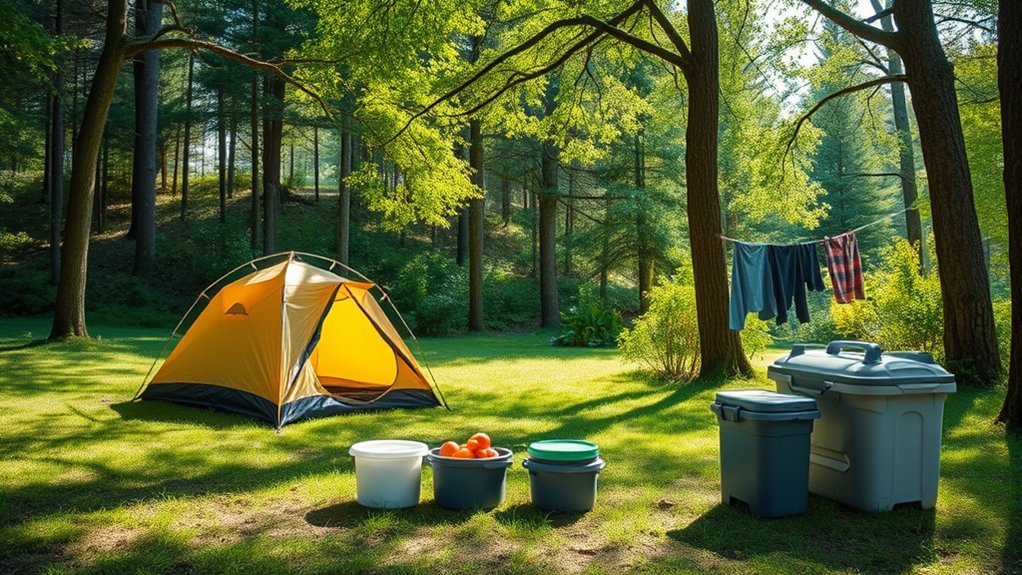
A low-odor campsite begins with organization. As soon as you arrive, identify where you will sleep, prepare food, wash dishes, store attractants, and handle trash. In a developed campground, use the designated tent pad, cooking area, food locker, waste station, and restroom. In the backcountry, choose an established or durable site and follow the destination’s required layout.
Some remote bear-country locations recommend a backcountry triangle in which the sleeping, cooking, and food-storage areas are separated by about 100 yards. Other destinations use different distances or require provided lockers and designated campsites. The National Park Service’s Gates of the Arctic camping guidance is one example of the 100-yard triangle, but it is not a universal rule.
Keep these items out of the sleeping tent unless the land manager specifically directs otherwise:
- Food, drinks, snacks, pet food, and livestock feed
- Trash, wrappers, empty cans, and food-stained recycling
- Toothpaste, soap, deodorant, cosmetics, sunscreen, and lip balm
- Insect repellent, lotion, ointments, and fragrant medication
- Dirty cookware, dishes, utensils, grills, and grease
- Coffee, tea, cooking oil, and scented cleaning products
Clean spills and dropped crumbs as soon as they happen. Wipe tables and food-preparation surfaces, inspect the ground under the cooking area, and place the cleaning cloth or paper towel with the other scented items afterward.
Dedicated cooking clothes are optional rather than a universal requirement. However, if a shirt, jacket, apron, or glove becomes heavily coated with grease or food, do not bring it into the sleeping area. Store it as directed for other scented items.
Pro Tip: Repackage meals at home in clearly labeled, resealable bags. Less packaging means fewer crumbs, fewer bulky wrappers, and a faster cleanup after dinner.
Five-Minute Evening Campsite Reset
- Put away all food, drinks, toiletries, and pet supplies.
- Wash or securely store cookware and utensils.
- Collect every crumb, peel, tea bag, and coffee ground.
- Seal trash and place it in the required storage location.
- Check pockets, backpacks, chairs, and the tent for forgotten snacks or wrappers.
- Air damp bedding and clothing while conditions allow, then secure scented items before sleeping.
Secure Food Storage Techniques
There is no single food-storage method that is legal or effective everywhere. The National Park Service advises campers to check the destination’s current requirements because some locations require lockers or portable bear-resistant containers, while others permit a properly constructed food hang.
Developed Campgrounds
Use the provided food locker whenever one is available. A hard-sided vehicle may be acceptable in some campgrounds, but other locations prohibit vehicle storage or restrict it by time of day. Keep windows fully closed, remove visible food and wrappers, and follow the posted rule rather than assuming the vehicle is always approved.
Bear-Resistant Containers
Use the term bear-resistant, not bear-proof. The Interagency Grizzly Bear Committee tests and identifies qualifying products, but certification does not guarantee that a bear can never breach a container.
A bear-resistant container only works when it is fully closed and locked. Place it according to the destination’s instructions, on stable ground and away from cliffs, fast water, or other places where an animal could roll it away. Do not tie a rope to a hard-sided canister unless its manufacturer and the land manager specifically instruct you to do so.
Food Hangs
Do not treat a tree hang as an automatic backup plan. Suitable trees may not exist, wildlife may defeat a poor hang, and some parks prohibit hanging because approved canisters are required. Where hanging is allowed, follow the land manager’s complete height, branch-clearance, trunk-clearance, rope, and bag requirements.
Odor-Resistant Bags
An odor-resistant bag can contain leaks and reduce smells inside a pack, but it is not a substitute for a food locker, approved vehicle, bear-resistant container, or legal food hang. Place the closed bag inside the required storage system.
Warning: Never keep food or scented products in your sleeping tent to make them easier to reach. Wildlife may damage the shelter to reach them, and improper storage may violate local regulations.
Odor control is not the same as attractant control. A product can smell faint to you and still need secure wildlife-resistant storage.
Natural Odor Control for Tents: What Helps and What to Avoid
The safest way to improve the smell inside a tent is to remove the source. Shake out dirt and crumbs, remove wet boots and clothing, wipe accidental spills with water and a manufacturer-approved cleaner, open the tent’s vents, and let damp fabric dry whenever the weather allows.
Activated-charcoal bags or a small amount of baking soda may reduce human-perceived odors during at-home storage, but they do not make food, trash, or scented products safe around wildlife. Follow the tent manufacturer’s care instructions, prevent loose powder from contacting coated fabric, and remove any deodorizing product before the next trip if it has a noticeable fragrance.
Avoid leaving an open container of vinegar, coffee grounds, essential oils, mint, lavender, air fresheners, or scented sprays inside or around the tent. These products add another smell instead of removing the original source. They can spill, contact the tent’s waterproof coating, or become additional wildlife attractants.
Note: A clean tent can still smell damp during humid weather. Condensation alone does not always indicate mildew, but the tent should be dried fully as soon as conditions permit.
Preventing Mildew and Storage Odors
After the trip, unpack the tent promptly. Shake out debris, spot-clean dirty areas, and follow the maker’s washing instructions. Do not use a washing machine, dryer, bleach, harsh detergent, or fragranced household cleaner unless the manufacturer specifically allows it.
Let the tent body, rainfly, footprint, guylines, and stuff sack dry completely before storage. NEMO’s tent-care guidance recommends complete drying and loose storage in a cool, dry, dark area to reduce mold, mildew, and damage to waterproof finishes.
Managing Food Waste, Dishwater, and Human Waste
Proper waste handling protects water, wildlife, and future campers. Food waste and human waste require different methods and should never be treated as interchangeable.
Food Scraps and Trash
- Pack out all leftovers, fruit peels, nut shells, crumbs, coffee grounds, tea bags, grease, and food-stained packaging.
- Use a designated wildlife-resistant trash receptacle where one is provided.
- Do not bury food, scatter it, leave it in a fire ring, or place it under rocks.
- Do not attempt to burn leftovers or coffee grounds. Partially burned material can continue to attract wildlife.
- Store sealed trash with the other food and scented items until it can be disposed of properly.
Dishwashing and Gray Water
At a developed campground, use the designated dishwashing or gray-water station. Do not dump water beside the tent, at the drinking-water spigot, or in a restroom sink unless the campground allows it.
In the backcountry, strain all food particles from dishwater and pack the particles out. Dispose of the strained water according to local rules. General Leave No Trace guidance recommends carrying washing water at least 200 feet from lakes and streams, using only a small amount of biodegradable soap, and scattering strained dishwater where permitted.
Human Waste
Use a toilet, privy, or other provided facility whenever possible. Where catholes are permitted, general guidance is to move at least 200 feet from water, camp, and trails; dig a hole 6–8 inches deep; cover it after use; and pack out toilet paper and hygiene products. Desert, alpine, river-corridor, winter, and high-use destinations may require all solid waste to be packed out instead.
Warning: Never operate a fuel-burning stove, heater, lantern, grill, or charcoal fire inside a tent or enclosed sleeping area. The U.S. Consumer Product Safety Commission warns that camping equipment can produce deadly carbon monoxide in enclosed spaces.
Troubleshooting Common Camp Smells
Food or Grease Smell
Inspect the table, stove exterior, chair fabric, clothing, pockets, and ground for spills. Wipe the affected surface, collect every food particle, and store the cleaning material with the other scented items. If food spilled inside the tent, remove all occupants and gear, clean the area according to the tent maker’s directions, and ask a ranger whether moving the shelter is recommended.
Campfire Smoke
Use an established fire ring only when fires are legal. Burn clean, dry wood where permitted, keep the fire small, and avoid placing the tent in the smoke path. Do not burn food waste or packaging. Extinguish the fire completely before leaving or sleeping.
Wet Boots and Clothing
Remove wet footwear before entering the sleeping area. Place it in the vestibule only if doing so is safe, does not block the exit, and complies with local wildlife rules. Hang damp, unscented clothing where it can air out, but secure clothing contaminated with food, grease, toothpaste, lotion, or other attractants.
Body Odor and Bedding
Change into clean, dry sleep clothing. Air out sleeping bags and pads during the day, wipe excess condensation from the tent, and avoid sealing wet socks or clothing inside the sleeping area overnight.
Musty or Sour Smell
A persistent musty smell may indicate that the tent was packed damp or that its waterproof coating is deteriorating. Dry and inspect the tent after the trip. Use only the cleaning product and soak time approved for the fabric and coating.
Creating a Pleasant Camping Environment
Choose an established campsite or another durable surface rather than clearing vegetation to make a new space. In undeveloped areas, general Leave No Trace guidance recommends camping at least 200 feet from lakes and streams. Use designated sites when they are provided, even when their layout differs from the general distance guideline.
Look for safe natural airflow without pitching the tent near water, on a wildlife trail, beneath dead branches, in a drainage channel, or in another hazardous location. Open the tent’s designed vents and position the rainfly correctly so moisture can escape without reducing weather protection.
Keep the sleeping area simple: bedding, clean sleep clothing, and gear that has not been contaminated by food or scented products. Store meals, toiletries, trash, cookware, and heavily scented clothing in the location required by the land manager.
Your tent can still feel like a sanctuary after a long day—much like the refuge Odysseus sought after his journey—but the safest approach is cleanliness rather than fragrance. A dry shelter, secure attractant storage, and a five-minute evening reset do more than bowls of vinegar or scented oils ever could.
Frequently Asked Questions
How often should I clean my campsite to reduce smells?
Reset the cooking and eating area after every meal and perform another check before bed. Pick up crumbs, wash or store dishes, seal trash, secure toiletries, and inspect chairs, pockets, and the ground for forgotten food.
Can I use essential oils to mask odors?
Do not use essential oils, scented sprays, or diffusers to mask campsite odors. They add fragrance, may irritate other campers, and can count as scented wildlife attractants. Remove the odor source, ventilate the tent, and store the product with other scented items.
What types of food attract animals the most?
Do not rely on a list of especially smelly foods. Wildlife may investigate sealed meals, fruit, meat, candy, crumbs, grease, pet food, drinks, empty packaging, and many nonfood toiletries. Store every food and scented item as required.
How can I prevent mildew smells in my tent?
Ventilate the tent during use, wipe away condensation, and dry it as much as possible before packing. At home, unpack it promptly and let every component dry completely before storing it loosely in a cool, dry place.
Are there specific plants that help reduce odors?
Lavender, mint, and other aromatic plants do not remove the cause of a campsite odor. Do not bring fragrant plants or plant-based sprays into camp as deodorizers. Clean, dry, ventilate, and securely store the actual odor source instead.
Should toothpaste and toiletries stay in the tent?
Generally, no. Toothpaste, deodorant, soap, sunscreen, cosmetics, lip balm, insect repellent, and similar products should be stored with food and trash whenever the destination treats them as scented attractants.
Is an odor-proof bag enough in bear country?
No. An odor-resistant bag is secondary containment, not a bear-resistant storage system. Put it inside the locker, vehicle, approved container, or legal food hang required at your destination.
What should I do if food spills inside my tent?
Remove the food and affected gear, collect every solid particle, and clean the fabric according to the tent manufacturer’s directions. Secure all cleaning waste as an attractant. In active bear country, contact a ranger or campground host for advice about moving the tent.
Conclusion
To minimize camp smells near your tent, focus on the source: food, grease, trash, toiletries, smoke, wet gear, or damp fabric. Store attractants according to local rules, clean after every meal, pack out food waste, ventilate the shelter, and dry it fully after the trip. These habits create a cleaner sleeping area while protecting wildlife, water, and the next person who uses the campsite.
Sources
- National Park Service — Bear Safety: Storing Food — food, garbage, scented-item, canister, and food-waste guidance
- Gates of the Arctic National Park — Camping and Bear Safety — backcountry-triangle and attractant-storage guidance
- National Park Service — Leave No Trace Seven Principles — campsite placement, food waste, dishwater, and cathole practices
- Interagency Grizzly Bear Committee — Bear-Resistant Products — certification meaning, limitations, and product verification
- U.S. Consumer Product Safety Commission — Camping Equipment and Carbon Monoxide — enclosed-tent fuel-burning equipment warning
- NEMO Equipment — Cleaning, Repairing, and Storing Your Tent — tent washing, drying, mildew prevention, and storage
