
Last Updated on September 10, 2026 by Daniel Globe
Sparks from a campfire or stove can burn tent fabric, start a wildfire, or injure someone in seconds. The safest approach is to keep campfires and portable cooking stoves outside and well away from your sleeping area. A wood stove belongs inside a tent only when both the stove and shelter are purpose-built as a compatible hot-tent system.
Quick Answer
Keep campfires at least 15 feet from tents, vegetation, and low branches, and clear a 10-foot-diameter area around the fire. Use portable gas stoves outdoors only. For a hot-tent wood stove, follow the exact stove and tent instructions, use a stove jack and spark arrestor, maintain required clearances, ventilate the shelter, and keep emergency equipment ready.
Key Takeaways
- Check current fire restrictions before lighting any campfire, charcoal fire, or wood stove.
- Never use a portable gas stove, charcoal grill, or unvented heater inside a tent.
- Use a wood stove inside a shelter only when the tent has a purpose-built stove jack and the stove manufacturer approves that use.
- A spark arrestor reduces escaping embers, but it does not replace safe clearance, dry fuel, supervision, or regular cleaning.
- At the first sign of carbon monoxide exposure, move everyone to fresh air and call 911.
At a Glance
| Time Required | 10–20 minutes for a pre-light safety check and setup |
| Difficulty | Easy for an outdoor camp stove; moderate for a manufacturer-approved hot-tent stove |
| Tools Needed | Water, bucket, shovel, fire extinguisher, heat-resistant gloves, fireproof stove mat, and a compatible spark arrestor |
| Cost | Usually no added cost for campfire spacing; hot-tent safety accessories vary by stove system |
Warning: A regular backpacking or car-camping tent is not designed for a wood stove. Do not cut a hole for a stovepipe, improvise a stove jack, or bring a portable gas stove or charcoal device inside. Ventilation alone cannot make an unsuitable setup safe.
Disclosure: As an Amazon Associate I earn from qualifying purchases. Some links on this page are affiliate links, at no extra cost to you.
Understand the Risks and Choose the Right Heat Source
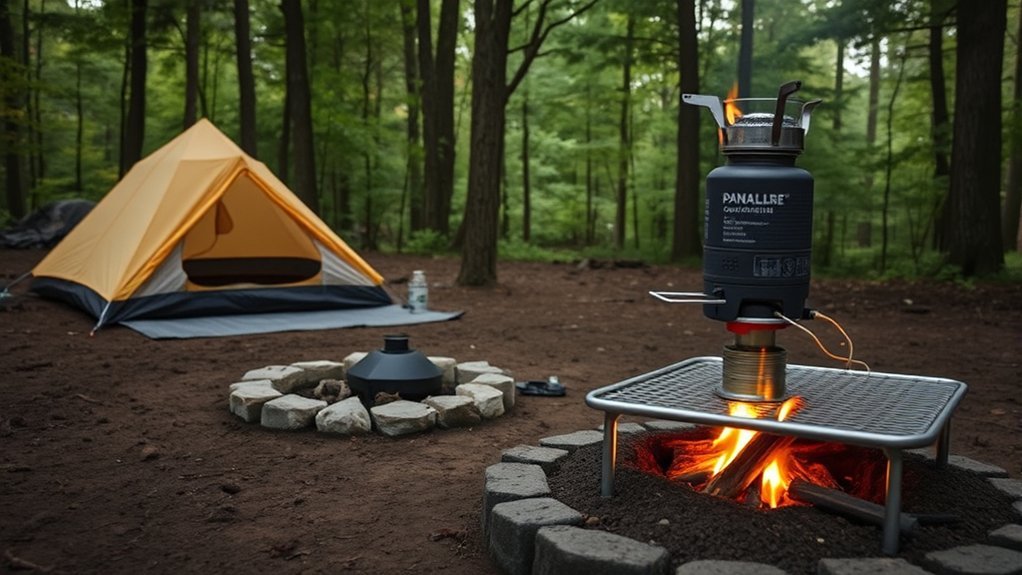
Before you light anything, identify which of these three systems you are using. Each has different rules and hazards:
- Campfire: An open wood fire that should remain in an approved fire ring or established fire pit, away from your tent and other combustibles.
- Portable cooking stove: A gas or liquid-fuel stove designed for outdoor cooking. Use it outside on a stable surface, not inside a tent, vestibule, vehicle, or other enclosed sleeping space.
- Hot-tent wood stove: A fully enclosed wood-burning stove made for use with a compatible shelter that has a properly installed fire-resistant stove jack.
Open flames, hot metal, escaping embers, leaking fuel, and carbon monoxide can cause burns, tent fires, poisoning, or wildfires. Flame-resistant fabric may slow ignition, but it is not fireproof. Synthetic tent fabric can melt or ignite when exposed to heat or sparks.
Check Fire Restrictions Before Setup
Fire rules can change by day, location, weather, and fire-danger level. A campground may allow gas stoves while banning campfires, charcoal, or wood stoves. Check the land manager’s current alerts, posted signs, permit requirements, and campground rules before you set up. Smokey Bear’s campfire guide also recommends checking restrictions and weather before building a fire.
Prevent Campfire Sparks From Reaching Your Tent
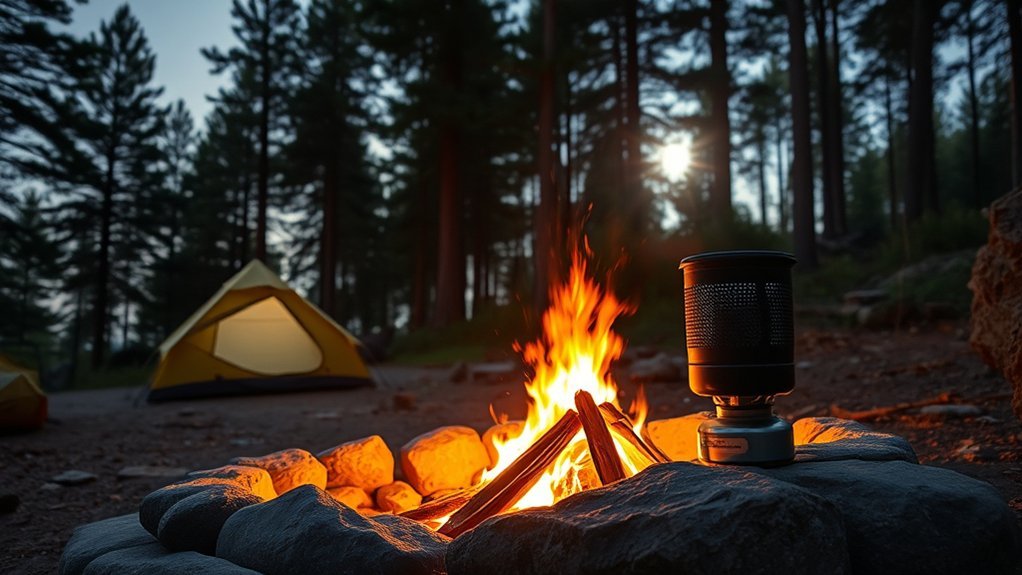
Use an existing metal fire ring or established fire pit whenever one is provided. Place the campfire at least 15 feet from tents, vegetation, and low-hanging branches. Keep at least a 10-foot-diameter area around the fire clear of leaves, needles, dry grass, wood scraps, and other burnable material. Local rules may require more distance.
- Choose calm conditions: Do not build a campfire during hazardous, dry, or windy weather.
- Keep it small: A low fire and compact bed of coals send fewer embers into the air than a tall, overfed fire.
- Use dry, local firewood: Wet wood smokes and pops. Never burn trash, batteries, aerosol cans, glass, or pressurized containers.
- Control the area: Keep children, pets, chairs, sleeping bags, fuel bottles, and spare firewood outside the cleared zone.
- Stay with the fire: Never leave it unattended, even for a moment.
If a fire or its ashes are too hot to touch safely with the back of your hand held nearby, they are too hot to leave.
Set Up Portable Cooking Stoves Outdoors
Portable gas and liquid-fuel camp stoves should be used outdoors in open air. Set the stove on level, firm ground or a stable camp table that the manufacturer approves. Keep it away from the tent door, rainfly, dry grass, low branches, spare fuel, and foot traffic.
- Inspect the fuel connection, hose, valve, and burner before lighting.
- Light the stove only after it is stable and the cooking area is clear.
- Use only a manufacturer-approved windscreen. An oversized or tightly wrapped windscreen can trap heat around a fuel canister.
- Do not cook in a tent vestibule or move a burning stove closer to the tent for weather protection.
- Turn the stove off and let it cool before disconnecting fuel or packing it away.
The Centers for Disease Control and Prevention advises never using a portable gas camp stove indoors. The same rule applies to charcoal, which releases carbon monoxide while burning.
Choose a Compatible Hot-Tent Stove
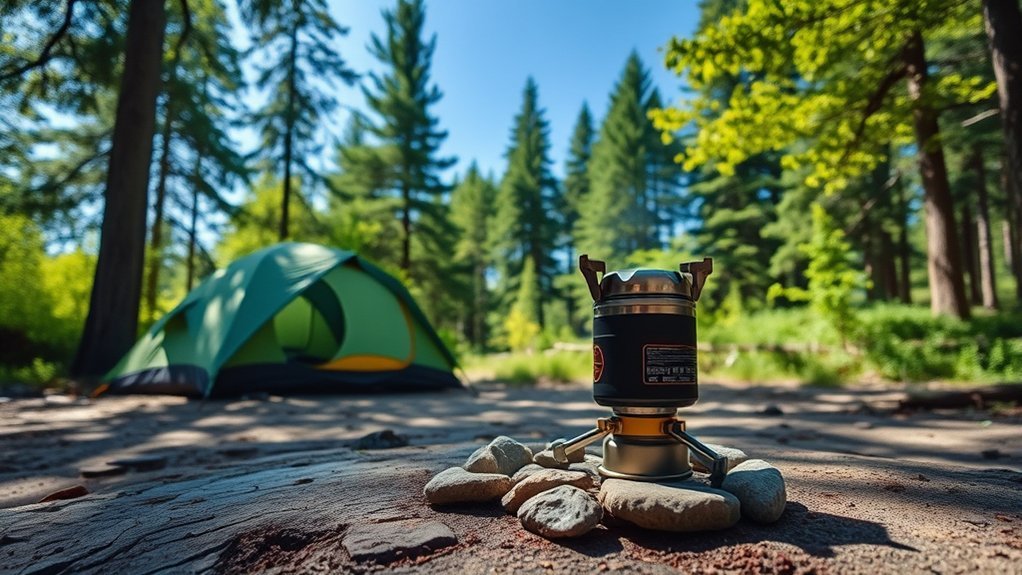
A hot-tent stove must be selected as part of a complete system. Confirm that the shelter maker allows wood-stove use, the stove jack matches the pipe and heat-protection system, and the stove maker approves installation in a tent or shelter.
Match Stove Size to the Shelter
A larger stove may hold more fuel and burn longer, but oversized equipment can overheat a small shelter and reduce safe clearance. An undersized stove may require frequent refueling and tempt you to overfill it. Use the tent and stove manufacturers’ sizing guidance rather than choosing by heat output alone.
Confirm Tent and Stove-Jack Compatibility
A safe hot-tent setup needs a purpose-built stove jack, a pipe and jack that fit correctly, adequate ventilation, and enough room for the manufacturer’s required clearances. A general vent hole is not a stove jack. Do not run a stovepipe through nylon, polyester, Dyneema, canvas, or any other tent fabric unless the shelter has an approved heat-resistant exit system designed for that exact use.
Know What Flame-Resistant Features Can and Cannot Do
Stainless steel, titanium, and other stove metals are noncombustible, but the full stove design still must control heat and embers. Likewise, flame-resistant tent treatments can reduce how quickly fabric ignites, but they do not prevent melting, scorching, or fire. Safe spacing, a fireproof hearth, a proper stove jack, and constant supervision remain essential.
Install Your Hot-Tent Stove Correctly
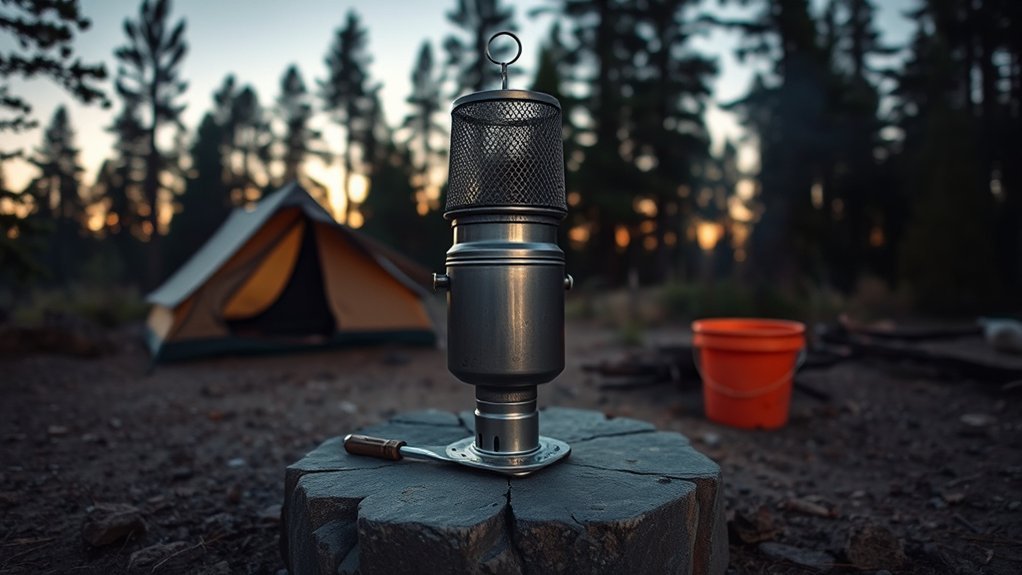
Practice the complete setup outdoors at home before relying on it in cold weather. Follow both manuals when the tent and stove come from different manufacturers. Do not substitute generic pipe-height or clearance numbers for the instructions supplied with your system.
| Safety Check | What to Do | Why It Matters |
|---|---|---|
| Stove and tent approval | Use only a stove and shelter approved for hot-tent use. | Improvised systems can overheat or ignite fabric. |
| Stove jack | Center the pipe in the approved stove jack or flashing system without letting hot pipe touch tent fabric. | The pipe exit is one of the highest-heat points. |
| Pipe height and support | Build the pipe to the height in the stove manual and secure it against movement or wind. | Correct draft and stability help limit smoke, hot gases, and falling embers. |
| Combustible clearance | Maintain at least the manufacturer’s stated clearance around the stove and pipe. | A universal 12-inch rule is not safe for every stove. |
| Hearth protection | Place the stove on the specified noncombustible mat or hearth, extending protection where sparks may fall when the door opens. | Hot coals can burn a tent floor or groundsheet. |
| Ventilation and exit | Open the shelter vents as directed and keep a clear route to the door. | Fresh air and fast evacuation are essential. |
For example, Winnerwell’s current stove guidance calls for at least 18 inches between that model and combustible material and requires a fireproof stove jack at the flue exit. That number is an example for a specific product, not a universal standard.
Pro Tip: Photograph the finished practice setup and save the tent and stove manuals on your phone. At camp, compare the real setup with the approved layout before lighting the first fire.
Use and Maintain a Spark Arrestor
A spark arrestor fits at or near the top of a wood-stove pipe and helps catch larger embers before they land on the tent or nearby vegetation. It lowers risk, but it cannot stop every tiny spark.
- Use the correct part: Install the arrestor specified for the stove and pipe diameter.
- Meet local rules: Some fire orders set a maximum mesh opening or ban wood stoves entirely. Follow the current rule for your location.
- Inspect before lighting: Replace torn, warped, missing, or poorly fitting screens.
- Clean during use: Soot and creosote can block the mesh, weaken draft, and push smoke into the shelter.
- Let it cool first: Wear heat-resistant gloves and follow the stove manual before touching or cleaning the pipe.
Maintain a Clear Zone From Combustibles
Clearance depends on the heat source. For a campfire, keep the tent and vegetation at least 15 feet away and maintain the cleared 10-foot-diameter area. For a portable cooking stove, follow the stove manual and keep the flame and hot exhaust away from tent fabric, dry grass, and fuel containers. For a hot-tent stove, use the exact stove-and-pipe clearances in the manufacturer’s instructions.
Store spare wood, kindling, fuel bottles, clothing, packs, and sleeping gear outside the heat zone. Keep the stove door facing away from sleeping bags and the main traffic path so an escaping coal is less likely to land on fabric or a person.
Prevent Carbon Monoxide Poisoning
Carbon monoxide is colorless and odorless. It can build up when fuel burns in an enclosed or poorly vented space. A person may mistake early exposure for tiredness, altitude sickness, food poisoning, or the flu.
Symptoms to Watch For
The U.S. Consumer Product Safety Commission lists common symptoms that include:
- Headache
- Dizziness or weakness
- Nausea or vomiting
- Sleepiness or confusion
Severe exposure can cause loss of coordination, loss of consciousness, brain injury, or death. Do not assume someone is simply sleeping if a fuel-burning device is in use and the person is difficult to wake.
Immediate Actions Required
| Situation | Action |
|---|---|
| Headache, dizziness, weakness, nausea, or confusion | Move everyone into fresh air immediately and call 911. |
| CO alarm sounds | Leave the shelter at once. Call emergency services from fresh air and do not re-enter until responders say it is safe. |
| Person is unresponsive or not breathing normally | Call 911, follow the dispatcher’s instructions, and begin CPR if trained and it is safe to do so. |
The American Red Cross advises moving a person to fresh air as soon as possible while waiting for emergency medical services. Do not enter a smoke-filled or contaminated shelter to attempt a rescue unless you can do so safely.
Note: A battery-powered carbon monoxide alarm rated for the expected temperature can add protection in a hot tent. It does not make an unsafe stove, blocked pipe, poor ventilation, or portable indoor cooking acceptable.
Keep Emergency Equipment Accessible
Place emergency items where you can reach them without crossing the flame or stove. Before lighting, make sure everyone knows the exit route and where the equipment is stored.
- Water and bucket: Keep enough water nearby to extinguish a campfire completely.
- Shovel: Use it to stir wet coals and expose hidden hot spots.
- Fire extinguisher: Carry a charged multipurpose extinguisher suitable for the hazards at your campsite, and know how to use it.
- Heat-resistant gloves: Use them for stove-door, pipe, and spark-arrestor tasks allowed by the manufacturer.
- Headlamp or flashlight: Keep one within reach for a fast nighttime exit.
- First-aid kit and phone: Keep both accessible, along with the campsite address or coordinates for emergency responders.
Keep a clear path from each sleeping position to the tent door. Do not place sleeping bags, fuel, spare wood, or loose gear where they could block the exit.
Operate a Hot-Tent Stove With Fewer Sparks
Most stove sparks are caused or worsened by poor fuel, overfilling, opening the door too quickly, or a dirty pipe. During use:
- Burn only dry, appropriately sized wood allowed by the stove manufacturer.
- Do not burn trash, treated wood, painted wood, plastics, or pressurized containers.
- Keep the stove door latched except when loading or tending the fire.
- Open the door slowly so the draft can stabilize before you add wood.
- Do not overfill the firebox or force a high burn that overheats the stove and pipe.
- Keep the pipe, damper, and spark arrestor clean enough to maintain proper draft.
- Monitor the stove constantly. Do not leave it burning while the shelter is unattended or while occupants are asleep.
Clean and Maintain Your Stove Regularly
Before each trip, inspect the firebox, door latch, legs, pipe sections, damper, stove jack, guy lines, and spark arrestor. Look for cracks, corrosion, warped metal, loose joints, holes, torn mesh, or heat damage. Do not use damaged equipment until the manufacturer-approved repair is complete.
During a trip, watch for reduced draft, smoke leaking from joints, an unusually dark or clogged arrestor, or sparks escaping near the stove jack. Let the system cool and correct the problem before relighting it.
After use, remove ash and soot according to the manual. Dry metal parts before storage, and keep the pipe and arrestor protected from crushing. A consistent maintenance routine reduces blockage, uncontrolled smoke, and ember escape.
Troubleshoot Sparks, Smoke, and Poor Draft
| Problem | Likely Cause | Safer Response |
|---|---|---|
| Many sparks leave the pipe | Overfilled firebox, very high burn, unsuitable fuel, or damaged arrestor | Reduce the burn as directed, stop adding fuel, and inspect the arrestor after the system cools. |
| Smoke enters the tent when the door opens | Weak draft, clogged screen, cold pipe, or door opened too quickly | Move occupants to fresh air if needed, ventilate, let the stove cool, and clean or correct the system before relighting. |
| Pipe leans or touches the stove jack | Loose support, wind, or poor assembly | Extinguish the stove, allow it to cool, then rebuild and secure the pipe according to the manual. |
| Tent fabric scorches or feels unusually hot | Insufficient clearance, pipe contact, or overheating | Stop using the stove immediately, evacuate if necessary, and do not relight until the damaged setup is professionally assessed or replaced. |
Extinguish Campfires and Stoves Completely
Campfire
Follow the drown, stir, drown, and feel method:
- Pour plenty of water over the fire until the hissing stops.
- Stir the wet coals, ashes, and remaining wood with a shovel.
- Add more water and stir again until no embers are exposed or smoldering.
- Hover the back of your hand near the ashes to check for heat. Do not leave until everything is cold.
Do not rely on dirt or sand alone because they can hide hot embers.
Hot-Tent Wood Stove
Stop adding fuel early enough for the fire to burn down while you are awake and supervising it. Follow the stove manual for closing air controls and handling ash. Do not pour water into a hot stove unless you are responding to an immediate fire emergency or the manufacturer directs it, because rapid cooling can damage metal. Keep monitoring the stove, pipe, and nearby fabric until every part is cool.
Frequently Asked Questions
What materials are best under a camping stove?
Use the base required by the stove manufacturer. A portable cooking stove needs a level, stable, noncombustible surface. A hot-tent wood stove normally needs a purpose-built fireproof hearth or mat that protects the floor and extends into the area where embers may fall when the door opens.
How far should a campfire or stove be from my tent?
Keep a campfire at least 15 feet from tents, vegetation, and low branches unless local rules require more. Use portable cooking stoves outdoors at the clearance stated in their manuals. A wood stove may be inside only a compatible hot tent, with the exact stove, pipe, and fabric clearances required by both manufacturers.
Can I use a stove in windy conditions?
Do not build a campfire in hazardous, dry, or windy conditions. A portable gas stove may be usable in a sheltered outdoor location if its manual allows it, but never move it into a tent or surround its fuel canister with an unsafe windscreen. Stop if gusts make the flame, cookware, or stove unstable.
What cooking methods avoid sparks?
No-cook meals avoid flame and sparks completely. Where power and campground rules allow, an electric hot plate or induction cooker is another option. Solar cookers can work in suitable sun and weather. A Dutch oven does not eliminate fire risk because it is commonly heated with coals or a campfire.
How do I properly extinguish a campfire?
Drown the fire with water, stir all coals and ashes, add more water, and check for heat with the back of your hand held nearby. Repeat until every ember and piece of wood is cold. Never leave a warm or smoldering fire.
Does a carbon monoxide alarm make tent stove use safe?
No. An alarm is only an added warning layer. It cannot correct an unsuitable tent, blocked stovepipe, poor ventilation, leaking equipment, or an unvented portable stove. Use only a compatible hot-tent system and follow its instructions.
Can I leave a hot-tent stove burning while I sleep?
Do not leave a tent stove unattended or burning while occupants are asleep. Stop adding fuel early, supervise the fire as it burns down, and remain awake until the stove and pipe are no longer an active hazard.
Will a spark arrestor stop every ember?
No. A clean, correctly fitted spark arrestor catches many larger embers, but small sparks may still escape. Maintain safe clearance, burn suitable dry fuel, avoid overfiring, and inspect the tent and surrounding ground during use.
Conclusion
Reducing sparks near a tent starts with choosing the correct heat source. Keep campfires and portable cooking stoves outside and away from your sleeping area. Use an indoor wood stove only as part of a manufacturer-approved hot-tent system with a stove jack, spark arrestor, correct pipe, safe clearances, ventilation, and constant supervision. Check restrictions before every trip, keep emergency equipment ready, and extinguish every fire until it is cold.
Sources
- CDC — Carbon Monoxide Poisoning Basics — portable gas stove and charcoal carbon monoxide guidance.
- U.S. Consumer Product Safety Commission — Portable Heaters and Camping Equipment — camping-related carbon monoxide symptoms and sleeping-area warnings.
- Smokey Bear — Campfire Safety — fire restrictions, 15-foot placement, cleared area, and extinguishing steps.
- National Park Service — Fire Safety — designated fire areas, supervision, small fires, and complete extinguishing.
- Winnerwell — Woodlander Medium Tent Stove Guidance — product-specific combustible clearances and stove-jack requirements.
- American Red Cross — Poison Exposure First Aid — fresh-air and emergency-care steps for suspected carbon monoxide exposure.
