Last Updated on August 26, 2026 by Mason Reed
A 4-season tent is built for conditions that can overwhelm a typical backpacking tent, especially strong wind, blowing snow, and substantial snow loading. It usually combines stronger pole architecture, more solid fabric coverage, secure guyout points, and controlled ventilation. Although these features can reduce drafts, your sleeping bag and insulated sleeping pad still provide most of the warmth you need in winter.
Quick Answer
A 4-season tent is a storm-resistant shelter designed for strong winds, blowing snow, and snow loads. Compared with most 3-season tents, it generally has stronger poles, more solid fabric, less exposed mesh, and better anchoring options. It reduces drafts, but your sleeping bag and pad provide most of your insulation.
Key Takeaways
- Choose a 4-season tent primarily for wind strength, snow loading, and blowing-snow protection, not because you expect the tent itself to act like an insulated sleeping bag.
- Both single-wall and double-wall 4-season tents exist, and each has different weight, condensation, and livability tradeoffs.
- A good winter shelter still needs ventilation because sealing every vent can increase condensation and frost inside.
- Weight varies dramatically by capacity and intended use, so compare tents designed for similar conditions rather than relying on one “typical” weight.
- For mild winter weather below tree line, a capable 3-season or extended-season tent may sometimes be sufficient; exposed alpine storms and heavy snow are where a true 4-season shelter becomes much more valuable.
Disclosure: As an Amazon Associate I earn from qualifying purchases. Some links on this page are affiliate links, at no extra cost to you.
Understanding the Features of 4-Season Tents
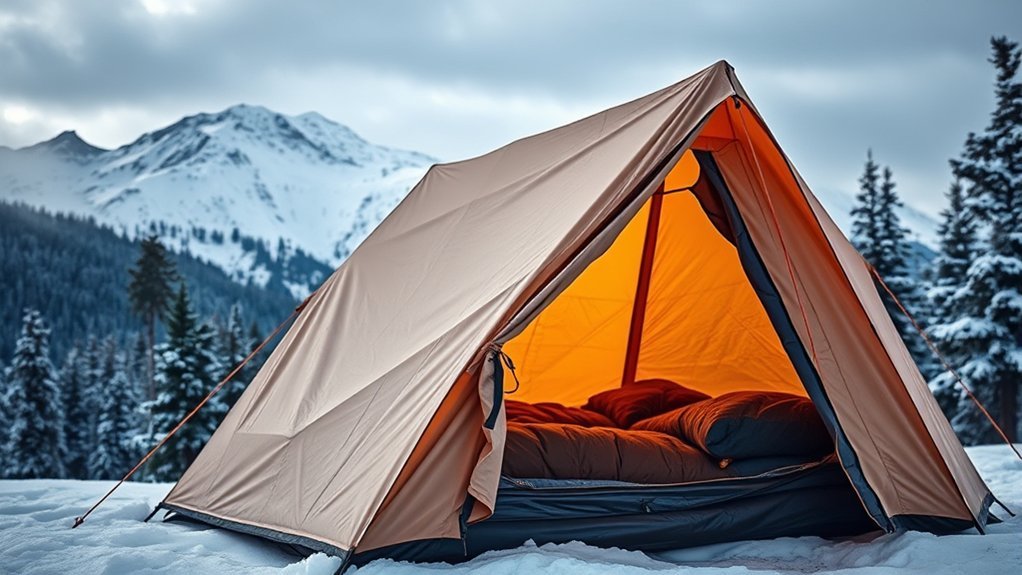
When you venture into exposed winter or alpine terrain, the most important job of a 4-season tent is to stay structurally stable when wind and snow place heavy loads on the shelter. According to REI’s tent seasonality guidance, mountaineering tents commonly use more poles, heavier-duty fabrics, rounded shapes, fewer mesh panels, and rainflies that extend close to the ground.
Structural Strength Matters More Than “Insulation”
A 4-season tent can feel less drafty than a highly ventilated summer tent because it usually has more solid canopy fabric and less permanently open mesh. That does not mean a 4-season tent provides a guaranteed temperature increase. Your winter sleeping bag, clothing, and especially an insulated sleeping pad are responsible for most of your thermal protection.
Strong 4-season designs may use intersecting poles, rigid dome or geodesic shapes, or well-supported tunnel architectures. A dome is common because its rounded profile can shed wind and snow efficiently, but it is not the only suitable design. Hilleberg’s all-season tent guidance, for example, includes both tunnel and dome shelters for demanding conditions.
Solid Fabric and Snow Protection
Compared with typical 3-season backpacking tents, 4-season models generally expose less mesh. Solid inner fabric can limit windblown snow and reduce cold drafts. Many double-wall models also use a full or low-reaching rainfly that helps block wind-driven precipitation and spindrift.
However, these features vary. Some tents use snow flaps or skirts, while others rely on a tightly pitched full-coverage fly. Lightweight alpine shelters may use a single waterproof or waterproof-breathable wall instead of a separate inner tent and rainfly.
Ventilation and Condensation
Winter tents still need airflow. Your breath and damp clothing release moisture, and that moisture can condense or freeze on cold tent surfaces. Closing every vent may make the shelter feel less drafty at first, but it can also create heavy condensation and interior frost.
Look for adjustable roof vents, protected openings, controllable inner panels, or doors that allow airflow without exposing the interior to blowing snow. Cascade Designs’ guidance on 3- and 4-season tents specifically notes that strong winter construction must be balanced with strategic ventilation to manage moisture.
Note: A tent’s “4-season” label describes the conditions the shelter is designed to handle. It does not replace a properly rated winter sleeping bag, insulated sleeping pad, warm clothing, or other cold-weather equipment.
Key Considerations for Choosing a 4-Season Tent
Choosing a 4-season tent is less about finding the heaviest shelter and more about matching its design to the conditions you realistically expect. Start with the weather, terrain, trip length, group size, and how far you must carry the tent.
- Wind and snow capability: Look for a strong pole structure, multiple secure guyout points, and a shape designed to remain stable under the conditions specified by the manufacturer.
- Fabric coverage: More solid inner fabric and a low-reaching fly can help keep out spindrift and wind-driven precipitation.
- Ventilation: Adjustable vents are essential for managing condensation, especially when several people sleep in a small tent.
- Capacity: Winter clothing, sleeping bags, boots, and climbing gear take more room than summer equipment. Check floor area, peak height, vestibule space, and door configuration.
- Weight and packed size: Four-season tents range from minimalist alpine shelters to large expedition tents. Compare the packed and minimum weights of models with similar capacity and storm capability instead of relying on a universal weight range.
- Ease of setup: A shelter that is simple to pitch while wearing gloves or in strong wind can be more useful than a complicated design with impressive specifications.
- Anchoring options: Make sure the tent can accommodate the anchors you expect to use, including snow stakes, buried deadman anchors, skis, or other manufacturer-approved methods.
Pro Tip: Practice pitching your tent at home before a winter trip. Learn where every pole, clip, sleeve, guyline, and vent goes so you are not solving the setup for the first time in darkness, wind, or blowing snow.
Single-Wall vs. Double-Wall 4-Season Tents
A true 4-season tent does not have to be double-wall. Both designs are used in serious alpine environments, and the right choice depends on your priorities.
| Feature | Double-Wall | Single-Wall |
|---|---|---|
| Construction | Breathable inner tent plus separate waterproof rainfly | One weather-resistant wall without a separate fly |
| Condensation management | Often easier to manage because moisture can move away from the inner living space | Can require more careful ventilation, particularly in humid conditions |
| Weight | Usually carries more components | Can reduce weight and packed bulk in alpine-focused designs |
| Best fit | Longer winter trips and situations where livability and moisture management matter | Fast alpine objectives where low weight, compact size, and quick pitching matter |
Neither design is automatically better. Check how the manufacturer expects the tent to be used and pay particular attention to ventilation if you choose a single-wall shelter.
Real-World Applications and User Experiences
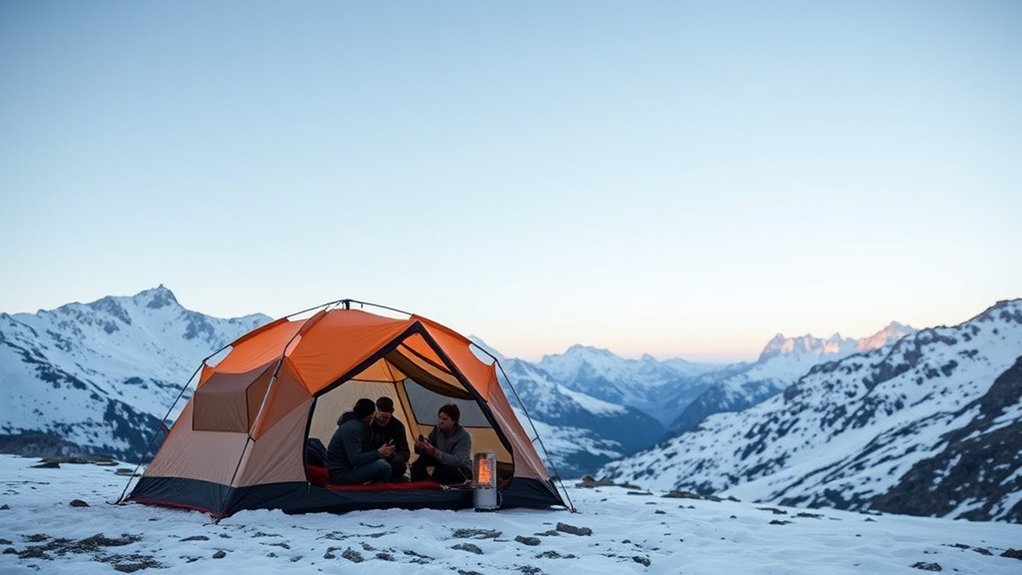
In real-world camping, the forecast and exposure matter more than the month printed on the calendar. A 4-season tent makes the strongest case for itself when a shelter may face substantial snow accumulation, powerful wind, blowing snow, or exposed terrain above tree line.
Typical situations where the extra structure can be worthwhile include:
- Winter backpacking during stormy forecasts: Stronger poles and more solid fabric provide a larger safety margin when snow and wind increase.
- Mountaineering and alpine climbing: Exposed high camps can demand a compact shelter with excellent wind stability and secure guying.
- Backcountry ski or snowshoe trips: A 4-season shelter can provide more dependable storm protection when you are camping on deep snow.
- Winter base camps: Larger expedition-style tents trade extra weight for more interior space and stronger structures.
- Exposed shoulder-season trips: High-elevation destinations can experience winter-like wind and snow even outside the traditional winter months.
A 4-season tent is not automatically necessary every time the temperature drops. REI’s winter-camping guidance notes that a typical 3-season backpacking tent may work below tree line when especially stormy weather is not expected. For high winds and heavy snowfall, however, REI recommends a 4-season shelter.
Comparing 4-Season Tents to 3-Season Options
While many campers prefer lightweight, highly ventilated shelters, seasonal tent categories are designed around different weather demands. It is also useful to recognize the middle ground: extended-season, 3+ season, or 3–4 season tents.
| Criteria | 3-Season Tent | Extended/3+ Season | 4-Season Tent |
|---|---|---|---|
| Primary use | Spring, summer, and fall | Shoulder seasons, high elevations, light snow | Winter, mountaineering, exposed storm conditions |
| Ventilation | High; often extensive mesh | Moderate; often includes closable fabric panels | More controlled; generally less permanently open mesh |
| Snow capability | Light or incidental snow only, depending on model | Better for occasional snow | Designed for substantially more demanding snow conditions |
| Wind resistance | Suitable for normal backpacking weather when properly pitched | Stronger than many standard 3-season designs | Built for severe wind exposure when properly anchored |
| Typical tradeoff | Light and breathable but less suited to heavy snow | Middle ground in protection and weight | More storm protection but often heavier and less airy |
Four-season tents generally use stronger structures and more solid fabric than comparable 3-season shelters. They can also feel stuffier in mild weather. If most of your camping is during warm months, buying a 4-season model simply because it sounds more capable can add unnecessary weight and reduce comfort.
Evaluating Your Camping Needs and Conditions
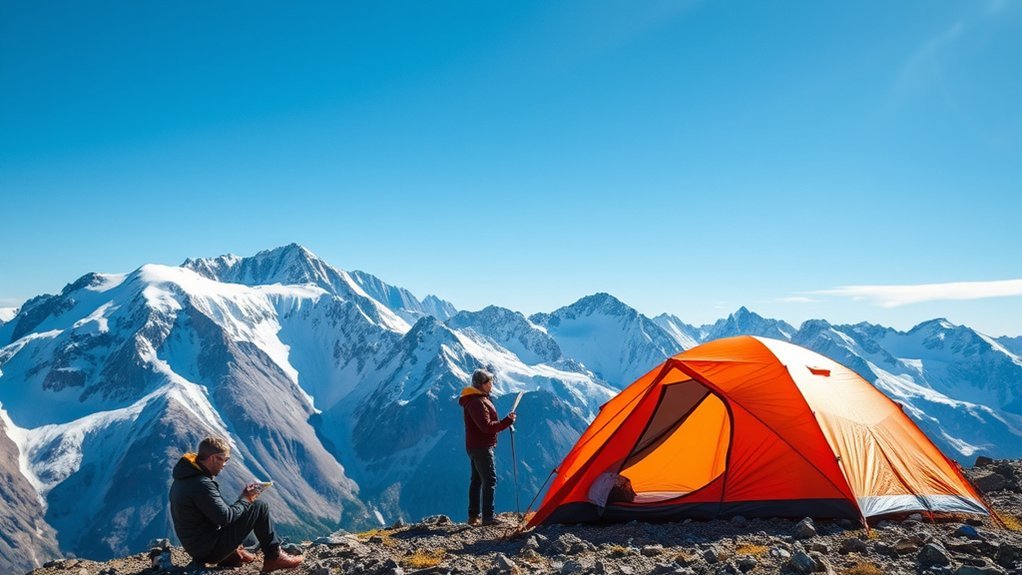
To determine which tent makes sense, start with the worst realistic conditions you expect to encounter rather than simply choosing by season name. Think about snow depth, wind exposure, elevation, campsite protection, trip length, and how quickly you could retreat if conditions deteriorate.
| Criteria | 3-Season Tent | 4-Season Tent |
|---|---|---|
| Tent Durability | Designed around lighter three-season conditions | Typically stronger construction for demanding winter or alpine use |
| Draft Protection | More mesh and airflow are common | More solid fabric generally reduces blowing snow and drafts |
| Weather Resistance | Rain, normal wind, and limited light snow depending on model | Stronger wind, substantial snow, and exposed winter conditions depending on model |
| Ideal Use | Most spring-to-fall camping | Winter camping, mountaineering, and exposed alpine trips |
Do not buy solely from a “4-season” marketing label. Read the manufacturer’s intended-use description, pole architecture, fabric specifications, ventilation design, guyout system, capacity, and setup instructions. The right tent is the one designed for the actual conditions of your trip.
How to Set Up a 4-Season Tent in Snow and Wind
A strong tent can perform poorly if it is pitched badly. Before camping on snow, review the specific manufacturer’s instructions and practice the complete pitch in controlled conditions.
- Choose a protected site when possible. Use terrain or healthy vegetation as a natural windbreak, but stay away from unstable trees, falling limbs, avalanche paths, and other overhead or terrain hazards.
- Prepare the snow platform. If camping on deep snow, compact the area with boots, skis, or snowshoes and allow the surface to settle before pitching.
- Secure the tent early. In wind, anchor the tent body or initial corners before assembling the rest of the shelter so a gust cannot carry it away.
- Orient the shelter correctly. Follow the manufacturer’s instructions for the strongest wind-facing side rather than assuming the door or narrow end should always face the wind.
- Use appropriate snow anchors. Ordinary soil stakes may pull out of soft snow. Use snow stakes, buried deadman anchors, or another anchor system approved for your tent and conditions.
- Use the guylines. Properly tensioned guylines transfer wind forces through the tent structure and improve stability.
- Keep ventilation operating. Do not completely seal the shelter in an attempt to trap warmth. Maintain protected airflow to control moisture and condensation.
REI’s winter-camping instructions specifically recommend compacting snow before pitching and using snow stakes or buried anchors because normal stakes may not hold effectively in snow.
Warning: Do not use a camp stove, charcoal grill, or other fuel-burning equipment inside your tent as a heat source. Carbon monoxide is colorless and odorless and can reach deadly levels in enclosed spaces. Follow the equipment manufacturer’s outdoor-use instructions. The U.S. Consumer Product Safety Commission warns that portable fuel-burning camping equipment can create dangerous carbon monoxide concentrations inside tents.
Care and Lifespan of a 4-Season Tent
There is no dependable rule that a 4-season tent lasts a specific number of years. A lightly used tent stored correctly may remain serviceable far longer than a tent exposed repeatedly to high-altitude UV, abrasive snow and rock, moisture, dirt, or improper storage.
To extend the useful life of your shelter:
- Dry the tent completely before long-term storage.
- Store it in a cool, dry area according to the manufacturer’s instructions.
- Avoid unnecessary prolonged UV exposure because sunlight gradually weakens many tent fabrics.
- Keep grit out of zippers and avoid forcing damaged or misaligned zipper sliders.
- Inspect seams, coatings, poles, guylines, stakes, and attachment points before demanding trips.
- Use a compatible footprint when appropriate to reduce abrasion to the tent floor.
- Follow the manufacturer’s cleaning instructions rather than using ordinary household detergents that may damage coatings.
MSR’s tent-care guidance warns that prolonged UV exposure weakens tent fabric and that storing a tent wet can promote mildew and deterioration of waterproof coatings. Condition and maintenance are therefore more meaningful than assigning a universal lifespan such as 10 years.
Frequently Asked Questions
Can I Use a 4-Season Tent in Summer?
Yes. A 4-season tent can physically be used in summer, but many models have less mesh and airflow than 3-season tents, so they can feel warmer and stuffier in mild or hot weather. Open the available vents and doors when conditions allow. For primarily warm-weather camping, a lighter and better-ventilated 3-season tent is usually more comfortable.
How Much Heavier Are 4-Season Tents Compared to 3-Season Tents?
There is no reliable fixed difference. Four-season tents are generally heavier than comparable 3-season tents because stronger poles, additional structure, solid fabric, and larger vestibules can add weight. However, lightweight single-wall alpine tents can weigh less than large 3-season camping tents. Compare shelters with similar capacity and intended use.
Do 4-Season Tents Require Special Setup Techniques?
The basic pitching process is similar to other tents, but winter conditions require more attention to anchoring and guying. On snow, compact the platform and use snow stakes or suitable buried anchors. In high wind, secure the shelter early, use its structural guyout points, and follow the manufacturer’s recommended orientation.
Are 4-Season Tents Waterproof?
Most mountaineering-style 4-season tents are designed with waterproof floors and weather-resistant outer fabrics, but “4-season” by itself is not a waterproof-rating specification. Materials, coatings, seam construction, design, age, and maintenance vary by model. Check the manufacturer’s waterproofing specifications and care instructions for the exact tent you are considering.
What Is the Lifespan of a Typical 4-Season Tent?
There is no universal lifespan. Frequency of use, UV exposure, abrasion, moisture, waterproof-coating condition, storage, repairs, and care all matter. Inspect your tent regularly and replace or repair it when fabric, poles, seams, coatings, zippers, or structural attachment points can no longer provide dependable protection for the conditions you plan to enter.
Is a 4-Season Tent Much Warmer Than a 3-Season Tent?
It may feel less drafty because it commonly uses more solid fabric and less open mesh, but you should not expect a fixed temperature increase. Your sleeping bag, insulated sleeping pad, clothing, hydration, nutrition, and campsite conditions have a much larger role in keeping you warm overnight.
Do I Need a 4-Season Tent for Every Winter Camping Trip?
No. A capable 3-season tent may be reasonable for protected camps below tree line when heavy snow and strong wind are not expected. A true 4-season tent becomes much more important when forecasts, elevation, exposure, or trip duration increase the possibility of severe wind, blowing snow, or substantial snow loading.
Sources
- REI Co-op — Backpacking Tents: How to Choose — tent seasonality, 3-season versus 4-season design, ventilation, and single-wall shelters.
- Cascade Designs — Differences Between Three- and Four-Season Tents — structural strength, solid fabric coverage, ventilation, and single-wall designs.
- Hilleberg — Choosing the Right Tent — all-season tent design, strength, weight tradeoffs, dome and tunnel applications, and full-length outer tents.
- REI Co-op — Winter Camping and Backpacking Basics — when a 4-season tent is recommended and how to pitch on snow.
- U.S. Consumer Product Safety Commission — Carbon Monoxide Fact Sheet — carbon-monoxide hazards from portable fuel-burning equipment in tents and other enclosed spaces.
- MSR — Tents and Shelters Manual — drying, storage, UV exposure, waterproof coatings, cleaning, and general tent care.
Conclusion
A 4-season tent earns its extra structure when your trip may involve heavy snow, strong wind, blowing spindrift, or exposed alpine terrain. Look beyond the season label and compare pole architecture, fabric coverage, ventilation, guyout points, capacity, weight, and manufacturer guidance. For ordinary warm-weather camping, a 3-season tent is usually lighter and more comfortable. For serious winter conditions, the stronger 4-season design can provide an important margin of shelter reliability—but it must still be paired with a proper winter sleep system, careful campsite selection, secure pitching, and safe cold-weather practices.