
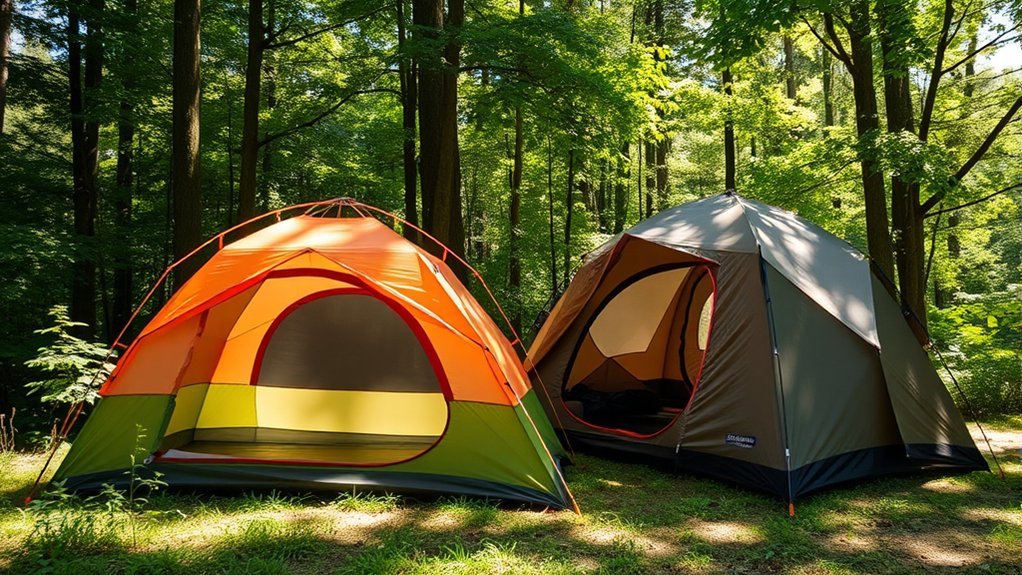
Last Updated on August 26, 2026 by Mason Reed
Choosing between a 3-season and 4-season tent comes down to the conditions you realistically expect, not simply how cold the temperature may become. A 3-season tent is the better all-around choice for most spring, summer, and fall camping, while a 4-season tent is designed for stronger winds, blowing snow, and heavier snow loads. Your sleeping bag and sleeping pad—not the tent’s season label—provide most of the insulation that keeps you warm at night.
Quick Answer
Choose a 3-season tent for most spring-through-fall trips, rain, moderate wind, and occasional light snow. Choose a 4-season tent when significant snow, strong winds, exposed alpine terrain, or true winter storms are realistic possibilities. For occasional shoulder-season snow, a 3–4-season tent can be a useful middle ground.
Key Takeaways
- 3-season tents prioritize ventilation, lower weight, and everyday rain protection.
- 4-season tents prioritize structural strength for snow, powerful wind, and exposed winter conditions.
- A 4-season rating is not a temperature or insulation rating; your sleeping bag and sleeping pad are more important for nighttime warmth.
- Weight varies greatly by tent capacity and design, so compare the same specification, such as minimum trail weight or packaged weight.
- If your trips fall between normal three-season weather and serious winter mountaineering, consider an extended-season or 3–4-season tent.
Disclosure: As an Amazon Associate I earn from qualifying purchases. Some links on this page are affiliate links, at no extra cost to you.
3-Season vs 4-Season Tent Comparison
| Feature | 3-Season Tent | 4-Season Tent |
|---|---|---|
| Best conditions | Spring, summer, fall, rain, moderate wind, occasional light snow | Winter, exposed terrain, strong wind, blowing snow, substantial snow loads |
| Ventilation | Usually more mesh and airflow | Usually more solid fabric and less mesh, with adjustable vents |
| Pole structure | Designed to balance weight and normal storm protection | Typically stronger and more supportive for severe weather |
| Weight | Usually lighter for comparable capacity | Usually heavier, although lightweight mountaineering designs exist |
| Warm-weather comfort | Generally better | Can feel warmer or stuffier because of reduced mesh |
| Snow capability | Light or incidental snow only, depending on the model | Designed for more significant snow and winter exposure |
These categories are useful guides rather than temperature ratings. Always check the manufacturer’s intended-use information for the exact tent you are considering. REI’s backpacking tent selection guide likewise distinguishes 3-season tents from stronger mountaineering shelters based mainly on weather capability, pole structure, fabric coverage, and ventilation.
Understanding 3-Season Tents
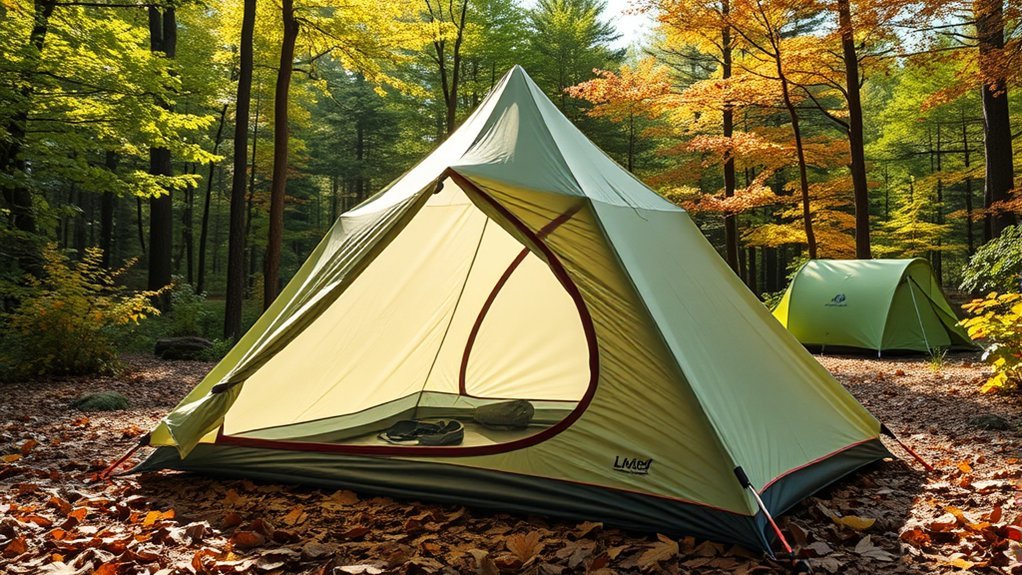
When you’re choosing a tent for spring, summer, or fall, a 3-season tent is usually the most versatile option. Backpacking models are commonly built with lighter pole structures and generous mesh panels, helping reduce packed weight while allowing moisture and warm air to escape.
There is no universal 2-to-4-pound weight range for 3-season tents. Small ultralight backpacking shelters can weigh only a few pounds, while larger backpacking and car-camping tents can weigh much more. When comparing models, make sure you are comparing the same specification: minimum or trail weight generally excludes some accessories, while packaged weight includes more of what comes in the bag.
Properly pitched 3-season tents can handle rain, ordinary wind, and in many cases a small amount of light snow, but they are not engineered for prolonged heavy snow loading, violent winds, or serious winter storms. Pitching in a sheltered, well-drained location, using the required stakes and guylines, and maintaining ventilation will help the tent perform as intended.
Understanding 4-Season Tents
If you’re heading into exposed alpine terrain or expecting significant winter weather, a 4-season tent provides greater structural protection. These shelters generally use stronger pole architecture, more solid canopy fabric, more storm-oriented shapes, and rainflies that extend closer to the ground to reduce windblown snow entering the shelter.
| Feature | Typical Design | Why It Helps |
|---|---|---|
| Frame Structure | More supportive pole geometry | Improves stability under wind and snow loads |
| Mesh Panels | Reduced, covered, or adjustable mesh | Limits drafts and blowing snow while retaining ventilation options |
| Rainfly Coverage | Often extends close to the ground | Helps block windblown precipitation and spindrift |
| Vestibules / Snow Skirts | Model-specific rather than universal | May improve gear storage or help manage blowing snow |
Note: “4-season” does not mean a tent functions like an insulated room. Less mesh can reduce drafts, but your sleeping bag, clothing, and especially your insulated sleeping pad provide the thermal protection that matters most overnight.
A winter tent can also produce condensation if it is sealed too tightly. Even in cold weather, use the manufacturer’s vents and manage moisture inside the shelter. REI’s winter camping guidance recommends 4-season shelters for high winds and heavy snowfall while noting that a normal 3-season tent may sometimes work in calm, sheltered winter conditions below treeline.
Key Features of 3-Season Tents
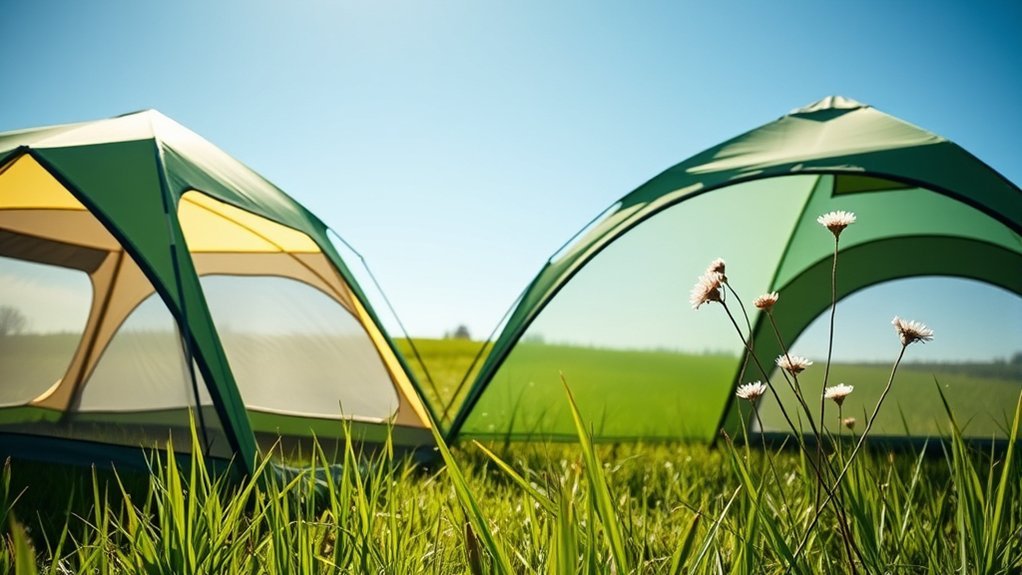
When you choose a 3-season tent, you generally get a lighter, more breathable shelter that is easier to carry during backpacking trips. Its main tradeoff is reduced structural capability compared with a dedicated winter mountaineering shelter.
Lightweight and Packable Design
The lightweight and packable design of many 3-season backpacking tents is a major advantage for hikers covering long distances. Manufacturers can reduce weight by using simpler pole structures, lighter fabrics, mesh canopy panels, and compact floor plans.
Weight and interior space still vary widely. Some lightweight shelters have limited headroom or vestibule space, while others provide generous living space. Color also varies by manufacturer and is not a defining characteristic of a 3-season tent. For most backpackers, usable space, storm protection, packed size, and total carried weight matter more than color.
High Ventilation and Airflow
High ventilation is one of the defining advantages of many 3-season tents. Important airflow features include:
- Mesh canopy panels that allow warm, humid air to escape while keeping insects out.
- Double-wall construction that separates the inner tent from the rainfly and helps keep condensation away from occupants.
- Rainfly vents and door openings that encourage cross-ventilation.
- Proper fly tension and spacing that preserve an air gap between the fly and inner tent.
Fabric thinness by itself does not create useful airflow. Vent placement, mesh coverage, open doors or windows, campsite humidity, and rainfly geometry matter much more. REI’s tent condensation guidance recommends maximizing ventilation and reducing unnecessary moisture inside the shelter.
Weather Resistance Limitations
While 3-season tents can perform very well in rain and ordinary wind, they are not intended for sustained exposure to substantial snow loads or severe alpine storms. More mesh and lighter pole structures generally provide less protection against blowing snow and structural loading than a dedicated winter shelter.
A well-designed 3-season tent may handle light snow, especially when properly guyed out, but this does not make it suitable for every winter trip. Check the specific manufacturer’s guidance instead of assuming every tent carrying the same season label has identical limits.
Pro Tip: If your trips regularly involve early-spring or late-fall snow but not full expedition conditions, look at extended-season or 3–4-season tents before accepting the additional weight and reduced warm-weather ventilation of a full 4-season model.
Key Features of 4-Season Tents
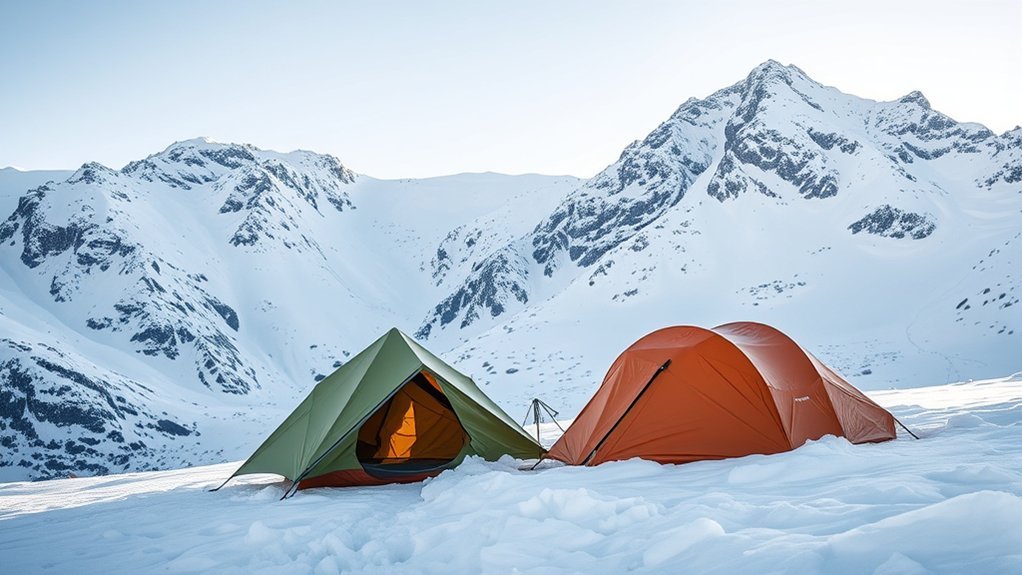
When you’re entering extreme weather territory, the important features of a 4-season tent are structural strength, weather protection, and controllable ventilation. Typical features include:
- Stronger pole architecture: More supportive or intersecting pole structures help the shelter resist wind and snow loading.
- Greater solid-fabric coverage: Reduced mesh helps block drafts and windblown snow while adjustable vents still allow moisture to escape.
- Storm-oriented shape: Lower or rounded profiles reduce broad surfaces that can catch wind and limit flat roof areas where snow can collect.
- More complete fly coverage: A fly that reaches close to the ground helps reduce spindrift and windblown precipitation.
- Additional guy-out capability: Properly tensioned guylines help the tent’s pole and fabric system resist storm forces.
- Optional winter-specific features: Some models add snow skirts, reinforced vestibules, or other expedition features, but these are not universal.
These features improve stability rather than directly insulating you from cold. For warmth, use a sleeping bag appropriate for expected temperatures and a sufficiently insulated sleeping pad.
Wind Protection in Tents
Wind resistance depends on much more than the number printed on a tent’s season label. Pole geometry, tent height, shape, guy points, stake placement, campsite exposure, and correct setup all contribute to storm performance.
A lower, rounded shelter with a strong pole structure generally handles exposed wind better than a tall tent with large unsupported fabric panels. A 4-season mountaineering tent is usually better equipped for serious wind, but even a strong tent must be anchored and guyed according to its instructions.
Choose a campsite with natural protection when practical, while avoiding hazards such as dead trees or branches. Orient the tent according to the manufacturer’s wind guidance, stake it securely, tension the fly correctly, and use the available guy points when conditions require them.
Snow walls can sometimes reduce wind and drifting snow at an established winter camp, but they should not block entrances or ventilation. A snow wall is an additional campsite technique, not a substitute for a shelter rated for the conditions you expect.
Packability and Weight Considerations
Packability and weight are important when choosing between 3-season and 4-season tents, but fixed category-wide weight ranges are misleading. Consider these factors instead:
- Compare equivalent specifications: A manufacturer’s minimum or trail weight may exclude stakes, stuff sacks, repair items, and other accessories that are included in packaged weight.
- Compare equivalent capacities: A two-person backpacking tent should not be compared directly with a four-person expedition shelter.
- Consider structural materials: Additional poles, stronger fabrics, more complete canopy coverage, and extra guy points can increase a winter tent’s weight and packed size.
- Account for the full winter system: A winter trip may also require a warmer sleeping bag, higher-R-value pad, more clothing, snow anchors, and emergency equipment.
- Remember that exceptions exist: Specialized mountaineering tents can achieve relatively low weights, but they may trade away interior space, ease of use, ventilation, or durability.
For most backpackers, a 3-season tent offers the best balance of packability, ventilation, and protection when severe winter conditions are not expected.
Specialized Options for Extreme Conditions
Beyond conventional double-wall tents, experienced climbers and winter travelers may consider single-wall or ultralight mountaineering shelters. These designs can reduce weight and simplify pitching in difficult terrain, but they involve important tradeoffs in condensation management, interior comfort, and versatility.
Single-Wall Tents
Single-wall tents combine the weather barrier and tent wall into one main layer rather than using a separate inner tent and rainfly. Potential advantages and disadvantages include:
- Lower complexity: Fewer major components can make some designs quicker to pitch.
- Lower weight and bulk: Eliminating a separate fly and inner body can reduce carried material.
- Condensation tradeoff: Moisture produced by occupants can collect directly on the inside surface, particularly when ventilation is limited.
- Specialized performance: Some single-wall models are designed specifically for cold, relatively dry alpine conditions rather than humid three-season camping.
Single-wall construction does not automatically mean a tent is less warm or less storm-worthy. Season capability depends on the entire design: fabric, poles, vents, seams, shape, anchoring, and intended use.
Ultralight Options
Ultralight shelters for difficult conditions exist, but reducing weight usually forces tradeoffs somewhere else. Rather than relying on vague brand-level weight ranges, compare the actual model’s intended use and specifications.
| Design Type | Typical Advantage | Main Tradeoff |
|---|---|---|
| Lightweight 3-season | Low weight and strong ventilation | Not intended for substantial winter snow loads |
| Extended / 3–4-season | More storm protection without full expedition bulk | Usually less capable than a dedicated severe-winter shelter |
| Single-wall mountaineering | Compact and potentially quick to pitch | Condensation can be harder to manage |
| Double-wall 4-season | Strong storm protection with better separation from condensation | Usually more weight and bulk |
The right choice depends on the exact environment, not simply on finding the lightest shelter carrying a winter label.
Tent Selection Based on Environment
Selecting the right tent for your camping environment is one of the best ways to improve both comfort and safety. Use the conditions you realistically expect—not the most extreme hypothetical scenario—as your starting point.
- Spring, summer, and fall in typical campsites: A quality 3-season tent is normally the best balance of ventilation, storm protection, price, and weight.
- Cool shoulder seasons with occasional light snow: A sturdy 3-season tent may work in sheltered conditions, while a 3–4-season model provides additional structural margin.
- Exposed high-elevation trips: Strong wind can justify a more robust shelter even when deep winter snow is not expected.
- Heavy snow or severe winter wind: Choose a true 4-season shelter designed for snow loading and winter exposure.
Where 3–4-Season Tents Fit
Extended-season, 3+, or 3–4-season tents bridge the gap between highly ventilated three-season backpacking shelters and full winter mountaineering tents. They commonly add stronger pole support, greater fabric coverage, or closable mesh while remaining lighter and more ventilated than many expedition shelters.
They can be a good choice for people who regularly camp in early spring, late fall, high elevations, or occasional light snow but do not expect the sustained snow loading and extreme wind for which a full 4-season tent is intended.
Note: Season labels are only one part of the decision. Read the individual manufacturer’s specifications, setup instructions, ventilation design, and intended-use description before taking any shelter into severe weather.
Tent Maintenance and Care Tips
Proper care can extend the useful life of both 3-season and 4-season tents. You do not need to wash the entire shelter with soap after every trip. Instead, follow a few simple habits:
- Shake out dirt and debris: Remove sand, leaves, and grit before packing whenever possible.
- Clean when necessary: Spot-clean dirty areas with an appropriate mild cleaner and follow the manufacturer’s care instructions. Avoid machine washing unless the manufacturer explicitly allows it.
- Dry completely: Never place a damp tent into long-term storage. Moisture encourages mildew and can damage waterproof coatings.
- Store loosely: For long-term storage, keep the dry tent in a cool, dry location rather than tightly compressed in its backpacking stuff sack.
- Inspect coatings and seams: Repair damaged seam sealing or waterproof coatings with products compatible with the tent’s fabric.
- Protect it from unnecessary UV exposure: Extended sunlight exposure gradually degrades many tent fabrics and coatings.
REI’s tent care guidance emphasizes periodic cleaning, complete drying, and loose storage in a cool, dry place.
Recommendations for Winter Camping
When winter camping, shelter choice is only one part of staying safe and comfortable. Consider the entire weather forecast, campsite, sleep system, clothing, and emergency plan.
- Use a 4-season tent for serious winter storms: If substantial snowfall, exposed terrain, or powerful winds are realistic, use a shelter specifically intended for those conditions.
- Reserve a 3-season tent for genuinely mild winter conditions: A normal 3-season tent can sometimes work below treeline when severe wind and snow are not expected, but do not treat that as permission to take it into mountaineering conditions.
- Use an insulated sleeping pad: Cold ground can pull heat from your body. REI’s sleeping-pad guidance explains that higher R-values provide greater resistance to ground heat loss and are particularly important for winter camping.
- Carry an appropriate sleeping bag and dry layers: Your sleep system, not the tent wall, provides most of your nighttime insulation.
- Check the forecast before leaving and during the trip: The National Weather Service recommends considering postponement when severe winter weather is forecast.
- Anchor the tent correctly: Follow the manufacturer’s instructions for stakes, snow anchors, guylines, and orientation.
- Choose the campsite carefully: Avoid obvious falling-tree hazards, exposed ridges when dangerous weather is expected, drainage channels, and other terrain hazards.
- Carry emergency supplies: Extra food, water or a safe way to obtain water, insulation, navigation equipment, lighting, first aid, and communication equipment may become critical if conditions change.
Warning: Keep winter shelters adequately ventilated. Fuel-burning appliances can create fire and carbon-monoxide hazards in enclosed spaces. Follow the tent and appliance manufacturers’ instructions, and never use a stove or heater as a casual way to warm a standard tent. The National Park Service’s Mount Rainier winter-safety guidance specifically stresses ventilation in tents and snow shelters.
Choose a tent for the wind and snow it must survive; choose your sleeping bag and pad for the temperatures in which you must sleep.
Frequently Asked Questions
Can I use a 3-season tent in winter conditions?
Sometimes. A sturdy 3-season tent can be reasonable for sheltered, below-treeline camping when heavy snow and strong wind are not expected. It should not be treated as a substitute for a 4-season tent during serious winter storms, substantial snow loading, or exposed alpine travel.
How do I choose between 3-season and 4-season tents?
Start with the worst realistic weather on your trip. Choose a 3-season tent for typical spring-through-fall rain and moderate wind. Choose a 4-season tent when strong wind, substantial snow, exposed alpine terrain, or severe winter storms are realistic. If your needs fall between those categories, consider a 3–4-season tent.
What is the average lifespan of a 3-season tent?
There is no dependable universal lifespan. A tent’s useful life depends on how many nights it is used, UV exposure, abrasion, fabric and coating quality, moisture, cleaning, and storage. Drying it completely before storage and avoiding unnecessary long-term compression can significantly improve longevity.
Are there hybrid tents available for varying seasons?
Yes. They are commonly described as extended-season, 3+, or 3–4-season tents. These models typically provide more pole support or solid-fabric coverage than a normal 3-season tent while retaining more ventilation and lower weight than many full winter mountaineering shelters.
How much should I expect to spend on a 4-season tent?
Expect a technical 4-season backpacking or mountaineering tent to cost several hundred dollars, and often more than a comparable 3-season shelter because of stronger pole structures and specialized materials. Prices vary widely by capacity, weight, construction, brand, and expedition features, so compare current model prices rather than relying on one fixed category-wide range.
Is a 4-season tent too hot for summer camping?
It can be. Four-season tents commonly have less mesh and more solid fabric, so they may feel stuffier in warm or humid weather. They can physically be used in summer, but a well-ventilated 3-season tent is usually more comfortable and lighter when winter-strength construction is unnecessary.
Is a 4-season tent significantly warmer than a 3-season tent?
Not in the way an insulated sleeping bag is warmer. Greater solid-fabric coverage can reduce drafts and limit blowing snow, which may make the interior feel more protected, but the sleeping bag, sleeping pad, clothing, ventilation, and weather conditions have a much larger effect on your overnight warmth.
Conclusion
For most campers and backpackers, a 3-season tent offers the best balance of ventilation, weight, packability, and protection from normal spring-through-fall weather. Move to a 4-season tent when substantial snow, powerful winds, exposed alpine terrain, or genuine winter storms are part of the plan. If your trips sit between those extremes, a 3–4-season shelter may provide the better compromise.
Most importantly, do not treat the season number as a temperature rating. Match the tent to the weather it must withstand, then match your sleeping bag, sleeping pad, clothing, and safety plan to the temperatures and hazards you expect.
Sources
- REI Co-op — Backpacking Tents: How to Choose — 3-season, extended-season, and 4-season tent construction and intended conditions.
- REI Co-op — Winter Camping and Backpacking Basics — winter shelter selection and use of 3-season versus 4-season tents.
- REI Co-op — Tent Care Basics — cleaning, drying, waterproofing, and long-term tent storage.
- REI Co-op — Sleeping Pad Buying Guide — R-value and the importance of ground insulation in cold conditions.
- National Weather Service — Winter Weather Safety — forecast monitoring and precautions for winter outdoor trips.
- National Park Service — Mount Rainier Winter Safety — winter shelter ventilation and carbon-monoxide precautions.
