
Last Updated on August 26, 2026 by Mason Reed
A 3-season tent is designed primarily for the conditions most campers encounter in spring, summer, and fall: rain, bugs, moderate wind, and occasional light snow. Rather than treating “3-season” as a strict calendar rule, choose your shelter according to the weather, exposure, and terrain you expect. Most 3-season backpacking tents emphasize low weight and ventilation, while 4-season tents place greater emphasis on structural strength for powerful winds and significant snow loads.
Quick Answer
A 3-season tent is intended for typical spring, summer, and fall camping where you may encounter rain, moderate wind, bugs, and light snow. It prioritizes ventilation and manageable weight over heavy snow-load strength. For exposed winter camps, sustained high winds, or accumulating snow, a stronger 4-season tent is usually the safer choice.
Key Takeaways
- Choose a tent for the conditions you expect, not simply the name of the season.
- Three-season tents usually emphasize ventilation, rain protection, bug protection, and lower weight.
- Double-wall construction is common in 3-season tents, but it is not a requirement that defines the category.
- For strong winter winds, exposed alpine terrain, or meaningful snow accumulation, a 4-season tent provides a more appropriate structure.
- Compare capacity, packed dimensions, weight, rainfly coverage, pole architecture, guyout points, vestibules, ventilation, and setup style before buying.
Disclosure: As an Amazon Associate I earn from qualifying purchases. Some links on this page are affiliate links, at no extra cost to you.
Understanding 3-Season Tents
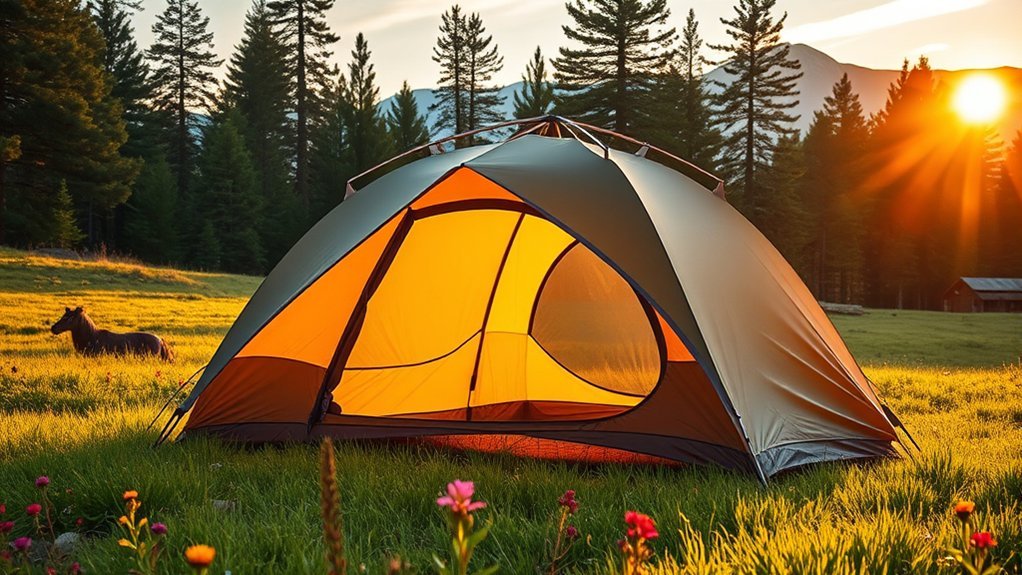
When you’re planning a camping trip in spring, summer, or autumn, understanding what a 3-season tent is designed to handle can make choosing a shelter much easier. According to MSR’s guidance on 3-season and 4-season tents, it is more useful to think about expected conditions than to interpret the season label literally.
Three-season backpacking tents generally emphasize low weight, airflow, rain protection, and bug protection. Many use a double-wall design consisting of a breathable or mesh-heavy inner tent plus a separate waterproof rainfly. That arrangement can improve ventilation and help manage condensation while still protecting the sleeping area from rain.
However, neither a particular weight nor double-wall construction defines every 3-season tent. Weight varies with capacity, fabrics, poles, floor area, vestibule size, and whether the shelter is intended for backpacking or car camping. The important question is whether the manufacturer’s intended use matches your forecast and campsite.
Key Features of 3-Season Tents
A 3-season tent balances weather protection with ventilation and portability. Backpacking models usually use relatively light fabrics and pole systems, while roomier car-camping models may be considerably heavier. Instead of shopping by a single weight range, compare shelters of the same capacity and intended use.
Many 3-season tents include large mesh panels to improve airflow and keep insects out. A rainfly covers the mesh during wet weather, and vents or a gap between the fly and inner tent can help moist air escape. Good ventilation matters because condensation can form inside any tent when warm, humid air meets cooler fabric.
Useful features to compare include:
- Rainfly coverage: A full-coverage fly generally offers better protection from wind-driven rain than a small roof-only fly.
- Pole architecture: More supportive geometries can improve stability, but overall design matters more than whether the poles form one specific shape.
- Guyout points: Properly tensioned guylines can improve stability in windy conditions.
- Bathtub-style floor: Raised waterproof floor edges help keep splash and surface moisture away from the sleeping area.
- Vestibules: Covered exterior space lets you store wet footwear or packs outside the sleeping area.
- Ventilation: Mesh, fly vents, and adjustable doors help control airflow and condensation.
- Freestanding or semi-freestanding setup: Freestanding tents rely mainly on their pole structure, while semi-freestanding models require certain stake-out points to achieve their intended shape.
Pro Tip: Pitch a new tent at home before your first trip. Learn where every pole, clip, stake, vent, and guyline goes so you are not figuring it out for the first time during wind, rain, or darkness.
Ideal Conditions for Using a 3-Season Tent
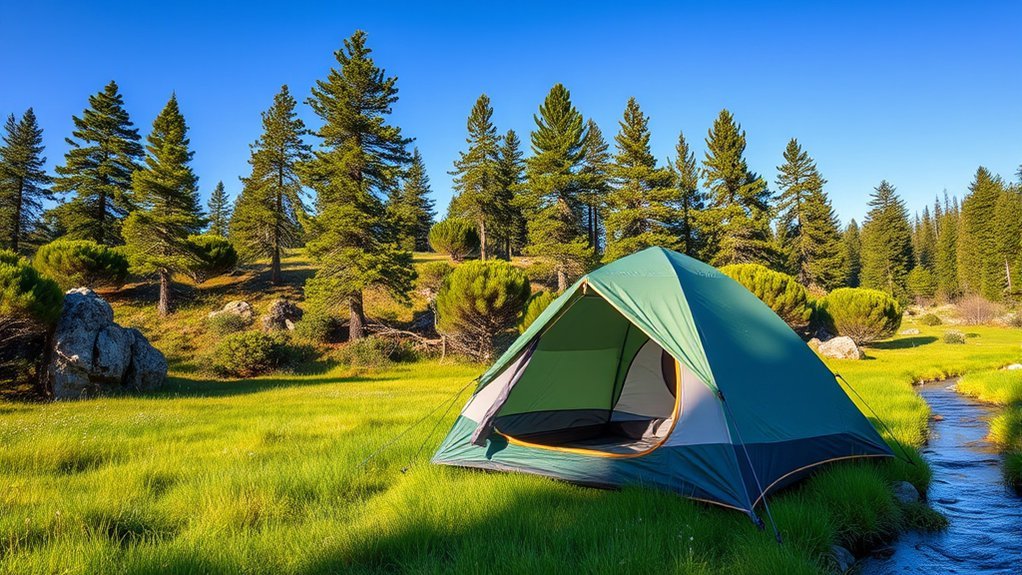
Three-season tents are most appropriate when severe wind and major snow accumulation are not expected. They work well for many forest, field, desert, and mountain trips during spring, summer, and fall. Some can also cope with brief light snow, but that does not turn them into winter mountaineering shelters.
Weather Resistance Factors
Properly pitched 3-season tents can provide excellent protection during ordinary rainstorms and can often tolerate light snow. Their main limitation is structural: they are generally not engineered for the combination of powerful wind and substantial snow loads that dedicated winter tents are built to withstand. Current MSR guidance describes 4-season tents as having stronger structures, more durable materials, and less mesh for severe conditions.
| Weather Factor | Typical 3-Season Suitability |
|---|---|
| Moderate Rain | Generally suitable when properly pitched with the rainfly and required stakes/guylines |
| Light, Brief Snow | Some models can handle it, but monitor accumulation and manufacturer guidance |
| Strong or Sustained Wind | Depends heavily on model and exposure; severe wind may exceed the design’s intended use |
| Heavy or Accumulating Snow | Not recommended; choose an appropriate 4-season/winter shelter |
Terrain and Environment
Terrain can change the amount of weather your tent must withstand. A sheltered campsite below treeline may expose a tent to far less wind than an open ridge, beach, desert plateau, or campsite above treeline. Check the forecast, identify exposure, and choose a legal campsite that avoids obvious hazards such as dead branches, drainage channels, avalanche terrain, and areas where water can pool.
A lightweight 3-season backpacking tent is useful on varied terrain because it can be compact and easy to carry, while mesh-heavy inner tents provide excellent ventilation in warmer conditions. In exposed locations, use every structural component required by the manufacturer, including appropriate stakes and guylines.
Seasonal Usage Guidelines
Spring, summer, and fall are the traditional uses for a 3-season tent, but conditions should make the final decision. A calm winter night at low elevation is very different from an exposed autumn storm above treeline.
| Situation | Shelter Guidance |
|---|---|
| Spring | Well suited to mild temperatures and ordinary rain when the model’s weather protection matches the forecast |
| Summer | Excellent for warm-weather camping where ventilation and bug protection matter |
| Autumn | Often suitable, but monitor colder storms, stronger winds, and early snowfall |
| Calm Winter Below Treeline | A suitable 3-season tent may work when significant wind and snow are not forecast, but winter skills and an appropriate sleep system remain essential |
| Exposed Winter / Heavy Snow | Use a tent designed for winter wind and snow loads |
Warning: Do not rely on a generic “3-season” label when powerful wind, accumulating snow, or exposed winter terrain is expected. Use the tent manufacturer’s intended-use guidance and switch to a suitable 4-season shelter when conditions demand it. Winter weather can change quickly, so shelter choice is only one part of proper cold-weather preparation.
Limitations of 3-Season Tents in Winter
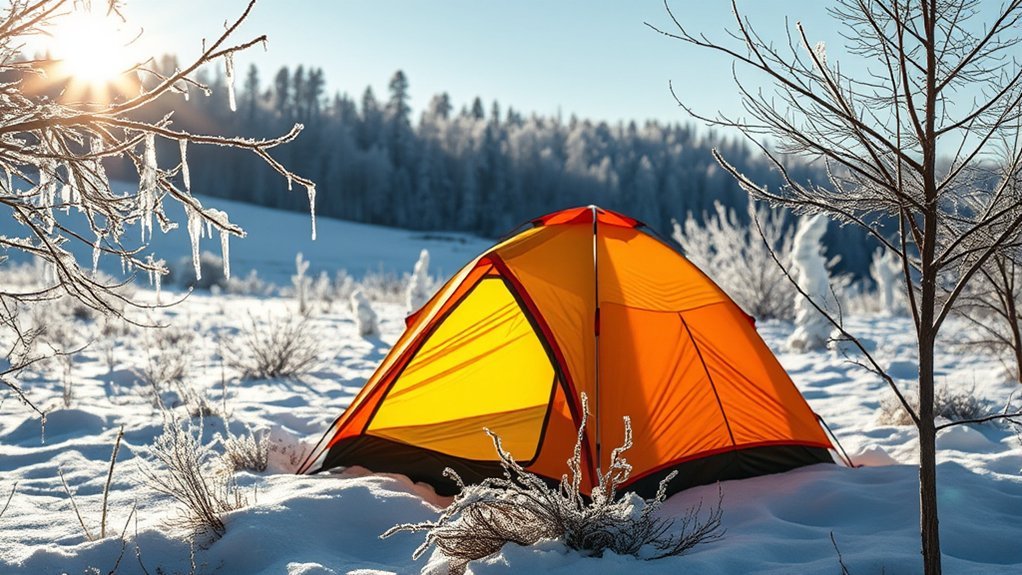
Although 3-season tents are versatile, their limitations become important when winter weather turns severe. Compared with dedicated 4-season models, they often have lighter pole structures, lighter fabrics, more mesh, and designs that are not intended to support substantial snow accumulation.
The mesh that is excellent for summer ventilation also allows more air movement through the inner tent. Remember, however, that a tent is not your primary insulation. Your sleeping bag or quilt, insulated sleeping pad, dry clothing, food, and overall cold-weather system do most of the work of keeping you warm.
Wind-driven snow can also enter through gaps around some rainflies, while accumulating snow can place increasing stress on a structure that was never designed for a large snow load. If conditions deteriorate, changing campsites, changing shelters, or ending the trip may be safer than trying to modify an unsuitable tent in the field.
The National Park Service’s Mount Rainier winter-safety guidance also emphasizes maintaining adequate shelter ventilation in snowy conditions. Snow can block vents, so winter campers need to keep ventilation openings clear.
Note: More fabric and less mesh may reduce drafts, but a winter tent is not simply a 3-season tent with the vents closed. Its pole architecture, materials, fly coverage, guying system, and overall structure are designed for more demanding conditions.
Comparisons With 4-Season Tents
When comparing 3-season tents with 4-season tents, consider the worst conditions you reasonably expect. Four-season tents focus on structural strength for strong winds and snow loading. They commonly use stronger pole geometries, more fabric and less mesh, and fly designs that provide greater protection near the ground.
Three-season tents usually provide better airflow and lower carried weight for ordinary backpacking conditions. Four-season models of comparable capacity are often heavier because of their stronger structures and more protective materials, although lightweight single-wall alpine designs show that this is not an absolute rule.
There is also a middle category: extended-season, 3+, or 3–4-season tents. These shelters add features such as stronger pole structures, more fabric coverage, or closable mesh to handle colder shoulder-season trips and occasional snow better than a typical 3-season design, without necessarily becoming full expedition tents.
| Tent Type | Best Fit | Typical Design Priority |
|---|---|---|
| 3-Season | Most spring, summer, and fall camping | Ventilation, rain protection, bug protection, manageable weight |
| Extended / 3+ | Shoulder seasons, exposed sites, occasional light snow | More structural support and weather coverage than a standard 3-season model |
| 4-Season | Winter storms, mountaineering, powerful wind, substantial snow | Structural strength, snow-load resistance, wind protection |
Recommendations for Choosing a 3-Season Tent
When choosing a 3-season tent, start with the number of sleepers and the conditions you expect, then compare weight, packed size, interior dimensions, vestibule space, ventilation, rainfly coverage, and structure. Backpackers usually prioritize low carried weight and compact packed dimensions, while car campers can accept more weight in exchange for space and comfort.
Weight and Packability
Weight matters most when you have to carry the tent for long distances, but there is no single correct weight range for every 3-season tent. A solo ultralight shelter, a roomy two-person backpacking tent, and a six-person car-camping tent may all be classified as 3-season despite very different weights.
Also check which weight figure you are reading. Manufacturers and retailers may list a minimum or trail weight as well as a heavier packaged weight that includes additional components. For example, the older REI Co-op Quarter Dome SL 1 was listed at 1 lb 15 oz minimum trail weight and 2 lb 6 oz packaged weight; the model is now unavailable. This illustrates why weight terminology and current model status matter more than copying a single number from an old recommendation.
Instead of assuming your shelter must fit a 60–65 liter backpack, compare its actual packed dimensions with the rest of your gear. Pack capacity depends on your sleeping system, clothing, food, water strategy, trip duration, season, and whether group equipment is shared.
Weather Resistance Features
For wet or windy trips, look beyond a single feature such as an X-frame. Overall weather resistance comes from the combination of the pole architecture, tent profile, fabric tension, rainfly coverage, floor design, stakes, and guyout points.
A full-coverage rainfly can provide better protection from wind-driven rain, while well-placed vents help manage condensation. In exposed locations, a lower-profile shelter often catches less wind than a tall, near-vertical tent. Strong guyout points allow you to stabilize the structure when conditions become gusty.
For cool shoulder-season trips, you may prefer a tent with less exposed mesh or panels that can be closed. If you frequently camp where early snow, high elevation, or exposed terrain is likely, consider an extended-season tent rather than pushing a lightweight 3-season shelter beyond its intended use.
Capacity and Livability
Capacity labels are only a starting point. Compare actual floor dimensions, peak height, wall shape, doors, and vestibule area. Two tents labeled “2-person” can feel very different inside, especially when both campers bring wide sleeping pads or bulky gear.
For backpacking, extra interior space usually costs some weight. For car camping, that trade-off may matter far less. If you want room for a dog, large sleeping pads, or gear inside the tent, sizing up can provide more comfort.
Ventilation and Condensation
No tent is completely immune to condensation. Moisture from breathing, wet gear, humid air, and damp ground can collect on cooler surfaces. Use available vents, avoid blocking airflow unnecessarily, and keep wet equipment in a vestibule when practical.
Closing every vent to make the tent feel warmer can make condensation worse. Even in colder conditions, maintain enough ventilation for the shelter’s design and follow the manufacturer’s instructions.
Inspect Your Tent Before Each Trip
Before leaving home, make sure you have the poles, stakes, rainfly, guylines, repair items, and any required footprint or groundsheet. Check the floor, fly, seams, zippers, pole sections, and shock cord for damage. A practice pitch also lets you identify missing pieces before you reach camp.
Frequently Asked Questions
Can I Use a 3-Season Tent in Winter With Proper Gear?
Sometimes. A suitable 3-season tent may work for calm winter camping in a protected location when substantial snowfall and severe winds are not expected. It is not the right choice for exposed winter storms or meaningful snow accumulation. Your sleeping bag, insulated pad, clothing, forecast, site selection, and winter experience are also critical.
How Do I Maintain My 3-Season Tent for Longevity?
Let the tent dry completely before long-term storage, remove dirt gently, and follow the manufacturer’s cleaning instructions. MSR’s current tent-care guidance recommends hand cleaning with mild non-detergent soap when necessary and avoiding bleach, strong detergents, machine washing, machine drying, and storage while the tent is damp.
Are 3-Season Tents Heavier Than 2-Season Tents?
Not necessarily. Weight depends on capacity, fabrics, poles, floor area, features, and intended use. Do not assume one tent will be lighter simply because it carries a different season label; compare the actual packaged and minimum/trail weights of the models you are considering.
What Are the Best Brands for 3-Season Tents?
Established outdoor brands such as REI Co-op, Big Agnes, MSR, NEMO, The North Face, and others offer 3-season tents, but brand name alone should not decide your purchase. Compare the specific model’s capacity, weather rating, dimensions, weight, pole structure, ventilation, warranty, and intended use.
Can I Set up a 3-Season Tent on Snow?
Yes, pitching a 3-season tent on snow is physically possible, but snow on the ground does not determine whether the shelter is suitable. The bigger questions are expected snowfall, wind, exposure, temperature, anchoring conditions, and the tent’s design limits. For heavy snow or severe winter weather, use an appropriate 4-season tent.
Is a 3-Season Tent Waterproof?
A properly designed and maintained 3-season tent should provide rain protection appropriate to its intended use, but performance varies by model. Use the rainfly as directed, stake the tent correctly, maintain fabric and seams, and inspect the shelter for wear before trips.
What Is a 3+ or Extended-Season Tent?
A 3+ or extended-season tent sits between a typical 3-season backpacking tent and a full 4-season winter tent. It usually adds structural support and greater fabric coverage for colder shoulder-season trips, exposed locations, and occasional light snow, while remaining more ventilated and portable than many expedition-style shelters.
Conclusion
A 3-season tent is a versatile shelter for most spring, summer, and fall camping, but its usefulness depends more on expected conditions than the calendar. Choose one by comparing capacity, weight, packed size, rainfly coverage, ventilation, pole structure, guyout points, and usable space. For powerful winds, accumulating snow, or exposed winter camps, step up to a shelter designed specifically for those conditions.
With the right tent, a suitable sleeping system, careful site selection, and a realistic weather forecast, you can stay more comfortable while avoiding the mistake of asking a lightweight shelter to handle conditions it was never designed for.
Sources
- Cascade Designs / MSR — Differences Between Three- and Four-Season Tents — supports seasonality, ventilation, wind, snow-load, and structural guidance.
- MSR — 3-Season vs. 4-Season Tent — supports condition-based tent selection and typical construction differences.
- REI Co-op Expert Advice — How to Choose a Backpacking Tent — supports 3-season, extended-season, and 4-season distinctions and core tent-selection factors.
- National Park Service — Mount Rainier Winter Safety — supports winter shelter and ventilation precautions.
- Cascade Designs / MSR — Tent Cleaning and Drying Guidance — supports cleaning, drying, and storage recommendations.

